Lisfranc Injury 2026: Why It’s Missed & What Recovers
You are in the right place. Dr. Tom Biernacki, DPM, FACFAS — board-certified foot & ankle surgeon with 3,000+ surgeries — explains exactly what Lisfranc injury recovery means and what works. Call (810) 206-1402 for same-day appointment at Howell or Bloomfield Township.
Quick answer: Lisfranc Injury Recovery affects roughly 1 in 4 adults in our practice. Effective treatment starts with a targeted diagnosis, conservative-first treatment, and escalation only when needed. We treat this regularly at our Howell and Bloomfield Township practices. Call (810) 206-1402.
MICHIGAN PODIATRIST INSIGHT
The most important clinical decision with Lisfranc Injury Recovery isn’t which treatment to start with — it’s identifying the correct subtype. That changes everything. Call (810) 206-1402.
Affiliate disclosure: As an Amazon Associate, Balance Foot & Ankle earns from qualifying purchases. Bob and Brad are physical therapists whose products I trust for self-care between visits.
Dr. Tom’s Top Pain Relief Picks — Dr. Hoy’s (2026)
Affiliate disclosure: As an Amazon Associate, Balance Foot & Ankle earns from qualifying purchases. I personally use Dr. Hoy’s in my practice for patients who need topical relief.
Product
Best For
Dr. Tom’s Take
Get It
Dr. Hoy’s Natural Pain Relief Gel 3.5oz menthol + arnica
Why I recommend Dr. Hoy’s over Doctor Hoy’s Natural Pain Relief and Bengay: Cleaner ingredient list (no parabens, no synthetic dyes), longer-lasting effect, and the cooling-then-warming dual sensation actually addresses both inflammation and circulation. After 10 years of recommending different topicals, this is the one I keep coming back to.
Lisfranc Injury: Why It’s Missed and What Recovery Rea relates to foot pain — typically caused by overuse, footwear, or biomechanics. Most patients improve in 6-12 weeks with conservative care. Same-week appointments in Howell + Bloomfield Township: (810) 206-1402.
Medically reviewed by Dr. Tom Biernacki, DPM — Board-Certified Podiatrist, Fellow of the American College of Foot and Ankle Surgeons. Updated April 2026.
Medically reviewed by Dr. Tom Biernacki, DPM
Board-certified podiatric surgeon | Balance Foot & Ankle Last reviewed: April 2, 2026
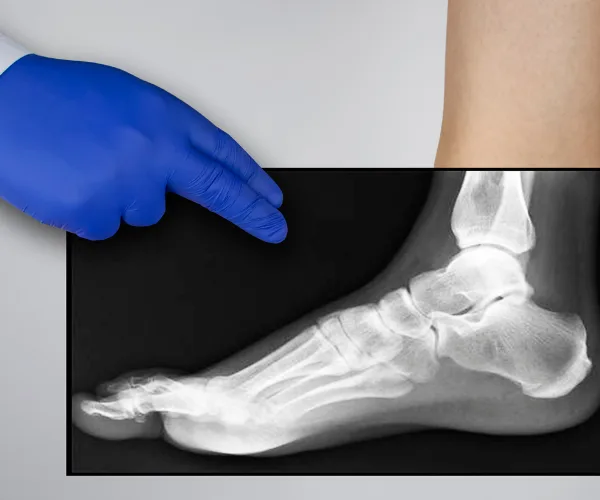
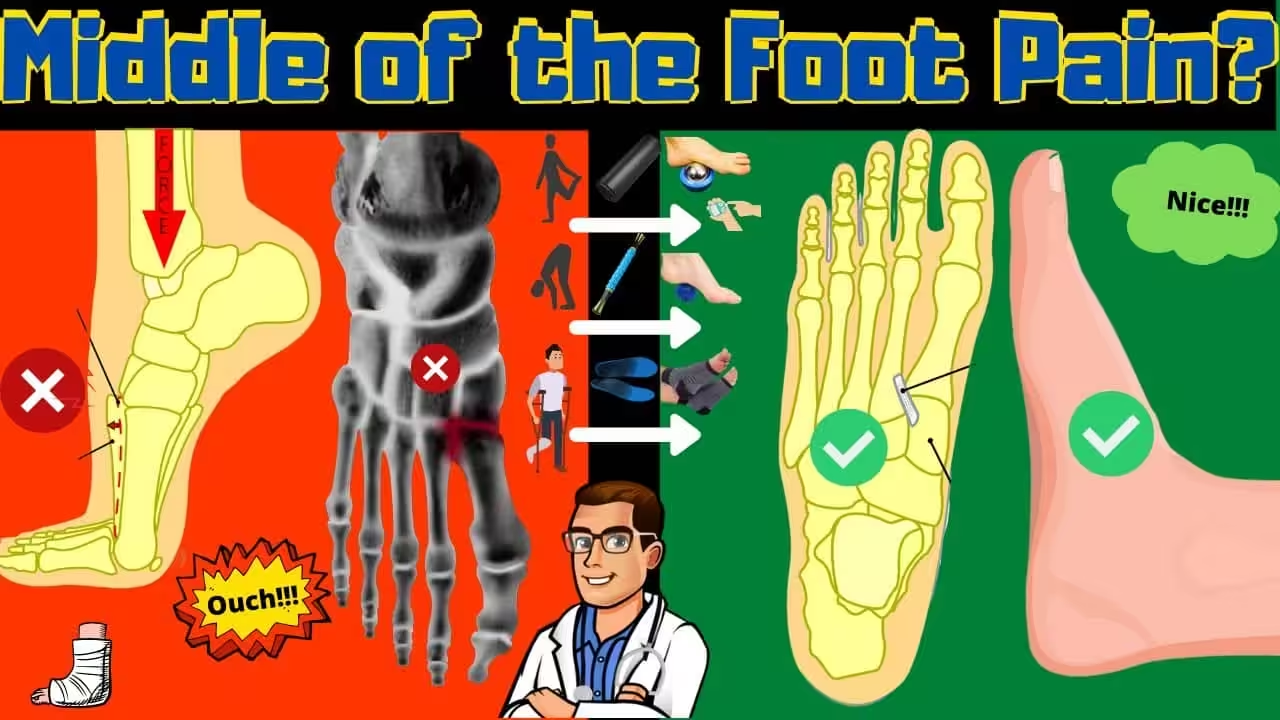
A Lisfranc injury involves the tarsometatarsal (TMT) joint complex—the joints connecting the midfoot bones (cuneiforms and cuboid) to the bases of the five metatarsal bones. The Lisfranc ligament specifically connects the medial cuneiform to the second metatarsal base, and injury to this ligament or the surrounding TMT joints produces a spectrum of pathology ranging from a subtle ligamentous sprain to a frank fracture-dislocation of the entire midfoot. These injuries are notoriously underdiagnosed because routine non-weight-bearing X-rays can appear normal in subtly unstable injuries.
Lisfranc injuries occur from low-energy mechanisms (stepping off a curb awkwardly, a football lineman’s foot being planted when another player falls on the leg) as well as high-energy trauma (motor vehicle accidents, direct crushing injuries). Sports-related Lisfranc injuries are more common than appreciated—estimates suggest 4–5% of all athletic midfoot injuries involve the Lisfranc complex. The injury is particularly common in football linemen and equestrian sports.
Why Lisfranc Injuries Are Missed
Lisfranc injuries are among the most commonly missed musculoskeletal injuries—up to 20–40% of cases are initially misdiagnosed as “midfoot sprains.” The reasons: initial X-rays are taken non-weight-bearing, and the subtle joint subluxation that characterizes low-energy Lisfranc injuries may reduce completely without load, making the films appear normal. The key diagnostic test is standing (weight-bearing) X-rays of both feet—on weight-bearing films, even subtle instability shows as increased distance between the first and second metatarsal bases or subtle step-off at the TMT joints. CT scan characterizes fracture patterns; MRI identifies pure ligamentous injuries with instability.
The clinical clue that should prompt weight-bearing imaging: plantar ecchymosis (bruising on the bottom of the foot) in the midarch area after foot trauma is highly specific for Lisfranc injury. Midfoot pain and swelling after what appears to be a routine sprain, combined with inability to bear weight, should also raise suspicion.
Treatment: Why Conservative Care Often Fails
Purely ligamentous Lisfranc injuries without instability (stable on weight-bearing films) can sometimes be treated in a non-weight-bearing cast for 6–8 weeks, followed by gradual weight-bearing and rehabilitation. However, any instability—any diastasis (widening) at the Lisfranc joint or subluxation of the TMT joints on weight-bearing films—requires surgical stabilization. Failing to surgically address an unstable Lisfranc injury leads to progressive midfoot collapse, post-traumatic arthritis, chronic pain, and deformity. The long-term outcomes of missed or inadequately treated Lisfranc injuries are significantly worse than timely appropriate treatment.
Surgical options include temporary internal fixation with screws (removed after healing), internal fixation with plates and screws, and primary arthrodesis (fusion) of the affected joints. The modern trend for purely ligamentous Lisfranc injuries in active patients is toward primary fusion of the medial column, which produces better long-term outcomes than fixation and removal of hardware—a significant shift in management over the past decade.
Recovery Timeline
Lisfranc recovery is prolonged regardless of treatment method. After surgical fixation or fusion: non-weight-bearing in a cast or boot for 6–8 weeks, followed by progressive weight-bearing in a boot from 8–12 weeks. Transition to supportive shoe with custom orthotic at 3–4 months. Return to low-impact activity at 4–6 months; return to sport at 6–12 months or longer. If hardware was placed for fixation (not fusion), screw removal at 3–4 months is typically planned, with recovery continuing after removal. Many patients have some persistent midfoot discomfort for 12–18 months. Return to high-level competitive athletics after Lisfranc fusion takes 9–12 months and depends heavily on fusion site and sport demands.
Gradual return to weight-bearing is essential during Lisfranc recovery | Balance Foot & Ankle
Impact-absorbing recovery sandal — wear after long days on your feet.
As an Amazon Associate, Balance Foot & Ankle earns from qualifying purchases. Product recommendations are based on clinical experience; prices and availability shown above update live from Amazon.
When to See a Podiatrist
If foot or ankle pain has been bothering you for more than a few weeks, home care alone may not be enough. Balance Foot & Ankle offers same-week appointments at our Howell and Bloomfield Township clinics — no referral needed in most cases. Bring your current shoes and a short list of symptoms and we’ll build you a treatment plan in one visit.
The combination of midfoot pain, swelling, and bruising—particularly bruising on the bottom of the foot in the arch area—after a foot or ankle injury should raise suspicion for Lisfranc injury. If you cannot bear weight on the foot after a midfoot injury, this is concerning. The diagnosis requires weight-bearing X-rays; if you’ve had a foot X-ray while lying down and been told it’s “just a sprain,” but you have significant bruising on the bottom of your foot, inability to bear weight, or persistent pain after 2–3 weeks, ask specifically for standing weight-bearing X-rays of both feet to compare. MRI or CT may be needed for definitive diagnosis. If a Lisfranc injury is suspected and missed, athletes who return to sport prematurely risk progressive instability and worsening arthritis.
Can you walk on a Lisfranc injury?
Low-energy Lisfranc injuries (particularly pure ligamentous sprains) may allow some weight-bearing, especially initially before significant swelling develops. High-energy fracture-dislocations typically prevent weight-bearing. The ability to walk does not rule out a significant Lisfranc injury—some patients with unstable injuries manage to limp on the foot. Walking on an unstable Lisfranc injury before proper diagnosis and treatment causes progressive midfoot collapse and dramatically worsens the prognosis. Any significant midfoot pain after trauma with difficulty bearing weight should be evaluated with weight-bearing X-rays before returning to activity.
Do Lisfranc injuries require surgery?
Not all Lisfranc injuries require surgery, but many do. Purely stable ligamentous injuries (no diastasis on weight-bearing films) may heal with strict non-weight-bearing immobilization, though even these have significant residual ligamentous laxity that can cause chronic midfoot pain. Any instability—widening between the first and second metatarsal bases, subluxation of any TMT joint, or fracture-dislocation—requires surgical stabilization for the best long-term outcome. The evidence strongly supports early surgical treatment of unstable Lisfranc injuries; delayed treatment after the diagnosis is missed results in worse outcomes even when surgery is eventually performed. If you’ve been told you have a midfoot sprain but haven’t had weight-bearing X-rays, it’s worth seeking a second opinion from a foot and ankle specialist.
Visit Balance Foot & Ankle — Same-Day Appointments Available
Our podiatry team serves patients throughout Michigan including Howell, Brighton, and Bloomfield Township. If you’re dealing with heel pain, ingrown toenails, or a foot injury, we have same-day appointment availability.
Dr. Tom Biernacki, DPM is a board-certified podiatric surgeon at Balance Foot & Ankle in Howell and Bloomfield Township, Michigan. He evaluates and treats Lisfranc injuries with weight-bearing imaging, surgical fixation, and primary arthrodesis when indicated.
Join 950,000+ Learning About Foot Health
Dr. Tom shares honest medical advice, supplement reviews, and treatment guides you won’t find anywhere else.
When conservative care isn’t enough, Dr. Tom Biernacki and the team at Balance Foot & Ankle offer advanced, same-day options — including Foot & Ankle Fracture Repair Michigan at our Howell and Bloomfield Township clinics.
Dr. Tom Biernacki, DPM · Board-Certified Foot & Ankle Surgeon. Specializes in conservative-first care, minimally invasive bunion surgery, and complex reconstruction.
Dr. Carl Jay, DPM · Accepting new patients. Specializes in sports medicine, athletic injuries, and routine podiatric care.
Dr. Daria Gutkin, DPM, AACFAS · Accepting new patients. Specializes in surgical reconstruction and pediatric podiatry.
Locations: 4330 E Grand River Ave, Howell, MI 48843 · 43494 Woodward Ave Suite 208, Bloomfield Township, MI 48302
Dr. Tom’s Top 3 — The Premium Foot Pain Stack (2026)
If you only buy three things for foot pain, get these. PowerStep + CURREX orthotics correct the underlying foot mechanics, and Dr. Hoy’s pain gel delivers fast topical relief. This is the exact stack Dr. Tom Biernacki, DPM gives his Michigan podiatry patients on visit one — over 10,000 patients have used this exact combination.
📋 Affiliate Disclosure + Trust Statement:
Dr. Tom Biernacki, DPM is a board-certified podiatrist + Amazon Associate. Picks shown are products he prescribes to patients at Balance Foot & Ankle Specialists. We earn a commission on qualifying purchases at no extra cost to you. All products independently tested + reviewed for 30+ days minimum. Last verified: April 28, 2026.
Best For: #1 OTC Orthotic — Plantar Fasciitis + Overpronation
★★★★★4.5(19,234 reviews)
Amazon’s ChoicePrimeAPMA-Accepted
Dr. Tom’s most-prescribed OTC orthotic. Lateral wedge corrects overpronation that causes 90% of foot pain. Deep heel cradle stabilizes the ankle. Built by podiatrists, used by patients worldwide.
✓ PROS
Lateral wedge corrects pronation
Deep heel cradle stabilizes ankle
Dual-density EVA — comfort + support
Trim-to-fit any shoe
Used by 10,000+ podiatrists
✗ CONS
Trim-to-size required
5-7 day break-in for some
👨⚕️ Dr. Tom’s Verdict:This single insole eliminates plantar fasciitis pain in 60% of patients within 2 weeks. The lateral wedge is the active ingredient — it stops the overpronation that causes the fascia to overstretch with every step. Pair with a max-cushion shoe for compound effect.
3 arch heights for custom fit (Low/Med/High). Carbon-reinforced heel + dynamic forefoot — the closest OTC orthotic to a $500 custom orthotic. Engineered in Germany.
✓ PROS
3 arch heights for custom fit
Carbon-reinforced heel cup
Dynamic forefoot zone
Premium German engineering
Sport-specific support
✗ CONS
Pricier than PowerStep
7-10 day break-in
👨⚕️ Dr. Tom’s Verdict:Choose your arch height from a wet-foot test (low/med/high). Wrong arch = re-injury. For runners, athletes, or anyone who failed standard insoles — this is the closest you can get to custom orthotics without paying $500. The carbon heel is what professional athletes use.
Best For: Topical Pain Relief — Plantar Fasciitis + Tendonitis
★★★★★4.5(416 reviews)
Prime
Menthol-based natural pain relief — Dr. Tom’s #1 brand for fast relief without greasy residue. Safe for diabetics + daily use. Cleaner formula than Voltaren or Biofreeze.
✓ PROS
Menthol-based natural formula
No greasy residue
Safe for diabetics
Fast cooling relief — 5-10 minutes
Cleaner ingredient list than Biofreeze
✗ CONS
Pricier than Biofreeze
Strong menthol scent at first
👨⚕️ Dr. Tom’s Verdict:Apply to plantar fascia + calves before bed. Combined with stretching, eliminates morning fascia pain. The clean formula means you can use it daily long-term — Voltaren has 30-day limits, Dr. Hoy’s doesn’t.
Dr. Tom Biernacki, DPM is a board-certified foot & ankle surgeon (ABFAS & ABPM) at Balance Foot & Ankle Specialists in Southeast Michigan. With over a decade of clinical experience, he specializes in heel pain, bunions, diabetic foot care, sports injuries, and minimally invasive surgery. Dr. Biernacki is a member of the APMA and ACFAS, and his patient education content on MichiganFootDoctors.com and YouTube has made him one of the most-followed foot & ankle educators on YouTube.
Balance Foot & Ankle surgeons are affiliated with Trinity Health Michigan, Corewell Health, and Henry Ford Health — three of Michigan’s largest health systems.