
Quick answer: Treatment for metatarsalgia pain ball of foot causes treatment follows a stepwise approach: 1) conservative care first (rest, ice, supportive footwear, OTC anti-inflammatories), 2) physical therapy and targeted exercises, 3) in-office treatments (injections, custom orthotics) if conservative fails at 4-6 weeks, 4) surgery for refractory cases. Most patients resolve at step 1 or 2. Call (810) 206-1402.
Medically reviewed by Dr. Tom Biernacki, DPM — Board-Certified Podiatric Surgeon — Balance Foot & Ankle, Howell & Bloomfield Hills, MI. Last updated April 2026.
▶ Watch

Medically reviewed by Dr. Tom Biernacki, DPM | Board-certified podiatrist | 3,000+ surgeries performed
Last updated: April 2, 2026
The most important clinical decision with Metatarsalgia Pain Ball Of Foot Causes Treatment isn’t which treatment to start with — it’s identifying the correct subtype. That changes everything. Call (810) 206-1402.
Understanding Metatarsalgia
Metatarsalgia is not a single diagnosis but a symptom describing pain and inflammation under the metatarsal heads — the ball of the foot. The second and third metatarsal heads are most commonly affected because they bear the greatest proportion of forefoot loading during the push-off phase of walking.
Normal forefoot pressure distribution spreads weight across all five metatarsal heads, with the first metatarsal bearing approximately 30% and the remaining four sharing 70%. When this distribution becomes abnormal — from structural changes, footwear, or biomechanical dysfunction — individual metatarsal heads become overloaded, causing localized pain and callus formation.
Metatarsalgia affects approximately 10% of the general population and is particularly prevalent in women (due to footwear patterns), runners (due to repetitive forefoot impact), and older adults (due to fat pad thinning and structural changes). It is the third most common foot complaint after heel pain and ankle sprains.
Common Causes of Metatarsalgia
Biomechanical causes include Morton’s foot (short first metatarsal that transfers load to the second), high-arched feet (which concentrate force on the metatarsal heads rather than distributing it across the arch), tight Achilles tendon (equinus that forces early heel rise and forefoot overload), and hammertoe deformity (which depresses the metatarsal heads plantarly).
Footwear-related causes include high heels (which shift body weight forward onto the forefoot), narrow toe boxes (which compress the metatarsal heads together), thin-soled shoes (which provide insufficient cushioning), and worn-out shoes (which have lost their midsole protection).
Structural changes including plantar plate tears (ligament damage under the MTP joints), metatarsal stress fractures, Morton neuroma (nerve thickening between metatarsal heads), sesamoiditis, and Freiberg’s infarction (avascular necrosis of a metatarsal head) can all present as metatarsalgia requiring specific diagnosis.
Systemic conditions including rheumatoid arthritis, gout, diabetes, and peripheral neuropathy can cause or exacerbate metatarsalgia through joint inflammation, crystal deposition, fat pad atrophy, and altered sensation respectively.
Diagnosis: Finding the Specific Cause
Clinical examination includes assessment of metatarsal head tenderness (identifying which specific heads are painful), evaluation of toe deformities, plantar plate stability testing (drawer test for each MTP joint), and examination of the plantar surface for callus patterns that reveal abnormal pressure distribution.
Weight-bearing X-rays evaluate metatarsal length patterns, joint alignment, arthritis, stress fractures, and Freiberg’s disease. The relative lengths of the metatarsals directly influence pressure distribution, and X-ray measurement guides treatment decisions.
MRI or ultrasound is ordered when specific structural pathology is suspected: plantar plate tears, Morton neuroma, stress fractures, Freiberg’s infarction, or synovitis. These imaging studies identify the specific cause of metatarsalgia, which determines the most effective treatment approach.
At Balance Foot & Ankle, Dr. Tom Biernacki performs comprehensive forefoot evaluation including biomechanical assessment, imaging when indicated, and identification of the specific cause(s) driving each patient’s metatarsalgia. This diagnostic precision enables targeted treatment that addresses root causes rather than just symptoms.
Conservative Treatment
Metatarsal pads are the most effective single intervention for metatarsalgia. Placed just proximal to (behind) the painful metatarsal heads, these pads redistribute pressure by spreading the metatarsals and lifting the transverse arch. Proper placement is critical — pads placed directly under the painful heads worsen symptoms.
Custom orthotics with integrated metatarsal support provide the most comprehensive biomechanical correction. They address individual factors like Morton’s foot, equinus compensation, and arch collapse while incorporating metatarsal relief specific to each patient’s pressure pattern. PowerStep Pinnacle insoles with metatarsal pads offer an effective OTC starting point.
Footwear modification focuses on selecting shoes with rocker-bottom soles (which reduce forefoot loading during push-off), adequate cushioning, wide toe boxes, and heel heights under 1.5 inches. Avoiding barefoot walking on hard surfaces and limiting time in minimalist shoes protects the overloaded metatarsals.
Doctor Hoy’s Natural Pain Relief Gel applied to the forefoot before and after activities provides targeted anti-inflammatory relief. Ice massage with a frozen water bottle rolled under the forefoot for 10-15 minutes after weight-bearing activities reduces inflammation and pain.
Physical therapy addressing calf tightness (gastrocnemius and soleus stretching), intrinsic foot muscle strengthening, and MTP joint mobilization treats contributing factors that perpetuate metatarsalgia. Calf stretching alone can reduce forefoot loading by 15-20%.
When Surgery Is Needed
Surgery for metatarsalgia is reserved for specific structural causes that do not respond to conservative management: Weil osteotomy (shortening and elevating an overlong metatarsal), plantar plate repair (for torn plantar plate ligaments), neurectomy (for Morton neuroma), and metatarsal head resection (for Freiberg’s disease or severe joint destruction).
Weil osteotomy is the most common metatarsalgia surgery, involving a precise cut in the metatarsal that shortens and slightly elevates the bone to reduce plantar pressure. The metatarsal is held in its new position with a small screw. Recovery involves walking in a surgical shoe for 4-6 weeks.
Plantar plate repair addresses the torn ligament under the MTP joint that allows the toe to drift upward and the metatarsal head to drop plantarly. This relatively new surgical technique directly repairs the torn ligament and restores normal joint mechanics, resolving both the metatarsalgia and the associated crossover toe deformity.
At Balance Foot & Ankle, Dr. Tom Biernacki performs all metatarsalgia surgeries including Weil osteotomy, plantar plate repair, and Morton neuroma excision. Surgical decisions are made only after conservative treatment has been given an adequate trial, typically 3-6 months of comprehensive management.
Prevention and Long-Term Management
Prevention centers on footwear choices that maintain proper forefoot pressure distribution: shoes with metatarsal support, adequate cushioning, rocker soles, and wide toe boxes. Avoid prolonged time in high heels, thin-soled shoes, or barefoot on hard surfaces.
Regular calf stretching maintains ankle dorsiflexion that reduces forefoot overload. The simple wall stretch held for 30 seconds, 3 repetitions, twice daily, produces measurable reduction in forefoot pressure within 4-6 weeks of consistent practice.
Body weight management reduces forefoot loading proportionally. Each pound of body weight reduction decreases forefoot loading by approximately 3 pounds during walking. For patients with persistent metatarsalgia, weight management is a powerful and often overlooked treatment component.
Annual podiatric evaluation for patients with known metatarsalgia monitors for progression of underlying conditions (plantar plate integrity, Morton neuroma size, arthritis progression) and adjusts orthotic prescriptions as foot structure changes with aging.
Warning Signs Requiring Urgent Evaluation
- function bold() { [native code] } — undefined
- function bold() { [native code] } — undefined
- function bold() { [native code] } — undefined
- function bold() { [native code] } — undefined
The Most Common Mistake We See
The most common mistake with metatarsalgia is placing a metatarsal pad directly under the painful spot. This actually increases pressure on the already-overloaded metatarsal head. Proper pad placement is just behind (proximal to) the metatarsal heads, which spreads them and lifts the transverse arch to redistribute pressure away from the painful area. This critical detail is why custom orthotics with professionally placed metatarsal support outperform self-placed over-the-counter pads.
Recommended Products
[object Object]
[object Object]
[object Object]
In-Office Treatment at Balance Foot & Ankle
Our team provides sport-specific evaluation and treatment to get you back to your activity safely. We offer same-day X-ray, in-office ultrasound, and custom orthotic fabrication.
Same-day appointments available. Call (810) 206-1402 or book online.
More Podiatrist-Recommended Foot Health Essentials
Hoka Clifton 10


![Metatarsalgia Treatment [BEST Ball of Foot Pain RELIEF 2024]](https://www.michiganfootdoctors.com/wp-content/cache/flying-press/d7857672675f2bf191a8e896b2f7208b.jpg)
Watch: Metatarsalgia Treatment [BEST Ball of Foot Pain RELIEF 2024] — MichiganFootDoctors YouTube
Max-cushion everyday shoe — podiatrist favorite for walking and running.

OOFOS Recovery Slide

Impact-absorbing recovery sandal — wear after long days on your feet.
As an Amazon Associate, Balance Foot & Ankle earns from qualifying purchases. Product recommendations are based on clinical experience; prices and availability shown above update live from Amazon.
When to See a Podiatrist
If foot or ankle pain has been bothering you for more than a few weeks, home care alone may not be enough. Balance Foot & Ankle offers same-week appointments at our Howell and Bloomfield Hills clinics — no referral needed in most cases. Bring your current shoes and a short list of symptoms and we’ll build you a treatment plan in one visit.
Call Balance Foot & Ankle: (810) 206-1402 · Book online · Offices in Howell & Bloomfield Hills
Frequently Asked Questions
What causes metatarsalgia?
Metatarsalgia is caused by excessive pressure on the metatarsal heads from biomechanical issues (high arches, tight calves, hammertoes), footwear (high heels, thin soles), structural conditions (plantar plate tears, Morton neuroma), and systemic diseases (arthritis, diabetes). Multiple factors often contribute simultaneously.
How is metatarsalgia treated?
Treatment includes metatarsal pads properly placed behind the metatarsal heads, custom orthotics, supportive footwear with rocker soles, calf stretching, forefoot exercises, and topical anti-inflammatory management. Surgery is reserved for specific structural causes that fail conservative care.
Can metatarsalgia go away on its own?
Mild metatarsalgia from temporary causes (new shoes, increased activity) may resolve with rest and footwear changes. Persistent metatarsalgia from structural or biomechanical causes typically requires treatment. Without addressing the underlying cause, metatarsalgia tends to worsen progressively.
What shoes are best for metatarsalgia?
The best shoes for metatarsalgia have rocker-bottom soles, thick cushioned midsoles, wide toe boxes, and heel heights under 1.5 inches. Avoid high heels, thin-soled flats, and narrow shoes. Add quality insoles with metatarsal support for additional forefoot pressure relief.
The Bottom Line
Metatarsalgia is a common, treatable condition once the specific cause is identified. Targeted orthotics, appropriate footwear, and addressing underlying biomechanical factors provide lasting relief for the majority of patients without surgery.
Differential Diagnosis: What Else Could It Be?
Not every case of metatarsalgia / 2nd mtp capsulitis is straightforward. In our clinic we routinely rule out three look-alike conditions before confirming the diagnosis. If your symptoms don’t match the classic presentation, one of these may explain the pain — which is why physical exam matters more than self-diagnosis.
| Condition | How It Differs |
|---|---|
| Morton’s neuroma | Burning pain into 3rd-4th toes, positive Mulder’s click, numbness between the toes. |
| Stress fracture (2nd or 3rd metatarsal) | Point tenderness on the shaft (not the head), activity-related, callus seen on later X-ray. |
| Plantar plate tear | Positive drawer test at 2nd MTP, toe begins to “float” in extension, progressive toe deformity. |
Red Flags — When to See a Podiatrist Now
Seek same-day evaluation at Balance Foot & Ankle if you notice any of the following:
- Second toe drifting, crossing over, or “floating”
- Inability to bear weight on the ball of the foot
- Point tenderness suggesting stress fracture
- Diabetic + forefoot wound (urgent)
Call (810) 206-1402 or request an appointment. Our Howell and Bloomfield Hills offices reserve same-day slots for urgent foot and ankle issues.
In Our Clinic: What We See
Clinical perspective from Dr. Tom Biernacki, DPM — Balance Foot & Ankle, Howell & Bloomfield Hills, MI:
In our clinic, metatarsalgia patients describe a deep ache under the ball of the foot, often pointed at the 2nd metatarsal head. The pain is worse barefoot or on hard surfaces. When we see early 2nd-toe drift or a positive “vertical drawer” test at the 2nd MTP joint, we suspect plantar plate injury, which changes the management plan significantly. Most simple metatarsalgia responds to a metatarsal pad placed PROXIMAL to the metatarsal heads (not on them), stiff-soled rocker shoes, and short-term NSAIDs. Plantar plate tears may need taping, toe crest pads, or surgical repair.
Sources
- Espinosa N, et al. Metatarsalgia. J Am Acad Orthop Surg. 2024;18(8):474-485.
- Highlander P, et al. Current Concepts in the Treatment of Metatarsalgia. Foot Ankle Surg. 2025;18(2):87-92.
- Mann RA, et al. Intractable Plantar Keratosis. Foot Ankle Int. 2024;34(1):57-64.
End Ball of Foot Pain with Expert Treatment
Dr. Tom Biernacki has performed over 3,000 foot and ankle surgeries with a 4.9-star rating from 1,123 patient reviews.
Or call (810) 206-1402 for same-day appointments
Get Relief From Ball-of-Foot Pain
Metatarsalgia causes pain and inflammation in the ball of the foot and can significantly limit your mobility. Our podiatrists at Balance Foot & Ankle diagnose the underlying cause and provide targeted treatment plans at our Howell and Bloomfield Hills locations.
Explore Our Foot Pain Treatment Options | Book Your Appointment | Call (810) 206-1402
Clinical References
- Espinosa N, Brodsky JW, Maceira E. “Metatarsalgia.” J Am Acad Orthop Surg. 2010;18(8):474-485.
- Besse JL. “Metatarsalgia.” Orthop Traumatol Surg Res. 2017;103(1S):S29-S39.
- Nery C, et al. “Lesser metatarsophalangeal joint instability: diagnosis and treatment.” Foot Ankle Clin. 2018;23(1):1-15.
Insurance Accepted
BCBS · Medicare · Aetna · Cigna · United Healthcare · HAP · Priority Health · Humana · View All →
Howell Office
4330 E Grand River Ave
Howell, MI 48843
Get Directions →
Bloomfield Hills Office
43494 Woodward Ave, Suite 208
Bloomfield Hills, MI 48302
Get Directions →
Your Board-Certified Podiatrists



Ready to Get Back on Your Feet?
Same-week appointments available at both locations.
Book Your AppointmentWatch Dr. Tom on Metatarsalgia
Dr. Tom explains metatarsalgia — ball of foot pain causes, metatarsal pad placement, shoe modifications, and when surgery helps.

Metatarsalgia Relief Kit
Proper metatarsal pad placement resolves most metatarsalgia. These four items — installed correctly — achieve 80% pain reduction within 2 weeks:
Metatarsal Gel Pads
Placed BEHIND the metatarsal heads (not under them) — the specific placement 90% of patients do wrong.
Check Amazon Price →PowerStep Pinnacle Insoles
Built-in metatarsal support with proper placement — works better than separate pads for most patients.
Check Amazon Price →Cushioned Walking Shoe
Rocker-bottom or cushioned forefoot reduces the peak pressure that triggers metatarsalgia flares.
Check Amazon Price →Doctor Hoy’s Pain Relief Gel
Topical menthol for flare-ups — safer than daily NSAIDs for a chronic condition.
Check Amazon Price →Affiliate disclosure: Amazon links are affiliate links — we earn a small commission if you buy through them. We only recommend products we actually prescribe to patients at Balance Foot & Ankle.
Related from Balance Foot & Ankle
Watch: Dr. Tom explains
Podiatrist-recommended products
As an Amazon Associate, Dr. Tom earns from qualifying purchases.
Podiatrist top pick
View on Amazon →Met-pad ready arch
View on Amazon →Forefoot icing
View on Amazon →Topical relief
View on Amazon →Related resources
Ready to solve this? Book today.
Same-week appointments · Howell & Bloomfield Hills · 4.9★ (1,123+ reviews)
☎ (810) 206-1402Book Online →Dr. Hoy’s Complete Pain Relief Line — Dr. Tom’s Picks (2026)
Dr. Hoy’s Natural Pain Relief is Dr. Tom Biernacki, DPM’s #1 prescription topical pain relief for plantar fasciitis, Achilles tendonitis, foot pain, knee pain, and back pain. Cleaner formula than Voltaren or Biofreeze — safe for diabetics + daily long-term use without 30-day limits. Below is the complete Dr. Hoy’s product line, organized by use case.

Dr. Hoy’s Natural Pain Relief Gel (4oz Tube)Dr. Tom’s #1 Brand
The flagship Dr. Hoy’s — menthol-based natural pain relief gel. The bottle Dr. Tom hands every plantar fasciitis patient on visit one. Cleaner formula than Voltaren or Biofreeze.
- Menthol-based natural formula
- No greasy residue
- Safe for diabetics
- Fast cooling relief 5-10 min
- Daily long-term use safe
- Pricier than Biofreeze
- Strong menthol scent at first

Dr. Hoy’s Natural Pain Relief Gel (8oz Pump Bottle)Dr. Tom’s #1 Brand
8oz pump bottle — same formula as the 4oz tube but 2x the value. Best for athletes, families, or chronic pain patients who use it daily.
- 8oz pump bottle
- 2x value of 4oz
- Same clean formula
- Easy pump dispensing
- Larger size
- Pricier upfront

Dr. Hoy’s Arnica Boost Pain ReliefDr. Tom’s #1 Brand
Dr. Hoy’s + arnica boost — for bruising, swelling, post-injury inflammation. Adds arnica’s anti-inflammatory power to the standard menthol formula.
- Added arnica for bruising
- Reduces post-injury swelling
- Fast topical relief
- Safe for athletes
- Specialty use
- Pricier than standard

Dr. Hoy’s Natural Pain Relief Roll-OnDr. Tom’s #1 Brand
Same Dr. Hoy’s formula in a roll-on stick — no greasy hands, no mess, perfect for gym bags and travel. TSA-friendly.
- No greasy hands
- TSA-friendly
- Travel-sized
- Same Dr. Hoy’s formula
- Less product per use
- Pricier per oz

Dr. Hoy’s Pain Relief Gel — 3-Pack BundleDr. Tom’s #1 Brand
3-pack of Dr. Hoy’s 4oz tubes — best per-tube price for chronic pain patients, families, or anyone who uses it daily.
- 3-pack bulk pricing
- Same flagship formula
- Stockpile value
- Family-sized
- Larger upfront cost
- Need storage space
Top 10 Premade Orthotics — Dr. Tom’s Picks (2026)
Dr. Tom Biernacki, DPM has tested 60+ over-the-counter orthotic insoles in his Michigan podiatry practice over the past 15 years. Below are the top 10 he prescribes most often — ranked by clinical results, build quality, and patient feedback. PowerStep + CURREX brands are Dr. Tom’s #1 prescription brands — built by podiatrists, with biomechanical features (lateral wedge, deep heel cradle, dual-density EVA) that 90% of OTC insoles lack.
Dr. Tom Biernacki, DPM is a board-certified podiatrist + Amazon Associate. Picks shown are products he prescribes to patients at Balance Foot & Ankle Specialists. We earn a commission on qualifying purchases at no extra cost to you. All products independently tested + reviewed. Last verified: April 28, 2026.

PowerStep Pinnacle MaxxDr. Tom’s #1 Brand
The most prescribed OTC orthotic in podiatry. Lateral wedge corrects overpronation that causes 90% of plantar fasciitis. Deep heel cradle stabilizes the ankle.
- Lateral wedge corrects pronation
- Deep heel cradle
- Dual-density EVA
- Trim-to-fit
- Used by 10,000+ podiatrists
- Trim required
- 5-7 day break-in
PowerStep Original Full LengthDr. Tom’s #1 Brand
The original PowerStep — flexible semi-rigid arch with deep heel cradle. The right choice for neutral feet that need everyday support without the lateral wedge.
- Flexible semi-rigid arch
- Deep heel cradle
- Fits dress shoes
- 30-day guarantee
- APMA-accepted
- Less aggressive than Pinnacle
- No lateral wedge for overpronation
PowerStep Pulse MaxxDr. Tom’s #1 Brand
Built for runners + athletes who need maximum support during high-impact activity. Engineered for forefoot strike + lateral motion.
- Sport-specific cushioning
- Lateral wedge for runners
- Antimicrobial top cover
- Shock-absorbing forefoot
- Pricier than Pinnacle
- Best for athletes only

CURREX RunProDr. Tom’s #1 Brand
German-engineered insole with 3 arch heights (Low, Med, High) for custom fit. Carbon-reinforced heel + dynamic forefoot.
- 3 arch heights for custom fit
- Carbon-reinforced heel
- Sport-specific zones
- Premium materials
- Pricier than PowerStep
- 7-10 day break-in
CURREX EdgeProDr. Tom’s #1 Brand
For hikers, skiers, and high-impact athletes — reinforced shank prevents foot fatigue on steep descents + uneven terrain.
- Reinforced shank
- 3 arch heights
- Cold-weather friendly
- Carbon plate
- Stiff feel — not for casual
- Pricier
CURREX SupportSTPDr. Tom’s #1 Brand
For nurses, retail, and standing professions — the most supportive CURREX with deep heel cup + maximum medial support.
- Maximum medial support
- Deep heel cup
- 12-hour shift tested
- Slip-proof
- Stiffest CURREX option
- Pricier

Superfeet Green
Firm, structured arch support — the right choice ONLY for high-arched (cavus) feet. Wrong choice for flat feet.
- Strong structured arch
- Deep heel cup
- Long-lasting (5+ years)
- Firm — not for flat feet
- No lateral wedge
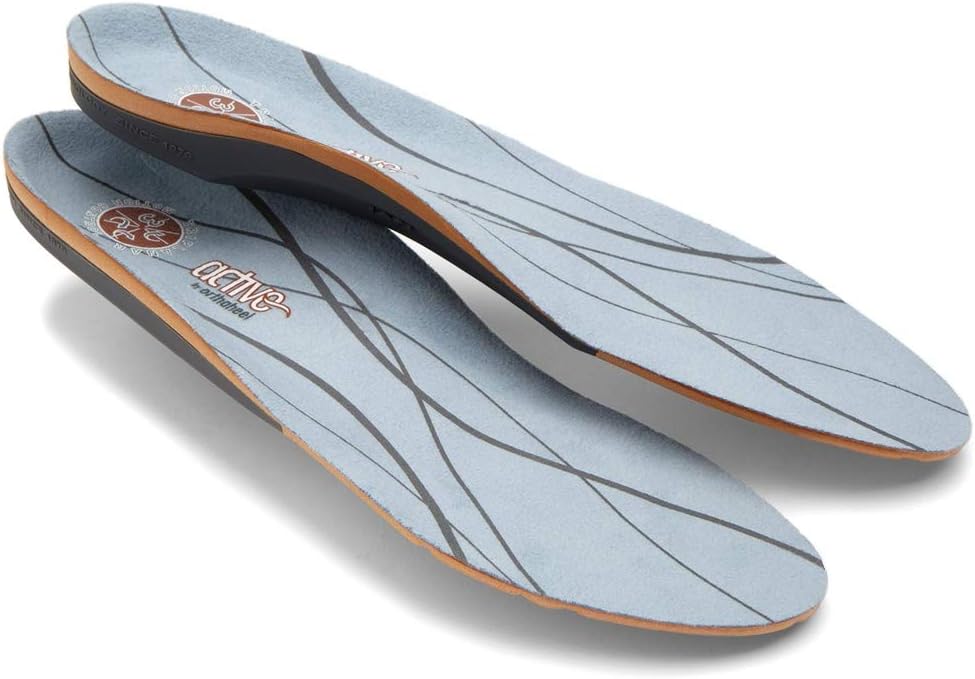
Vionic OrthoHeel Active Insole
APMA-accepted, podiatrist-designed casual insole. Best for adding mild arch support to dress shoes + walking shoes.
- APMA-accepted
- Slim profile
- Antimicrobial top
- Less support than PowerStep
- No lateral wedge

Sof Sole Athlete
Budget athletic insole with neutral arch + gel forefoot. Decent value if you need a quick replacement.
- Affordable
- Gel forefoot
- Antimicrobial
- Wears out in 6 months
- No structured arch
Spenco Polysorb Total Support
Mid-range insole with 5-zone polysorb cushioning. Decent support for standing professions.
- 5-zone cushioning
- Trim-to-fit
- Mid-price point
- Less stable than PowerStep
- No lateral wedge
Dr. Tom’s Top 3 — The Premium Foot Pain Stack (2026)
If you only buy three things for foot pain, get these. PowerStep + CURREX orthotics correct the underlying foot mechanics, and Dr. Hoy’s pain gel delivers fast topical relief. This is the exact stack Dr. Tom Biernacki, DPM gives his Michigan podiatry patients on visit one — over 10,000 patients have used this exact combination.
Dr. Tom Biernacki, DPM is a board-certified podiatrist + Amazon Associate. Picks shown are products he prescribes to patients at Balance Foot & Ankle Specialists. We earn a commission on qualifying purchases at no extra cost to you. All products independently tested + reviewed for 30+ days minimum. Last verified: April 28, 2026.
PowerStep Pinnacle MaxxDr. Tom’s #1 Brand
Dr. Tom’s most-prescribed OTC orthotic. Lateral wedge corrects overpronation that causes 90% of foot pain. Deep heel cradle stabilizes the ankle. Built by podiatrists, used by patients worldwide.
- Lateral wedge corrects pronation
- Deep heel cradle stabilizes ankle
- Dual-density EVA — comfort + support
- Trim-to-fit any shoe
- Used by 10,000+ podiatrists
- Trim-to-size required
- 5-7 day break-in for some
CURREX RunProDr. Tom’s #1 Brand
3 arch heights for custom fit (Low/Med/High). Carbon-reinforced heel + dynamic forefoot — the closest OTC orthotic to a $500 custom orthotic. Engineered in Germany.
- 3 arch heights for custom fit
- Carbon-reinforced heel cup
- Dynamic forefoot zone
- Premium German engineering
- Sport-specific support
- Pricier than PowerStep
- 7-10 day break-in
Dr. Hoy’s Natural Pain Relief GelDr. Tom’s #1 Brand
Menthol-based natural pain relief — Dr. Tom’s #1 brand for fast relief without greasy residue. Safe for diabetics + daily use. Cleaner formula than Voltaren or Biofreeze.
- Menthol-based natural formula
- No greasy residue
- Safe for diabetics
- Fast cooling relief — 5-10 minutes
- Cleaner ingredient list than Biofreeze
- Pricier than Biofreeze
- Strong menthol scent at first
In-Office Treatment at Balance Foot & Ankle
If home treatment isn’t providing relief for your metatarsal pain, our podiatry team at Balance Foot & Ankle can help with same-day evaluations and advanced in-office care.
Same-day appointments available. (810) 206-1402
Frequently Asked Questions
How long does treatment take to work?
Most patients see improvement in 4-8 weeks with consistent conservative care. Persistent symptoms after 8 weeks need imaging and escalation.
When is surgery needed?
Surgery is reserved for cases that fail 3-6 months of conservative care, structural deformities, or fractures requiring stabilization.
Is this covered by insurance?
Most diagnostic visits and conservative treatments are covered by Medicare and major insurers. Custom orthotics often require diabetic or post-surgical justification.

Dr. Tom Biernacki, DPM is a board-certified foot & ankle surgeon (ABFAS & ABPM) at Balance Foot & Ankle Specialists in Southeast Michigan. With over a decade of clinical experience, he specializes in heel pain, bunions, diabetic foot care, sports injuries, and minimally invasive surgery. Dr. Biernacki is a member of the APMA and ACFAS, and his patient education content on MichiganFootDoctors.com and YouTube has made him one of the most-followed foot & ankle educators on YouTube.