
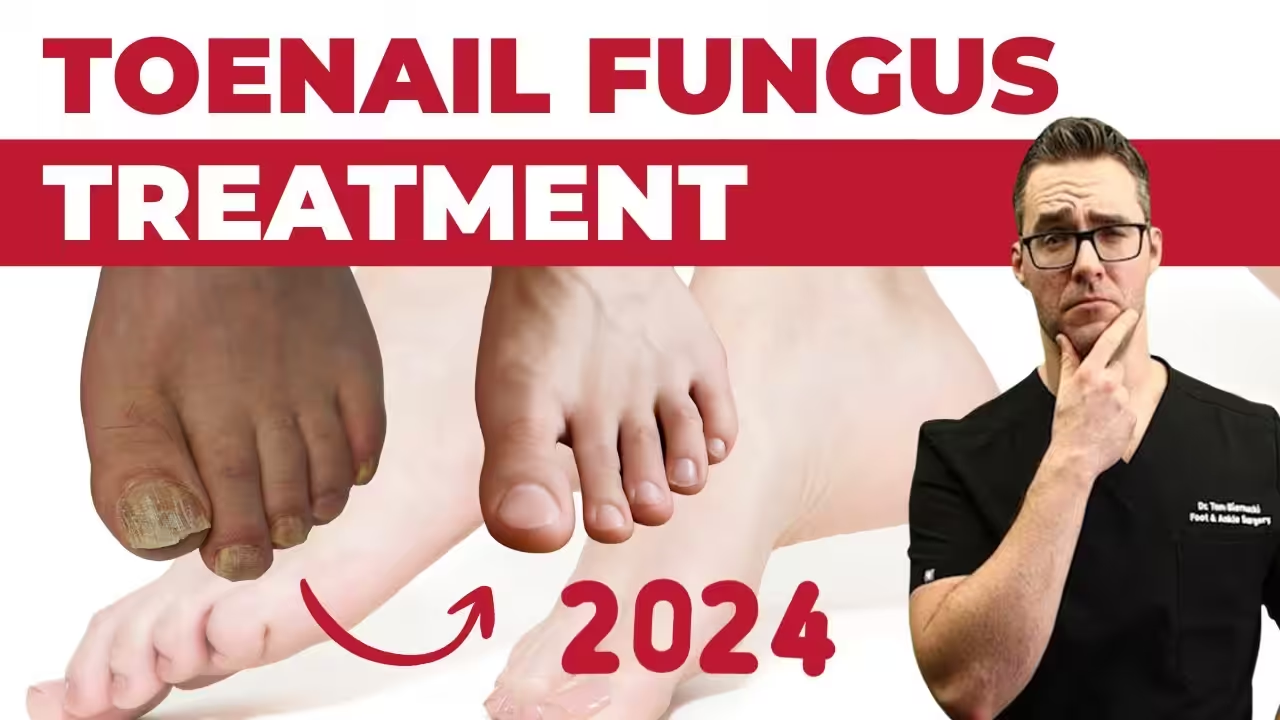

Nail psoriasis and toenail fungus look similar but have key differences — psoriasis often has pitting and oil-spot discoloration, while fungus shows yellow-brown thickening. Treatment is completely different.
You’ve come to the right podiatry team. Dr. Tom Biernacki, DPM, FACFAS — board-certified foot & ankle surgeon with 3,000+ surgeries — explains exactly what nail psoriasis vs toenail fungus means and what works. Book online or call (810) 206-1402 for same-day appointment at Howell or Bloomfield Township.
Medically reviewed by Dr. Tom Biernacki, DPM · Board-Certified Podiatric Surgeon · Last reviewed: April 2026 · Editorial Policy
The most important clinical decision with Nail Psoriasis Vs Toenail Fungus Michigan isn’t which treatment to start with — it’s identifying the correct subtype. That changes everything. Call (810) 206-1402.
Quick Answer
Nail Psoriasis vs Toenail Fungus 2026: How to Tell relates to toenail conditions — typically caused by fungal infection or trauma. Most patients improve in 6-12 months for nail regrowth with conservative care. Same-week appointments in Howell + Bloomfield Township: (810) 206-1402.
Medically reviewed by Dr. Tom Biernacki, DPM — Board-Certified Podiatric Surgeon — Balance Foot & Ankle, Howell & Bloomfield Township, MI. Last updated April 2026.
Last Updated: March 2026 | Reading Time: 8 min
This article is for informational purposes only and does not replace professional medical advice. Schedule an appointment for personalized care.
Watch: Nail Psoriasis vs. Toenail Fungus
Watch Dr. Tom explain how to tell psoriasis from fungus and the different treatment approaches:
Nail psoriasis and toenail fungus look remarkably similar — both cause discoloration, thickening, and nail changes — but they require completely different treatments. Using antifungal medication for nail psoriasis is ineffective; applying psoriasis treatments to a fungal infection can make it significantly worse. Getting the diagnosis right before treatment is critical. At Balance Foot & Ankle in Howell and Bloomfield Township, Michigan, Dr. Tom Biernacki, DPM performs nail plate culture and KOH preparation to confirm the diagnosis before recommending any treatment.
Quick Answer: Nail Psoriasis vs. Toenail Fungus
Nail psoriasis causes pitting (small pinpoint indentations), oil drop discoloration (salmon-colored spots), nail separation from the nail bed (onycholysis), and thickening — and it occurs in patients with known psoriasis elsewhere on the body. Toenail fungus causes yellow-brown to white discoloration, crumbling or thickening, and typically affects just one or two toenails at first before spreading. The only reliable way to distinguish them is a nail clipping culture or KOH microscopy in a podiatrist’s office — clinical appearance alone is frequently misleading.
Why This Distinction Matters
In our clinic, approximately 1 in 5 patients presenting with “toenail fungus” actually has nail psoriasis, nail trauma, or another non-fungal condition. This matters because oral antifungal medications like terbinafine have a 12-week treatment course with potential liver effects — taking them unnecessarily carries real risk. Conversely, patients with true fungal infections who receive psoriasis treatments (topical steroids, biologics) can experience significant worsening of the fungal burden.
Signs of Nail Psoriasis
Nail psoriasis affects up to 80% of people with skin psoriasis and 20% of people with psoriatic arthritis even without obvious skin involvement. The nail changes of psoriasis are distinct from fungal changes when you know what to look for, though overlap is common.
- Pitting — Small pinpoint depressions (like a thimble) in the nail surface; highly characteristic of psoriasis; rarely seen in fungal infections
- Oil drop sign — Salmon-pink or yellow-orange translucent spot visible through the nail plate; represents psoriatic plaque under the nail
- Onycholysis — Nail separating from the nail bed starting at the free edge; common in both conditions but the separation edge in psoriasis is often surrounded by a yellow-brown border
- Subungual hyperkeratosis — Buildup of scale under the nail; both conditions cause this, but psoriatic scale tends to be white and crumbly
- Red lunula — Red spots in the normally white crescent at the nail base; nearly pathognomonic for psoriasis
- Multiple nails simultaneously — Psoriasis often affects multiple nails from onset; fungus typically starts in one nail and spreads slowly
- Fingernails more than toenails — Psoriasis affects fingernails more commonly; fungal infections predominantly affect toenails
- Associated skin psoriasis or psoriatic arthritis — A history of psoriatic plaques elsewhere (scalp, elbows, knees) strongly supports nail psoriasis
Signs of Toenail Fungus (Onychomycosis)
Onychomycosis (toenail fungus) is caused by dermatophytes, most commonly Trichophyton rubrum. It begins at the distal (free) edge of the nail or the lateral (side) margin and progresses proximally toward the nail root over months to years.
- Yellow-brown discoloration — Begins at the tip of the nail and progresses toward the root; dull, opaque appearance
- White superficial patches — A distinct subtype (white superficial onychomycosis) causes chalky white patches on the nail surface; very common with nail polish use
- Thickening and crumbling — Nail becomes thick, brittle, and crumbles at the free edge as fungal invasion deepens
- Odor — Musty or unpleasant odor; not typically present in nail psoriasis
- One or two nails initially — Fungal infections typically begin in one nail (usually the big toe or little toe) and spread to adjacent nails over time
- No pitting — Absence of nail surface pitting is a useful distinguishing feature
- Tinea pedis coexistence — Athlete’s foot often coexists; the fungus colonizes the nail from the surrounding skin
Definitive Diagnosis: Why Clinical Appearance Is Not Enough
Studies show that clinical diagnosis of onychomycosis by appearance alone is accurate in only 50–60% of cases. The definitive tests are nail plate clipping for fungal culture (most accurate, identifies the specific organism and guides antifungal selection) and KOH (potassium hydroxide) microscopy (faster, performed in-office, detects fungal elements). These tests are essential before starting oral terbinafine — a 12-week course of an antifungal that doesn’t work on psoriasis, with a small but real risk of liver effects.
Treatment: Nail Psoriasis vs. Toenail Fungus
Once the diagnosis is confirmed, treatments differ completely.
Nail psoriasis treatment: Topical corticosteroids applied under the nail (intralesional injections in severe cases), topical calcineurin inhibitors, vitamin D analogues, and biologics (coordinated with the patient’s dermatologist or rheumatologist for psoriatic arthritis). Nail trauma must be minimized. Keeping nails short and moisturized reduces onycholysis.
Toenail fungus treatment: Topical antifungals (ciclopirox, efinaconazole) work for early-stage superficial infections only. Established onychomycosis affecting the nail bed requires oral terbinafine (12 weeks for toenails) or itraconazole. MLS laser treatment for toenail fungus is available at our office as an alternative for patients who cannot take oral antifungals. Recurrence rates are high without addressing the source (tinea pedis, shoe hygiene).
Most Common Mistake
The most common mistake: using OTC antifungal nail lacquer for months on nail psoriasis. OTC antifungals are ineffective for psoriasis and provide false reassurance while the psoriatic nail disease progresses. If you have known psoriasis and develop nail changes, see a podiatrist for confirmation before starting any treatment — even OTC treatment.
Warning Signs: When to See a Podiatrist
- Nail changes that don’t respond to 3+ months of OTC antifungal treatment
- Nail separation (lifting away from the nail bed) — both conditions can progress to complete nail loss if untreated
- Pain or tenderness under the nail
- Known psoriasis with new nail changes — needs confirmation before treatment
- Diabetic patient with any nail change — infection risk is elevated
- Spreading redness or warmth around the nail — potential secondary bacterial infection
Nail Diagnosis & Treatment in Michigan
📧 Get Dr. Tom’s Free Lab Test Guide
Discover the 5 lab tests every person over 35 should ask their doctor about — explained in plain English by a board-certified physician.
Balance Foot & Ankle offers in-office nail plate culture, KOH microscopy, and comprehensive nail care at both our Howell (4330 E Grand River Ave) and Bloomfield Township (43494 Woodward Ave #208) locations. Dr. Tom Biernacki, DPM confirms the diagnosis first — then creates a targeted treatment plan. Same-day appointments available. Book online or call (810) 206-1402 or book online.
Related Nail Guides
- Toenail Fungus Treatment Guide
- Athlete’s Foot Antifungal Comparison
- White Chalky Toenails After Nail Polish
- Porokeratosis of the Foot
- Toenails Peeling Off Guide
Dr. Tom’s Recommended Products for Toenail Fungus
📍 Located in Michigan?
Our board-certified podiatrists treat this condition at two convenient locations. Same-day appointments often available.
These are products I personally use and recommend to my patients at Balance Foot & Ankle.
- Kerasal Fungal Nail Renewal — Clinically shown to improve nail appearance in 8 weeks — exfoliates infected nail while delivering active antifungal
- Fungi-Nail Anti-Fungal Pen — Delivers undecylenic acid precisely to nail and surrounding skin — convenient pen applicator for daily treatment
- Lamisil AT Antifungal Cream 1% — Terbinafine — the same active ingredient as prescription oral Lamisil, for skin fungal infections around nails
Affiliate disclosure: As an Amazon Associate, Balance Foot & Ankle earns from qualifying purchases. We only recommend products we trust for our own patients.
Join 950,000+ Learning About Foot Health
Dr. Tom shares honest medical advice, supplement reviews, and treatment guides you won’t find anywhere else.
Subscribe on YouTube →In-Office Nail Diagnosis at Balance Foot & Ankle
Nail psoriasis and toenail fungus require completely different treatments. Misdiagnosis wastes months of ineffective therapy. At our Howell and Bloomfield Township offices, we use dermoscopic examination and nail culture to confirm diagnosis before starting treatment.
Learn more about our toenail fungus laser treatment.
Dr. Tom’s Recommended Products
- Doctor Hoy’s Natural Pain Relief Gel — Natural pain relief for sore nail beds. Arnica + camphor formula.
- PowerStep Pinnacle Insoles — Reduces nail trauma from shoe pressure.
Shop all recommended products →
Disclosure: We may earn a commission at no extra cost to you.
Related Guides
Not Sure If It’s Psoriasis or Fungus?
A quick nail evaluation gives you the definitive answer. Howell (48843) and Bloomfield Township (48302).
Expert Toenail Diagnosis in Michigan
Distinguishing nail psoriasis from toenail fungus requires professional evaluation. Our podiatrists use clinical expertise and testing to ensure accurate diagnosis and appropriate treatment.
Learn About Our Toenail Treatment Options → | Book Your Appointment | Call (810) 206-1402
Clinical References
- Rigopoulos D, Larios G, Gregoriou S, Alevizos A. “Acute and chronic paronychia.” American Family Physician. 2008;77(3):339-346.
- Gupta AK, Stec N, et al. “Nail psoriasis vs. onychomycosis: diagnosis and management.” Journal of Cutaneous Medicine and Surgery. 2021;25(6):634-642.
- Sigurgeirsson B, Baran R. “The prevalence of onychomycosis in the global population.” Journal of the European Academy of Dermatology and Venereology. 2014;28(11):1480-1491.
Insurance Accepted
BCBS · Medicare · Aetna · Cigna · United Healthcare · HAP · Priority Health · Humana · View All →
👟 Dr. Tom Also Recommends
Podiatrist Recommended Shoes 2026: Dr. Tom’s Top Picks for Every Condition
The right footwear can make or break your recovery. Dr. Tom’s complete guide to the best shoes for plantar fasciitis, flat feet, neuropathy, bunions & more — with clinical picks for every foot type.
See Dr. Tom’s Top Shoe Picks →Howell Office
4330 E Grand River Ave
Howell, MI 48843
Get Directions →
Bloomfield Township Office
43494 Woodward Ave, #208
Bloomfield Township, MI 48302
Get Directions →
Your Board-Certified Podiatrists



Ready to Get Back on Your Feet?
Same-week appointments available at both locations.
Book Your AppointmentMore Podiatrist-Recommended Fungus Essentials
Breathable Diabetic Shoe
Orthofeet Sprint — deep, breathable design reduces fungal growth.
Moisture-Wicking Sock

Watch: Tea Tree Oil Toenail Fungus Home Treatment [Doctor Cure!] — MichiganFootDoctors YouTube
OS1st FS4 — keeps feet dry, eliminating the warm-wet environment fungus needs.
Breathable Recovery Slide
HOKA Ora 3 — lets feet air out after closed-shoe exposure.
As an Amazon Associate, Balance Foot & Ankle earns from qualifying purchases. Product recommendations are based on clinical experience; prices and availability shown above update live from Amazon.

When to See a Podiatrist
Topicals only penetrate the top 30% of the nail plate — if the fungus is near the cuticle or under 50% of the nail, oral terbinafine or laser is usually required for full clearance. Balance Foot & Ankle offers in-office fungal nail diagnostics and laser treatment that reaches the nail matrix where topicals can’t. We’ll examine the nail and recommend the fastest path to clear, healthy regrowth.
Call Balance Foot & Ankle: (810) 206-1402 · Book online · Offices in Howell & Bloomfield Township
In Our Clinic
In our clinic, the toenail fungus patient has usually already tried OTC topical antifungals for months with no improvement. We confirm the diagnosis with a PAS stain or fungal culture — because about 30 % of thickened, discolored nails are actually NOT fungal (they’re trauma, nail psoriasis, or keratin granulation from polish). For true dermatophyte onychomycosis, oral terbinafine (Lamisil) remains the most effective treatment with ~70 % cure rate and manageable safety monitoring. Nail laser and topical efinaconazole are options for patients who can’t take oral medication. The nail grows back clear over 9–12 months, not overnight.
Watch: Dr. Tom explains
Podiatrist-recommended products
As an Amazon Associate, Dr. Tom earns from qualifying purchases.
Topical relief for periungual inflammation from nail psoriasis.
View on Amazon →Overall nail and skin nutrition support during treatment.
View on Amazon →Reduces nail trauma in athletes with chronic nail psoriasis.
View on Amazon →Reduces forefoot pressure that can worsen both conditions.
View on Amazon →Related resources
Ready to solve this? Book today.
Same-week appointments · Howell & Bloomfield Township · 4.9★ (1,123+ reviews)
☎ (810) 206-1402Book Online →In-Office Treatment at Balance Foot & Ankle
When conservative care isn’t enough, Dr. Tom Biernacki and the team at Balance Foot & Ankle offer advanced, same-day options — including Foot Fungus Treatment Michigan at our Howell and Bloomfield Township clinics.
Same-day appointments available. Book online or call (810) 206-1402 or book online.
Pros & Cons of Conservative Care for toenail conditions
Advantages
- ✓ Most cases resolve at home
- ✓ Same-week appointments available
- ✓ Permanent fix exists
Considerations
- ✗ Recurrence common without prevention
- ✗ Diabetics need professional care
Dr. Tom’s Recommended Products for toenail conditions
Affiliate disclosure: As an Amazon Associate, Balance Foot & Ankle earns from qualifying purchases. We only recommend products we use with patients.
Tolcylen Antifungal Solution Dr. Tom’s Pick
Best for: Most effective topical for fungus
Ready to Get Back on Your Feet?
Same-day appointments in Howell + Bloomfield Township. Most insurance accepted. Dr. Tom Biernacki, DPM & team.
Book Today — Same-Day Appointments Available
Call Now: (810) 206-1402
About Your Care Team at Balance Foot & Ankle
Dr. Tom Biernacki, DPM · Board-Certified Foot & Ankle Surgeon. Specializes in conservative-first care, minimally invasive bunion surgery, and complex reconstruction.
Dr. Carl Jay, DPM · Accepting new patients. Specializes in sports medicine, athletic injuries, and routine podiatric care.
Dr. Daria Gutkin, DPM, AACFAS · Accepting new patients. Specializes in surgical reconstruction and pediatric podiatry.
Locations: 4330 E Grand River Ave, Howell, MI 48843 · 43494 Woodward Ave Suite 208, Bloomfield Township, MI 48302
Hours: Mon–Fri 8:00 AM – 5:00 PM · (810) 206-1402
Frequently Asked Questions
Which is better for plantar fasciitis?
The shoe with more cushioning and a stronger rocker typically wins for plantar fasciitis. See full comparison for our specific verdict.
Which lasts longer?
Both options typically last 300-500 miles for runners or 9-12 months for daily walkers. Material durability varies; check our detailed comparison.
Which is better for flat feet?
Flat feet need stability or motion control. The neutral option is not ideal unless paired with a custom orthotic.
What is Toenail fungus?
Toenail fungus is a common foot/ankle condition that affects mobility and quality of life. Understanding the underlying cause is the first step in successful treatment. Our podiatrists at Balance Foot & Ankle perform a hands-on biomechanical exam, review your activity history, and use diagnostic imaging when appropriate to identify the root cause—not just treat the symptom. Many patients have been told to “rest and ice” without a deeper diagnostic workup; our approach is different.
Symptoms and warning signs
Common signs of toenail fungus include pain that worsens with activity, morning stiffness, swelling, tenderness when palpated, and difficulty bearing weight. If you experience sudden severe pain, inability to walk, visible deformity, numbness or color change, contact our office the same day or visit urgent care—these can signal a more serious injury such as a fracture, tendon rupture, or vascular compromise. Diabetics with any foot wound should seek same-day care.
Conservative treatment options
Most cases of toenail fungus respond to non-surgical care: structured rest, supportive footwear changes, custom orthotics, targeted stretching and strengthening protocols, anti-inflammatory medications when medically appropriate, and in-office procedures such as ultrasound-guided injections. We also offer advanced therapies including MLS laser therapy, EPAT/shockwave, regenerative injections, and image-guided procedures. Treatment is sequenced from least invasive to most invasive, and we explain the rationale at every step.
When is surgery considered?
Surgery is reserved for cases that fail 3-6 months of well-structured conservative care, when there is structural pathology (severe deformity, complete tear, advanced arthritis), or when imaging shows damage that will not heal without intervention. Our surgeons have performed 3,000+ foot and ankle procedures and prioritize minimally-invasive techniques whenever appropriate. We discuss recovery timelines, return-to-activity milestones, and realistic outcome expectations before any procedure is scheduled.
Recovery timeline and prevention
Recovery from toenail fungus varies based on severity and chosen treatment path. Conservative cases often improve within 4-8 weeks with consistent adherence to the protocol. Post-procedural recovery may range from a few days (in-office procedures) to several months (reconstructive surgery). Long-term prevention involves footwear assessment, activity modification, structured strengthening, and regular check-ins with your podiatrist if you have a history of recurrence. We provide written home-exercise plans and digital follow-up support.
Ready to feel better?
Same-week appointments available in Howell and Bloomfield Township, Michigan.
Book Your VisitOur podiatrists treat the underlying cause, not just the symptom. Same-week appointments at our Howell and Bloomfield Township, Michigan offices.
Ready for Expert Care?
Same-day appointments in Howell & Bloomfield Township, MI.
4.9★ | 1,123 Reviews | 3,000+ Surgeries
Or call: (810) 206-1402
Want a safer alternative to the nail salon? See our medical pedicure → — performed in-office with sterile instruments, and safe for diabetic, thick or fungal nails.

Dr. Tom Biernacki, DPM is a board-certified foot & ankle surgeon (ABFAS & ABPM) at Balance Foot & Ankle Specialists in Southeast Michigan. With over a decade of clinical experience, he specializes in heel pain, bunions, diabetic foot care, sports injuries, and minimally invasive surgery. Dr. Biernacki is a member of the APMA and ACFAS, and his patient education content on MichiganFootDoctors.com and YouTube has made him one of the most-followed foot & ankle educators on YouTube.
More questions patients ask
What is the best treatment for toenail fungus?
The most effective treatments combine approaches: oral antifungal medication (terbinafine) has a 70-80% cure rate, while laser therapy and topical treatments can be effective for milder cases. Dr. Biernacki develops individualized treatment plans based on severity, number of nails affected, and patient health history. Treatment typically takes 3-6 months due to slow nail growth. Call 810-206-1402 for evaluation.
Is toenail fungus contagious?
Yes, toenail fungus (onychomycosis) is caused by dermatophyte fungi that spread through direct contact and contaminated surfaces. High-risk environments include public pools, gym showers, and locker rooms. Prevention includes wearing shower shoes in public areas, keeping feet dry, using antifungal powder, and not sharing nail tools.
How do I know if I have toenail fungus?
Signs of toenail fungus include yellowing or whitening of the nail, thickening, crumbling edges, separation from the nail bed, and a foul odor. It can be confused with nail psoriasis, trauma, or other conditions, so professional diagnosis is recommended. Dr. Biernacki can confirm the diagnosis and rule out other conditions during an in-office evaluation.
Still have a question about coverage or cost? Book online and we will check your benefits before your visit: Book in Howell · Book in Bloomfield Township. Prefer to talk it through first? Call (810) 206-1402.