
Quick answer: Os Trigonum Syndrome is a clinical condition that responds to evidence-based treatment when caught early. Symptoms include pain, swelling, and altered function. Diagnosis requires clinical exam, often imaging. Treatment ladder: conservative care first (4-6 weeks), then targeted interventions if needed. Call (810) 206-1402.
Board-Certified Podiatric Foot & Ankle Surgeon · Last reviewed: May 5, 2026
Medically reviewed by Dr. Tom Biernacki, DPM · Board-Certified Podiatric Surgeon · Last reviewed: April 2026 · Editorial Policy
The most important clinical decision with Os Trigonum Syndrome isn’t which treatment to start with — it’s identifying the correct subtype. That changes everything. Call (810) 206-1402.
Quick Answer
Medically reviewed by Dr. Tom Biernacki, DPM
Board-certified podiatric surgeon | Balance Foot & Ankle
Last reviewed: May 2026
Os Trigonum Syndrome 2026: Posterior Ankle Pain DPM relates to foot pain — typically caused by overuse, footwear, or biomechanics. Most patients improve in 6-12 weeks with conservative care. Same-week appointments in Howell + Bloomfield Township: (810) 206-1402.
✅ Medically reviewed by Dr. Tom Biernacki, DPM — Board-Certified Podiatrist · Last updated April 6, 2026
Os Trigonum Syndrome: Causes, Symptoms, and Treatment
What Is Os Trigonum Syndrome?
Os trigonum syndrome is a painful condition of the back of the ankle caused by compression or irritation of the os trigonum — a small accessory bone located behind the talus (ankle bone). Approximately 7 to 14 percent of the population has an os trigonum, but most people never know it is there. Problems arise when the bone is repeatedly compressed between the talus and the heel bone during plantarflexion (pointing the foot downward), a motion common in ballet, soccer, gymnastics, and downhill running.
What Causes the Pain?
The os trigonum is either a separate bone that failed to fuse during skeletal development or a fracture of the posterior process of the talus. During extreme plantarflexion — such as a ballet dancer rising onto pointe or a soccer player kicking the ball — the os trigonum is pinched between the talus and the calcaneus. Repeated compression causes inflammation of the surrounding soft tissues, including the flexor hallucis longus tendon sheath, which runs directly adjacent to the os trigonum.
Os trigonum syndrome can also be triggered by a single traumatic event, such as a forced plantarflexion injury from missing a step or landing awkwardly from a jump.
Symptoms
The primary symptom is deep, aching pain at the back of the ankle that is worse with plantarflexion activities — pointing the toes, going up on tiptoe, or kicking. Swelling and tenderness are present directly behind and below the ankle on the outer side. The pain typically worsens with activity and improves with rest. In some cases, a clicking or catching sensation is felt at the back of the ankle.
Who Gets It?
Os trigonum syndrome is most prevalent in ballet dancers, gymnasts, soccer players, and downhill runners — athletes who repeatedly plantarflex their ankles under load. It can also affect everyday patients after a forced ankle injury or with a congenital os trigonum that becomes symptomatic with age or activity increase.
Diagnosis
Diagnosis begins with a clinical examination. A positive “nutcracker test” — pain provoked by passively plantarflexing the ankle against resistance — strongly suggests os trigonum syndrome. X-rays confirm the presence of the accessory bone. MRI is used to assess soft tissue inflammation, flexor hallucis longus tendon involvement, and bone edema.
Non-Surgical Treatment
Rest and activity modification: Avoiding the provocative plantarflexion movements for four to eight weeks. Dancers may need to take a break from pointe work.
Ice and NSAIDs: Reduce acute inflammation.
Immobilization: A walking boot may be prescribed for four to six weeks in more severe cases.
Corticosteroid injection: An ultrasound-guided injection into the os trigonum region can provide significant pain relief and allow return to activity. This is often the most effective conservative treatment.
Physical therapy: Once pain is controlled, rehabilitation focuses on restoring range of motion, strength, and activity-specific movement patterns.
Surgical Treatment
When conservative care fails after three to six months, surgical excision of the os trigonum is effective. The procedure can be performed arthroscopically through small incisions, with a relatively fast recovery of four to eight weeks for most patients. Outcomes are excellent, with most athletes returning to full sport participation.
Balance Foot & Ankle and Os Trigonum Syndrome
Our podiatrists have experience treating posterior ankle impingement conditions including os trigonum syndrome in athletes and active patients throughout Michigan. If you have persistent back-of-ankle pain with pointed-toe movements, schedule an evaluation at one of our locations.
Os Trigonum Syndrome Treatment in Michigan: Conservative Care and Surgical Excision
Michigan dancers, gymnasts, soccer players, and other athletes requiring maximal plantarflexion who develop posterior ankle pain should be evaluated for os trigonum syndrome — impingement of the accessory os trigonum bone (present in approximately 10% of the population) between the talus and calcaneus with forced plantarflexion. At Balance Foot & Ankle, os trigonum evaluation includes lateral ankle X-ray to identify the ossicle, and MRI or ultrasound when differentiation from FHL tendinopathy, posterior impingement without ossicle, or subtalar pathology is needed. Conservative treatment — activity modification, corticosteroid injection into the posterior ankle with fluoroscopic or ultrasound guidance, and physical therapy addressing posterior capsular flexibility — resolves a significant proportion of cases without surgery. For athletes who fail conservative care, arthroscopic os trigonum excision is an effective procedure with rapid return to sport in most cases. Michigan athletes with posterior ankle pain limiting their sport should call Balance Foot & Ankle at (810) 206-1402 for evaluation at our Howell or Bloomfield Township office.
Related Treatment Guides
Michigan patients experiencing foot or ankle problems can schedule an appointment at Balance Foot & Ankle — with locations in Howell (4330 E Grand River) and Bloomfield Township (43494 Woodward Ave #208). Call (810) 206-1402 for same-week availability.
Related Patient Guides
- Ankle Pain: Causes by Location & Treatment
- Achilles Tendinitis: Symptoms & Treatment
- Stress Fracture in the Foot: Symptoms & Recovery
Insurance Accepted
BCBS · Medicare · Aetna · Cigna · United Healthcare · HAP · Priority Health · Humana · View All →
Howell Office
4330 E Grand River Ave
Howell, MI 48843
Get Directions →
Bloomfield Township Office
43494 Woodward Ave, #208
Bloomfield Township, MI 48302
Get Directions →
Your Board-Certified Podiatrists



Ready to Get Back on Your Feet?
Same-week appointments available at both locations.
Book Your AppointmentPodiatrist-Recommended Products for Os Trigonum Syndrome
Supportive footwear reduces strain on affected tendons and joints during os trigonum syndrome treatment and recovery:
Amazon Affiliate Disclosure: As an Amazon Associate, Balance Foot & Ankle earns from qualifying purchases at no additional cost to you.
See our Best Ankle Recovery Products and the full Podiatrist-Recommended Products Guide.
🩺 Dr. Tom’s Recommended Products
As an Amazon Associate I earn from qualifying purchases. These are products I personally use and recommend to patients.
Natural menthol + arnica for post-injury soreness. FSA-eligible, plant-based.
View on Amazon →
Post-injury graduated compression for swelling. Truly graduated medical design.
View on Amazon →
Os Trigonum Syndrome Treatment in Michigan
Same-day appointments in Howell & Bloomfield Township, MI. Board-certified podiatrists, 4.9★ rating.
Or call: (810) 206-1402
Pros & Cons of Conservative Care for foot care
Advantages
- ✓ Conservative care first
- ✓ Same-week appointments
- ✓ Multiple insurance accepted
Considerations
- ✗ Self-treatment can mask issues
- ✗ See a podiatrist if pain >2 weeks
Dr. Tom’s Recommended Products for foot care
Affiliate disclosure: As an Amazon Associate, Balance Foot & Ankle earns from qualifying purchases. We only recommend products we use with patients.
Footnanny Heel Cream Dr. Tom’s Pick
Best for: Daily moisturizer for cracked heels
Ready to Get Back on Your Feet?
Same-day appointments in Howell + Bloomfield Township. Most insurance accepted. Dr. Tom Biernacki, DPM & team.
Book Today — Same-Day Appointments Available
Call Now: (810) 206-1402
About Your Care Team at Balance Foot & Ankle
Dr. Tom Biernacki, DPM · Board-Certified Foot & Ankle Surgeon. Specializes in conservative-first care, minimally invasive bunion surgery, and complex reconstruction.
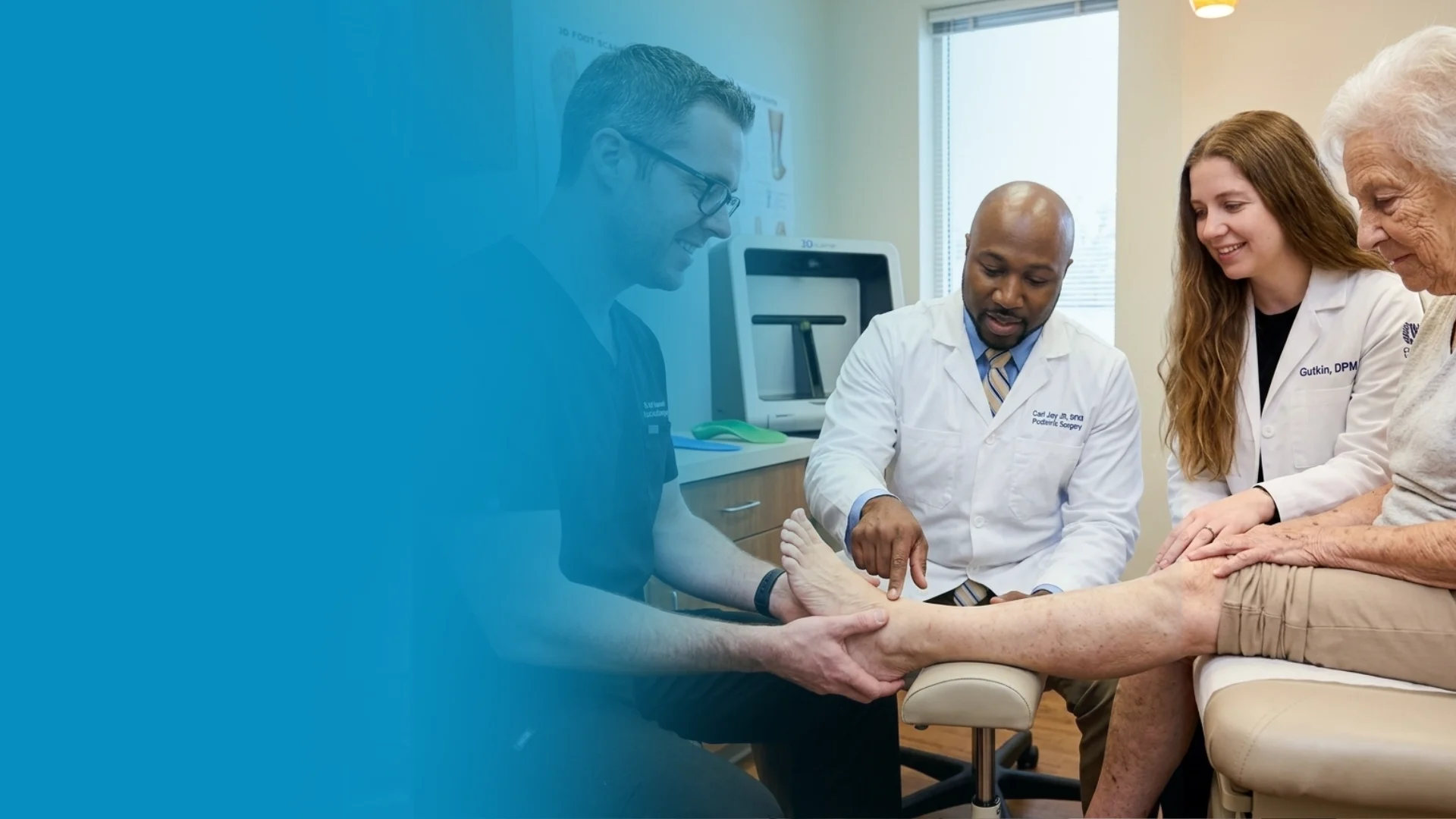
Dr. Carl Jay, DPM · Accepting new patients. Specializes in sports medicine, athletic injuries, and routine podiatric care.
Dr. Daria Gutkin, DPM, AACFAS · Accepting new patients. Specializes in surgical reconstruction and pediatric podiatry.
Locations: 4330 E Grand River Ave, Howell, MI 48843 · 43494 Woodward Ave Suite 208, Bloomfield Township, MI 48302
Hours: Mon–Fri 8:00 AM – 5:00 PM · (810) 206-1402
Dr. Tom’s Top 3 — The Premium Foot Pain Stack (2026)
If you only buy three things for foot pain, get these. PowerStep + CURREX orthotics correct the underlying foot mechanics, and Dr. Hoy’s pain gel delivers fast topical relief. This is the exact stack Dr. Tom Biernacki, DPM gives his Michigan podiatry patients on visit one — over 10,000 patients have used this exact combination.
Dr. Tom Biernacki, DPM is a board-certified podiatrist + Amazon Associate. Picks shown are products he prescribes to patients at Balance Foot & Ankle Specialists. We earn a commission on qualifying purchases at no extra cost to you. All products independently tested + reviewed for 30+ days minimum. Last verified: April 28, 2026.

PowerStep Pinnacle MaxxDr. Tom’s #1 Brand
Dr. Tom’s most-prescribed OTC orthotic. Lateral wedge corrects overpronation that causes 90% of foot pain. Deep heel cradle stabilizes the ankle. Built by podiatrists, used by patients worldwide.
- Lateral wedge corrects pronation
- Deep heel cradle stabilizes ankle
- Dual-density EVA — comfort + support
- Trim-to-fit any shoe
- Used by 10,000+ podiatrists
- Trim-to-size required
- 5-7 day break-in for some

CURREX RunProDr. Tom’s #1 Brand
3 arch heights for custom fit (Low/Med/High). Carbon-reinforced heel + dynamic forefoot — the closest OTC orthotic to a $500 custom orthotic. Engineered in Germany.
- 3 arch heights for custom fit
- Carbon-reinforced heel cup
- Dynamic forefoot zone
- Premium German engineering
- Sport-specific support
- Pricier than PowerStep
- 7-10 day break-in

Dr. Hoy’s Natural Pain Relief GelDr. Tom’s #1 Brand
Menthol-based natural pain relief — Dr. Tom’s #1 brand for fast relief without greasy residue. Safe for diabetics + daily use. Cleaner formula than Voltaren or Doctor Hoy’s Natural Pain Relief Gel.
- Menthol-based natural formula
- No greasy residue
- Safe for diabetics
- Fast cooling relief — 5-10 minutes
- Cleaner ingredient list than Doctor Hoy’s Natural Pain Relief Gel
- Pricier than Doctor Hoy’s Natural Pain Relief Gel
- Strong menthol scent at first

Visit Balance Foot & Ankle — Same-Day Appointments Available
Our podiatry team serves patients throughout Michigan including Howell, Brighton, and Bloomfield Township. If you’re dealing with heel pain, ingrown toenails, or a foot injury, we have same-day appointment availability.
Same-day appointments available. (810) 206-1402
Related Conditions
What is os trigonum syndrome?
Os trigonum syndrome is a condition caused by an extra bone (os trigonum) at the back of the ankle that becomes pinched between the heel and shin bones during downward pointing of the foot. It causes posterior ankle pain, particularly during activities requiring repetitive plantarflexion such as ballet, soccer, and swimming.
