

Quick answer: Peripheral Arterial Disease Foot Ankle Vascular Assessment Guide is a clinical condition that responds to evidence-based treatment when caught early. Symptoms include pain, swelling, and altered function. Diagnosis requires clinical exam, often imaging. Treatment ladder: conservative care first (4-6 weeks), then targeted interventions if needed. Call (810) 206-1402.
Medically reviewed by Dr. Tom Biernacki, DPM · Board-Certified Podiatric Surgeon · Last reviewed: April 2026 · Editorial Policy
The most important clinical decision with peripheral arterial disease of the foot isn’t which treatment to start with — it’s identifying the correct subtype. That changes everything. Call (810) 206-1402.
Quick Answer
Peripheral arterial disease restricts blood flow to the feet, causing cramping with walking, cold or discoloured feet, and wounds that will not heal. It is assessed with pulses and ABI and warrants vascular evaluation. Same-week appointments in Howell + Bloomfield Township: (810) 206-1402.

Medically reviewed by Dr. Tom Biernacki, DPM — Board-Certified Podiatric Surgeon — Balance Foot & Ankle, Howell & Bloomfield Township, MI. Last updated April 2026.
▶ Watch
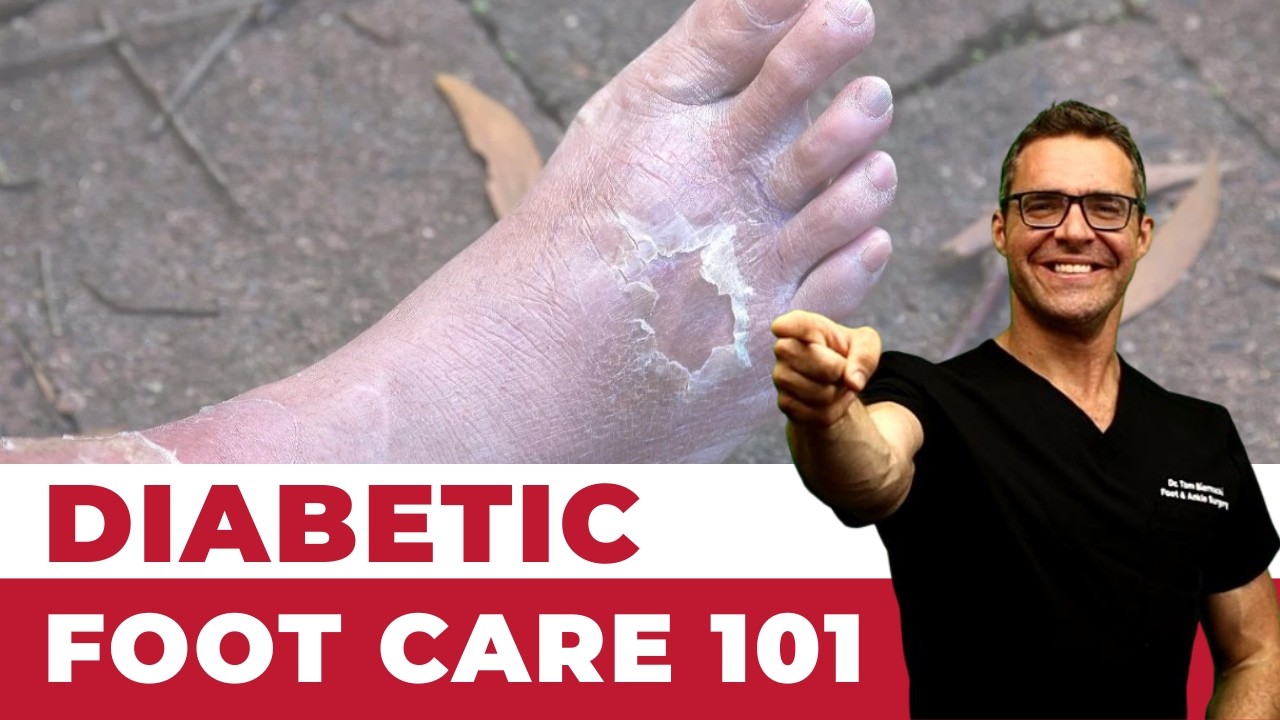
Medically Reviewed by Dr. Tom Biernacki, DPM — Board-Certified Podiatrist, Balance Foot & Ankle Specialists, Michigan. Last updated April 2026.
Peripheral arterial disease (PAD) — narrowing or blockage of arteries supplying the legs and feet — is present in 8–12 million Americans and is frequently undiagnosed. For podiatrists, PAD recognition is critical because compromised circulation transforms minor foot problems into limb-threatening emergencies. A scratch that becomes an ulcer, a nail trim that becomes a wound, or a tight shoe that causes ischemic necrosis — the stakes are fundamentally different in a foot with inadequate blood supply.
Pathophysiology: Atherosclerosis and the Lower Extremity
PAD in the lower extremity results from atherosclerosis — plaque accumulation in arterial walls causing progressive luminal narrowing and reduced oxygen delivery to muscle and skin. Risk factors mirror those for coronary artery disease: diabetes (4× increased PAD risk), smoking (3–5× increased risk), hypertension, hyperlipidemia, and advancing age. Diabetics develop PAD at younger ages and in more distal vessel distributions — the tibial and peroneal arteries below the knee — than non-diabetics, making wound healing particularly challenging.
The spectrum of PAD ranges from asymptomatic (50% of cases) to claudication (reproducible calf cramping with walking, relieved by rest) to rest pain (continuous ischemic pain at night or with limb elevation) to critical limb ischemia (tissue loss — ulceration or gangrene). The foot is the first anatomic site to exhibit critical ischemia because it is farthest from the heart and most dependent on collateral circulation.
Vascular Assessment in the Podiatric Examination
Pedal pulse palpation — dorsalis pedis and posterior tibial — is the screening examination. Absent pulses prompt further evaluation. Ankle-brachial index (ABI) is the diagnostic standard: ABI below 0.90 indicates PAD; 0.70–0.90 is mild; 0.50–0.69 is moderate; below 0.50 indicates severe PAD with rest pain risk. ABI above 1.40 indicates non-compressible calcified vessels (common in diabetics) and requires toe-brachial index (TBI) measurement; TBI below 0.70 indicates PAD.
Skin and subcutaneous tissue findings of chronic ischemia: hairlessness, cool skin, dependent rubor (erythema worsening with leg dependency), pallor on elevation, thin parchment-like skin, and poor nail quality. Transcutaneous oxygen pressure (TcPO2) below 30 mmHg predicts wound healing failure; above 40 mmHg supports conservative wound management.
Wound Healing in the Presence of PAD
Tissue oxygen delivery is the rate-limiting factor in wound healing. A diabetic foot ulcer with adequate circulation (TBI >0.70, TcPO2 >40 mmHg) will heal with standard wound care and offloading. The same wound in a foot with critical ischemia will not heal regardless of the sophistication of wound dressings used — and may progress to amputation. Accurate vascular assessment before prescribing wound care protocols is therefore essential rather than optional.
Indications for urgent vascular surgery consultation: non-healing ulcer with ABI <0.50, rest pain, tissue loss with ankle pressure <50 mmHg or toe pressure <30 mmHg. Revascularization — endovascular (angioplasty and stenting) or surgical bypass — restores perfusion and is a prerequisite for wound healing in many PAD patients.
Podiatric Management of the PAD Foot
Patients with known PAD require careful preventive foot care: daily inspection for blisters, pressure areas, and wounds; moisture management; professional nail care (self-trimming risks); protective footwear with pressure redistribution; and absolute avoidance of sharp instruments, corn removers, and heat. Smoking cessation is the single most effective intervention for slowing PAD progression. Antiplatelet therapy (aspirin, clopidogrel) reduces cardiovascular events in PAD patients.
At Balance Foot & Ankle, Dr. Biernacki performs comprehensive vascular assessment including ABI measurement and TcPO2 at both Bloomfield Township and Howell offices, and coordinates urgent vascular surgery referrals when critical ischemia is identified. PAD screening should be routine in any diabetic or cardiovascular-risk patient — call (810) 206-1402 to schedule a vascular assessment.
Schedule Your Appointment at Balance Foot & Ankle
Board-certified podiatric physician and surgeon serving Southeast Michigan from Bloomfield Township and Howell.
📞 (810) 206-1402 |
📧 Get Dr. Tom’s Free Lab Test Guide
Discover the 5 lab tests every person over 35 should ask their doctor about — explained in plain English by a board-certified physician.
📍 Located in Michigan?
Our board-certified podiatrists treat this condition at two convenient locations. Same-day appointments often available.

Insurance Accepted
BCBS · Medicare · Aetna · Cigna · United Healthcare · HAP · Priority Health · Humana · View All →
Howell Office
4330 E Grand River Ave
Howell, MI 48843
Get Directions →
Bloomfield Township Office
43494 Woodward Ave, #208
Bloomfield Township, MI 48302
Get Directions →
Your Board-Certified Podiatrists



Ready to Get Back on Your Feet?
Same-week appointments available at both locations.
Book Your AppointmentMore Podiatrist-Recommended Foot Health Essentials
Hoka Clifton 10


Max-cushion everyday shoe — podiatrist favorite for walking and running.

OOFOS Recovery Slide

Impact-absorbing recovery sandal — wear after long days on your feet.
As an Amazon Associate, Balance Foot & Ankle earns from qualifying purchases. Product recommendations are based on clinical experience; prices and availability shown above update live from Amazon.

When to See a Podiatrist
If foot or ankle pain has been bothering you for more than a few weeks, home care alone may not be enough. Balance Foot & Ankle offers same-week appointments at our Howell and Bloomfield Township clinics — no referral needed in most cases. Bring your current shoes and a short list of symptoms and we’ll build you a treatment plan in one visit.
Call Balance Foot & Ankle: (810) 206-1402 · Book online · Offices in Howell & Bloomfield Township
In-Office Treatment at Balance Foot & Ankle
When conservative care isn’t enough, Dr. Tom Biernacki and the team at Balance Foot & Ankle offer advanced, same-day options — including Peripheral Arterial Disease (PAD) Foot Care in Michigan at our Howell and Bloomfield Township clinics.
Same-day appointments available. Call (810) 206-1402 or book online.
Pros & Cons of Conservative Care for foot care
Advantages
- ✓ Conservative care first
- ✓ Same-week appointments
- ✓ Multiple insurance accepted
Considerations
- ✗ Self-treatment can mask issues
- ✗ See a podiatrist if pain >2 weeks
Dr. Tom’s Recommended Products for foot care
Affiliate disclosure: As an Amazon Associate, Balance Foot & Ankle earns from qualifying purchases. We only recommend products we use with patients.
Footnanny Heel Cream Dr. Tom’s Pick
Best for: Daily moisturizer for cracked heels
Ready to Get Back on Your Feet?
Same-day appointments in Howell + Bloomfield Township. Most insurance accepted. Dr. Tom Biernacki, DPM & team.
Book Today — Same-Day Appointments Available
Call Now: (810) 206-1402
About Your Care Team at Balance Foot & Ankle
Dr. Tom Biernacki, DPM · Board-Certified Foot & Ankle Surgeon. Specializes in conservative-first care, minimally invasive bunion surgery, and complex reconstruction.
Dr. Carl Jay, DPM · Accepting new patients. Specializes in sports medicine, athletic injuries, and routine podiatric care.
Dr. Daria Gutkin, DPM, AACFAS · Accepting new patients. Specializes in surgical reconstruction and pediatric podiatry.
Locations: 4330 E Grand River Ave, Howell, MI 48843 · 43494 Woodward Ave Suite 208, Bloomfield Township, MI 48302
Hours: Mon–Fri 8:00 AM – 5:00 PM · (810) 206-1402
In-Office Treatment at Balance Foot & Ankle
If home treatment isn’t providing relief for your foot health, our podiatry team at Balance Foot & Ankle can help with same-day evaluations and advanced in-office care.
Same-day appointments available. (810) 206-1402
Doctor Hoy’s Natural Pain Relief Gel
Natural topical pain relief I use in our clinic. Arnica + camphor formula — apply directly to the area 3–4x daily. ($20–25)
Shop Doctor Hoy’s →Frequently Asked Questions
What causes this condition?
Causes include mechanical stress, biomechanical imbalance, age-related changes, and sometimes systemic disease. Our clinical exam plus imaging identifies the specific driver.
Can it go away on its own?
Mild cases sometimes resolve with rest and supportive footwear. Persistent symptoms past 4-6 weeks rarely resolve without active treatment.
Is surgery required?
Most patients resolve with non-surgical care. Surgery is reserved for refractory cases or structural deformity.
Get Expert Care at Balance Foot & Ankle
Same-week appointments at our Howell and Bloomfield Township offices. Board-certified podiatric surgeons. Most insurance accepted.
Ready for Expert Care?
Same-day appointments in Howell & Bloomfield Township, MI.
4.9★ | 1,123 Reviews | 3,000+ Surgeries
Or call: (810) 206-1402

Dr. Tom Biernacki, DPM is a board-certified foot & ankle surgeon (ABFAS & ABPM) at Balance Foot & Ankle Specialists in Southeast Michigan. With over a decade of clinical experience, he specializes in heel pain, bunions, diabetic foot care, sports injuries, and minimally invasive surgery. Dr. Biernacki is a member of the APMA and ACFAS, and his patient education content on MichiganFootDoctors.com and YouTube has made him one of the most-followed foot & ankle educators on YouTube.