
Quick answer: Peripheral Artery Disease Foot Symptoms Diagnosis Limb Preservation is a clinical condition that responds to evidence-based treatment when caught early. Symptoms include pain, swelling, and altered function. Diagnosis requires clinical exam, often imaging. Treatment ladder: conservative care first (4-6 weeks), then targeted interventions if needed. Call (810) 206-1402.
Medically Reviewed by Dr. Tom Biernacki, DPM — Board-Certified Podiatrist, Balance Foot & Ankle Specialists, Michigan. Last updated April 2026.
⚡ Quick Answer
Peripheral artery disease (PAD) reduces blood flow to your feet through atherosclerotic narrowing of the leg arteries. Symptoms include leg cramping during walking (claudication), cold feet, slow-healing wounds, and absent pulses. PAD affects approximately 8.5 million Americans and is a leading cause of non-traumatic lower limb amputation. Early detection through ankle-brachial index testing, combined with risk factor modification and proper foot care, can prevent devastating complications and preserve your mobility.

🩺 Medically Reviewed by Dr. Tom Biernacki, DPM
Board-certified podiatrist at Balance Foot & Ankle, PLLC · Fellowship-trained in reconstructive foot and ankle surgery · Last updated April 2026
In This Article
- What Is Peripheral Artery Disease?
- Causes and Risk Factors
- How PAD Affects Your Feet
- Diagnosis and Vascular Testing
- Medical and Surgical Treatment Options
- Daily Foot Care for PAD Patients
- Best Foot Care Products for PAD
- Watch: Vascular Foot Care
- Frequently Asked Questions
- Medical Sources
- Book Your Vascular Foot Assessment
Affiliate disclosure: This article contains affiliate links to products we genuinely recommend. As an Amazon Associate, we earn from qualifying purchases at no extra cost to you.
What Is Peripheral Artery Disease?
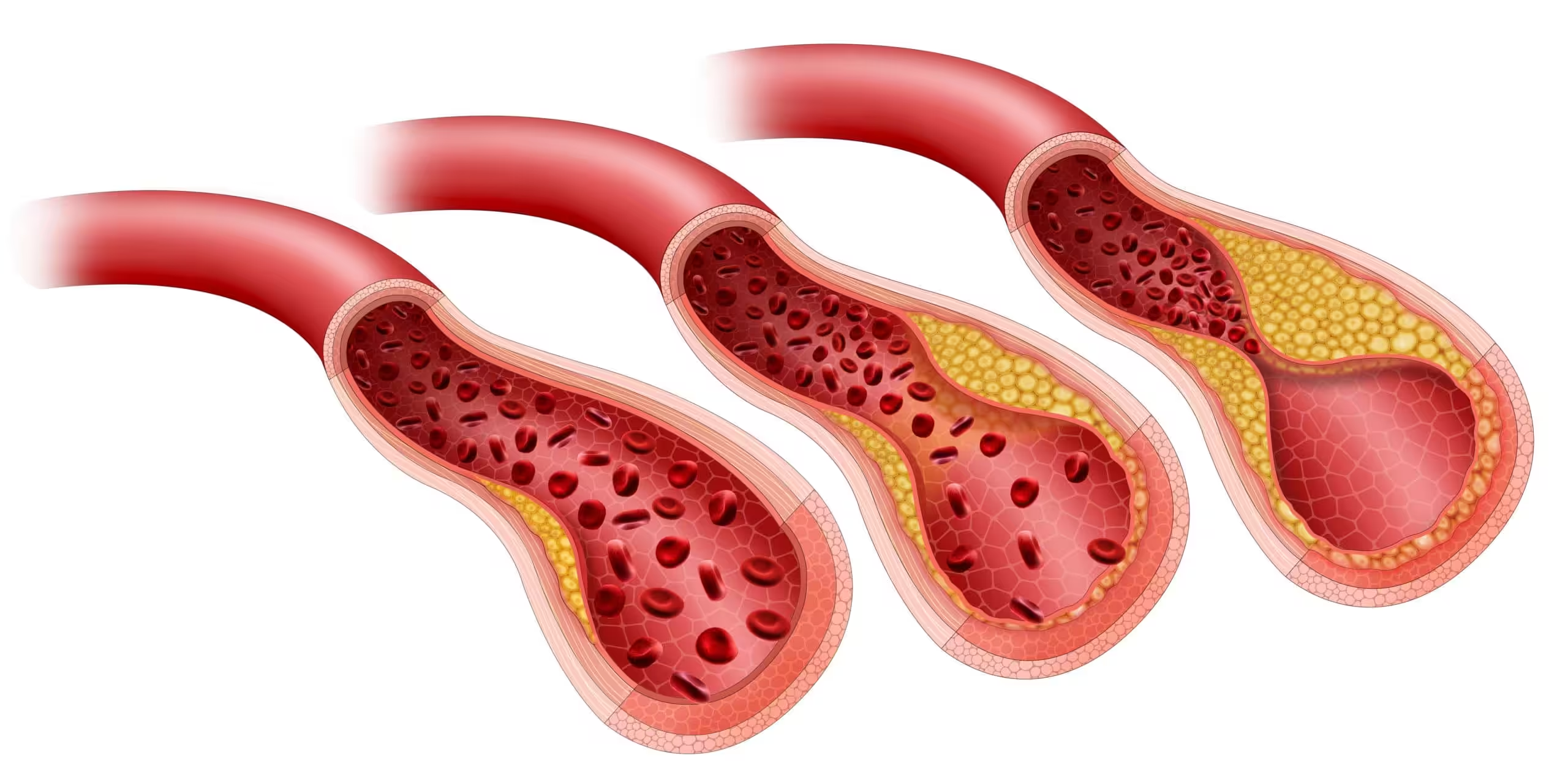
Peripheral artery disease is a chronic circulatory condition in which atherosclerotic plaque—deposits of cholesterol, calcium, and inflammatory cells—gradually narrows the arteries that supply blood to your legs and feet. As these arteries become increasingly blocked, the tissues downstream receive less oxygen and fewer nutrients. The legs and feet are particularly vulnerable because they are the farthest point from the heart, and the arterial system must work against gravity to deliver blood to the toes and then return it back to the heart.
PAD is far more than a circulation problem—it is a systemic marker of cardiovascular disease. Patients diagnosed with PAD have a 4-to-6-fold increased risk of heart attack and stroke because the same atherosclerotic process affecting the leg arteries is almost certainly occurring in the coronary and carotid arteries as well. Understanding PAD as a whole-body disease—not just a foot problem—is essential for proper management and long-term survival.
Causes and Risk Factors for Peripheral Artery Disease
The primary cause of PAD is atherosclerosis—the progressive buildup of fatty plaque within arterial walls. This process begins with endothelial damage from chronic exposure to risk factors and evolves over decades. The major modifiable risk factors include smoking (the single strongest risk factor, increasing PAD risk 2-to-4-fold), diabetes mellitus (which accelerates atherosclerosis and impairs wound healing), hypertension (which damages arterial walls and promotes plaque formation), hyperlipidemia (elevated LDL cholesterol provides the raw material for plaque), and physical inactivity (which reduces the development of collateral blood vessels).
Non-modifiable risk factors include advancing age (prevalence rises sharply after age 50), male sex (though the gap narrows after menopause), African American ethnicity (2-to-3-fold higher prevalence than Caucasians), and family history of cardiovascular disease. The combination of diabetes and smoking creates a particularly dangerous combination—diabetic smokers have an amputation risk up to 30 times higher than non-diabetic non-smokers. Chronic kidney disease is increasingly recognized as an independent risk factor, as the uremic environment accelerates vascular calcification.
How Peripheral Artery Disease Affects Your Feet
PAD manifests in the feet through a predictable progression of symptoms that clinicians classify using the Fontaine staging system or the Rutherford classification. Understanding where you fall on this spectrum helps guide treatment decisions and urgency.
Intermittent Claudication (Early-Stage PAD)
The hallmark early symptom of PAD is intermittent claudication—cramping, aching, or fatigue in the calf muscles that develops during walking and resolves completely within 2–5 minutes of rest. This occurs because the narrowed arteries cannot deliver enough oxygen-rich blood to meet the increased metabolic demands of exercise. The distance you can walk before symptoms start (claudication distance) provides a functional measure of disease severity. Buttock and thigh claudication suggests aortoiliac disease, while calf claudication indicates femoropopliteal disease.
Rest Pain (Advanced PAD)
As PAD progresses, pain begins occurring at rest—particularly at night when you lie flat and lose the gravitational assist that helps blood reach your feet while standing. Patients often describe a burning or aching pain in the toes and forefoot that wakes them from sleep. A classic finding is that hanging the foot over the edge of the bed or standing briefly provides temporary relief as gravity helps restore some blood flow. Rest pain signals critical limb ischemia and requires urgent vascular evaluation.
Tissue Loss and Non-Healing Wounds
The most severe manifestation of PAD in the foot is tissue loss—ulcers that fail to heal or gangrene (tissue death) affecting the toes or forefoot. Ischemic ulcers typically appear on the tips of toes, between toes, or over bony prominences where pressure is concentrated. Unlike diabetic neuropathic ulcers that occur on the plantar surface, ischemic ulcers tend to be painful (unless neuropathy coexists) with pale or necrotic wound beds and minimal bleeding. Even minor injuries—a toenail trim gone wrong, a small blister from shoes—can become catastrophic wounds in a PAD-affected foot because the compromised blood supply cannot deliver the immune cells and nutrients needed for healing.
Diagnosis and Vascular Testing for PAD
Diagnosis begins with a thorough clinical examination. Your podiatrist will assess pedal pulses (dorsalis pedis and posterior tibial arteries), skin temperature and color, hair growth patterns (loss of hair on toes and dorsal foot suggests chronic ischemia), nail changes (thickened, brittle, slow-growing nails), and capillary refill time. A dependent rubor test—elevating the leg for 60 seconds then placing it in a dependent position—reveals the severity of ischemia through the degree and speed of color return.
Ankle-Brachial Index (ABI)
The ABI is the primary non-invasive screening test for PAD. It compares the systolic blood pressure at the ankle to the systolic pressure in the arm. A normal ABI is 1.0–1.3. Values of 0.91–0.99 are borderline, 0.41–0.90 indicate mild-to-moderate PAD, and 0.40 or below indicates severe disease with critical limb ischemia. Importantly, diabetic patients with calcified (non-compressible) arteries may have falsely elevated ABIs above 1.3—in these cases, toe-brachial index (TBI) using photoplethysmography provides a more accurate assessment because the small digital arteries are less susceptible to medial calcification.
Advanced Vascular Imaging
When intervention is being considered, advanced imaging maps the exact location and severity of arterial blockages. Duplex ultrasound combines B-mode imaging with Doppler flow analysis to visualize plaque and measure flow velocity. CT angiography (CTA) provides detailed 3D reconstructions of the arterial tree from the aorta to the pedal vessels. Magnetic resonance angiography (MRA) offers similar detail without radiation exposure. Conventional catheter angiography remains the gold standard and allows simultaneous diagnostic and therapeutic intervention—a blocked artery can be opened with a balloon and stent during the same procedure.
Medical and Surgical Treatment for Peripheral Artery Disease
Risk Factor Modification
The foundation of PAD treatment is aggressive risk factor modification. Smoking cessation is the single most impactful intervention—continuing to smoke after a PAD diagnosis doubles the risk of amputation and triples cardiovascular mortality. Statin therapy reduces LDL cholesterol and stabilizes existing plaque to prevent rupture. Antiplatelet therapy (aspirin or clopidogrel) reduces the risk of heart attack and stroke. Blood pressure control to below 130/80 mmHg and hemoglobin A1c management below 7% in diabetic patients are essential targets. Cilostazol (Pletal) is an FDA-approved medication specifically for claudication that improves walking distance by 40–60% through vasodilation and antiplatelet effects.
Supervised Exercise Therapy
Structured exercise programs are as effective as endovascular intervention for claudication and are recommended as first-line therapy. The optimal protocol involves walking until near-maximal claudication pain, resting until symptoms resolve, then walking again—repeated for 30–60 minutes, three times per week, for at least 12 weeks. This approach stimulates the growth of collateral blood vessels (arteriogenesis) that bypass the blockages, improves muscle oxygen extraction efficiency, and enhances endothelial function. Supervised programs consistently outperform unsupervised home exercise because trained oversight ensures adequate exercise intensity.
Endovascular and Surgical Revascularization
When lifestyle modifications and medications fail to adequately control symptoms—or when critical limb ischemia threatens the limb—revascularization restores blood flow through the blocked arteries. Endovascular techniques include balloon angioplasty (inflating a catheter-mounted balloon to compress plaque against the arterial wall), stent placement (deploying a metallic scaffold to hold the artery open), atherectomy (mechanically removing plaque), and drug-coated balloon therapy (delivering anti-proliferative medication directly to the arterial wall to prevent restenosis). For complex or long-segment disease, surgical bypass grafting creates a new conduit—typically using the patient’s own saphenous vein—to route blood around the blockage. The choice between endovascular and surgical approaches depends on lesion location, length, severity, and the patient’s overall surgical risk.
Daily Foot Care for PAD Patients
When blood flow to your feet is compromised, even minor foot problems can become limb-threatening emergencies. Daily preventive foot care is not optional—it is a medical necessity that directly reduces your amputation risk. Inspect your feet thoroughly every day, checking between toes and on the soles for cuts, blisters, cracks, redness, or color changes. Wash feet daily with lukewarm (not hot) water and mild soap, then dry completely—especially between the toes. Apply a quality moisturizer to prevent skin cracking but avoid the web spaces between toes where moisture can promote fungal infection.
Never walk barefoot—even indoors—because a minor puncture wound or stubbed toe can become a non-healing ulcer. Wear properly fitted shoes with adequate depth and width, checking inside shoes for foreign objects before putting them on. Never use heating pads, hot water bottles, or electric blankets on your feet—compromised circulation reduces your ability to feel temperature extremes, increasing burn risk. Have toenails trimmed by your podiatrist rather than attempting self-care, especially if you have thickened or dystrophic nails. Schedule professional foot examinations every 2–3 months for monitoring.
Best Foot Care Products for PAD Patients
Patients with peripheral artery disease need foot care products that protect fragile skin, reduce pressure on vulnerable areas, and support circulation. These are the products our clinic recommends specifically for patients managing compromised blood flow to their feet.
Affiliate disclosure: The following section contains affiliate links to products we genuinely recommend. As an Amazon Associate, we earn from qualifying purchases at no extra cost to you. Every product listed is one we use in clinical practice or recommend to our own patients.
PowerStep Pinnacle Arch-Supporting Insoles
PowerStep Pinnacle insoles serve a critical protective role for PAD patients by redistributing plantar pressure away from high-risk areas. The semi-rigid arch support and deep heel cup prevent excessive forefoot loading that can cause calluses—and calluses in a PAD foot can break down into ulcers that refuse to heal. The double-layer cushioning system absorbs shock during the supervised walking programs that are essential for building collateral circulation. For PAD patients, every step generates both therapeutic benefit (exercise-induced arteriogenesis) and mechanical risk (repetitive pressure on compromised tissue)—PowerStep insoles maximize the benefit while minimizing the risk.
Doctor Hoy’s Natural Pain Relief Gel
Doctor Hoy’s Natural Pain Relief Gel provides safe topical relief for the calf cramping and forefoot discomfort that PAD causes. Unlike NSAIDs that carry cardiovascular risks in PAD patients, Doctor Hoy’s arnica and menthol formula delivers local anti-inflammatory and analgesic effects without systemic absorption. Apply to the calves before your supervised exercise sessions to help manage claudication-related discomfort, and to the forefoot after activity to address ischemic pain. The natural formulation is particularly important for PAD patients because many are on anticoagulant or antiplatelet therapy, and Doctor Hoy’s does not interact with these medications.
DASS Graduated Compression Socks
Important note: Compression socks must be used with caution in PAD patients. DASS graduated compression socks at the 15–20 mmHg level may be appropriate for PAD patients with concurrent venous insufficiency, but only after clearance from your vascular specialist. Higher compression levels (20–30 mmHg or above) can further restrict already-compromised arterial blood flow and are generally contraindicated in moderate-to-severe PAD. When your vascular team confirms adequate arterial inflow (ABI above 0.5), mild graduated compression can help manage the venous congestion and dependent edema that often coexist with arterial disease. The moisture-wicking fabric protects fragile skin from maceration.
🩺 The Complete PAD Foot Protection Kit
For comprehensive PAD foot care, combine: PowerStep Pinnacle insoles for pressure redistribution and exercise support, Doctor Hoy’s Pain Relief Gel for claudication and forefoot pain, and DASS compression socks (with vascular clearance) for venous support. This three-product system protects compromised tissues while supporting the exercise therapy that builds life-saving collateral circulation.
🔑 Most Common Mistake
Assuming cold feet are “just aging.” Chronically cold toes, slow-growing toenails, and calf pain during walks are not normal signs of getting older—they are warning signs of PAD. Many patients dismiss these symptoms for years while the disease silently progresses from treatable claudication to critical limb ischemia. If your feet are consistently colder than expected, your leg cramps during walking, or a small wound is not healing within 2 weeks, request an ankle-brachial index test. Early detection saves limbs.
⚠️ Warning Signs — See Your Podiatrist or Vascular Specialist Immediately
- New or worsening rest pain in toes or forefoot, especially at night
- Any wound, cut, or blister on the foot that has not improved within 1–2 weeks
- Skin color changes: blue, purple, black, or mottled discoloration of toes
- Sudden onset of severe leg or foot pain with a cold, pale limb (acute limb ischemia — emergency)
- Numbness that progresses beyond the toes to involve the foot or ankle
Watch: Understanding Vascular Foot Health
More Podiatrist-Recommended Foot Health Essentials
Hoka Clifton 10


Max-cushion everyday shoe — podiatrist favorite for walking and running.

OOFOS Recovery Slide

Impact-absorbing recovery sandal — wear after long days on your feet.
As an Amazon Associate, Balance Foot & Ankle earns from qualifying purchases. Product recommendations are based on clinical experience; prices and availability shown above update live from Amazon.
When to See a Podiatrist
If foot or ankle pain has been bothering you for more than a few weeks, home care alone may not be enough. Balance Foot & Ankle offers same-week appointments at our Howell and Bloomfield Township clinics — no referral needed in most cases. Bring your current shoes and a short list of symptoms and we’ll build you a treatment plan in one visit.
Call Balance Foot & Ankle: (810) 206-1402 · Book online · Offices in Howell & Bloomfield Township
Frequently Asked Questions About PAD and the Foot
What are the first signs of peripheral artery disease in the feet?
The earliest signs are often subtle and easily dismissed. Intermittent claudication—cramping or fatigue in the calves during walking that resolves with rest—is the classic first symptom. Other early indicators include feet that feel consistently cold compared to the rest of your body, loss of hair on the toes and lower legs, toenails that grow noticeably slower or become thickened and brittle, and skin that appears shiny or thin with a reddish-blue hue when the foot hangs down. A diminished or absent pulse on top of the foot (dorsalis pedis) or behind the inner ankle (posterior tibial) during examination is a definitive early finding.
How is PAD different from neuropathy?
PAD and peripheral neuropathy are distinct conditions that frequently coexist, especially in diabetic patients. PAD is a vascular disease—blocked arteries reduce blood flow, causing cramping with activity, cold feet, and poor wound healing. Neuropathy is a nerve disease—damaged nerves cause numbness, tingling, burning sensations, and loss of protective sensation. The combination is particularly dangerous because neuropathy prevents you from feeling injuries while PAD prevents those injuries from healing. Your podiatrist uses different tests for each: the ankle-brachial index screens for PAD, while monofilament testing and nerve conduction studies evaluate neuropathy.
Can walking actually improve PAD symptoms?
Yes—supervised exercise therapy is one of the most effective treatments for claudication and is recommended as first-line therapy alongside medication. Walking stimulates arteriogenesis, the growth of small collateral blood vessels that create natural bypasses around the blocked arteries. The protocol involves walking until you experience moderate-to-strong claudication pain, resting 1–3 minutes until it subsides, then walking again. Studies consistently show that structured walking programs performed 3 times per week for 12 or more weeks can increase pain-free walking distance by 100–150%. The key is consistency and adequate intensity—gentle strolling does not provide sufficient stimulus for collateral vessel development.
Why do podiatrists check foot pulses at every visit?
Checking pedal pulses—at the dorsalis pedis artery on top of your foot and the posterior tibial artery behind your inner ankle—is the quickest clinical screening for adequate blood flow. A strong, easily palpable pulse generally indicates good arterial supply, while a weak or absent pulse raises immediate concern for PAD and triggers further vascular testing. For podiatrists, knowing the vascular status of your foot directly impacts every treatment decision: whether a wound will heal, whether surgery is safe, what level of activity to recommend, and how aggressively to intervene with a foot problem. Pulse assessment takes seconds but provides invaluable information for your safety.
What happens if PAD is left untreated?
Untreated PAD follows a progressive course. Claudication worsens as plaque continues to accumulate, reducing walking distance and quality of life. Eventually, blood flow becomes insufficient to maintain tissue health at rest (critical limb ischemia), causing constant foot pain, non-healing ulcers, and gangrene. Without revascularization, critical limb ischemia carries a 1-year amputation rate of approximately 25% and a 1-year mortality rate of 25%. Even patients who avoid amputation face dramatically increased risk of heart attack and stroke. Early treatment—starting with risk factor modification, exercise therapy, and medications—can halt or even partially reverse the disease and significantly improve outcomes.
In-Office Treatment at Balance Foot & Ankle
If home treatment isn’t providing relief for your foot and ankle conditions, our podiatry team at Balance Foot & Ankle can help with same-day evaluations and advanced in-office care.
Same-day appointments available. (810) 206-1402
Medical Sources and References
- Gerhard-Herman MD, Gornik HL, Barrett C, et al. “2016 AHA/ACC guideline on the management of patients with lower extremity peripheral artery disease.” Circulation. 2017;135(12):e726-e779.
- Aboyans V, Ricco JB, Bartelink MEL, et al. “2017 ESC guidelines on the diagnosis and treatment of peripheral arterial diseases.” European Heart Journal. 2018;39(9):763-816.
- Criqui MH, Matsushita K, Aboyans V, et al. “Lower extremity peripheral artery disease: contemporary epidemiology, management gaps, and future directions.” Circulation. 2021;144(11):e171-e191.
- McDermott MM, Spring B, Tian L, et al. “Effect of low-intensity vs high-intensity home-based walking exercise on walk distance in patients with peripheral artery disease.” JAMA. 2021;325(13):1266-1276.
- Armstrong DG, Boulton AJM, Bus SA. “Diabetic foot ulcers and their recurrence.” New England Journal of Medicine. 2017;376(24):2367-2375.
Comprehensive Vascular Foot Assessment in Southeast Michigan
Peripheral artery disease threatens more than your comfort—it threatens your limbs and your life. At Balance Foot & Ankle, Dr. Biernacki performs thorough vascular assessments including pulse evaluation, ankle-brachial index testing, and coordination with vascular specialists when intervention is needed. Whether you have claudication symptoms, a wound that will not heal, or risk factors that concern you, early evaluation is the most important step you can take to protect your feet and your cardiovascular health.
Related Foot Conditions and Resources
- Podiatrist-Recommended Foot Care Products 2026
- Diabetic Foot Care Guide
- Wound Care for Feet
- Peripheral Neuropathy Treatment
- How Custom Orthotics Are Made
- Foot Changes During Pregnancy
Insurance Accepted
BCBS · Medicare · Aetna · Cigna · United Healthcare · HAP · Priority Health · Humana · View All →
Howell Office
4330 E Grand River Ave
Howell, MI 48843
Get Directions →
Bloomfield Township Office
43494 Woodward Ave, Suite 208
Bloomfield Township, MI 48302
Get Directions →
Your Board-Certified Podiatrists



Ready to Get Back on Your Feet?
Same-week appointments available at both locations.
Book Your Appointment
Dr. Tom Biernacki, DPM is a board-certified foot & ankle surgeon (ABFAS & ABPM) at Balance Foot & Ankle Specialists in Southeast Michigan. With over a decade of clinical experience, he specializes in heel pain, bunions, diabetic foot care, sports injuries, and minimally invasive surgery. Dr. Biernacki is a member of the APMA and ACFAS, and his patient education content on MichiganFootDoctors.com and YouTube has made him one of the most-followed foot & ankle educators on YouTube.