
Last Updated: March 2026 | Reading Time: 7 min
This article is for informational purposes only and does not replace professional medical advice. Schedule an appointment for personalized care.
Watch: Best Insoles & Orthotics for Plantar Fasciitis
Watch Dr. Tom review the most effective insoles and orthotics for plantar fasciitis relief:
Book your plantar fasciitis evaluation → | (810) 206-1402
Plantar Fasciitis — Complete Guide to Causes, Treatment, and Recovery
Plantar Fasciitis — The Complete Guide
Plantar fasciitis is the most common cause of heel pain and one of the most prevalent musculoskeletal conditions in adults, affecting approximately 2 million Americans annually. Despite its frequency, it remains widely misunderstood — patients expect quick resolution, underestimate the importance of biomechanical factors, and often pursue treatments in the wrong sequence. A thorough understanding of the condition, its true causes, and the evidence hierarchy for its treatment leads to faster recovery and lower recurrence rates.
Anatomy and Pathophysiology
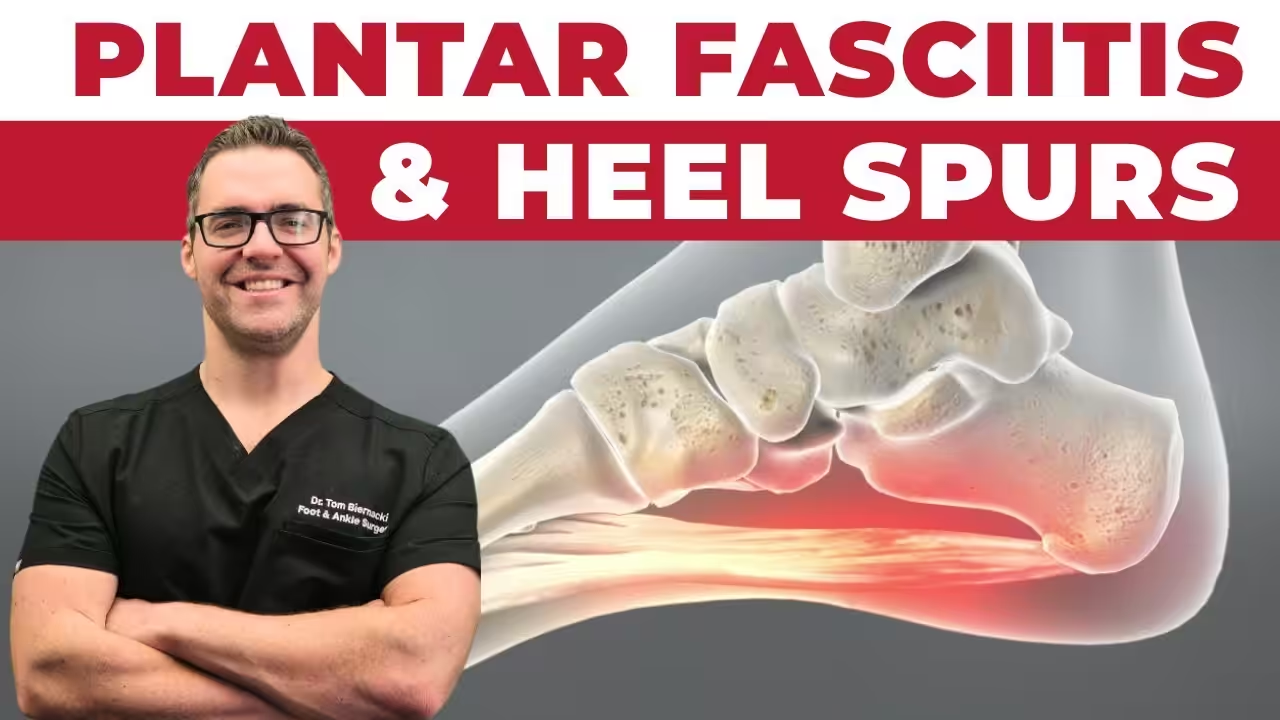
The plantar fascia is a thick band of connective tissue — technically a aponeurosis rather than a true fascia — originating at the medial tuberosity of the calcaneus (heel bone) and inserting at the base of the proximal phalanges of all five toes. Its primary function is to support the medial longitudinal arch through the windlass mechanism: as the toes dorsiflex during toe-off, the plantar fascia tightens around the first metatarsal head, raising the arch and converting the foot into a rigid lever for push-off. This mechanism places enormous repetitive tensile stress at the calcaneal insertion with every step.
Risk Factors — Who Gets Plantar Fasciitis and Why
The strongest risk factors for plantar fasciitis are: reduced ankle dorsiflexion (tight calf-Achilles complex limiting the ankle’s upward range); obesity or sudden weight gain increasing cumulative fascial load; sudden increase in activity volume or intensity; prolonged standing on hard surfaces; high arch (cavus) or significantly flat (planus) foot type creating abnormal fascial tension; and middle age (40 to 60 years), when connective tissue healing capacity declines. Notably, running is a risk factor primarily through training load errors — not through running itself being inherently harmful to the fascia.
The Evidence-Based Treatment Ladder
Treatment should follow an evidence-based sequence. First-line interventions (succeed in 80-90% of patients within 6-12 months): daily plantar fascia stretching, calf and Achilles stretching, supportive footwear, quality arch-support insoles, activity modification, and weight management. Second-line interventions when first-line fails at 6-8 weeks: night splints, physical therapy with specific loading exercises, cortisone injection, and custom orthotics. Third-line interventions for recalcitrant cases: extracorporeal shockwave therapy (ESWT), PRP injection, and as a last resort after all conservative measures — surgical plantar fascia release.
The Role of Cortisone — Benefits and Risks
Corticosteroid injections provide rapid pain relief for plantar fasciitis — typically 50-80% pain reduction within 1 to 3 weeks. However, their long-term outcomes are equivalent to conservative care, and repeated injections carry real risks: plantar fascia rupture (estimated 2-10% risk with repeated injections), fat pad atrophy that permanently reduces heel cushioning, and skin depigmentation at the injection site. A single injection is often appropriate for severe pain limiting activity while conservative treatments take effect. Repeated injections as a primary long-term strategy are not recommended by current clinical guidelines.
Shockwave Therapy — When Surgery Might Be Avoided
Extracorporeal shockwave therapy (ESWT) applies high-energy acoustic waves to the plantar fascia insertion, stimulating a healing response in chronically degenerated tissue. Multiple randomized trials show ESWT produces meaningful pain reduction in 60-80% of patients with chronic plantar fasciitis that has failed conservative care for 3-6 months — and its results persist at long-term follow-up unlike cortisone. It is now widely considered the appropriate next step before surgical consideration. Sessions are performed in-office without anesthesia (focused ESWT) or with local anesthesia (high-energy ESWT), typically 3-5 treatments spaced weekly.
Preventing Recurrence
Plantar fasciitis recurrence is common — estimated at 20-30% within the first year of recovery. Prevention requires maintaining the calf flexibility and foot strength gains made during treatment, continuing with supportive footwear and insoles indefinitely, returning to activity gradually rather than immediately resuming pre-injury training volumes, maintaining healthy body weight, and performing the plantar fascia stretch before the first morning steps permanently as a daily habit. Patients who discontinue all treatment measures the moment pain resolves predictably see recurrence within weeks to months of returning to full activity.
Plantar Fasciitis in Non-Athletic Adults: The Workplace and Lifestyle Factors
While plantar fasciitis is commonly associated with runners and athletes, the majority of patients treated at podiatry practices are non-athletes whose fasciitis is driven by occupational and lifestyle factors. Jobs requiring prolonged standing on hard surfaces — healthcare workers, teachers, retail employees, factory workers, and warehouse staff — create the continuous compressive and tensile loading on the plantar fascia that predisposes to microtearing at the calcaneal insertion. The combination of hard flooring, inadequate footwear, and continuous weight-bearing without recovery periods replicates the biomechanical overload of high mileage running in terms of cumulative fascia strain.
Weight gain is a major independent risk factor: each additional 10 pounds of body weight increases plantar fascia insertion force by approximately 30–40 pounds during walking due to the mechanical lever arm involved. Patients who develop plantar fasciitis after a period of significant weight gain frequently achieve rapid symptom improvement with even modest weight reduction combined with orthotics. Pregnancy-associated plantar fasciitis — driven by both weight change and the ligamentous laxity from relaxin — typically resolves postpartum but may persist if foot mechanics changes established during pregnancy are not addressed. At Balance Foot & Ankle in Howell and Bloomfield Hills, we provide comprehensive plantar fasciitis evaluation regardless of activity level, addressing the specific drivers of each patient’s condition rather than applying a one-size-fits-all protocol.
Michigan patients can access expert heel pain treatment in Michigan at Balance Foot & Ankle. Our board-certified podiatrists serve Howell (4330 E Grand River) and Bloomfield Hills (43494 Woodward Ave #208). Schedule an appointment online or call (810) 206-1402 for same-week availability.
Related Resources
For deeper dives into specific aspects of plantar fasciitis management, see our dedicated guides:
- Plantar Fasciitis Causes — Understand the exact biomechanical and lifestyle factors driving your heel pain, including tight calves, flat feet, overuse, and footwear issues.
- Plantar Fasciitis Exercises — The 6 best podiatrist-recommended stretches and strengthening moves, with a daily exercise schedule to follow at home.
- How to Tape Your Foot for Plantar Fasciitis — Step-by-step taping guide for immediate heel pain relief during activity.
- Night Splints for Plantar Fasciitis — How night splints prevent the overnight fascia tightening that causes painful first-morning steps.
More from Our Plantar Fasciitis Resource Hub: Plantar Fasciitis Symptoms → | Heel Pain Stretches (6-Step Morning Protocol) → | Exercises for Plantar Fasciitis → | What Causes Plantar Fasciitis? → | Plantar Fasciitis Recovery Time →
Related Guides
Plantar Fasciitis Treatment Howell → | Bloomfield Hills → | Heel Pain Treatment → | Custom Orthotics →
Medical References & Sources
- American Podiatric Medical Association — Plantar Fasciitis
- PubMed Research — Plantar Fasciitis Treatment Studies
- American Orthopaedic Foot & Ankle Society — Heel Pain
Dr. Tom’s Recommended Products for Plantar Fasciitis & Heel Pain
📍 Located in Michigan?
Our board-certified podiatrists treat this condition at two convenient locations. Same-day appointments often available.
These are products I personally use and recommend to my patients at Balance Foot & Ankle.
- PowerStep Pinnacle Insoles — Firm arch support with dual-layer cushioning — the #1 podiatrist-recommended OTC insole for plantar fasciitis
- PowerStep Pinnacle Insoles — High-profile biomechanical stabilizer cap controls overpronation and reduces fascia tension at the insertion
- Brooks Adrenaline GTS 24 — GuidRails support system with 12mm heel drop — the most-prescribed running shoe for plantar fasciitis in our practice
📧 Get Dr. Tom’s Free Lab Test Guide
Discover the 5 lab tests every person over 35 should ask their doctor about — explained in plain English by a board-certified physician.
Affiliate disclosure: As an Amazon Associate, Balance Foot & Ankle earns from qualifying purchases. We only recommend products we trust for our own patients.
Join 950,000+ Learning About Foot Health
Dr. Tom shares honest medical advice, supplement reviews, and treatment guides you won’t find anywhere else.
Subscribe on YouTube →In-Office Plantar Fasciitis Treatment at Balance Foot & Ankle
When 6-12 weeks of home treatment fails to resolve your heel pain, it’s time for professional intervention. At our Howell and Bloomfield Hills offices, Dr. Tom Biernacki offers a complete plantar fasciitis treatment ladder: biomechanical gait analysis, custom 3D orthotics, MLS laser therapy (reduces inflammation at the cellular level), ultrasound-guided corticosteroid injections, shockwave therapy, and minimally invasive surgery for refractory cases. Over 90% of patients achieve resolution without surgery.
Learn about our plantar fasciitis treatment →
Heel pain not improving? (810) 206-1402 | Book your appointment →
Dr. Tom’s Complete Plantar Fasciitis Kit
PowerStep Pinnacle Insoles — The OTC orthotic I recommend most in our clinic. Medical-grade arch support at a fraction of custom orthotic cost. Start here before considering custom orthotics. Not ideal for: severe flat feet (use PowerStep Maxx instead).
Doctor Hoy’s Natural Pain Relief Gel — Natural topical pain relief I use in our clinic. Arnica + camphor formula — apply to heel and arch 3-4x daily, especially before first morning steps. Not ideal for: open blisters or cracked heels.
CURREX RunPro Insoles — The insole I put in my own running shoes. Dynamic flex zones adapt to your gait in real time. Best for runners with PF. Not ideal for: dress shoes (use PowerStep slim instead).
Strassburg Sock — Maintains gentle dorsiflexion stretch overnight, preventing the fascia from tightening. Significantly reduces first-step morning pain within 1-2 weeks.
Affiliate disclosure: We may earn a commission on purchases. This does not affect our clinical recommendations.
Browse all PF products → Shop Now | Foundation Wellness Products
Related Plantar Fasciitis Guides
- Plantar Fasciitis Causes
- Plantar Fasciitis Stretches
- Plantar Fasciitis Secrets
- Best Shoes for Plantar Fasciitis 2026
- Best Insoles for Plantar Fasciitis
- How to Tape for Plantar Fasciitis
- Best Plantar Fasciitis Tools
- Plantar Fasciitis Hub
Frequently Asked Questions About Plantar Fasciitis
How long does plantar fasciitis take to heal?
Most cases resolve within 6-12 weeks with consistent home treatment (stretching, arch support, activity modification). Approximately 10% of cases become chronic, lasting 6-12 months. Early intervention significantly shortens recovery — patients who seek treatment within 4 weeks of onset heal fastest. Factors that delay healing: continuing high-impact activity, unsupportive footwear, and excess body weight.
What is the fastest way to cure plantar fasciitis?
There is no overnight cure, but the fastest protocol Dr. Tom recommends: heat the heel 3-5 minutes before first steps (not ice), gentle calf stretches before standing, PowerStep Pinnacle insoles in all shoes, Doctor Hoy’s gel on the heel 3-4x daily, and Strassburg Sock at night. Give this 6 weeks. If not 50% improved, get professional evaluation — you may have Baxter’s neuropathy or calcaneal stress fracture mimicking PF. Call (810) 206-1402.
Should I see a podiatrist for plantar fasciitis?
See a podiatrist if heel pain persists beyond 6 weeks of home treatment, prevents you from walking or exercising, is severe in the morning AND at night (red flag for stress fracture), or is accompanied by swelling, bruising, or numbness. At Balance Foot & Ankle, we offer same-day plantar fasciitis evaluations in Howell and Bloomfield Hills.

Dr. Tom Biernacki, DPM is a board-qualified podiatrist and foot & ankle surgeon serving Southeast Michigan at Balance Foot & Ankle Specialists. A Michigan native, Dr. Biernacki earned his undergraduate degree from Michigan State University and his Doctor of Podiatric Medicine (DPM) from Kent State University College of Podiatric Medicine. He completed a three-year comprehensive surgical residency in foot and ankle surgery in the Detroit metro area.
Dr. Biernacki specializes in the treatment of heel pain, bunions, hammertoes, diabetic foot care, sports injuries, flatfoot correction, and minimally invasive foot surgery. He is dedicated to providing evidence-based, patient-centered care that helps people of all ages stay active and pain-free.
He sees patients at multiple convenient Metro Detroit locations and is committed to community education through the MichiganFootDoctors.com resource library. Dr. Biernacki is a member of the American Podiatric Medical Association (APMA) and the Michigan Podiatric Medical Association (MPMA).