

Quick answer: Plantar Plate Repair Second Mtp Arthrodesis Crossover Toe is a common foot/ankle topic that affects many patients. The 2026 evidence-based approach combines proper diagnosis, conservative-first treatment, and escalation only when needed. We treat this regularly at our Howell and Bloomfield Hills practices. Call (810) 206-1402.
Medically reviewed by Dr. Tom Biernacki, DPM
▶ Watch
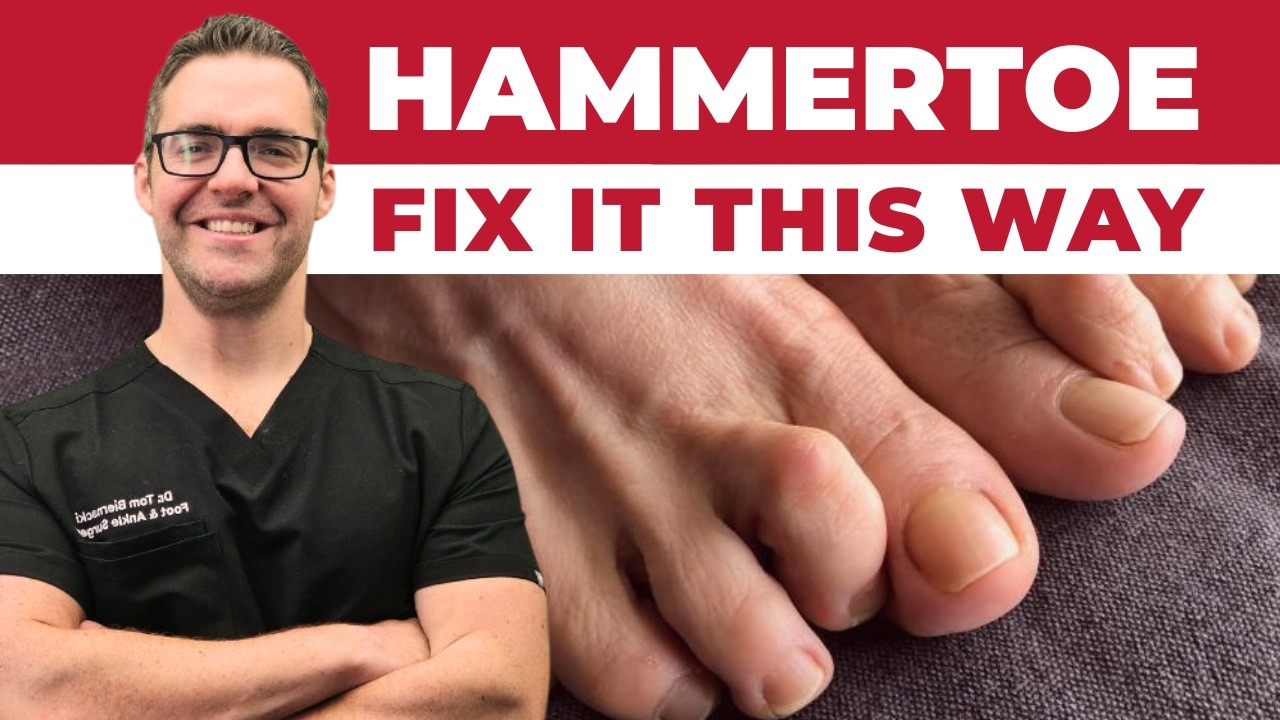
Board-certified podiatric surgeon | Balance Foot & Ankle
Last reviewed: April 2026

The most important clinical decision with Plantar Plate Repair Second Mtp Arthrodesis Crossover Toe isn’t which treatment to start with — it’s which subtype or underlying cause you actually have. That distinction changes everything. Call us: (810) 206-1402
The plantar plate: A Critical Forefoot Stabilizer
The plantar plate is a thick fibrocartilaginous structure on the plantar (bottom) surface of the lesser metatarsophalangeal joints, most commonly discussed in the context of the second MTP joint. It serves as the primary restraint against dorsal displacement and sagittal plane instability of the lesser toes, functioning analogously to the volar plate of the finger MTP joints. When the plantar plate is disrupted — through chronic overload, direct tear, or progressive attenuation from a long second metatarsal that concentrates load at the joint — the second toe loses its primary stabilizing structure and begins to drift. The result is crossover toe deformity: the second toe deviates medially and dorsally, eventually crossing over the hallux.
Why Crossover Toe Develops
Crossover toe deformity at the second MTP joint develops when the plantar plate tears at its metatarsal attachment — typically the distal insertion — due to repetitive overload in a patient with a long second metatarsal relative to the first, underlying hallux valgus that pushes the second toe laterally before it crosses back, or flat feet with overpronation that transfers excessive forefoot load to the second ray. The condition often begins with predislocation syndrome — pain, swelling, and a feeling of instability at the second MTP joint — that progresses over months to years if not treated to frank dorsal dislocation and rigid crossover deformity.
When to see a podiatrist about crossover toe:
- Second toe visibly drifting toward or crossing over the big toe
- Pain under the ball of the foot that worsens with walking or standing
- Swelling at the base of the second toe that does not resolve
- Feeling of instability or the toe buckling when pushing off during walking
Surgical Repair Technique
Plantar plate repair is performed through a dorsal approach at the second MTP joint. After releasing the contracted dorsal capsule and reducing the subluxed toe, the plantar plate is accessed directly through the MTP joint space and repaired using small suture anchors that re-attach the torn plate to its metatarsal origin. The repair restores the plantar restraint that prevents dorsal subluxation. Weil osteotomy of the second metatarsal is performed concurrently in virtually all cases, shortening the metatarsal to decompress the joint and allow the repair to heal without being stressed by a long metatarsal driving continued joint overload. Proximal interphalangeal joint arthroplasty or arthrodesis addresses co-existing hammertoe deformity at the same session. K-wire fixation holds the toe in a neutral position during healing for 4 to 6 weeks.
Recovery and Outcomes

Patients are weight bearing in a surgical shoe immediately with forefoot offloading. Swelling resolves over 8 to 12 weeks. Active range of motion exercises of the repaired MTP joint begin at 2 to 4 weeks to prevent stiffness. Published outcomes from plantar plate repair with concurrent Weil osteotomy show significant improvements in pain and functional scores, with correction of the crossover deformity maintained in the majority of patients at medium-term follow-up. Floating toe — incomplete ground contact of the repaired digit — can occur and is minimized by preserving appropriate Weil osteotomy geometry during surgery. Our surgical team at Balance Foot & Ankle discusses these details thoroughly at the preoperative consultation.
Ready to Relieve Your Foot Pain?
Board-certified podiatrists serving Southeast Michigan. Same-week appointments available.
Recommended Products
Browse products → | FW collection →
Related Guides
(810) 206-1402
|
Book Appointment →
Howell, MI 48843 | Bloomfield Township, MI 48302
Recommended Products
(810) 206-1402
|
Book →
Recovery support: The Powerstep Pinnacle orthotic insole with built-in metatarsal support redistributes forefoot pressure after plantar plate surgery and helps prevent recurrence.
More Podiatrist-Recommended Sports Essentials
Hoka Clifton 10

Max-cushion everyday shoe — podiatrist favorite for walking and running.

OOFOS Recovery Slide

Impact-absorbing recovery sandal — wear after long days on your feet.
As an Amazon Associate, Balance Foot & Ankle earns from qualifying purchases. Product recommendations are based on clinical experience; prices and availability shown above update live from Amazon.

When to See a Podiatrist
Athletic injuries heal faster with sport-specific rehab protocols — not generic rest and ice. Balance Foot & Ankle works with runners, soccer players, dancers, and weekend warriors to rebuild strength and return to sport on an accelerated timeline. Don’t let a foot injury keep you sidelined longer than necessary.
Call Balance Foot & Ankle: (810) 206-1402 · Book online · Offices in Howell & Bloomfield Hills
Frequently Asked Questions
What causes a plantar plate tear?
Plantar plate tears typically result from chronic overloading of the second MTP joint. Bunions that shift weight to the second toe, high-heeled shoes, and repetitive push-off activities like running all increase stress on the plantar plate. Over time, the ligament weakens and tears, allowing the toe to drift and cross over.
Can crossover toe be fixed without surgery?
Early-stage crossover toe with mild drift may respond to taping, metatarsal pads, stiff-soled shoes, and custom orthotics. Once the toe has crossed over the big toe or the plantar plate is completely torn, surgical repair is typically necessary to restore alignment and prevent worsening deformity.
How long is recovery after plantar plate repair?
Most patients wear a surgical shoe or boot for 4 to 6 weeks. A temporary pin holds the toe in corrected position for 3 to 4 weeks. Swelling gradually resolves over 3 to 6 months. Return to regular shoes and full activity typically occurs by 8 to 12 weeks.
Differential Diagnosis: What Else Could It Be?
Not every case of plantar plate tear is straightforward. In our clinic we routinely rule out three look-alike conditions before confirming the diagnosis. If your symptoms don’t match the classic presentation, one of these may explain the pain — which is why physical exam matters more than self-diagnosis.
| Condition | How It Differs |
|---|---|
| Metatarsalgia | Pain at metatarsal head without instability; negative drawer test at MTP. |
| Morton’s neuroma | Burning into 3rd-4th toes with positive Mulder’s click; not between 2nd-3rd. |
| Stress fracture (metatarsal) | Point tenderness on shaft, not joint; callus on follow-up imaging. |
Red Flags — When to See a Podiatrist Now
Seek same-day evaluation at Balance Foot & Ankle if you notice any of the following:
- 2nd toe visibly drifting sideways or floating above the ground
- Pain failing to improve after 6 weeks of metatarsal padding
- Progressive deformity at the 2nd MTP
- Patient diabetic with forefoot pain and deformity
Call (810) 206-1402 or request an appointment. Our Howell and Bloomfield Hills offices reserve same-day slots for urgent foot and ankle issues.
In Our Clinic: What We See
Clinical perspective from Dr. Tom Biernacki, DPM — Balance Foot & Ankle, Howell & Bloomfield Hills, MI:
Plantar plate tear is one of the most missed diagnoses in forefoot pain. Patients come in saying ‘metatarsalgia’ but in our clinic we check the drawer test at the 2nd MTP — if the toe lifts easily, the plantar plate is compromised. Early stage responds beautifully to a metatarsal pad placed BEHIND (not under) the metatarsal head, a stiff-soled shoe, and taping the toe down. Ignored plantar plate tears progress to a ‘floating toe’ and eventual crossover toe deformity. Dr. Biernacki emphasizes early intervention — a tear caught in month 2 rarely needs surgery; caught in year 2, it almost always does.
The Bottom Line
Crossover toe is a progressive deformity that worsens without treatment, but plantar plate repair and MTP arthrodesis offer reliable surgical correction when conservative care is no longer effective. In our clinic in Howell and Bloomfield Hills, Michigan, we catch plantar plate tears early with clinical exam and ultrasound, and we repair them before the deformity becomes rigid.
🦶 Dr. Tom’s Recommended Products
These are the at-home products I recommend most often to patients at Balance Foot & Ankle in Howell, MI.
The OTC orthotic I recommend most in our clinic. Medical-grade arch support at a fraction of custom orthotic cost.
View on Amazon →
Natural topical pain relief I use in our clinic. Arnica + menthol formula — apply directly to the area 3-4x daily. FSA-eligible.
View on Amazon →
FTC Disclosure: As an Amazon Associate and Foundation Wellness affiliate, we earn from qualifying purchases. This never affects our clinical recommendations.
Second Toe Crossing Over?
Same-day appointments available in Howell & Bloomfield Hills, MI
4.9★ | 1,123 Reviews | 3,000+ Surgeries
Or call: (810) 206-1402
Insurance Accepted
BCBS · Medicare · Aetna · Cigna · United Healthcare · HAP · Priority Health · Humana · View All →
Howell Office
4330 E Grand River Ave
Howell, MI 48843
Get Directions →
Bloomfield Hills Office
43494 Woodward Ave, Suite 208
Bloomfield Township, MI 48302
Get Directions →
Your Board-Certified Podiatrists



Ready to Get Back on Your Feet?
Same-week appointments available at both locations.
Book Your AppointmentIn-Office Treatment at Balance Foot & Ankle
If home treatment isn’t providing relief for your plantar fasciitis, our podiatry team at Balance Foot & Ankle can help with same-day evaluations and advanced in-office care.
Same-day appointments available. (810) 206-1402
Learn about our plantar fasciitis treatment → | Book online →

Dr. Tom Biernacki, DPM is a board-certified foot & ankle surgeon (ABFAS & ABPM) at Balance Foot & Ankle Specialists in Southeast Michigan. With over a decade of clinical experience, he specializes in heel pain, bunions, diabetic foot care, sports injuries, and minimally invasive surgery. Dr. Biernacki is a member of the APMA and ACFAS, and his patient education content on MichiganFootDoctors.com and YouTube has made him one of the most-followed foot & ankle educators on YouTube.