
Quick answer: Recovering From Foot Surgery What To Expect Tips is a common foot/ankle topic that affects many patients. The 2026 evidence-based approach combines proper diagnosis, conservative-first treatment, and escalation only when needed. We treat this regularly at our Howell and Bloomfield Township practices. Call (810) 206-1402.
Medically reviewed by Dr. Tom Biernacki, DPM — Board-Certified Podiatric Surgeon — Balance Foot & Ankle, Howell & Bloomfield Township, MI. Last updated April 2026.
▶ Watch

Medically reviewed by Dr. Tom Biernacki, DPM | Board-certified podiatrist | 3,000+ surgeries performed
Last updated: April 2, 2026
The most important clinical decision with Recovering From Foot Surgery What To Expect Tips isn't which treatment to start with — it's which subtype or underlying cause you actually have. Our podiatrists regularly see patients who've been treated for months for the wrong diagnosis. The correct identification changes the entire treatment path. Call (810) 206-1402 — Dr. Tom evaluates this condition at both Howell and Bloomfield Township locations.
The First 72 Hours After Foot Surgery
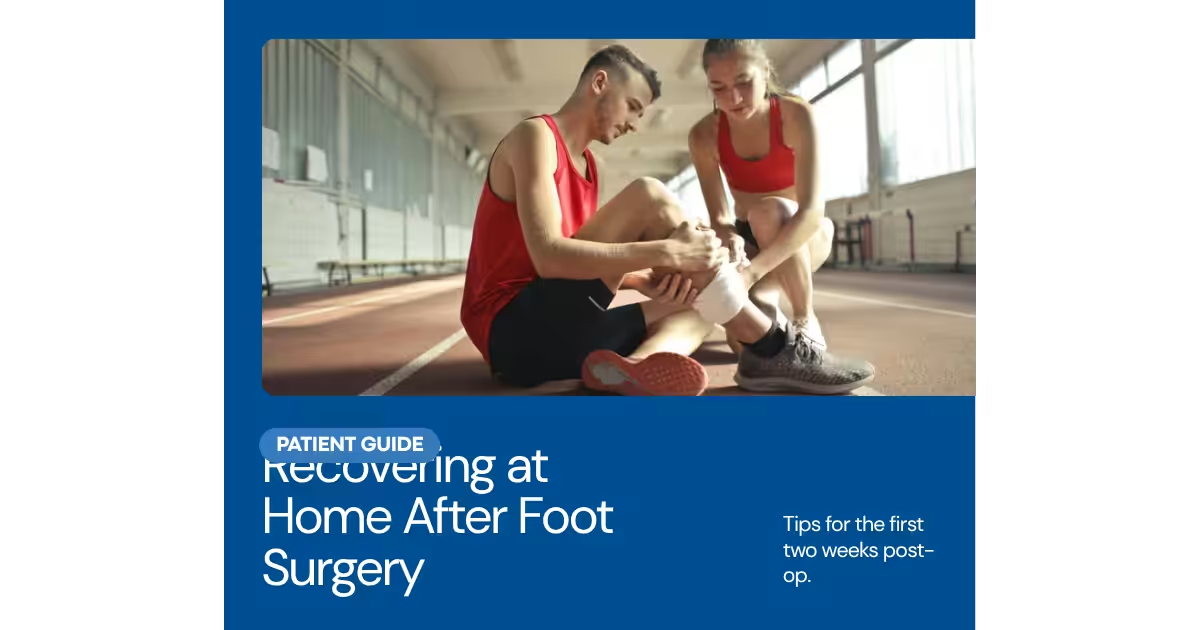
The initial 72 hours following foot surgery are the most critical period for controlling swelling and establishing the foundation for successful healing. Elevation is paramount — the surgical foot must be positioned above heart level as much as possible during this window. Use two to three pillows under the calf (not the heel, which creates pressure) to maintain proper elevation while reclining. Ideally, patients should remain reclined with the foot elevated for 50-55 minutes of every hour during the first three days.
Ice therapy applied around (not directly on) the surgical dressing helps control inflammation and pain. Apply ice packs for 20 minutes on, 40 minutes off, cycling continuously during waking hours for the first 48-72 hours. Wrap ice packs in a thin towel to prevent moisture from compromising the surgical dressing. Never place ice directly on exposed skin or surgical sites.
Pain management during this period typically involves a combination of prescribed medications and non-pharmacological strategies. Take prescribed pain medications on schedule during the first 24-48 hours rather than waiting for pain to become severe — it is significantly harder to regain control of pain once it escalates. Transition to over-the-counter options as soon as comfort allows, following your surgeon’s specific guidance.
Understanding Weight-Bearing Restrictions
Weight-bearing instructions vary dramatically depending on the specific procedure performed and must be followed precisely. Non-weight-bearing (NWB) means absolutely zero weight on the surgical foot — patients use crutches, a knee scooter, or wheelchair to keep the foot completely unloaded. Partial weight bearing (PWB) allows limited loading, typically toe-touch only, progressing as healing is confirmed radiographically.
Dr. Tom Biernacki provides specific weight-bearing protocols for each patient based on the procedure, bone quality, fixation strength, and individual healing factors. Common timelines include 2-4 weeks NWB for hammertoe and bunion corrections, 6-8 weeks NWB for ankle fusions and fracture repairs, and 8-12 weeks for Charcot reconstructions. Premature weight bearing is the single most common cause of surgical complication — hardware failure, malunion, and wound breakdown.
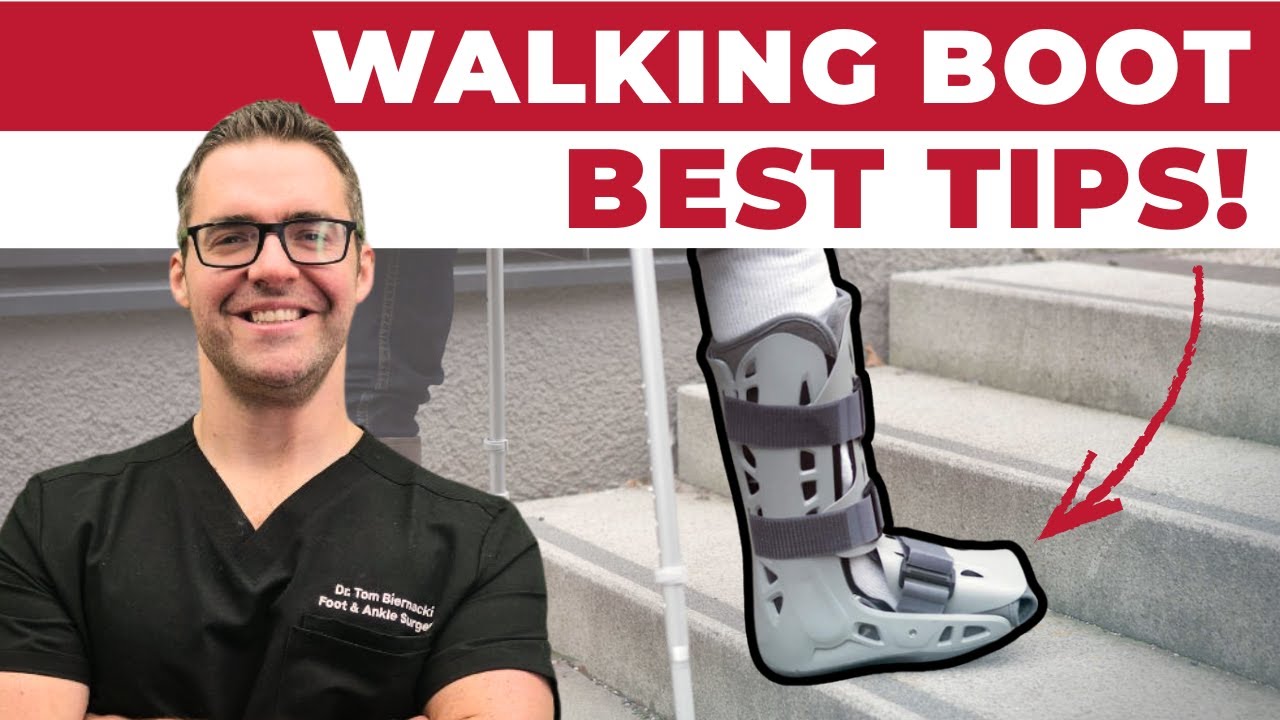
Transitioning from NWB to weight bearing follows a graduated progression. Typically, patients advance from NWB to PWB in a surgical boot, then to full weight bearing (FWB) in the boot, then to supportive shoes with orthotics. Each transition occurs only after radiographic confirmation of adequate healing. Rushing this progression risks undoing the surgical correction and may require revision surgery.
Wound Care and Surgical Site Management
Keeping the surgical site clean and dry is essential for preventing infection — the most feared early complication of foot surgery. Leave the initial surgical dressing in place until your first postoperative visit (typically 5-7 days after surgery) unless your surgeon instructs otherwise or you notice concerning signs such as saturated bandages, foul odor, or fever above 101°F.
After the initial dressing change at your postoperative appointment, follow your surgeon’s specific wound care instructions. This typically involves gentle cleansing with dilute hydrogen peroxide or saline, application of antibiotic ointment to incision lines, and re-dressing with sterile gauze and compression wrap. Keep the surgical site completely dry until sutures or staples are removed and the incision is fully sealed — use waterproof covers during bathing.
Monitor the surgical site daily for signs of infection: increasing redness spreading away from the incision, warmth, swelling that worsens rather than improves, purulent drainage, wound opening, or systemic symptoms including fever, chills, and malaise. Report any of these findings to your surgeon’s office immediately. Early intervention for surgical site infection dramatically improves outcomes compared to delayed treatment.
Managing Swelling During Recovery
Postoperative swelling is the most persistent challenge in foot surgery recovery, often lasting 3-6 months after the procedure and sometimes up to a year for major reconstructions. The foot’s dependent position and limited venous and lymphatic return make it particularly susceptible to prolonged edema that can impede healing, increase pain, and delay return to normal footwear.
Compression therapy with DASS Diabetic Ankle and Foot Compression Socks helps manage post-surgical edema once the surgical wound is healed and sutures are removed. Graduated compression of 15-20 mmHg reduces swelling, improves venous return, and decreases the heavy, throbbing sensation that patients commonly experience when the foot is in a dependent position. Wear compression from morning through evening, removing only for sleep and wound care.
Elevation remains important throughout the recovery period, not just the initial 72 hours. Continue elevating the surgical foot above heart level whenever seated for the first 4-6 weeks postoperatively. Even after returning to weight bearing, evening elevation for 30-60 minutes helps manage the swelling that accumulates during the day. Patients who are diligent about long-term elevation consistently report faster swelling resolution and better overall outcomes.
Physical Therapy and Rehabilitation
Formal physical therapy typically begins 4-8 weeks after foot surgery, depending on the procedure and healing progress. Early rehabilitation focuses on restoring range of motion to joints that have been immobilized during the healing period. Gentle dorsiflexion and plantarflexion exercises, toe curls, and alphabet tracing with the foot help reestablish mobility without stressing surgical repairs.
Strengthening exercises progress from isometric contractions (muscle activation without joint movement) to resistance band exercises, balance training, and eventually functional activities like stair climbing, heel raises, and single-leg stance. Dr. Biernacki coordinates with physical therapists who specialize in foot and ankle rehabilitation to ensure exercise progression matches healing milestones confirmed by imaging.
Gait retraining is often necessary after prolonged periods of altered weight bearing. Patients who have used crutches or a knee scooter for several weeks develop compensatory movement patterns that persist even after they’re cleared for normal walking. Physical therapy addresses these gait deviations through targeted exercises, visual feedback training, and graduated walking programs that restore normal biomechanics.
Returning to Normal Activities and Footwear
The timeline for returning to regular shoes varies by procedure: simple bunion corrections may allow transition to supportive athletic shoes at 6-8 weeks, while major reconstructions may require surgical boots for 3-4 months before advancing to shoes. When transitioning, choose shoes with wide toe boxes, supportive midsoles, and enough depth to accommodate postoperative swelling and orthotics.
PowerStep Pinnacle insoles provide excellent transitional support as patients move from surgical boots to regular footwear. The structured arch support and cushioning help the foot readjust to normal loading patterns while protecting surgical corrections. As swelling resolves and the foot reaches its final postoperative shape, custom orthotics can be fabricated for long-term use based on the new foot alignment.
Return to exercise and sports follows a predictable progression: swimming and cycling (non-impact) are typically first, followed by walking programs, then elliptical training, and finally running and sport-specific activities. Each level requires clearance from your surgeon and absence of pain with the previous activity level. Attempting to skip stages or advance too quickly is the most common cause of setbacks during the later recovery period.
Warning Signs Requiring Urgent Evaluation
- function bold() { [native code] } — undefined
- function bold() { [native code] } — undefined
- function bold() { [native code] } — undefined
- function bold() { [native code] } — undefined
The Most Common Mistake We See
The most common mistake patients make during foot surgery recovery is returning to activities too quickly because they feel good. Pain often resolves before tissues are fully healed — bones take 6-8 weeks to achieve initial union and 12-16 weeks for full strength, regardless of how the patient feels. Following the prescribed timeline rather than symptoms prevents the hardware failures, re-fractures, and correction losses that result from premature loading.
Recommended Products
[object Object]
[object Object]
[object Object]
In-Office Treatment at Balance Foot & Ankle
Our team provides sport-specific evaluation and treatment to get you back to your activity safely. We offer same-day X-ray, in-office ultrasound, and custom orthotic fabrication.
Same-day appointments available. Call (810) 206-1402 or book online.
More Podiatrist-Recommended Surgery Essentials

HOKA Ora 3 Recovery Slide
Max-cushion recovery sandal — comfort for post-surgical swelling.
Hoka Bondi 9
Max-cushion walking shoe — ease into return-to-walking post-surgery.
As an Amazon Associate, Balance Foot & Ankle earns from qualifying purchases. Product recommendations are based on clinical experience; prices and availability shown above update live from Amazon.
When to See a Podiatrist
Foot and ankle surgery in 2026 is dramatically different than a decade ago — most procedures are now minimally-invasive, outpatient, and allow weight-bearing within days. Balance Foot & Ankle surgeons have performed 3,000+ foot/ankle surgeries with modern techniques. If another surgeon has recommended a traditional open procedure, a second opinion may reveal a faster, less-invasive option.
Call Balance Foot & Ankle: (810) 206-1402 · Book online · Offices in Howell & Bloomfield Township
Frequently Asked Questions
How long does it take to recover from foot surgery?
Recovery timelines vary significantly by procedure: minor procedures like hammertoe correction take 4-6 weeks, bunion surgery takes 6-12 weeks, ankle fusions take 3-4 months, and major reconstructions can take 6-9 months for full recovery. Your surgeon provides a specific timeline based on your procedure and individual healing factors.
When can I walk normally after foot surgery?
Most patients transition to weight bearing in a surgical boot within 2-8 weeks depending on the procedure, then progress to supportive shoes 2-4 weeks later. Normal walking without a limp typically returns by 3-4 months for standard procedures. Gait pattern fully normalizes within 6-12 months as strength and confidence return.
How do I reduce swelling after foot surgery?
Elevation above heart level is the most important strategy, especially during the first 2 weeks. Ice therapy for 20 minutes per session multiple times daily during the first 72 hours helps. Graduated compression socks (after wound healing) and continued elevation for 4-6 weeks postoperatively further manage persistent edema.
When can I drive after foot surgery?
Driving restrictions depend on which foot was operated and whether you drive automatic or manual transmission. Right foot surgery on automatic vehicles typically requires 4-8 weeks off driving. Left foot surgery with automatic transmission may allow driving once off narcotic medications. Your surgeon must clear you for driving based on reaction time and brake pressure testing.
The Bottom Line
Recovering from foot surgery is a journey that rewards patience and protocol compliance. At Balance Foot & Ankle, Dr. Tom Biernacki and his team provide comprehensive postoperative care including scheduled follow-up visits, wound monitoring, radiographic healing assessment, physical therapy coordination, and personalized guidance through every stage of your recovery.
Sources
- Journal of Foot and Ankle Surgery (2024) — Postoperative protocols and complication prevention
- Foot & Ankle International (2025) — Swelling duration and management after foot surgery
- Physical Therapy in Sport (2024) — Rehabilitation milestones following foot and ankle procedures
- Clinical Orthopaedics (2024) — Premature weight bearing and hardware failure rates
Dr. Tom’s Surgery Recovery Picks
Doctor Hoy’s Natural Pain Relief Gel — Natural arnica + menthol for post-procedure soreness. We use this in our Howell clinic for post-injection recovery. FSA-eligible, pump bottle.
DASS Medical Compression Socks — Graduated medical compression for post-surgical swelling. Proper sizing and diabetic-friendly knit — not the generic S/M/L compression socks that don’t actually graduate.
Disclosure: We earn a commission if you purchase — at no extra cost to you. We only recommend what we use in our clinic.
Expert Foot Surgery Recovery Support in Michigan
Dr. Tom Biernacki has performed over 3,000 foot and ankle surgeries with a 4.9-star rating from 1,123 patient reviews.
Or call (810) 206-1402 for same-day appointments
Foot Surgery Recovery at Balance Foot & Ankle
Proper post-operative care is essential for successful foot surgery outcomes. Our surgeons at Balance Foot & Ankle provide comprehensive surgical aftercare and rehabilitation guidance at our Howell and Bloomfield Township offices.
Learn About Our Surgical Options | Book Your Appointment | Call (810) 206-1402
Clinical References
- Baumhauer JF, et al. “Postoperative rehabilitation after foot and ankle surgery.” Foot Ankle Clin. 2016;21(2):425-441.
- Glazebrook M, et al. “Postoperative complications after foot and ankle surgery.” Foot Ankle Int. 2014;35(12):1299-1305.
- SooHoo NF, et al. “Factors predicting complication rates following foot and ankle surgery.” Foot Ankle Int. 2009;30(4):344-349.
Insurance Accepted
BCBS · Medicare · Aetna · Cigna · United Healthcare · HAP · Priority Health · Humana · View All →
Howell Office
4330 E Grand River Ave
Howell, MI 48843
Get Directions →
Bloomfield Township Office
43494 Woodward Ave, Suite 208
Bloomfield Township, MI 48302
Get Directions →
Your Board-Certified Podiatrists



Ready to Get Back on Your Feet?
Same-week appointments available at both locations.
Book Your AppointmentIn-Office Treatment at Balance Foot & Ankle

If home treatment isn’t providing relief for your foot and ankle pain, our podiatry team at Balance Foot & Ankle can help with same-day evaluations and advanced in-office care.
Same-day appointments available. (810) 206-1402

Dr. Tom Biernacki, DPM is a board-certified foot & ankle surgeon (ABFAS & ABPM) at Balance Foot & Ankle Specialists in Southeast Michigan. With over a decade of clinical experience, he specializes in heel pain, bunions, diabetic foot care, sports injuries, and minimally invasive surgery. Dr. Biernacki is a member of the APMA and ACFAS, and his patient education content on MichiganFootDoctors.com and YouTube has made him one of the most-followed foot & ankle educators on YouTube.