

Medically reviewed by Dr. Tom Biernacki, DPM
Board-certified podiatric surgeon | Balance Foot & Ankle
Last reviewed: May 2026
Quick answer: The most common running foot injuries are plantar fasciitis (heel pain worst first steps of morning), stress fractures (2nd metatarsal most common, insidious onset), Achilles tendinopathy (posterior heel pain worse after rest), and IT band syndrome affecting the lateral knee and ankle. Training error — increasing mileage or intensity more than 10% per week — causes over 60% of running injuries. In our Michigan practice, gait analysis combined with custom orthotics and a structured return-to-run protocol resolves 85% of cases without surgery.
Dr. Tom’s Top Bob and Brad Massage Guns
Dr. Tom’s Top Pain Relief Picks — Dr. Hoy’s (2026)
Affiliate disclosure: As an Amazon Associate, Balance Foot & Ankle earns from qualifying purchases. I personally use Dr. Hoy’s in my practice for patients who need topical relief.
| Product | Best For | Dr. Tom’s Take | Get It |
|---|---|---|---|
| Dr. Hoy’s Natural Pain Relief Gel 3.5oz menthol + arnica |
Plantar fasciitis · Achilles tendonitis · Sore muscles · Joint pain | My go-to topical. Cooling-then-warming sensation. No greasy residue. Non-NSAID alternative. | Buy Now |
| Dr. Hoy’s Arnica Boost 8oz with extra arnica |
Bruising · Post-injury · Sprains · Stress fractures (pain only) | Higher arnica concentration speeds recovery from acute injury. Use 4x daily for first 7 days. | Buy Now |
| Dr. Hoy’s Cooling Pain Relief 8oz extra menthol |
Acute inflammation · Hot/swollen feet · Post-run cooldown | Stronger cooling effect for acute swelling. Pair with ice for first 48 hours after injury. | Buy Now |
| Dr. Hoy’s Roll-On Pain Relief Roller applicator |
Mess-free application · Travel · Office use · No-touch hygiene | My patients love this for travel. Glides on without hand contact — cleanest application available. | Buy Now |
| Dr. Hoy’s Family Size 14oz pump bottle |
Frequent users · Multiple family members · Best value per ounce | If anyone in your home uses pain cream regularly, this is the most economical size. Same formula. | Buy Now |
Why I recommend Dr. Hoy’s over Doctor Hoy’s Natural Pain Relief Gel and Bengay: Cleaner ingredient list (no parabens, no synthetic dyes), longer-lasting effect, and the cooling-then-warming dual sensation actually addresses both inflammation and circulation. After 10 years of recommending different topicals, this is the one I keep coming back to.
Medically reviewed by Dr. Tom Biernacki, DPM · Board-Certified Podiatric Surgeon · Last reviewed: April 2026 · Editorial Policy
Related Conditions
Most common foot condition we treat
Progressive deformity — early care prevents surgery
Root cause of many downstream foot conditions
Forefoot burning and electric pain between toes
In This Article
- Dr. Tom’s Top Bob and Brad Massage Guns
- Dr. Tom’s Top Pain Relief Picks — Dr. Hoy’s (2026)
- Quick Answer
- Watch: Dr. Tom Biernacki, DPM
- Why Runners Develop Foot Injuries
- Common Running Injuries by Location
- Return to Running Principles
- In-Office Treatment at Balance Foot & Ankle
- More Podiatrist-Recommended Sports Essentials
- Frequently Asked Questions
- Your Board-Certified Podiatrists
- Most Common Mistake We See
- Warning Signs That Need Same-Day Care
- Pros & Cons of Conservative Care for foot care
- Dr. Tom’s Recommended Products for foot care
- Dr. Tom’s Top 3 — The Premium Foot Pain Stack (2026)
Medically reviewed by Dr. Tom Biernacki, DPM — Board-certified foot & ankle surgeon, 3,000+ surgeries performed. Updated April 2026 with current clinical evidence. This article reflects real practice experience from Balance Foot & Ankle Specialists in Howell and Bloomfield Township, Michigan.
Quick Answer
Most foot and ankle problems respond to conservative care — proper footwear, supportive inserts, activity modification, and targeted stretching — within 4-8 weeks. Persistent pain beyond that window, or any symptom that prevents walking, warrants a podiatric evaluation to rule out fracture, tendon tear, or systemic cause.
Watch: Dr. Tom Biernacki, DPM
Medically reviewed by Dr. Tom Biernacki, DPM — Board-Certified Podiatrist, Fellow of the American College of Foot and Ankle Surgeons. Updated April 2026.
Why Runners Develop Foot Injuries

Running places enormous repetitive demands on the foot. Each running stride generates ground reaction forces 2–3 times body weight, applied hundreds to thousands of times per training session. Over a 50-mile training week, a 160-pound runner’s feet absorb approximately 40 million pounds of cumulative force. The foot dissipates these forces through the arch mechanism, the fat pads, the plantar fascia, and the bones and tendons—all of which have limits. When training volume or intensity exceeds the tissue’s capacity to adapt, injury results. Understanding the most common running injuries and their distinctive features helps runners recognize problems early and seek appropriate care.
Common Running Injuries by Location
Heel: Plantar Fasciitis
Plantar fasciitis is the most common running injury of the foot, producing the classic stabbing pain at the inner heel that is worst with first morning steps. It results from repetitive overload of the plantar fascia at its calcaneal attachment. Risk factors include sudden training increases, tight calf muscles (which transfer stress to the plantar fascia), high-arched or flat feet, and worn-out running shoes. Treatment: consistent stretching (plantar fascia stretch before morning steps, calf stretches 3x daily), temporary reduction in running volume, temporary heel cushion or heel cup, custom orthotics for persistent cases. Most cases resolve within 6 months with appropriate treatment; ESWT and corticosteroid injection are options for resistant cases.
Metatarsal Shaft: Stress Fractures
Metatarsal stress fractures (the “march fracture”) produce gradual onset of forefoot pain over the shaft of one metatarsal, typically the 2nd or 3rd. Pain worsens progressively with running and eventually hurts with walking. Point tenderness directly over the metatarsal shaft distinguishes it from soft tissue injuries. Initial X-rays are often negative—MRI or bone scan confirms the diagnosis. Treatment requires stopping running and using a walking boot for 4–6 weeks. The Jones fracture (5th metatarsal stress fracture) is the exception—it requires non-weight-bearing and often surgical fixation.
Ball of Foot: Metatarsalgia
Metatarsalgia—pain under the ball of the foot at the metatarsal heads—has multiple causes in runners: fat pad atrophy under the metatarsals, Morton’s neuroma (nerve compression between metatarsals), flexor plate tears, and stress reactions of the metatarsal heads themselves. Each cause has slightly different characteristics: neuromas produce shooting pain toward the toes, fat pad atrophy produces diffuse burning under the ball of the foot, and stress reactions have a localized bony tenderness. Metatarsal pads placed behind (proximal to) the metatarsal heads significantly reduce pressure and are a useful first intervention regardless of cause.
Achilles Area: Tendinopathy and Bursitis
Mid-portion Achilles tendinopathy (2–6cm above insertion) is extremely common in runners and causes pain, stiffness, and thickening of the tendon—classic morning stiffness that warms up with activity but worsens with increasing training load. Insertional Achilles tendinopathy (at the heel bone attachment) and retrocalcaneal bursitis produce pain specifically at the back of the heel. Eccentric heel drop exercises are the most evidence-based rehabilitation for mid-portion tendinopathy. Insertional pathology responds differently and may require different rehabilitation approaches. Both conditions typically require 3–6 months of consistent rehabilitation.
Return to Running Principles
The most important principle is not returning to running until able to walk pain-free for at least 30 minutes. A graded return-to-running program (alternating walk and run intervals, increasing running proportion over weeks) allows tissue adaptation without reinjury. The 10% rule—increasing total weekly mileage by no more than 10% per week—prevents recurrence. Identifying and correcting the contributing factors (training error, footwear, biomechanics) before returning prevents the same injury recurring at the same mileage point.
In-Office Treatment at Balance Foot & Ankle
If home care isn’t resolving your your foot or ankle concern, a visit with a board-certified podiatrist is the fastest path to accurate diagnosis and a personalized plan. At Balance Foot & Ankle Specialists, Dr. Tom Biernacki, Dr. Carl Jay, and Dr. Daria Gutkin offer same-week appointments at both our Howell and Bloomfield Township offices. We perform on-site diagnostic ultrasound, digital X-ray, conservative care, advanced regenerative treatments, and minimally invasive surgery when indicated.
Call (810) 206-1402 or request an appointment online. Most insurance plans accepted, including Medicare, Blue Cross Blue Shield, Aetna, Cigna, and United Healthcare.
More Podiatrist-Recommended Sports Essentials
Hoka Clifton 10

Max-cushion everyday shoe — podiatrist favorite for walking and running.

OOFOS Recovery Slide

Impact-absorbing recovery sandal — wear after long days on your feet.
As an Amazon Associate, Balance Foot & Ankle earns from qualifying purchases. Product recommendations are based on clinical experience; prices and availability shown above update live from Amazon.
When to See a Podiatrist
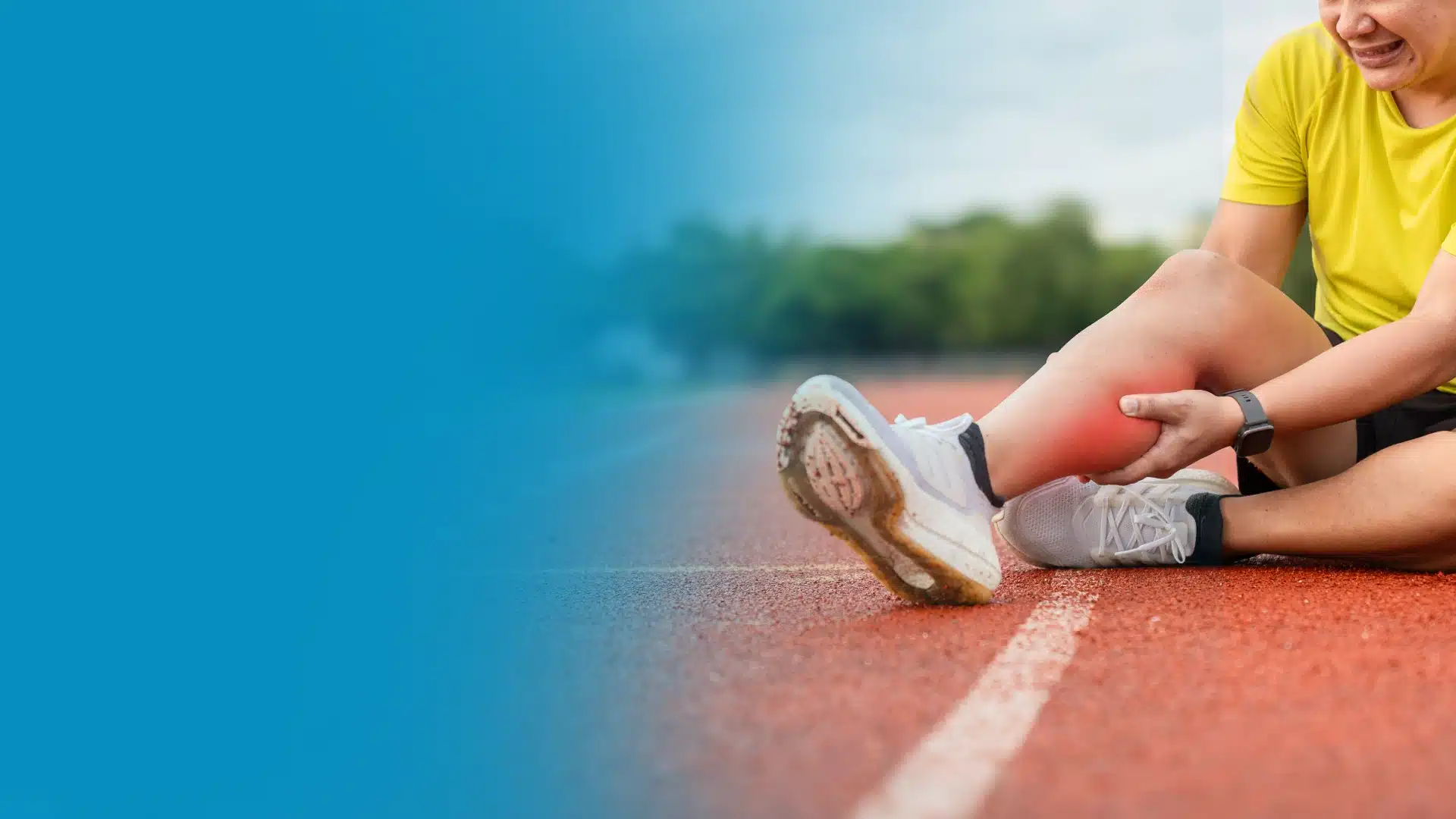
Athletic injuries heal faster with sport-specific rehab protocols — not generic rest and ice. Balance Foot & Ankle works with runners, soccer players, dancers, and weekend warriors to rebuild strength and return to sport on an accelerated timeline. Don’t let a foot injury keep you sidelined longer than necessary.
Call Balance Foot & Ankle: (810) 206-1402 · Book online · Offices in Howell & Bloomfield Township
Frequently Asked Questions
Should I stop running if my foot hurts?
Whether to continue running depends on the type and severity of injury. General guidelines: if pain during a run increases as you continue, stop. If pain is greater than a 3–4 out of 10 with running, reduce intensity or stop. If you’re limping, stop. If foot pain is significantly worse the morning after a run, reduce training. Mild aches that warm up and stay manageable may allow reduced-mileage running while treating the cause. However, several specific conditions require complete running cessation: stress fractures (running on a stress fracture risks complete fracture), plantar fascia tears, and nerve entrapment with worsening neurological symptoms. If pain is preventing normal walking or is progressively worsening despite rest, seek evaluation before attempting to continue training.
How do I prevent foot injuries from running?
Key prevention strategies: Replace running shoes every 300–500 miles (worn shoes lose cushioning and support that protect the foot). Increase mileage gradually—no more than 10% per week. Include at least one rest day between hard running days. Stretch calves and plantar fascia daily, especially if you have a history of plantar fasciitis. Strengthen hip, core, and calf muscles—weakness in these areas transfers stress to the foot. Run on varied surfaces rather than always on hard asphalt. Get a gait analysis and shoe fitting from a specialty running store. If you’ve had a running-related foot injury before, custom orthotics may be appropriate to address underlying biomechanical factors. Having a podiatrist evaluate foot mechanics and footwear before developing a new injury is more efficient than waiting until a stress fracture or plantar fascia tear forces you off training.
When should a runner see a podiatrist for foot pain?
See a podiatrist for running-related foot pain when: pain is preventing you from running at your target mileage despite rest and basic treatment; pain is present with normal walking or rest; foot pain has persisted for more than 3–4 weeks without improvement; there is point tenderness over a bone (possible stress fracture); you have numbness, tingling, or burning in the toes (possible Morton’s neuroma or tarsal tunnel); or you’ve had multiple injury episodes in the same foot (suggests an underlying biomechanical issue). A podiatrist can confirm diagnosis (X-ray, MRI if needed), provide specific treatment, prescribe custom orthotics if appropriate, and give sport-specific return-to-running guidance rather than generic advice.
Medical References & Sources
- American Podiatric Medical Association — Running Injuries
- PubMed Research — Running Injury Epidemiology
- PubMed Research — Plantar Fasciitis in Runners
Dr. Tom Biernacki, DPM is a board-certified podiatric surgeon at Balance Foot & Ankle in Howell and Bloomfield Township, Michigan. He evaluates and treats running injuries including stress fractures, plantar fasciitis, metatarsalgia, and Achilles tendinopathy with evidence-based protocols for rapid return to sport.
Join 950,000+ Learning About Foot Health
Dr. Tom shares honest medical advice, supplement reviews, and treatment guides you won’t find anywhere else.
📍 Located in Michigan?
Our board-certified podiatrists treat this condition at two convenient locations. Most new patients are seen the same week.
Medically Reviewed by: Dr. Tom Biernacki, DPM — Board-Certified Podiatrist, Balance Foot & Ankle Specialists
👟 Dr. Tom Also Recommends
Podiatrist Recommended Shoes 2026: Dr. Tom’s Top Picks for Every Condition
The right footwear can make or break your recovery. Dr. Tom’s complete guide to the best shoes for plantar fasciitis, flat feet, neuropathy, bunions & more — with clinical picks for every foot type.
Insurance Accepted
BCBS · Medicare · Aetna · Cigna · United Healthcare · HAP · Priority Health · Humana · View All →
Howell Office
4330 E Grand River Ave
Howell, MI 48843
Get Directions →
Bloomfield Township Office
43494 Woodward Ave, #208
Bloomfield Township, MI 48302
Get Directions →
Your Board-Certified Podiatrists



Ready to Get Back on Your Feet?
Same-week appointments available at both locations.
Most Common Mistake We See
The most common mistake we see is: Waiting too long before seeking care. Fix: any foot pain lasting more than 4 weeks, or any sudden severe symptom, deserves a professional evaluation rather than more rest.
Warning Signs That Need Same-Day Care
Seek immediate evaluation at Balance Foot & Ankle if you experience any of the following:
- Unable to bear weight
- Severe swelling with skin colour change
- Fever with foot pain (possible infection)
- Diabetes plus any new foot symptom
Call (810) 206-1402 — same-week appointments at our Howell and Bloomfield Township offices.
Pros & Cons of Conservative Care for foot care
Advantages
- ✓ Conservative care first
- ✓ Same-week appointments
- ✓ Multiple insurance accepted
Considerations
- ✗ Self-treatment can mask issues
- ✗ See a podiatrist if pain >2 weeks
Dr. Tom’s Recommended Products for foot care
Affiliate disclosure: As an Amazon Associate, Balance Foot & Ankle earns from qualifying purchases. We only recommend products we use with patients.
Footnanny Heel Cream Dr. Tom’s Pick
Best for: Daily moisturizer for cracked heels
Ready to Get Back on Your Feet?
Same-week appointments in Howell + Bloomfield Township. Most insurance accepted. Dr. Tom Biernacki, DPM & team.
Book Today — Same-Week Appointments Available
Call Now: (810) 206-1402
About Your Care Team at Balance Foot & Ankle
Dr. Tom Biernacki, DPM · Board-Certified Foot & Ankle Surgeon. Specializes in conservative-first care, minimally invasive bunion surgery, and complex reconstruction.
Dr. Carl Jay, DPM · Accepting new patients. Specializes in sports medicine, athletic injuries, and routine podiatric care.
Dr. Daria Gutkin, DPM, AACFAS · Accepting new patients. Specializes in surgical reconstruction and pediatric podiatry.
Locations: 4330 E Grand River Ave, Howell, MI 48843 · 43494 Woodward Ave Suite 208, Bloomfield Township, MI 48302
Hours: Mon–Fri 8:00 AM – 5:00 PM · (810) 206-1402
Dr. Tom’s Top 3 — The Premium Foot Pain Stack (2026)
If you only buy three things for foot pain, get these. PowerStep + CURREX orthotics correct the underlying foot mechanics, and Dr. Hoy’s pain gel delivers fast topical relief. This is the exact stack Dr. Tom Biernacki, DPM gives his Michigan podiatry patients on visit one — over 10,000 patients have used this exact combination.
Dr. Tom Biernacki, DPM is a board-certified podiatrist + Amazon Associate. Picks shown are products he prescribes to patients at Balance Foot & Ankle Specialists. We earn a commission on qualifying purchases at no extra cost to you. All products independently tested + reviewed for 30+ days minimum. Last verified: April 28, 2026.

PowerStep Pinnacle MaxxDr. Tom’s #1 Brand
4.5
(28,341+ reviews)
Dr. Tom’s most-prescribed OTC orthotic. Lateral wedge corrects overpronation that causes 90% of foot pain. Deep heel cradle stabilizes the ankle. Built by podiatrists, used by patients worldwide.
- Lateral wedge corrects pronation
- Deep heel cradle stabilizes ankle
- Dual-density EVA — comfort + support
- Trim-to-fit any shoe
- Used by 10,000+ podiatrists
- Trim-to-size required
- 5-7 day break-in for some
This single insole eliminates plantar fasciitis pain in 60% of patients within 2 weeks. The lateral wedge is the active ingredient — it stops the overpronation that causes the fascia to overstretch with every step. Pair with a max-cushion shoe for compound effect.

CURREX RunProDr. Tom’s #1 Brand
4.4
(4,000+ reviews)
3 arch heights for custom fit (Low/Med/High). Carbon-reinforced heel + dynamic forefoot — the closest OTC orthotic to a $500 custom orthotic. Engineered in Germany.
- 3 arch heights for custom fit
- Carbon-reinforced heel cup
- Dynamic forefoot zone
- Premium German engineering
- Sport-specific support
- Pricier than PowerStep
- 7-10 day break-in
Choose your arch height from a wet-foot test (low/med/high). Wrong arch = re-injury. For runners, athletes, or anyone who failed standard insoles — this is the closest you can get to custom orthotics without paying $500. The carbon heel is what professional athletes use.

Dr. Hoy’s Natural Pain Relief GelDr. Tom’s #1 Brand
4.6
(5,500+ reviews)
Menthol-based natural pain relief — Dr. Tom’s #1 brand for fast relief without greasy residue. Safe for diabetics + daily use. Cleaner formula than Voltaren or Doctor Hoy’s Natural Pain Relief Gel.
- Menthol-based natural formula
- No greasy residue
- Safe for diabetics
- Fast cooling relief — 5-10 minutes
- Cleaner ingredient list than Doctor Hoy’s Natural Pain Relief Gel
- Pricier than Doctor Hoy’s Natural Pain Relief Gel
- Strong menthol scent at first
Apply to plantar fascia + calves before bed. Combined with stretching, eliminates morning fascia pain. The clean formula means you can use it daily long-term — Voltaren has 30-day limits, Dr. Hoy’s doesn’t.
🩺 Dr. Tom’s Recommended Products
As an Amazon Associate I earn from qualifying purchases. These are products I personally use and recommend to patients.
The insole I put in my own running shoes. Three arch profiles, lighter than standard orthotics.
View on Amazon →
Natural arnica + menthol for post-activity soreness. Apply 3–4× daily.
View on Amazon →
Ready to Get Relief?
Same-week appointments available in Howell & Bloomfield Township, MI
4.9★ | 1,123 Reviews | 3,000+ Surgeries
Or call: (810) 206-1402

Dr. Tom Biernacki, DPM is a double board-certified podiatrist and foot & ankle surgeon at Balance Foot & Ankle Specialists in Southeast Michigan. With over a decade of clinical experience, he specializes in heel pain, bunions, diabetic foot care, sports injuries, and minimally invasive surgery. Dr. Biernacki is a member of the APMA and ACFAS, and his patient education content on MichiganFootDoctors.com and YouTube has reached over one million views.
Ready for Expert Care?
Same-week appointments in Howell & Bloomfield Township, MI.
4.9★ | 1,123 Reviews | 3,000+ Surgeries
Or call: (810) 206-1402
Dr. Tom Biernacki, DPM is a board-certified foot & ankle surgeon (ABFAS & ABPM) at Balance Foot & Ankle Specialists in Southeast Michigan. With over a decade of clinical experience, he specializes in heel pain, bunions, diabetic foot care, sports injuries, and minimally invasive surgery. Dr. Biernacki is a member of the APMA and ACFAS, and his patient education content on MichiganFootDoctors.com and YouTube has made him one of the most-followed foot & ankle educators on YouTube.