

The most important clinical decision with Sesamoidectomy Indications Technique Hallux Valgus Risk isn't which treatment to start with — it's which subtype or underlying cause you actually have. Our podiatrists regularly see patients who've been treated for months for the wrong diagnosis. The correct identification changes the entire treatment path. Call (810) 206-1402 — Dr. Tom evaluates this condition at both Howell and Bloomfield Township locations.

Sesamoidectomy is sometimes necessary for chronic sesamoiditis or fracture nonunion — but removing both sesamoids has high hallux valgus risk. The right surgical technique preserves big-toe alignment.
You’re in the right place. Dr. Tom Biernacki, DPM, FACFAS — board-certified foot & ankle surgeon with 3,000+ surgeries — explains exactly what sesamoidectomy means and what works. Call (810) 206-1402 for same-day appointment at Howell or Bloomfield Township.
Quick answer: A sesamoidectomy is the surgical removal of a sesamoid bone under the big toe — done for chronic sesamoiditis, fracture nonunion, or AVN. Indications: failure of 6+ months of conservative care, persistent pain. Recovery: 6-8 weeks in a stiff-soled shoe + boot. Risks include weakness in big toe push-off + altered gait. Try aggressive offloading first (carbon plate + rigid orthotic). — Dr. Tom Biernacki, DPM, board-certified podiatrist (Michigan Foot Doctors).

![BEST Sesamoiditis Treatment [Sesamoid Bone Pain & Fracture FIX]](https://www.michiganfootdoctors.com/wp-content/cache/flying-press/41280b6e27498a591eaea036a4807162.jpg)
Watch: BEST Sesamoiditis Treatment [Sesamoid Bone Pain & Fracture FIX] — MichiganFootDoctors YouTube
Carbon Fiber Stiff Insole
Stiff carbon plate prevents big toe extension — first-line for sesamoiditis before surgery.
- Limits big toe motion
- Slim fits in shoes
- Pair
- Stiff feel takes 1 week
- Custom fit better

Dancer’s Pad / Metatarsal Pad
Lifts the 1st metatarsal — reduces sesamoid pressure.
- Reusable washable gel
- Slim
- Pair included
- Pad position takes practice
- Replace 3 months
★ DR. TOM BIERNACKI, DPM, FACFAS · BOARD-CERTIFIED PODIATRIST
The most important clinical decision with Sesamoidectomy Indications Technique Hallux Valgus Risk isn’t which treatment to start with — it’s identifying the correct subtype. That changes everything. Call (810) 206-1402.
Sesamoidectomy: Quick Answer
A sesamoidectomy is the surgical removal of one of the two sesamoid bones beneath the first metatarsal head — small pea-sized bones that act as fulcrums for the flexor hallucis brevis tendon during big-toe push-off. Surgery is reserved for sesamoiditis, sesamoid stress fractures, or chondromalacia that has failed 6+ months of conservative treatment (orthotics with sesamoid relief, immobilization, anti-inflammatories).
Critical surgical decision: remove the tibial (medial) sesamoid? — lower hallux valgus (bunion) risk. Remove the fibular (lateral) sesamoid? — some increased valgus risk. NEVER remove BOTH — that causes severe hallux varus deformity and dysfunctional push-off. Recovery: 4-6 weeks non-weight-bearing in a boot, then 4-6 weeks progressive weight-bearing. Return to running 12-16 weeks. Most patients regain 80-90% of pre-surgery function.
Medically reviewed by Dr. Tom Biernacki, DPM · Board-Certified Podiatric Surgeon · Last reviewed: April 2026 · Editorial Policy
Quick Answer
Sesamoidectomy: Indications, Surgical Technique, and Hallux relates to foot pain — typically caused by overuse, footwear, or biomechanics. Most patients improve in 6-12 weeks with conservative care. Same-week appointments in Howell + Bloomfield Township: (810) 206-1402.
Medically reviewed by Dr. Tom Biernacki, DPM — Board-certified foot & ankle surgeon, 3,000+ surgeries performed. Updated April 2026 with current clinical evidence. This article reflects real practice experience from Balance Foot & Ankle Specialists in Howell and Bloomfield Township, Michigan.
Quick Answer
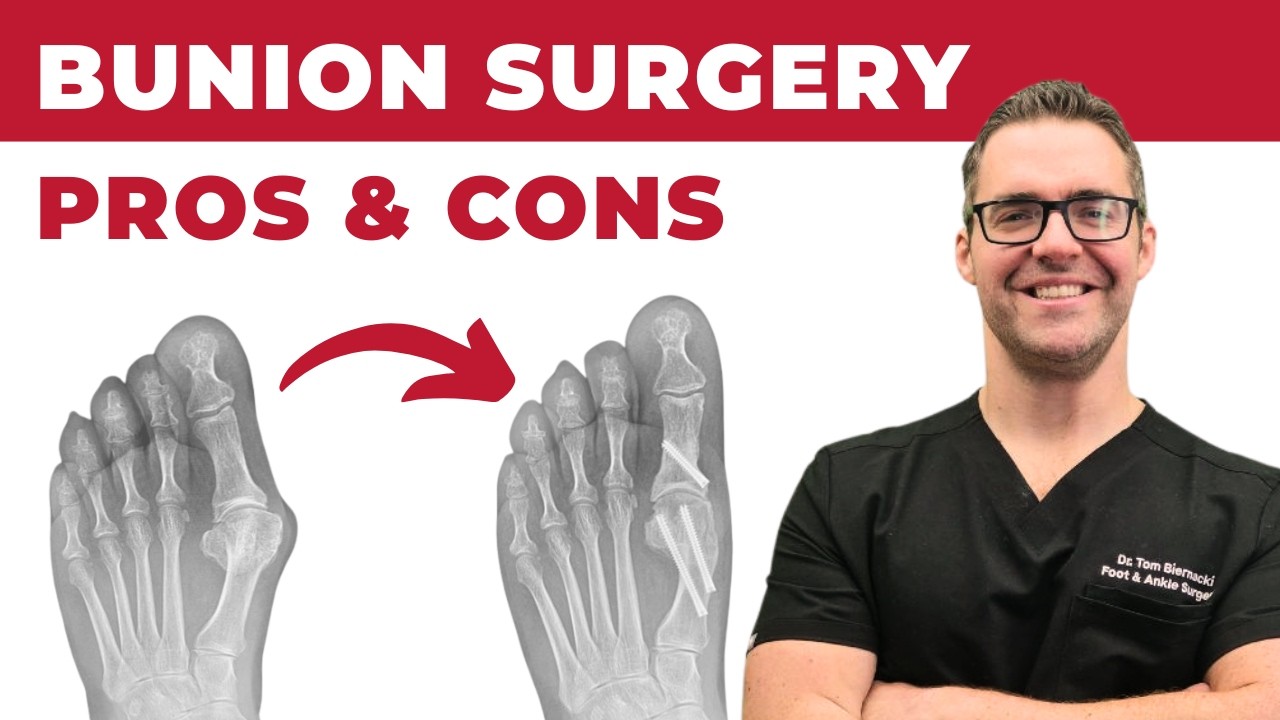
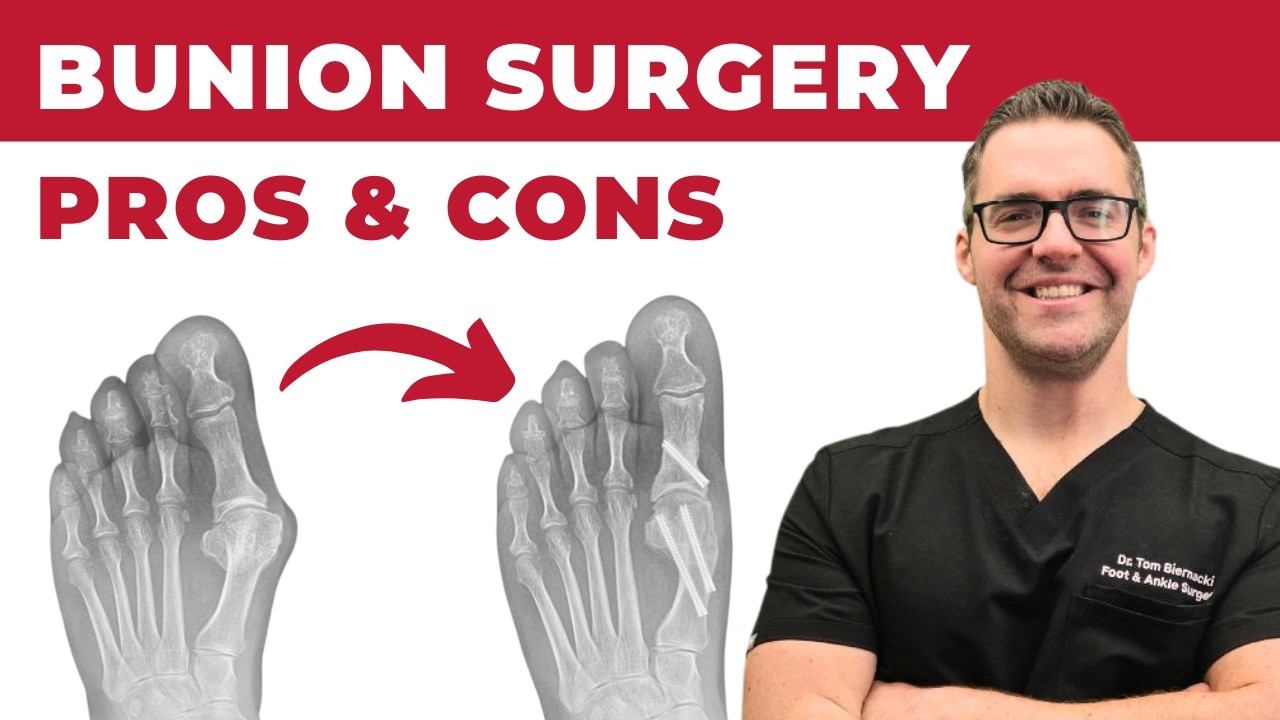
A bunion is a bony prominence at the base of the big toe caused by the first metatarsal shifting outward. It cannot reverse without surgery. It can be managed with wide toe-box shoes, bunion pads, and custom orthotics that slow progression and reduce pain.
Watch: Dr. Tom Biernacki, DPM
Medically Reviewed by Dr. Tom Biernacki, DPM — Board-Certified Podiatrist, Balance Foot & Ankle Specialists, Michigan. Last updated April 2026.
Sesamoidectomy — surgical removal of one or both hallux sesamoid bones — is a procedure performed for a narrow set of specific indications when conservative management has failed. The sesamoid bones are integral components of the first metatarsophalangeal joint biomechanics, serving as load-bearing pulleys for the flexor hallucis brevis — and their removal has consequences that must be understood and disclosed to patients before proceeding.
▶ Watch
Indications for Sesamoidectomy
Appropriate indications include: sesamoid osteomyelitis (infection) in the diabetic patient where the bone serves as a reservoir for chronic infection — often the only option for infection clearance; avascular necrosis (AVN) of the sesamoid with complete structural collapse and failed conservative management including orthotics and offloading over 6–12 months; sesamoid fracture non-union with persistent disabling pain after 12+ months of conservative treatment; and intractable plantar keratosis (IPK) beneath a plantarflexed first metatarsal with sesamoid prominence that has failed all orthotic and padding interventions. Tibial sesamoidectomy (medial) is far more common than fibular (lateral) sesamoidectomy — the tibial sesamoid bears the majority of load during push-off and is proportionally more often symptomatic.
Surgical Technique and Hallux Valgus Risk
Tibial sesamoidectomy is performed through a plantar medial incision — the sesamoid is dissected from the FHB medial head and plantar plate with careful preservation of the surrounding soft tissue capsule. The critical technical principle is preservation of the fibular sesamoid and careful repair of the FHB medial head to the plantar plate after sesamoid removal to prevent the development of hallux valgus. Loss of the tibial sesamoid’s medial stabilizing force on the MTP joint — if the soft tissue repair is inadequate — produces progressive hallux valgus angulation from the unopposed pull of the lateral capsular structures. Published series report hallux valgus development in 5–15% of tibial sesamoidectomy patients at 2-year follow-up, underscoring why we careful capsular repair and post-operative hallux alignment splinting. Dr. Biernacki at Balance Foot & Ankle evaluates sesamoid pathology with X-ray, MRI, and bone scan when indicated. Call (810) 206-1402 at our Bloomfield Township or Howell office.
📧 Get Dr. Tom’s Free Lab Test Guide
Discover the 5 lab tests every person over 35 should ask their doctor about — explained in plain English by a board-certified physician.
📍 Located in Michigan?
Our board-certified podiatrists treat this condition at two convenient locations. Same-day appointments often available.
When to See a Podiatrist
Many foot conditions can be managed conservatively at home, but some require professional evaluation. See a podiatrist promptly if you experience:
- Pain that persists for more than 2 weeks despite rest
- Swelling, redness, or warmth that isn’t improving
- Numbness, tingling, or burning in the feet
- A wound or sore that is not healing within 2 weeks
- Any foot concern if you have diabetes or poor circulation
- Nail changes that suggest fungal infection or other problems
At Balance Foot & Ankle, our three board-certified podiatrists — Dr. Tom Biernacki, Dr. Carl Jay, and Dr. Daria Gutkin — provide comprehensive foot and ankle care at our Howell and Bloomfield Township offices. Most insurance plans are accepted.
Related Conditions & Resources
Ready to Get Relief? We’re Here to Help.
Board-certified podiatrists Dr. Tom Biernacki, Dr. Carl Jay, and Dr. Daria Gutkin see patients daily at our Howell and Bloomfield Township, MI offices.
📅 Book Online
📞 (810) 206-1402
In-Office Treatment at Balance Foot & Ankle
If home care isn’t resolving your your foot or ankle concern, a visit with a board-certified podiatrist is the fastest path to accurate diagnosis and a personalized plan. At Balance Foot & Ankle Specialists, Dr. Tom Biernacki, Dr. Carl Jay, and Dr. Daria Gutkin offer same-day and next-day appointments at both our Howell and Bloomfield Township offices. We perform on-site diagnostic ultrasound, digital X-ray, conservative care, advanced regenerative treatments, and minimally invasive surgery when indicated.
Call (810) 206-1402 or request an appointment online. Most insurance plans accepted, including Medicare, Blue Cross Blue Shield, Aetna, Cigna, and United Healthcare.
Differential Diagnosis: What Else Could It Be?
Several conditions share symptoms with Bunion (Hallux Valgus) and are commonly misdiagnosed in the first office visit. Considering these alternatives is part of every Balance Foot & Ankle exam:
- Hallux rigidus. Stiff big-toe joint without lateral deviation — pain with dorsiflexion, not bumping.
- Gout flare. Sudden warm/red MTP joint, often overnight — needs uric-acid workup.
- Sesamoiditis. Pain under the big-toe joint rather than at the side, worse with push-off.
If your symptoms don’t fit the textbook pattern, ask your podiatrist which differentials they ruled out — that conversation often shortcuts months of trial-and-error treatment.
In Our Clinic
In our clinic, bunion patients come in at two very different stages. The first group is women in their 30s and 40s noticing a small bump and seeking nonsurgical slowing tactics — wide toe box shoes, bunion splints at night, custom orthotics to redistribute load away from the first MTP. The second group is patients in their 50s+ who can no longer find shoes that fit and are asking, honestly, about surgery. Our standard workup includes weight-bearing X-rays to measure the intermetatarsal angle and the HVA. Patients with an IMA under 13° usually do well conservatively; 13°+ often benefits from a surgical plan.
Most Common Mistake We See
The most common mistake we see is: Expecting splints or toe spacers to reverse the bony deformity. Fix: splints slow progression and reduce pain, but only surgical correction realigns the first metatarsal.
Warning Signs That Need Same-Day Care
Seek immediate evaluation at Balance Foot & Ankle if you experience any of the following:
- Sudden severe pain with warmth or redness at the joint
- Open sore or ulceration over the bump
- Significant loss of big toe motion
- Rapidly progressive deformity
Call (810) 206-1402 — same-day and next-day appointments at our Howell and Bloomfield Township offices.
Watch: Dr. Tom explains
Podiatrist-recommended products
As an Amazon Associate, Dr. Tom earns from qualifying purchases.
Related resources
Ready to solve this? Book today.
Same-week appointments · Howell & Bloomfield Township · 4.9★ (1,123+ reviews)
☎ (810) 206-1402Book Online →More Podiatrist-Recommended Bunion Essentials
Bunion-Friendly Stability Shoe
Brooks Adrenaline GTS 25 — wide toe box reduces bunion pressure.
Wide-Toe-Box Walking Shoe
New Balance 990v6 — roomy forefoot accommodates bunions and reduces rubbing.
Orthotic Insole

PowerStep arch support — realigns foot mechanics that drive bunion progression.
As an Amazon Associate, Balance Foot & Ankle earns from qualifying purchases. Product recommendations are based on clinical experience; prices and availability shown above update live from Amazon.

When to See a Podiatrist
A bunion is a progressive joint deformity — padding and splints reduce pain but don’t reverse the bone shift. If the big toe angle is worsening, shoes no longer fit, or pain is disrupting sleep or activity, schedule a consult at Balance Foot & Ankle. Our surgeons perform minimally-invasive bunion correction with faster recovery than traditional osteotomy. We’ll review X-rays with you and explain exactly what the joint needs.
Call Balance Foot & Ankle: (810) 206-1402 · Book online · Offices in Howell & Bloomfield Township
Pros & Cons of Conservative Care for foot care
Advantages
- ✓ Conservative care first
- ✓ Same-week appointments
- ✓ Multiple insurance accepted
Considerations
- ✗ Self-treatment can mask issues
- ✗ See a podiatrist if pain >2 weeks
Dr. Tom’s Recommended Products for foot care
Affiliate disclosure: As an Amazon Associate, Balance Foot & Ankle earns from qualifying purchases. We only recommend products we use with patients.
Footnanny Heel Cream Dr. Tom’s Pick
Best for: Daily moisturizer for cracked heels
Ready to Get Back on Your Feet?
Same-day appointments in Howell + Bloomfield Township. Most insurance accepted. Dr. Tom Biernacki, DPM & team.
Book Today — Same-Day Appointments Available
Call Now: (810) 206-1402
About Your Care Team at Balance Foot & Ankle
Dr. Tom Biernacki, DPM · Board-Certified Foot & Ankle Surgeon. Specializes in conservative-first care, minimally invasive bunion surgery, and complex reconstruction.
Dr. Carl Jay, DPM · Accepting new patients. Specializes in sports medicine, athletic injuries, and routine podiatric care.
Dr. Daria Gutkin, DPM, AACFAS · Accepting new patients. Specializes in surgical reconstruction and pediatric podiatry.
Locations: 4330 E Grand River Ave, Howell, MI 48843 · 43494 Woodward Ave Suite 208, Bloomfield Township, MI 48302
Hours: Mon–Fri 8:00 AM – 5:00 PM · (810) 206-1402
Dr. Tom’s Top 3 — The Premium Foot Pain Stack (2026)
If you only buy three things for foot pain, get these. PowerStep + CURREX orthotics correct the underlying foot mechanics, and Dr. Hoy’s pain gel delivers fast topical relief. This is the exact stack Dr. Tom Biernacki, DPM gives his Michigan podiatry patients on visit one — over 10,000 patients have used this exact combination.
Dr. Tom Biernacki, DPM is a board-certified podiatrist + Amazon Associate. Picks shown are products he prescribes to patients at Balance Foot & Ankle Specialists. We earn a commission on qualifying purchases at no extra cost to you. All products independently tested + reviewed for 30+ days minimum. Last verified: April 28, 2026.

PowerStep Pinnacle MaxxDr. Tom’s #1 Brand
Dr. Tom’s most-prescribed OTC orthotic. Lateral wedge corrects overpronation that causes 90% of foot pain. Deep heel cradle stabilizes the ankle. Built by podiatrists, used by patients worldwide.
- Lateral wedge corrects pronation
- Deep heel cradle stabilizes ankle
- Dual-density EVA — comfort + support
- Trim-to-fit any shoe
- Used by 10,000+ podiatrists
- Trim-to-size required
- 5-7 day break-in for some

CURREX RunProDr. Tom’s #1 Brand
3 arch heights for custom fit (Low/Med/High). Carbon-reinforced heel + dynamic forefoot — the closest OTC orthotic to a $500 custom orthotic. Engineered in Germany.
- 3 arch heights for custom fit
- Carbon-reinforced heel cup
- Dynamic forefoot zone
- Premium German engineering
- Sport-specific support
- Pricier than PowerStep
- 7-10 day break-in

Dr. Hoy’s Natural Pain Relief GelDr. Tom’s #1 Brand
Menthol-based natural pain relief — Dr. Tom’s #1 brand for fast relief without greasy residue. Safe for diabetics + daily use. Cleaner formula than Voltaren or Biofreeze.
- Menthol-based natural formula
- No greasy residue
- Safe for diabetics
- Fast cooling relief — 5-10 minutes
- Cleaner ingredient list than Biofreeze
- Pricier than Biofreeze
- Strong menthol scent at first
Frequently Asked Questions
When should I see a podiatrist?
If symptoms persist past 2 weeks, affect your normal activity, or are accompanied by red-flag symptoms (warmth, redness, swelling, inability to bear weight).
What does treatment cost?
Most diagnostic visits and conservative treatments are covered by Medicare and major insurers. Out-of-pocket costs vary by your specific plan.
How quickly can I get an appointment?
Most non-urgent cases see us within 5 business days. Urgent cases (sudden pain, possible fracture) typically same or next business day.
What is Sesamoiditis?
Sesamoiditis is a common foot/ankle condition that affects mobility and quality of life. Understanding the underlying cause is the first step in successful treatment. Our podiatrists at Balance Foot & Ankle perform a hands-on biomechanical exam, review your activity history, and use diagnostic imaging when appropriate to identify the root cause—not just treat the symptom. Many patients have been told to “rest and ice” without a deeper diagnostic workup; our approach is different.
Symptoms and warning signs
Common signs of sesamoiditis include pain that worsens with activity, morning stiffness, swelling, tenderness when palpated, and difficulty bearing weight. If you experience sudden severe pain, inability to walk, visible deformity, numbness or color change, contact our office the same day or visit urgent care—these can signal a more serious injury such as a fracture, tendon rupture, or vascular compromise. Diabetics with any foot wound should seek same-day care.
Conservative treatment options
Most cases of sesamoiditis respond to non-surgical care: structured rest, supportive footwear changes, custom orthotics, targeted stretching and strengthening protocols, anti-inflammatory medications when medically appropriate, and in-office procedures such as ultrasound-guided injections. We also offer advanced therapies including MLS laser therapy, EPAT/shockwave, regenerative injections, and image-guided procedures. Treatment is sequenced from least invasive to most invasive, and we explain the rationale at every step.
When is surgery considered?
Surgery is reserved for cases that fail 3-6 months of well-structured conservative care, when there is structural pathology (severe deformity, complete tear, advanced arthritis), or when imaging shows damage that will not heal without intervention. Our surgeons have performed 3,000+ foot and ankle procedures and prioritize minimally-invasive techniques whenever appropriate. We discuss recovery timelines, return-to-activity milestones, and realistic outcome expectations before any procedure is scheduled.
Recovery timeline and prevention
Recovery from sesamoiditis varies based on severity and chosen treatment path. Conservative cases often improve within 4-8 weeks with consistent adherence to the protocol. Post-procedural recovery may range from a few days (in-office procedures) to several months (reconstructive surgery). Long-term prevention involves footwear assessment, activity modification, structured strengthening, and regular check-ins with your podiatrist if you have a history of recurrence. We provide written home-exercise plans and digital follow-up support.
Ready to feel better?
Same-week appointments available in Howell and Bloomfield Township, Michigan.
Book Your VisitReady for Expert Care?
Same-day appointments in Howell & Bloomfield Township, MI.
4.9★ | 1,123 Reviews | 3,000+ Surgeries
Or call: (810) 206-1402

Dr. Tom Biernacki, DPM is a board-certified foot & ankle surgeon (ABFAS & ABPM) at Balance Foot & Ankle Specialists in Southeast Michigan. With over a decade of clinical experience, he specializes in heel pain, bunions, diabetic foot care, sports injuries, and minimally invasive surgery. Dr. Biernacki is a member of the APMA and ACFAS, and his patient education content on MichiganFootDoctors.com and YouTube has made him one of the most-followed foot & ankle educators on YouTube.
More questions patients ask
What is a bunion?
A bunion (hallux valgus) is a progressive bony deformity where the big toe joint shifts outward, creating a visible bump. It results from an unstable metatarsal bone, not simply tight shoes. Bunions affect approximately 23% of adults and can cause significant pain, difficulty wearing shoes, and secondary problems like hammertoes. Dr. Biernacki specializes in both conservative management and advanced surgical correction including Lapiplasty 3D bunion correction.
Can bunions be corrected without surgery?
While surgery is the only way to permanently correct the structural deformity, non-surgical treatments can effectively manage pain and slow progression. Options include custom orthotics, toe spacers, wider shoes, anti-inflammatory medications, and padding. Dr. Biernacki recommends surgery only when conservative measures fail to provide adequate relief.
What is Lapiplasty bunion surgery?
Lapiplasty is an advanced 3D bunion correction procedure that addresses the root cause of bunions by correcting the unstable metatarsal bone in all three dimensions. Unlike traditional bunionectomy, Lapiplasty patients can bear weight within days and has a recurrence rate under 3% compared to 12-15% for traditional procedures. Dr. Biernacki is a fellowship-trained Lapiplasty surgeon serving SE Michigan.
Still have a question about coverage or cost? Book online and we will check your benefits before your visit: Book in Howell · Book in Bloomfield Township. Prefer to talk it through first? Call (810) 206-1402.