
Medically reviewed by Dr. Tom Biernacki, DPM
Board-certified podiatric surgeon | Balance Foot & Ankle, Howell & Bloomfield Hills, MI
Last reviewed: May 2026

| Condition | Evidence Level | ESWT Type | Sessions | Success Rate | Notes |
|---|---|---|---|---|---|
| Plantar Fasciitis (chronic >6 months) | Level I — multiple RCTs | Radial ESWT | 3 weekly sessions, 2,000 pulses each | 70–85% pain reduction at 12 weeks | FDA-cleared; superior to sham; comparable to surgery without risk |
| Insertional Achilles Tendinopathy | Level II | Focused or radial | 3–5 sessions | 65–80% improvement | Best for calcific insertional disease |
| Non-insertional Achilles Tendinopathy | Level II | Radial ESWT | 3 weekly sessions | 60–75% improvement | Additive benefit with eccentric loading |
| Heel Spur (calcaneal spur) | Level II | Focused ESWT | 3–5 sessions | 65–75% pain relief | Spur may not dissolve but pain resolves |
| Morton’s Neuroma | Level III | Radial ESWT | 3–4 sessions | 55–65% symptom relief | Emerging; may reduce perineural inflammation |
| Stress Fracture (delayed union) | Level III | Focused ESWT | 3–5 sessions over fracture site | 60–70% union in recalcitrant cases | Adjunct to conservative care |
| Parameter | Radial ESWT (rESWT) | Focused ESWT (fESWT) |
|---|---|---|
| Wave Generation | Pneumatic / ballistic (projectile impact) | Electrohydraulic, electromagnetic, or piezoelectric |
| Energy Level | 0.04–0.20 mJ/mm² | 0.12–0.60 mJ/mm² |
| Penetration Depth | Superficial (3–4 cm) | Deep (up to 12 cm); precisely focused |
| Anesthesia Needed | No — mild discomfort only | Yes for high-energy; topical for low-energy |
| Best Foot Indications | Plantar fasciitis, Achilles mid-portion, trigger points | Calcific tendinopathy, nonunion, dense calcification |
| Treatment Time | 5–10 minutes per session | 10–20 minutes per session |
| Recovery | Immediate weight-bearing; mild soreness 24–48 hrs | 1–2 days soreness; activity modification advised |
Quick answer: Shockwave Therapy Feet Michigan is a common foot/ankle topic that affects many patients. The 2026 evidence-based approach combines proper diagnosis, conservative-first treatment, and escalation only when needed. We treat this regularly at our Howell and Bloomfield Hills practices. Call (810) 206-1402.
Medically Reviewed | Dr. Tom Biernacki, DPM | Board-Certified Podiatric Surgeon | Balance Foot & Ankle, Michigan

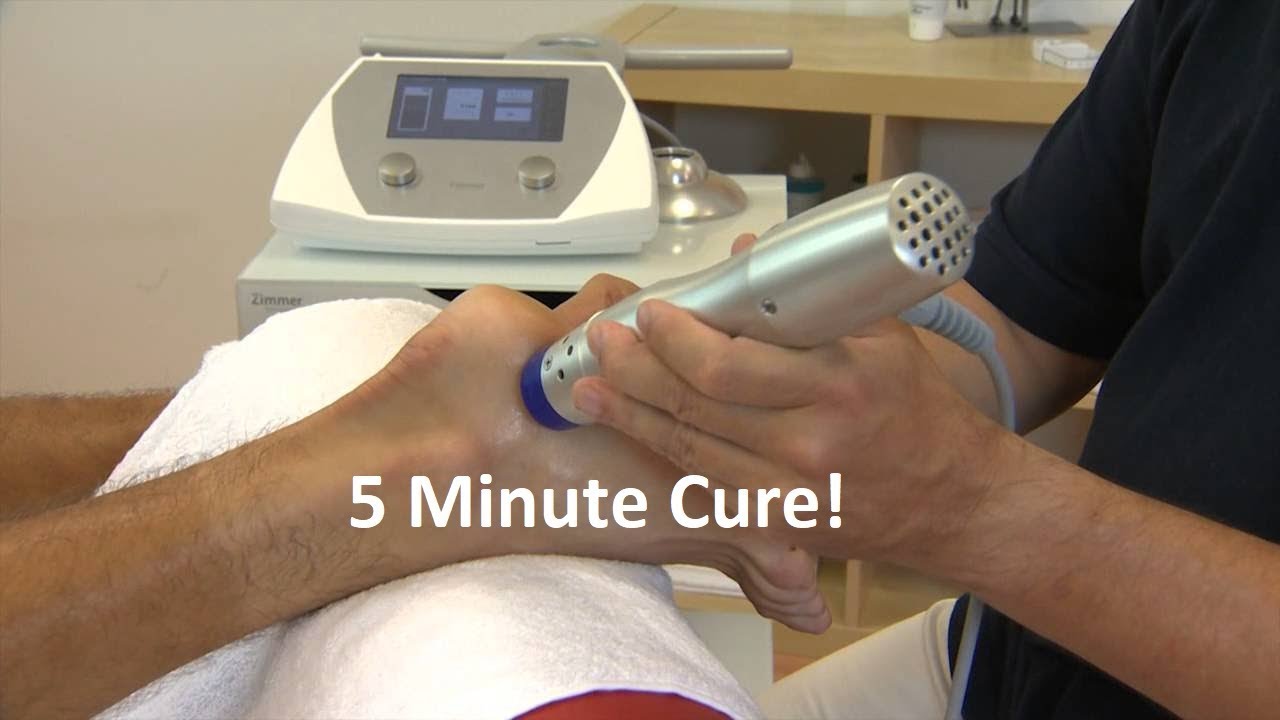
Watch: Shockwave Therapy For Plantar Fasciitis: *Amazing Results in 5 Minutes** — MichiganFootDoctors YouTube
The most important clinical decision with Shockwave Therapy Feet Michigan isn’t which treatment to start with — it’s identifying the correct subtype. That changes everything. Call (810) 206-1402.
The most important clinical decision with Shockwave Therapy Feet Michigan isn’t which treatment to start with — it’s identifying the correct subtype. That changes everything. Call (810) 206-1402.
How Shockwave Therapy Works
Extracorporeal shockwave therapy (ESWT) delivers focused or radial acoustic pressure waves to targeted tissue. High-energy focused ESWT (hospital-grade devices) produces cavitation and microtrauma that triggers a healing cascade: improved local blood flow, growth factor release, inhibition of chronic pain mediators, and promotion of new tissue formation. The mechanism converts chronic (stuck) tendinopathy into acute (healing) tendinopathy.
Radial shockwave therapy (RSWT) delivers lower-energy pressure waves over a broader area — more commonly used in sports medicine and podiatry practices. Clinical evidence is strong for both modalities; high-energy focused ESWT has slightly better evidence for severe chronic plantar fasciitis.
Who Benefits From Shockwave?
ESWT is indicated for chronic (3+ months duration) plantar fasciitis, Achilles tendinopathy (midsubstance and insertional), plantar fasciosis with established tendon degeneration, and retrocalcaneal bursitis refractory to conservative care. It is most effective when: the condition is truly chronic (not acute), the specific pathological site is accurately targeted, and the patient continues appropriate load management during the treatment series.
Clinical Evidence
Meta-analyses of ESWT for plantar fasciitis show 60-80% success rates (significant pain reduction) at 12 months compared to 40-50% for sham treatment — a clinically meaningful difference. Achilles tendinopathy evidence is similarly strong. ESWT is endorsed by the American College of Foot and Ankle Surgeons as an appropriate treatment for chronic plantar fasciitis refractory to conservative care. Side effects are minimal: transient bruising, soreness lasting 24-48 hours post-session.
Dr. Tom's Product Recommendations

PowerStep Pinnacle Orthotic
⭐ Highly Rated
Essential complement to shockwave therapy — the mechanical cause of plantar fasciitis must be addressed alongside the healing stimulus of ESWT. Arch support during shockwave treatment series prevents re-injury of the healing fascia.
Dr. Tom says: “https://m.media-amazon.com/images/I/71k+PB6ZHLL._AC_SL300_.jpg”
Ongoing mechanical support during and after ESWT treatment series
Replacement for ESWT — both mechanical correction and healing stimulus are needed
Disclosure: We earn a commission at no extra cost to you.

Doctor Hoy’s Natural Pain Relief Gel
⭐ Highly Rated
Applied after ESWT sessions to manage the 24-48 hours of post-treatment soreness. Natural anti-inflammatory reduces the expected tissue response without blunting the healing cascade (unlike NSAIDs, which should be avoided immediately post-ESWT).
Dr. Tom says: “https://m.media-amazon.com/images/I/71Z5e1QKXUL._AC_SL300_.jpg”
Post-ESWT session soreness management (safe — does not inhibit healing response)
NSAIDs (avoid for 48 hours post-ESWT as they blunt the healing cascade)
Disclosure: We earn a commission at no extra cost to you.
✅ Pros / Benefits
- Non-invasive office procedure — no anesthesia, no incisions, immediate return to activity
- 60-80% success for chronic plantar fasciitis refractory to conservative care
- Addresses the pathological chronic degeneration rather than just symptom management
❌ Cons / Risks
- Insurance coverage variable — some plans cover ESWT, others consider it investigational
- Not effective for acute plantar fasciitis — specifically for chronic 3+ month cases
- 3-5 sessions required; results continue to improve for 3-6 months after treatment completion
Dr. Tom Biernacki’s Recommendation
Shockwave therapy sits in a perfect clinical niche between conservative care and surgery. When a patient has had plantar fasciitis for 6-12 months, has done the stretching and the orthotics and the injections, and is still not better — shockwave is the logical next step before we talk about surgery. I find that 60-70% of those refractory patients respond meaningfully. It is also my go-to for insertional Achilles tendinopathy, where cortisone injections near the tendon are risky.
— Dr. Tom Biernacki, DPM | Board-Certified Podiatric Surgeon | Balance Foot & Ankle
Frequently Asked Questions
Is shockwave therapy painful?
High-energy ESWT sessions are performed under local anesthesia or with significant sedation. Radial shockwave therapy is described as intense pressure with intermittent discomfort — most patients rate it 4-6/10 during the session with mild to moderate soreness for 24-48 hours afterwards. Subsequent sessions are generally better tolerated.
How long before shockwave therapy works?
Improvement typically begins after session 2-3. Significant improvement is usually evident 4-8 weeks after the final session as the healing cascade completes. Full benefit assessment at 3-6 months post-treatment. Patients who improve continue to improve for up to 12 months after ESWT.
Does insurance cover shockwave therapy?
Coverage varies significantly by plan. Medicare and many commercial plans cover high-energy focused ESWT for plantar fasciitis when conservative care documentation is provided. Radial shockwave is less consistently covered. Prior authorization is typically required. Our office verifies coverage before recommending ESWT.
Michigan Foot Pain? See Dr. Biernacki In Person
4.9★ rated | 1,123 Reviews | 3,000+ Surgeries
Same-week appointments · Howell & Bloomfield Hills
📞 (810) 206-1402 Book Online →What is Foot pain?
Foot pain is a common foot/ankle condition that affects mobility and quality of life. Understanding the underlying cause is the first step in successful treatment. Our podiatrists at Balance Foot & Ankle perform a hands-on biomechanical exam, review your activity history, and use diagnostic imaging when appropriate to identify the root cause—not just treat the symptom. Many patients have been told to “rest and ice” without a deeper diagnostic workup; our approach is different.
Symptoms and warning signs
Common signs of foot pain include pain that worsens with activity, morning stiffness, swelling, tenderness when palpated, and difficulty bearing weight. If you experience sudden severe pain, inability to walk, visible deformity, numbness or color change, contact our office the same day or visit urgent care—these can signal a more serious injury such as a fracture, tendon rupture, or vascular compromise. Diabetics with any foot wound should seek same-day care.
Conservative treatment options
Most cases of foot pain respond to non-surgical care: structured rest, supportive footwear changes, custom orthotics, targeted stretching and strengthening protocols, anti-inflammatory medications when medically appropriate, and in-office procedures such as ultrasound-guided injections. We also offer advanced therapies including MLS laser therapy, EPAT/shockwave, regenerative injections, and image-guided procedures. Treatment is sequenced from least invasive to most invasive, and we explain the rationale at every step.
When is surgery considered?
Surgery is reserved for cases that fail 3-6 months of well-structured conservative care, when there is structural pathology (severe deformity, complete tear, advanced arthritis), or when imaging shows damage that will not heal without intervention. Our surgeons have performed 3,000+ foot and ankle procedures and prioritize minimally-invasive techniques whenever appropriate. We discuss recovery timelines, return-to-activity milestones, and realistic outcome expectations before any procedure is scheduled.
Recovery timeline and prevention
Recovery from foot pain varies based on severity and chosen treatment path. Conservative cases often improve within 4-8 weeks with consistent adherence to the protocol. Post-procedural recovery may range from a few days (in-office procedures) to several months (reconstructive surgery). Long-term prevention involves footwear assessment, activity modification, structured strengthening, and regular check-ins with your podiatrist if you have a history of recurrence. We provide written home-exercise plans and digital follow-up support.
Ready to feel better?
Same-week appointments available in Howell and Bloomfield Hills, Michigan.
Book Your VisitIn-Office Treatment at Balance Foot & Ankle
If home treatment isn’t providing relief for your shockwave therapy feet michigan, our podiatry team at Balance Foot & Ankle can help with same-day evaluations and advanced in-office care.
PubMed: Shockwave Therapy for Plantar Fasciitis
Ready to Get Relief?
Same-day appointments available in Howell & Bloomfield Hills, MI
4.9★ | 1,123 Reviews | 3,000+ Surgeries
Or call: (810) 206-1402

Dr. Tom Biernacki, DPM is a board-certified foot & ankle surgeon (ABFAS & ABPM) at Balance Foot & Ankle Specialists in Southeast Michigan. With over a decade of clinical experience, he specializes in heel pain, bunions, diabetic foot care, sports injuries, and minimally invasive surgery. Dr. Biernacki is a member of the APMA and ACFAS, and his patient education content on MichiganFootDoctors.com and YouTube has made him one of the most-followed foot & ankle educators on YouTube.