

Shooting pain in the big toe is most often gout, sesamoiditis, hallux rigidus, or a stress fracture — and the timing (sudden vs gradual) and trigger (food, activity, shoes) narrow it down fast.
Foot or ankle pain that isn’t getting better? A podiatrist can diagnose it in one visit — pick a real appointment time online, 24/7: Howell or Bloomfield Township. Takes about a minute, 24/7.
You’ve come to the right podiatry team. Dr. Tom Biernacki, DPM, FACFAS — board-certified foot & ankle surgeon with 3,000+ surgeries — explains exactly what shooting pain in your big toe means and what works. Call (810) 206-1402 for same-week appointment at Howell or Bloomfield Township.
Quick answer: Shooting Pain In Big Toe has multiple potential causes including mechanical, neurological, vascular, and inflammatory. The patterns we see most often are overuse, poorly-fitted shoes, and biomechanical imbalance. Red flags requiring urgent evaluation: warmth/redness (infection), inability to bear weight (fracture), and unilateral swelling without injury (DVT). Call (810) 206-1402.
![Side & Lateral Foot Pain FIX! [The BEST At-Home Relief Methods]](https://www.michiganfootdoctors.com/wp-content/cache/flying-press/3769d57b59f1c9a9223f614b88574d3e.jpg)
In This Article
A sudden electric jolt through your big toe — the kind that stops you mid-step or wakes you at 2 AM — is not something you can just walk off. Shooting pain in the big toe is one of the most common reasons patients come into our office, and it’s also one of the most frequently misdiagnosed. That’s because at least seven different conditions can produce sharp, shooting, or electric-like pain in the big toe, and each requires a completely different treatment approach. Getting the diagnosis right is everything.
7 Causes of Shooting Pain in the Big Toe
| Condition | Pain Character | When It Hits | Key Clue |
|---|---|---|---|
| Gout | Throbbing, crushing, excruciating | Sudden onset, often at night | Red, hot, swollen joint; can’t tolerate even a bedsheet |
| Hallux Rigidus | Sharp at push-off, deep ache at rest | Walking, climbing stairs, bending toe | Decreased range of motion; bony bump on top of joint |
| Nerve Entrapment | Electric, burning, tingling | Tight shoes, prolonged standing | Numbness or pins-and-needles between toes or along toe |
| Sesamoiditis | Sharp under the ball of foot | Push-off, barefoot walking | Pain directly under big toe joint; worse when bending toe upward |
| Turf Toe | Sudden sharp, then persistent ache | After a hyperextension injury | Clear moment of injury; swelling at base of big toe; limited push-off |
| Ingrown Toenail | Stabbing along nail border | Shoes, pressure on toe | Red, swollen nail fold; possible drainage; tender along nail edge |
| Peripheral Neuropathy | Burning, electric, shooting | At rest, often worse at night | Affects multiple toes/both feet; stocking-glove distribution; diabetes history |
Let’s take a closer look at the three most common causes we see in our clinic.
Gout: The Most Common Cause of Sudden Big Toe Pain
Gout is the single most common reason for sudden, severe shooting pain in the big toe — specifically at the first metatarsophalangeal (MTP) joint, the knuckle where the big toe meets the foot. This location is so characteristic that it has its own name: podagra. Roughly 50% of all first gout attacks strike the big toe joint.
A gout attack happens when uric acid crystals deposit in the joint, triggering an intense inflammatory response. The pain typically begins abruptly — often in the middle of the night — and escalates within hours to the point where even the weight of a bedsheet on the toe is unbearable. The joint becomes red, hot, swollen, and detailedly tender. Without treatment, an acute gout flare lasts 7–14 days before self-resolving, but the experience is severe enough that most people seek emergency care.
Who gets gout? Men over 40 are the most commonly affected demographic. Risk factors include high-purine diets (red meat, organ meats, shellfish, beer), obesity, kidney disease, certain medications (diuretics, low-dose aspirin), and family history. Women’s risk increases after menopause due to declining estrogen, which normally helps the kidneys excrete uric acid.
Gout treatment has two phases. The acute flare is managed with anti-inflammatory medications — colchicine (most effective in the first 12–24 hours), NSAIDs (indomethacin is the classic choice), or corticosteroids for patients who can’t take the other options. Long-term management focuses on lowering uric acid levels below 6.0 mg/dL with medications like allopurinol or febuxostat, combined with dietary modifications. Untreated recurrent gout can cause permanent joint damage (chronic tophaceous gout), so long-term urate-lowering therapy is important for anyone with more than one or two attacks per year.
Nerve Entrapment and Neuropathy
When the shooting pain has an electric, burning, or tingling quality — especially if it radiates along the toe or is accompanied by numbness — nerve involvement is the likely culprit. Two nerve conditions commonly affect the big toe:
Medial dorsal cutaneous nerve entrapment. This small nerve crosses the top of the foot and can become compressed by tight shoes, shoe laces tied too tightly, or bony prominences from hallux rigidus or bunions. The pain is a sharp, shooting sensation along the top of the big toe that worsens with shoe wear and improves barefoot. Treatment involves shoe modification (looser lacing, wider toe box), topical nerve-calming agents, and sometimes a guided corticosteroid injection to the compression point.
Peripheral neuropathy. If the shooting pain affects multiple toes or both feet and follows a “stocking” distribution (from toes upward), peripheral neuropathy is the diagnosis. Diabetes is the most common cause, but other etiologies include B12 deficiency, alcohol use, thyroid disease, and idiopathic small fiber neuropathy. The sensation is often described as burning, tingling, electric shocks, or “pins and needles” that worsens at night. Treatment depends on the underlying cause — blood sugar optimization for diabetes, B12 supplementation for deficiency — combined with neuropathic pain medications (gabapentin, pregabalin, duloxetine) as needed.
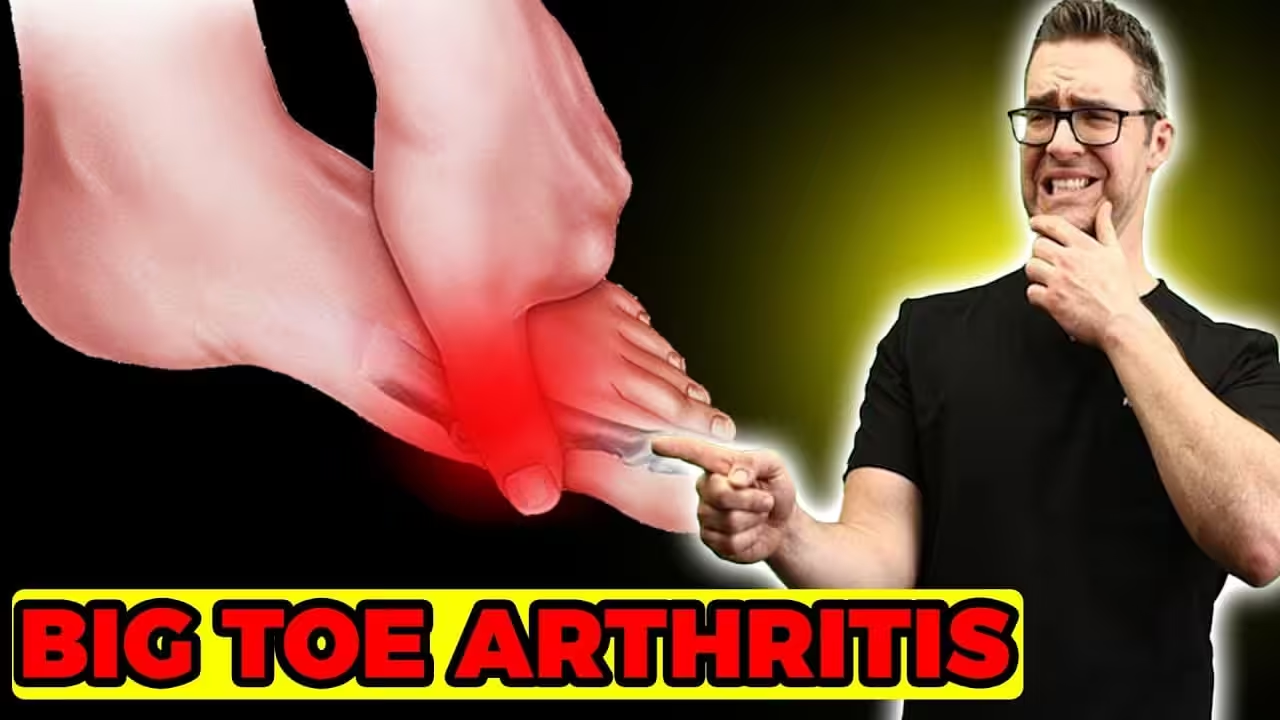
Hallux Rigidus (Big Toe Arthritis)
Hallux rigidus is degenerative arthritis of the big toe joint — the most common arthritic condition in the foot. It causes shooting pain during push-off (when the toe bends upward) because bone spurs and damaged cartilage create mechanical impingement within the joint. Over time, the joint progressively stiffens — “rigidus” means stiff — until the big toe barely bends at all.
The hallmark sign is a bony bump on top of the big toe joint (a dorsal osteophyte) that you can feel and often see. This bump is the joint’s response to cartilage wear — the body builds extra bone as a failed attempt at stabilization. Patients typically notice that the toe bends less than it used to, that certain shoes (particularly heels or flexible-soled shoes) aggravate the pain, and that walking uphill or pushing off during a jog produces a sharp jolt through the joint.
Hallux rigidus treatment is staged by severity. Early stages respond well to stiff-soled shoes or carbon fiber inserts (which limit toe bending and reduce joint stress), orthotics that offload the first MTP joint, anti-inflammatory medications, and corticosteroid injections for acute flares. Advanced cases with severe cartilage loss and near-total stiffness may require surgery — either a cheilectomy (removing the bone spur to restore motion) or fusion (permanently stiffening the joint in a functional position to eliminate pain).
How We Diagnose the Cause
The diagnosis of shooting big toe pain starts with a detailed history: when did it start, what makes it worse, what makes it better, was there a specific injury, does it happen at rest or with activity, and does it wake you at night? These details point toward the correct diagnosis before any imaging is ordered.
Physical examination includes testing range of motion (reduced in hallux rigidus), palpating for pinpoint tenderness (sesamoiditis, nerve entrapment), checking for swelling and warmth (gout, infection), performing Tinel’s sign (tapping over a nerve to reproduce electric symptoms), and assessing the nail borders (ingrown toenail).
X-rays reveal joint space narrowing and bone spurs (hallux rigidus), sesamoid fractures or fragmentation (sesamoiditis), and soft tissue swelling patterns (gout). X-rays are typically normal in nerve entrapment and neuropathy.
Blood work is ordered when gout is suspected (serum uric acid, though it can be paradoxically normal during an acute flare), for neuropathy workup (fasting glucose, HbA1c, B12, TSH, complete metabolic panel), or if infection is a concern (CBC, ESR, CRP).
MRI or ultrasound may be needed for soft tissue evaluation — sesamoid stress fractures, ligament tears (turf toe), or nerve pathology not evident on clinical exam.
Treatment by Condition
Gout
Acute: colchicine, NSAIDs, or corticosteroids. Long-term: urate-lowering therapy (allopurinol, febuxostat) if recurrent attacks. Dietary modifications — reduce red meat, shellfish, beer, and high-fructose corn syrup. Target serum uric acid below 6.0 mg/dL.
Hallux Rigidus
Conservative: stiff-soled shoes or carbon fiber plate inserts, orthotics to offload the joint, NSAIDs, corticosteroid injections. Surgical: cheilectomy for moderate cases (removes bone spurs, restores motion) or fusion for severe cases (eliminates motion and pain permanently).
Nerve Entrapment
Shoe modification (wider toe box, looser lacing), topical analgesics (lidocaine patches, compounded nerve creams), oral neuropathic medications (gabapentin), guided corticosteroid injection at the compression site. Surgical nerve release for refractory cases.
Sesamoiditis
Offloading with dancer’s pads or custom orthotics that redistribute pressure away from the sesamoid bones, stiff-soled shoes, activity modification (avoid push-off sports), and taping to limit big toe extension. Healing takes 6–12 weeks. Refractory cases may need a bone stimulator or, rarely, surgical excision of a chronically painful sesamoid.
Turf Toe
RICE protocol initially (rest, ice, compression, elevation). Grade 1 sprains heal in 1–2 weeks with taping and stiff-soled shoes. Grade 2 sprains require 4–6 weeks in a walking boot. Grade 3 tears (complete plantar plate rupture) may require surgical repair. Return to sport must be gradual — premature return risks chronic instability of the big toe joint.
Ingrown Toenail
Mild cases respond to warm soaks and proper nail trimming (straight across, not rounded). Infected or recurrent ingrown nails require a partial nail avulsion — a quick in-office procedure under local anesthesia where the offending nail border is removed and the nail matrix is treated with phenol to prevent regrowth. The procedure takes 10 minutes and resolves the problem permanently in over 95% of cases.
Recommended Products
These are products we commonly recommend to patients with big toe pain. The right product depends on your specific diagnosis — ask your podiatrist which is most appropriate for your condition.
⭐ OUR #1 PICK
Hoka Bondi 9
The best shoe for hallux rigidus and sesamoiditis. The rigid meta-rocker sole rolls the foot forward through push-off without requiring the big toe to bend — dramatically reducing stress on the first MTP joint. The maximum cushion absorbs ground reaction forces that would otherwise travel through the inflamed joint. Patients with big toe arthritis consistently report significant pain reduction the first day they switch to this shoe.
Best for: Hallux rigidus, sesamoiditis, turf toe recovery, big toe joint protection
Check Price on AmazonPowerStep Pinnacle Orthotic Insoles
Semi-rigid arch support that redistributes pressure away from the big toe joint and sesamoid bones. For hallux rigidus and sesamoiditis, the structured arch cradle shifts load from the forefoot to the midfoot during push-off, reducing the force that passes through the first MTP joint with every step. An excellent first-line conservative treatment that works in most athletic and casual shoes.
Best for: Pressure redistribution, arch support, sesamoid offloading, general big toe pain reduction
Check Price on AmazonCorrect Toes Toe Spacers
Medical-grade silicone toe spacers that gently realign the big toe and reduce compression at the first MTP joint. For nerve entrapment, the spacers decompress the medial dorsal cutaneous nerve by widening the intermetatarsal spaces. For early hallux rigidus with a bunion component, they counteract valgus drift and reduce the mechanical impingement that causes shooting pain during push-off.
Best for: Nerve entrapment, hallux valgus with rigidus, toe alignment, interdigital nerve compression
Check Price on AmazonWhat You Can Do at Home Right Now
Identify the pattern. Pain that comes on suddenly with redness and swelling (especially at night) points to gout — take an anti-inflammatory (ibuprofen 800mg if tolerated) and see a doctor promptly. Electric, burning, or tingling pain suggests nerve involvement. Sharp pain only with toe bending or push-off suggests a joint or sesamoid problem. Knowing the pattern helps you communicate effectively with your doctor and start appropriate self-care.
Switch to a stiff-soled shoe. Regardless of the diagnosis, reducing how much the big toe bends during walking reduces stress on the joint, sesamoids, and surrounding nerves. A shoe with a rocker sole (like the Hoka Bondi) or a stiff hiking-style boot provides immediate relief for most causes of big toe pain. Avoid flexible shoes, flip-flops, and going barefoot until the pain resolves.
Ice the joint. Apply ice for 15–20 minutes, 2–3 times daily, especially after activity. Use a thin cloth barrier to protect the skin. Ice reduces inflammation and provides temporary nerve-calming pain relief.
Anti-inflammatory medication. Over-the-counter NSAIDs (ibuprofen 400–800mg with food, or naproxen 220–440mg) can reduce pain and swelling from gout, sesamoiditis, hallux rigidus, and turf toe. Take consistently for 5–7 days rather than sporadically — the anti-inflammatory effect requires steady blood levels. Avoid NSAIDs if you have kidney disease, stomach ulcers, or are on blood thinners without medical guidance.
Buddy tape for turf toe. If you injured your big toe during a sport (hyperextension), tape the big toe to the second toe with athletic tape. This limits motion at the MTP joint and acts like a temporary splint during healing.
⚠️ Warning Signs — See a Doctor Immediately
- Sudden severe pain with a red, hot, swollen big toe joint (gout flare or septic arthritis)
- Fever accompanying big toe joint swelling (possible joint infection — emergency)
- Red streaks extending from the toe toward the ankle
- Open wound or drainage from the big toe, especially with diabetes
- Complete inability to bear weight after an injury (possible fracture or complete ligament tear)
- Progressive numbness spreading from the big toe to other toes or the foot (worsening nerve compression)
- Diabetes or immunocompromised status — any new big toe pain warrants professional evaluation to prevent complications
More Podiatrist-Recommended Foot Health Essentials
Hoka Clifton 10

Max-cushion everyday shoe — podiatrist favorite for walking and running.

OOFOS Recovery Slide

Impact-absorbing recovery sandal — wear after long days on your feet.
As an Amazon Associate, Balance Foot & Ankle earns from qualifying purchases. Product recommendations are based on clinical experience; prices and availability shown above update live from Amazon.

When to See a Podiatrist
If foot or ankle pain has been bothering you for more than a few weeks, home care alone may not be enough. Balance Foot & Ankle offers same-week appointments at our Howell and Bloomfield Township clinics — no referral needed in most cases. Bring your current shoes and a short list of symptoms and we’ll build you a treatment plan in one visit.
Call Balance Foot & Ankle: (810) 206-1402 · Book online · Offices in Howell & Bloomfield Township
Frequently Asked Questions
Why does my big toe hurt at night?
Nighttime big toe pain has two common causes. Gout attacks classically begin between midnight and early morning because body temperature drops during sleep, which decreases uric acid solubility and promotes crystal formation in the cooler peripheral joints. Peripheral neuropathy also tends to worsen at night because the lack of daytime sensory input (walking, shoes, ground contact) unmasks the abnormal nerve signals — your brain “hears” the nerve pain more clearly when other sensory information quiets down. If your big toe pain is consistently worse at night, one of these two conditions is very likely.
Is shooting big toe pain a sign of diabetes?
It can be, particularly if the pain is burning, electric, or tingling and affects both feet in a symmetrical pattern. Diabetic peripheral neuropathy often begins in the big toes and gradually progresses to involve all toes and eventually the midfoot and ankle in a “stocking” distribution. However, shooting big toe pain has many non-diabetic causes (gout, arthritis, nerve entrapment from tight shoes, sesamoiditis). If you have diabetes or prediabetes and develop new shooting toe pain, get evaluated promptly — early neuropathy detection allows intervention that can prevent progression.
Can tight shoes cause shooting pain in my big toe?
Absolutely. Shoes that are too narrow, too short, or laced too tightly over the midfoot can compress the medial dorsal cutaneous nerve and the deep peroneal nerve as they cross the top of the foot. This produces electric, shooting pain radiating into the big toe that worsens with shoe wear and improves barefoot. High heels are particularly problematic because they force the toes into the narrow toe box under maximum pressure. The fix is straightforward: switch to shoes with a wider toe box, use skip-lacing over the midfoot, and consider toe spacers to decompress the interdigital nerves.
How do I know if my big toe pain is gout or arthritis?
Timing and pattern are the biggest distinguishers. Gout produces episodic attacks — sudden onset of severe pain, redness, and swelling that peaks in 12–24 hours and resolves completely in 1–2 weeks, with pain-free intervals between attacks. Hallux rigidus (arthritis) produces chronic, progressive pain that worsens with activity and improves with rest but never fully resolves — and the joint gradually stiffens over months to years. With gout, the joint looks normal between attacks. With hallux rigidus, you can often feel a permanent bony bump on top of the joint. A blood uric acid level and X-ray can usually confirm the diagnosis.
The Bottom Line
Shooting pain in the big toe has many causes — gout, hallux rigidus, nerve entrapment, sesamoiditis, turf toe, ingrown toenails, and peripheral neuropathy — each requiring different treatment. The pain pattern (sudden vs gradual, with activity vs at rest, burning vs sharp) is the most important clue to the correct diagnosis. A stiff-soled shoe with rocker geometry provides relief for most causes while you await evaluation. Don’t dismiss persistent big toe pain — early diagnosis leads to simpler, more effective treatment and prevents long-term joint damage.
Sources
- Dalbeth N, Merriman TR, Stamp LK. “Gout.” Lancet. 2016;388(10055):2039-2052.
- Coughlin MJ, Shurnas PS. “Hallux rigidus: grading and long-term results of operative treatment.” J Bone Joint Surg Am. 2003;85(11):2072-2088.
- Dellon AL. “Deep peroneal nerve entrapment on the dorsum of the foot.” Foot Ankle. 1990;11(2):73-80.
- Cohen BE. “Hallux sesamoid disorders.” Foot Ankle Clin. 2009;14(1):91-104.
- McCormick JJ, Anderson RB. “Turf toe: anatomy, diagnosis, and treatment.” Sports Health. 2010;2(6):487-494.
Shooting Pain in Your Big Toe?
Stop guessing — our podiatrists will identify the exact cause and create a targeted treatment plan. Most big toe conditions improve significantly with the right diagnosis and conservative care.
Balance Foot & Ankle — Howell & Bloomfield Township | (810) 206-1402
Shooting Pain in Your Big Toe?
Sudden sharp pain in the big toe can signal gout, sesamoiditis, hallux rigidus, turf toe, or nerve entrapment. Our podiatrists quickly differentiate between these conditions with clinical testing and imaging to get you the right treatment fast.
References
- Dalbeth N, et al. Gout. Lancet. 2021;397(10287):1843-1855.
- Cohen BE. Hallux sesamoid disorders. Foot Ankle Clin. 2009;14(1):91-104.
- Coughlin MJ, Shurnas PS. Hallux rigidus: grading and long-term results of operative treatment. J Bone Joint Surg Am. 2003;85(11):2072-2088.
Insurance Accepted
BCBS · Medicare · Aetna · Cigna · United Healthcare · HAP · Priority Health · Humana · View All →

Howell Office
4330 E Grand River Ave
Howell, MI 48843
Get Directions →
Bloomfield Township Office
43494 Woodward Ave, #208
Bloomfield Township, MI 48302
Get Directions →
Your Board-Certified Podiatrists



Ready to Get Back on Your Feet?
Same-week appointments available at both locations.
Book Your AppointmentFrequently Asked Questions
When should I see a doctor?
See a podiatrist if pain persists past 2 weeks, prevents normal activity, or is accompanied by red-flag symptoms (warmth, swelling, numbness, inability to bear weight).
Can I treat this at home?
Mild cases respond to RICE protocol (rest, ice, compression, elevation), supportive shoes, and OTC anti-inflammatories. Persistent symptoms need professional evaluation.
How long does it take to heal?
Most soft tissue injuries resolve in 2-6 weeks with appropriate care. Bone injuries take 6-12 weeks. Chronic conditions need longer-term management.
Dr. Tom’s Shooting Big Toe Pain Protocol
- Doctor Hoy’s Natural Pain Relief Gel — Gout flare or sesamoiditis shooting pain in the big toe: arnica + camphor gel applied to the 1st MTP joint and plantar forefoot 3-4x daily provides topical anti-inflammatory support between episodes.
- Foot Petals Tip Toes — Sesamoiditis and MTP joint pain with shooting forefoot pain: Foot Petals Tip Toes metatarsal cushion redistributes pressure away from the 1st MTP sesamoid complex — the primary OTC intervention for sesamoiditis.
- PowerStep Pinnacle — Hallux rigidus and turf toe with big toe joint pain: arch support with metatarsal dome reduces the ground reaction force at the 1st MTP joint during push-off — reducing the loading that provokes shooting pain.
Shooting big toe pain with sudden onset, extreme swelling, or red/hot joint? Acute gout and septic arthritis require same-day evaluation and lab work. Balance Foot & Ankle → (810) 206-1402
Ready to feel better?
Same-week appointments available in Howell and Bloomfield Township, Michigan.
Book Your VisitReady to fix this for good?
Reading goes so far. The fastest path is a 30-minute office visit. Same-day Howell or Bloomfield Township. Call (810) 206-1402.
In-Office Treatment at Balance Foot & Ankle
If home treatment isn’t providing relief for your foot and ankle conditions, our podiatry team at Balance Foot & Ankle can help with same-week evaluations and advanced in-office care.
Get Expert Care at Balance Foot & Ankle
Same-week appointments at our Howell and Bloomfield Township offices. Board-certified podiatric surgeons. Most insurance accepted.

Dr. Tom Biernacki, DPM is a board-certified foot & ankle surgeon (ABFAS & ABPM) at Balance Foot & Ankle Specialists in Southeast Michigan. With over a decade of clinical experience, he specializes in heel pain, bunions, diabetic foot care, sports injuries, and minimally invasive surgery. Dr. Biernacki is a member of the APMA and ACFAS, and his patient education content on MichiganFootDoctors.com and YouTube has made him one of the most-followed foot & ankle educators on YouTube.