
This page covers the clinical evaluation, evidence-based treatment options, and recovery timeline for posterior tibial tendon dysfunction michigan at Balance Foot & Ankle in Michigan. For same-week appointments at our Howell or Bloomfield Hills offices, call (810) 206-1402.
| PTTD Stage | Tendon Finding (MRI) | Clinical Test | Deformity | Conservative Success | Surgical Gold Standard |
|---|---|---|---|---|---|
| Stage I — Tenosynovitis | Peritendinous edema — intact fibers | Single-leg heel rise: mildly painful but possible | None — normal alignment | 80–90% with boot + orthotic | Tenosynovectomy (rarely needed) |
| Stage II — Flexible Flatfoot | Intratendinous tears — elongated tendon | Single-leg heel rise: 0–3 reps, weak | Flexible flatfoot — corrects on heel rise | 50–60% with AFO + PT | FDL transfer + calcaneal osteotomy |
| Stage IIb — Forefoot Abduction | Elongated + spring ligament incompetent | Too many toes sign, forefoot abducted | Flexible flat + forefoot drift | 30–40% — often surgical | FDL transfer + lateral column lengthening |
| Stage III — Rigid Flatfoot | Complete dysfunction — fixed deformity | Single-leg heel rise: absent | Rigid flatfoot — does NOT correct | AFO palliative only | Double or triple arthrodesis |
| Stage IV — Ankle Valgus | Complete + deltoid ligament compromise | Ankle valgus visible on X-ray | Ankle tilts into valgus | AFO palliative only | Triple arthrodesis ± ankle reconstruction |
| Treatment | Stage | Duration | Goal | Success Rate |
|---|---|---|---|---|
| Immobilization Boot (6 weeks) | I–II early | 6 weeks NWB or protected WB | Reduce acute tendon inflammation | 70–80% pain reduction |
| UCBL Custom Orthotic | I–IIa | Long-term daily wear | Control rearfoot valgus, reduce PT tendon load | 60–75% functional improvement |
| Articulated AFO | IIa–IIb | Long-term daily wear | Prevent deformity progression | 50–65% halt progression |
| Eccentric PT Tendon Rehab | I–II | 12 weeks structured PT | Strengthen tendon, improve neuromuscular control | 60–70% with orthotic combo |
| PRP Injection (PT tendon) | I–II | 1–2 injections | Promote tendon fiber healing | 65–75% improvement in early disease |
| FDL Transfer + Osteotomy | II–IIb | 9–12 months recovery | Restore arch, replace failed PT function | 85–90% good/excellent results |
| Triple Arthrodesis | III–IV | 12–18 months recovery | Correct rigid deformity, eliminate pain | 75–80% satisfaction |

Foot pain isn't resolving?
Same-week appointments at Howell & Bloomfield Hills
Board-Certified Podiatric Foot & Ankle Surgeon · Last reviewed: May 4, 2026
Medically Reviewed | Dr. Tom Biernacki, DPM | Board-Certified Podiatric Surgeon | Balance Foot & Ankle, Michigan
Related Conditions
In This Article
- What is the tibialis posterior tendon — and why does it fail?
- Understanding the Posterior Tibial Tendon
- PTTD Stages and What Each Means for Treatment
- Conservative Treatment: Custom AFOs and Physical Therapy
- Surgical Options: Flatfoot Reconstruction
- Dr. Tom's Product Recommendations
- Frequently Asked Questions
- Frequently Asked Questions

Understanding the Posterior Tibial Tendon
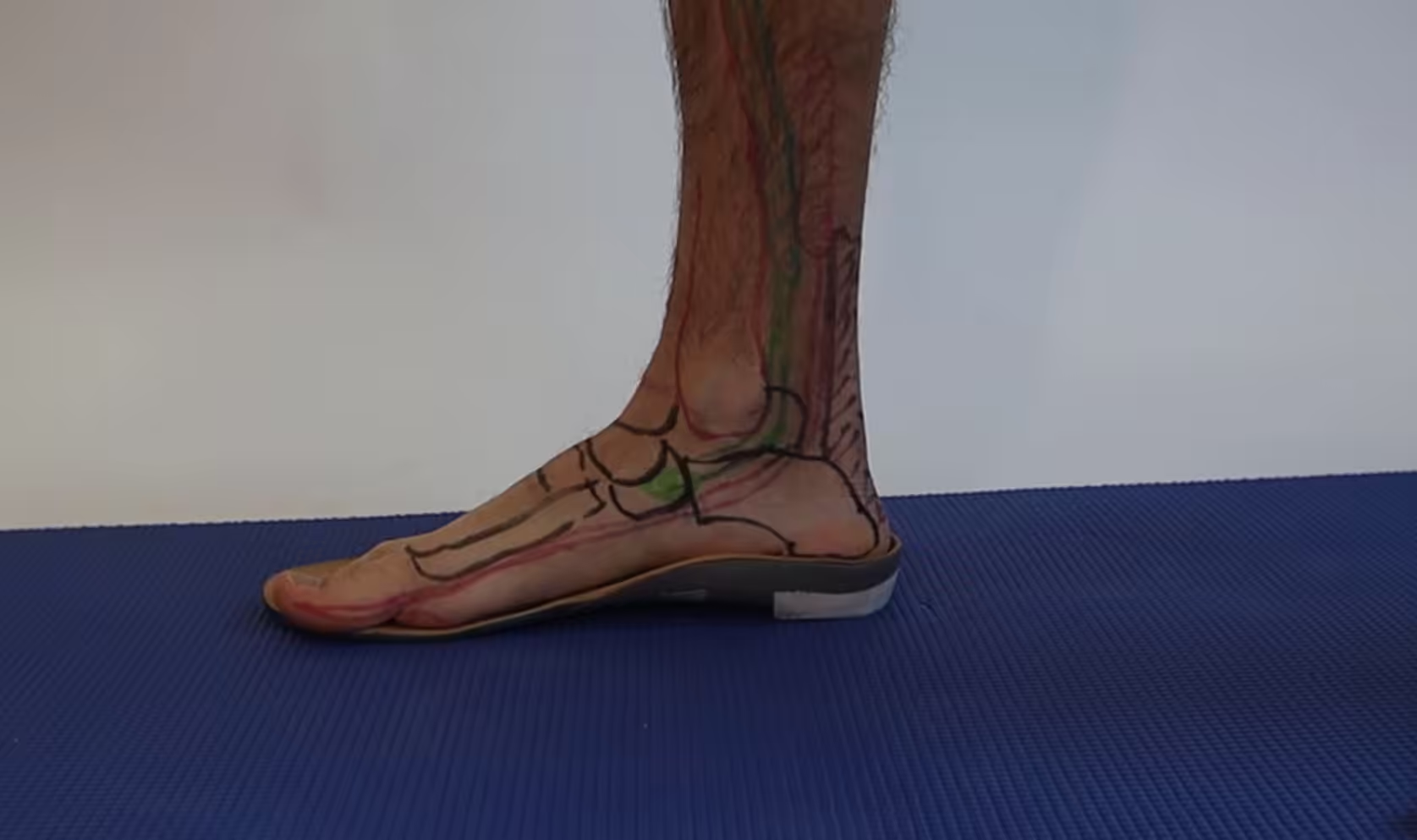
The posterior tibial tendon (PTT) is one of the most important tendons in the foot. It runs from the calf muscle down the back of the leg, around the inner ankle, and inserts into multiple bones on the bottom of the foot — where it acts as the primary support structure for the longitudinal arch. When this tendon degenerates, the arch gradually collapses inward, producing the characteristic “too many toes” sign when viewed from behind and a progressive flatfoot deformity that worsens without treatment.
PTTD Stages and What Each Means for Treatment
Stage 1: Tendinitis without deformity — the tendon is inflamed but the arch is intact. Custom AFOs, physical therapy, and anti-inflammatory measures resolve most Stage 1 cases. Stage 2: Partial tendon tear with flexible flatfoot — the arch collapses under load but can be manually corrected. Aggressive orthotic management or tendon reconstruction surgery. Stage 3: Rigid flatfoot — the arch collapse is fixed and cannot be corrected manually. Surgical intervention is typically needed. Stage 4: Ankle arthritis develops from chronic malalignment. Complex reconstruction required.
Conservative Treatment: Custom AFOs and Physical Therapy
For Stage 1 and early Stage 2 PTTD, Dr. Biernacki prescribes a custom articulating or rigid ankle-foot orthosis (AFO) that supports the arch and controls hindfoot valgus (inward rolling). Physical therapy is prescribed to strengthen the remaining PTT and calf complex. Cortisone injection near the tendon is used cautiously — it reduces inflammation but can weaken an already compromised tendon. Most Stage 1 patients achieve long-term control with consistent AFO use and do not progress to surgery.
Surgical Options: Flatfoot Reconstruction
Flexible flatfoot that fails AFO management (Stage 2) is treated with tendon reconstruction — typically a flexor digitorum longus (FDL) tendon transfer to replace the failed PTT, combined with a calcaneal osteotomy (heel bone cut and shift) to realign the hindfoot. Additional procedures such as a medial column fusion or lateral column lengthening may be required based on the degree of deformity. Dr. Biernacki plans reconstruction based on weight-bearing X-rays and a thorough preoperative evaluation — every reconstruction is customized to the patient’s specific anatomy and stage.
Dr. Tom's Product Recommendations

PowerStep Pinnacle Maxx Orthotic — Wide
⭐ Highly Rated
Maximum-support prefabricated orthotic for Stage 1 PTTD and early flatfoot. Provides significant arch support and hindfoot control as a bridge to custom AFO fitting.
Dr. Tom says: “Dr. Biernacki had me use these while waiting for my custom AFO. They reduced my inner ankle pain significantly in Stage 1 PTTD.”
Stage 1 PTTD, flexible flatfoot, inner ankle pain, overpronation
Stage 2+ PTTD — custom AFO required for adequate control
Disclosure: We earn a commission at no extra cost to you.

Copper Compression Ankle Support Sleeve
⭐ Highly Rated
Mild compression sleeve for inner ankle pain and PTTD-related swelling. Provides warmth and light medial support during low-demand activity.
Dr. Tom says: “Helps my inner ankle swelling after long days on my feet. Dr. Biernacki approved this for mild symptom management between PT sessions.”
PTTD-related swelling, inner ankle inflammation, light daily support
Advanced PTTD or structural flatfoot — requires custom AFO, not sleeve
Disclosure: We earn a commission at no extra cost to you.
✅ Pros / Benefits
- Accurate PTTD staging using weight-bearing X-rays to guide treatment decision
- Custom AFO fabrication available — articulating and rigid options
- Flatfoot reconstruction experience with FDL transfer and calcaneal osteotomy
- Conservative-first philosophy for Stage 1 and early Stage 2
❌ Cons / Risks
- PTTD is progressive — delaying treatment allows advancement to harder-to-treat stages
- Flatfoot reconstruction recovery is 3–6 months; complex cases may be longer
Dr. Tom Biernacki’s Recommendation
PTTD is a condition where timing is everything. Stage 1 patients who get a good AFO and commit to it often never need surgery. Stage 3 patients who waited too long always do. Early evaluation saves surgeries.
— Dr. Tom Biernacki, DPM | Board-Certified Podiatric Surgeon | Balance Foot & Ankle
Frequently Asked Questions
What is the ‘too many toes’ sign?
When viewed from behind, a normal foot shows 1–2 toes lateral to the heel. In advanced PTTD flatfoot, arch collapse and hindfoot valgus cause 3–4 toes to be visible — this is the ‘too many toes’ sign, indicating significant deformity.
Can PTTD be treated without surgery?
Yes — Stage 1 and most Stage 2 cases are managed conservatively with custom AFOs and physical therapy. Surgery is needed when conservative management fails in Stage 2 or for Stage 3 and beyond.
How is PTTD diagnosed?
Clinical examination plus weight-bearing X-rays are the foundation. MRI is used to assess tendon tear extent and tendon quality. Dr. Biernacki performs this evaluation in-office with on-site imaging.
Is PTTD more common in women?
Yes — PTTD affects middle-aged women disproportionately, likely related to hormonal effects on tendon collagen and biomechanical factors. However, it occurs in men as well, particularly those who are obese or have a history of inner ankle injury.
Michigan Foot Pain? See Dr. Biernacki In Person
4.9★ rated | 1,123 Reviews | 3,000+ Surgeries
Same-week appointments · Howell & Bloomfield Hills
📞 (810) 206-1402 Book Online →Frequently Asked Questions
When should I see a podiatrist?
If symptoms persist past 2 weeks, affect your normal activity, or are accompanied by red-flag symptoms (warmth, redness, swelling, inability to bear weight).
What does treatment cost?
Most diagnostic visits and conservative treatments are covered by Medicare and major insurers. Out-of-pocket costs vary by your specific plan.
How quickly can I get an appointment?
Most non-urgent cases see us within 5 business days. Urgent cases (sudden pain, possible fracture) typically same or next business day.
Frequently Asked Questions
When should I see a podiatrist?
See a podiatrist if: foot or ankle pain has lasted more than 2–4 weeks without improvement, you’re changing your gait to avoid pain, you have an open wound or sore that isn’t healing, you notice nail discoloration or thickening, you have diabetes and any foot concern, or pain is severe enough to wake you at night. Most foot conditions are easier and cheaper to treat early — what starts as a minor issue can become a surgical problem with months of delay.
What is the difference between a podiatrist and an orthopedic surgeon?
Podiatrists (DPM — Doctor of Podiatric Medicine) specialize exclusively in the foot, ankle, and lower leg. Orthopedic surgeons (MD/DO) have broader musculoskeletal training but variable foot/ankle subspecialization. For foot and ankle-specific problems, a podiatrist often has more focused training and experience. For injuries involving the leg above the ankle, complex pediatric cases, or multi-level reconstruction, orthopedic consultation may be appropriate. We frequently co-manage patients with orthopedic colleagues.
How do I know if my foot pain is serious?
Signs that warrant same-day or next-day evaluation: severe pain that appeared suddenly without clear cause, swelling, redness, and warmth that appeared suddenly (possible gout, infection, or Charcot fracture), an open wound that looks infected (redness spreading, pus, warmth), inability to bear weight, or any foot problem in a diabetic patient. Pain that’s been present for weeks and is stable is important but not an emergency — schedule within 1–2 weeks.
Can foot problems cause back and knee pain?
Yes — this is a kinetic chain effect. Abnormal foot mechanics (overpronation, supination, leg length discrepancy) cause compensatory changes in knee, hip, and lumbar alignment. Roughly 30% of patients presenting to our clinic with knee pain have a treatable foot-level biomechanical cause. Correcting foot mechanics with orthotics or appropriate footwear often provides significant knee and back relief. If you have chronic knee or back pain and haven’t had your foot mechanics evaluated, it’s worth a consult.
Are orthotics worth it?
For the right conditions, yes — custom orthotics are among the most cost-effective interventions in podiatry. They’re most effective for: plantar fasciitis, flat feet with secondary knee/back pain, leg length discrepancy, metatarsalgia, posterior tibial tendon dysfunction, and diabetic foot pressure management. Quality OTC orthotics ($35–60) resolve symptoms for 60% of patients with mild-to-moderate conditions. Custom orthotics are appropriate when OTC options have failed or when the biomechanical problem is complex. We cast custom orthotics in-office.
How do I choose the right running shoes?
Start with your foot type (flat, neutral, high arch) and running pattern (overpronator, neutral, supinator). Flat feet and overpronators do best in stability or motion-control shoes. Neutral feet do well in neutral-cushioned shoes. High arches need maximum cushioning with flexible soles. Always buy running shoes at the end of the day (foot swelling peaks then), get properly fitted by a specialist, and replace every 300–500 miles. If you’ve been injured repeatedly, a gait analysis can identify the mechanical flaw driving your injury pattern.
What is the difference between a sprain and a fracture?
A sprain is a ligament injury (the tissue connecting bones); a fracture is a break in the bone itself. Both can occur with the same trauma (ankle roll, fall). The old test — ‘if you can walk, it’s not broken’ — is wrong; many fractures are initially weight-bearable. Key differences: a fracture typically produces localized bone tenderness along the bone itself, while a sprain is tender over the ligament. X-ray is the standard to differentiate. High-grade sprains without proper treatment can be as disabling as fractures.
How do I prevent foot and ankle injuries?
The four most impactful prevention strategies: (1) Supportive, appropriately fitted footwear for your foot type and activity. (2) Gradual activity progression — the 10% rule (never increase weekly mileage or intensity by more than 10%). (3) Regular calf and ankle mobility work. (4) Strengthening the posterior tibial tendon, peroneals, and intrinsic foot muscles. Most overuse injuries are preventable; most acute injuries are not — but ankle sprain recurrence (60–70% without rehab) is prevented by balance and proprioception training.
Doctor Hoy’s Natural Pain Relief Gel
Natural topical pain relief I use in our clinic. Arnica + camphor formula — apply directly to the area 3–4x daily. ($20–25)
Shop Doctor Hoy’s →AAOS: Posterior Tibial Tendon Dysfunction
In-Office Treatment at Balance Foot & Ankle
If home treatment isn’t providing relief for your foot and ankle issues, our podiatry team at Balance Foot & Ankle can help with same-day evaluations and advanced in-office care.
Same-day appointments available. (810) 206-1402
Learn about our podiatry appointment booking → | Book online →
Our podiatrists treat the underlying cause, not just the symptom. Same-week appointments at our Howell and Bloomfield Hills, Michigan offices.
Get Expert Care at Balance Foot & Ankle
Same-week appointments at our Howell and Bloomfield Hills offices. Board-certified podiatric surgeons. Most insurance accepted.
Same-Week Appointments in Howell & Bloomfield Hills
Three board-certified podiatric surgeons. 1,123+ five-star reviews. Most insurance accepted.

Dr. Tom Biernacki, DPM is a board-certified foot & ankle surgeon (ABFAS & ABPM) at Balance Foot & Ankle Specialists in Southeast Michigan. With over a decade of clinical experience, he specializes in heel pain, bunions, diabetic foot care, sports injuries, and minimally invasive surgery. Dr. Biernacki is a member of the APMA and ACFAS, and his patient education content on MichiganFootDoctors.com and YouTube has made him one of the most-followed foot & ankle educators on YouTube.