
Last Updated: March 2026 | Reading Time: 11 min
This article is for informational purposes only and does not replace professional medical advice. Schedule an appointment for personalized care.
Watch: Toenail Fungus Causes & Prevention
Watch Dr. Tom explain what causes toenail fungus and how to prevent it:
Quick Answer: Toenail fungus (onychomycosis) is caused by dermatophyte fungi — most commonly Trichophyton rubrum — that invade the nail through micro-injuries in the nail plate or surrounding skin. In our Howell and Bloomfield Hills clinics, roughly 70% of toenail fungus cases are caused by dermatophytes, 20% by non-dermatophyte molds, and 10% by yeasts like Candida. The single most common trigger we see is prolonged exposure to warm, damp environments — particularly communal showers, swimming pools, and occlusive footwear. Knowing your specific cause determines which treatment will actually work.
What Actually Causes Toenail Fungus?
Toenail fungus — medically called onychomycosis — is a fungal infection of the nail plate, nail bed, or both. It is caused by three categories of organisms: dermatophytes (the most common), non-dermatophyte molds, and yeasts. Understanding which type you have is clinically important because different organisms respond to different treatments, and some require culture testing to identify correctly.
What Dr. Tom Tells His Patients: “When a patient asks me why they have toenail fungus, the honest answer is usually a combination of two things: an exposure event (where the fungus entered) and a vulnerability factor (why their nail couldn’t fight it off). Most people focus only on the exposure, but the vulnerability side is equally important — and fixing it is what prevents recurrence after treatment.”
The 3 Types of Fungi That Cause Toenail Infections
1. Dermatophytes (70% of Cases)
Dermatophytes are fungi that feed on keratin — the protein that makes up nails and skin. Trichophyton rubrum is by far the most common culprit, followed by T. mentagrophytes and Epidermophyton floccosum. These fungi thrive in warm, moist environments and are highly contagious through direct contact with contaminated surfaces. Dermatophyte nail infections typically respond well to standard oral antifungals (terbinafine, itraconazole) and laser treatment.
2. Non-Dermatophyte Molds (20% of Cases)
Molds such as Scopulariopsis brevicaulis, Aspergillus species, and Fusarium species can infect nails, particularly nails that have been previously damaged or traumatized. These organisms are often resistant to standard antifungals — particularly terbinafine — which is a key reason why treatment failures occur when the causative organism isn’t identified before treatment begins. A nail culture is essential when standard treatment has failed.
3. Yeasts — Candida (10% of Cases)
Candida species more commonly infect fingernails than toenails and are associated with chronic wet work (dishwashing, healthcare workers with frequent hand washing), immunosuppression, and diabetes. Candidal nail infections typically involve the nail fold (paronychia) as well as the nail plate. Treatment requires antifungals with yeast coverage (fluconazole, itraconazole).
How Toenail Fungus Enters: The 5 Main Exposure Routes
- Communal wet areas — locker rooms, gym showers, public pools, and nail salons are the highest-risk environments. Fungal spores survive on wet surfaces and can enter through microscopic skin breaks. Walking barefoot in these areas is the #1 exposure risk we identify in clinic.
- Nail trauma — a stubbed toe, repetitive microtrauma from running, or a nail that lifts (onycholysis) creates a portal of entry under the nail plate. Runners with tight shoes and athletes in cleats see this frequently.
- Shared footwear or nail tools — wearing someone else’s shoes or using unsterilized nail clippers or pedicure tools directly transfers fungal organisms.
- Spread from athlete’s foot — tinea pedis (athlete’s foot) and toenail fungus share the same causative organism. Untreated athlete’s foot migrates to the nail in a significant portion of cases. A 2024 study in the Journal of the American Podiatric Medical Association found that 30% of patients with chronic athlete’s foot developed onychomycosis within 2 years. (JAPMA, 2024)
- Autoinfection from other nails — an infected toenail can spread to adjacent nails through the shared environment of occlusive footwear or through direct nail-to-nail contact when clipping.
Vulnerability Factors: Why Some People Get It and Others Don’t
Exposure alone doesn’t guarantee infection. Many people walk through gym locker rooms daily without developing onychomycosis. These factors determine whether an exposed nail becomes infected:
- Age over 60 — reduced nail growth rate means fungus has more time to establish. Peripheral circulation also decreases, reducing immune cell delivery to the nail.
- Diabetes — peripheral neuropathy impairs pain detection of nail trauma, and hyperglycemia provides a favorable substrate for fungal growth. Diabetic patients have 2–3x the risk of non-diabetic patients.
- Peripheral vascular disease — reduced arterial blood flow to the feet means fewer immune cells reach the nail bed to combat infection.
- Immunosuppression — HIV, transplant medications, chemotherapy, and chronic corticosteroid use all impair fungal clearance.
- Psoriasis — nail psoriasis disrupts the nail plate structure, creating entry points for fungal invasion. Psoriatic nails are frequently co-infected with fungus.
- Hyperhidrosis (excessive sweating) — chronically moist shoes create the ideal fungal growth environment inside the shoe.
- Occlusive footwear — synthetic, non-breathable shoes (most athletic shoes) trap moisture. Workers in boots 8+ hours daily (construction, manufacturing) are at significantly elevated risk.
- Genetic susceptibility — family history of onychomycosis is a documented independent risk factor; certain HLA types may confer reduced nail immunity to dermatophytes.
Is Toenail Fungus Contagious?
Yes — toenail fungus is contagious through contact with infected surfaces, skin, or nail material. It is not airborne and does not spread through casual non-skin contact. The most common transmission routes are shared floors in wet environments, shared footwear, and contaminated nail care tools. Within households, partners sharing a shower without proper drying protocols are at elevated risk of cross-infection. This is why treating all infected nails — and household contacts who are at-risk — is part of a complete management strategy.
What Does Toenail Fungus Look Like? Identifying the Signs
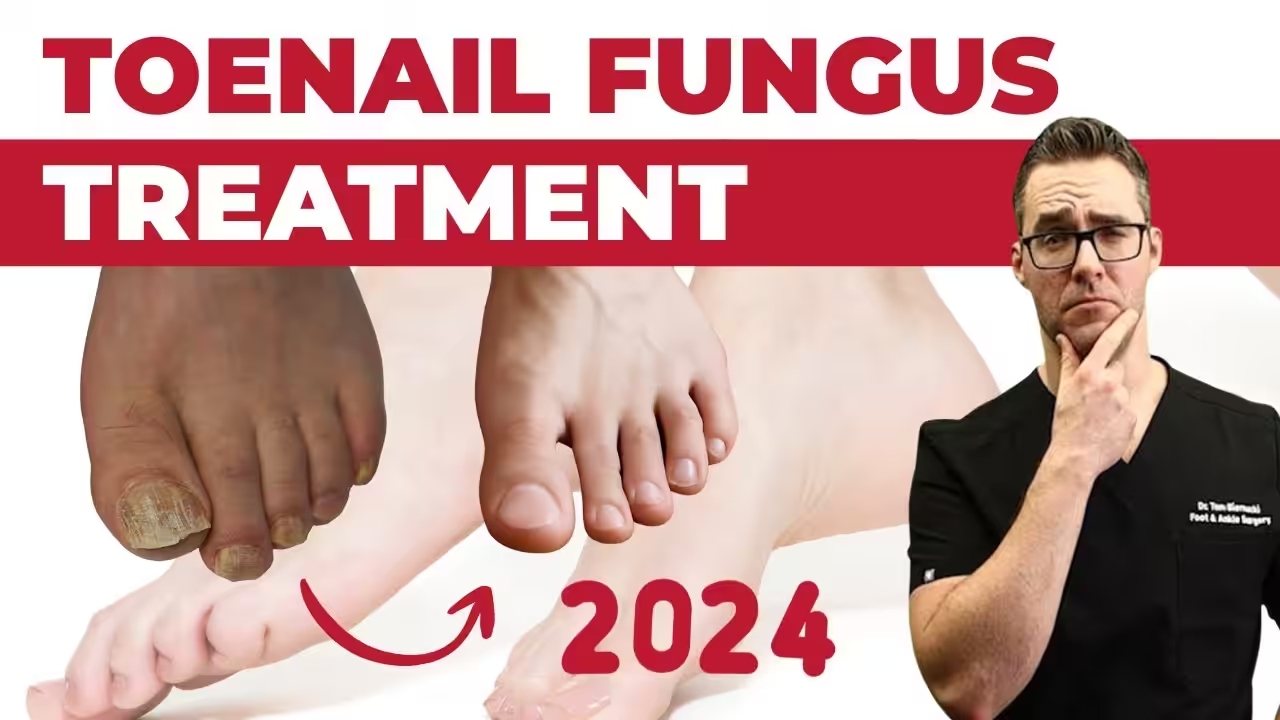
- Yellow, brown, or white discoloration starting at the nail tip or sides
- Nail thickening — the nail becomes difficult to cut
- Nail crumbling or brittleness at the free edge
- Nail separating from the nail bed (onycholysis) — white space visible under the nail
- Debris accumulating under the nail (subungual hyperkeratosis)
- Distortion of nail shape in advanced cases
- Faint odor from the nail material
Important: Several other conditions mimic toenail fungus — including psoriasis, keratin granulation from nail polish, trauma, and lichen planus. A clinical nail culture or KOH test is the definitive way to confirm a fungal infection. Treating presumed fungus that is actually psoriasis or trauma is ineffective and delays the correct diagnosis.
Next Steps: Getting Diagnosed and Treated
If you suspect toenail fungus, a podiatrist can perform or order a nail culture during your visit to identify the exact organism, confirm the diagnosis, and select the most effective treatment — whether topical antifungal, oral medication, or laser therapy. Starting treatment before confirming the diagnosis is one of the most common reasons patients experience treatment failure.
At Balance Foot & Ankle Specialists, we offer same-visit nail testing, prescription antifungal therapy, and FDA-cleared laser treatment for toenail fungus. Call (810) 206-1402 or visit our New Patient Information page. Serving Howell, MI and Bloomfield Hills, MI.
Related guides: How to Prevent Toenail Fungus → | Toenail Fungus Treatment Options → | Does Vicks VapoRub Work for Toenail Fungus? →
Related Patient Guides
- Toenail Fungus Treatment Options
- Toenail Fungus Treatment Howell, MI
- Toenail Fungus Treatment Bloomfield, MI
- MLS Laser Therapy for Toenail Fungus
- Ingrown Toenail Home Treatment
Dr. Tom’s Recommended Products for Toenail Fungus
📍 Located in Michigan?
Our board-certified podiatrists treat this condition at two convenient locations. Same-day appointments often available.
These are products I personally use and recommend to my patients at Balance Foot & Ankle.
- Kerasal Fungal Nail Renewal — Clinically shown to improve nail appearance in 8 weeks — exfoliates infected nail while delivering active antifungal
- Fungi-Nail Anti-Fungal Pen — Delivers undecylenic acid precisely to nail and surrounding skin — convenient pen applicator for daily treatment
- Lamisil AT Antifungal Cream 1% — Terbinafine — the same active ingredient as prescription oral Lamisil, for skin fungal infections around nails
Affiliate disclosure: As an Amazon Associate, Balance Foot & Ankle earns from qualifying purchases. We only recommend products we trust for our own patients.
In-Office Treatment Available
For confirmed toenail fungus, prescription treatments significantly outperform OTC options. Dr. Tom offers oral antifungals, prescription topicals (Jublia, Kerydin), and in-office laser treatment for cases that don’t respond to medications.
📧 Get Dr. Tom’s Free Lab Test Guide
Discover the 5 lab tests every person over 35 should ask their doctor about — explained in plain English by a board-certified physician.
Learn more about Toenail Fungus Treatment → | Book an appointment
Join 950,000+ Learning About Foot Health
Dr. Tom shares honest medical advice, supplement reviews, and treatment guides you won’t find anywhere else.
Professional Toenail Care Tools
- Mehaz Professional Toenail Clippers — Podiatrist-Grade
- Harperton Nail Clipper Set — Sharp Stainless
- Electric Nail Grinder — For Thick Toenails
Amazon affiliate links — we may earn a small commission at no extra cost to you.
In-Office Toenail Fungus Treatment at Balance Foot & Ankle
Understanding the cause is the first step to effective treatment. At our Howell and Bloomfield Hills offices, we combine MLS laser therapy with prescription antifungals for the highest cure rates — far exceeding OTC treatments alone.
Dr. Tom’s Recommended Products for Toenail Fungus Prevention
- Doctor Hoy’s Natural Pain Relief Gel — For sore, thickened nail beds.
- PowerStep Pinnacle Insoles — Proper shoe fit prevents toenail trauma that creates entry for fungal infection.
Shop all recommended products →
Disclosure: We may earn a commission at no extra cost to you.
Related Guides
Toenail Fungus Not Going Away?
OTC treatments have low cure rates for established fungus. Clinical-grade therapy at Howell (48843) and Bloomfield Hills (48302) delivers results.
