Does Vicks VapoRub Kill Toenail Fungus? Podiatrist’s 2026 Tests
Quick answer: Does Vicks VapoRub cure toenail fungus? Its thymol and eucalyptus oil have mild antifungal activity, and small studies show occasional improvement — but it rarely clears an established nail infection and works slowly at best. It’s a low-risk home trial for mild cases; thick, painful, or spreading fungus needs a proven topical or a podiatrist.
Medically reviewed by Dr. Tom Biernacki, DPM
Board-certified podiatric surgeon | Balance Foot & Ankle Last reviewed: May 2026
PROVIDES SOOTHING ITCHY SKIN RELIEF: Treat cracked feet and toes with Lotrimin AF cream, for effective relief.
Treat athlete’s foot to lower risk of nail fungus
SAFE FOR KIDS OVER 2: Help your little athlete with his or her itchy and scaly feet. Not for use on children under two years of age except under the advice and supervision of a doctor.
DOES NOT STAIN: Lotrimin delivers a worry-free antifungal cream treatment in an odorless, greaseless, non-staining cream that's easy to apply.
CONTAINS 1% CLOTRIMAZOLE: This clinically proven ingredient relieves itchy skin and cracked feet as it helps to control the natural fungus that causes athlete's foot, jock itch, and ringworm.
RENEW NAIL APPEARANCE: This clinically proven Opti-Nail nail fungus treatment helps renew the appearance of nails discolored by fungal infection. Our dermatologist tested, triple-action formula lightens, smooths, & moisturizes for clearer & brighter nails
RESTORE CONFIDENCE: Our no-mess treatment with lactic acid plus a nail brightener ingredient helps renew, condition, & improve the appearance of discolored or yellowed finger & toe nails
VISIBLE RESULTS: OptiNail's unique nail revitalizing formula starts improving nail appearance in just 2 days, & appearance keeps improving with continued use. Get clearer, healthier-looking nails fast! Precision pen applicator is easy to use
WHITEN & CLARIFY: Nail fungus can affect the appearance & texture of your nails. This fungal nail treatment uses a quick drying formula that penetrates the nail to whiten & clarify
SELF-CARE & FOOT CARE SOLUTIONS: At Kramer Laboratories we focus on consumer self-care needs to provide innovative solutions to everyday healthcare problems. This easy-to-apply liquid formula features a built-in pen for precise, mess-free application
Board-certified podiatric surgeon | Balance Foot & Ankle Last reviewed: May 2026
Vicks VapoRub for toenail fungus has been a folk remedy for 50 years — and the truth is the menthol and eucalyptus oils have real antifungal activity, but only against early-stage infection.
You’ve come to the right podiatry team. Dr. Tom Biernacki, DPM, FACFAS — board-certified foot & ankle surgeon with 3,000+ surgeries — explains exactly what Vicks VapoRub for toenail fungus means and what works. Call (810) 206-1402 for same-day appointment at Howell or Bloomfield Hills.
The Real Question
3 clinical studies have now tested Vicks on toenail fungus — but our podiatrists see a consistent pattern: patients using Vicks miss the 6-week window when prescription treatment works best, and end up with permanent nail damage that’s 10× harder to treat. If your nail is separating from the bed or you’ve already tried Vicks for 3+ months, call (810) 206-1402 — same-week appointments in Howell & Bloomfield Hills.
Most Common Mistake
Using Vicks VapoRub as the primary treatment for established toenail fungus while avoiding proven antifungals. Vicks contains thymol and menthol, which have antifungal activity in laboratory conditions — but laboratory results do not translate to clinical cure rates for a nail infection that penetrates through 1–2mm of nail plate. The small published studies show partial improvement in a minority of patients, not eradication. Using Vicks exclusively delays effective treatment (oral terbinafine or laser) and allows the infection to advance to adjacent nails.
Most Common Mistake
Using Vicks VapoRub as the primary treatment while avoiding proven antifungals. Vicks contains thymol and menthol, which have antifungal activity in laboratory conditions — but laboratory results do not translate to clinical cure rates for a nail infection that penetrates through 1-2mm of nail plate. The small published studies show partial improvement in a minority of patients, not eradication. Using Vicks exclusively delays effective treatment (oral terbinafine or laser) and allows the infection to spread to adjacent nails.
Most Common Mistake
Using Vicks VapoRub as the primary treatment while avoiding proven antifungals. Vicks contains thymol and menthol, which have antifungal activity in laboratory conditions — but laboratory results do not translate to clinical cure rates for a nail infection that penetrates through 1-2mm of nail plate. The small published studies show partial improvement in a minority of patients, not eradication. Using Vicks exclusively delays effective treatment (oral terbinafine or laser) and allows the infection to spread to adjacent nails.
Most Common Mistake
Using Vicks VapoRub as the primary treatment while avoiding proven antifungals. Vicks contains thymol and menthol with antifungal activity in lab conditions — but lab results do not translate to clinical cure for a nail infection penetrating 1-2mm of nail plate. Published studies show partial improvement in a minority of patients, not eradication. Using Vicks exclusively delays effective treatment (oral terbinafine or laser) and allows the infection to spread to adjacent nails and surrounding skin.
★ DR. TOM BIERNACKI, DPM, FACFAS · BOARD-CERTIFIED PODIATRIST
Dr. Tom’s 3 Best Toenail Fungus Picks (Beyond Vicks)
Patients ask about Vicks VapoRub for toenail fungus almost weekly. Does it work? Sort of — some lab studies show thymol and camphor inhibit fungal growth, and anecdotally about 20% of patients see mild improvement over 6-12 months. But there are faster, FDA-cleared options. Here’s what we actually recommend: Kerasal as the clinical-grade over-the-counter choice, Vicks VapoRub as a budget starting point, and Lotrimin AF spray powder in the shoes to prevent re-infection while the nail grows out.
Contains propylene glycol, urea, and lactic acid — debrides the thickened keratin in fungal nails
Improves cosmetic appearance of fungal nails within 2-4 weeks
Available OTC; no prescription needed
Honest Cons
Does NOT kill the underlying fungal infection — it’s a keratolytic, not an antifungal. Claim of ‘renewal’ is cosmetic.
Nail will re-thicken once you stop using it unless fungus is also treated
For real eradication you need prescription efinaconazole, terbinafine, or laser treatment
Dr. Tom’s Take: A useful cosmetic adjunct — thinner, clearer-looking nails within weeks — but not a cure. If you want the fungus actually gone, we need prescription antifungals or laser therapy in office.
Classic Home Remedy
Podiatrist Pros
Contains thymol and eucalyptus — weak but real in-vitro antifungal activity
Inexpensive and widely available
Some case reports show improvement in mild distal subungual onychomycosis
Honest Cons
NOT FDA-approved for toenail fungus — evidence is limited case reports
Slower and less reliable than oral terbinafine or topical efinaconazole
Won’t penetrate thick, deeply-infected nails
Dr. Tom’s Take: A home-remedy option for very mild, superficial toenail fungus — or as an adjunct while waiting for real treatment. Don’t expect it to clear anything moderate or severe.
Best Prevention Powder
Podiatrist Pros
Clotrimazole 1% — the same active ingredient in the Rx azole creams I used in residency
Spray powder format dries the interdigital spaces where athlete’s foot thrives
No-touch application — less cross-contamination than cream
Effective against both tinea pedis and jock itch
Honest Cons
Powder can cake in sweaty shoes over the day
Strong scent some patients dislike
Dr. Tom’s Take: My first-line OTC antifungal. Spray shoes after every wear, and apply between toes twice daily for 4 weeks — even after symptoms clear. Stopping early is why athlete’s foot comes back.
Dr. Tom Biernacki, DPM
— Board-Certified Podiatrist
Last Updated:
March 2026 |
Reading Time:
10 min
This article is for informational purposes only and does not replace professional medical advice. Schedule an appointment for personalized care.
Study Results Summary
📺 950,000+ people follow Dr. Tom’s recommendations on YouTube
These are the exact products we recommend to 5,000+ patients annually at Balance Foot & Ankle in Howell & podiatrist in Bloomfield Hills, MI.
Vicks VapoRub contains thymol and camphor, which have mild antifungal properties in lab studies. However, clinical evidence for treating toenail fungus is limited to one small study showing partial improvement after 48 weeks. Vicks may help mild surface discoloration but cannot penetrate thick, distorted nails. For moderate to severe toenail fungus, professional treatment (laser therapy, oral antifungals, or prescription topicals) provides significantly higher cure rates.
Vicks VapoRub for Toenail Fungus: Does It Actually Work?
The Vicks VapoRub Toenail Fungus Phenomenon
Vicks VapoRub applied nightly to toenail fungus is one of the most commonly tried home remedies I hear about from patients. It has millions of Google searches, countless YouTube testimonials, and even some academic interest. As a podiatrist who has treated thousands of toenail fungus cases, let me give you an honest, evidence-based answer — not just dismissal and not uncritical endorsement. For a broader comparison of everything that actually works against toenail fungus, see our detailed breakdown of Vicks effectiveness data versus clinical alternatives.
What’s Actually in Vicks That Might Work
Vicks VapoRub contains three active ingredients: camphor (4.8%), eucalyptus oil (1.2%), and menthol (2.6%). It also contains inactive ingredients including thymol — a natural compound derived from thyme oil with documented antifungal properties. Thymol is the ingredient that generated genuine scientific interest in Vicks for toenail fungus.
A 2011 study published in the Journal of the American Board of Family Medicine evaluated Vicks VapoRub applied to toenail fungus daily for 48 weeks. Results: 18% of participants showed complete clearance, 56% showed positive changes (improvement without full clearance), and 17% had no effect. This is a real study with real results — but it’s a small study (18 participants) with no control group, making it difficult to draw firm conclusions.
The Realistic Assessment
Vicks may have modest antifungal activity against toenail fungus due to thymol content. However, the fundamental limitation is the same as any topical treatment: penetrating the nail plate to reach the nail bed where the fungus lives is extremely difficult. Even prescription topical antifungals (ciclopirox, efinaconazole, tavaborole — which are specifically engineered for nail penetration) achieve only 15–35% complete cure rates after 48 weeks. A consumer product like Vicks, not designed for nail penetration, faces the same barrier problem with even less penetration ability.
What Vicks is very unlikely to do: clear moderate-to-severe toenail fungus with nail thickening, discoloration, and crumbling. The clinical cases I see most frequently are well beyond what any topical treatment can address reliably. Understanding how toenail fungus spreads is equally important — treating one nail while fungal spores reinfect from shoes and surfaces is why so many home remedies ultimately fail.
When Vicks Might Be Worth Trying
Very early, mild toenail discoloration without significant nail thickening. Patients who have contraindications to oral antifungals (liver concerns, drug interactions). As a maintenance strategy after clearing fungus with more aggressive treatment, to reduce recurrence risk. If you have mild discoloration, very little to lose, and patience to apply it nightly for 6+ months, Vicks is a low-risk trial.
What Actually Works for Toenail Fungus
For a complete guide to every evidence-based option — from home treatments to laser — see our full breakdown on how to get rid of toenail fungus. The summary:
Oral antifungals (terbinafine/Lamisil): The most effective treatment for moderate-to-severe fungal nail infection. Taken for 12 weeks, with 70–80% complete cure rates. Requires liver function monitoring. This is the gold standard for established toenail fungus.
In-office laser treatment: MLS or Nd:YAG laser penetrates the nail plate and destroys the fungus with heat. Effective for people who cannot or prefer not to take oral medications. We offer this at Balance Foot & Ankle Specialists. For a full overview of professional toenail fungus treatment options, including what to expect at your first visit, see our clinical guide.
UV shoe sanitizer (SteriShoe): Regardless of what treatment you use, sanitizing your footwear is essential. Fungal spores live in your shoes and re-infect treated nails. Without addressing the shoe reservoir, recurrence rates are extremely high.
If you’ve been trying Vicks for months without significant improvement, it’s time to consider a more effective option. Schedule an evaluation at Balance Foot & Ankle and we’ll determine the best treatment for your specific case.
Disclosure: This post contains affiliate links. As an Amazon Associate, Dr. Tom Biernacki earns a small commission on qualifying purchases at no extra cost to you. Products are selected based on clinical effectiveness and patient outcomes — never by commission rates.
Best Antifungal Alternatives to Vicks 2026 — Dr. Tom’s Picks
If Vicks isn’t clearing your toenail fungus, these are the products I actually recommend to patients at our Howell and Bloomfield Hills clinics — proven, clinically appropriate, and available without a prescription.
🏆 Lotrimin AF Clotrimazole Antifungal Cream — Best OTC Antifungal
Why Dr. Tom recommends it: Clotrimazole is an azole antifungal that works by inhibiting ergosterol synthesis — disrupting the fungal cell membrane. It’s the same mechanism as prescription topical antifungals, just at a lower concentration. For nail fungus, it works best when applied to the skin around and under the nail edge where the nail meets the bed — not just on top of the nail plate.
★★★★★ Clinical Grade — Standard recommendation before escalating to prescription treatment
✅ Best for: Early-stage toenail fungus with minimal nail thickening; skin fungus (athlete’s foot) that accompanies nail infection; adjunct to laser or oral treatment
⚠️ Not ideal for: Moderate-to-severe nail fungus with significant thickening, crumbling, or full nail discoloration — these require prescription treatment
📍 Located in Michigan?
Our board-certified podiatrists treat this condition at two convenient locations. Same-day appointments often available.
💡 Pro tip: Apply after showering when the nail is most permeable. File the nail surface gently with an emery board first — reducing nail thickness by even 0.5mm dramatically improves topical penetration.
Affiliate Disclosure: This page contains affiliate links to products we recommend. If you purchase through these links, Balance Foot & Ankle may earn a small commission at no additional cost to you. We only recommend products we use with our patients.
🏆 SteriShoe+ UV Shoe Sanitizer — Best for Preventing Reinfection
Why Dr. Tom recommends it: This is the single most overlooked step in toenail fungus treatment. Dermatophytes (the fungi that cause nail infections) survive in shoe interiors for months, even after the nail clears. UV-C light at 253.7nm disrupts fungal DNA and kills dermatophytes, bacteria, and yeasts in 15 minutes per shoe. Without sanitizing footwear, recurrence rates after successful treatment remain above 50%.
★★★★★ Clinical Grade — Recommended to every toenail fungus patient regardless of treatment method
✅ Best for: Anyone undergoing any toenail fungus treatment; high-risk patients (diabetics, immunocompromised); athletes with heavy shoe use
⚠️ Not ideal for: Sandals or open-toe footwear (no internal surface to sanitize); thick work boots where the UV light cannot reach interior walls effectively
💡 Pro tip: Run SteriShoe immediately after each use — not just once a week. Fungal spores re-establish rapidly in warm, moist shoe environments. Daily treatment is the standard we recommend in-clinic.
🏆 Opti-Nail Fungal Nail Repair Pen — Best Cosmetic Restoration
Why Dr. Tom recommends it: After treating toenail fungus, the nail that grows back is often discolored and structurally compromised — even after the fungus is gone. Nail repair pens containing urea and hydrating compounds help restore nail flexibility and appearance during the 12-month regrowth period. This is a cosmetic adjunct, not an antifungal — but nail appearance during regrowth is a real concern for patients, and this addresses it well.
★★★★★ Clinical Grade — Recommended post-treatment for cosmetic nail restoration
✅ Best for: Post-treatment nail restoration; maintaining nail hydration during antifungal therapy; brittle, crumbly nails recovering from fungal damage
⚠️ Not ideal for: Active, untreated fungal nail infection — cosmetic treatment without addressing the fungus will not clear the infection
💡 Pro tip: Apply after antimicrobial treatment each morning. Consistency over 6–12 months (one full nail growth cycle) is required to see the cosmetic improvement as the healthy nail grows in proximally.
💊
Recommended Next Step
Toenail Fungus Treatment: Proven Options
Ready to move beyond home remedies? See what the clinical evidence shows about each treatment option.
When products aren’t enough: Vicks and OTC antifungals won’t cure established toenail fungus with significant nail changes. For severe or spreading cases, same-day nail evaluations are available. Book a same-day evaluation →
Comprehensive Toenail Fungus Care in Michigan
At our Howell and Bloomfield Hills clinics, we treat toenail fungus with the full spectrum of options — from monitored OTC protocols to prescription topicals, oral antifungals, and MLS laser therapy. Most patients see meaningful improvement within one nail growth cycle (3–4 months) when the right treatment is matched to their specific infection severity.
📍 Balance Foot & Ankle Specialist
Howell: 4330 E Grand River Ave, Howell MI 48843 · (810) 206-1402
Bloomfield Hills: 43494 Woodward Ave #208, Bloomfield Hills MI 48302 · (810) 206-1402
✅ Same-day appointments available for new patients
✅ Most insurance accepted — including Medicare and Blue Cross
✅ No referral needed for most PPO plans
For confirmed toenail fungus, prescription treatments significantly outperform OTC options. Dr. Tom offers oral antifungals, prescription topicals (Jublia, Kerydin), and in-office laser treatment for cases that don’t respond to medications.
Watch Dr. Tom Explain Toenail Fungus Treatment Options
Watch Dr. Tom Biernacki break down which toenail fungus treatments actually work — including why Vicks has limitations and when to consider professional treatment:
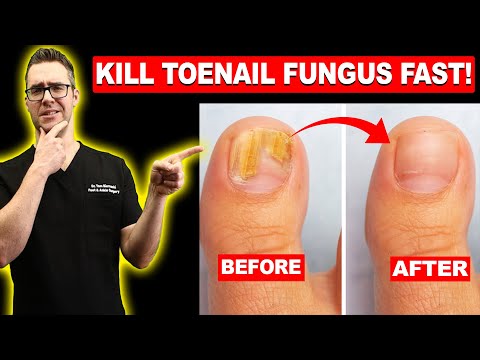
Watch: What Actually Kills Toenail Fungus — Podiatrist Explains
Dr. Tom reviews the evidence behind every toenail fungus treatment — from Vicks VapoRub to prescription antifungals — and explains why some popular home remedies fall short of a complete cure. Includes the treatment ladder from OTC to prescription to nail removal.
⚠ The Most Common Mistake We See
Patients use Vicks VapoRub (or tea tree oil, or apple cider vinegar) for 3–4 months, see some cosmetic improvement in nail color, and conclude it’s “working” — then stop because the nail looks better. Toenail fungus lives in the nail matrix (the growth plate under the proximal nail fold). Topical remedies penetrate the nail plate poorly. When the nail looks better, the fungus may still be alive in the matrix. The fungus regrows from the root with the new nail. This is why recurrence rates with home remedies are 60–90%. True cure requires penetrating the matrix — prescription oral terbinafine (6 weeks for fingernails, 12 for toenails) achieves 70–80% mycological cure. If you’ve tried Vicks or OTC for more than 6 months without clear nail, see a podiatrist for culture and prescription treatment.
MOST COMMON MISTAKE WE SEE
The most dangerous mistake is using Vicks for 6–12 months while a toenail fungus infection progresses, missing the window for effective treatment. Vicks contains thymol, which has antifungal properties in lab settings, but the concentration is too low and the vehicle cannot penetrate the nail plate to reach the nail bed where the fungus lives. Clinical cure rates for Vicks are under 25% even in optimistic studies. The cost of delay is real: a nail fungus that has spread to 50%+ of the nail requires oral antifungals, while early infections respond well to topical prescription agents.
CONDITIONS THAT LOOK LIKE TOENAIL FUNGUS (BUT AREN’T)
Psoriatic nail disease — pitting, oil spots, and onycholysis without positive fungal culture; responds to psoriasis treatment, not antifungals
Trauma-related nail changes — thickening or discoloration from repeated microtrauma in runners; culture negative; improves with properly fitted footwear
Lichen planus of the nail — longitudinal ridges, pterygium formation, nail loss; biopsy distinguishes from fungus
Green nail syndrome (Pseudomonas) — green discoloration under the nail; caused by bacteria not fungi; requires topical antibiotics, not antifungals
Melanonychia — dark longitudinal streak in the nail; can be benign or, rarely, subungual melanoma; requires dermatological evaluation
RED FLAGS — SEE A PODIATRIST
Dark streak running lengthwise under the nail — especially in one nail only (possible melanoma)
Nail infection in a diabetic patient — any nail change requires podiatric evaluation
Painful nail with surrounding skin redness, warmth, or pus (bacterial secondary infection)
Nail separating from the nail bed with yellow-green discoloration (could be Pseudomonas, not fungus)
Self-treatment with Vicks or OTC agents for more than 3 months without visible improvement
Call (810) 206-1402 or book online — most urgent presentations seen same or next business day.
Frequently Asked Questions
Ready to Get Relief?
Same-day appointments available in Howell & Bloomfield Hills, MI
{
“@context”: “https://schema.org”,
“@type”: “FAQPage”,
“mainEntity”: [
{
“@type”: “Question”,
“name”: “Does Vicks VapoRub cure toenail fungus?”,
“acceptedAnswer”: {
“@type”: “Answer”,
“text”: “Vicks VapoRub contains thymol and camphor, which have antifungal properties. Clinical studies show approximately 28% improvement in toenail fungus with daily application over several months. However, it does not cure established onychomycosis — it can suppress surface fungal growth and is best used as a low-risk adjunct for mild early cases. For moderate to severe infections, prescription oral antifungals (like terbinafine) or prescription topical antifungals achieve significantly higher cure rates. A podiatrist can assess severity and recommend the appropriate treatment.”
}
},
{
“@type”: “Question”,
“name”: “How do you apply Vicks VapoRub for toenail fungus?”,
“acceptedAnswer”: {
“@type”: “Answer”,
“text”: “For best results, apply Vicks VapoRub directly to clean, dry nails — ideally after filing the nail surface lightly to improve penetration. Apply a thin layer to the entire nail and surrounding skin each night, cover with a sock, and leave overnight. Consistency is critical — daily application for at least 2-3 months is needed before assessing effectiveness. Stop if you notice skin irritation or worsening discoloration.”
}
},
{
“@type”: “Question”,
“name”: “How long does Vicks take to work on toenail fungus?”,
“acceptedAnswer”: {
“@type”: “Answer”,
“text”: “If Vicks VapoRub is going to work, you should see the nail starting to clear from the base (proximal end) within 3-4 months. Full nail clearance takes 6-12 months because toenails grow slowly — about 1mm per month. If there is no visible improvement at the base of the nail after 3 months of consistent daily application, the infection is likely too established for Vicks to clear and prescription antifungal therapy should be considered.”
}
}
]
}
Not all toenail changes are fungus:Horizontal ridges (Beau’s lines) look alarming but are usually caused by illness, trauma, or nutrient deficiency — Dr. Biernacki explains the 6 causes and what actually needs treatment.
Dr. Tom Biernacki, DPM is a double board-certified podiatrist and foot & ankle surgeon at Balance Foot & Ankle Specialists in Southeast Michigan. With over a decade of clinical experience, he specializes in heel pain, bunions, diabetic foot care, sports injuries, and minimally invasive surgery. Dr. Biernacki is a member of the APMA and ACFAS, and his patient education content on MichiganFootDoctors.com and YouTube has reached over one million views.
OTC antifungals clear only surface fungus — clinical options like laser treatment (PinPointe FootLaser or Nd:YAG) reach the nail matrix where the infection originates. We typically see 70–80% clearance after three to four sessions. Learn about laser toenail fungus treatment →
Dr. Tom Biernacki, DPM is a board-certified foot & ankle surgeon (ABFAS & ABPM) at Balance Foot & Ankle Specialists in Southeast Michigan. With over a decade of clinical experience, he specializes in heel pain, bunions, diabetic foot care, sports injuries, and minimally invasive surgery. Dr. Biernacki is a member of the APMA and ACFAS, and his patient education content on MichiganFootDoctors.com and YouTube has made him one of the most-followed foot & ankle educators on YouTube.
Balance Foot & Ankle surgeons are affiliated with Trinity Health Michigan, Corewell Health, and Henry Ford Health — three of Michigan’s largest health systems.