

✅ Medically reviewed by Dr. Thomas Biernacki, DPM — Board-Certified Podiatrist · Last updated April 6, 2026
Swelling on the Top of Your Foot?
Book Your Appointment Online
Get an accurate diagnosis and effective treatment from trusted Michigan foot specialists. We identify the cause of your swelling and create a personalized plan to relieve pain and restore comfort.
Schedule Your Appointment Today


-
Board-Certified Podiatrists -
Diabetic Foot Doctor Near You -
Howell & Bloomfield Hills
⚡ Quick Answer
A swollen top of foot is most commonly caused by extensor tendonitis (from tight shoes or overuse), a stress fracture (from repetitive impact), or a ganglion cyst (fluid-filled lump near a joint). Start with RICE — rest, ice 15–20 min several times daily, compression, and elevation above heart level. Loosen your shoe laces immediately. If swelling doesn’t improve within 5–7 days, or you can’t bear weight, see a podiatrist for X-rays to rule out a fracture. Bilateral foot swelling (both feet) with no injury suggests a systemic cause like venous insufficiency or fluid retention — see your doctor.
⚠️ Most Common Mistake
The biggest mistake is continuing to exercise through dorsal foot pain and swelling, thinking it’s “just a strain.” If you have a metatarsal stress fracture, continued activity can convert it to a complete fracture that requires weeks in a boot or even surgery. Another common error: tying shoes too tightly over a swollen foot, which compresses the extensor tendons and makes inflammation worse. Skip-lacing or switching to a wider shoe gives immediate relief. For swelling after a midfoot twist injury, don’t ignore it — a Lisfranc injury is commonly missed and leads to chronic problems if untreated.
🔍 Differential Diagnosis
- Extensor Tendonitis — Pain and swelling along the tendons on top of the foot; worsens with toe extension against resistance; caused by tight shoes or overuse
- Metatarsal Stress Fracture — Localized swelling and point tenderness over a metatarsal shaft; pain worsens with activity and improves with rest; may not show on initial X-ray
- Ganglion Cyst — Soft, compressible, round lump on top of the foot near a joint; may fluctuate in size; transilluminates with light
- Lisfranc (Midfoot) Injury — Swelling and bruising on top of the midfoot after a twisting injury; pain with weight-bearing; widening of the midfoot on X-ray
- Gout — Sudden onset intense pain, redness, warmth, and swelling; often affects the big toe joint but can occur on the dorsum; elevated uric acid
Swollen Top of the Foot Causes & Best Treatment Video
Causes of a Swollen Top of the Foot
Top of Foot Swollen Causes, Symptoms & Best Home Treatment Overview:
-
The goal is to see whether just one foot is swollen or both feet are swollen. -
If just 1 foot is swollen, this is most likely an injury to 1 of the feet or too much rubbing to the top of the foot. -
The most common cause of just 1 top of the foot being swollen is a Lisfranc fracture or sprain or rubbing against the top of the foot in a tight shoe. -
Usually, one foot is flatter than the other to become more swollen and painful than the other foot. -
It is also common to have extensor tendonitis to the top of both feet. It is also possible to have heart problems, liver problems, kidney problems, or breathing problems that can lead to swelling in her feet. -
If both feet are swollen equally, see your doctor or podiatrist and have your feet evaluated!
Symptoms:
The symptoms can usually depend on what is the cause of your top of the foot swelling or your swollen top of the foot:
- Numbness burning and tingling can be caused by irritation to the nerves on top of her foot.
- A deep aching throb can be due to rubbing or extensor tendonitis to the top of your foot.
- If you have prominent bone, this may be a bone spur or a bone prominence.
- If you have redness, this may be skin irritation to the top of the foot.
Most Common Causes:
1. Dorsal Compression Syndrome:
- Dorsal compression syndrome occurs when there is too much stress on the foot.
- This is most common in a condition called overpronation. This is when your foot flattens out, and the arch collapses.
- This leads to the bones compressing on the top of your foot while the bottom of your foot stretches.
- The top of your foot experiences compression.
- The bottom of your foot experiences tension and microscopic tearing.
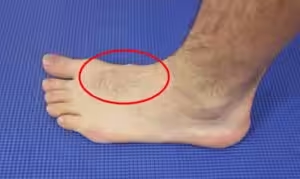
2. Top Of Foot Numbness Or Tingling:
- The top of the foot’s tingling is usually due to nerve irritation.
- The medial dorsal cutaneous nerve is most frequently affected.
- The medial dorsal cutaneous nerve is a branch off of your superficial peroneal nerve.
- If you have tight shoelaces or a tight boot pressing against the top of your foot, this can lead to bruising of these nerves.
- A bruise nerve can be sore and swollen for 2-3 months or more.
- This bruising can take a lot of time in a lot of effort to get better.
3. Top Of The Foot Bone Spur:
- A bone spur on top of the foot forms due to abnormal friction and stress on the bone.
- Bone spurs are your body’s response to try to strengthen an area that experiences too much pressure.
- Too many people think that the spur is the problem itself; the spur is not the problem!
- If you can get rid of the abnormal forces and stress, the spur should not bother you very much.
- The spur itself rarely needs to be removed for many people.
- The problem with the spur is that it can eventually cause nerve compression and pressure against the top of your shoe.

4. Metatarsal Stress Fracture:
- This is most common in people who start working in a new job with a lot of walking on a hard floor or an athlete who has started extensive training.
- This does not happen instantly, But gradually over time.
- It can take days or weeks to start hurting and causing pain gradually.
- Eventually, this will get too excruciating to continue walking or running.
- This can take 10-21 days to show up on X-ray.
- In our office, in option is to use ultrasound to detect the stress fracture.
- The more sensitive test can be an MRI or a CT scan, leading to an extensive co-pay fracture. For this reason, we try to focus on using the ultrasound or trying to see if the treatment causes relief of symptoms.
5. Sprained Top Of The Foot:
- A sprain in the top of the foot or the arch is called a Lisfranc sprain.
- In most cases, it is usually only a sprain that lasts a couple of days to a couple of weeks.
- But in some cases, it may be essential to seek imaging & further treatment.
6. Lisfranc sprain or Lisfranc fracture:
- If just one foot is swollen and you have had a traumatic incident recently, this is very likely the cause of your foot pain.
- This can read quite reducing your podiatrist, and it might require surgery, being in a cast, boot, and time off work.
- Do not take a chance with a Lisfranc fracture or Lisfranc sprain. Get it evaluated immediately!
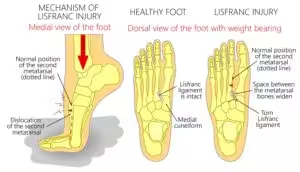
Lisfranc sprain or Lisfranc fracture is an injury to the ligaments holding the middle of your foot together.
7. Fluid Cyst:
- Ganglionic cysts are soft masses across the top of the foot which are not immediately dangerous!
- These are simply pockets of fluid that pouch out from the joints of your foot bones like a balloon.
- Treatment consists of draining and removing the pocket of fluid.
- But they should still check out by a podiatrist because there is a chance that they may be something a little more dangerous.
8. Extensor Tendonitis:
- Just like a nerve can get irritated on top of the foot, so can tendons.
- The most common tendon is called the anterior tibial tendon.
- Another name for this is anterior tibial tendonitis.
- Extensor tendons are the ones responsible for lifting your foot toward your shin.
- They can become irritated from being overworked.
- This is very common in long-distance runners and running hills.
- The front of your leg and the top of your foot will be sore.
9. Plantar Fasciitis – Entire Arch Pain
- This is by far the most common pain in the arch of your foot.
- It is said that up to 40% or more people in the world will experience chronic heel pain at some point in her life.
- 93% or more of heel pain has been said to be a form of plantar fasciitis.
- If it feels painful in the morning & painful after walks, this is the first thing you should consider.
- This usually gets better after 10-20 steps, but new microscopic tears from within your plantar fascia ligament.
- The key is to stop this damage from occurring first, use good shoes and good insoles to make this pain go away examination point.
- Plantar fasciitis is usually related to flat foot & is due to the stretching of the tissues in the middle of your foot!
Top of Foot Swollen: Trusted Foot & Ankle Information
Learn what’s hurting and how to fix it.
Finding the best products for managing peripheral neuropathy and diabetic foot pain can make a world of difference in your daily comfort and mobility.
When it comes to managing foot pain from conditions like plantar fasciitis, flat feet, or diabetic neuropathy, the best orthotics can offer crucial support and relief.
Choosing the best shoes for foot conditions like neuropathy, plantar fasciitis, or flat feet is essential for pain relief and long-term foot health.
Athlete’s Foot
Ball of Foot
Achilles Tendon
Bunion
Big Toe
Callus
Foot Fungus
Gout
Ingrown
Orthotics
Outside of Foot Pain
Sports Podiatrist
Why Choose Balance Foot & Ankle Specialist in Howell and Bloomfield Hills?
If you are experiencing swelling on the top of your foot, it’s important to identify the underlying cause and receive the right care. At Balance Foot & Ankle Specialist, with locations in Howell and Bloomfield Hills, Michigan, our experienced podiatrists provide thorough evaluations and customized treatment plans to reduce swelling, relieve pain, and restore healthy foot function. Whether your condition is due to injury, inflammation, or an underlying medical issue, we are here to provide advanced solutions and compassionate care to help you get back on your feet comfortably.
Book Your Podiatrist Visit Now



Why Michigan Patients Trust Us
-
Experienced in both non-surgical and surgical treatments -
Personalized care for every patient -
Advanced diagnostic and treatment techniques -
Convenient Michigan locations -
Compassionate, patient-focused approach
Book a Foot Consultation Today
Our board-certified podiatrists specialize in foot and ankle care.
Experienced Care for Top of the Foot Pain
Dr. Tom Biernacki, DPM
Dr. Tom Biernacki, Head Podiatrist at Balance Foot & Ankle Specialist, brings years of experience diagnosing and treating complex foot and ankle conditions—including heel nerve pain.

Dr. Carl Jay,
DPM
Experienced in geriatric foot conditions, chronic pain treatment, and difficult toenail management. Highly rated by Michigan seniors for comfort-focused care.

Dr. Daria Gutkin, DPM
Dr. Gutkin is experienced in treating a variety of conditions including diabetic foot care, foot pain and trauma.
FAQ: Swelling on the Top of the Foot
Why is the top of my foot swollen?
If you ever asked yourself “Why is the top of my foot swollen?” Your foot is swollen most commonly due to dorsal compression syndrome and overpronation of your foot. With over pronation of your foot the dorsal portion of the foot can compress and caused swelling and tenderness to the top of the foot.
Why is the top of my foot swollen and hurt?
If you ever asked yourself “Why is the top of my foot swollen & hurt?” In our experience the top of the foot being swollen and her is almost always due to overuse and overpronation. It usually happens in either the left foot or the right foot depending on who is tighter through the hamstring or the calf muscle on that foot. This versus the foot to externally rotate more on that side causing the Lisfranc joint to compress at the top and stretch at the bottom.
Why is the top of my foot swollen and red?
If you ever asked yourself “Why is the top of my foot swollen and red?” The redness can be due to the overpronation of your foot as well as rubbing against the top of your shoe. The best relief that we have found towards the top of the foot turning red is to change the Lasix so that it is not squishing or squeezing against the top of the foot.
What causes swelling on the top of the foot?
Swelling may be caused by injuries (sprains, fractures), tendonitis, arthritis, poor circulation, gout, or even footwear that restricts blood flow.
Can tight shoes make the top of my foot swell?
Yes. Shoes that press too tightly across the top can irritate tendons and restrict circulation, leading to swelling and discomfort.
Is swelling on the top of the foot always serious?
Not always. Mild swelling can come from overuse, standing too long, or minor irritation. However, persistent or painful swelling should be checked by a podiatrist.
Could a stress fracture cause swelling on the top of my foot?
Yes. Stress fractures in the metatarsals often cause localized swelling, pain, and tenderness on the top of the foot.
Can arthritis cause swelling on the top of the foot?
Yes. Arthritis in the midfoot joints can trigger inflammation and swelling, especially after walking or physical activity.
Is the Swelling on the Top of Your Foot Getting Worse?
Don’t wait for the pain or swelling to interfere with your daily life. The right diagnosis and treatment can bring lasting relief and prevent more serious problems.
At Balance Foot & Ankle Specialist, we provide personalized care to identify the cause of your foot swelling and help you return to comfortable, pain-free movement.
Book Your Foot Evaluation
Call Now for Relief
Swelling on Top of Your Foot?
Don’t ignore unexplained foot swelling. Our podiatrists diagnose the underlying cause and provide targeted treatment for fast relief.
Clinical References
- Menz HB, Jordan KP, Roddy E, Croft PR. Characteristics of primary care consultations for musculoskeletal foot and ankle problems in the UK. Rheumatology. 2010;49(7):1391-1398.
- Rome K, Survepalli D, Sanders A, et al. Functional and biomechanical characteristics of foot disease in chronic gout. Arthritis Rheum. 2011;63(11):3318-3327.
- Rao S, Riskowski JL, Hannan MT. Musculoskeletal conditions of the foot and ankle: assessments and treatment options. Best Pract Res Clin Rheumatol. 2012;26(3):345-368.

Dr. Tom Biernacki, DPM is a double board-certified podiatrist and foot & ankle surgeon at Balance Foot & Ankle Specialists in Southeast Michigan. With over a decade of clinical experience, he specializes in heel pain, bunions, diabetic foot care, sports injuries, and minimally invasive surgery. Dr. Biernacki is a member of the APMA and ACFAS, and his patient education content on MichiganFootDoctors.com and YouTube has reached over one million views.