
Quick answer: Treatment for fungal toenail treatment laser oral topical antifungals compared follows a stepwise approach: 1) conservative care first (rest, ice, supportive footwear, OTC anti-inflammatories), 2) physical therapy and targeted exercises, 3) in-office treatments (injections, custom orthotics) if conservative fails at 4-6 weeks, 4) surgery for refractory cases. Most patients resolve at step 1 or 2. Call (810) 206-1402.
Medically reviewed by Dr. Tom Biernacki, DPM — Board-Certified Podiatric Surgeon — Balance Foot & Ankle, Howell & Bloomfield Township, MI. Last updated April 2026.
Medically reviewed by Dr. Tom Biernacki, DPM
Board-certified podiatric surgeon | Balance Foot & Ankle
Last reviewed: April 2026
The most important clinical decision with Fungal Toenail Treatment Laser Oral Topical Antifungals Compared isn’t which treatment to start with — it’s which subtype or underlying cause you actually have. That distinction changes everything. Call us: (810) 206-1402
Considering laser locally? We provide laser treatment for toenail fungus at our Howell office and at our Bloomfield Township office, with same-week consults: (810) 206-1402.
Table of Contents
Watch Dr. Tom: Book → | (810) 206-1402
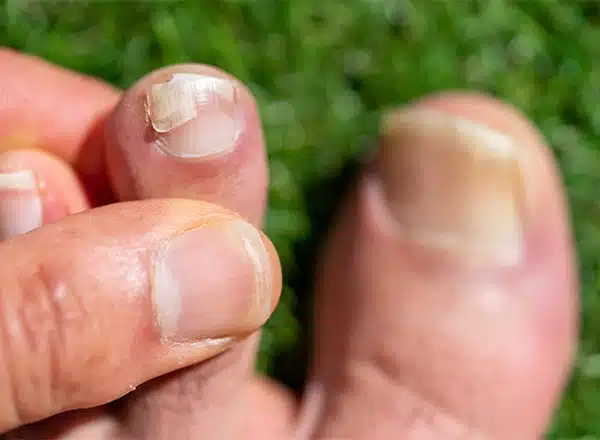
Understanding Fungal Toenail Infections
 toenail fungus treatment options laser oral topical – Balance Foot & Ankle Howell MI” class=”wp-image-57354″ width=”1200″ height=”630″ loading=”eager” fetchpriority=”high” decoding=”async”/>

Watch: Tea Tree Oil Toenail Fungus Home Treatment [Doctor Cure!] — MichiganFootDoctors YouTube
Laser Treatment for Fungal Nails
Nd:YAG laser therapy is our primary treatment for fungal toenail infections at Balance Foot & Ankle. The laser delivers targeted energy that penetrates the nail plate and selectively heats fungal organisms within the nail bed to temperatures that kill the fungi without damaging surrounding tissue. The procedure is performed in the office without anesthesia — patients typically describe a warming or mild heating sensation during treatment. A series of four treatments performed at monthly intervals is our standard protocol. Laser treatment produces mycological cure rates of approximately 70 to 80 percent and is preferred by many patients because it avoids the side effect profile and drug interactions of oral antifungals.Oral Antifungal Medications

When to see a podiatrist about toenail fungus:
- Nail is thickening, crumbling, or separating from the nail bed
- You have diabetes or peripheral neuropathy
- Over-the-counter treatments have failed after 3 months
- Pain or drainage around the affected nail
Topical Antifungals and Preventing Recurrence

Ready to Relieve Your Foot Pain?
Board-certified podiatrists serving Southeast Michigan. Same-week appointments available.
Book Your AppointmentRelated Guides
Recommended OTC treatment: The Fungi-Nail Anti-Fungal Pen delivers undecylenic acid directly to the nail. In our clinic, we recommend this as a convenient daily application for mild infections or as maintenance after completing prescription treatment.
More Podiatrist-Recommended Fungus Essentials
Breathable Diabetic Shoe
Orthofeet Sprint — deep, breathable design reduces fungal growth.
Moisture-Wicking Sock

OS1st FS4 — keeps feet dry, eliminating the warm-wet environment fungus needs.
Breathable Recovery Slide
HOKA Ora 3 — lets feet air out after closed-shoe exposure.
As an Amazon Associate, Balance Foot & Ankle earns from qualifying purchases. Product recommendations are based on clinical experience; prices and availability shown above update live from Amazon.
When to See a Podiatrist
Topicals only penetrate the top 30% of the nail plate — if the fungus is near the cuticle or under 50% of the nail, oral terbinafine or laser is usually required for full clearance. Balance Foot & Ankle offers in-office fungal nail diagnostics and laser treatment that reaches the nail matrix where topicals can’t. We’ll examine the nail and recommend the fastest path to clear, healthy regrowth.
Call Balance Foot & Ankle: (810) 206-1402 · Book online · Offices in Howell & Bloomfield Township
Frequently Asked Questions
How long does toenail fungus treatment take?
Oral antifungals require 3 months of daily pills, but a visibly clear nail takes 9 to 12 months to grow out fully. Laser treatment involves 3 to 4 sessions spaced monthly. Topical treatments need 48 weeks of consistent daily application. In our clinic, we set realistic expectations because the toenail growth cycle cannot be rushed.
Is laser treatment for toenail fungus worth it?
Laser treatment works well for patients who cannot take oral medications due to liver concerns or drug interactions. Clinical studies show 60 to 70% improvement rates. The procedure is painless and has no systemic side effects, making it a viable option when oral terbinafine is not appropriate.
Can toenail fungus come back after treatment?
Recurrence rates reach 10 to 50% within 2 years regardless of treatment method. Preventing reinfection requires keeping feet dry, treating shoes with antifungal spray, wearing moisture-wicking socks, and addressing any underlying conditions like athlete’s foot that serve as a fungal reservoir.
In Our Clinic
In our clinic, the toenail fungus patient has usually already tried OTC topical antifungals for months with no improvement. We confirm the diagnosis with a PAS stain or fungal culture — because about 30 % of thickened, discolored nails are actually NOT fungal (they’re trauma, nail psoriasis, or keratin granulation from polish). For true dermatophyte onychomycosis, oral terbinafine (Lamisil) remains the most effective treatment with ~70 % cure rate and manageable safety monitoring. Nail laser and topical efinaconazole are options for patients who can’t take oral medication. The nail grows back clear over 9–12 months, not overnight.
The Bottom Line
Toenail fungus rarely resolves on its own, and the longer treatment is delayed, the harder the infection becomes to clear. A podiatrist can culture the nail to confirm the diagnosis and recommend the most effective treatment based on infection severity, your health history, and lifestyle preferences.
Ready to Get Relief?
Same-day appointments available in Howell & Bloomfield Township, MI
4.9★ | 1,123 Reviews | 3,000+ Surgeries
Or call: (810) 206-1402
Toenail Fungus Treatment at Balance Foot & Ankle
From topical medications to laser therapy, our podiatrists offer the full spectrum of toenail fungus treatments. We help you choose the most effective option based on severity at our Howell and Bloomfield Township offices.
Learn About Toenail Fungus Treatment | Book Your Appointment | Call (810) 206-1402
Clinical References
- Gupta AK, et al. Therapies for onychomycosis: a systematic review and network meta-analysis of mycological cure. J Am Podiatr Med Assoc. 2019;109(6):442-456.
- Lipner SR, Scher RK. Onychomycosis: treatment and prevention of recurrence. J Am Acad Dermatol. 2019;80(4):853-867. doi:10.1016/j.jaad.2018.05.1260
- Gupta AK, Simpson FC. Laser therapy for onychomycosis. J Cutan Med Surg. 2013;17(5):301-307.
Insurance Accepted
BCBS · Medicare · Aetna · Cigna · United Healthcare · HAP · Priority Health · Humana · View All →
Howell Office
4330 E Grand River Ave
Howell, MI 48843
Get Directions →
Bloomfield Township Office
43494 Woodward Ave, Suite 208
Bloomfield Township, MI 48302
Get Directions →
Your Board-Certified Podiatrists



Ready to Get Back on Your Feet?
Same-week appointments available at both locations.
Book Your AppointmentIn-Office Treatment at Balance Foot & Ankle
If home treatment isn’t providing relief for your toenail condition, our podiatry team at Balance Foot & Ankle can help with same-day evaluations and advanced in-office care.
Same-day appointments available. (810) 206-1402
Learn about our toenail fungus laser treatment → | Book online →
Frequently Asked Questions
How long does treatment take to work?
Most patients see improvement in 4-8 weeks with consistent conservative care. Persistent symptoms after 8 weeks need imaging and escalation.
When is surgery needed?
Surgery is reserved for cases that fail 3-6 months of conservative care, structural deformities, or fractures requiring stabilization.
Is this covered by insurance?
Most diagnostic visits and conservative treatments are covered by Medicare and major insurers. Custom orthotics often require diabetic or post-surgical justification.

Dr. Tom Biernacki, DPM is a board-certified foot & ankle surgeon (ABFAS & ABPM) at Balance Foot & Ankle Specialists in Southeast Michigan. With over a decade of clinical experience, he specializes in heel pain, bunions, diabetic foot care, sports injuries, and minimally invasive surgery. Dr. Biernacki is a member of the APMA and ACFAS, and his patient education content on MichiganFootDoctors.com and YouTube has made him one of the most-followed foot & ankle educators on YouTube.