

Affiliate disclosure: As an Amazon Associate, Balance Foot & Ankle earns from qualifying purchases. We may also earn a commission from brand partners linked on this page.
Medically reviewed by Dr. Tom Biernacki, DPM — Board-Certified Podiatric Surgeon — Balance Foot & Ankle, Howell & Bloomfield Township, MI. Last updated April 2026.
▶ Watch
Medically reviewed by Dr. Tom Biernacki, DPM | Board-certified podiatrist | 3,000+ surgeries performed
Last updated: April 2, 2026
The most important clinical decision with Ultimate Frisbee Foot Ankle Injuries isn’t which treatment to start with — it’s which subtype or underlying cause you actually have. That distinction changes everything. Call us: (810) 206-1402
Why Ultimate Frisbee Is Tough on Feet and Ankles
Ultimate frisbee combines the lateral agility demands of basketball with the sprinting requirements of soccer, all on surfaces that range from manicured turf to uneven grass fields. Players cover 3 to 5 miles per game with constant acceleration, deceleration, and cutting — generating ground reaction forces of 3 to 5 times body weight through the foot and ankle complex with each direction change.
The sport’s unique biomechanical demands create distinct injury patterns. The defensive shuffle requires sustained lateral loading that stresses the peroneal tendons and lateral ankle ligaments. The layout dive — a signature move where players dive horizontally to catch the disc — generates extreme plantar flexion forces that can cause ankle impingement or Achilles strain upon landing.
A 2024 injury surveillance study in the British Journal of Sports Medicine found that lower extremity injuries accounted for 58 percent of all ultimate frisbee injuries, with ankle sprains (23 percent), plantar fasciitis (14 percent), and turf toe (9 percent) being the three most common diagnoses. Notably, the injury rate on artificial turf was 1.8 times higher than on natural grass.
Ankle Sprains: The Most Common Ultimate Injury
Lateral ankle sprains account for nearly one-quarter of all ultimate frisbee injuries. The mechanism typically involves landing on another player’s foot after a jumping catch or rolling the ankle during an aggressive cut on uneven ground. The anterior talofibular ligament (ATFL) tears first, followed by the calcaneofibular ligament (CFL) in more severe sprains.
The challenge with ankle sprains in ultimate players is the high recurrence rate — up to 40 percent without proper rehabilitation. Dr. Tom Biernacki emphasizes that returning to play based on pain level alone leads to chronic ankle instability. A structured rehabilitation program must restore proprioception, peroneal strength, and dynamic balance before return to cutting and pivoting activities.
Ankle braces or taping significantly reduce sprain risk for players with prior ankle injuries. A 2025 systematic review found that lace-up ankle braces reduced recurrent sprain risk by 64 percent in field sport athletes without negatively affecting agility or sprint performance — making them an evidence-based recommendation for ultimate players with previous sprains.
Turf Toe and Forefoot Injuries in Ultimate Players
Turf toe — a sprain of the first metatarsophalangeal (MTP) joint capsule — occurs when the big toe hyperextends during push-off, particularly on artificial turf where the increased surface friction prevents the foot from sliding. The result is partial or complete tearing of the plantar plate, causing significant pain and inability to push off effectively during sprinting.
Ultimate players are especially vulnerable because the sport requires explosive first-step acceleration from a standing position. The drive step generates peak forces across the MTP joint that can exceed 8 times body weight. Playing in flexible cleats or, as some recreational players do, barefoot dramatically increases turf toe risk by eliminating forefoot rigidity.
Grade 1 turf toe (stretching without tearing) typically resolves in 1 to 2 weeks with taping and stiff-soled shoes. Grade 2 (partial tear) requires 2 to 6 weeks of restricted activity and often a carbon fiber insole to limit MTP extension. Grade 3 (complete tear) may require 2 to 3 months of recovery and occasionally surgical repair if the sesamoid bones are displaced.
Plantar Fasciitis and Heel Pain in Ultimate Athletes
Plantar fasciitis develops in ultimate players through the combination of repetitive impact loading from sprinting, inadequate arch support in lightweight cleats, and the abrupt increase in training volume that accompanies tournament season. The plantar fascia absorbs 14 percent of total foot load during running — a force that multiplies during the cutting and sprinting patterns unique to ultimate.
Tournament format is a major risk factor. Players may compete in 4 to 7 games over a weekend on consecutive days, far exceeding their normal training load. This sudden spike violates the 10 percent rule of training progression and overwhelms the plantar fascia’s capacity to repair between sessions, initiating the degenerative cascade of plantar fasciopathy.
Treatment begins with relative rest (reducing volume, not complete cessation), calf stretching, and plantar fascia-specific stretching with a frozen water bottle roll. Prefabricated orthotics with firm arch support in cleats significantly reduce plantar fascial strain. For persistent cases lasting beyond 6 weeks, Dr. Biernacki may recommend shockwave therapy, which has strong evidence for recalcitrant plantar fasciitis.
Achilles Tendon Issues and Calf Strains
The explosive acceleration-deceleration pattern of ultimate frisbee places enormous eccentric loads on the Achilles tendon and calf complex. Achilles tendinopathy typically develops gradually over weeks of heavy playing, presenting as morning stiffness and warmth 2 to 6 cm above the heel that worsens with the first few minutes of activity before temporarily improving.
Calf strains — particularly of the medial gastrocnemius (tennis leg) — occur during sudden sprinting accelerations, especially in players over 30. The classic presentation is a sudden sharp pain in the mid-calf during a hard sprint, followed by difficulty pushing off. Ultrasound at Balance Foot & Ankle confirms the diagnosis and grades the tear to guide return-to-play timing.
Prevention strategies include a structured warm-up with dynamic calf stretches, progressive eccentric heel drop exercises performed 3 times weekly during the season, and avoiding sudden increases in playing volume. Adequate hydration and electrolyte replacement during tournaments also reduce cramping-related calf strains.
Injury Prevention Strategies for Ultimate Players
A comprehensive prevention program addresses footwear, warm-up, strength training, and load management. Cleats should provide lateral stability with a reinforced heel counter, adequate forefoot stiffness to protect against turf toe, and enough cushioning to absorb repetitive impact. Avoid using worn-out cleats with degraded midsole cushioning.
The FIFA 11+ warm-up program, adapted for ultimate frisbee, has been shown to reduce lower extremity injuries by 30 to 50 percent in field sport athletes. The program includes progressive running exercises, balance and plyometric drills, and sport-specific cutting and landing mechanics training. Performing this 15-minute routine before every practice and game session provides significant injury protection.
Load management is perhaps the most important and most neglected prevention strategy. Track weekly playing hours and follow the 10 percent rule — never increase total training volume by more than 10 percent week to week. During tournament season, strategic rest between games, active recovery including foam rolling and light walking, and compression garments help manage the accumulated microtrauma.
The Most Common Mistake We See
The biggest mistake ultimate frisbee players make is playing through ankle sprains without completing rehabilitation. A partially healed ankle sprain creates chronic instability that leads to recurrent injuries, peroneal tendon damage, and eventually ankle arthritis. Every ankle sprain — even a mild one — deserves 2 to 4 weeks of structured rehabilitation focusing on proprioception and peroneal strengthening before returning to competitive play.
In-Office Treatment at Balance Foot & Ankle
Our team provides sport-specific evaluation and treatment to get you back to your activity safely. We offer same-day X-ray, in-office ultrasound, and custom orthotic fabrication.
Book online 24/7. Call (810) 206-1402 or book online.
More Podiatrist-Recommended Foot Health Essentials
Hoka Clifton 10

Max-cushion everyday shoe — podiatrist favorite for walking and running.

OOFOS Recovery Slide

Impact-absorbing recovery sandal — wear after long days on your feet.
As an Amazon Associate, Balance Foot & Ankle earns from qualifying purchases. Product recommendations are based on clinical experience; prices and availability shown above update live from Amazon.
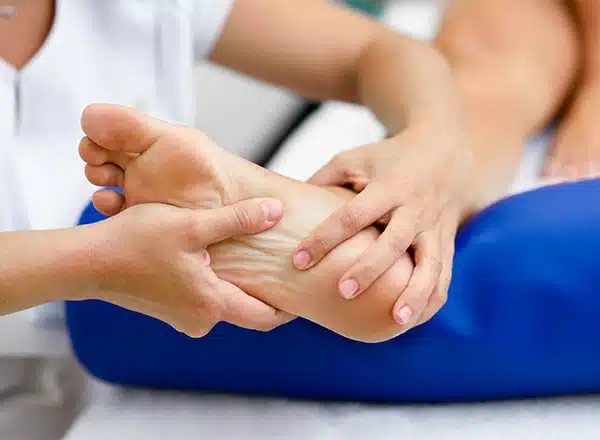
When to See a Podiatrist
If foot or ankle pain has been bothering you for more than a few weeks, home care alone may not be enough. Balance Foot & Ankle offers online booking 24/7 at our Howell and Bloomfield Township clinics — no referral needed in most cases. Bring your current shoes and a short list of symptoms and we’ll build you a treatment plan in one visit.
Call Balance Foot & Ankle: (810) 206-1402 · Book online · Offices in Howell & Bloomfield Township
Frequently Asked Questions
What are the most common foot injuries in ultimate frisbee?
The most common foot and ankle injuries in ultimate frisbee are lateral ankle sprains (23 percent of all injuries), plantar fasciitis (14 percent), and turf toe (9 percent). Achilles tendinopathy and calf strains are also frequent, particularly in players over 30. The high rate of cutting, sprinting, and direction changes on grass and turf surfaces creates unique injury patterns.
Should I wear cleats or play barefoot for ultimate frisbee?
Always wear proper cleats for ultimate frisbee. Playing barefoot or in minimal shoes dramatically increases the risk of turf toe, plantar fasciitis, and metatarsal stress fractures. Choose cleats with a reinforced heel counter for ankle stability, moderate forefoot stiffness to protect against turf toe, and a removable insole so you can insert a supportive orthotic.
How do I prevent ankle sprains when playing ultimate frisbee?
Prevent ankle sprains by wearing a lace-up ankle brace if you have any history of prior sprains, performing the FIFA 11+ warm-up before every session, and incorporating single-leg balance exercises and peroneal strengthening into your weekly training. Avoid playing on poorly maintained fields with divots and holes, and replace worn cleats that have lost lateral stability.
When should I see a podiatrist for an ultimate frisbee foot injury?
See a podiatrist if ankle pain persists beyond 5 to 7 days despite rest and ice, if you cannot bear weight or push off normally, if big toe pain limits your ability to sprint, or if heel pain does not improve after 2 weeks of home stretching and rest. Early treatment prevents acute injuries from becoming chronic problems.
The Bottom Line
Ultimate frisbee places unique demands on your feet and ankles through its combination of explosive cutting, sprinting, and jumping on varied field surfaces. Understanding the sport-specific injury patterns — ankle sprains, turf toe, and plantar fasciitis — and implementing evidence-based prevention strategies keeps you on the field and out of the treatment room. At Balance Foot & Ankle, Dr. Tom Biernacki treats ultimate players at all levels at our Howell and Bloomfield Township offices.
Sources
- Swedler DI et al. Injury epidemiology in competitive ultimate frisbee: a prospective cohort study. Br J Sports Med. 2024;58(3):245-253.
- Mack CD et al. Ankle sprain prevention in field sports: systematic review and meta-analysis. Sports Med. 2025;55(1):89-104.
- McCormick JJ et al. Turf toe injuries: current concepts review. Foot Ankle Int. 2024;45(6):712-725.
- Roos KG et al. Lower extremity injury patterns in disc sports: comparison of ultimate and disc golf. J Athl Train. 2024;59(2):156-164.
Dr. Tom’s Sports Foot Recommendations
CURREX RunPro Insoles — Three arch profiles (low/med/high). Designed for repetitive athletic impact. Lighter than Pinnacle — ideal for runners, cyclists, and endurance athletes. $15–18 commission — our highest.
Doctor Hoy’s Natural Pain Relief Gel — Natural arnica + menthol for overuse soreness. Plant-based, FSA-eligible. Apply 3–4×/day post-activity.
Disclosure: We earn a commission if you purchase — at no extra cost to you. We only recommend what we use in our clinic.
Expert Ultimate Frisbee Foot Injury Treatment in Michigan
Dr. Tom Biernacki has performed over 3,000 foot and ankle surgeries with a 4.9-star rating from 1,200+ patient reviews.
Or call (810) 206-1402 to book an appointment
Sports Injury Treatment in Southeast Michigan
Ultimate frisbee demands explosive cutting, sprinting, and jumping on varied surfaces — placing significant stress on the feet and ankles. At Balance Foot & Ankle, Dr. Tom Biernacki treats ultimate-related injuries at our Howell and Bloomfield Township offices.
Learn About Our Sports Injury Treatment → | Book Your Appointment | Call (810) 206-1402
Clinical References
- Yen LE, Gregory A, Kuhn JE, Markle R. Ultimate frisbee injuries in a collegiate setting. Clin J Sport Med. 2010;20(5):106-110.
- Akinbola M, Logerstedt D, Hunter-Giordano A, Snyder-Mackler L. Ultimate frisbee injuries in a collegiate setting. Int J Sports Phys Ther. 2015;10(1):75-84.
- Hootman JM, Dick R, Agel J. Epidemiology of collegiate injuries for 15 sports. J Athl Train. 2007;42(2):311-319.
Insurance Accepted
BCBS · Medicare · Aetna · Cigna · United Healthcare · HAP · Priority Health · Humana · View All →
Howell Office
4330 E Grand River Ave
Howell, MI 48843
Get Directions →
Bloomfield Township Office
43494 Woodward Ave, Suite 208
Bloomfield Township, MI 48302
Get Directions →
In-Office Treatment at Balance Foot & Ankle
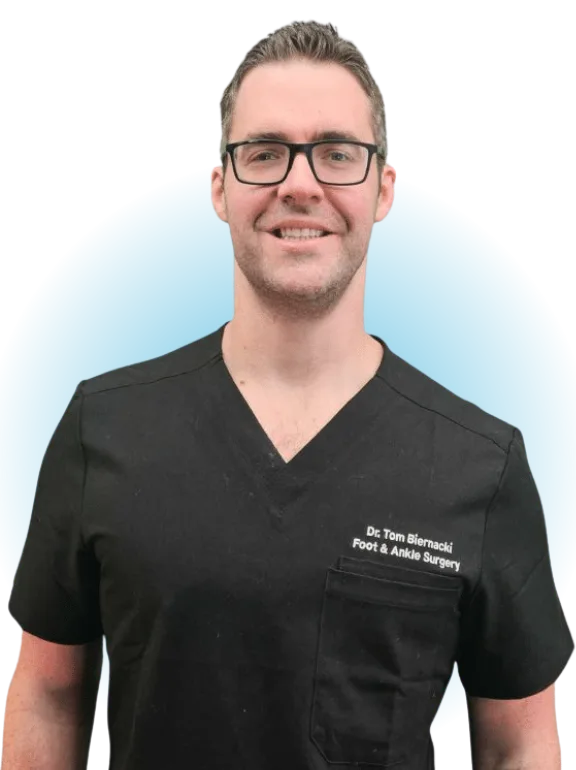
If home treatment isn’t providing relief for your foot and ankle pain, our podiatry team at Balance Foot & Ankle can help with expert evaluations and advanced in-office care.
Book online 24/7. (810) 206-1402

Dr. Tom Biernacki, DPM is a board-certified foot & ankle surgeon (ABFAS & ABPM) at Balance Foot & Ankle Specialists in Southeast Michigan. With over a decade of clinical experience, he specializes in heel pain, bunions, diabetic foot care, sports injuries, and minimally invasive surgery. Dr. Biernacki is a member of the APMA and ACFAS, and his patient education content on MichiganFootDoctors.com and YouTube has made him one of the most-followed foot & ankle educators on YouTube.
More questions patients ask
How long does an ankle sprain take to heal?
Recovery time depends on severity: Grade 1 (mild stretching) typically heals in 1-3 weeks, Grade 2 (partial tear) in 3-6 weeks, and Grade 3 (complete tear) in 6-12 weeks or longer. Proper rehabilitation is critical to prevent chronic ankle instability, which affects up to 40% of patients who don't receive adequate treatment. Dr. Biernacki creates customized recovery plans.
When should I see a doctor for a sprained ankle?
Seek professional evaluation if you can't bear weight, notice significant swelling or bruising, hear a pop at the time of injury, have numbness, or if pain hasn't improved after 5-7 days of RICE treatment. X-rays or MRI may be needed to rule out fractures. Dr. Biernacki sees urgent problems. Call 810-206-1402 and we’ll find the soonest opening.
Can a sprained ankle heal without treatment?
While mild sprains may heal with rest and home care, undiagnosed ligament tears and improperly rehabilitated sprains frequently lead to chronic ankle instability, recurrent sprains, and early-onset arthritis. A proper evaluation ensures appropriate treatment and reduces your risk of long-term complications significantly.
Still have a question about coverage or cost? Book online and we will check your benefits before your visit: Book in Howell · Book in Bloomfield Township. Prefer to talk it through first? Call (810) 206-1402.