
![Dry, Itchy Skin Or Rash On Feet Or Legs? [Dermatitis & Eczema] | Balance Foot & Ankle](https://www.michiganfootdoctors.com/uploads/2023/06/dry-itchy-skin-or-rash-on-feet-or-legs-dermatitis-eczema.avif)
You are in the right place. Dr. Tom Biernacki, DPM, FACFAS — board-certified foot & ankle surgeon with 3,000+ surgeries — explains exactly what venous stasis dermatitis means and what works. Call (810) 206-1402 for same-day appointment at Howell or Bloomfield Township.
Quick answer: Venous Stasis Dermatitis Feet Legs is a common foot/ankle topic that affects many patients. The 2026 evidence-based approach combines proper diagnosis, conservative-first treatment, and escalation only when needed. We treat this regularly at our Howell and Bloomfield Township practices. Call (810) 206-1402.
The most important clinical decision with Venous Stasis Dermatitis Feet Legs isn’t which treatment to start with — it’s which subtype or underlying cause you actually have. That distinction changes everything. Call us: (810) 206-1402
Stasis Dermatitis: Causes, Symptoms & Treatment (Podiatrist 2026)
Stasis dermatitis is a skin condition caused by chronic venous insufficiency — when leg veins fail to return blood efficiently to the heart, fluid + blood pools in the lower legs and feet. Symptoms: itchy, scaly, reddish-brown discoloration on the lower legs and ankles; swelling worse at end of day; varicose veins; sometimes ulcers near the inner ankle (medial malleolus). The brown color comes from hemosiderin (iron) deposits from leaked red blood cells.
In my Michigan podiatry clinic, my stasis dermatitis protocol gets ~80% of patients meaningfully better in 6-8 weeks: (1) compression stockings 20-30 mmHg, worn ALL day, removed only at night, (2) elevate legs above heart 15-20 min, 3-4x daily, (3) moisturize with thick urea or petrolatum cream nightly, (4) topical corticosteroid (triamcinolone 0.1% cream) for active flares, (5) vascular workup (ultrasound) to rule out DVT or refluxing veins. Red flag: open ulcer near inner ankle — needs same-week wound-care evaluation; venous ulcers heal slowly without compression.
Same-Week Appointments at Balance Foot & Ankle
Three board-certified podiatric surgeons. 950K+ YouTube subscribers. 1,123+ five-star reviews. Howell & Bloomfield Township, Michigan.
★ DR. TOM BIERNACKI, DPM, FACFAS · BOARD-CERTIFIED PODIATRIST
Stasis Dermatitis: Quick Answer
Stasis dermatitis is a chronic skin inflammation caused by venous insufficiency — when leg veins fail to return blood to the heart efficiently. Blood pools in the lower legs, leaks into surrounding tissue, and triggers an inflammatory response that turns the skin red, itchy, swollen, and eventually brown-stained (hemosiderin deposits).
The hallmark signs: reddish-brown discoloration around the ankles, weeping or scaly patches, severe itching that worsens at night, swelling that improves with leg elevation, and a feeling of heaviness in the legs by end of day. Treatment requires both addressing the underlying venous insufficiency (compression stockings 20-30 mmHg, leg elevation, exercise) AND treating the skin inflammation (moisturizers, topical steroids when severe). Untreated stasis dermatitis can progress to venous ulceration.
Medically reviewed by Dr. Tom Biernacki, DPM — Board-Certified Podiatric Surgeon — Balance Foot & Ankle, Howell & Bloomfield Township, MI. Last updated April 2026.
▶ Watch
Medically reviewed by Dr. Tom Biernacki, DPM | Board-certified podiatrist | 3,000+ surgeries performed
Last updated: April 2, 2026
Understanding Venous Stasis and Its Effects on Skin
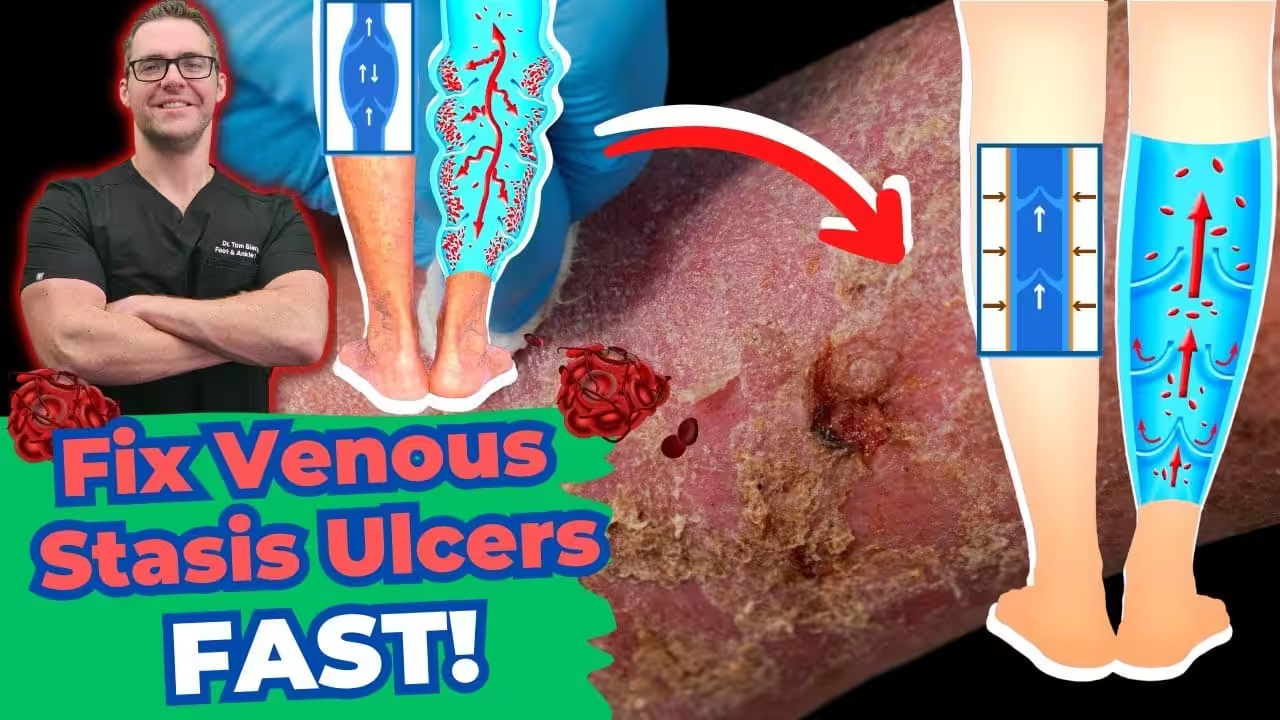
Chronic venous insufficiency (CVI) develops when the one-way valves in leg veins fail, allowing blood to pool in the lower extremities rather than returning efficiently to the heart. This venous hypertension — sustained elevated pressure in the leg veins — drives a cascade of skin and tissue changes collectively called venous stasis dermatitis.
The elevated venous pressure pushes fluid, proteins, and red blood cells through capillary walls into the surrounding tissue. Hemosiderin — an iron-containing pigment released from broken-down red blood cells — deposits in the skin, producing the characteristic brown discoloration that gives the lower legs their stained appearance.
Chronic inflammation from protein and fluid leakage triggers fibrotic changes in the skin and subcutaneous tissue, producing lipodermatosclerosis — a hardening and tightening of the lower leg skin that narrows the ankle circumference and creates an inverted champagne bottle appearance in advanced cases.
Recognizing the Stages of Venous Stasis Dermatitis
Early stage presents with mild ankle swelling that worsens throughout the day and resolves overnight, accompanied by itchy, dry skin on the inner ankles and lower legs. Patients often attribute these symptoms to dry skin or aging rather than venous disease.
Intermediate stage features progressive brown hemosiderin staining, scaling and crusting skin, and edema that no longer fully resolves overnight. Varicose veins may become visible, and the skin develops a shiny, thin texture with increased fragility.
Advanced stage involves lipodermatosclerosis (hardened, fibrotic skin), chronic swelling, recurrent cellulitis, and venous ulcer formation. Venous ulcers typically develop on the medial (inner) ankle, above the malleolus, and are characteristically shallow with irregular borders and a weeping base.
Dr. Tom Biernacki identifies venous stasis dermatitis during routine foot examinations and distinguishes it from contact dermatitis, cellulitis, peripheral arterial disease, and other conditions that produce similar lower leg changes.
Compression Therapy: The Foundation of Treatment
Graduated compression stockings providing 20-30 mmHg pressure at the ankle are the cornerstone of venous stasis management. The compression counteracts venous hypertension by supporting the vein walls and promoting venous return, directly addressing the root cause of skin changes.
Higher compression levels (30-40 mmHg) are prescribed for moderate to severe CVI, established stasis dermatitis, and after venous ulcer healing to prevent recurrence. Multi-layer compression wrapping is used during active ulcer treatment when stockings cannot be applied over wounds.
Compression stockings must be properly fitted and replaced every 3-6 months as they lose elasticity. Putting stockings on first thing in the morning before leg swelling develops maximizes effectiveness, and stocking donning aids are available for patients with limited hand dexterity.
Patients with concurrent peripheral arterial disease (PAD) require ankle-brachial index (ABI) testing before compression is prescribed. Compression on significantly ischemic legs can worsen arterial perfusion, making vascular assessment mandatory before initiating compression therapy.
Skin Care and Dermatitis Management
Daily moisturizing with fragrance-free emollients maintains skin barrier function and reduces the itching and scaling that drive the scratch-itch cycle worsening dermatitis. Apply moisturizer immediately after bathing while skin is still damp to maximize absorption and barrier repair.
Topical corticosteroid ointments (triamcinolone 0.1%) reduce inflammation and itching during acute dermatitis flares. Short courses of 2-4 weeks followed by maintenance with moisturizers prevent the skin thinning that prolonged steroid use causes in already fragile venous stasis skin.
Avoid potential irritants including fragranced products, harsh soaps, lanolin-containing preparations, and adhesive bandages that contact the affected skin. Many patients develop contact sensitization to topical products that were previously well-tolerated, so patch testing may be needed for persistent dermatitis.
Leg elevation for 20-30 minutes three to four times daily complements compression by reducing venous pressure through gravity-assisted drainage. Position the legs above heart level on pillows or in a recliner for maximum benefit.
Venous Ulcer Management
Venous ulcers require comprehensive wound care combining compression therapy, appropriate wound dressings, infection management, and nutritional optimization. Without compression, venous ulcers heal in only 40% of cases compared to 70-80% with sustained compression therapy.
Wound dressings are selected based on ulcer characteristics: alginate dressings for heavily exudative wounds, foam dressings for moderate drainage, hydrogel for dry wound beds, and antimicrobial dressings when bioburden is elevated. Dressing changes every 1-7 days depending on wound drainage.
Infection assessment at every wound evaluation monitors for increased pain, expanding cellulitis, purulent drainage, and fever that indicate the need for systemic antibiotics. Chronic non-healing wounds may harbor bacterial biofilm that requires debridement and targeted antimicrobial therapy.
Advanced wound therapies including negative pressure wound therapy (wound VAC), skin grafting, and cellular wound matrices are available for ulcers that fail to progress with standard compression and dressing protocols over 4-6 weeks.
Prevention and Long-Term Management
Lifelong compression stocking use prevents venous stasis progression and ulcer recurrence. Studies demonstrate that consistent compression reduces venous ulcer recurrence from 70% to 25% over 5 years — making compliance the most important factor in long-term disease management.
Regular walking exercise activates the calf muscle pump that drives venous blood back toward the heart. Walking 20-30 minutes daily significantly improves venous return function and reduces the venous hypertension that drives all stasis-related complications.
Weight management reduces venous pressure by decreasing the gravitational column of blood returning from the legs. Even modest weight loss of 5-10% body weight produces measurable improvement in venous function and edema control.
Regular podiatric monitoring every 3-6 months allows early detection of skin changes, compression stocking assessment, callus and nail care, and foot health maintenance that prevents the secondary complications of chronic venous disease.
The Most Common Mistake We See
The most common mistake with venous stasis dermatitis is treating only the skin changes without addressing the underlying venous insufficiency with compression. Topical steroids and moisturizers provide symptom relief but cannot prevent disease progression without compression therapy counteracting the venous hypertension driving all of the skin damage.
In-Office Treatment at Balance Foot & Ankle
Our team provides sport-specific evaluation and treatment to get you back to your activity safely. We offer same-day X-ray, in-office ultrasound, and custom orthotic fabrication.
Same-day appointments available. Call (810) 206-1402 or book online.
More Podiatrist-Recommended Foot Health Essentials
Hoka Clifton 10


Max-cushion everyday shoe — podiatrist favorite for walking and running.

OOFOS Recovery Slide

Impact-absorbing recovery sandal — wear after long days on your feet.
As an Amazon Associate, Balance Foot & Ankle earns from qualifying purchases. Product recommendations are based on clinical experience; prices and availability shown above update live from Amazon.
When to See a Podiatrist
If foot or ankle pain has been bothering you for more than a few weeks, home care alone may not be enough. Balance Foot & Ankle offers same-week appointments at our Howell and Bloomfield Township clinics — no referral needed in most cases. Bring your current shoes and a short list of symptoms and we’ll build you a treatment plan in one visit.
Call Balance Foot & Ankle: (810) 206-1402 · Book online · Offices in Howell & Bloomfield Township
Frequently Asked Questions
What causes brown spots on the ankles?
Brown discoloration around the ankles (hemosiderin staining) results from chronic venous insufficiency. Blood pools in the leg veins, red blood cells leak into surrounding tissue, and the iron pigment deposits permanently in the skin. Compression therapy prevents further staining.
Can venous stasis dermatitis be cured?
Venous stasis dermatitis can be effectively managed but the underlying venous insufficiency is chronic. Consistent compression stocking use controls symptoms, prevents progression, and reduces ulcer risk. Skin discoloration may be permanent but active dermatitis improves with treatment.
How long do venous ulcers take to heal?
With consistent compression therapy and proper wound care, most venous ulcers heal in 12-16 weeks. Larger ulcers and those without adequate compression take significantly longer. Some complex ulcers require advanced wound therapies for complete healing.
When should I see a doctor for leg skin changes?
See a doctor for persistent ankle swelling, brown skin discoloration, itchy or scaling skin on the lower legs, visible varicose veins, hardening skin around the ankles, or any open wound that does not heal within 2 weeks.
The Bottom Line
Venous stasis dermatitis is a progressive condition driven by chronic venous insufficiency that demands ongoing management centered on compression therapy. Early recognition and consistent treatment prevent the advanced complications — lipodermatosclerosis and venous ulceration — that produce significant disability and reduced quality of life.
Sources
- Eberhardt RT, et al. Chronic venous insufficiency: pathophysiology and management update. Circulation. 2024;149(18):e876-892.
- Raffetto JD, et al. Venous leg ulcer management: evidence-based guidelines. J Vasc Surg Venous Lymphat Disord. 2025;13(1):45-62.
- Partsch H, et al. Compression therapy for venous disease: mechanisms and clinical application. Phlebology. 2024;39(6):345-360.
- Chi YW, et al. Chronic venous disease skin manifestations: clinical review. Dermatol Clin. 2024;42(3):412-428.
Michigan Venous Stasis Foot Care Specialists
Dr. Tom Biernacki has performed over 3,000 foot and ankle surgeries with a 4.9-star rating from 1,123 patient reviews.
Or call (810) 206-1402 for same-day appointments
Venous Stasis Dermatitis Treatment for Feet & Legs
Venous stasis dermatitis causes skin changes, swelling, and ulceration in the lower legs and feet due to poor venous circulation. At Balance Foot & Ankle, we manage venous skin conditions with compression therapy, wound care, and coordinate with vascular specialists for comprehensive treatment.
Learn About Our Wound Care & Skin Treatment Services → | Book Your Appointment | Call (810) 206-1402
Clinical References
- Eberhardt RT, Raffetto JD. Chronic venous insufficiency. Circulation. 2014;130(4):333-346.
- Sundaresan S, et al. Stasis dermatitis: pathophysiology, evaluation, and management. Am J Clin Dermatol. 2017;18(3):383-390.
- Abbade LP, Lastória S. Venous ulcer: epidemiology, physiopathology, diagnosis and treatment. Int J Dermatol. 2005;44(6):449-456.
Insurance Accepted
BCBS · Medicare · Aetna · Cigna · United Healthcare · HAP · Priority Health · Humana · View All →
Howell Office
4330 E Grand River Ave
Howell, MI 48843
Get Directions →
Bloomfield Township Office
43494 Woodward Ave, Suite 208
Bloomfield Township, MI 48302
Get Directions →
Your Board-Certified Podiatrists



Ready to Get Back on Your Feet?
Same-week appointments available at both locations.
Book Your AppointmentIn-Office Treatment at Balance Foot & Ankle
If home treatment isn’t providing relief for your foot and ankle conditions, our podiatry team at Balance Foot & Ankle can help with same-day evaluations and advanced in-office care.
Same-day appointments available. (810) 206-1402
Doctor Hoy’s Natural Pain Relief Gel
Natural topical pain relief I use in our clinic. Arnica + camphor formula — apply directly to the area 3–4x daily. ($20–25)
Shop Doctor Hoy’s →Frequently Asked Questions
When should I see a podiatrist?
If symptoms persist past 2 weeks, affect your normal activity, or are accompanied by red-flag symptoms (warmth, redness, swelling, inability to bear weight).
What does treatment cost?
Most diagnostic visits and conservative treatments are covered by Medicare and major insurers. Out-of-pocket costs vary by your specific plan.
How quickly can I get an appointment?
Most non-urgent cases see us within 5 business days. Urgent cases (sudden pain, possible fracture) typically same or next business day.

Dr. Tom Biernacki, DPM is a board-certified foot & ankle surgeon (ABFAS & ABPM) at Balance Foot & Ankle Specialists in Southeast Michigan. With over a decade of clinical experience, he specializes in heel pain, bunions, diabetic foot care, sports injuries, and minimally invasive surgery. Dr. Biernacki is a member of the APMA and ACFAS, and his patient education content on MichiganFootDoctors.com and YouTube has made him one of the most-followed foot & ankle educators on YouTube.