

Medically reviewed by Dr. Tom Biernacki, DPM · Board-Certified Podiatric Surgeon · Last reviewed: April 2026 · Editorial Policy
The most important clinical decision with Venous Stasis Ulcer Vs Diabetic Ulcer Wound Care Michigan isn’t which treatment to start with — it’s identifying the correct subtype. That changes everything. Book online or call (810) 206-1402.
Quick Answer
Venous and diabetic foot ulcers differ in location, appearance and cause. Venous ulcers sit near the ankle with oedema; diabetic ulcers form at pressure points on an insensate foot. Same-week appointments in Howell + Bloomfield Township: (810) 206-1402.
Medically reviewed by Dr. Tom Biernacki, DPM — Board-Certified Podiatric Surgeon — Balance Foot & Ankle, Howell & Bloomfield Township, MI. Last updated April 2026.
▶ Watch
👟 Dr. Tom Also Recommends
Podiatrist Recommended Shoes 2026: Dr. Tom’s Top Picks for Every Condition
The right footwear can make or break your recovery. Dr. Tom’s complete guide to the best shoes for plantar fasciitis, flat feet, neuropathy, bunions & more — with clinical picks for every foot type.
See Dr. Tom’s Top Shoe Picks →Medically Reviewed by Dr. Tom Biernacki, DPM — Board-Certified Podiatrist, Balance Foot & Ankle Specialists, Michigan. Last updated April 2026.
Leg and foot ulcers are frequently misdiagnosed — and wrong treatment not only fails to heal the wound but can cause serious harm. Compressing a wound with arterial ischemia, or treating a venous ulcer as a diabetic neuropathic ulcer, leads to predictably poor outcomes. At Balance Foot & Ankle, Dr. Tom Biernacki, DPM provides comprehensive wound evaluation and differentiation in Howell and Bloomfield Township, Michigan. Book online or call (810) 206-1402 for urgent wound evaluation.
Quick Answer: How Do I Know What Type of Ulcer I Have?
The three most common types of lower extremity ulcers differ in location, pain level, wound appearance, and underlying cause: Venous stasis ulcers — located above the ankle on the medial lower leg, shallow with irregular edges, wet/weeping, painful, surrounded by lipodermatosclerosis (brown pigmentation, indurated skin); Diabetic neuropathic ulcers — located over bony pressure points (plantar metatarsal heads, heel), painless or minimally painful due to neuropathy, “punched out” appearance with callused margins, normal or mildly reduced pulses; Arterial (ischemic) ulcers — located at toes, heel, or lateral ankle (furthest from heart), extremely painful (unless neuropathy masks pain), necrotic base, pale or black wound, absent pulses, hair loss on limb. Treatment differs dramatically — get the diagnosis right first.
Venous Stasis Ulcers: Pathophysiology and Treatment
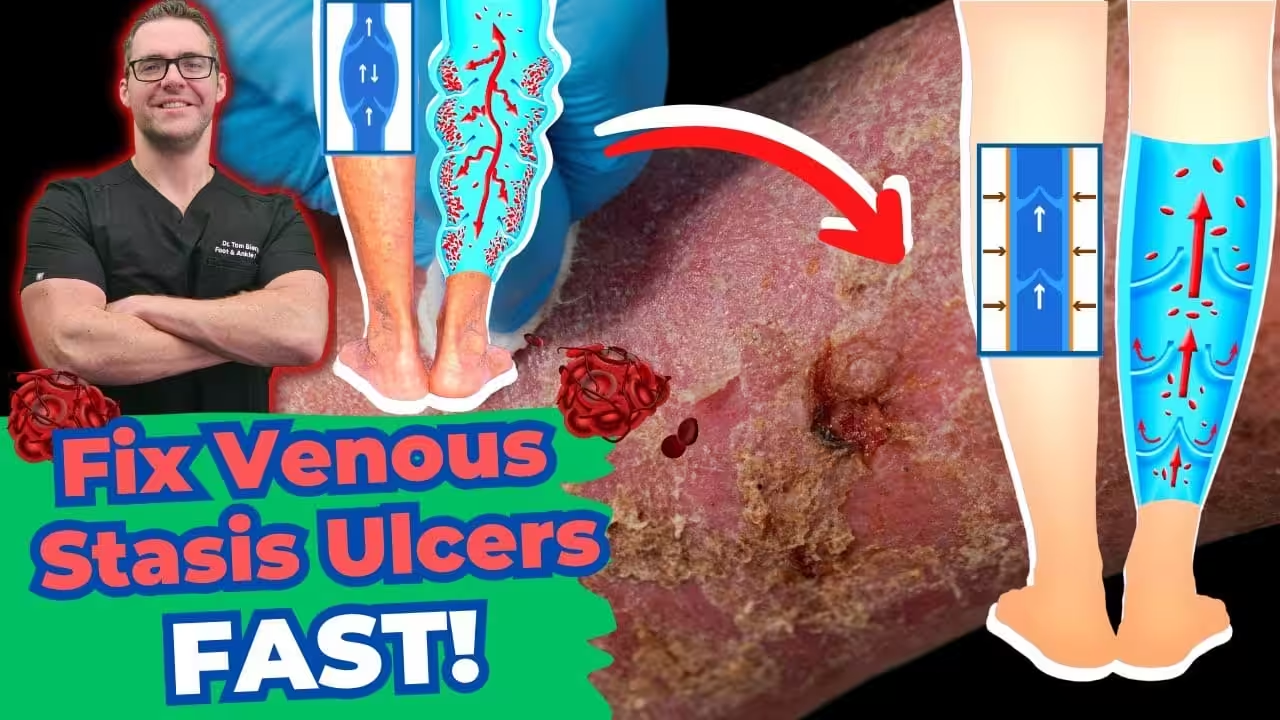
Pathophysiology: Venous hypertension from incompetent venous valves in the deep or superficial venous system produces sustained elevated hydrostatic pressure in the lower leg, forcing fluid, red blood cells, and fibrin into the interstitial space. Hemosiderin deposits (from RBC breakdown) cause the characteristic brown pigmentation. The fibrin “cuff” around capillaries impairs oxygen delivery to the skin, producing ulceration in areas of maximum venous pressure — typically the medial gaiter area above the ankle (2–10 cm above the medial malleolus).
Treatment: Graduated compression is the cornerstone — 40–50 mmHg at the ankle (higher than standard compression socks) is the therapeutic level for venous ulcers. Multi-layer compression bandaging systems (Profore, Coban 2) are applied by wound care nurses and changed weekly. The ulcer base requires moist wound healing — saline-impregnated or hydrocolloid dressings maintain the optimal moisture environment. ABI must be confirmed ≥0.8 before compression — compressing a limb with arterial insufficiency can cause critical ischemia. Wound healing time: 12–24 weeks for large venous ulcers with optimized compression therapy. Venous ablation (endovenous laser or sclerotherapy) of the incompetent vein reduces recurrence significantly after initial healing.
Diabetic Neuropathic Ulcers: Pathophysiology and Treatment
Pathophysiology: Peripheral sensory neuropathy eliminates protective pain sensation — the patient walks repeatedly on a focal pressure point without pain-based behavior modification. The high plantar pressure over metatarsal heads or heel creates repetitive microtrauma that overwhelms tissue repair capacity, eventually producing full-thickness skin breakdown. Motor neuropathy causes intrinsic muscle atrophy, producing clawing of the toes that elevates the metatarsal heads — increasing plantar pressure further. Autonomic neuropathy causes dry skin, loss of sweating, and fissures that become entry points for infection.
Treatment: Offloading is the single most critical intervention — total contact casting (gold standard) or CROW walker transfers pressure away from the ulcer site, allowing healing. Non-total-contact-cast offloading methods (removable cam boot, healing sandal) are substantially less effective because patients bear weight without the device. Debridement of callused wound margins stimulates healing by converting a chronic wound to an acute wound environment. Infection management — wound culture, targeted antibiotics for infected ulcers, surgical debridement for deep space infection or osteomyelitis. Wound dressing — silver-impregnated antimicrobial dressings for infected wounds; negative pressure wound therapy (NPWT/VAC) for deeper wounds with adequate blood supply.
Arterial (Ischemic) Ulcers: When Wound Care Alone Fails
Arterial ulcers cannot heal without adequate arterial inflow — wound care is essentially futile until blood supply is restored. ABI <0.4 or toe pressure <30 mmHg indicates critical limb ischemia — these patients require vascular surgery consultation for revascularization (bypass or endovascular angioplasty/stenting) before wound healing is possible. Compression is contraindicated. Wounds should be protected with dry dressings to prevent infection until revascularization can be performed. Do not debride arterial ulcers aggressively — this converts a stable dry eschar (natural barrier) to an open wound in an ischemic limb, dramatically increasing amputation risk.
Most Common Wound Care Mistake
The most common mistake: applying compression bandaging to an ankle wound without ABI measurement. In our clinic, we routinely see patients from urgent care or primary care who had compression wraps applied to “venous ulcers” that turned out to have ABI values of 0.4–0.5 — critical limb ischemia with arterial ulcers that looked venous. The compression significantly worsened arterial inflow, causing accelerated wound progression. Any lower extremity ulcer without a confirmed ABI ≥0.8 should NOT have compression applied until vascular assessment is completed. Book online or call (810) 206-1402 for urgent wound evaluation — we perform ABI testing at both Balance Foot & Ankle locations.
Dr. Tom’s Recommended Products for Diabetic Foot Care
📍 Located in Michigan?
Our board-certified podiatrists treat this condition at two convenient locations. Same-day appointments often available.
These are products I personally use and recommend to my patients at Balance Foot & Ankle.
- Dr. Comfort Men’s Paradise Diabetic Shoe — Medicare-covered diabetic shoe with seamless interior — eliminates pressure points that cause diabetic ulcers
- Foundation Wellness DASS Diabetic Socks (Levanta) — non-binding, seamless toe, moisture-wicking diabetic socks protecting neuropathic feet
- Derma Sciences Bordered Gauze Dressings — Non-adherent wound dressing ideal for diabetic foot wound management between podiatry visits
Affiliate disclosure: As an Amazon Associate, Balance Foot & Ankle earns from qualifying purchases. We only recommend products we trust for our own patients.
🧦 Dr. Tom’s Pick: DASS Medical Compression Socks
Medical-grade 15-20 mmHg graduated compression. DASS socks are the brand I recommend most to patients with swollen feet, poor circulation, and post-surgery recovery. Graduated compression means tightest at the ankle, gradually releasing up the leg — promoting upward venous blood flow.
View DASS Compression Socks on Amazon →📧 Get Dr. Tom’s Free Lab Test Guide
Discover the 5 lab tests every person over 35 should ask their doctor about — explained in plain English by a board-certified physician.
Affiliate disclosure: As an Amazon Associate, Balance Foot & Ankle earns from qualifying purchases.
Join 950,000+ Learning About Foot Health
Dr. Tom shares honest medical advice, supplement reviews, and treatment guides you won’t find anywhere else.
Subscribe on YouTube →Ready to Get Expert Foot Care?
Dr. Biernacki and our team at Balance Foot & Ankle are accepting new patients in Howell and Bloomfield Township, MI. Most insurances accepted.
Book My Appointment →or call (810) 206-1402
Insurance Accepted
BCBS · Medicare · Aetna · Cigna · United Healthcare · HAP · Priority Health · Humana · View All →
Howell Office
4330 E Grand River Ave
Howell, MI 48843
Get Directions →
Bloomfield Township Office
43494 Woodward Ave, #208
Bloomfield Township, MI 48302
Get Directions →
Your Board-Certified Podiatrists



Ready to Get Back on Your Feet?
Same-week appointments available at both locations.
Book Your AppointmentIn Our Clinic
Diabetic neuropathy patients in our clinic often don’t realize they have it until we put a 10-gram Semmes-Weinstein monofilament to the plantar foot and they can’t feel it. Many arrive for an unrelated concern — an ingrown toenail, a callus — and we catch the neuropathy on screening. The conversation then shifts: we need to discuss daily foot inspections, appropriate footwear, the urgency of any blister or open area, and the timing of vascular referral if pulses are diminished. Comprehensive diabetic foot exams are covered by Medicare annually. If you have diabetes, we want to see you once a year even if nothing hurts.
More Podiatrist-Recommended Diabetic Essentials
Diabetic-Approved Walking Shoe
Orthofeet Sprint — seamless, extra-depth, designed for neuropathic feet.
Seamless Diabetic Sock


Watch: Diabetes Peripheral Neuropathy Treatment [Diabetic Nerve Pain Remedy] — MichiganFootDoctors YouTube
OS1st FS4 — non-binding, moisture-wicking, protects fragile diabetic skin.
Recovery Slide for Indoor Wear
HOKA Ora 3 — protects diabetic feet from barefoot injury at home.
As an Amazon Associate, Balance Foot & Ankle earns from qualifying purchases. Product recommendations are based on clinical experience; prices and availability shown above update live from Amazon.
When to See a Podiatrist
One unnoticed blister on a neuropathic foot can become a limb-threatening ulcer in under 14 days. Medicare covers diabetic shoes (A5500) and comprehensive foot exams annually for most diabetic patients with neuropathy or circulation concerns. Balance Foot & Ankle runs a dedicated diabetic limb-preservation program — vascular screening, offloading, ulcer care, and shoe fitting — all in one visit. Schedule your annual diabetic foot exam today.
Call Balance Foot & Ankle: (810) 206-1402 · Book online · Offices in Howell & Bloomfield Township
Watch: Dr. Tom explains
Podiatrist-recommended products
As an Amazon Associate, Dr. Tom earns from qualifying purchases.
Manage venous insufficiency and stasis ulcers.
View on Amazon →Offload pressure in neuropathic diabetic feet.
View on Amazon →Offload plantar diabetic ulcers.
View on Amazon →Topical support (avoid open wound beds).
View on Amazon →Related resources
Ready to solve this? Book today.
Same-week appointments · Howell & Bloomfield Township · 4.9★ (1,123+ reviews)
☎ (810) 206-1402Book Online →In-Office Treatment at Balance Foot & Ankle
When conservative care isn’t enough, Dr. Tom Biernacki and the team at Balance Foot & Ankle offer advanced, same-day options — including Diabetic Wound Care Michigan at our Howell and Bloomfield Township clinics.
Same-day appointments available. Book online or call (810) 206-1402 or book online.
Pros & Cons of Conservative Care for diabetic foot care
Advantages
- ✓ Daily inspection prevents amputation
- ✓ Most insurance covers DME
- ✓ Custom orthotics help
Considerations
- ✗ Daily commitment required
- ✗ Slow wound healing
- ✗ Charcot risk if neuropathy
Dr. Tom’s Recommended Products for diabetic foot care
Affiliate disclosure: As an Amazon Associate, Balance Foot & Ankle earns from qualifying purchases. We only recommend products we use with patients.
Drew Moonwalker Diabetic Shoe Dr. Tom’s Pick
Best for: Medicare-covered diabetic footwear
Diabetic Compression Socks Dr. Tom’s Pick
Best for: Daily protection + circulation
Ready to Get Back on Your Feet?
Same-day appointments in Howell + Bloomfield Township. Most insurance accepted. Dr. Tom Biernacki, DPM & team.
Book Today — Same-Day Appointments Available
Call Now: (810) 206-1402
About Your Care Team at Balance Foot & Ankle
Dr. Tom Biernacki, DPM · Board-Certified Foot & Ankle Surgeon. Specializes in conservative-first care, minimally invasive bunion surgery, and complex reconstruction.
Dr. Carl Jay, DPM · Accepting new patients. Specializes in sports medicine, athletic injuries, and routine podiatric care.
Dr. Daria Gutkin, DPM, AACFAS · Accepting new patients. Specializes in surgical reconstruction and pediatric podiatry.
Locations: 4330 E Grand River Ave, Howell, MI 48843 · 43494 Woodward Ave Suite 208, Bloomfield Township, MI 48302
Hours: Mon–Fri 8:00 AM – 5:00 PM · (810) 206-1402
In-Office Treatment at Balance Foot & Ankle
If home treatment isn’t providing relief for your diabetic foot condition, our podiatry team at Balance Foot & Ankle can help with same-day evaluations and advanced in-office care.
Same-day appointments available. (810) 206-1402
Frequently Asked Questions
Which is better for plantar fasciitis?
The shoe with more cushioning and a stronger rocker typically wins for plantar fasciitis. See full comparison for our specific verdict.
Which lasts longer?
Both options typically last 300-500 miles for runners or 9-12 months for daily walkers. Material durability varies; check our detailed comparison.
Which is better for flat feet?
Flat feet need stability or motion control. The neutral option is not ideal unless paired with a custom orthotic.
What is Diabetic foot?
Diabetic foot is a common foot/ankle condition that affects mobility and quality of life. Understanding the underlying cause is the first step in successful treatment. Our podiatrists at Balance Foot & Ankle perform a hands-on biomechanical exam, review your activity history, and use diagnostic imaging when appropriate to identify the root cause—not just treat the symptom. Many patients have been told to “rest and ice” without a deeper diagnostic workup; our approach is different.
Symptoms and warning signs
Common signs of diabetic foot include pain that worsens with activity, morning stiffness, swelling, tenderness when palpated, and difficulty bearing weight. If you experience sudden severe pain, inability to walk, visible deformity, numbness or color change, contact our office the same day or visit urgent care—these can signal a more serious injury such as a fracture, tendon rupture, or vascular compromise. Diabetics with any foot wound should seek same-day care.
Conservative treatment options
Most cases of diabetic foot respond to non-surgical care: structured rest, supportive footwear changes, custom orthotics, targeted stretching and strengthening protocols, anti-inflammatory medications when medically appropriate, and in-office procedures such as ultrasound-guided injections. We also offer advanced therapies including laser therapy, EPAT/shockwave, regenerative injections, and image-guided procedures. Treatment is sequenced from least invasive to most invasive, and we explain the rationale at every step.
When is surgery considered?
Surgery is reserved for cases that fail 3-6 months of well-structured conservative care, when there is structural pathology (severe deformity, complete tear, advanced arthritis), or when imaging shows damage that will not heal without intervention. Our surgeons have performed 3,000+ foot and ankle procedures and prioritize minimally-invasive techniques whenever appropriate. We discuss recovery timelines, return-to-activity milestones, and realistic outcome expectations before any procedure is scheduled.
Recovery timeline and prevention
Recovery from diabetic foot varies based on severity and chosen treatment path. Conservative cases often improve within 4-8 weeks with consistent adherence to the protocol. Post-procedural recovery may range from a few days (in-office procedures) to several months (reconstructive surgery). Long-term prevention involves footwear assessment, activity modification, structured strengthening, and regular check-ins with your podiatrist if you have a history of recurrence. We provide written home-exercise plans and digital follow-up support.
Ready to feel better?
Same-week appointments available in Howell and Bloomfield Township, Michigan.
Book Your VisitOur podiatrists treat the underlying cause, not just the symptom. Same-week appointments at our Howell and Bloomfield Township, Michigan offices.
Ready for Expert Care?
Same-day appointments in Howell & Bloomfield Township, MI.
4.9★ | 1,123 Reviews | 3,000+ Surgeries
Or call: (810) 206-1402

Dr. Tom Biernacki, DPM is a board-certified foot & ankle surgeon (ABFAS & ABPM) at Balance Foot & Ankle Specialists in Southeast Michigan. With over a decade of clinical experience, he specializes in heel pain, bunions, diabetic foot care, sports injuries, and minimally invasive surgery. Dr. Biernacki is a member of the APMA and ACFAS, and his patient education content on MichiganFootDoctors.com and YouTube has made him one of the most-followed foot & ankle educators on YouTube.