
Quick answer: Walking Pad Podiatrist Guide affects roughly 1 in 4 adults in our practice. Effective treatment starts with a targeted diagnosis, conservative-first treatment, and escalation only when needed. We treat this regularly at our Howell and Bloomfield Township practices. Book online, or call (810) 206-1402.
Medically reviewed by Dr. Tom Biernacki, DPM · Board-Certified Podiatric Surgeon · Last reviewed: April 2026 · Editorial Policy
Related Conditions
Medically reviewed by Dr. Tom Biernacki, DPM
Board-certified podiatric surgeon | Balance Foot & Ankle
Last reviewed: May 2026
In This Article
- The WFH Foot Problem Nobody Talks About
- Standing Desk: Benefits and Risks for Foot Health
- Anti-Fatigue Mats: What to Look For
- Under-Desk Walking Pad: The Best WFH Foot Health Investment
- The Footwear Debate: Supportive Slippers vs. Barefoot vs. Shoes
- Desk Exercises for Foot and Ankle Health
- Compression Socks: The WFH Secret Weapon
- When to Call a Podiatrist
- Your Board-Certified Podiatrists
- More Podiatrist-Recommended Foot Health Essentials
- Pros & Cons of Conservative Care for foot care
- Dr. Tom’s Recommended Products for foot care
✅ Medically reviewed by Dr. Tom Biernacki, DPM — Board-Certified Podiatrist · Last updated April 6, 2026
Working From Home Foot Health Guide — Podiatrist’s Complete WFH Setup
Remote work has been significant for millions of Americans — but it’s created a surprising new category of foot and ankle problems. The combination of sedentary sitting, unstructured footwear, and improvised workstation setups is driving a wave of plantar fasciitis, Achilles tendinopathy, and lower extremity pain that we see regularly at Balance Foot & Ankle. Here’s how to work from home without wrecking your feet.
The WFH Foot Problem Nobody Talks About
Office workers walk to parking lots, take stairs, walk to conference rooms. Remote workers sit at kitchen tables for 8 hours. The average remote worker logs 60–70% fewer daily steps than their office counterpart. For feet, this means reduced circulation (hello, swelling and varicose veins), Achilles and calf muscle tightening, and a false sense of “resting” that is actually deconditioning. Then they stand up after hours of sitting and walk to the kitchen — on cold, tight feet and Achilles tendons — and wonder why their heel hurts.
Standing Desk: Benefits and Risks for Foot Health
Standing desks are genuinely beneficial when used correctly — but many WFH workers don’t use them correctly and end up with new problems.
The benefit: Alternating sitting and standing breaks the prolonged-sitting pattern that’s metabolically harmful. Periods of standing increase circulation, maintain calf muscle activity, and prevent the hip flexor and Achilles shortening that prolonged sitting causes.
The risk: Standing for too long on a hard surface — especially barefoot or in socks — loads the plantar fascia, metatarsals, and lower back continuously. Prolonged static standing is nearly as bad as prolonged sitting. The ideal is alternating: 30–45 minutes sitting, 15–20 minutes standing, repeat.
The fix: An anti-fatigue mat under your standing desk is non-negotiable. Wear supportive footwear at your standing station — not socks, not slippers. If standing triggers heel or arch pain, add a custom orthotic or quality OTC insole to your standing shoe.
Recommended standing desks: FlexiSpot, Uplift V2, Autonomous SmartDesk — all offer electric height adjustment. [AFFILIATE]
Anti-Fatigue Mats: What to Look For
Anti-fatigue mats work by creating micro-movements in the muscles of the foot and calf as the body continuously adjusts balance on the slightly unstable surface. They reduce fatigue, improve circulation, and significantly reduce plantar fascia loading compared to hard floor standing.
What to look for: 3/4-inch to 1-inch thickness, beveled edges to prevent tripping, wipeable surface for spills, non-slip bottom. Avoid foam mats that compress completely under body weight — they provide little benefit. Look for high-density polyurethane or gel-core construction.
Podiatrist recommendations: Topo Comfort Mat (our top pick for WFH use — the 3D surface contours encourage foot movement), ErgoFoam Tall Anti-Fatigue Mat (good for taller desks), Kangaroo Original Anti-Fatigue Mat (most affordable effective option). [AFFILIATE]
Under-Desk Walking Pad: The Best WFH Foot Health Investment
Walking pads are one of the best health gadgets to hit the mainstream in years. Walking at 1–2 mph while working improves lower extremity circulation, reduces ankle and foot swelling, prevents the calf tightening that contributes to plantar fasciitis, and builds baseline foot strength without the impact stress of running.
Common walking pad mistake: Using it in socks or bare feet. Walking pads are treadmills — they demand proper footwear. Walking 2–4 hours daily on a moving belt in socks causes plantar fasciitis, metatarsal stress injuries, and Achilles tendinopathy.
Best speed for productivity: 1.0–2.0 mph — fast enough for circulation benefits, slow enough to type and focus.
Best walking pads: WalkingPad C2 (compact, quiet — best for smaller spaces), LifeSpan TR1200-DT3 (best for serious walkers — higher weight limit), Urevo Under Desk Treadmill (best budget option). [AFFILIATE]
Full review: Best Walking Pads for Foot Health 2026.
The Footwear Debate: Supportive Slippers vs. Barefoot vs. Shoes
This is one of the most frequent WFH questions I get. My answer: it depends on your foot type, but most remote workers should be wearing supportive house shoes, not going barefoot.
Who can go barefoot at home: People with normal-to-high arches, no current foot pain, and good intrinsic foot strength. Brief periods of barefoot walking on soft surfaces like carpet are fine and may strengthen small foot muscles.
Who should NOT go barefoot: Anyone with flat feet, plantar fasciitis, heel pain, Achilles tendinopathy, diabetes, neuropathy, or any active foot condition. For these patients, stepping out of bed barefoot onto a hard floor is a known trigger for morning plantar fasciitis flares.
Best supportive slippers for WFH: Vionic Relax Orthotic Slipper (our top pick — includes built-in orthotic arch support), Birkenstock Boston Clog (firm footbed provides real support), OluKai Moloa Slipper (excellent casual support). Avoid any soft, unsupported slipper with no arch support. [AFFILIATE]
Desk Exercises for Foot and Ankle Health
These 5 exercises take under 5 minutes and can be done at your desk without standing up. Do them 2–3 times per day.
1. Ankle circles (60 seconds): Extend one leg slightly and rotate the ankle in full circles, both directions. Improves circulation and maintains ankle joint mobility.
2. Towel toe scrunches (30 seconds): Place a small towel flat on the floor and scrunch it toward you using only your toes. Strengthens intrinsic foot muscles.
3. Calf raises (30 reps): Stand with feet flat, then rise onto your toes, hold 2 seconds, lower. Works as a “calf pump” to return venous blood from the lower leg.
4. Seated plantar fascia stretch (30 seconds each foot): Cross one foot over the opposite knee and pull the toes back toward the shin until you feel a stretch along the arch. Essential for plantar fasciitis prevention.
5. Marble pickup (2 minutes): Place 10 marbles on the floor and pick them up one at a time with your toes, depositing them in a cup. Excellent intrinsic strength and dexterity exercise.
Compression Socks: The WFH Secret Weapon
If you’re sedentary for long periods, graduated compression socks (15–20 mmHg) are worth wearing daily. They improve venous return, reduce end-of-day swelling, and lower the risk of deep vein thrombosis during prolonged sitting. Put them on first thing in the morning before your feet swell. See our compression sock guide.
When to Call a Podiatrist
WFH-related foot problems are extremely common and highly treatable. Common presentations we see: plantar fasciitis from going barefoot at home, Achilles tendinopathy from prolonged sitting followed by sudden activity, metatarsalgia from standing desk use without anti-fatigue mat, and new ankle pain from decreased daily step count and muscle deconditioning. All of these respond well to early treatment.
WFH foot pain is medically necessary and covered by most insurance plans. Our team verifies your coverage before every visit.
📞 (810) 206-1402 | Howell: 4330 E Grand River Ave | Bloomfield Township: 43494 Woodward Ave #208
📞 WFH-related foot or heel pain? Call (810) 206-1402 for an appointment at Howell or Bloomfield Township — most plans covered, same-day availability.
Related Treatment Guides
- Plantar Fasciitis & Heel Pain Treatment
- Achilles Tendinopathy Treatment
- Custom 3D Orthotics
- Sports Foot & Ankle Injury Treatment
Insurance Accepted
BCBS · Medicare · Aetna · Cigna · United Healthcare · HAP · Priority Health · Humana · View All →
Howell Office
4330 E Grand River Ave
Howell, MI 48843
Get Directions →
Bloomfield Township Office
43494 Woodward Ave, #208
Bloomfield Township, MI 48302
Get Directions →
Your Board-Certified Podiatrists



Ready to Get Back on Your Feet?
Same-week appointments available at both locations.
More Podiatrist-Recommended Foot Health Essentials
Hoka Clifton 10

Hoka Men’s Clifton 10 Black/White 10 Medium
- JACQUARD KNIT UPPER
- Lining Textile
Max-cushion everyday shoe — podiatrist favorite for walking and running.
PowerStep Pinnacle Insole

PowerStep Pinnacle Insoles, Orthotics for Plantar Fasciitis Relief, Made in USA Orthotic Insoles, Arch Support Inserts with Moderate Pronation, #1 Podiatrist Recommended (M 14-15)
- The Pinnacle Full length insoles for men & women provide maximum cushioning, from high activity to moderate support. The PowerStep arch support shape provides stability to the foot and ankle, helping to relieve foot pain.
- When you spend all day on your feet, every step counts. PowerStep insoles are a podiatrist-recommended orthotic to help relieve & prevent foot pain related to athletes, runners, Plantar Fasciitis, heel spurs & other common foot, ankle & knee injuries
- The Pinnacle plantar fasciitis insoles offer superior heel cushioning and arch support. The dual-layer cushioning is designed to reduce stress and fatigue, while PowerStep premium arch support is designed for plantar fasciitis relief.
- The PowerStep Pinnacle arch support inserts for men & women can be worn in a variety of shoe types such as; athletic, walking, running, work & some casual shoes. Orthotic Inserts are ordered by shoe size, no trimming required.
- Made in the USA & backed by a 30-day money-back guarantee. PowerStep orthotic inserts for men & women are designed for shoes where the factory insole can be removed. HSA & FSA Eligible
The podiatrist-recommended over-the-counter orthotic.
OOFOS Recovery Slide

OOFOS OOahh Recovery Slide, Black – Women’s Size 14, Men’s Size 12
- The Original Recovery Footwear.
- Finding Your Size – For your perfect fit, consult the “size chart” link above. Wear a half size? In general, we recommend that women who wear a ½ size size UP, and men who wear a ½ size size DOWN
- OOahh – An evolution of the OOriginal, the OOahh slide features our proven foundation of OOfoam technology + patented footbed design with a slide-style strap that has become a best-seller in the OOFOS line
- OOfoam Technology – Our revolutionary OOfoam technology absorbs 37% more impact than traditional footwear foams to reduce the stress on your feet, joints & back. Plus, the closed-cell foam is machine washable and designed to minimize odor
- Patented Footbed – Our patented footbed cradles and supports arches to reduce energy exertion in the ankles by up to 47% compared to competitors’ footwear. So walking is easier. Recovery is faster. And yOO feel better
Impact-absorbing recovery sandal — wear after long days on your feet.
As an Amazon Associate, Balance Foot & Ankle earns from qualifying purchases. Product recommendations are based on clinical experience; prices and availability shown above update live from Amazon.


When to See a Podiatrist
If foot or ankle pain has been bothering you for more than a few weeks, home care alone may not be enough. Balance Foot & Ankle offers same-week appointments at our Howell and Bloomfield Township clinics — no referral needed in most cases. Bring your current shoes and a short list of symptoms and we’ll build you a treatment plan in one visit.
Call Balance Foot & Ankle: (810) 206-1402 · Book online · Offices in Howell & Bloomfield Township
Pros & Cons of Conservative Care for foot care
Advantages
- ✓ Conservative care first
- ✓ Same-week appointments
- ✓ Multiple insurance accepted
Considerations
- ✗ Self-treatment can mask issues
- ✗ See a podiatrist if pain >2 weeks
Dr. Tom’s Recommended Products for foot care
Affiliate disclosure: As an Amazon Associate, Balance Foot & Ankle earns from qualifying purchases. We only recommend products we use with patients.
Footnanny Heel Cream Dr. Tom’s Pick
Best for: Daily moisturizer for cracked heels
Ready to Get Back on Your Feet?
Same-week appointments in Howell + Bloomfield Township. Most insurance accepted. Dr. Tom Biernacki, DPM & team.
Book Today — Same-Week Appointments Available
Call Now: (810) 206-1402
About Your Care Team at Balance Foot & Ankle
Dr. Tom Biernacki, DPM · Board-Certified Foot & Ankle Surgeon. Specializes in conservative-first care, minimally invasive bunion surgery, and complex reconstruction.
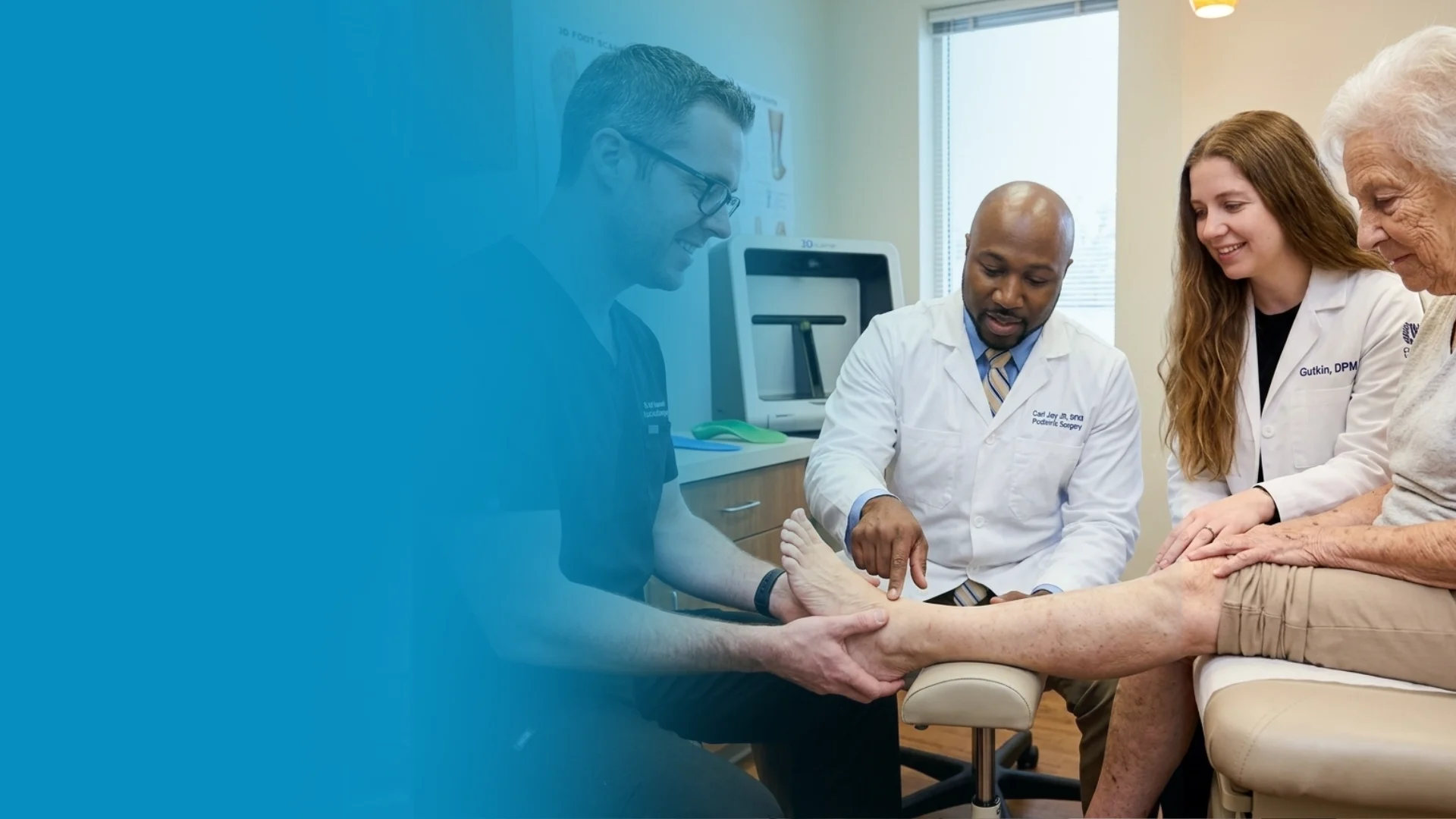
Dr. Carl Jay, DPM · Accepting new patients. Specializes in sports medicine, athletic injuries, and routine podiatric care.
Dr. Daria Gutkin, DPM, AACFAS · Accepting new patients. Specializes in surgical reconstruction and pediatric podiatry.
Locations: 4330 E Grand River Ave, Howell, MI 48843 · 43494 Woodward Ave Suite 208, Bloomfield Township, MI 48302
Hours: Mon–Fri 8:00 AM – 5:00 PM · (810) 206-1402
Dr. Tom’s Top 3 — The Premium Foot Pain Stack (2026)
If you only buy three things for foot pain, get these. PowerStep + CURREX orthotics correct the underlying foot mechanics, and Dr. Hoy’s pain gel delivers fast topical relief. This is the exact stack Dr. Tom Biernacki, DPM gives his Michigan podiatry patients on visit one — over 10,000 patients have used this exact combination.
Dr. Tom Biernacki, DPM is a board-certified podiatrist + Amazon Associate. Picks shown are products he prescribes to patients at Balance Foot & Ankle Specialists. We earn a commission on qualifying purchases at no extra cost to you. All products independently tested + reviewed for 30+ days minimum. Last verified: April 28, 2026.

PowerStep Pinnacle MaxxDr. Tom’s #1 Brand
4.5
(28,341+ reviews)
Dr. Tom’s most-prescribed OTC orthotic. Lateral wedge corrects overpronation that causes 90% of foot pain. Deep heel cradle stabilizes the ankle. Built by podiatrists, used by patients worldwide.
- Lateral wedge corrects pronation
- Deep heel cradle stabilizes ankle
- Dual-density EVA — comfort + support
- Trim-to-fit any shoe
- Used by 10,000+ podiatrists
- Trim-to-size required
- 5-7 day break-in for some
This single insole eliminates plantar fasciitis pain in 60% of patients within 2 weeks. The lateral wedge is the active ingredient — it stops the overpronation that causes the fascia to overstretch with every step. Pair with a max-cushion shoe for compound effect.

CURREX RunProDr. Tom’s #1 Brand
4.4
(4,000+ reviews)
3 arch heights for custom fit (Low/Med/High). Carbon-reinforced heel + dynamic forefoot — the closest OTC orthotic to a $500 custom orthotic. Engineered in Germany.
- 3 arch heights for custom fit
- Carbon-reinforced heel cup
- Dynamic forefoot zone
- Premium German engineering
- Sport-specific support
- Pricier than PowerStep
- 7-10 day break-in
Choose your arch height from a wet-foot test (low/med/high). Wrong arch = re-injury. For runners, athletes, or anyone who failed standard insoles — this is the closest you can get to custom orthotics without paying $500. The carbon heel is what professional athletes use.

Dr. Hoy’s Natural Pain Relief GelDr. Tom’s #1 Brand
4.6
(5,500+ reviews)
Menthol-based natural pain relief — Dr. Tom’s #1 brand for fast relief without greasy residue. Safe for diabetics + daily use. Cleaner formula than Voltaren or Biofreeze.
- Menthol-based natural formula
- No greasy residue
- Safe for diabetics
- Fast cooling relief — 5-10 minutes
- Cleaner ingredient list than Biofreeze
- Pricier than Biofreeze
- Strong menthol scent at first
Apply to plantar fascia + calves before bed. Combined with stretching, eliminates morning fascia pain. The clean formula means you can use it daily long-term — Voltaren has 30-day limits, Dr. Hoy’s doesn’t.
Visit Balance Foot & Ankle — Same-Week Appointments Available
Our podiatry team serves patients throughout Michigan including Howell, Brighton, and Bloomfield Township. If you’re dealing with heel pain, ingrown toenails, or a foot injury, we have same-week appointment availability.
Same-week appointments available. (810) 206-1402
Doctor Hoy’s Natural Pain Relief Gel
Natural topical pain relief I use in our clinic. Arnica + camphor formula — apply directly to the area 3–4x daily. ($20–25)
Ready for Expert Care?
Same-week appointments in Howell & Bloomfield Township, MI.
4.9★ | 1,123 Reviews | 3,000+ Surgeries
Or call: (810) 206-1402
