

Medically Reviewed by Dr. Tom Biernacki, DPM, FACFAS — Board-certified podiatrist & foot surgeon | Balance Foot & Ankle | Last updated: May 2026
Michigan winter running requires trail shoes with aggressive lugs or screw-in ice traction devices, moisture-wicking wool socks, and a 15–20% pace reduction on slick surfaces. The most common winter running injuries are lateral ankle sprains from ice, stress fractures from frozen ground impact, and plantar fasciitis aggravated by cold-stiffened tissues. Warm up indoors before cold runs — connective tissue is significantly less elastic below 50°F.
How Cold Weather Changes Your Feet While Running
Michigan winters present unique foot and ankle challenges that warm-weather runners consistently underestimate. Cold reduces the elasticity of the plantar fascia, Achilles tendon, and ankle ligaments — making these structures more vulnerable to sudden load spikes. Frozen or packed-snow ground surfaces transmit impact forces differently than asphalt, often increasing ground reaction force variability. Road ice creates lateral ankle sprain risk that has no warm-weather equivalent. Understanding these biomechanical changes is the foundation of safe winter running.
Winter Running Injury Risk Table
| Injury | Winter-Specific Risk Factor | Prevention Strategy |
|---|---|---|
| Lateral ankle sprain | Black ice, uneven packed snow | Ice traction devices, shorter stride, route planning |
| Plantar fasciitis flare | Cold-stiffened fascia, reduced warm-up | Indoor warm-up, pre-run stretching, insulated insoles |
| Metatarsal stress fracture | Frozen ground + altered gait on snow | Reduce mileage 20–30%, avoid sudden pace increases |
| Achilles tendinopathy | Cold tendon + hill running on packed snow | Avoid steep hills on cold runs; eccentric calf drops daily |
| Frostbite (toes) | Wet socks, below-15°F temps, wind chill | Wool/synthetic socks, vapor barrier, gaiters below 10°F |
| Chilblains | Repeated cold-warm cycling of extremities | Gradual rewarming; avoid tight shoes when toes are cold |
Michigan Winter Running Gear: Foot Essentials
- Traction devices: Yaktrax Run or Kahtoola MicroSpikes for ice-specific runs; screw-in hex head screws (sheet metal, #8, 3/8″) installed in old shoes for regular snowy routes — the most cost-effective traction solution available
- Trail shoes for snow: A shoe with 4–6mm lugs (Hoka Speedgoat, Brooks Cascadia, Salomon Speedcross) provides significantly better snow traction than road shoes without adding the bulk of traction devices
- Merino wool or Drymax socks: Cotton kills in winter — it holds moisture against the skin. Merino wool stays warm when wet and has natural antimicrobial properties. Drymax Cold Weather is a synthetic alternative with excellent moisture management.
- Insulated insoles: PowerStep Pinnacle Carbon or Sole Active insoles with insulation layers maintain foot temperature during runs below 20°F without adding significant bulk
- Gaiters: Low-cut trail gaiters prevent snow from entering the shoe during deeper snow runs; particularly important for preventing that cold-sock scenario that accelerates heat loss
The Indoor Warm-Up Requirement for Cold-Weather Running
Connective tissue — tendon, ligament, and plantar fascia — loses meaningful elasticity at temperatures below 50°F. A 5-minute indoor warm-up before stepping into winter conditions dramatically reduces the risk of acute tissue injury in the first mile. The protocol: leg swings (front-to-back and side-to-side, 10 each leg), calf raises x20, plantar fascia stretch on a stair x30 seconds each foot, and 3 minutes of light jogging in place. This should happen inside, not at the start of the outdoor run.
Watch: Ankle Sprain Treatment After a Winter Running Fall
Dr. Tom Biernacki covers what to do immediately after rolling your ankle — one of the most common winter running injuries — and how to tell if you need imaging or can manage recovery at home:
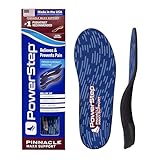
- Slightly Angled Heel Post: PowerStep Pinnacle Maxx insoles for men & women keep the feet from rolling inward, improve stability, and prevent problems caused by overpronation including flat feet and plantar fasciitis.
- Firm But Flexible Design: Our orthotics Pinnacle PowerStep insoles for overpronation are equipped with a deep heel insert cradle for increased comfort, stability, and motion control for standard arch support and immediate heel pain relief.
- Premium Dual Layer Cushioning: For enhanced comfort from heel to toe. As the thickest of our Pinnacle PowerStep orthotics, these need to be worn in shoes where the factory insole can be removed. HSA & FSA Eligible. Made in the USA
- The Perfect Balance of Comfort and Support: These PowerStep Pinnacle arch support inserts for men & women are unlike most other orthotics as they help to correct over-pronation which can cause ankle, knee, and hip pain in your daily routine
- No Trimming: Our arch support PowerStep insoles men & women can use can be worn in a variety of shoe styles & fit in any type with no trimming required! Unlike most insoles for flat feet and other heel pain relief products, these come ready to wear.
As an Amazon Associate, Balance Foot and Ankle earns from qualifying purchases. Product links are affiliate links and we may earn a commission at no extra cost to you. This does not influence our clinical recommendations. Last update on 2026-10-18 / Images from Amazon Product Advertising API

The most common mistake Michigan winter runners make is skipping the warm-up because the run itself “will warm me up.” The first mile on cold, stiff connective tissue is precisely when injuries happen — not during mile 5. Plantar fasciitis flares, Achilles strains, and ankle sprains disproportionately occur in the first 10 minutes of a cold run when tissue is least elastic and neuromuscular coordination is impaired by cold. Invest 5 minutes in indoor warm-up and protect yourself from injuries that can derail training for weeks or months.
Frequently Asked Questions
Is it safe to run outside in Michigan winter?
Running in Michigan winter is safe with appropriate preparation — the right footwear, traction, layering, and warm-up protocol. The risk level changes significantly below 0°F or with wind chills that bring effective temperatures to -15°F or below, where frostbite risk to extremities becomes real within 30 minutes of exposure. Below these thresholds, treadmill or indoor track running is the safer option. For typical Michigan winter conditions (10°F to 32°F), outdoor running with proper gear is entirely appropriate and many runners find the cold refreshing compared to summer humidity.
How much should I slow down when running on snow or ice?
A 15–20% pace reduction on packed snow and 20–30% on loose snow is appropriate for maintaining equivalent effort and managing fall risk. Don’t compare your winter pace to your summer pace — the additional traction demand, altered gait, and snow resistance make equivalent-effort winter running significantly harder. Shorter stride length with higher cadence is biomechanically safer on slippery surfaces: a shorter stride keeps your foot strike closer to your center of gravity, reducing the lever arm that causes ankle inversion during slips.
What should I do immediately after slipping on ice during a run?
If you roll an ankle on ice: stop running immediately, assess weight-bearing ability (can you walk without sharp pain?), apply the POLICE protocol — Protection, Optimal Loading, Ice, Compression, Elevation. If you cannot bear weight, have significant swelling within 20 minutes, or have bony tenderness over the lateral ankle, navicular, or 5th metatarsal, you need same-day imaging. The Ottawa Ankle Rules exist specifically to identify who needs X-rays after ankle injury — your podiatrist applies these criteria at the initial visit. Balance Foot & Ankle offers online booking 24/7 and phone scheduling at (810) 206-1402.
Does cold weather cause plantar fasciitis to get worse?
Yes — cold temperature directly reduces plantar fascia elasticity, and Michigan runners experience predictable plantar fasciitis flares in November through March. The mechanism: cold-stiffened fascia is less able to absorb the repetitive impact of running, and the jump in treadmill use during winter (harder surface than pavement or track) adds additional mechanical stress. Prevention: maintain calf stretching and plantar fascia stretching year-round, don’t skip warm-ups in winter, and consider switching some outdoor miles to a track or treadmill on the coldest days.
When should a winter running injury be seen by a podiatrist vs. self-managed?
Self-manage with rest, ice, compression, and elevation when: the injury is a mild ankle sprain with full weight-bearing capacity and minimal swelling; the pain is a familiar plantar fasciitis flare responding to stretching within 24–48 hours; or a minor blister or toenail issue from shoe friction. See a podiatrist when: pain prevents normal walking; swelling is significant and localized over a specific bone; pain persists beyond 5–7 days without improvement; or you have diabetes with any foot injury regardless of severity.
Winter Running Injury? expert Evaluation Available.
In-office X-ray, ankle assessment, and treatment at Howell and Bloomfield Township, MI. Dr. Tom Biernacki DPM — board-certified podiatrist. Don’t wait — ankle and stress fracture injuries worsen with continued running.
Book a Visit Online (810) 206-1402Related Articles
- Ankle Sprain Treatment & Recovery
- Plantar Fasciitis Treatment
- Podiatrist-Recommended Running Shoes
- Marathon Training Foot Injuries
- When to See a Podiatrist

Visit Balance Foot & Ankle — Online Booking 24/7
Our podiatry team serves patients throughout Michigan including Howell, Brighton, and Bloomfield Township. If you’re dealing with heel pain, ingrown toenails, or a foot injury, you can book online 24/7.
Book online 24/7. (810) 206-1402
VitaMedica Arnica Gel
Arnica gel plus 15 plant compounds for sore feet, plantar fasciitis flares and post-activity soreness. Apply a thin layer to the sore area.
Shop VitaMedica Arnica Gel →Seen at both offices — Howell and Bloomfield Township.

Dr. Tom Biernacki, DPM is a board-certified foot & ankle surgeon (ABFAS & ABPM) at Balance Foot & Ankle Specialists in Southeast Michigan. With over a decade of clinical experience, he specializes in heel pain, bunions, diabetic foot care, sports injuries, and minimally invasive surgery. Dr. Biernacki is a member of the APMA and ACFAS, and his patient education content on MichiganFootDoctors.com and YouTube has made him one of the most-followed foot & ankle educators on YouTube.
More questions patients ask
Is it safe to run in below-freezing temperatures?
Yes, with proper preparation. Most healthy runners can safely train in temperatures down to about 0°F with appropriate clothing, footwear, and sock layers. Below 0°F or wind chill below -20°F, indoor alternatives become safer. Runners with Raynaud's, diabetes, or peripheral vascular disease should discuss cold-weather limits with their podiatrist.
What type of socks should I wear for winter running?
Merino wool or synthetic moisture-wicking socks are best. Never wear cotton. Above 25°F, a single midweight merino wool sock suffices. Below 25°F, use a two-layer system: thin synthetic liner for moisture wicking topped by thicker wool insulating sock. Ensure the combination fits without compression.
How do I prevent blisters during winter running?
Wear moisture-wicking sock materials, apply anti-friction product to blister-prone areas, ensure proper shoe fit with winter sock system, and change into dry socks during runs exceeding 60 minutes in wet conditions. Keep blisters intact if they develop and protect with moleskin.
Should I use traction devices on my running shoes?
Traction devices like Yaktrax Run or Kahtoola NANOspikes are excellent for packed snow and light ice. They are essential for Michigan runners on icy roads and sidewalks. Remove them on bare pavement. Trail runners on packed snow may get sufficient traction from aggressive lugged trail shoes.
When should I see a podiatrist for winter running foot problems?
See a podiatrist for persistent numbness lasting more than 30 minutes post-run, recurring chilblains, infected blisters, worsening ankle pain over consecutive runs, or any skin color changes suggesting frostbite. Early treatment prevents minor issues from becoming season-ending injuries.
Still have a question about coverage or cost? Book online and we will check your benefits before your visit: Book in Howell · Book in Bloomfield Township. Prefer to talk it through first? Call (810) 206-1402.