

Wound care outcomes in the foot and ankle are profoundly affected by blood supply — a wound that would heal normally in a healthy patient can become limb-threatening in a patient with peripheral vascular disease or uncontrolled diabetes. The two clinical decisions that separate healing wounds from chronic non-healing ulcers are not about dressings — they are about vascular assessment and offloading. Call (810) 206-1402 — Dr. Tom manages complex diabetic and non-healing wounds.
Medically reviewed by Dr. Tom Biernacki, DPM · Board-Certified Podiatric Surgeon · Last reviewed: April 2026 · Editorial Policy
The most important clinical decision with Wound Care Video isn’t which treatment to start with — it’s identifying the correct subtype. That changes everything. Call (810) 206-1402.
Quick Answer
Wound Care Podiatrist Video relates to foot pain — typically caused by overuse, footwear, or biomechanics. Most patients improve in 6-12 weeks with conservative care. Same-week appointments in Howell + Bloomfield Township: (810) 206-1402.
✅ Medically reviewed by Dr. Tom Biernacki, DPM — Board-Certified Podiatrist · Last updated April 6, 2026
Heal Your Foot Wounds Safely
— Watch How Our Experts Can Help Seniors
Our board-certified podiatrists provide gentle, expert care for ulcers, infections, and slow-healing wounds.
Heal safely, prevent complications, and keep your mobility and independence.
https://youtu.be/vkw22d8ZAe0 

Get Relief Today!
(810) 206-1402




Watch: Why Wound Care Matters for Seniors
https://youtu.be/vkw22d8ZAe0
Get Specialist Wound Care Now
Limited spots available
Why Does Heel Pain Keep Seniors From Walking Comfortably?
Plantar fasciitis can make walking painful and limit your independence. Learn why this condition happens and how expert podiatrists help seniors regain mobility.
Why Heel Pain Happens
Plantar fasciitis occurs when the thick band of tissue along the bottom of your foot (the plantar fascia) becomes irritated or inflamed. Over time, this can lead to chronic heel pain that makes walking, standing, or even simple daily activities difficult — especially for seniors.
Common Signs Seniors Should Watch For
-
Sharp pain in the heel, especially in the morning or after sitting -
Difficulty walking or reduced activity due to pain -
Pain that persists for 6+ months despite home treatments -
Swelling, stiffness, or a thickened plantar fascia -
Failed conservative treatments like orthotics, stretching, or injections -
Prior treatments that didn’t work
Why Seniors Should See a Wound Care Podiatrist
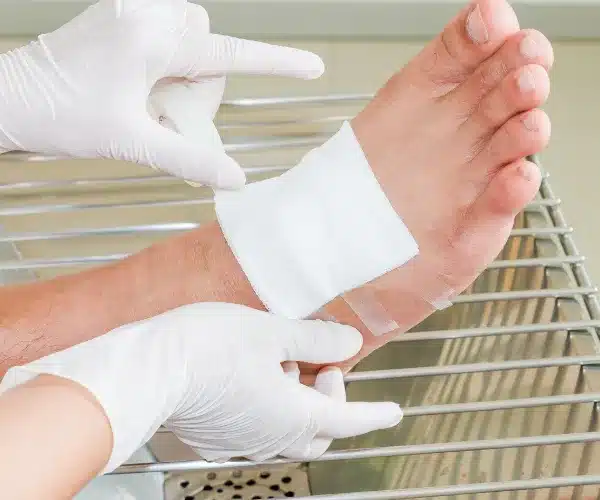
Foot wounds in older adults need specialized care. Pressure from walking, reduced blood flow, and nerve damage can make healing slower and increase infection risk.
A wound care podiatrist helps seniors:
-
Heal faster and safely -
Prevent infection or complications -
Maintain mobility and independence -
Avoid hospitalization or surgery
Conditions We Treat in Seniors
-
Diabetic foot ulcers -
Non-healing wounds -
Infected foot wounds -
Pressure sores -
Venous stasis ulcers -
Surgical wound complications -
Traumatic foot & ankle wounds
Conditions We Treat
-
Diabetic foot ulcers -
Non-healing wounds -
Infected foot wounds -
Venous stasis ulcers -
Pressure sores -
Surgical wound complications -
Traumatic foot & ankle wounds
Our Wound Care Treatment Approach
Comprehensive Evaluation
-
Check circulation, nerve function, and infection risk.
Precision Wound Care
-
Gentle medical debridement and advanced dressings.
Pressure Offloading
-
Custom footwear, braces, or orthotics to relieve pressure.
Ongoing Monitoring
-
Regular follow-ups to track healing and prevent recurrence.
Our goal: healing with safety, comfort, and independence. 
Why Patients Trust Our Wound Care Podiatrists
-
Board-certified foot & ankle specialists -
Extensive experience in diabetic wound care -
Focus on limb preservation -
Modern wound care techniques -
Trusted by local patients and physicians
Our board-certified podiatrists specialize in foot and ankle care.
Meet Our Senior-Friendly Podiatrists

Dr. Tom Biernacki, DPM
Dr. Biernacki provides comprehensive foot and ankle care for patients in Howell and Bloomfield Township, focusing on accurate diagnosis, effective treatment, and long-term mobility.

Dr. Carl Jay,
DPM
Dr. Jay delivers trusted general podiatric care, helping patients manage foot and ankle pain, injuries, and chronic conditions with plan tailored to your foot types.

Dr. Daria Gutkin, DPM
Dr. Gutkin offers attentive foot and ankle care for a many conditions, emphasizing preventive care and patient education to support healthy, active lifestyles.
Local Senior-Friendly Foot Wound Care Near You
Our clinics in Howell and Bloomfield Township are designed for comfort and accessibility:
-
Easy Parking -
Wheelchair-friendly Facilities -
Calm, patient-centered Environment
Custom Orthotics for Seniors
Foot wounds often fail to heal in seniors due to pressure, imbalance, or arthritis. Custom orthotics reduce pressure, improve balance, and prevent wounds from reopening.
Benefits for Seniors:
-
Relieve pressure on ulcers and fragile skin -
Improve walking confidence and stability -
Reduce risk of infection and repeat injury -
Protect long-term foot health -
Support long-term foot health for seniors

How Our Custom Orthotics Support Wound Healing
-
Pressure Offloading – Redistributes weight away from high-risk areas and healing wounds. -
Improved Stability – Helps seniors walk more safely and confidently, reducing fall risk. -
Personalized Fit – Designed based on gait analysis, wound location, and foot structure. -
Long-Term Protection – Supports both active wound care and post-healing prevention.
Ask About Custom Orthotics During Your Wound Care Visit
Our priority is healing, protection, and preventing future complications.
What Our Wound Care Patients Say
Real patients. Real relief. Discover why seniors in Howell and Bloomfield Township choose Balance Foot & Ankle Specialist.

“My ulcer pain was terrible every morning. After custom orthotics and therapy, I’m finally walking normally again.”
“I stand all day for work and the pain became unbearable. One visit and a clear treatment plan changed everything.”
“I tried home remedies for foot wound for months with no relief. Dr. Biernacki diagnosed the real issue and now I’m pain-free.”
“As a senior, I was nervous about the pain. The team treated me gently and professionally—my heel feels so much better now.”
We Accept Most Major Insurance Plans
Our team helps you understand coverage before treatment.





When Should Seniors See a Wound Care Podiatrist?
Seek professional care if:
-
Wounds aren’t healing within 1–2 weeks -
You have diabetes, nerve damage, or poor circulation -
There are signs of infection or swelling -
Previous treatments failed
(810) 206-1402
Wound Care Podiatrist
-
At Balance Foot & Ankle Specialists we have board-certified foot and ankle surgeons who specialize in wound care. -
We have experiencing thousands of foot wounds and taking the time to treat these.

Vascular Evaluation
-
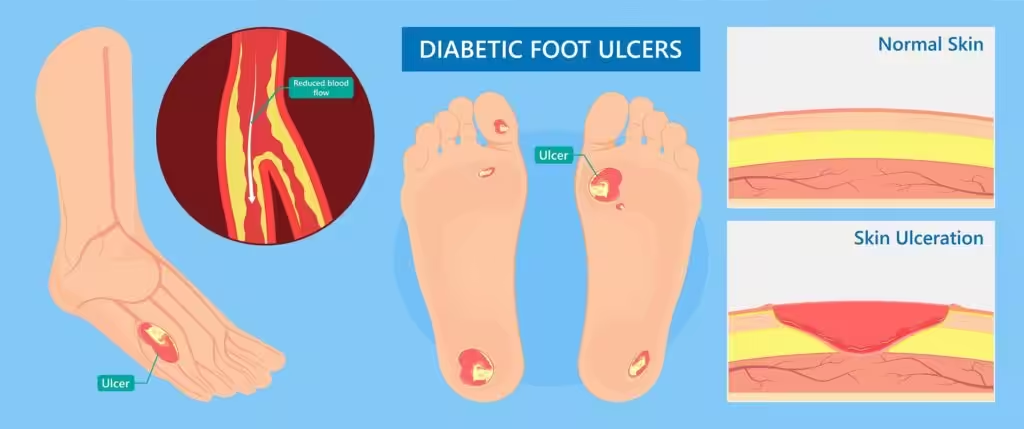
We work with the vascular surgery department to make sure to assess for the blood flow to ensure as quick of healing for foot and ankle wounds as possible. -
We strive to prevent the development of foot ulcers healed ulcers, and toe ulcers. -
We try to prevent ulcers that are blood flow related and diabetic ulcers.
Advanced Treatment Options
-
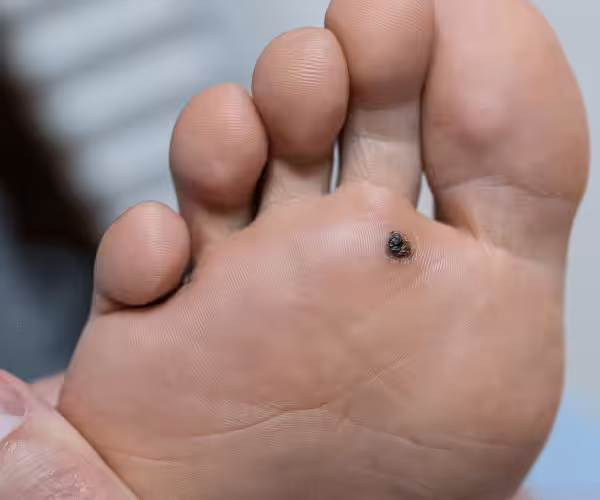
We can perform minimally invasive in office surgery to take pressure off the bottom of the foot wounds. -
We work with your internal medicine doctor and vascular surgery specialist to make sure that he had no blood flow. -
For chronic nonhealing wounds we pursue minimally invasive surgery.
Frequently Asked Questions

What does a wound care podiatrist do?
A wound care podiatrist specializes in diagnosing, treating, and managing wounds on the feet and ankles, especially those that are slow to heal or related to diabetes, infections, or poor circulation.
Why is a podiatrist better for foot wounds?
Podiatrists have specific training in the structure, function, and treatment of foot and ankle problems, making them more effective for targeted wound care.
When should I see a podiatrist for a wound?
If a wound hasn’t healed within 7–10 days, is showing signs of infection, or if you have diabetes, it’s critical to see a specialist immediately.
Can Balance Foot & Ankle Specialist treat diabetic foot ulcers?
Yes. Our team has extensive experience managing diabetic foot wounds using advanced treatments such as debridement, offloading, and regenerative medicine.
What types of wounds do podiatrists treat?
Common wounds include diabetic ulcers, pressure sores, post-surgical wounds, punctures, and infected blisters.
Do I need a referral to see a wound care podiatrist?
In most cases, no referral is needed. You can call Balance Foot & Ankle Specialist directly to book an appointment.
What should I expect during a wound care visit?
Your podiatrist will assess the wound, clean and debride the area if needed, recommend imaging or lab tests, and develop a plan tailored to your foot type.
How long does it take for a foot wound to heal?
It varies based on severity and patient health, but with proper podiatrist care, many wounds heal in weeks rather than months.
What happens if I ignore a foot wound?
Ignoring a wound can lead to infection, tissue death, or in severe cases, amputation. Early care by a wound care podiatrist greatly reduces those risks.
Get Relief Today
If your foot wound isn’t healing, don’t wait. Protect your feet, prevent complications, and maintain your independence.
Schedule Your Wound Care Appointment Today
(810) 206-1402
Related Treatment Guides
- Plantar Fasciitis & Heel Pain Treatment
- Custom 3D Orthotics
- Sports Foot & Ankle Injury Treatment
- Bunion Treatment
Insurance Accepted
BCBS · Medicare · Aetna · Cigna · United Healthcare · HAP · Priority Health · Humana · View All →
Howell Office
4330 E Grand River Ave
Howell, MI 48843
Get Directions →
Bloomfield Township Office
43494 Woodward Ave, #208
Bloomfield Township, MI 48302
Get Directions →
Your Board-Certified Podiatrists



Ready to Get Back on Your Feet?
Same-week appointments available at both locations.
In-Office Treatment at Balance Foot & Ankle
When conservative care isn’t enough, Dr. Tom Biernacki and the team at Balance Foot & Ankle offer advanced, same-day options — including Diabetic Wound Care Michigan at our Howell and Bloomfield Township clinics.
Same-day appointments available. Call (810) 206-1402 or book online.
Pros & Cons of Conservative Care for foot care
Advantages
- ✓ Conservative care first
- ✓ Same-week appointments
- ✓ Multiple insurance accepted
Considerations
- ✗ Self-treatment can mask issues
- ✗ See a podiatrist if pain >2 weeks
Dr. Tom’s Recommended Products for foot care
Affiliate disclosure: As an Amazon Associate, Balance Foot & Ankle earns from qualifying purchases. We only recommend products we use with patients.
Footnanny Heel Cream Dr. Tom’s Pick
Best for: Daily moisturizer for cracked heels
Ready to Get Back on Your Feet?
Same-day appointments in Howell + Bloomfield Township. Most insurance accepted. Dr. Tom Biernacki, DPM & team.
Book Today — Same-Day Appointments Available
Call Now: (810) 206-1402
About Your Care Team at Balance Foot & Ankle
Dr. Tom Biernacki, DPM · Board-Certified Foot & Ankle Surgeon. Specializes in conservative-first care, minimally invasive bunion surgery, and complex reconstruction.
Dr. Carl Jay, DPM · Accepting new patients. Specializes in sports medicine, athletic injuries, and routine podiatric care.
Dr. Daria Gutkin, DPM, AACFAS · Accepting new patients. Specializes in surgical reconstruction and pediatric podiatry.
Locations: 4330 E Grand River Ave, Howell, MI 48843 · 43494 Woodward Ave Suite 208, Bloomfield Township, MI 48302
Hours: Mon–Fri 8:00 AM – 5:00 PM · (810) 206-1402
Ready for Expert Care?
Same-day appointments in Howell & Bloomfield Township, MI.
4.9★ | 1,123 Reviews | 3,000+ Surgeries
Or call: (810) 206-1402
