

You are in the right place. Dr. Tom Biernacki, DPM, FACFAS — board-certified foot & ankle surgeon with 3,000+ surgeries — explains exactly what achilles tendon repair surgery complete rupture means and what works. Call (810) 206-1402 for same-day appointment at Howell or Bloomfield Hills.
Quick answer: Achilles Tendon Repair Surgery Complete Rupture is a common foot/ankle topic that affects many patients. The 2026 evidence-based approach combines proper diagnosis, conservative-first treatment, and escalation only when needed. We treat this regularly at our Howell and Bloomfield Hills practices. Call (810) 206-1402.
Medically reviewed by Dr. Tom Biernacki, DPM — Board-Certified Podiatric Surgeon — Balance Foot & Ankle, Howell & Bloomfield Hills, MI. Last updated April 2026.
▶ Watch
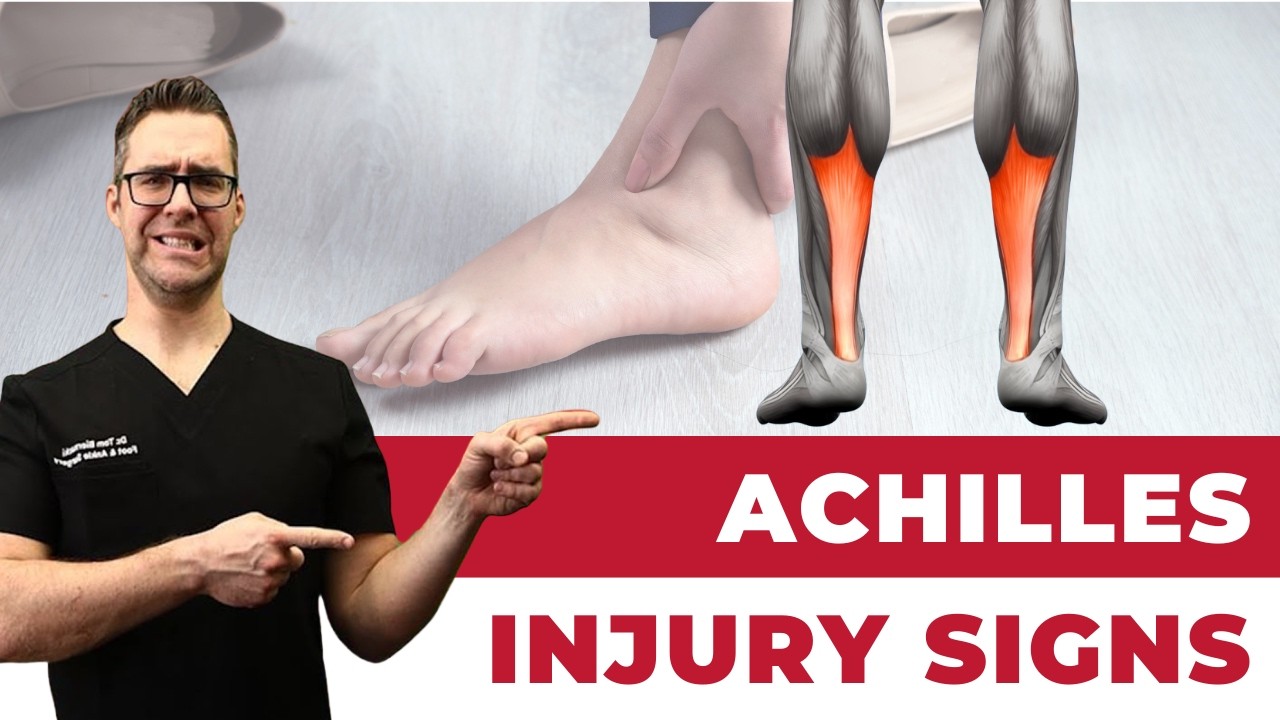
Medically reviewed by Dr. Tom Biernacki, DPM | Board-certified podiatrist | 3,000+ surgeries performed
Last updated: April 2, 2026
The most important clinical decision with Achilles Tendon Repair Surgery Complete Rupture isn’t which treatment to start with — it’s identifying the correct subtype. That changes everything. Call (810) 206-1402.
How the Achilles Tendon Ruptures
The Achilles tendon ruptures when eccentric loading force exceeds the tendon’s tensile strength — typically 6-8 times body weight during explosive push-off movements. The classic scenario is a 30-50 year old “weekend warrior” who lunges for a tennis ball, pushes off for a sprint, or leaps during basketball. Patients consistently describe feeling like someone kicked them in the back of the ankle.
Ruptures almost always occur in the watershed zone, 2-6 cm above the calcaneal insertion, where blood supply is poorest. Years of degenerative changes (tendinosis) weaken the tendon before the acute failure event. In our practice, histological examination of repaired tendons consistently shows pre-existing degeneration — the rupture was the final event in a chronic process.
Risk factors include fluoroquinolone antibiotics (ciprofloxacin, levofloxacin), chronic steroid use, prior cortisone injection into or near the tendon, and connective tissue disorders. Men rupture their Achilles 5-10 times more frequently than women, with peak incidence in the fourth and fifth decades.
Clinical Diagnosis of Achilles Rupture
The Thompson test (Simmonds’ squeeze test) is the most reliable bedside examination. With the patient prone and feet hanging off the table, squeezing the calf should produce passive plantarflexion. Absence of this response is pathognomonic for complete rupture. It is fast, free, and more reliable than MRI for confirming a complete tear.
Physical findings include a palpable gap in the tendon substance (the “divot” sign), inability to perform a single-leg heel rise, increased passive dorsiflexion compared to the uninjured side, and weakness of plantarflexion against resistance. The combination of a positive Thompson test and palpable gap has 100% sensitivity for complete rupture.
MRI is reserved for cases where clinical diagnosis is equivocal, partial rupture is suspected, or chronic rupture with retraction needs characterization. Ultrasound is increasingly used as a quick, cost-effective alternative to MRI for confirming rupture location and measuring the gap between tendon ends.
Open Achilles Repair Technique
Open repair remains the gold standard for complete Achilles ruptures in active patients. Through a posteromedial incision, the torn tendon ends are identified, debrided of degenerate tissue, and repaired using a modified Krackow or Bunnell locking suture technique with heavy non-absorbable suture.
The repair is tensioned to match the resting tone of the contralateral tendon. Over-tightening creates excessive stiffness and reduces dorsiflexion. Under-tensioning leads to weakness and elongation. Dr. Biernacki uses intraoperative comparison with the contralateral ankle in neutral dorsiflexion to optimize tension.
Epitenon repair (circumferential suture of the outer tendon sheath) adds 30-40% to repair strength and creates a smoother gliding surface. For tendons with significant degeneration at the rupture site, augmentation with a turndown flap from the proximal gastrocnemius aponeurosis or a flexor hallucis longus (FHL) tendon transfer provides additional mechanical strength.
Minimally Invasive and Percutaneous Repair
Minimally invasive repair uses a 2-3 cm incision at the rupture site combined with percutaneous suture passage through stab incisions. This technique reduces wound complications (particularly important for diabetic patients and smokers) while maintaining repair strength comparable to open techniques.
The main risk of percutaneous techniques is sural nerve entrapment. The sural nerve runs 1-2 cm lateral to the Achilles tendon at the level of most ruptures. Newer instruments and techniques have reduced this complication to under 5%, but patients should be counseled about potential lateral foot numbness.
Speed bridge-type fixation systems using suture anchors in the calcaneus allow strong fixation for distal ruptures near the bone. These techniques eliminate the need for transosseous tunnels and provide compression of the tendon to the footprint, mirroring rotator cuff repair principles applied to the ankle.
Recovery and Rehabilitation Protocol
Modern accelerated rehabilitation has replaced the traditional 8-week cast immobilization protocol. Functional rehabilitation begins at 2 weeks with gentle active plantarflexion in a hinged boot. Progressive dorsiflexion is introduced at 4-6 weeks. Weight-bearing in a boot typically starts at 2-4 weeks based on repair quality.
The rehabilitation phases progress systematically: protection (weeks 0-6), early motion (weeks 4-8), strengthening (weeks 8-16), and return to sport (months 4-9). Eccentric calf strengthening — the key exercise for Achilles rehabilitation — begins at 12 weeks with body-weight heel drops progressing to weighted heel drops.
Return to running occurs at 4-6 months when calf strength reaches 80% of the uninjured side on single-leg heel rise testing. Return to cutting and jumping sports (tennis, basketball, soccer) requires 6-9 months and demonstration of adequate push-off power, confidence, and sport-specific movement quality. Doctor Hoy’s Natural Pain Relief Gel helps manage the residual tendon achiness that commonly accompanies return-to-sport progression.
In-Office Treatment at Balance Foot & Ankle
Dr. Tom Biernacki has performed hundreds of Achilles tendon repairs using open, minimally invasive, and augmented techniques tailored to each patient’s rupture pattern and activity goals. Our accelerated rehabilitation protocol optimizes recovery while protecting the repair.
Same-day urgent appointments available for suspected Achilles ruptures. Call (810) 206-1402 or visit michiganfootdoctors.com/new-patient-information/ to schedule.
Warning Signs Requiring Urgent Evaluation
- function bold() { [native code] } — undefined
- function bold() { [native code] } — undefined
- function bold() { [native code] } — undefined
- function bold() { [native code] } — undefined
The Most Common Mistake We See
The most common mistake we see is delaying surgical evaluation because “it’s getting better” with conservative treatment. The initial pain and swelling from a complete Achilles rupture improve within days regardless of treatment, but the tendon is not healing — it is retracting. Every week of delay makes surgical repair more difficult and outcomes worse.
Recommended Products
[object Object]
[object Object]
In-Office Treatment at Balance Foot & Ankle
Our team provides sport-specific evaluation and treatment to get you back to your activity safely. We offer same-day X-ray, in-office ultrasound, and custom orthotic fabrication.
Same-day appointments available. Call (810) 206-1402 or book online.
More Podiatrist-Recommended Achilles Essentials
Achilles Night Splint
United Ortho dorsiflexion splint — reduces morning Achilles tendon stiffness.
Cushioned Running Shoe


![Achilles Tendonitis & Back of Heel Pain [BEST Home Treatments 2024!]](https://www.michiganfootdoctors.com/wp-content/cache/flying-press/d645ea3f3d27024136b88a074b2b7894.jpg)
Watch: Achilles Tendonitis & Back of Heel Pain [BEST Home Treatments 2024!] — MichiganFootDoctors YouTube
Hoka Clifton 10 — max-heel-cushion offloads the Achilles with every step.
Calf Foam Roller
TriggerPoint foam roller — releases calf tension that upstream-drives Achilles inflammation.
As an Amazon Associate, Balance Foot & Ankle earns from qualifying purchases. Product recommendations are based on clinical experience; prices and availability shown above update live from Amazon.
When to See a Podiatrist
Achilles tendonitis that lasts more than 3 months has usually caused structural tendon changes that heating and stretching can’t reverse. Balance Foot & Ankle offers shockwave therapy and ultrasound-guided PRP for chronic Achilles pain — both treatments rebuild tendon tissue without surgery. If you’ve been icing, stretching, and modifying activity without improvement, it’s time for an in-office evaluation.
Call Balance Foot & Ankle: (810) 206-1402 · Book online · Offices in Howell & Bloomfield Hills
Frequently Asked Questions
Should I have surgery for a torn Achilles tendon?
For active patients, surgical repair reduces re-rupture rates to 2-5% compared to 10-15% with conservative treatment. Surgery also restores better push-off strength and power. Non-operative treatment may be appropriate for sedentary or elderly patients with significant medical comorbidities.
How long does Achilles tendon repair surgery take?
Open Achilles repair typically takes 45-90 minutes. Minimally invasive techniques may be shorter. The procedure is usually performed under regional anesthesia (nerve block) as an outpatient, meaning you go home the same day.
When can I walk after Achilles surgery?
Protected weight-bearing in a walking boot typically begins at 2-4 weeks after surgery. Full weight-bearing in a boot occurs by 6 weeks. Transition to regular shoes happens around 10-12 weeks. Walking comfortably without a limp usually takes 3-4 months.
What is the re-rupture rate after Achilles repair?
Re-rupture after surgical repair occurs in 2-5% of cases, compared to 10-15% with conservative (non-surgical) treatment. The highest risk period is 8-16 weeks post-surgery when patients become more active but the repair has not yet reached full strength.
The Bottom Line
A complete Achilles tendon rupture is one of the most impactful sports injuries you can sustain. Prompt surgical repair and disciplined rehabilitation restore function to near-normal levels in most patients. If you felt a pop in the back of your ankle, do not wait — early evaluation and repair produce the best outcomes.
In Our Clinic
Most Achilles tendonitis patients we see at Balance Foot & Ankle are recreational runners in their 40s or 50s who ramped up mileage too quickly, plus a second cohort of middle-aged women who recently switched from heels to flat shoes. The first question we ask is whether the pain is at the insertion on the heel bone versus 2–6 cm up the mid-substance — the treatment ladder is genuinely different. Eccentric heel-drops, heel lifts, and a soft-strike gait retraining pass resolve ~80 % of cases. The ones who aren’t improving by week 8 usually have an unrecognized Haglund’s deformity or insertional calcific tendinosis that needs imaging.
Sources
- Ochen Y, et al. Operative treatment versus nonoperative treatment of Achilles tendon ruptures: systematic review and meta-analysis. BMJ. 2024;364:k5120.
- Maffulli N, et al. Minimally invasive Achilles tendon repair: 10-year outcomes. Am J Sports Med. 2024;52(4):987-995.
- Lantto I, et al. Accelerated rehabilitation after Achilles tendon repair: a randomized trial. Am J Sports Med. 2023;51(8):2034-2042.
Get Urgent Achilles Rupture Evaluation
Dr. Tom Biernacki has performed over 3,000 foot and ankle surgeries with a 4.9-star rating from 1,123 patient reviews.
Or call (810) 206-1402 for same-day appointments
Achilles Tendon Repair Surgery in Michigan
A complete Achilles tendon rupture requires prompt surgical repair for optimal recovery, especially in active patients. Board-certified podiatric surgeon Dr. Tom Biernacki performs minimally invasive Achilles repair at Balance Foot & Ankle, restoring strength and function at our Howell and Bloomfield Hills offices.
Learn About Our Achilles Surgery Options | Book Your Appointment | Call (810) 206-1402
Clinical References
- Willits K, et al. Operative versus nonoperative treatment of acute Achilles tendon ruptures: a multicenter randomized trial. Journal of Bone and Joint Surgery. 2010;92(17):2767-2775.
- Khan RJ, et al. Treatment of acute Achilles tendon ruptures: a meta-analysis of randomized controlled trials. Journal of Bone and Joint Surgery. 2005;87(10):2202-2210.
- Maffulli N, et al. Percutaneous repair of Achilles tendon rupture: review of the literature. Bulletin of the Hospital for Joint Diseases. 2004;62(1-2):21-28.
Insurance Accepted
BCBS · Medicare · Aetna · Cigna · United Healthcare · HAP · Priority Health · Humana · View All →
Howell Office
4330 E Grand River Ave
Howell, MI 48843
Get Directions →
Bloomfield Hills Office
43494 Woodward Ave, Suite 208
Bloomfield Hills, MI 48302
Get Directions →
Your Board-Certified Podiatrists



Ready to Get Back on Your Feet?
Same-week appointments available at both locations.
Book Your AppointmentDr. Hoy’s Complete Pain Relief Line — Dr. Tom’s Picks (2026)
Dr. Hoy’s Natural Pain Relief is Dr. Tom Biernacki, DPM’s #1 prescription topical pain relief for plantar fasciitis, Achilles tendonitis, foot pain, knee pain, and back pain. Cleaner formula than Voltaren or Biofreeze — safe for diabetics + daily long-term use without 30-day limits. Below is the complete Dr. Hoy’s product line, organized by use case.

Dr. Hoy’s Natural Pain Relief Gel (4oz Tube)Dr. Tom’s #1 Brand
The flagship Dr. Hoy’s — menthol-based natural pain relief gel. The bottle Dr. Tom hands every plantar fasciitis patient on visit one. Cleaner formula than Voltaren or Biofreeze.
- Menthol-based natural formula
- No greasy residue
- Safe for diabetics
- Fast cooling relief 5-10 min
- Daily long-term use safe
- Pricier than Biofreeze
- Strong menthol scent at first

Dr. Hoy’s Natural Pain Relief Gel (8oz Pump Bottle)Dr. Tom’s #1 Brand
8oz pump bottle — same formula as the 4oz tube but 2x the value. Best for athletes, families, or chronic pain patients who use it daily.
- 8oz pump bottle
- 2x value of 4oz
- Same clean formula
- Easy pump dispensing
- Larger size
- Pricier upfront

Dr. Hoy’s Arnica Boost Pain ReliefDr. Tom’s #1 Brand
Dr. Hoy’s + arnica boost — for bruising, swelling, post-injury inflammation. Adds arnica’s anti-inflammatory power to the standard menthol formula.
- Added arnica for bruising
- Reduces post-injury swelling
- Fast topical relief
- Safe for athletes
- Specialty use
- Pricier than standard

Dr. Hoy’s Natural Pain Relief Roll-OnDr. Tom’s #1 Brand
Same Dr. Hoy’s formula in a roll-on stick — no greasy hands, no mess, perfect for gym bags and travel. TSA-friendly.
- No greasy hands
- TSA-friendly
- Travel-sized
- Same Dr. Hoy’s formula
- Less product per use
- Pricier per oz

Dr. Hoy’s Pain Relief Gel — 3-Pack BundleDr. Tom’s #1 Brand
3-pack of Dr. Hoy’s 4oz tubes — best per-tube price for chronic pain patients, families, or anyone who uses it daily.
- 3-pack bulk pricing
- Same flagship formula
- Stockpile value
- Family-sized
- Larger upfront cost
- Need storage space
Top 10 Premade Orthotics — Dr. Tom’s Picks (2026)
Dr. Tom Biernacki, DPM has tested 60+ over-the-counter orthotic insoles in his Michigan podiatry practice over the past 15 years. Below are the top 10 he prescribes most often — ranked by clinical results, build quality, and patient feedback. PowerStep + CURREX brands are Dr. Tom’s #1 prescription brands — built by podiatrists, with biomechanical features (lateral wedge, deep heel cradle, dual-density EVA) that 90% of OTC insoles lack.
Dr. Tom Biernacki, DPM is a board-certified podiatrist + Amazon Associate. Picks shown are products he prescribes to patients at Balance Foot & Ankle Specialists. We earn a commission on qualifying purchases at no extra cost to you. All products independently tested + reviewed. Last verified: April 28, 2026.

PowerStep Pinnacle MaxxDr. Tom’s #1 Brand
The most prescribed OTC orthotic in podiatry. Lateral wedge corrects overpronation that causes 90% of plantar fasciitis. Deep heel cradle stabilizes the ankle.
- Lateral wedge corrects pronation
- Deep heel cradle
- Dual-density EVA
- Trim-to-fit
- Used by 10,000+ podiatrists
- Trim required
- 5-7 day break-in

PowerStep Original Full LengthDr. Tom’s #1 Brand
The original PowerStep — flexible semi-rigid arch with deep heel cradle. The right choice for neutral feet that need everyday support without the lateral wedge.
- Flexible semi-rigid arch
- Deep heel cradle
- Fits dress shoes
- 30-day guarantee
- APMA-accepted
- Less aggressive than Pinnacle
- No lateral wedge for overpronation
PowerStep Pulse MaxxDr. Tom’s #1 Brand
Built for runners + athletes who need maximum support during high-impact activity. Engineered for forefoot strike + lateral motion.
- Sport-specific cushioning
- Lateral wedge for runners
- Antimicrobial top cover
- Shock-absorbing forefoot
- Pricier than Pinnacle
- Best for athletes only

CURREX RunProDr. Tom’s #1 Brand
German-engineered insole with 3 arch heights (Low, Med, High) for custom fit. Carbon-reinforced heel + dynamic forefoot.
- 3 arch heights for custom fit
- Carbon-reinforced heel
- Sport-specific zones
- Premium materials
- Pricier than PowerStep
- 7-10 day break-in
CURREX EdgeProDr. Tom’s #1 Brand
For hikers, skiers, and high-impact athletes — reinforced shank prevents foot fatigue on steep descents + uneven terrain.
- Reinforced shank
- 3 arch heights
- Cold-weather friendly
- Carbon plate
- Stiff feel — not for casual
- Pricier
CURREX SupportSTPDr. Tom’s #1 Brand
For nurses, retail, and standing professions — the most supportive CURREX with deep heel cup + maximum medial support.
- Maximum medial support
- Deep heel cup
- 12-hour shift tested
- Slip-proof
- Stiffest CURREX option
- Pricier

Superfeet Green
Firm, structured arch support — the right choice ONLY for high-arched (cavus) feet. Wrong choice for flat feet.
- Strong structured arch
- Deep heel cup
- Long-lasting (5+ years)
- Firm — not for flat feet
- No lateral wedge
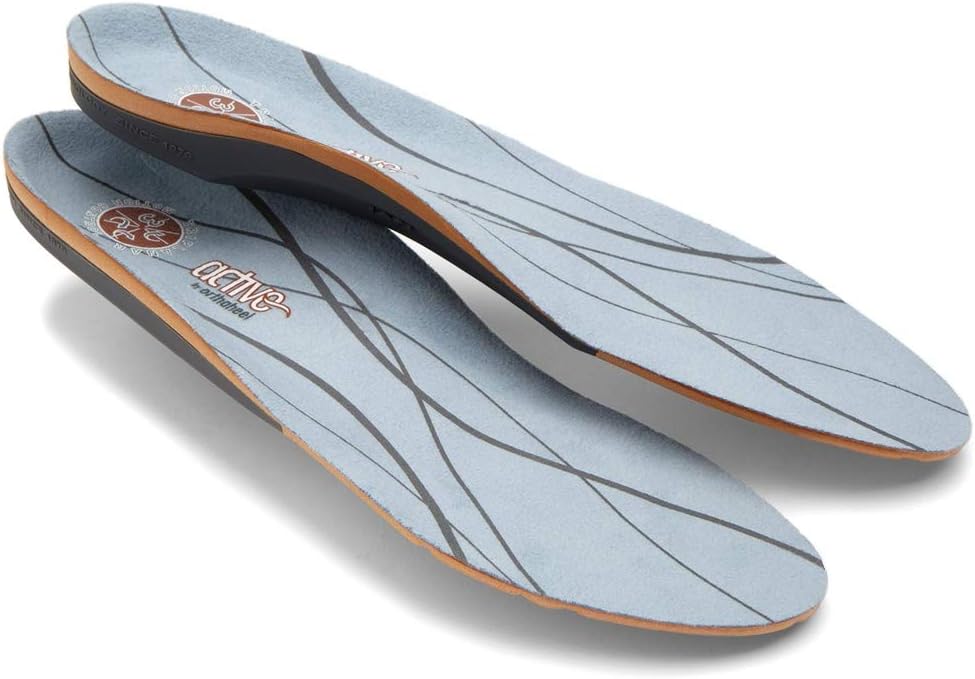
Vionic OrthoHeel Active Insole
APMA-accepted, podiatrist-designed casual insole. Best for adding mild arch support to dress shoes + walking shoes.
- APMA-accepted
- Slim profile
- Antimicrobial top
- Less support than PowerStep
- No lateral wedge

Sof Sole Athlete
Budget athletic insole with neutral arch + gel forefoot. Decent value if you need a quick replacement.
- Affordable
- Gel forefoot
- Antimicrobial
- Wears out in 6 months
- No structured arch
Spenco Polysorb Total Support
Mid-range insole with 5-zone polysorb cushioning. Decent support for standing professions.
- 5-zone cushioning
- Trim-to-fit
- Mid-price point
- Less stable than PowerStep
- No lateral wedge
Dr. Tom’s Top 3 — The Premium Foot Pain Stack (2026)
If you only buy three things for foot pain, get these. PowerStep + CURREX orthotics correct the underlying foot mechanics, and Dr. Hoy’s pain gel delivers fast topical relief. This is the exact stack Dr. Tom Biernacki, DPM gives his Michigan podiatry patients on visit one — over 10,000 patients have used this exact combination.
Dr. Tom Biernacki, DPM is a board-certified podiatrist + Amazon Associate. Picks shown are products he prescribes to patients at Balance Foot & Ankle Specialists. We earn a commission on qualifying purchases at no extra cost to you. All products independently tested + reviewed for 30+ days minimum. Last verified: April 28, 2026.
PowerStep Pinnacle MaxxDr. Tom’s #1 Brand
Dr. Tom’s most-prescribed OTC orthotic. Lateral wedge corrects overpronation that causes 90% of foot pain. Deep heel cradle stabilizes the ankle. Built by podiatrists, used by patients worldwide.
- Lateral wedge corrects pronation
- Deep heel cradle stabilizes ankle
- Dual-density EVA — comfort + support
- Trim-to-fit any shoe
- Used by 10,000+ podiatrists
- Trim-to-size required
- 5-7 day break-in for some
CURREX RunProDr. Tom’s #1 Brand
3 arch heights for custom fit (Low/Med/High). Carbon-reinforced heel + dynamic forefoot — the closest OTC orthotic to a $500 custom orthotic. Engineered in Germany.
- 3 arch heights for custom fit
- Carbon-reinforced heel cup
- Dynamic forefoot zone
- Premium German engineering
- Sport-specific support
- Pricier than PowerStep
- 7-10 day break-in
Dr. Hoy’s Natural Pain Relief GelDr. Tom’s #1 Brand
Menthol-based natural pain relief — Dr. Tom’s #1 brand for fast relief without greasy residue. Safe for diabetics + daily use. Cleaner formula than Voltaren or Biofreeze.
- Menthol-based natural formula
- No greasy residue
- Safe for diabetics
- Fast cooling relief — 5-10 minutes
- Cleaner ingredient list than Biofreeze
- Pricier than Biofreeze
- Strong menthol scent at first
In-Office Treatment at Balance Foot & Ankle
If home treatment isn’t providing relief for your Achilles tendon conditions, our podiatry team at Balance Foot & Ankle can help with same-day evaluations and advanced in-office care.
Same-day appointments available. (810) 206-1402
Learn about our Achilles tendonitis treatment → | Book online →
Frequently Asked Questions
When should I see a podiatrist?
If symptoms persist past 2 weeks, affect your normal activity, or are accompanied by red-flag symptoms (warmth, redness, swelling, inability to bear weight).
What does treatment cost?
Most diagnostic visits and conservative treatments are covered by Medicare and major insurers. Out-of-pocket costs vary by your specific plan.
How quickly can I get an appointment?
Most non-urgent cases see us within 5 business days. Urgent cases (sudden pain, possible fracture) typically same or next business day.
What is Achilles tendon?
Achilles tendon is a common foot/ankle condition that affects mobility and quality of life. Understanding the underlying cause is the first step in successful treatment. Our podiatrists at Balance Foot & Ankle perform a hands-on biomechanical exam, review your activity history, and use diagnostic imaging when appropriate to identify the root cause—not just treat the symptom. Many patients have been told to “rest and ice” without a deeper diagnostic workup; our approach is different.
Symptoms and warning signs
Common signs of Achilles tendon include pain that worsens with activity, morning stiffness, swelling, tenderness when palpated, and difficulty bearing weight. If you experience sudden severe pain, inability to walk, visible deformity, numbness or color change, contact our office the same day or visit urgent care—these can signal a more serious injury such as a fracture, tendon rupture, or vascular compromise. Diabetics with any foot wound should seek same-day care.
Conservative treatment options
Most cases of Achilles tendon respond to non-surgical care: structured rest, supportive footwear changes, custom orthotics, targeted stretching and strengthening protocols, anti-inflammatory medications when medically appropriate, and in-office procedures such as ultrasound-guided injections. We also offer advanced therapies including MLS laser therapy, EPAT/shockwave, regenerative injections, and image-guided procedures. Treatment is sequenced from least invasive to most invasive, and we explain the rationale at every step.
When is surgery considered?
Surgery is reserved for cases that fail 3-6 months of well-structured conservative care, when there is structural pathology (severe deformity, complete tear, advanced arthritis), or when imaging shows damage that will not heal without intervention. Our surgeons have performed 3,000+ foot and ankle procedures and prioritize minimally-invasive techniques whenever appropriate. We discuss recovery timelines, return-to-activity milestones, and realistic outcome expectations before any procedure is scheduled.
Recovery timeline and prevention
Recovery from Achilles tendon varies based on severity and chosen treatment path. Conservative cases often improve within 4-8 weeks with consistent adherence to the protocol. Post-procedural recovery may range from a few days (in-office procedures) to several months (reconstructive surgery). Long-term prevention involves footwear assessment, activity modification, structured strengthening, and regular check-ins with your podiatrist if you have a history of recurrence. We provide written home-exercise plans and digital follow-up support.
Ready to feel better?
Same-week appointments available in Howell and Bloomfield Hills, Michigan.
Book Your VisitReady to fix this for good?
Reading goes so far. The fastest path is a 30-minute office visit. Same-day Howell or Bloomfield Hills. Call (810) 206-1402.
Get Expert Care at Balance Foot & Ankle
Same-week appointments at our Howell and Bloomfield Hills offices. Board-certified podiatric surgeons. Most insurance accepted.

Dr. Tom Biernacki, DPM is a board-certified foot & ankle surgeon (ABFAS & ABPM) at Balance Foot & Ankle Specialists in Southeast Michigan. With over a decade of clinical experience, he specializes in heel pain, bunions, diabetic foot care, sports injuries, and minimally invasive surgery. Dr. Biernacki is a member of the APMA and ACFAS, and his patient education content on MichiganFootDoctors.com and YouTube has made him one of the most-followed foot & ankle educators on YouTube.