

You are in the right place. Dr. Tom Biernacki, DPM, FACFAS — board-certified foot & ankle surgeon with 3,000+ surgeries — explains exactly what achilles tendon repair surgery recovery guide means and what works. Call (810) 206-1402 to book at Howell or Bloomfield Township.
Medically reviewed by Dr. Tom Biernacki, DPM · Board-Certified Podiatric Surgeon · Last reviewed: April 2026 · Editorial Policy
Quick Answer
Achilles Tendon Repair Surgery: Complete Recovery Guide relates to Achilles tendonitis — typically caused by sudden activity increase. Most patients improve in 8-12 weeks with conservative care. Appointments in Howell + Bloomfield Township: (810) 206-1402.

Medically reviewed by Dr. Tom Biernacki, DPM — Board-Certified Podiatric Surgeon — Balance Foot & Ankle, Howell & Bloomfield Township, MI. Last updated April 2026.
▶ Watch
Medically Reviewed by Dr. Tom Biernacki, DPM — Board-Certified Podiatrist, Balance Foot & Ankle Specialists, Michigan. Last updated April 2026.
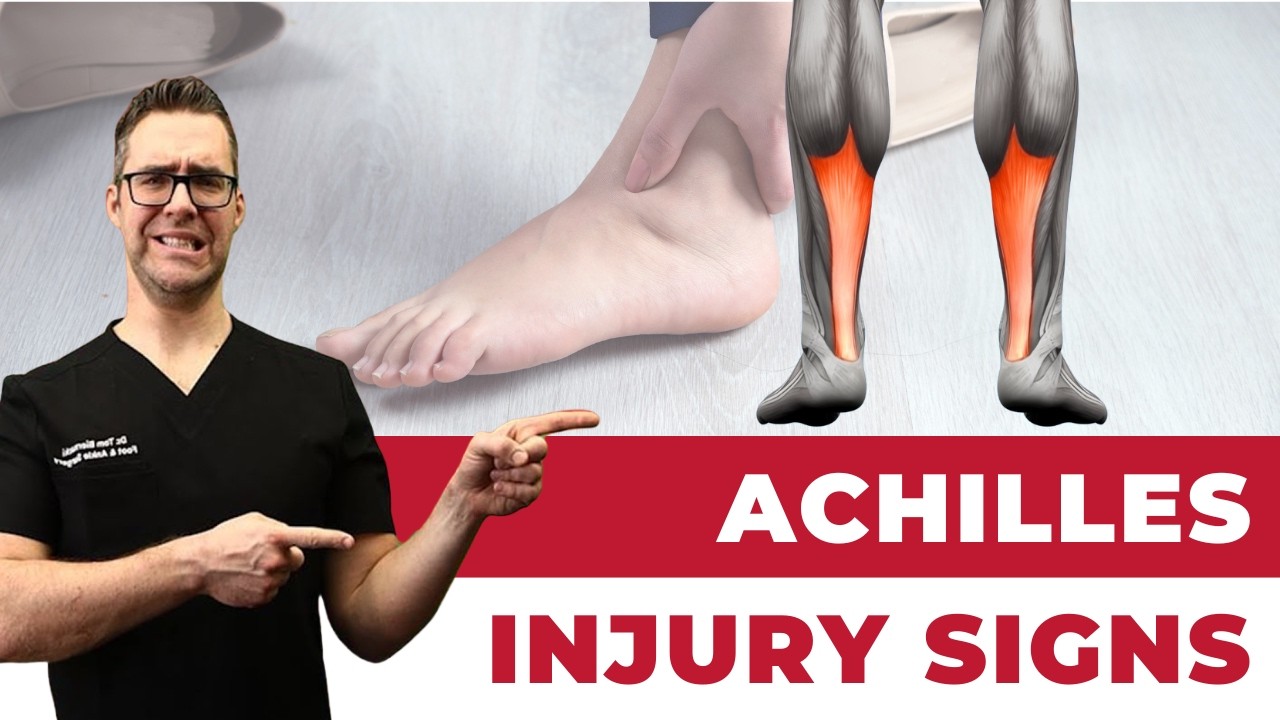
A complete Achilles tendon rupture is one of the most disabling lower extremity injuries an active person can sustain. The Achilles is the thickest and strongest tendon in the body — yet it remains vulnerable to sudden eccentric overload, particularly in the “weekend warrior” demographic of men aged 30–50. Understanding your treatment options, what surgery involves, and what recovery realistically looks like is essential for making an informed decision and preparing for the road ahead.
How Achilles Tendon Ruptures Happen
The classic mechanism is a sudden explosive push-off — a sprint start, a jump landing, or an abrupt change of direction — producing a characteristic “pop” sensation and immediate inability to plantar flex (push down) the foot. Patients often describe feeling as though they were kicked or struck in the back of the leg, only to look behind them and find no one there.
Risk factors include:
- Age 30–50 (peak vulnerability zone — tendon vascularity declining, activity maintained)
- Prior fluoroquinolone antibiotic use (ciprofloxacin, levofloxacin) — increases rupture risk significantly
- Corticosteroid injections near the tendon — degrades collagen mechanical properties
- Poorly managed chronic Achilles tendinopathy with tendon degeneration
- Sudden spike in training volume or intensity without progressive loading
The Thompson (calf squeeze) test is the most reliable bedside diagnostic maneuver: with the patient prone and knee flexed, squeezing the calf produces no passive foot plantarflexion in a complete rupture. Diagnostic ultrasound at Balance Foot & Ankle confirms the diagnosis with real-time tendon imaging.
Surgical vs. Conservative Treatment
The management of acute Achilles tendon rupture remains one of the most debated topics in orthopedic and podiatric surgery. Both operative and non-operative treatment can produce excellent outcomes, and current evidence supports individualized decision-making:
- Surgical repair is generally preferred for: younger active patients, competitive athletes, patients with acceptable surgical risk, and cases where tendon ends are poorly apposed (wide gap on ultrasound)
- Accelerated functional rehabilitation (functional bracing with early weight bearing) produces re-rupture rates approaching those of surgery (approximately 3–5%) when a rigorous protocol is followed — making it a compelling option for older patients, sedentary individuals, or those with significant surgical risk factors
Dr. Biernacki discusses both options transparently at consultation, presenting the evidence base, individual risk profile, and activity goals to determine the most appropriate pathway for each patient.
Surgical Technique
Primary open Achilles repair is performed through a posteromedial longitudinal incision over the ruptured tendon. The torn ends are identified, debrided of necrotic tissue, and repaired with a locked running suture technique (commonly Krackow or Bunnell configuration) using #2 or larger non-absorbable sutures. The paratenon is closed separately to maintain the gliding sheath. A drain may be used overnight. The procedure is performed as outpatient surgery under regional (popliteal nerve block) anesthesia.
For chronic ruptures (presentation delayed >4–6 weeks), primary end-to-end repair is often not possible due to tendon retraction and fibrosis. Reconstruction using a V-Y gastrocnemius advancement or flexor hallucis longus (FHL) tendon transfer may be required.
Recovery Timeline After Achilles Repair
- Days 1–14: Non-weight bearing in plantarflexed splint; strict elevation protocol; suture removal at 12–14 days
- Weeks 2–6: Progressive weight bearing in a controlled ankle motion (CAM) boot with heel lifts; gentle passive range-of-motion initiated
- Weeks 6–12: Transition out of boot; formal physical therapy begins — progressive strengthening, calf raises, proprioceptive training
- Months 3–4: Return to walking without a limp; stationary bike and pool rehabilitation
- Months 4–6: Return to jogging and straight-line running for recreational athletes
- Months 6–12: Return to full competitive sport; cutting, jumping, explosive movements
The Achilles tendon remodels over 12–18 months — patience through this process is critical to avoiding re-rupture, which carries a significantly worse prognosis than the primary injury.
Rehabilitation Priorities
Physical therapy after Achilles repair focuses on progressive loading of the healing tendon through a periodized eccentric strengthening program. The single-leg heel raise is the gold-standard functional test of Achilles strength — patients should achieve symmetrical single-leg heel raises before return to running. Custom orthotics with appropriate heel lift may be prescribed for long-term load management.
Achilles Tendon Injury? Get Expert Evaluation.
Dr. Biernacki treats acute and chronic Achilles pathology at Balance Foot & Ankle — Bloomfield Township and Howell, MI.
📞 (810) 206-1402 | Request Appointment →
📍 Located in Michigan?
Our board-certified podiatrists treat this condition at two convenient locations. Book online 24/7 at either office.
Insurance Accepted
BCBS · Medicare · Aetna · Cigna · United Healthcare · HAP · Priority Health · Humana · View All →
Howell Office
4330 E Grand River Ave
Howell, MI 48843
Get Directions →
Bloomfield Township Office
43494 Woodward Ave, #208
Bloomfield Township, MI 48302
Get Directions →
In Our Clinic
Most Achilles tendonitis patients we see at Balance Foot & Ankle are recreational runners in their 40s or 50s who ramped up mileage too quickly, plus a second cohort of middle-aged women who recently switched from heels to flat shoes. The first question we ask is whether the pain is at the insertion on the heel bone versus 2–6 cm up the mid-substance — the treatment ladder is genuinely different. Eccentric heel-drops, heel lifts, and a soft-strike gait retraining pass resolve ~80 % of cases. The ones who aren’t improving by week 8 usually have an unrecognized Haglund’s deformity or insertional calcific tendinosis that needs imaging.
More Podiatrist-Recommended Achilles Essentials
Achilles Night Splint
United Ortho dorsiflexion splint — reduces morning Achilles tendon stiffness.
Cushioned Running Shoe


![Achilles Tendonitis & Back of Heel Pain [BEST Home Treatments 2024!]](https://www.michiganfootdoctors.com/wp-content/cache/flying-press/d645ea3f3d27024136b88a074b2b7894.jpg)
Watch: Achilles Tendonitis & Back of Heel Pain [BEST Home Treatments 2024!] — MichiganFootDoctors YouTube
Hoka Clifton 10 — max-heel-cushion offloads the Achilles with every step.
Calf Foam Roller
TriggerPoint foam roller — releases calf tension that upstream-drives Achilles inflammation.
As an Amazon Associate, Balance Foot & Ankle earns from qualifying purchases. Product recommendations are based on clinical experience; prices and availability shown above update live from Amazon.

When to See a Podiatrist
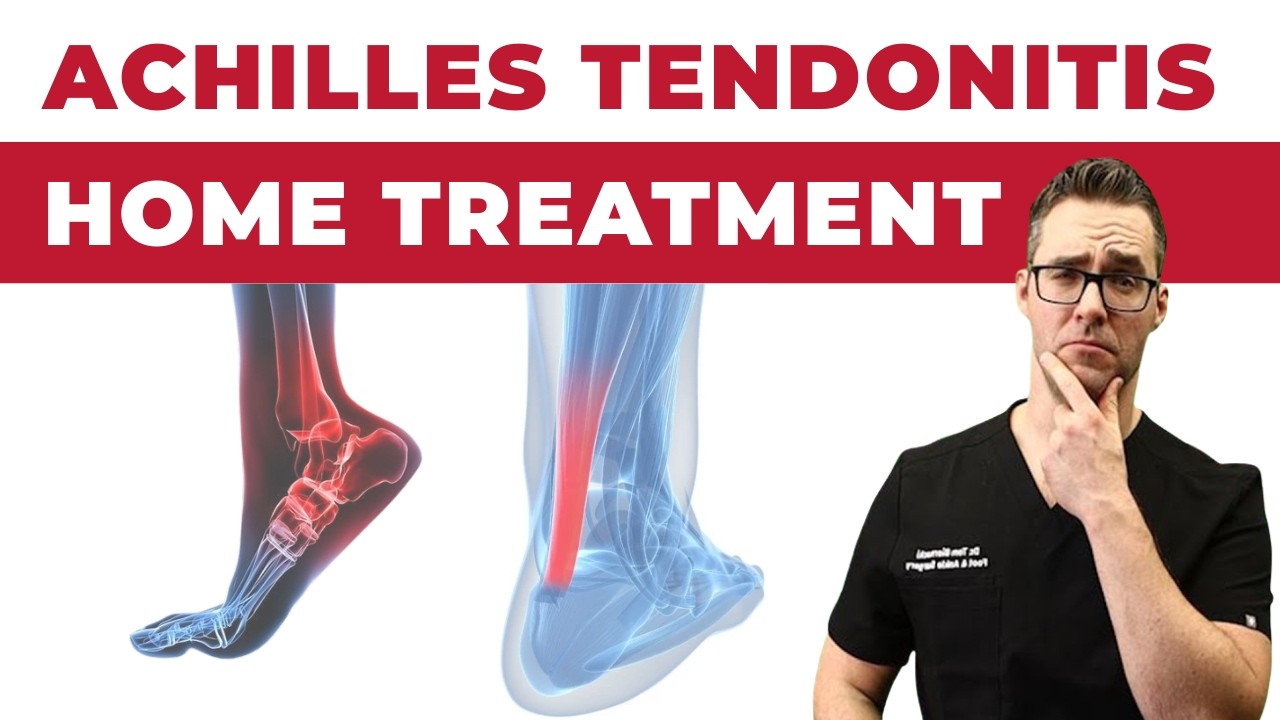
Achilles tendonitis that lasts more than 3 months has usually caused structural tendon changes that heating and stretching can’t reverse. Balance Foot & Ankle offers shockwave therapy and ultrasound-guided PRP for chronic Achilles pain — both treatments rebuild tendon tissue without surgery. If you’ve been icing, stretching, and modifying activity without improvement, it’s time for an in-office evaluation.
Call Balance Foot & Ankle: (810) 206-1402 · Book online · Offices in Howell & Bloomfield Township
Watch: Dr. Tom explains
Podiatrist-recommended products
As an Amazon Associate, Dr. Tom earns from qualifying purchases.
Heel lift reduces Achilles tension post-repair.
Check price →Additional heel elevation for early recovery.
Check price →Dynamic Achilles support for return-to-run.
View on Amazon →Post-op swelling management.
Check price →Related resources
Ready to solve this? Book today.
Book online 24/7 · Howell & Bloomfield Township · 4.9★ (1,200+ reviews)
☎ (810) 206-1402Book Online →In-Office Treatment at Balance Foot & Ankle
When conservative care isn’t enough, Dr. Tom Biernacki and the team at Balance Foot & Ankle offer advanced treatment options — including Tendon Repair Surgery Michigan at our Howell and Bloomfield Township clinics.
Book online 24/7. Call (810) 206-1402 or book online.
Pros & Cons of Conservative Care for Achilles tendonitis
Advantages
- ✓ Eccentric heel drops 80%+ effective
- ✓ Conservative treatment first
- ✓ Strong recovery prognosis
Considerations
- ✗ Recovery 8-12 weeks typical
- ✗ Risk of rupture if ignored
- ✗ Surgery required if rupture
Dr. Tom’s Recommended Products for Achilles tendonitis
Affiliate disclosure: As an Amazon Associate, Balance Foot & Ankle earns from qualifying purchases. We only recommend products we use with patients.
TriggerPoint Footballer Dr. Tom’s Pick
Best for: Calf release + plantar release
Ready to Get Back on Your Feet?
Appointments in Howell + Bloomfield Township. Most insurance accepted. Dr. Tom Biernacki, DPM & team.
Call Now: (810) 206-1402
In-Office Treatment at Balance Foot & Ankle
If home treatment isn’t providing relief for your Achilles tendon conditions, our podiatry team at Balance Foot & Ankle can help with expert evaluations and advanced in-office care.
Book online 24/7. (810) 206-1402
Learn about our Achilles tendonitis treatment → | Book online →
VitaMedica Arnica Gel
Arnica gel plus 15 plant compounds for sore feet, plantar fasciitis flares and post-activity soreness. Apply a thin layer to the sore area.
Shop VitaMedica Arnica Gel →Ready to feel better?
Appointments available in Howell and Bloomfield Township, Michigan.
Book Your VisitReady to fix this for good?
Reading goes so far. The fastest path is a 30-minute office visit. Book online for Howell or Bloomfield Township. Call (810) 206-1402.
Get Expert Care at Balance Foot & Ankle
Appointments at our Howell and Bloomfield Township offices. Board-certified podiatric surgeons. Most insurance accepted.
Ready for Expert Care?
Appointments in Howell & Bloomfield Township, MI.
4.9★ | 1,200+ Reviews | 3,000+ Surgeries
Or call: (810) 206-1402

Dr. Tom Biernacki, DPM is a board-certified foot & ankle surgeon (ABFAS & ABPM) at Balance Foot & Ankle Specialists in Southeast Michigan. With over a decade of clinical experience, he specializes in heel pain, bunions, diabetic foot care, sports injuries, and minimally invasive surgery. Dr. Biernacki is a member of the APMA and ACFAS, and his patient education content on MichiganFootDoctors.com and YouTube has made him one of the most-followed foot & ankle educators on YouTube.
More questions patients ask
How long does an ankle sprain take to heal?
Recovery time depends on severity: Grade 1 (mild stretching) typically heals in 1-3 weeks, Grade 2 (partial tear) in 3-6 weeks, and Grade 3 (complete tear) in 6-12 weeks or longer. Proper rehabilitation is critical to prevent chronic ankle instability, which affects up to 40% of patients who don't receive adequate treatment. Dr. Biernacki creates customized recovery plans.
When should I see a doctor for a sprained ankle?
Seek professional evaluation if you can't bear weight, notice significant swelling or bruising, hear a pop at the time of injury, have numbness, or if pain hasn't improved after 5-7 days of RICE treatment. X-rays or MRI may be needed to rule out fractures. Dr. Biernacki sees urgent problems. Call 810-206-1402 and we’ll find the soonest opening.
Can a sprained ankle heal without treatment?
While mild sprains may heal with rest and home care, undiagnosed ligament tears and improperly rehabilitated sprains frequently lead to chronic ankle instability, recurrent sprains, and early-onset arthritis. A proper evaluation ensures appropriate treatment and reduces your risk of long-term complications significantly.
Still have a question about coverage or cost? Book online and we will check your benefits before your visit: Book in Howell · Book in Bloomfield Township. Prefer to talk it through first? Call (810) 206-1402.