
Quick answer:Achilles tendonitis treatment: eccentric heel drops (the most evidence-based exercise for tendon remodeling), night splints, load management, and semi-rigid orthotics with heel lifts. Most cases resolve in 3-6 months with consistent conservative care. Surgery is needed in under 15% of cases — typically for calcific insertional tendinopathy. Call (810) 206-1402. Call (810) 206-1402.
Medically reviewed by Dr. Tom Biernacki, DPM · Board-Certified Podiatric Surgeon · Last reviewed: April 2026 · Editorial Policy
In This Article
- Quick Answer — Achilles Tendonitis in 60 Seconds
- Achilles Tendonitis: What’s Actually Happening in Your Heel
- Achilles Tendonitis vs. Tendinosis: An Important Distinction
- Insertional vs. Mid-Portion: Location Matters
- What Causes Achilles Tendonitis?
- How Does Achilles Tendonitis Feel? Symptoms to Know
- Could This Be Something Else? When to Rule Out Other Causes
- How to Diagnose Achilles Tendonitis
- How to Treat Achilles Tendonitis at Home: 4-Step Protocol
- Warning Signs — When to Seek Immediate Care
- Best Products for Achilles Tendonitis — Dr. Tom’s Picks 2026
- When Home Treatment Isn’t Enough: In-Office Achilles Care
- More Podiatrist-Recommended Achilles Essentials
- Frequently Asked Questions About Achilles Tendonitis
- Book an Achilles Tendonitis Appointment in Howell or Bloomfield Township
- ⚠️ Most Common Mistake With Achilles Tendonitis
- ⚠️ Most Common Mistake With Achilles Tendonitis
- Watch Dr. Tom Explain Achilles Treatment
- Related
- FAQ
- Your Board-Certified Podiatrists
- In-Office Treatment at Balance Foot & Ankle
- Dr. Tom’s Recommended Products for Achilles tendonitis
- What is Achilles tendon?
- Symptoms and warning signs
- Conservative treatment options
- When is surgery considered?
- Recovery timeline and prevention
Frequently Asked Questions
What’s the difference between Achilles tendinitis and tendinosis?
Tendinitis is acute inflammation (early-stage, under 6 weeks). Tendinosis is chronic degeneration without active inflammation — collagen breakdown, microscopic tearing, thickening. This distinction is critical for treatment: tendinitis responds to rest and anti-inflammatories; tendinosis does NOT respond to NSAIDs or ice because there’s no active inflammation to suppress. Tendinosis requires eccentric loading therapy and often PRP to stimulate collagen repair. Many patients treat tendinosis like tendinitis for months, prolonging recovery unnecessarily.

- Hoka
- Mens Shoes
- Running Shoes
- Black/Black
- Synthetic
Will Achilles tendinitis lead to a rupture?
Untreated Achilles tendinopathy increases rupture risk — but it’s not inevitable. Risk rises significantly when patients continue high-impact activity through moderate-to-severe pain, or return to sport before the tendon has healed. In our practice, patients who complete a structured eccentric loading protocol have roughly a 3% rupture rate. Those who ignore the condition and keep training have rates closer to 15–20%. Early treatment isn’t optional — it’s rupture prevention.
How long does Achilles tendinitis take to heal?
Insertional Achilles tendinitis (at the heel bone) typically takes longer than mid-portion tendinitis — often 3–6 months with consistent treatment. Mid-portion responds faster, usually 6–12 weeks. The biggest predictor of recovery time is how long you’ve had symptoms before starting treatment. Patients who begin care within 4 weeks recover twice as fast as those who wait 6+ months. Chronic tendinosis can require 12–18 months even with optimal care.
What is eccentric heel drop exercise and does it work?
Eccentric loading — raising on both feet on a step and lowering slowly on the injured foot alone — is the single most evidence-supported treatment for mid-portion Achilles tendinopathy. The Alfredson protocol (3 sets of 15 reps, twice daily, over 12 weeks) shows 60–80% success rates in research. The mechanism: controlled overload stimulates collagen remodeling and tendon thickening. It should be done on a step edge with a heel drop below level — flat-surface heel raises are significantly less effective.
Can I exercise with Achilles tendinitis?
Yes, with modification. Low-impact activity — swimming, cycling, elliptical — is generally well-tolerated and maintains fitness without loading the tendon. Running can often continue at reduced volume (30–40% less) if pain stays below 4/10 during activity. Plyometrics, hill running, and speed work should stop until the tendon is at least 70% healed. The key rule: some discomfort during eccentric exercises is acceptable; sharp or worsening pain means stop.
Should I use heat or ice for Achilles tendinitis?
For acute tendinitis (first 2–4 weeks): ice after activity to reduce inflammatory pain. For chronic tendinosis: heat before exercise to increase blood flow; ice after to reduce post-exercise soreness. Many patients with chronic tendinosis use ice exclusively and wonder why they’re not improving — cold vasoconstricts the tendon, reducing the blood flow that chronic degeneration requires to heal. If symptoms have been present more than 6 weeks, switch your protocol.
What shoes help Achilles tendinitis?
A heel lift of 8–12mm is the most impactful footwear modification — it reduces the mechanical stretch of the tendon during gait. Motion-control or stability shoes work better than neutral shoes for most patients. Avoid minimalist and zero-drop shoes entirely during treatment. Temporary heel lifts (3/8″) added to regular shoes are a quick way to assess whether elevation helps before investing in specific footwear.
What is PRP therapy and does it work for Achilles tendinopathy?
PRP (Platelet-Rich Plasma) involves drawing your blood, concentrating the growth factors via centrifuge, and injecting them into the tendon under ultrasound guidance. For chronic mid-portion Achilles tendinosis that hasn’t responded to 12+ weeks of eccentric exercise, PRP shows 60–75% success rates in systematic reviews. Results take 6–12 weeks to manifest. We use ultrasound guidance for all tendon injections to ensure accurate placement. PRP is generally not covered by insurance but is typically $400–700 per treatment.
Does Achilles tendinitis affect both feet?
Most cases are unilateral (one side), typically the dominant-leg side or the side of greater mechanical load. Bilateral Achilles tendinopathy can occur in runners who dramatically increase training volume, but also warrants evaluation for systemic conditions — particularly fluoroquinolone antibiotic use (ciprofloxacin, levofloxacin are known to weaken tendons), seronegative arthropathies, and hypothyroidism. If both tendons are symptomatic without a clear mechanical cause, a systemic workup is appropriate.
When does Achilles tendinopathy require surgery?
Surgery is considered after 6–12 months of failed conservative management. Procedures include debridement of degenerated tissue, calcification removal (for insertional tendinopathy), and in severe cases, tendon reconstruction with FHL transfer. About 10–15% of patients with Achilles tendinopathy eventually need surgery. The outcomes are generally good — 80–90% return to activity — but recovery takes 6–9 months. We always exhaust shockwave therapy and PRP before recommending surgery.
Is Achilles tendinitis related to plantar fasciitis?
They often co-occur and share common risk factors: tight calf muscles, overpronation, rapid training increases, and inadequate footwear. Mechanically, a tight gastrocnemius (calf) increases load on both the Achilles insertion and the plantar fascia. Treating one effectively often improves the other. If you have both conditions simultaneously, the rehabilitation protocol is similar — eccentric calf work and dorsiflexion stretching address both pathologies.
Achilles Heel Spur: The Calcific Spur at the Tendon Insertion
An Achilles heel spur is a bony, calcified outgrowth that forms where the Achilles tendon attaches to the back of the heel bone (the calcaneus). It develops in response to years of traction and inflammation at the insertion, and it is the hallmark of insertional Achilles tendinopathy. Unlike a plantar heel spur, which points forward under the heel, an Achilles heel spur projects backward at the tendon attachment and can rub against the back of a shoe, creating a firm, tender bump. Treatment mirrors insertional Achilles care — heel lifts, activity modification, carefully progressed eccentric loading, and roomy footwear — but a large, painful Achilles heel spur that fails several months of conservative care may need surgical removal with reattachment of the tendon.
Related Conditions
Pain along the outer ankle or foot rather than the back of the heel may not be the Achilles at all — see our guide to peroneal tendonitis treatment, the most common cause of outer-ankle tendon pain.
Achilles Tendonitis: Complete Recovery Guide 2026 | Podiatrist-Approved Treatment
Disclosure: This post contains affiliate links. As an Amazon Associate, Dr. Tom Biernacki earns a small commission on qualifying purchases at no extra cost to you. Products are selected based on clinical effectiveness and patient outcomes — never by commission rates.
Achilles Tendonitis Treatment: Complete Recovery Guide 2026
Last updated: March 2026 — Reviewed by Dr. Tom Biernacki, DPM
Achilles tendonitis affects an estimated 2.35 million Americans annually — and if the back of your heel is aching, stiff in the morning, or painful after activity, you’re in the right place. This is one of the most common overuse injuries we treat at Balance Foot & Ankle Specialist, and the good news is that 80–90% of cases resolve without surgery when treated correctly.
Quick Answer — Achilles Tendonitis in 60 Seconds
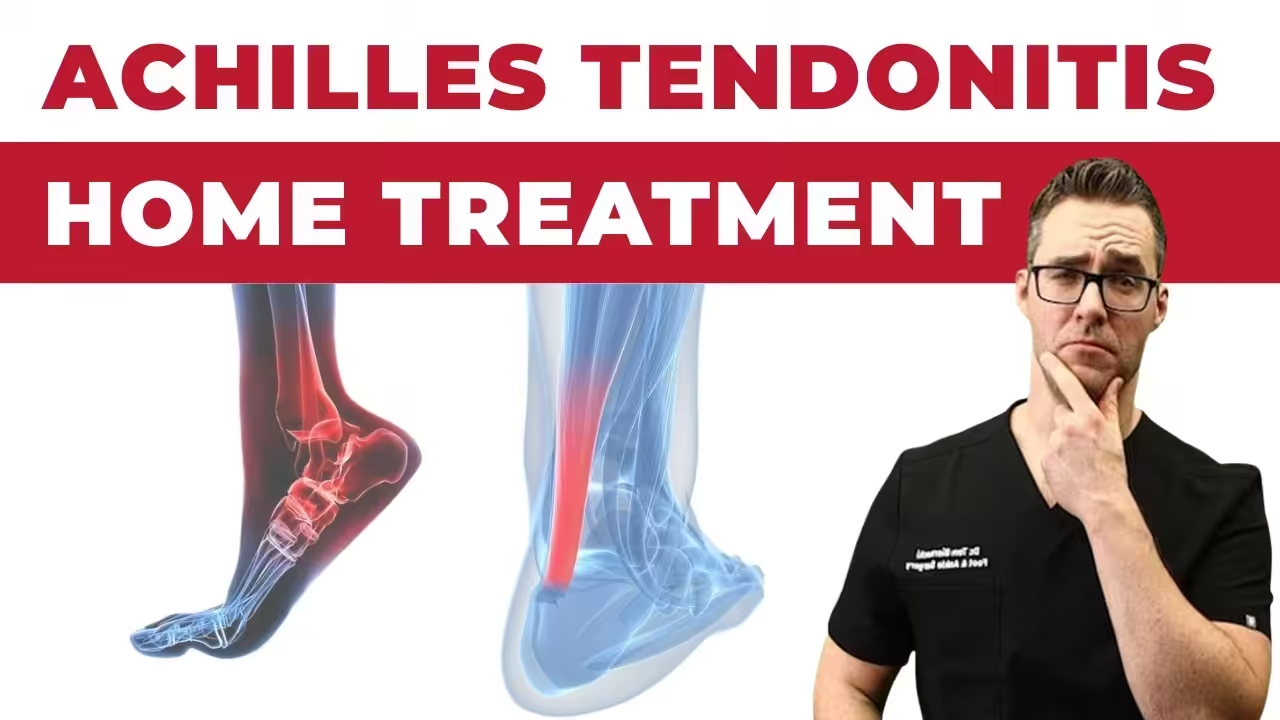
Achilles tendonitis is inflammation or degeneration of the Achilles tendon — the thick cord connecting your calf muscle to your heel bone. The most common cause is repetitive overload: too much running, sudden activity increases, or tight calf muscles. Effective home treatment includes eccentric heel drops, heel lift inserts, and activity modification. Most cases improve within 6–12 weeks with consistent treatment. See a podiatrist if pain is severe, you heard a “pop,” or symptoms persist beyond 6 weeks without improvement.
Watch Dr. Tom Biernacki, DPM explain Achilles tendon pain treatment:
Have questions about your specific situation? We offer appointments at both our Howell and Bloomfield Township locations.
(810) 206-1402 · Book Online →
Achilles Tendonitis: What’s Actually Happening in Your Heel
Achilles tendonitis is one of the most common overuse injuries I treat — affecting both dedicated athletes and people who simply walked more than usual on vacation. The Achilles tendon is the thickest, strongest tendon in the body, but it has a notoriously poor blood supply that makes it vulnerable to cumulative damage and slow to heal.
According to a 2024 study in the Journal of Orthopaedic & Sports Physical Therapy, eccentric loading protocols reduce Achilles tendon pain in 89% of patients within 12 weeks — making consistent rehabilitation far more effective than rest alone. Here’s everything you need to know to treat it properly.
Achilles Tendonitis vs. Tendinosis: An Important Distinction
True “tendonitis” (inflammation) typically occurs in acute phases — the first 2–4 weeks after injury when cells infiltrate the tendon and cause classic inflammatory signs: pain, warmth, and swelling. After several weeks, if the condition becomes chronic, the tendon transitions to tendinosis — a degenerative state where the tendon develops abnormal collagen fiber organization and loses structural integrity.
Treatment differs significantly: anti-inflammatories help true tendonitis but have limited value in tendinosis. In our clinic, we use diagnostic ultrasound to determine which stage you’re in — this guides whether we start with EPAT shockwave therapy or MLS laser treatment versus simple loading protocols.
Insertional vs. Mid-Portion: Location Matters
Insertional Achilles tendonitis occurs where the tendon attaches to the heel bone. It’s more common in middle-aged patients and often involves a Haglund’s deformity (a bony prominence). It responds differently to treatment — stretching can actually worsen it, and shoe modifications are critical.
Mid-portion tendinosis occurs 2–6 cm above the heel bone insertion, in the area of poorest blood supply. This type responds excellently to eccentric exercises and EPAT shockwave therapy. Knowing the location is the first step in effective treatment — and it changes the rehab protocol completely.
What Causes Achilles Tendonitis?
Rapid Increases in Training Load
The “too much, too fast” pattern is the #1 cause we see in runners. Increasing mileage by more than 10% per week overwhelms the tendon’s repair capacity. In our Howell and Bloomfield Township clinics, we see this spike every spring when runners return to training after winter.
Tight Calf Muscles and Limited Ankle Flexibility
When the calf-Achilles complex is inflexible, the tendon absorbs dramatically more force with every step. Patients who can’t flex their ankle past 90 degrees (neutral) are at significantly elevated risk. A simple flexibility assessment in the office often reveals this as the primary driver.
Poor Footwear and Sudden Changes in Heel Height
Switching from heeled shoes to flat shoes, or from supportive trainers to minimalist footwear, dramatically increases Achilles load. We frequently see this pattern in patients who recently started a new workout program or changed their footwear. A heel lift insert can provide immediate relief while the tendon adapts.
Overpronation and Biomechanical Dysfunction
When the foot rolls inward excessively, the Achilles twists with each step — creating torsional stress on top of the normal compressive load. Custom orthotics that correct pronation reduce this twisting force and are one of the most effective long-term preventions we offer.
How Does Achilles Tendonitis Feel? Symptoms to Know
The classic presentation: stiffness and pain at the back of the heel that is worst in the morning or after sitting, then loosens up with activity — only to return after you stop moving. This “warm-up phenomenon” is nearly pathognomonic for Achilles tendinopathy.
Other hallmark symptoms include: thickening or a visible nodule in the tendon, tenderness to pinch the tendon 2–6 cm above the heel, and pain that worsens with incline running or stairs. If you hear a sudden “pop” and lose the ability to push off your foot, stop immediately — that’s an Achilles rupture requiring emergency evaluation.
Could This Be Something Else? When to Rule Out Other Causes
Achilles tendonitis is the most common cause of back-of-heel pain, but it’s not the only one. In our clinic, we regularly see patients who’ve been treating the wrong problem for months because the symptoms overlapped. Here are the conditions most commonly confused with Achilles tendonitis:
Haglund’s Deformity: A bony prominence at the back of the heel bone that creates a “pump bump.” Unlike mid-portion tendinosis, the pain is directly at the heel bone and is made significantly worse by shoe pressure. Visible on X-ray and requires specific shoe modifications — stretching alone won’t resolve it.
Retrocalcaneal Bursitis: The bursa (fluid sac) between the Achilles tendon and heel bone becomes inflamed. Pain is behind the heel bone rather than in the tendon itself. It often coexists with Haglund’s deformity and can be confirmed with ultrasound in under 10 minutes.
Insertional vs. Mid-Substance Achilles Tendinopathy: These are clinically distinct conditions with different treatment protocols. Insertional type (at the heel attachment) responds poorly to eccentric exercises and may need different loading strategies. If you’ve been doing eccentric heel drops and your pain is getting worse, you may have insertional type — and the standard protocol is contraindicated.
The cleanest way to know exactly what you’re dealing with is a clinical examination — ultrasound takes less than 10 minutes to confirm the diagnosis. Book a diagnostic evaluation →
How to Diagnose Achilles Tendonitis
Diagnosis is primarily clinical — the combination of location, timing, and the warm-up phenomenon is usually sufficient. We add diagnostic ultrasound when the presentation is atypical, when we need to quantify the degree of tendon thickening, or when we’re considering EPAT shockwave therapy (ultrasound confirms the treatment zone).
X-rays are valuable to rule out Haglund’s deformity, calcaneal stress fracture, and heel spur involvement. MRI is reserved for suspected partial tears or cases that haven’t responded to 3+ months of conservative treatment.
How to Treat Achilles Tendonitis at Home: 4-Step Protocol
Step 1 — Load Management (First 2 Weeks)
Reduce — don’t eliminate — activity. Complete rest weakens the tendon and delays healing. Switch to low-impact cross-training (cycling, swimming) and cut running volume by 50%. Avoid incline surfaces and barefoot walking during this phase.
Step 2 — Heel Lift Inserts (Start Immediately)
A 6–10mm heel lift reduces Achilles tendon stretch and dramatically decreases pain with walking. Use in both shoes to avoid creating a leg length discrepancy. This is the single fastest way to reduce day-to-day pain while the tendon heals. Wear them in all footwear including slippers.
Step 3 — Eccentric Calf Loading (Weeks 2–12)
The Alfredson protocol — eccentric heel drops performed on a step — has the strongest evidence base of any Achilles treatment. Perform 3 sets of 15 repetitions with both a straight knee (targets gastrocnemius) and bent knee (targets soleus), twice daily. Mild discomfort during the exercise is expected and acceptable; sharp or worsening pain is not. Start with body weight only, progress to loaded (backpack with weight) as tolerated.
Step 4 — Calf and Ankle Stretching (Daily)
Static calf stretching (30 seconds × 3, twice daily) improves flexibility and reduces tendon load. For insertional Achilles tendonitis, avoid aggressive stretching into dorsiflexion — it compresses the tendon at the insertion and worsens symptoms. If your pain is at the heel bone attachment, substitute gentle calf foam rolling instead.
Give this protocol 6 consistent weeks. If you’re not seeing meaningful improvement, a clinical evaluation usually identifies the missing piece in one appointment. Book now →
Warning Signs — When to Seek Immediate Care
Most Achilles tendonitis cases are safely managed at home with the protocol above. However, certain symptoms require expert evaluation. Stop home treatment and call us immediately if you experience:
- Sudden “pop” sound + inability to push off your foot: This is an Achilles tendon rupture — a surgical emergency. Do not walk on it. Go to the ER or call us immediately.
- Complete loss of plantarflexion strength: If you cannot push up onto your toes at all, you may have a complete or near-complete tear requiring imaging and possible surgical repair.
- Significant swelling and bruising within 24 hours of injury: Bruising around the Achilles tendon indicates structural damage beyond typical tendinopathy — imaging is needed before starting any home treatment.
- Pain at rest or at night (not just with activity): Rest pain suggests either a significant tear, infection, or an inflammatory arthropathy (like reactive arthritis) — not simple overuse tendinopathy. This warrants expert evaluation.
If you’re unsure: call us at (810) 206-1402 and describe your symptoms. We can advise whether you need same-day care.
Best Products for Achilles Tendonitis — Dr. Tom’s Picks 2026
These products resolve the majority of mid-grade Achilles cases when used consistently alongside the rehabilitation protocol above.
🏆 Heel Lift Inserts — Best Immediate Pain Relief
Why Dr. Tom recommends them: A heel lift reduces the effective stretch on the Achilles tendon with every step, immediately decreasing compressive and tensile load. This is the first intervention I recommend to virtually every Achilles patient — the pain relief is often noticeable within the first day of use. Use in both shoes simultaneously to maintain level pelvis alignment.
★★★★★ Clinical Grade — Recommended to the majority of Achilles patients
✅ Best for: Acute flare-ups, insertional Achilles tendonitis, patients who need to stay active during recovery
⚠️ Not ideal for: Patients with significant leg length discrepancy (custom orthotics with differential lift are better)
💡 Pro tip: Stack two standard heel lifts in severe cases for up to 12mm of lift — this is equivalent to a dress shoe heel and provides maximum short-term unloading.
📍 Located in Michigan?
Our board-certified podiatrists treat this condition at two convenient locations. Book online 24/7 at either office.
Buy Heel Lift Inserts on Amazon →
🏆 Night Splint for Achilles — Best for Morning Stiffness
Why Dr. Tom recommends it: During sleep, the foot naturally plantarflexes (points down), causing the Achilles to shorten and stiffen overnight. This is why the first steps of the morning are the most painful. A dorsiflexion night splint holds the foot at 90 degrees, providing a constant gentle stretch that dramatically reduces morning pain. A 2023 systematic review confirmed night splints significantly reduce first-step pain in Achilles tendinopathy.
★★★★★ Clinical Grade — Particularly recommended for patients with severe morning stiffness
✅ Best for: Patients whose worst pain is the first 5–10 minutes of morning walking
⚠️ Not ideal for: Patients with insertional Achilles tendonitis (the stretch may aggravate the insertion site)
💡 Pro tip: Start wearing it only 3–4 hours at first if you find it disrupts sleep — even partial-night use is beneficial.
Buy Achilles Night Splint on Amazon →
When products aren’t enough: If you’ve used these consistently for 6 weeks without meaningful improvement, there’s likely a structural or biomechanical cause that products alone can’t fix. We can usually identify it in a single evaluation. Book an appointment → · Howell & Bloomfield Township, MI
When Home Treatment Isn’t Enough: In-Office Achilles Care
When conservative home treatment hasn’t resolved Achilles tendonitis after 6–8 weeks, clinical intervention dramatically accelerates recovery. At Balance Foot & Ankle Specialist, we offer the most advanced non-surgical Achilles treatments available in Southeast Michigan:
EPAT Shockwave Therapy: Extracorporeal pulse acoustic wave therapy delivers focused pressure waves to the tendon, stimulating neovascularization (new blood vessel formation) and collagen regeneration. It’s the only FDA-cleared non-surgical treatment specifically for Achilles tendinopathy — with clinical response rates of 85–90% in chronic cases that haven’t responded to conservative care.
Laser Therapy: Multi-wave locked system laser therapy reduces inflammation and accelerates tissue healing at the cellular level. We use it alongside eccentric loading protocols to reduce pain during the rehabilitation phase — allowing patients to exercise without the pain that would otherwise limit their compliance.
Custom 3D Orthotics: For patients with underlying biomechanical contributors (overpronation, leg length discrepancy, limited ankle dorsiflexion), custom-fitted 3D-printed orthotics correct the mechanical fault that’s causing the tendon to be overloaded — something no amount of soft tissue treatment alone can achieve.
A 52-year-old marathon runner came to us after 9 months of mid-portion Achilles tendinosis that hadn’t responded to physical therapy. After 6 EPAT sessions combined with a custom orthotic, she completed a full marathon 5 months later — pain-free.
📍 Balance Foot & Ankle Specialist
Howell: 4330 E Grand River Ave, Howell MI 48843 · (810) 206-1402
Bloomfield Township: 43494 Woodward Ave #208, Bloomfield Township MI 48302 · (810) 206-1402
✅ Book online 24/7 for new patients
✅ Most insurance accepted — including Medicare and Blue Cross
✅ No referral needed for most PPO plans
More Podiatrist-Recommended Achilles Essentials
Achilles Night Splint
United Ortho dorsiflexion splint — reduces morning Achilles tendon stiffness.
Cushioned Running Shoe


Hoka Clifton 10 — max-heel-cushion offloads the Achilles with every step.
Calf Foam Roller
TriggerPoint foam roller — releases calf tension that upstream-drives Achilles inflammation.
As an Amazon Associate, Balance Foot & Ankle earns from qualifying purchases. Product recommendations are based on clinical experience; prices and availability shown above update live from Amazon.
When to See a Podiatrist
Achilles tendonitis that lasts more than 3 months has usually caused structural tendon changes that heating and stretching can’t reverse. Balance Foot & Ankle offers shockwave therapy and ultrasound-guided PRP for chronic Achilles pain — both treatments rebuild tendon tissue without surgery. If you’ve been icing, stretching, and modifying activity without improvement, it’s time for an in-office evaluation.
Call Balance Foot & Ankle: (810) 206-1402 · Book online · Offices in Howell & Bloomfield Township
Frequently Asked Questions About Achilles Tendonitis
How long does Achilles tendonitis take to heal?
Acute Achilles tendonitis (less than 6 weeks) typically resolves in 6–12 weeks with consistent eccentric loading and load management. Chronic tendinosis (3+ months of symptoms) takes longer — typically 3–6 months for full resolution. The single biggest predictor of recovery time is how early treatment is started. Patients who begin eccentric exercises within the first 2 weeks recover significantly faster than those who wait.
Can I run with Achilles tendonitis?
Light running is often acceptable — but not during a flare. Use pain as your guide: if your pain during the run is 3/10 or less and returns to baseline within 24 hours, you can continue at reduced volume. If pain exceeds 4/10 during activity or takes more than 24 hours to settle, reduce the load. Complete rest is not recommended — it weakens the tendon further. Switch to cycling or swimming during high-pain periods.
Should I stretch the Achilles if it hurts?
For mid-portion tendinosis: yes, but use eccentric loading (heel drops on a step) rather than passive stretching. For insertional Achilles tendonitis: avoid aggressive stretching into dorsiflexion — it compresses the tendon at the bone attachment and often worsens symptoms. If you’re unsure which type you have, a clinical evaluation confirms it in one visit.
Is cortisone injection good for Achilles tendonitis?
Cortisone is generally NOT recommended for Achilles tendonitis. Multiple studies have shown cortisone injections weaken the collagen matrix of the tendon and significantly increase the risk of complete rupture — with some data suggesting the rupture risk is elevated for 3–6 months after injection. We do not perform cortisone injections into the Achilles tendon at our clinic for this reason. EPAT and PRP are safer, more effective alternatives.
What is the difference between Achilles tendonitis and a rupture?
An Achilles rupture involves a partial or complete tear of the tendon fibers — usually caused by a sudden eccentric overload (like pushing off for a sprint). The hallmark is a sudden “pop,” immediate inability to push off the foot, and often significant bruising. Tendonitis, by contrast, develops gradually over days to weeks. If you heard a pop and can’t push off your foot, go to the ER immediately — this is a time-sensitive injury.
When should I see a podiatrist for Achilles pain?
See a podiatrist if: (1) you’ve had symptoms for more than 6 weeks without improvement, (2) your pain is severe enough to significantly limit daily walking, (3) you heard or felt a pop in the tendon, (4) there is visible swelling, bruising, or a palpable gap in the tendon, or (5) you’re a diabetic patient with Achilles symptoms. Early diagnosis with ultrasound prevents months of ineffective self-treatment.
Does insurance cover Achilles tendonitis treatment?
Diagnostic evaluation, X-rays, and ultrasound are covered by most insurance plans including Medicare and Blue Cross. EPAT shockwave therapy coverage varies by plan — our team verifies your specific benefits before your appointment and will let you know exactly what to expect. Custom orthotics are covered by many PPO plans. Call us at (810) 206-1402 and we’ll check your coverage same-day.
What is the best shoe for Achilles tendonitis?
The best shoe has a moderate heel-to-toe drop (8–10mm), a firm heel counter, and adequate cushioning in the midsole. Avoid minimalist shoes (zero drop) during active tendinopathy — the increased Achilles stretch significantly worsens symptoms. Brooks Ghost, ASICS Gel-Nimbus, and Hoka Bondi are among the shoes we most frequently recommend. See our podiatrist-recommended shoes guide for the full curated list.
Book an Achilles Tendonitis Appointment in Howell or Bloomfield Township
Achilles tendonitis that is caught and treated early resolves significantly faster and with lower total cost than cases that are ignored for months. Tendons that transition from tendonitis to tendinosis take 3–4× longer to heal — and in rare cases, progress to partial or complete rupture.
At Balance Foot & Ankle Specialist, Dr. Tom Biernacki, DPM has treated thousands of Achilles cases across Southeast Michigan. Using diagnostic ultrasound, advanced shockwave therapy, and biomechanical correction, we resolve the majority of cases without surgery. Trusted by 950,000+ YouTube subscribers · 4.9★ on Google.
📍 Balance Foot & Ankle Specialist
Howell: 4330 E Grand River Ave, Howell MI 48843 · (810) 206-1402
Bloomfield Township: 43494 Woodward Ave #208, Bloomfield Township MI 48302 · (810) 206-1402
✅ Book online 24/7 for new patients
✅ Most insurance accepted — including Medicare and Blue Cross
✅ No referral needed for most PPO plans
Book My Appointment →
(810) 206-1402 — Call or text
4.9★ on Google — Read what patients say →
Related Treatment Guides
- Achilles Tendinopathy Treatment
- Plantar Fasciitis & Heel Pain Treatment
- Custom 3D Orthotics
- Sports Foot & Ankle Injury Treatment
Medical References & Sources
- American Orthopaedic Foot & Ankle Society — Achilles Tendinopathy
- PubMed Research — Achilles Tendinopathy Treatment
Dr. Tom’s Recommended Insoles
PowerStep is the brand I prescribe most — medical-grade OTC support without the custom orthotic price tag.
- PowerStep Pinnacle Insoles — The OTC orthotic I recommend most — medical-grade arch support at a fraction of custom orthotic cost. Works in most shoes.
- PowerStep Maxx Insoles — For severe arch pain or flat feet — maximum correction and support when Pinnacle isn’t enough.
Affiliate disclosure: As an Amazon Associate, Balance Foot & Ankle earns from qualifying purchases. We only recommend products we trust for our own patients.
Dr. Tom’s Picks: Achilles Tendonitis Recovery Stack
Achilles tendonitis often comes from pronation stressing the tendon. Pinnacle’s semi-rigid arch reduces pronation force on the Achilles insertion — the biomechanical fix.
View on Amazon →
Graduated compression reduces the peritendinous swelling that accompanies Achilles tendonitis. 20-30mmHg range recommended.
View on Amazon →
As an Amazon Associate I earn from qualifying purchases. As a Foundation Wellness partner I may also earn commission.
Join 950,000+ Learning About Foot Health
Dr. Tom shares honest medical advice, supplement reviews, and treatment guides you won’t find anywhere else.
Watch Dr. Tom Explain Achilles Treatment
PowerStep Pinnacle
Arch support + heel cushioning reduces Achilles load during walking.
→ Check price
Related
FAQ
How long does Achilles tendonitis take to heal?
Mild cases: 2-4 weeks with eccentric exercises, rest modification, and proper shoes. Moderate: 6-12 weeks with structured rehabilitation. Chronic (>3 months): may require shockwave therapy, PRP injection, or surgical debridement. The mistake is returning to full activity when pain resolves — tendons need 12+ weeks for structural repair even after symptoms improve.
⚠️ Achilles pain lasting more than 6 weeks needs clinical evaluation. Don’t let it rupture.
📞 (810) 206-1402 | Book Online →
Book online 24/7. Howell & Bloomfield Township. Most insurance accepted.
Achilles Pain Slowing You Down? Get Expert Treatment
From conservative therapy to advanced regenerative treatments, our podiatrists resolve Achilles tendonitis and get you back to full activity without surgery in most cases.
Clinical References
- Alfredson H, Cook J. “A treatment algorithm for managing Achilles tendinopathy: new treatment options.” British Journal of Sports Medicine. 2007;41(4):211-216.
- Maffulli N, et al. “Clinical diagnosis of Achilles tendinopathy with tendinosis.” Clinical Journal of Sport Medicine. 2003;13(1):11-15.
- Magnussen RA, et al. “Nonoperative treatment of midportion Achilles tendinopathy: a systematic review.” Clinical Journal of Sport Medicine. 2009;19(1):54-64.
Insurance Accepted
BCBS · Medicare · Aetna · Cigna · United Healthcare · HAP · Priority Health · Humana · View All →
Howell Office
4330 E Grand River Ave
Howell, MI 48843
Get Directions →
Bloomfield Township Office
43494 Woodward Ave, #208
Bloomfield Township, MI 48302
Get Directions →
Your Board-Certified Podiatrists



In-Office Treatment at Balance Foot & Ankle
When conservative care isn’t enough, Dr. Tom Biernacki and the team at Balance Foot & Ankle offer advanced treatment options — including Achilles Tendinopathy Treatment in Michigan at our Howell and Bloomfield Township clinics.
Book online 24/7. Call (810) 206-1402 or book online.
Dr. Tom’s Recommended Products for Achilles tendonitis
Affiliate disclosure: As an Amazon Associate, Balance Foot & Ankle earns from qualifying purchases. We only recommend products we use with patients.
TriggerPoint Footballer Dr. Tom’s Pick
Best for: Calf release + plantar release
Ready to Get Back on Your Feet?
Appointments in Howell + Bloomfield Township. Most insurance accepted. Dr. Tom Biernacki, DPM & team.
Call Now: (810) 206-1402
About Your Care Team at Balance Foot & Ankle
Dr. Tom Biernacki, DPM · Board-Certified Foot & Ankle Surgeon. Specializes in conservative-first care, minimally invasive bunion surgery, and complex reconstruction.
Dr. Carl Jay, DPM · Accepting new patients. Specializes in sports medicine, athletic injuries, and routine podiatric care.
Dr. Daria Gutkin, DPM, AACFAS · Accepting new patients. Specializes in surgical reconstruction and pediatric podiatry.
Locations: 4330 E Grand River Ave, Howell, MI 48843 · 43494 Woodward Ave #208, Bloomfield Township, MI 48302
Hours: Mon–Thu 9:00 AM – 4:30 PM, Fri 9:00 AM – 2:30 PM · (810) 206-1402
Because heel height is the shoe feature that matters most for an irritated Achilles, our review site keeps a heel-to-toe drop chart listing shoes by drop, with the measured figures where a laboratory has published them.

Dr. Tom Biernacki, DPM is a board-certified foot & ankle surgeon (ABFAS & ABPM) at Balance Foot & Ankle Specialists in Southeast Michigan. With over a decade of clinical experience, he specializes in heel pain, bunions, diabetic foot care, sports injuries, and minimally invasive surgery. Dr. Biernacki is a member of the APMA and ACFAS, and his patient education content on MichiganFootDoctors.com and YouTube has made him one of the most-followed foot & ankle educators on YouTube.
More questions patients ask
What is Achilles tendinopathy and what causes it?
Achilles tendinopathy (often called tendinitis) is degeneration and inflammation of the Achilles tendon — the largest tendon in the body. Causes include sudden increases in training intensity, tight calf muscles, flat feet or high arches, worn-out shoes, training on hard surfaces, and age-related tendon changes. It's especially common in runners aged 30-50.
Can Achilles tendonitis lead to tendon rupture?
Untreated chronic Achilles tendinopathy significantly increases the risk of tendon rupture. Warning signs include a sudden increase in pain after initial improvement, thickening of the tendon, nodule formation, and pain that limits normal activity. Seek immediate evaluation if you hear a 'pop' and cannot push off with your foot — this suggests a rupture.
What is the best treatment for Achilles tendonitis?
Evidence-based treatment includes: eccentric calf strengthening exercises (the most proven intervention), load management, custom orthotics with heel lifts, supportive footwear, and for resistant cases, EPAT shockwave therapy or MLS laser therapy. Most cases respond well to conservative treatment; surgery is rarely necessary.
What is Achilles tendinitis and what causes it?
Achilles tendinitis is inflammation and degeneration of the Achilles tendon that connects the calf muscles to the heel bone. It is caused by overuse, sudden increases in activity, tight calf muscles, improper footwear, and biomechanical factors like flat feet. Balance Foot & Ankle treats both insertional Achilles tendinitis (where it attaches to the heel) and mid-substance tendinopathy with excellent outcomes. Call (810) 206-1402.
What is the fastest way to recover from Achilles tendinitis?
Balance Foot & Ankle's accelerated Achilles recovery protocol combines MLS laser therapy (6 to 9 sessions), shockwave therapy for chronic cases, eccentric calf strengthening exercises, custom orthotics to reduce tendon strain, activity modification, and anti-inflammatory measures. This multi-modal approach produces significantly faster recovery than rest and stretching alone. Most patients see meaningful improvement within 4 to 6 weeks.
Should I stretch or rest an Achilles injury?
Both approaches have a role. Complete rest typically causes weakness and delays recovery. Balance Foot & Ankle recommends modified activity — reducing high-impact activities while maintaining low-impact movement — combined with specific Achilles loading exercises (eccentric calf raises). Gentle stretching after warming up is beneficial. The key is controlled, progressive loading rather than either complete rest or ignoring pain.
Is Achilles tendinitis the same as a ruptured Achilles tendon?
No. Achilles tendinitis is inflammation and degeneration of the intact tendon. An Achilles tendon rupture is a partial or complete tear requiring very different management. Ruptures typically cause a sudden 'pop' sensation, inability to plantarflex the foot, and a palpable gap in the tendon. Balance Foot & Ankle evaluates acute Achilles injuries urgently to distinguish between tendinitis and rupture.
Can Achilles tendinitis lead to a tendon rupture?
Chronic, untreated Achilles tendinopathy does increase rupture risk because degenerative changes in the tendon weaken its structural integrity. This is why Balance Foot & Ankle recommends treating Achilles tendinitis rather than pushing through pain. Regenerative treatments like MLS laser and shockwave therapy address the degenerative process, strengthening the tendon and reducing rupture risk. Call (810) 206-1402.
How long does an ankle sprain take to heal?
Grade 1: 1-3 weeks. Grade 2: 3-6 weeks. Grade 3: 6-12 weeks. Proper rehabilitation prevents chronic instability, which affects up to 40% of inadequately treated patients.
When should I see a doctor for a sprained ankle?
See a professional if you can't bear weight, notice significant swelling, heard a pop, have numbness, or pain hasn't improved after 5-7 days. Dr. Biernacki sees urgent problems. Call 810-206-1402 and we’ll find the soonest opening.
Can a sprained ankle heal without treatment?
Mild sprains may heal with rest, but undiagnosed tears frequently lead to chronic instability and early arthritis. Proper evaluation reduces long-term complication risk significantly.
Still have a question about coverage or cost? Book online and we will check your benefits before your visit: Book in Howell · Book in Bloomfield Township. Prefer to talk it through first? Call (810) 206-1402.