

Medically reviewed by Dr. Tom Biernacki, DPM · Board-Certified Podiatric Surgeon · Last reviewed: April 2026 · Editorial Policy
Quick Answer
Ankle Fracture Treatment in Michigan Surgical & Non-Su relates to foot/ankle injury — typically caused by trauma or twist. Most patients improve in 4-8 weeks with conservative care. Same-week appointments in Howell + Bloomfield Township: (810) 206-1402.

Quick Answer
Most foot and ankle problems respond to conservative care — proper footwear, supportive inserts, activity modification, and targeted stretching — within 4-8 weeks. Persistent pain beyond that window, or any symptom that prevents walking, warrants a podiatric evaluation to rule out fracture, tendon tear, or systemic cause.
Medically reviewed by Dr. Tom Biernacki, DPM — Board-Certified Podiatric Surgeon — Balance Foot & Ankle, Howell & Bloomfield Township, MI. Last updated April 2026.
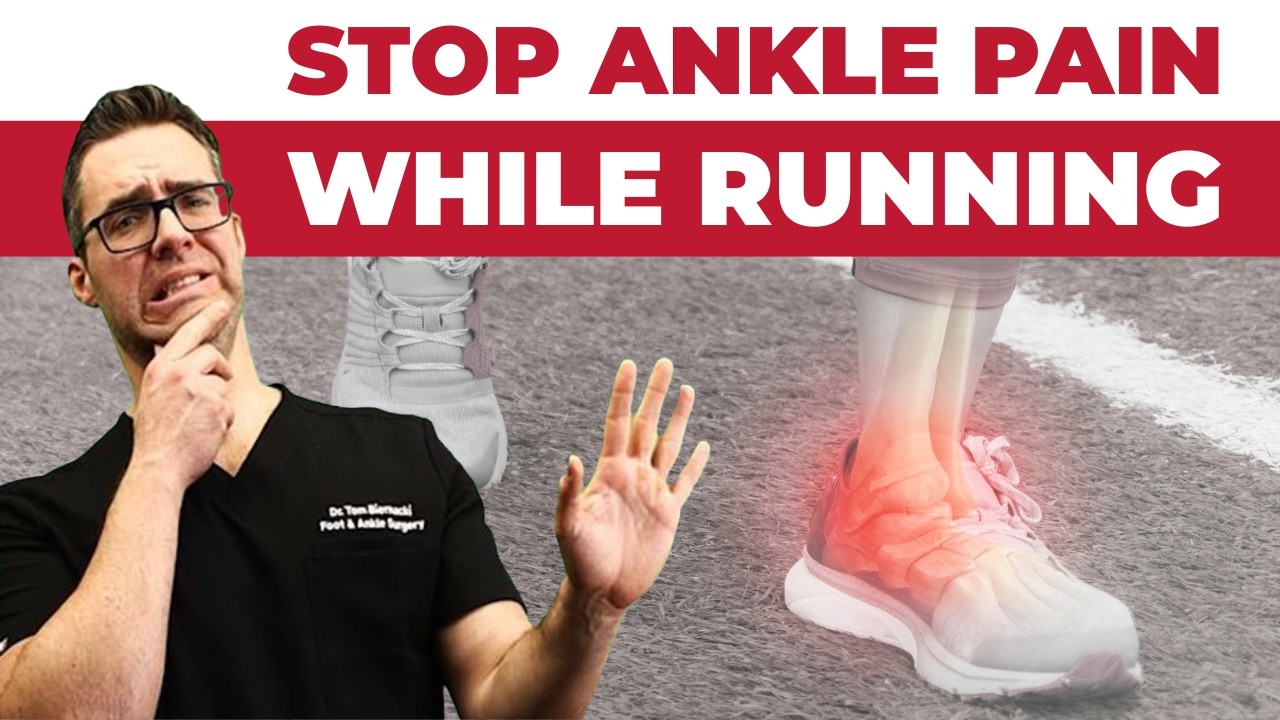
Watch: Dr. Tom Biernacki, DPM
👟 Dr. Tom Also Recommends
Podiatrist Recommended Shoes 2026: Dr. Tom’s Top Picks for Every Condition
The right footwear can make or break your recovery. Dr. Tom’s complete guide to the best shoes for plantar fasciitis, flat feet, neuropathy, bunions & more — with clinical picks for every foot type.
See Dr. Tom’s Top Shoe Picks →An ankle fracture is a break in one or more of the bones that make up the ankle joint — the tibia (medial malleolus and plafond), fibula (lateral malleolus), and posterior tibia. The severity ranges from an isolated, non-displaced fracture of the lateral malleolus — which may be treated in a walking boot — to complex bimalleolar or trimalleolar fractures requiring surgical fixation to restore joint stability and alignment. Dr. Tom Biernacki at Balance Foot & Ankle in Southeast Michigan evaluates and treats ankle fractures comprehensively, with same-week access for acute injuries.
How Ankle Fractures Happen
Ankle fractures typically result from twisting injuries (inversion or eversion mechanisms), falls, sports impacts, or motor vehicle accidents. Inversion (rolling the ankle inward) is the most common mechanism and typically fractures the lateral malleolus (fibula). Eversion injuries tend to fracture the medial malleolus or cause a syndesmotic (high ankle) injury. The Danis-Weber classification (A, B, C) and Lauge-Hansen classification are the systems most commonly used to describe fracture location and instability pattern and guide treatment decisions.
How We Determine If You Need Surgery
The critical question after ankle fracture is whether the ankle joint is stable. Stable, non-displaced, isolated lateral malleolus fractures (Weber A, some Weber B) can often be treated non-surgically in a boot or cast with weight-bearing as tolerated, with excellent outcomes. Unstable fractures — those with displacement, bimalleolar or trimalleolar involvement, or syndesmotic injury — require surgical reduction and internal fixation (ORIF) to restore anatomic alignment. Even a few millimeters of residual displacement significantly accelerates post-traumatic ankle arthritis. Stress views and gravity stress radiographs are used to assess stability when the plain film is ambiguous.
Surgical Treatment: ORIF
Open reduction and internal fixation (ORIF) restores the anatomic alignment of the fractured malleoli using plates, screws, and when indicated, a syndesmotic screw or suture-button device to stabilize the distal tibiofibular joint. The procedure is performed under regional or general anesthesia. Post-operatively, patients are typically non-weight-bearing in a splint for 2 weeks until wound healing is confirmed, then transitioned to a boot with progressive weight-bearing over the following 4–6 weeks. Physical therapy begins at 6–8 weeks for range-of-motion, strengthening, and balance retraining.
Non-Surgical Treatment
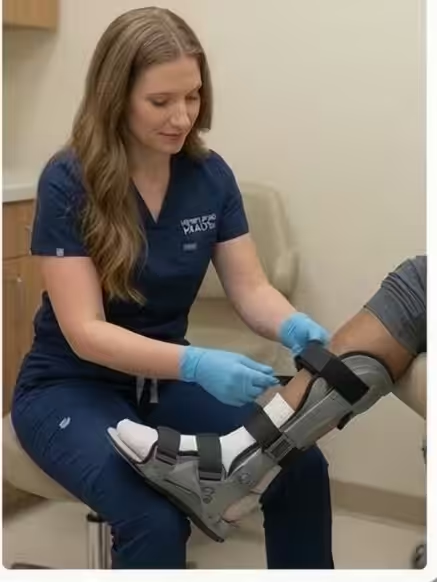
For stable ankle fractures managed conservatively, a rigid walking boot or short-leg cast is used for 6 weeks with serial radiographs at 1–2 week intervals to verify that alignment is maintained. Weight-bearing status depends on the fracture pattern. Physical therapy is initiated after the immobilization period. Outcomes for appropriately selected non-surgical fractures are equivalent to surgery.
More Podiatrist-Recommended Foot Health Essentials
Hoka Clifton 10


Max-cushion everyday shoe — podiatrist favorite for walking and running.

OOFOS Recovery Slide

Impact-absorbing recovery sandal — wear after long days on your feet.
As an Amazon Associate, Balance Foot & Ankle earns from qualifying purchases. Product recommendations are based on clinical experience; prices and availability shown above update live from Amazon.
When to See a Podiatrist
If foot or ankle pain has been bothering you for more than a few weeks, home care alone may not be enough. Balance Foot & Ankle offers same-week appointments at our Howell and Bloomfield Township clinics — no referral needed in most cases. Bring your current shoes and a short list of symptoms and we’ll build you a treatment plan in one visit.
Call Balance Foot & Ankle: (810) 206-1402 · Book online · Offices in Howell & Bloomfield Township
Frequently Asked Questions
How do I know if my ankle is fractured or just sprained?
The Ottawa Ankle Rules are a validated clinical tool used to decide if X-rays are needed: inability to bear weight for 4 steps, plus tenderness over the posterior edge of the fibula or medial malleolus, indicates a higher likelihood of fracture. However, only an X-ray can definitively confirm or exclude a fracture. If you have significant swelling, bruising, and difficulty bearing weight after an ankle injury, see a podiatrist or emergency room for imaging.
How long does an ankle fracture take to heal?
Bone healing typically occurs at 6–8 weeks for isolated fibula fractures. Full functional recovery — return to walking comfortably, then sport — takes 3–6 months for simple fractures and 6–12 months or longer for complex fractures requiring surgery. Swelling can persist for 12–18 months after ankle fractures, even after full bone healing.
What happens if an ankle fracture is left untreated?
An unstable ankle fracture that is not properly treated will malunite — the bone heals in a displaced position — leading to chronic ankle instability, accelerated post-traumatic arthritis, pain, and functional limitation. Even stable fractures require immobilization to prevent displacement. Seek evaluation promptly after ankle injury.
Can I put weight on a broken ankle?
It depends entirely on the fracture type. Some isolated, non-displaced lateral malleolus fractures allow weight-bearing in a boot from day one. Unstable or surgically treated fractures require strict non-weight-bearing on crutches for 6–8 weeks. Weight-bearing on an unstable fracture risks displacement and malunion. Always follow your surgeon’s specific instructions.
If you have sustained an ankle injury and suspect a fracture, prompt evaluation is important. Contact Balance Foot & Ankle for same-week fracture evaluation with Dr. Biernacki in Southeast Michigan.
Dr. Tom’s Recommended Products for Ankle Pain & Injuries
📍 Located in Michigan?
Our board-certified podiatrists treat this condition at two convenient locations. Most new patients are seen the same week.
These are products I personally use and recommend to my patients at Balance Foot & Ankle.
- ASO Ankle Stabilizing Orthosis — Figure-8 straps with bilateral stability columns — the gold standard lace-up ankle brace for return to sport
- McDavid 195 Ankle Brace — Hinged design allows dorsiflexion/plantarflexion while blocking inversion — best for chronic lateral instability
- Doctor Hoy’s Natural Pain Relief Gel 3oz — Menthol-based cryotherapy — penetrates soft tissue to reduce ankle sprain inflammation and acute pain
Affiliate disclosure: As an Amazon Associate, Balance Foot & Ankle earns from qualifying purchases. We only recommend products we trust for our own patients.
Dr. Tom’s Recommended: Natural Topical Pain Relief
This is what I actually use in our clinic at Balance Foot & Ankle.
- Doctor Hoy’s Natural Pain Relief Gel — Natural topical pain relief I use in our clinic. Arnica + camphor formula. Apply directly to the painful area 3-4x daily for fast-acting relief without NSAIDs.
Affiliate disclosure: As an Amazon Associate, Balance Foot & Ankle earns from qualifying purchases. We only recommend products we trust for our own patients.
Join 950,000+ Learning About Foot Health
Dr. Tom shares honest medical advice, supplement reviews, and treatment guides you won’t find anywhere else.
Subscribe on YouTube →Top-Rated Ankle Braces
- Aircast Air-Stirrup — Gold Standard Ankle Brace
- Zamst A2-DX — Maximum Support for Athletes
- McDavid Lace-Up Ankle Brace — Everyday Stability
Amazon affiliate links — we may earn a small commission at no extra cost to you.
Medically Reviewed by: Dr. Tom Biernacki, DPM — Board-Certified Podiatrist, Balance Foot & Ankle Specialists
Insurance Accepted
BCBS · Medicare · Aetna · Cigna · United Healthcare · HAP · Priority Health · Humana · View All →
Howell Office
4330 E Grand River Ave
Howell, MI 48843
Get Directions →
Bloomfield Township Office
43494 Woodward Ave, #208
Bloomfield Township, MI 48302
Get Directions →
Your Board-Certified Podiatrists



Ready to Get Back on Your Feet?
Same-week appointments available at both locations.
Book Your AppointmentMost Common Mistake We See
The most common mistake we see is: Waiting too long before seeking care. Fix: any foot pain lasting more than 4 weeks, or any sudden severe symptom, deserves a professional evaluation rather than more rest.
Warning Signs That Need Same-Day Care
Seek immediate evaluation at Balance Foot & Ankle if you experience any of the following:
- Unable to bear weight
- Severe swelling with skin colour change
- Fever with foot pain (possible infection)
- Diabetes plus any new foot symptom
Call (810) 206-1402 — same-week appointments at our Howell and Bloomfield Township offices.
In-Office Treatment at Balance Foot & Ankle
When conservative care isn’t enough, Dr. Tom Biernacki and the team at Balance Foot & Ankle offer advanced, same-day options — including Foot & Ankle Fracture Repair Michigan at our Howell and Bloomfield Township clinics.
Same-week appointments available. Call (810) 206-1402 or book online.
Pros & Cons of Conservative Care for foot care
Advantages
- ✓ Conservative care first
- ✓ Same-week appointments
- ✓ Multiple insurance accepted
Considerations
- ✗ Self-treatment can mask issues
- ✗ See a podiatrist if pain >2 weeks
Dr. Tom’s Recommended Products for foot care
Affiliate disclosure: As an Amazon Associate, Balance Foot & Ankle earns from qualifying purchases. We only recommend products we use with patients.
Footnanny Heel Cream Dr. Tom’s Pick
Best for: Daily moisturizer for cracked heels
Ready to Get Back on Your Feet?
Same-week appointments in Howell + Bloomfield Township. Most insurance accepted. Dr. Tom Biernacki, DPM & team.
Book Today — Same-Week Appointments Available
Call Now: (810) 206-1402
About Your Care Team at Balance Foot & Ankle
Dr. Tom Biernacki, DPM · Board-Certified Foot & Ankle Surgeon. Specializes in conservative-first care, minimally invasive bunion surgery, and complex reconstruction.
Dr. Carl Jay, DPM · Accepting new patients. Specializes in sports medicine, athletic injuries, and routine podiatric care.
Dr. Daria Gutkin, DPM, AACFAS · Accepting new patients. Specializes in surgical reconstruction and pediatric podiatry.
Locations: 4330 E Grand River Ave, Howell, MI 48843 · 43494 Woodward Ave Suite 208, Bloomfield Township, MI 48302
Hours: Mon–Fri 8:00 AM – 5:00 PM · (810) 206-1402
In-Office Treatment at Balance Foot & Ankle
If home treatment isn’t providing relief for your foot fracture, our podiatry team at Balance Foot & Ankle can help with same-week evaluations and advanced in-office care.
Same-week appointments available. (810) 206-1402
Frequently Asked Questions
How long does treatment take to work?
Most patients see improvement in 4-8 weeks with consistent conservative care. Persistent symptoms after 8 weeks need imaging and escalation.
When is surgery needed?
Surgery is reserved for cases that fail 3-6 months of conservative care, structural deformities, or fractures requiring stabilization.
Is this covered by insurance?
Most diagnostic visits and conservative treatments are covered by Medicare and major insurers. Custom orthotics often require diabetic or post-surgical justification.
Ready for Expert Care?
Same-week appointments in Howell & Bloomfield Township, MI.
4.9★ | 1,123 Reviews | 3,000+ Surgeries
Or call: (810) 206-1402

Dr. Tom Biernacki, DPM is a board-certified foot & ankle surgeon (ABFAS & ABPM) at Balance Foot & Ankle Specialists in Southeast Michigan. With over a decade of clinical experience, he specializes in heel pain, bunions, diabetic foot care, sports injuries, and minimally invasive surgery. Dr. Biernacki is a member of the APMA and ACFAS, and his patient education content on MichiganFootDoctors.com and YouTube has made him one of the most-followed foot & ankle educators on YouTube.