

You are in the right place. Dr. Tom Biernacki, DPM, FACFAS — board-certified foot & ankle surgeon with 3,000+ surgeries — explains exactly what ankle instability bracing means and what actually works. Book online or call (810) 206-1402 for a same-week appointment at our Howell or Bloomfield Township office.
Quick answer: Ankle Instability Bracing Michigan is a common foot/ankle topic that affects many patients. Effective treatment starts with a targeted diagnosis, conservative-first treatment, and escalation only when needed. We treat this regularly at our Howell and Bloomfield Township practices. Book online, or call (810) 206-1402.
Medically reviewed by Dr. Tom Biernacki, DPM · Board-Certified Podiatric Surgeon · Last reviewed: April 2026 · Editorial Policy
Quick Answer
Ankle Instability Bracing & Non-Surgical Treatment in M relates to foot pain — typically caused by overuse, footwear, or biomechanics. Most patients improve in 6-12 weeks with conservative care. Same-week appointments in Howell + Bloomfield Township: (810) 206-1402.

Medically reviewed by Dr. Tom Biernacki, DPM — Board-Certified Podiatric Surgeon — Balance Foot & Ankle, Howell & Bloomfield Township, MI. Last updated April 2026.
▶ Watch
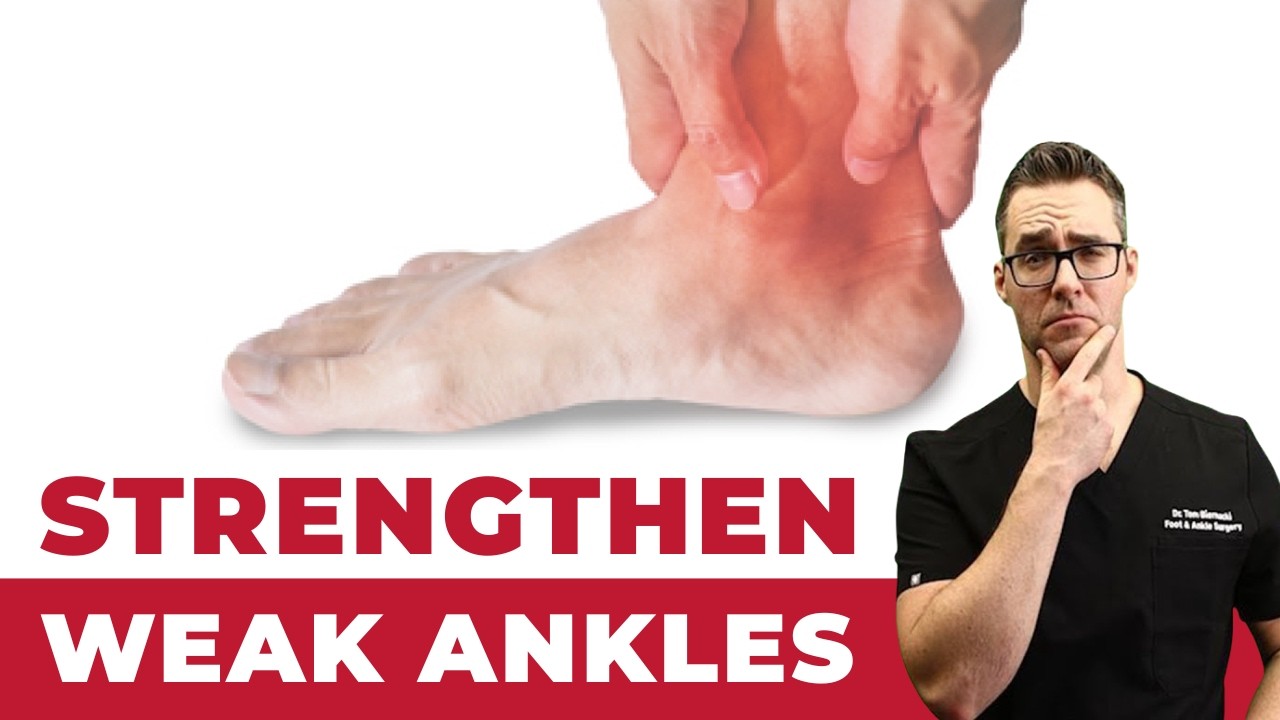
Chronic lateral ankle instability — the condition in which the ankle repeatedly gives way with walking, running, or uneven terrain due to incompletely healed lateral ankle ligaments — affects up to 40% of people after a significant ankle sprain. While surgical ligament reconstruction (Brostrom procedure) is highly effective for refractory cases, the majority of patients with chronic ankle instability achieve functional stability through a well-structured program of bracing, proprioceptive rehabilitation, orthotic support, and activity modification. At Balance Foot & Ankle in Southeast Michigan, Dr. Tom Biernacki designs individualized non-surgical treatment plans for ankle instability — surgery is reserved for patients who have truly failed adequate conservative care.
Why Ankle Instability Develops
The lateral ankle is stabilized primarily by the anterior talofibular ligament (ATFL) and calcaneofibular ligament (CFL). After a significant lateral ankle sprain, these ligaments may heal with residual laxity — mechanical instability — or with impaired proprioception — functional instability in which the muscles around the ankle fail to activate quickly enough to prevent a giving-way episode. Both mechanical and functional instability contribute to the “giving way” that characterizes chronic ankle instability. Because proprioceptive training can substantially restore functional stability even when some mechanical laxity remains, rehabilitation plays a central role in non-surgical treatment.
Ankle Bracing
Ankle bracing during sport and high-risk activities is one of the most evidence-supported interventions for preventing recurrent ankle sprains in patients with chronic instability. Lace-up braces (ASO, McDavid) and semi-rigid stirrup braces (Aircast, DJO) both significantly reduce the incidence of recurrent sprains in athletes with prior ankle instability. Bracing should be worn for all sports and activities involving cutting, pivoting, or uneven terrain. Prophylactic bracing in athletes with chronic instability is more effective at preventing re-sprain than ankle taping (which loosens quickly during activity) and does not appear to increase injury rates at adjacent joints. Bracing is not a substitute for rehabilitation — patients who brace without building strength and proprioception are more vulnerable when not braced.
Proprioceptive Rehabilitation
Proprioceptive and neuromuscular training is the most evidence-based conservative intervention for chronic ankle instability. Programs combining single-leg balance training, perturbation training (balance board, BOSU, foam surface), peroneal muscle strengthening (the primary dynamic stabilizers of the lateral ankle), and sport-specific movement pattern training have been shown to reduce re-sprain rates by 35–60% compared to no intervention. A typical program runs 6–8 weeks and should be maintained as ongoing conditioning. Physical therapists with sports rehabilitation experience provide the best-structured programs — Dr. Biernacki provides referrals to therapists familiar with ankle instability protocols.
Frequently Asked Questions
Can ankle instability be fixed without surgery?
Many patients achieve functional stability and prevent recurrent sprains without surgery through a combination of proprioceptive rehabilitation, ankle bracing for sport, and custom orthotics. Patients with functional instability (poor neuromuscular control) often respond very well to rehabilitation. Patients with severe mechanical laxity (very loose ligaments) may have less success with conservative care and may ultimately require surgical reconstruction. Attempting a 3–6 month structured conservative program before considering surgery is appropriate for most patients.
What is the best ankle brace for chronic instability?
Lace-up braces (ASO, McDavid) and semi-rigid stirrup braces (Aircast, DJO) are both evidence-based options. Semi-rigid braces provide more firm lateral support and may be preferred for higher-risk activities. Lace-up braces are lower-profile and fit in more shoe types. The “best” brace is one the patient will actually wear consistently — comfort and fit in available footwear matters as much as brace design. Dr. Biernacki provides specific brace recommendations based on your activity level and footwear needs.
Is physical therapy for ankle instability covered by insurance?
Physical therapy for chronic ankle instability is covered by Medicare and most commercial insurance plans when medically necessary. A referral or prescription from Dr. Biernacki’s office documents the medical necessity and can support insurance approval. Most plans cover a defined number of PT visits per year or per episode of care — our office can assist with authorization and documentation requirements.
Chronic ankle instability is highly treatable — most patients do not need surgery. Contact Balance Foot & Ankle to schedule an evaluation with Dr. Biernacki and get a personalized ankle stability plan in Southeast Michigan.
Dr. Tom’s Recommended Products for Ankle Pain & Injuries
📍 Located in Michigan?
Our board-certified podiatrists treat this condition at two convenient locations. Most new patients are seen the same week.
These are products I personally use and recommend to my patients at Balance Foot & Ankle.
- ASO Ankle Stabilizing Orthosis — Figure-8 straps with bilateral stability columns — the gold standard lace-up ankle brace for return to sport
- McDavid 195 Ankle Brace — Hinged design allows dorsiflexion/plantarflexion while blocking inversion — best for chronic lateral instability
- Doctor Hoy’s Natural Pain Relief Gel 3oz — Menthol-based cryotherapy — penetrates soft tissue to reduce ankle sprain inflammation and acute pain
Affiliate disclosure: As an Amazon Associate, Balance Foot & Ankle earns from qualifying purchases. We only recommend products we trust for our own patients.
Dr. Tom’s Recommended: Natural Topical Pain Relief
This is what I actually use in our clinic at Balance Foot & Ankle.
- Doctor Hoy’s Natural Pain Relief Gel — Natural topical pain relief I use in our clinic. Arnica + camphor formula. Apply directly to the painful area 3-4x daily for fast-acting relief without NSAIDs.
Affiliate disclosure: As an Amazon Associate, Balance Foot & Ankle earns from qualifying purchases. We only recommend products we trust for our own patients.
Join 950,000+ Learning About Foot Health
Dr. Tom shares honest medical advice, supplement reviews, and treatment guides you won’t find anywhere else.
Subscribe on YouTube →Top-Rated Ankle Braces
- Aircast Air-Stirrup — Gold Standard Ankle Brace
- Zamst A2-DX — Maximum Support for Athletes
- McDavid Lace-Up Ankle Brace — Everyday Stability
Amazon affiliate links — we may earn a small commission at no extra cost to you.
Insurance Accepted
BCBS · Medicare · Aetna · Cigna · United Healthcare · HAP · Priority Health · Humana · View All →
Howell Office
4330 E Grand River Ave
Howell, MI 48843
Get Directions →
Bloomfield Township Office
43494 Woodward Ave, #208
Bloomfield Township, MI 48302
Get Directions →
Your Board-Certified Podiatrists



Ready to Get Back on Your Feet?
Same-week appointments available at both locations.
Book Your AppointmentPros & Cons of Conservative Care for foot care
Advantages
- ✓ Conservative care first
- ✓ Same-week appointments
- ✓ Multiple insurance accepted
Considerations
- ✗ Self-treatment can mask issues
- ✗ See a podiatrist if pain >2 weeks
Dr. Tom’s Recommended Products for foot care
Affiliate disclosure: As an Amazon Associate, Balance Foot & Ankle earns from qualifying purchases. We only recommend products we use with patients.
Footnanny Heel Cream Dr. Tom’s Pick
Best for: Daily moisturizer for cracked heels
Ready to Get Back on Your Feet?
Same-week appointments in Howell + Bloomfield Township. Most insurance accepted. Dr. Tom Biernacki, DPM & team.
Book Today — Same-Week Appointments Available
Call Now: (810) 206-1402
About Your Care Team at Balance Foot & Ankle
Dr. Tom Biernacki, DPM · Board-Certified Foot & Ankle Surgeon. Specializes in conservative-first care, minimally invasive bunion surgery, and complex reconstruction.
Dr. Carl Jay, DPM · Accepting new patients. Specializes in sports medicine, athletic injuries, and routine podiatric care.
Dr. Daria Gutkin, DPM, AACFAS · Accepting new patients. Specializes in surgical reconstruction and pediatric podiatry.
Locations: 4330 E Grand River Ave, Howell, MI 48843 · 43494 Woodward Ave Suite 208, Bloomfield Township, MI 48302
Hours: Mon–Fri 8:00 AM – 5:00 PM · (810) 206-1402
PowerStep Dynamic Ankle Stability Sock (DASS)
Best for: Chronic ankle instability · Repeat ankle sprains · Proprioception training · Athletes returning to play

A revolutionary alternative to bulky ankle braces. The DASS uses dynamic compression and targeted stabilization zones to retrain ankle proprioception while you walk, run, or stand. Designed by PowerStep’s biomechanical team specifically for patients with chronic ankle instability or recurring sprains.
- Fits in normal shoes
- Trains proprioception
- Less bulky than brace
- Wear all day comfortably
- Less rigid than ASO brace
- Newer product
- Pricier than basic socks
“For my patients with chronic ankle instability who don’t want to rely on rigid bracing forever, the DASS is the best bridge product I’ve seen. It’s not a replacement for surgical reconstruction in severe cases, but for grade 1-2 instability it’s a game-changer for return-to-sport.”
In-Office Treatment at Balance Foot & Ankle
If home treatment isn’t providing relief for your ankle sprains, our podiatry team at Balance Foot & Ankle can help with same-week evaluations and advanced in-office care.
Same-week appointments available. (810) 206-1402
Ready for Expert Care?
Same-week appointments in Howell & Bloomfield Township, MI.
4.9★ | 1,123 Reviews | 3,000+ Surgeries
Or call: (810) 206-1402

Dr. Tom Biernacki, DPM is a board-certified foot & ankle surgeon (ABFAS & ABPM) at Balance Foot & Ankle Specialists in Southeast Michigan. With over a decade of clinical experience, he specializes in heel pain, bunions, diabetic foot care, sports injuries, and minimally invasive surgery. Dr. Biernacki is a member of the APMA and ACFAS, and his patient education content on MichiganFootDoctors.com and YouTube has made him one of the most-followed foot & ankle educators on YouTube.