

| Procedure | Indication | Tissue Used | Success Rate | Return to Sport |
|---|---|---|---|---|
| Modified Brostrom | Primary chronic instability; adequate tissue | Native ATFL imbricated to fibula | 85-95% good-to-excellent | 4-6 months |
| Brostrom-Gould | Severe laxity; hypermobility; high-demand athletes | ATFL + inferior extensor retinaculum augmentation | 90-95% | 4-6 months |
| Arthroscopic Brostrom | Primary instability; surgeon-dependent | Arthroscopic plication of ATFL | 85-92%; equivalent to open at 2 years | 3-5 months (faster rehab) |
| Chrisman-Snook (Tenodesis) | Revision after failed Brostrom; tissue deficiency | Split peroneus brevis tendon graft | 75-85%; limits subtalar motion | 6-9 months |
| Allograft Reconstruction | Revision; multiple prior surgeries; hypermobility | Cadaveric tendon graft (gracilis/semitendinosus) | 80-90% at 5 years | 6-9 months |
| Rehab Phase | Timeframe | Goals | Allowed Activities | Restrictions |
|---|---|---|---|---|
| Immobilization | Weeks 0-2 | Wound healing; swelling control | Toe wiggling; elevation; ice | No weight-bearing; no plantarflexion/inversion |
| Early Mobilization | Weeks 2-6 | ROM restoration; weight-bearing in boot | Walking in boot; stationary bike (no resistance) | No inversion stress; no running |
| Strengthening | Weeks 6-12 | Peroneal strength; proprioception; balance | Resistance bands; balance board; swimming | No lateral cutting; no jumping |
| Sport-Specific Training | Months 3-5 | Return to running; agility; sport simulation | Jogging; agility drills; sport practice | No full contact; no game play |
| Return to Sport | Months 4-6 | Full unrestricted sport participation | Unrestricted with brace for 1 season | Brace recommended first season back |
Quick answer: Ankle Ligament Reconstruction Brostrom Procedure Lateral Instability is a common foot/ankle topic that affects many patients. The 2026 evidence-based approach combines proper diagnosis, conservative-first treatment, and escalation only when needed. We treat this regularly at our Howell and Bloomfield Township practices. Call (810) 206-1402.
Medically reviewed by Dr. Tom Biernacki, DPM
Board-certified podiatric surgeon | Balance Foot & Ankle | Last reviewed: May 2026

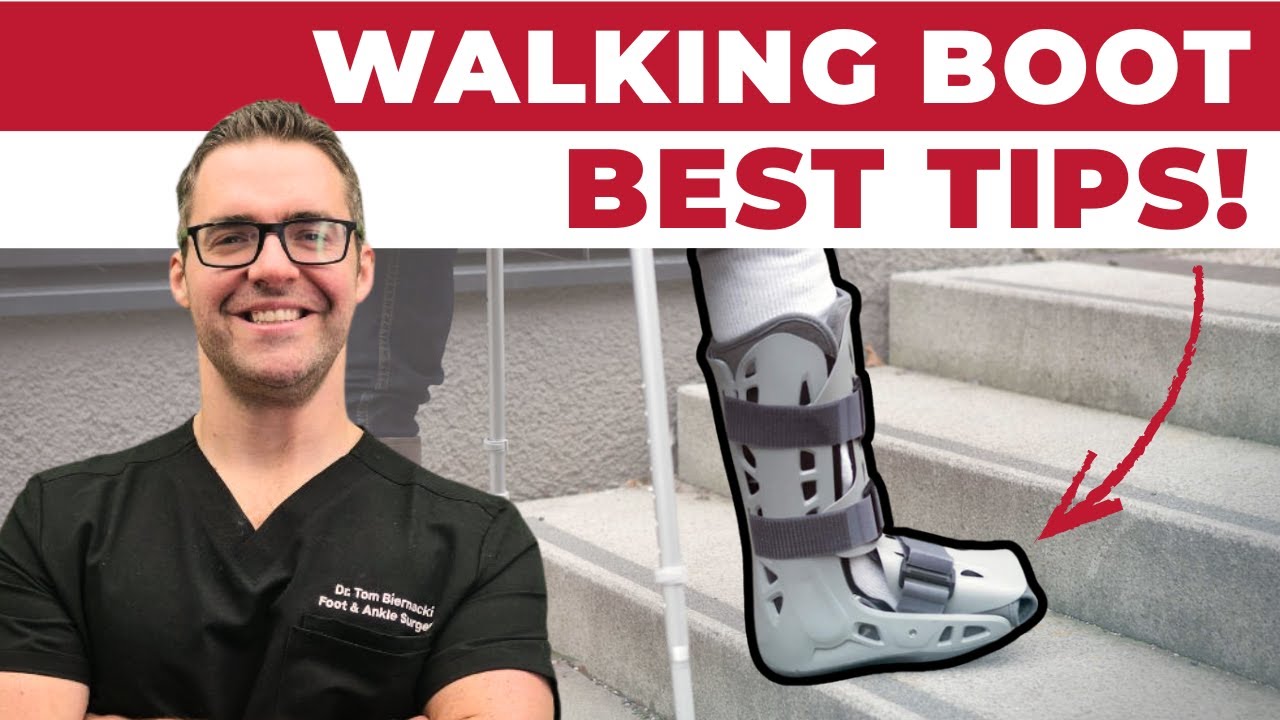
What Is the Broström Procedure?
If you’ve been dealing with an ankle that repeatedly gives way — giving you that sickening, uncontrolled inward roll during sport or even daily activities — despite a full rehabilitation program, the Broström procedure is likely the solution you’ve been looking for. It’s the gold standard surgical treatment for chronic lateral ankle instability, with outstanding outcomes and a reliable return-to-sport track record.
Chronic lateral ankle instability develops when the anterior talofibular ligament (ATFL) and/or calcaneofibular ligament (CFL) fail to heal properly after one or more significant sprains. Instead of repairing to normal length and strength, the ligaments heal in an elongated, lax state — allowing the talus to shift abnormally in the mortise. No amount of peroneal strengthening fully compensates for this structural deficit.
Key takeaway: The Broström procedure directly repairs the stretched, incompetent ATFL and CFL — shortening and reinforcing them to restore mechanical stability. It’s not just strengthening; it addresses the structural cause of instability that rehabilitation cannot fix.
The Modified Broström-Gould Procedure
The modern standard is the Broström-Gould modification, which adds reinforcement of the ligament repair using the inferior extensor retinaculum — a strong tissue band on the front of the ankle. This augmentation reduces stress on the repair and lowers re-rupture risk. More recently, the InternalBrace (Arthrex) technique adds a high-strength FiberTape suture anchor construct to provide internal splinting during healing — allowing earlier weight-bearing and potentially better outcomes in active patients.
Surgical Technique Overview
Performed under ankle block anesthesia as an outpatient procedure. A 3–4cm incision is made over the anterolateral ankle. The ATFL is identified and imbricated (folded over itself to shorten and tighten). The CFL may be repaired if it was also torn. The extensor retinaculum is advanced over the repair for reinforcement. If InternalBrace is used, a suture anchor is placed in the fibula and talus with FiberTape connecting them. Total operative time: 45–60 minutes.
Recovery Timeline
Week 0–2: Splint, non-weight-bearing, elevation. Wound healing. Weeks 2–4: Transition to walking boot, progressive weight-bearing. Weeks 4–8: Range of motion and peroneal strengthening begins. Weeks 8–12: Proprioception training, balance board, agility drills. Months 3–5: Sport-specific training, jogging, cutting. Month 5–6: Return to full sport.
InternalBrace technique allows protected weight-bearing sooner (Week 2 vs. Week 4) and may shorten the overall rehabilitation by 2–4 weeks.
Key takeaway: Return to sport after Broström typically occurs at 5–6 months. Athletes who rush the proprioception and sport-specific phases have higher re-injury rates even after anatomically successful repair — full rehabilitation is as important as the surgery itself.
Outcomes and Success Rates
The Broström-Gould procedure has an excellent evidence base accumulated over 50+ years. Published success rates: 85–90% good or excellent outcomes at 10-year follow-up. Return to sport at pre-injury level: approximately 85% at 6 months. Re-rupture rate with the standard technique: 5–10%; with InternalBrace augmentation: reported lower in early studies. Patient satisfaction is high — most patients describe a qualitative improvement in ankle confidence that profoundly changes how they move.
⚠️ Consider Broström evaluation if:
- Ankle gives way with sport, cutting, or uneven terrain despite 3+ months of rehab
- Stress X-rays or MRI confirm ATFL/CFL laxity or incompetence
- You’ve had 3 or more ‘ankle sprains’ in the same ankle
- The ankle gives way during daily activities — not just sport
- Peroneal strengthening has improved strength but not the instability
Broström vs. Non-Anatomic Reconstructions
The Broström-Gould procedure repairs the patient’s native ligaments in their anatomic position — preserving normal joint mechanics and full range of motion. Non-anatomic reconstructions (Watson-Jones, Evans procedures) use tendon grafts rerouted around the fibula — they provide stability but sacrifice subtalar motion and have higher complication rates. Anatomic reconstruction is the current standard and is preferred in virtually all primary cases.
Frequently Asked Questions
Can the Broström procedure be done arthroscopically?
Yes — arthroscopic Broström techniques exist and offer smaller incisions and faster recovery. They are technically demanding and best suited for isolated ATFL repairs without significant CFL involvement. Open technique remains the gold standard for complex cases.
What happens if the Broström fails?
Revision surgery uses allograft or autograft tendon to replace (not just repair) the incompetent ligaments. Outcomes for revision are good but not as predictable as primary repair, which is why getting the primary surgery right — with proper patient selection and technique — matters significantly.
Do I need to stop sports permanently after Broström repair?
No — return to full sport at prior level is the expected outcome for most patients. The ankle is typically more stable post-Broström than it was before the instability began.
The Bottom Line
The Broström procedure is the most reliable, evidence-backed surgery for chronic lateral ankle instability, with decades of outcomes data supporting 85–90% success rates. When conservative rehabilitation has failed to address mechanical giving-way, it corrects the structural cause directly. At Balance Foot & Ankle in Howell and Bloomfield Township, Michigan, Dr. Biernacki performs Broström and InternalBrace procedures routinely as part of a comprehensive ankle instability program.
Sources
- Broström L. Sprained ankles. VI. Surgical treatment of chronic ligament ruptures. Acta Chirurgica Scandinavica. 1966.
- Gould N et al. Operative treatment of the subtalar complex instabilities. Foot & Ankle.
- Viens NA et al. Anterior talofibular ligament ruptures. American Journal of Sports Medicine. 2014.
Ready to Get Relief?
Same-week appointments available in Howell & Bloomfield Township, MI
4.9★ | 1,123 Reviews | 3,000+ Surgeries
Or call: (810) 206-1402

Dr. Tom Biernacki, DPM is a board-certified foot & ankle surgeon (ABFAS & ABPM) at Balance Foot & Ankle Specialists in Southeast Michigan. With over a decade of clinical experience, he specializes in heel pain, bunions, diabetic foot care, sports injuries, and minimally invasive surgery. Dr. Biernacki is a member of the APMA and ACFAS, and his patient education content on MichiganFootDoctors.com and YouTube has made him one of the most-followed foot & ankle educators on YouTube.