

Medically reviewed by Dr. Tom Biernacki, DPM · Board-Certified Podiatric Surgeon · Last reviewed: April 2026 · Editorial Policy
The most important clinical decision with Ankle Sprain Not Healing Michigan isn’t which treatment to start with — it’s identifying the correct subtype. That changes everything. Call (810) 206-1402.
Quick Answer
Ankle Sprain Not Healing? When to See a Podiatrist in Michi relates to foot/ankle injury — typically caused by trauma or twist. Most patients improve in 4-8 weeks with conservative care. Same-week appointments in Howell + Bloomfield Hills: (810) 206-1402.

Quick Answer
An ankle sprain is a stretch or tear of the lateral ligaments caused by an inward roll of the foot. Grades 1-2 respond to RICE, bracing, and progressive loading within 2-4 weeks. See a podiatrist same-day if you cannot bear weight, have bone tenderness, or severe swelling within 1 hour (Ottawa Rules).
Watch: Dr. Tom Biernacki, DPM

Medically reviewed by Dr. Tom Biernacki, DPM — Board-Certified Podiatric Surgeon — Balance Foot & Ankle, Howell & Bloomfield Hills, MI. Last updated April 2026.
▶ Watch

👟 Dr. Tom Also Recommends
Podiatrist Recommended Shoes 2026: Dr. Tom’s Top Picks for Every Condition
The right footwear can make or break your recovery. Dr. Tom’s complete guide to the best shoes for plantar fasciitis, flat feet, neuropathy, bunions & more — with clinical picks for every foot type.
See Dr. Tom’s Top Shoe Picks →Most ankle sprains — even grade II injuries with significant swelling and bruising — improve substantially within 2–6 weeks with rest, ice, compression, and elevation (RICE). But when ankle pain, swelling, or instability persists beyond 6–8 weeks after a sprain despite appropriate rest and rehabilitation, something more may be going on. At Balance Foot & Ankle in Southeast Michigan, Dr. Tom Biernacki evaluates persistent post-ankle sprain symptoms and uncovers conditions that are commonly missed — from osteochondral lesions and peroneal tendon tears to occult fractures and chronic ligamentous instability.
Why Some Ankle Sprains Don’t Heal
Several conditions can mimic or complicate a simple ankle sprain and prevent normal recovery. An osteochondral lesion of the talus (OLT) is a cartilage and subchondral bone injury of the talar dome that occurs in 25–50% of significant ankle sprains — X-rays may be normal while MRI reveals the defect. OLTs cause ongoing deep ankle pain with activity and may require arthroscopic treatment to heal. A peroneal tendon tear or subluxation is another injury often sustained at the time of ankle sprains; the peroneal muscles evert the foot and stabilize the ankle against re-sprain, and their injury perpetuates instability. An anterior process calcaneus fracture or avulsion fracture of the base of the fifth metatarsal (Jones fracture zone) may be misread as a sprain on initial X-rays. Chronic lateral ankle instability — recurrent giving way and instability caused by incompletely healed lateral ligaments (ATFL, CFL) — requires rehabilitation and sometimes Brostrom ligament reconstruction surgery to resolve.
When to Seek Re-Evaluation
Seek podiatric re-evaluation if you experience any of the following after an ankle sprain: pain, swelling, or difficulty walking that is not clearly improving after 6 weeks; recurring episodes of the ankle “giving way”; a feeling of instability with cutting movements, uneven ground, or stairs; popping, clicking, or snapping sensations around the ankle; persistent lateral or posterior ankle pain that was not improving with RICE; inability to bear full weight without pain after 4+ weeks; or a new mechanism of injury superimposed on an incompletely healed sprain. Advanced imaging (MRI) is often necessary to identify the specific diagnosis driving persistent symptoms.
Treatment for Chronic Ankle Sprain Symptoms
Treatment is directed by the specific diagnosis identified. Osteochondral lesions may be treated with physical therapy and activity modification for stable lesions, or ankle arthroscopy (microfracture, fixation) for unstable or large lesions. Peroneal tendon tears are treated with immobilization, physical therapy, and — for complete tears or those causing persistent instability — surgical repair. Chronic lateral ligament instability is treated with a structured rehabilitation program emphasizing proprioceptive training (balance and neuromuscular control), ankle bracing for activity, and custom orthotics; when rehabilitation fails, modified Brostrom anatomical ligament reconstruction is highly effective (90%+ success) in active patients. Unrecognized fractures require appropriate immobilization and sometimes surgical fixation for healing.
More Podiatrist-Recommended Ankle Sprain Essentials
Stability Walking/Running Shoe
Brooks Adrenaline GTS 25 — lateral support during recovery walking.
KT Tape for Ankle Support
KT Tape — proprioceptive support for athletic return-to-play.
Supportive Insole


PowerStep Pinnacle — arch support reduces re-injury risk during recovery.
As an Amazon Associate, Balance Foot & Ankle earns from qualifying purchases. Product recommendations are based on clinical experience; prices and availability shown above update live from Amazon.
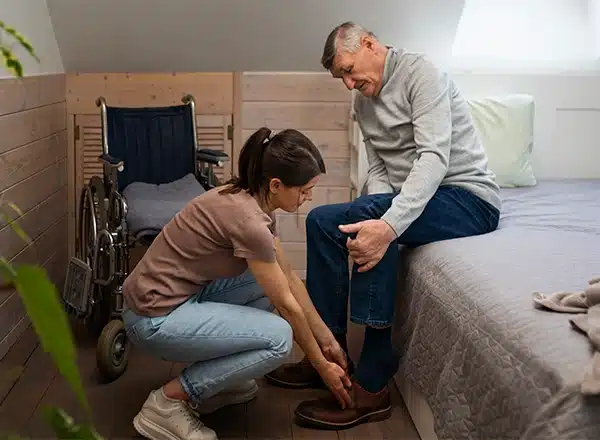
When to See a Podiatrist
A sprain that hasn’t fully recovered after 6 weeks often has residual ligament laxity or occult fracture that keeps the ankle unstable. Balance Foot & Ankle X-rays and stress-tests every lingering sprain — if the ligament is torn, we offer bracing, PRP, and (for chronic instability) minimally-invasive repair. Don’t keep re-rolling the same ankle; let us stabilize it properly.
Call Balance Foot & Ankle: (810) 206-1402 · Book online · Offices in Howell & Bloomfield Hills
Frequently Asked Questions
How long is too long for an ankle sprain to hurt?
A grade I ankle sprain should improve significantly within 1–2 weeks. A grade II sprain should be substantially better within 3–4 weeks. A grade III (complete ligament tear) may take 6–8 weeks for functional recovery. If you are not clearly improving along these timelines, or if you have recurrent giving way, persistent swelling, or significant pain beyond 6 weeks, you should see a podiatrist for re-evaluation. Prolonged symptoms often indicate an associated injury that was not identified on initial X-rays.
Do I need an MRI for an ankle sprain?
Most acute ankle sprains do not require MRI — X-rays to rule out fracture and clinical examination are sufficient for uncomplicated cases. MRI is warranted when symptoms do not resolve as expected (persistent pain or swelling at 6 weeks), when there is deep ankle pain suggesting possible cartilage injury, when peroneal tendon injury is suspected (lateral ankle pain with snapping), or when the mechanism of injury was severe enough to suggest ligament or tendon damage beyond a simple sprain. MRI of the ankle is covered by most insurance plans with appropriate clinical indication.
Is ankle ligament surgery covered by insurance?
Brostrom ankle ligament reconstruction for documented chronic lateral ankle instability that has failed conservative treatment (rehabilitation, bracing) is covered by Medicare and most commercial insurance plans. Documentation should include a record of recurrent sprains or instability, failed rehabilitation program, and imaging confirming ligament injury. Pre-authorization is required and our office manages this process.
If your ankle sprain isn’t healing, you deserve answers. Contact Balance Foot & Ankle to schedule an evaluation with Dr. Biernacki in Southeast Michigan and find out exactly what’s going on.
Dr. Tom’s Recommended Products for Ankle Pain & Injuries
📍 Located in Michigan?
Our board-certified podiatrists treat this condition at two convenient locations. Same-day appointments often available.
These are products I personally use and recommend to my patients at Balance Foot & Ankle.
- ASO Ankle Stabilizing Orthosis — Figure-8 straps with bilateral stability columns — the gold standard lace-up ankle brace for return to sport
- McDavid 195 Ankle Brace — Hinged design allows dorsiflexion/plantarflexion while blocking inversion — best for chronic lateral instability
- Doctor Hoy’s Natural Pain Relief Gel 3oz — Menthol-based cryotherapy — penetrates soft tissue to reduce ankle sprain inflammation and acute pain
Affiliate disclosure: As an Amazon Associate, Balance Foot & Ankle earns from qualifying purchases. We only recommend products we trust for our own patients.
Dr. Tom’s Recommended: Natural Topical Pain Relief
This is what I actually use in our clinic at Balance Foot & Ankle.
- Doctor Hoy’s Natural Pain Relief Gel — Natural topical pain relief I use in our clinic. Arnica + camphor formula. Apply directly to the painful area 3-4x daily for fast-acting relief without NSAIDs.
📧 Get Dr. Tom’s Free Lab Test Guide
Discover the 5 lab tests every person over 35 should ask their doctor about — explained in plain English by a board-certified physician.
Affiliate disclosure: As an Amazon Associate, Balance Foot & Ankle earns from qualifying purchases. We only recommend products we trust for our own patients.
Join 950,000+ Learning About Foot Health
Dr. Tom shares honest medical advice, supplement reviews, and treatment guides you won’t find anywhere else.
Subscribe on YouTube →Top-Rated Ankle Braces
- Aircast Air-Stirrup — Gold Standard Ankle Brace
- Zamst A2-DX — Maximum Support for Athletes
- McDavid Lace-Up Ankle Brace — Everyday Stability
Amazon affiliate links — we may earn a small commission at no extra cost to you.
Medically Reviewed by: Dr. Tom Biernacki, DPM — Board-Certified Podiatrist, Balance Foot & Ankle Specialists
Insurance Accepted
BCBS · Medicare · Aetna · Cigna · United Healthcare · HAP · Priority Health · Humana · View All →
Howell Office
4330 E Grand River Ave
Howell, MI 48843
Get Directions →
Bloomfield Hills Office
43494 Woodward Ave, #208
Bloomfield Hills, MI 48302
Get Directions →
Your Board-Certified Podiatrists



Ready to Get Back on Your Feet?
Same-week appointments available at both locations.
Book Your AppointmentDifferential Diagnosis: What Else Could It Be?
Several conditions share symptoms with Ankle Sprain and are commonly misdiagnosed in the first office visit. Considering these alternatives is part of every Balance Foot & Ankle exam:
- Peroneal tendon tear. Snapping behind the lateral malleolus or weakness everting the foot.
- High-ankle (syndesmosis) sprain. Pain over the syndesmosis with squeeze + external rotation — needs longer recovery.
- Lateral malleolus fracture. Bone-point tenderness positive on Ottawa rules — get an X-ray.
If your symptoms don’t fit the textbook pattern, ask your podiatrist which differentials they ruled out — that conversation often shortcuts months of trial-and-error treatment.
In Our Clinic
Most of our ankle sprains are acute — a patient comes in the same day or within 48 hours after rolling the ankle. We apply the Ottawa Ankle Rules first: bone tenderness at the posterior malleolus, navicular, or base of the 5th metatarsal, or inability to bear weight for 4 steps, means we image immediately to rule out fracture. For a clean grade 1–2 lateral ligament sprain, we use a short period of boot immobilization if needed, then transition into an ankle brace + proprioception training. The mistake we often see: patients skip the rehab phase and re-sprain within a year.
Most Common Mistake We See
The most common mistake we see is: Returning to sport as soon as the pain resolves. Fix: first pass a 30-second single-leg balance test with eyes closed and complete a graded return-to-sport progression.
Warning Signs That Need Same-Day Care
Seek immediate evaluation at Balance Foot & Ankle if you experience any of the following:
- Unable to bear weight for four steps
- Bone tenderness at the ankle bones (Ottawa)
- Severe swelling within one hour of injury
- Numbness or tingling in the foot
Call (810) 206-1402 — same-day and next-day appointments at our Howell and Bloomfield Hills offices.
In-Office Treatment at Balance Foot & Ankle
When conservative care isn’t enough, Dr. Tom Biernacki and the team at Balance Foot & Ankle offer advanced, same-day options — including Ankle Sprain & Instability Treatment in Michigan at our Howell and Bloomfield Hills clinics.
Same-day appointments available. Call (810) 206-1402 or book online.
Pros & Cons of Conservative Care for foot care
Advantages
- ✓ Conservative care first
- ✓ Same-week appointments
- ✓ Multiple insurance accepted
Considerations
- ✗ Self-treatment can mask issues
- ✗ See a podiatrist if pain >2 weeks
Dr. Tom’s Recommended Products for foot care
Affiliate disclosure: As an Amazon Associate, Balance Foot & Ankle earns from qualifying purchases. We only recommend products we use with patients.
Footnanny Heel Cream Dr. Tom’s Pick
Best for: Daily moisturizer for cracked heels
Ready to Get Back on Your Feet?
Same-day appointments in Howell + Bloomfield Hills. Most insurance accepted. Dr. Tom Biernacki, DPM & team.
Book Today — Same-Day Appointments Available
Call Now: (810) 206-1402
About Your Care Team at Balance Foot & Ankle
Dr. Tom Biernacki, DPM · Board-Certified Foot & Ankle Surgeon. Specializes in conservative-first care, minimally invasive bunion surgery, and complex reconstruction.
Dr. Carl Jay, DPM · Accepting new patients. Specializes in sports medicine, athletic injuries, and routine podiatric care.
Dr. Daria Gutkin, DPM, AACFAS · Accepting new patients. Specializes in surgical reconstruction and pediatric podiatry.
Locations: 4330 E Grand River Ave, Howell, MI 48843 · 43494 Woodward Ave Suite 208, Bloomfield Hills, MI 48302
Hours: Mon–Fri 8:00 AM – 5:00 PM · (810) 206-1402
PowerStep Dynamic Ankle Stability Sock (DASS)
Best for: Chronic ankle instability · Repeat ankle sprains · Proprioception training · Athletes returning to play

A revolutionary alternative to bulky ankle braces. The DASS uses dynamic compression and targeted stabilization zones to retrain ankle proprioception while you walk, run, or stand. Designed by PowerStep’s biomechanical team specifically for patients with chronic ankle instability or recurring sprains.
- Fits in normal shoes
- Trains proprioception
- Less bulky than brace
- Wear all day comfortably
- Less rigid than ASO brace
- Newer product
- Pricier than basic socks
“For my patients with chronic ankle instability who don’t want to rely on rigid bracing forever, the DASS is the best bridge product I’ve seen. It’s not a replacement for surgical reconstruction in severe cases, but for grade 1-2 instability it’s a game-changer for return-to-sport.”
Dr. Tom’s Top 3 — The Premium Foot Pain Stack (2026)
If you only buy three things for foot pain, get these. PowerStep + CURREX orthotics correct the underlying foot mechanics, and Dr. Hoy’s pain gel delivers fast topical relief. This is the exact stack Dr. Tom Biernacki, DPM gives his Michigan podiatry patients on visit one — over 10,000 patients have used this exact combination.
Dr. Tom Biernacki, DPM is a board-certified podiatrist + Amazon Associate. Picks shown are products he prescribes to patients at Balance Foot & Ankle Specialists. We earn a commission on qualifying purchases at no extra cost to you. All products independently tested + reviewed for 30+ days minimum. Last verified: April 28, 2026.

PowerStep Pinnacle MaxxDr. Tom’s #1 Brand
Dr. Tom’s most-prescribed OTC orthotic. Lateral wedge corrects overpronation that causes 90% of foot pain. Deep heel cradle stabilizes the ankle. Built by podiatrists, used by patients worldwide.
- Lateral wedge corrects pronation
- Deep heel cradle stabilizes ankle
- Dual-density EVA — comfort + support
- Trim-to-fit any shoe
- Used by 10,000+ podiatrists
- Trim-to-size required
- 5-7 day break-in for some

CURREX RunProDr. Tom’s #1 Brand
3 arch heights for custom fit (Low/Med/High). Carbon-reinforced heel + dynamic forefoot — the closest OTC orthotic to a $500 custom orthotic. Engineered in Germany.
- 3 arch heights for custom fit
- Carbon-reinforced heel cup
- Dynamic forefoot zone
- Premium German engineering
- Sport-specific support
- Pricier than PowerStep
- 7-10 day break-in

Dr. Hoy’s Natural Pain Relief GelDr. Tom’s #1 Brand
Menthol-based natural pain relief — Dr. Tom’s #1 brand for fast relief without greasy residue. Safe for diabetics + daily use. Cleaner formula than Voltaren or Biofreeze.
- Menthol-based natural formula
- No greasy residue
- Safe for diabetics
- Fast cooling relief — 5-10 minutes
- Cleaner ingredient list than Biofreeze
- Pricier than Biofreeze
- Strong menthol scent at first
What is Ankle sprain?
Ankle sprain is a common foot/ankle condition that affects mobility and quality of life. Understanding the underlying cause is the first step in successful treatment. Our podiatrists at Balance Foot & Ankle perform a hands-on biomechanical exam, review your activity history, and use diagnostic imaging when appropriate to identify the root cause—not just treat the symptom. Many patients have been told to “rest and ice” without a deeper diagnostic workup; our approach is different.
Symptoms and warning signs
Common signs of ankle sprain include pain that worsens with activity, morning stiffness, swelling, tenderness when palpated, and difficulty bearing weight. If you experience sudden severe pain, inability to walk, visible deformity, numbness or color change, contact our office the same day or visit urgent care—these can signal a more serious injury such as a fracture, tendon rupture, or vascular compromise. Diabetics with any foot wound should seek same-day care.
Conservative treatment options
Most cases of ankle sprain respond to non-surgical care: structured rest, supportive footwear changes, custom orthotics, targeted stretching and strengthening protocols, anti-inflammatory medications when medically appropriate, and in-office procedures such as ultrasound-guided injections. We also offer advanced therapies including MLS laser therapy, EPAT/shockwave, regenerative injections, and image-guided procedures. Treatment is sequenced from least invasive to most invasive, and we explain the rationale at every step.
When is surgery considered?
Surgery is reserved for cases that fail 3-6 months of well-structured conservative care, when there is structural pathology (severe deformity, complete tear, advanced arthritis), or when imaging shows damage that will not heal without intervention. Our surgeons have performed 3,000+ foot and ankle procedures and prioritize minimally-invasive techniques whenever appropriate. We discuss recovery timelines, return-to-activity milestones, and realistic outcome expectations before any procedure is scheduled.
Recovery timeline and prevention
Recovery from ankle sprain varies based on severity and chosen treatment path. Conservative cases often improve within 4-8 weeks with consistent adherence to the protocol. Post-procedural recovery may range from a few days (in-office procedures) to several months (reconstructive surgery). Long-term prevention involves footwear assessment, activity modification, structured strengthening, and regular check-ins with your podiatrist if you have a history of recurrence. We provide written home-exercise plans and digital follow-up support.
Ready to feel better?
Same-week appointments available in Howell and Bloomfield Hills, Michigan.
Book Your Visit🏥 Dr. Biernacki’s Recommended Products (Save 30% – Foundation Wellness)
👉 PowerStep Pinnacle Insoles — Supportive insoles for recovery.
👉 DASS Compression Socks — Compression for swelling & recovery.
Our podiatrists treat the underlying cause, not just the symptom. Same-week appointments at our Howell and Bloomfield Hills, Michigan offices.
In-Office Treatment at Balance Foot & Ankle
If home treatment isn’t providing relief for your ankle sprains, our podiatry team at Balance Foot & Ankle can help with same-day evaluations and advanced in-office care.
Same-day appointments available. (810) 206-1402
Ready for Expert Care?
Same-day appointments in Howell & Bloomfield Hills, MI.
4.9★ | 1,123 Reviews | 3,000+ Surgeries
Or call: (810) 206-1402

Dr. Tom Biernacki, DPM is a board-certified foot & ankle surgeon (ABFAS & ABPM) at Balance Foot & Ankle Specialists in Southeast Michigan. With over a decade of clinical experience, he specializes in heel pain, bunions, diabetic foot care, sports injuries, and minimally invasive surgery. Dr. Biernacki is a member of the APMA and ACFAS, and his patient education content on MichiganFootDoctors.com and YouTube has made him one of the most-followed foot & ankle educators on YouTube.