
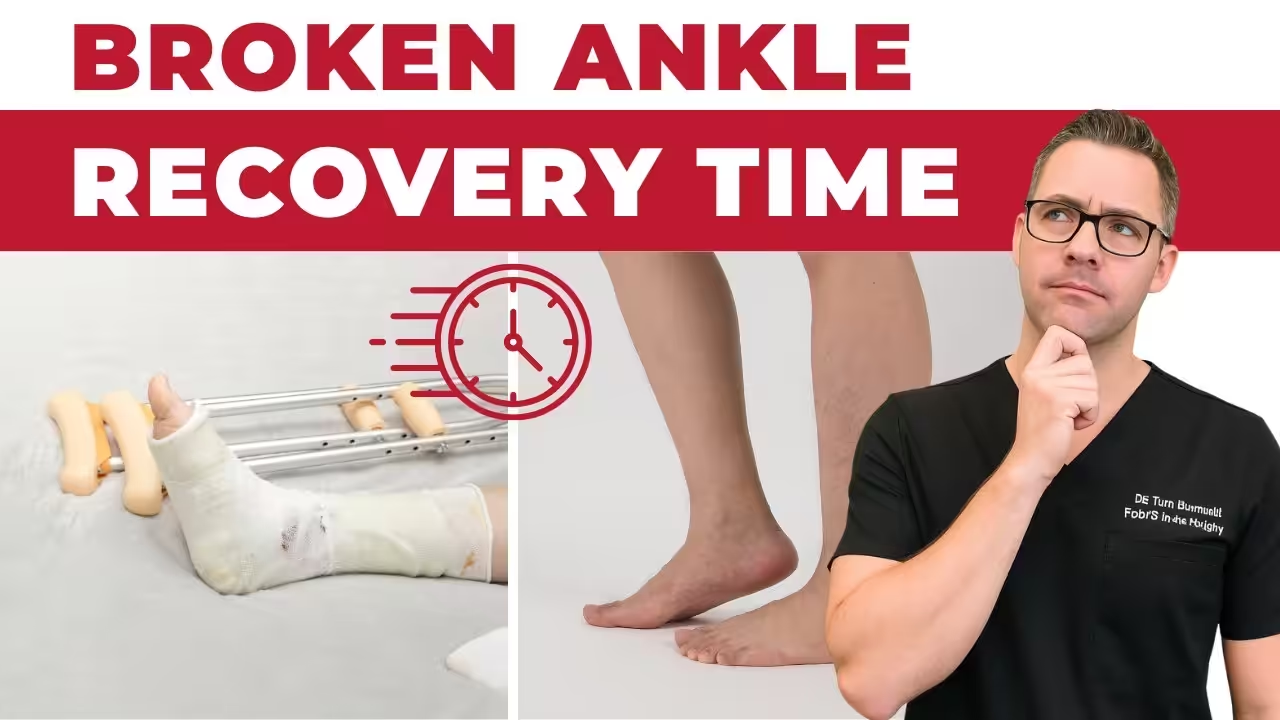
The most important clinical decision with Ankle Sprain Recovery Guide isn’t which treatment to start with — it’s identifying the correct subtype. That changes everything. Call (810) 206-1402.
Dr. Tom’s Top Bob and Brad Massage Guns (2026)
Medically reviewed by Dr. Tom Biernacki, DPM
Board-certified podiatric surgeon | Balance Foot & Ankle
Last reviewed: May 2026
Affiliate disclosure: As an Amazon Associate, Balance Foot & Ankle earns from qualifying purchases. Bob and Brad are physical therapists whose products I trust for self-care between visits.
Dr. Tom’s Top Pain Relief Picks — Dr. Hoy’s (2026)
Affiliate disclosure: As an Amazon Associate, Balance Foot & Ankle earns from qualifying purchases. I personally use Dr. Hoy’s in my practice for patients who need topical relief.
| Product | Best For | Dr. Tom’s Take | Get It |
|---|---|---|---|
| Dr. Hoy’s Natural Pain Relief Gel 3.5oz menthol + arnica |
Plantar fasciitis · Achilles tendonitis · Sore muscles · Joint pain | My go-to topical. Cooling-then-warming sensation. No greasy residue. Non-NSAID alternative. | Buy Now |
| Dr. Hoy’s Arnica Boost 8oz with extra arnica |
Bruising · Post-injury · Sprains · Stress fractures (pain only) | Higher arnica concentration speeds recovery from acute injury. Use 4x daily for first 7 days. | Buy Now |
| Dr. Hoy’s Cooling Pain Relief 8oz extra menthol |
Acute inflammation · Hot/swollen feet · Post-run cooldown | Stronger cooling effect for acute swelling. Pair with ice for first 48 hours after injury. | Buy Now |
| Dr. Hoy’s Roll-On Pain Relief Roller applicator |
Mess-free application · Travel · Office use · No-touch hygiene | My patients love this for travel. Glides on without hand contact — cleanest application available. | Buy Now |
| Dr. Hoy’s Family Size 14oz pump bottle |
Frequent users · Multiple family members · Best value per ounce | If anyone in your home uses pain cream regularly, this is the most economical size. Same formula. | Buy Now |
Why I recommend Dr. Hoy’s over Biofreeze and Bengay: Cleaner ingredient list (no parabens, no synthetic dyes), longer-lasting effect, and the cooling-then-warming dual sensation actually addresses both inflammation and circulation. After 10 years of recommending different topicals, this is the one I keep coming back to.
Quick Compare: Dr. Tom’s Top Running Shoes
| Shoe | Best For | Watch Out For | Buy | ||||||||||||||||||||||||
|---|---|---|---|---|---|---|---|---|---|---|---|---|---|---|---|---|---|---|---|---|---|---|---|---|---|---|---|
| Hoka Bondi 9 | Plantar fasciitis, max cushion | Heavy, tall stack | Buy | ||||||||||||||||||||||||
| Brooks Ghost 17 | Neutral runners, first running shoe | Not for 200+lb runners | Buy | ||||||||||||||||||||||||
| Brooks Adrenaline GTS 23 | Flat feet, overpronation | Snug toe box | Buy | ||||||||||||||||||||||||
| Altra Torin 8 | Wide feet, bunions, Morton’s toe | Zero-drop transition | Buy | ||||||||||||||||||||||||
| Hoka Clifton 10 | Daily training, lighter Hoka | Less cushion than Bondi | Buy | ||||||||||||||||||||||||
| NB 990v6 | Senior fall prevention, 6E width |
Dr. Tom’s Top Pain Relief Picks — Dr. Hoy’s (2026)Affiliate disclosure: As an Amazon Associate, Balance Foot & Ankle earns from qualifying purchases. I personally use Dr. Hoy’s in my practice for patients who need topical relief.
Why I recommend Dr. Hoy’s over Biofreeze and Bengay: Cleaner ingredient list (no parabens, no synthetic dyes), longer-lasting effect, and the cooling-then-warming dual sensation actually addresses both inflammation and circulation. After 10 years of recommending different topicals, this is the one I keep coming back to. 75-200, not for running |
Buy |
For full detailed reviews with pros/cons/Dr. Tom’s tips, see our complete shoe guide.
Related Conditions
Quick Answer
Ankle Sprains: Complete Recovery Guide From RICE to Return t relates to foot/ankle injury — typically caused by trauma or twist. Most patients improve in 4-8 weeks with conservative care. Same-week appointments in Howell + Bloomfield Township: (810) 206-1402.
Quick Answer
An ankle sprain is a stretch or tear of the lateral ligaments caused by an inward roll of the foot. Grades 1-2 respond to RICE, bracing, and progressive loading within 2-4 weeks. See a podiatrist same-day if you cannot bear weight, have bone tenderness, or severe swelling within 1 hour (Ottawa Rules).
Watch: Dr. Tom Biernacki, DPM
✅ Medically reviewed by Dr. Tom Biernacki, DPM — Board-Certified Podiatrist · Last updated April 6, 2026
Ankle Sprains: Complete Recovery Guide From RICE to Return to Sport
What Are Flat Feet?
Flat feet, or pes planus, occur when the arch of the foot collapses so the entire sole makes contact with the ground. Nearly everyone is born with flat feet — arches typically develop during childhood. But for some people, arches never form, or they collapse later in life due to injury, aging, or medical conditions.
The critical distinction: flat feet are not automatically a problem. Millions of people with flat feet live active, pain-free lives. Treatment becomes relevant only when flat feet cause symptoms that limit function or quality of life.
Types of Flat Feet
Flexible flat feet are the most common type. The arch disappears when standing but reappears when the foot is lifted. This type is rarely painful and often requires no treatment. Rigid flat feet maintain their flat shape regardless of position — this type is more likely to cause symptoms and may have underlying structural causes. Acquired adult flatfoot deformity (AAFD) develops when the posterior tibial tendon — which supports the arch — becomes damaged or weakened. This is a progressive condition requiring active management.
When Flat Feet Are Just Fine
Many people discover their flat feet incidentally, through a school screening or a comment from a doctor. If you have flat feet and experience no pain, no limitations in activity, no unusual shoe wear patterns, and no problems with balance or coordination, you likely need nothing beyond regular monitoring.
Athletes including Olympic sprinters, professional soccer players, and elite marathon runners have competed at the highest levels with flat feet. The presence of flat feet alone does not predict injury, performance limitations, or future problems.
Symptoms That Signal Treatment Is Needed
Flat feet warrant professional evaluation and possible treatment when you experience persistent arch or heel pain, shin splints that do not respond to rest, knee pain especially on the inner side, hip or lower back pain linked to your gait, swelling along the inner ankle, fatigue in feet and legs after normal activity, or shoes that wear unevenly especially on the inner edge.
In children, additional red flags include refusing to participate in physical activity, complaining of leg cramps, walking on tiptoes, or having feet that appear to roll severely inward during movement.
Common Causes of Painful Flat Feet
Posterior tibial tendon dysfunction is the leading cause of adult-onset flatfoot. The posterior tibial tendon runs from the calf along the inside of the ankle to the arch — when it stretches or tears, the arch gradually collapses. Risk factors include obesity, diabetes, hypertension, and prior ankle injuries.
Tarsal coalition — an abnormal fusion of foot bones — can cause rigid flat feet in adolescents and young adults. Rheumatoid arthritis, which attacks joint tissue, can destroy arch-supporting structures. Charcot-Marie-Tooth disease and other neurological conditions affect the muscles that maintain arch height.
Diagnosis and Assessment
A podiatrist evaluates flat feet through physical examination assessing arch height in standing and non-weight-bearing positions, observation of gait and foot alignment, the single heel-rise test to assess posterior tibial tendon function, and range-of-motion testing of ankle and subtalar joints.
Imaging is ordered when clinical findings suggest structural problems. X-rays reveal bone alignment and arch angles. MRI is the gold standard for evaluating the posterior tibial tendon and other soft tissues. CT scans help identify tarsal coalition. Gait analysis may be used in complex cases or when planning surgical intervention.
Non-Surgical Treatment Options
Custom orthotics are the cornerstone of flat foot treatment. Prescription devices support the arch, improve alignment, and redistribute pressure away from overloaded structures. They are more effective than over-the-counter insoles for symptomatic flat feet because they are fabricated to the precise contour and biomechanics of your foot.
Supportive footwear with motion control features reduces excessive inward rolling. High-top shoes and stability running shoes provide additional ankle support. Physical therapy addresses flexibility and strength deficits — tight Achilles tendons and weak posterior tibial muscles are common contributors to flat-foot symptoms. Stretching the calf and strengthening the intrinsic foot muscles can meaningfully reduce pain.
Weight management reduces load on the arch-supporting structures. NSAIDs manage acute inflammation. In cases of posterior tibial tendon inflammation, short-term immobilization with a walking boot can allow the tendon to heal.
Surgical Options
Surgery is reserved for symptomatic flat feet that fail 6 to 12 months of conservative treatment, or for structural problems that cannot be addressed non-surgically. The appropriate procedure depends on the underlying cause, the stage of deformity, and patient factors.
Common procedures include tendon transfers to replace or augment a damaged posterior tibial tendon, calcaneal osteotomy to reposition the heel bone and restore mechanical alignment, medializing calcaneal osteotomy shifting the heel inward to realign the foot, lateral column lengthening to correct forefoot abduction, and subtalar arthroereisis placing an implant in the subtalar joint to limit excessive motion.
In severe or rigid deformity, fusion procedures such as subtalar, talonavicular, or triple arthrodesis eliminate motion at affected joints to provide a stable, painless platform. Recovery from flat foot surgery typically spans 3 to 6 months depending on procedure complexity.
Flat Feet in Children
Pediatric flat feet are extremely common and almost always resolve naturally as the arch develops through age 6 to 8. Routine treatment of asymptomatic flat feet in children is not supported by current evidence — studies show that arch supports in children without symptoms do not accelerate arch development or prevent future problems.
Evaluation is warranted for children with pain, stiffness, asymmetric flatfoot (one side flat, one not), rigid flatfoot, or obvious neurological or systemic conditions. A podiatrist can differentiate normal developmental flatfoot from conditions requiring intervention.
When to See a Podiatrist
Schedule an appointment if foot or leg pain is affecting your daily activities, if you notice your feet rolling significantly inward when walking or running, if you have rapidly progressive flatfoot in one foot (a hallmark of posterior tibial tendon dysfunction), if your child complains of persistent foot or leg pain, or if conservative measures like stretching and better shoes have not helped after several weeks.
Early intervention for posterior tibial tendon dysfunction is particularly important — catching it in stage 1 or 2 can prevent the severe deformity that ultimately requires complex surgery.
Michigan patients can access expert ankle sprain treatment in Michigan at Balance Foot & Ankle. Our board-certified podiatrists serve Howell (4330 E Grand River) and Bloomfield Township (43494 Woodward Ave #208). Schedule an appointment online or call (810) 206-1402 for same-week availability.
Related Treatment Guides
- Ankle Sprain Treatment
- Custom Orthotics for Flat Feet
- Plantar Fasciitis & Heel Pain Treatment
- Sports Foot & Ankle Injury Treatment
Insurance Accepted
BCBS · Medicare · Aetna · Cigna · United Healthcare · HAP · Priority Health · Humana · View All →
Howell Office
4330 E Grand River Ave
Howell, MI 48843
Get Directions →
Bloomfield Township Office
43494 Woodward Ave, #208
Bloomfield Township, MI 48302
Get Directions →
Your Board-Certified Podiatrists



Ready to Get Back on Your Feet?
Same-week appointments available at both locations.
In-Office Treatment at Balance Foot & Ankle
If home care isn’t resolving your ankle pain, a visit with a board-certified podiatrist is the fastest path to accurate diagnosis and a personalized plan. At Balance Foot & Ankle Specialists, Dr. Tom Biernacki, Dr. Carl Jay, and Dr. Daria Gutkin offer same-day and next-day appointments at both our Howell and Bloomfield Township offices. We perform on-site diagnostic ultrasound, digital X-ray, conservative care, advanced regenerative treatments, and minimally invasive surgery when indicated.
Call (810) 206-1402 or request an appointment online. Most insurance plans accepted, including Medicare, Blue Cross Blue Shield, Aetna, Cigna, and United Healthcare.
Differential Diagnosis: What Else Could It Be?
Several conditions share symptoms with Ankle Sprain and are commonly misdiagnosed in the first office visit. Considering these alternatives is part of every Balance Foot & Ankle exam:
- Peroneal tendon tear. Snapping behind the lateral malleolus or weakness everting the foot.
- High-ankle (syndesmosis) sprain. Pain over the syndesmosis with squeeze + external rotation — needs longer recovery.
- Lateral malleolus fracture. Bone-point tenderness positive on Ottawa rules — get an X-ray.
If your symptoms don’t fit the textbook pattern, ask your podiatrist which differentials they ruled out — that conversation often shortcuts months of trial-and-error treatment.
In Our Clinic
Most of our ankle sprains are acute — a patient comes in the same day or within 48 hours after rolling the ankle. We apply the Ottawa Ankle Rules first: bone tenderness at the posterior malleolus, navicular, or base of the 5th metatarsal, or inability to bear weight for 4 steps, means we image immediately to rule out fracture. For a clean grade 1–2 lateral ligament sprain, we use a short period of boot immobilization if needed, then transition into an ankle brace + proprioception training. The mistake we often see: patients skip the rehab phase and re-sprain within a year.
Most Common Mistake We See
The most common mistake we see is: Returning to sport as soon as the pain resolves. Fix: first pass a 30-second single-leg balance test with eyes closed and complete a graded return-to-sport progression.
Warning Signs That Need Same-Day Care
Seek immediate evaluation at Balance Foot & Ankle if you experience any of the following:
- Unable to bear weight for four steps
- Bone tenderness at the ankle bones (Ottawa)
- Severe swelling within one hour of injury
- Numbness or tingling in the foot
Call (810) 206-1402 — same-day and next-day appointments at our Howell and Bloomfield Township offices.
Pros & Cons of Conservative Care for foot care
Advantages
- ✓ Conservative care first
- ✓ Same-week appointments
- ✓ Multiple insurance accepted
Considerations
- ✗ Self-treatment can mask issues
- ✗ See a podiatrist if pain >2 weeks
In This Article
- Quick Answer
- In-Office Treatment at Balance Foot & Ankle
- Differential Diagnosis: What Else Could It Be?
Several conditions share symptoms with Ankle Sprain and are commonly misdiagnosed in the first office visit. Considering these alternatives is part of every Balance Foot & Ankle exam:Peroneal tendon tear. Snapping behind the lateral malleolus or weakness everting the foot.
High-ankle (syndesmosis) sprain. Pain over the syndesmosis with squeeze + external rotation — needs longer recovery.
Lateral malleolus fracture. Bone-point tenderness positive on Ottawa rules — get an X-ray.If your symptoms don’t fit the textbook pattern, ask your podiatrist which differentials they ruled out — that conversation often shortcuts months of trial-and-error treatment.
In Our Clinic
Most of our ankle sprains are acute — a patient comes in the same day or within 48 hours after rolling the ankle. We apply the Ottawa Ankle Rules first: bone tenderness at the posterior malleolus, navicular, or base of the 5th metatarsal, or inability to bear weight for 4 steps, means we image immediately to rule out fracture. For a clean grade 1–2 lateral ligament sprain, we use a short period of boot immobilization if needed, then transition into an ankle brace + proprioception training. The mistake we often see: patients skip the rehab phase and re-sprain within a year.Most Common Mistake We See
- Warning Signs That Need Same-Day Care
Dr. Tom’s Recommended Products for foot care
Affiliate disclosure: As an Amazon Associate, Balance Foot & Ankle earns from qualifying purchases. We only recommend products we use with patients.
Footnanny Heel Cream Dr. Tom’s Pick
Best for: Daily moisturizer for cracked heels
Ready to Get Back on Your Feet?
Same-day appointments in Howell + Bloomfield Township. Most insurance accepted. Dr. Tom Biernacki, DPM & team.
Book Today — Same-Day Appointments Available
Call Now: (810) 206-1402
About Your Care Team at Balance Foot & Ankle
Dr. Tom Biernacki, DPM · Board-Certified Foot & Ankle Surgeon. Specializes in conservative-first care, minimally invasive bunion surgery, and complex reconstruction.
Dr. Carl Jay, DPM · Accepting new patients. Specializes in sports medicine, athletic injuries, and routine podiatric care.
Dr. Daria Gutkin, DPM, AACFAS · Accepting new patients. Specializes in surgical reconstruction and pediatric podiatry.
Locations: 4330 E Grand River Ave, Howell, MI 48843 · 43494 Woodward Ave Suite 208, Bloomfield Township, MI 48302
Hours: Mon–Fri 8:00 AM – 5:00 PM · (810) 206-1402
Ready for Expert Care?
Same-day appointments in Howell & Bloomfield Township, MI.
4.9★ | 1,123 Reviews | 3,000+ Surgeries
Or call: (810) 206-1402
