
Quick answer: Treatment for athletes foot treatment prevention recurrence follows a stepwise approach: 1) conservative care first (rest, ice, supportive footwear, OTC anti-inflammatories), 2) physical therapy and targeted exercises, 3) in-office treatments (injections, custom orthotics) if conservative fails at 4-6 weeks, 4) surgery for refractory cases. Most patients resolve at step 1 or 2. Call (810) 206-1402.
Medically reviewed by Dr. Tom Biernacki, DPM — Board-Certified Podiatric Surgeon — Balance Foot & Ankle, Howell & Bloomfield Township, MI. Last updated April 2026.
▶ Watch
Medically reviewed by Dr. Tom Biernacki, DPM | Board-certified podiatrist | 3,000+ surgeries performed
Last updated: April 2, 2026
The most important clinical decision with Athletes Foot Treatment Prevention Recurrence isn’t which treatment to start with — it’s which subtype or underlying cause you actually have. That distinction changes everything. Call us: (810) 206-1402
What Causes Athlete’s Foot?
Athlete’s foot is caused by dermatophyte fungi — primarily Trichophyton rubrum and Trichophyton mentagrophytes — that thrive in warm, moist environments. These organisms feed on keratin in the outer skin layer and produce enzymes that break down the skin barrier, causing the characteristic itching, scaling, and cracking between the toes and on the soles.
Transmission occurs through direct contact with contaminated surfaces including gym floors, pool decks, shared showers, and locker room floors. The fungi can survive on surfaces for weeks, and microscopic skin flakes shed by infected individuals serve as reservoirs of infection. Walking barefoot in these environments is the primary risk factor for acquiring athlete’s foot.
Predisposing factors include excessive foot perspiration (hyperhidrosis), occlusive footwear that traps moisture, immunosuppression, diabetes, peripheral vascular disease, and genetic susceptibility. Some individuals harbor the fungus asymptomatically and develop clinical infection only when conditions favor fungal overgrowth.
Types and Symptoms of Athlete’s Foot
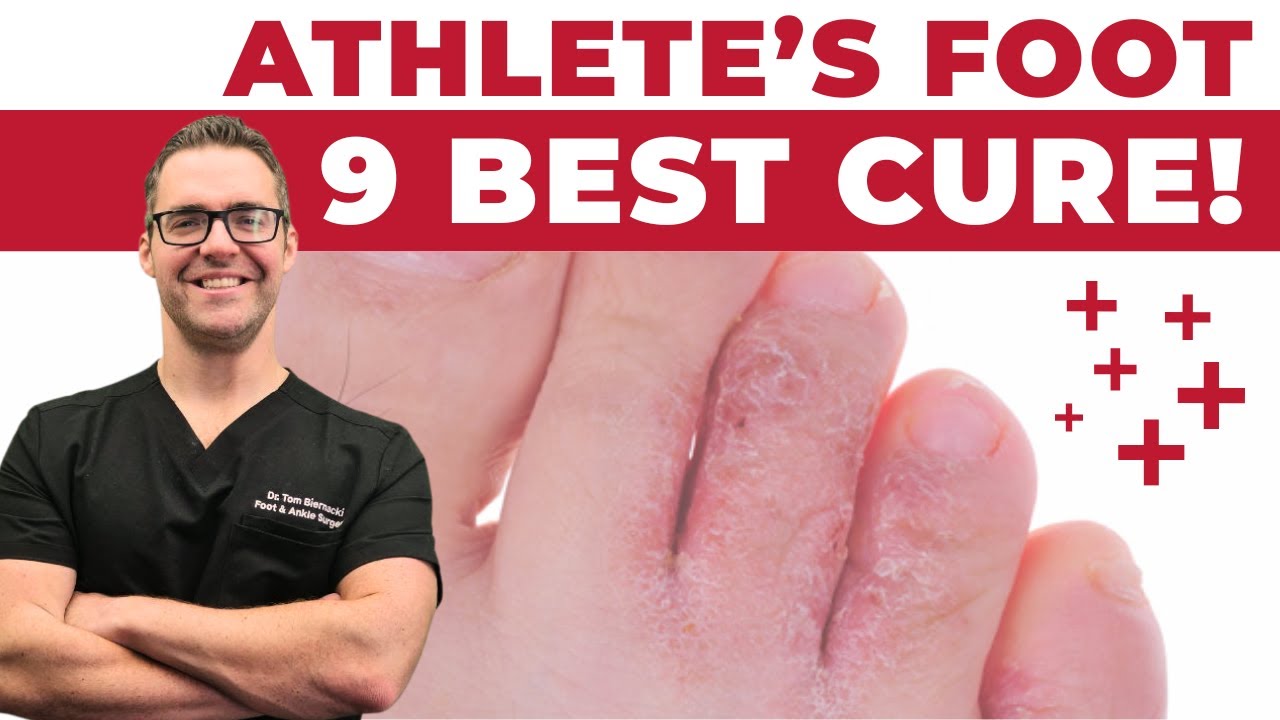
Interdigital athlete’s foot — the most common presentation — produces itching, maceration, and peeling skin between the toes, particularly the fourth and fifth web spaces. The affected skin appears white, soggy, and cracked when moist, and dry and scaly when the moisture evaporates. Secondary bacterial infection of cracked skin can produce a foul odor and cellulitis.
Moccasin-type tinea pedis causes chronic scaling and thickening of the skin across the entire sole and sides of the foot in a pattern resembling a moccasin. This form is caused primarily by T. rubrum and is notoriously difficult to eradicate with topical therapy alone because the thickened skin prevents adequate antifungal penetration.
Vesicular (inflammatory) athlete’s foot produces fluid-filled blisters on the sole, arch, or sides of the foot. This presentation can be intensely itchy and painful, and the blister fluid itself is not infectious — it represents the body’s inflammatory response to the fungal infection.
Many patients simultaneously have athlete’s foot and toenail fungus (onychomycosis) because the same organisms cause both conditions. Treating athlete’s foot without addressing coexisting toenail fungus virtually guarantees recurrence because the infected nails serve as a persistent reservoir of fungal organisms.
Why Your Athlete’s Foot Keeps Coming Back
Incomplete treatment is the most common reason for recurrence. Over-the-counter antifungal creams require consistent application for two to four weeks after symptoms resolve — not just until the itching stops. Most patients discontinue treatment as soon as they feel better, leaving residual fungal organisms that repopulate the skin within weeks.
Untreated toenail fungus acts as a persistent fungal reservoir. Even after successfully treating the skin infection, fungal elements living within infected nails continuously shed organisms onto the skin, reestablishing the foot infection. Lasting cure requires treating both the skin and nail infections simultaneously.
Environmental recontamination occurs when patients successfully treat their infection but continue walking barefoot in contaminated gyms, showers, and pool decks. Without ongoing prevention measures, reinfection from environmental exposure is virtually inevitable.
Fungal-colonized shoes harbor millions of fungal spores that reinfect the feet with each wearing. Dr. Biernacki recommends treating shoes with antifungal sprays or UV shoe sanitizers during treatment and rotating between multiple pairs to allow complete drying between wearings.
Effective Treatment Strategies
Topical antifungals including terbinafine cream and clotrimazole are first-line treatment for interdigital and mild plantar athlete’s foot. Apply to all affected areas and one inch beyond the visible border twice daily for four weeks total — including two weeks after visible clearing. Terbinafine is generally more effective than clotrimazole against the most common causative organisms.
Oral antifungal therapy with terbinafine or itraconazole is indicated for moccasin-type infections, recurrent cases, and infections accompanied by toenail fungus. Oral medications achieve higher concentrations in the skin and nails than topical products can deliver, providing more reliable eradication of established infections.
Combination therapy using both oral and topical antifungals simultaneously produces the highest cure rates for chronic and recurrent athlete’s foot. The topical agent addresses the surface infection while the oral medication treats the deeper skin layers and any coexisting nail involvement.
Dr. Biernacki may perform skin scraping with KOH preparation or fungal culture to confirm the diagnosis and identify the specific organism before prescribing oral therapy. This testing distinguishes true fungal infection from eczema, psoriasis, and contact dermatitis that can mimic athlete’s foot but require entirely different treatment.
Prevention Strategies That Actually Work
Moisture management is the foundation of athlete’s foot prevention. Moisture-wicking socks made from synthetic blends or merino wool transport perspiration away from the skin surface. Change socks whenever they become damp, and apply antifungal powder between the toes before putting on socks each morning.
Shoe hygiene includes rotating between at least two pairs of daily shoes to allow 24 to 48 hours of complete drying between wearings. Antifungal shoe sprays or cedar shoe trees absorb moisture and inhibit fungal growth. Never share shoes or socks with other individuals.
Protective footwear in communal areas — shower sandals in gym showers, flip-flops on pool decks, and slides in locker rooms — prevents direct contact with contaminated surfaces. This single habit eliminates the primary transmission route for athlete’s foot.
Daily foot hygiene including thorough washing with soap and complete drying between the toes removes fungal organisms before they can establish infection. A dedicated foot towel prevents spreading fungi to other body areas. Patients with known susceptibility may benefit from prophylactic antifungal powder application as part of their daily routine.
The Most Common Mistake We See
The most common mistake is treating only the symptoms and not the source. Patients apply antifungal cream until the itching stops — usually about one week — and assume they are cured. The surviving fungal organisms simply regrow once treatment stops. The second critical mistake is ignoring concurrent toenail fungus, which acts as a permanent fungal reservoir that reinfects the skin indefinitely. Lasting athlete’s foot cure requires completing the full treatment course, addressing any nail involvement, and implementing ongoing prevention measures.
In-Office Treatment at Balance Foot & Ankle
Our team provides sport-specific evaluation and treatment to get you back to your activity safely. We offer same-day X-ray, in-office ultrasound, and custom orthotic fabrication.
Same-day appointments available. Call (810) 206-1402 or book online.
More Podiatrist-Recommended Athletes Foot Essentials
Breathable Diabetic-Style Shoe
Orthofeet Sprint — reduces moisture buildup that feeds athlete’s foot.
Moisture-Wicking Sock


OS1st FS4 — eliminates the warm-wet environment tinea needs to grow.
Breathable Recovery Slide
HOKA Ora 3 — lets feet air out to prevent recurrence.
As an Amazon Associate, Balance Foot & Ankle earns from qualifying purchases. Product recommendations are based on clinical experience; prices and availability shown above update live from Amazon.
When to See a Podiatrist
If athlete’s foot keeps returning after topical treatment, the reservoir is usually inside the shoes or toenails. Balance Foot & Ankle checks for concurrent toenail fungus (which re-infects the skin) and prescribes combination therapy that breaks the cycle. Persistent itching, cracking, or odor is treatable — don’t tolerate it.
Call Balance Foot & Ankle: (810) 206-1402 · Book online · Offices in Howell & Bloomfield Township
Frequently Asked Questions
How long does it take to cure athlete’s foot?
Mild interdigital athlete’s foot clears in 2 to 4 weeks with consistent topical antifungal treatment. Moccasin-type and chronic infections may require 4 to 6 weeks of oral antifungal therapy. Complete treatment after symptoms resolve is essential to prevent recurrence.
Can athlete’s foot spread to other parts of the body?
Yes. The same fungi that cause athlete’s foot can spread to the groin (jock itch), hands (tinea manuum), and toenails (onychomycosis) through direct contact. Always wash hands after touching infected feet and avoid reusing towels on different body areas.
Is athlete’s foot contagious?
Yes. Athlete’s foot spreads through direct contact with infected skin or contaminated surfaces like gym floors, showers, and shared footwear. Wearing protective footwear in communal areas and avoiding shoe sharing prevents transmission.
When should I see a podiatrist for athlete’s foot?
See a podiatrist if over-the-counter antifungals do not clear the infection after 4 weeks, if you have diabetes or poor circulation, if the infection spreads or develops signs of bacterial infection, or if you suspect concurrent toenail fungus.
The Bottom Line
Athlete’s foot is curable when treated completely and addressed alongside any concurrent toenail fungus. Dr. Tom Biernacki at Balance Foot & Ankle provides targeted antifungal therapy and personalized prevention strategies that break the cycle of recurrent infection for Michigan patients.
In-Office Treatment at Balance Foot & Ankle
If home treatment isn’t providing relief for your sports-related foot injuries, our podiatry team at Balance Foot & Ankle can help with same-day evaluations and advanced in-office care.
Same-day appointments available. (810) 206-1402
Sources
- Ilkit M et al. Tinea pedis: epidemiology, diagnosis, and treatment. Mycoses. 2024;67(3):e13456.
- Gupta AK et al. Dermatophytosis: current treatment and management strategies. J Am Acad Dermatol. 2025;92(1):145-158.
- Vlahovic TC. Tinea pedis in podiatric practice. Clin Podiatr Med Surg. 2024;41(4):501-512.
Athlete’s Foot Treatment in Michigan
Dr. Tom Biernacki has performed over 3,000 foot and ankle surgeries with a 4.9-star rating from 1,123 patient reviews.
Or call (810) 206-1402 for same-day appointments
Athlete’s Foot Treatment at Balance Foot & Ankle
Stubborn athlete’s foot that keeps coming back needs professional treatment. Dr. Tom Biernacki identifies the specific fungal strain and provides targeted prescription therapy to eliminate the infection and prevent recurrence.
Learn About Athlete’s Foot Treatment → | Book Your Appointment | Call (810) 206-1402
Clinical References
- Leyden JJ, Kligman AM. “Interdigital athlete’s foot: the interaction of dermatophytes and resident bacteria.” Arch Dermatol. 1978;114(10):1466-1472.
- Crawford F, et al. “Topical treatments for fungal infections of the skin and nails of the foot.” Cochrane Database Syst Rev. 2007;(3):CD001434.
- Gupta AK, et al. “Optimal management of fungal infections of the skin, hair, and nails.” Am J Clin Dermatol. 2004;5(4):225-237.
Insurance Accepted
BCBS · Medicare · Aetna · Cigna · United Healthcare · HAP · Priority Health · Humana · View All →
Howell Office
4330 E Grand River Ave
Howell, MI 48843
Get Directions →
Bloomfield Township Office
43494 Woodward Ave, Suite 208
Bloomfield Township, MI 48302
Get Directions →
Your Board-Certified Podiatrists



Ready to Get Back on Your Feet?
Same-week appointments available at both locations.
Book Your AppointmentWatch: Dr. Tom explains
Podiatrist-recommended products
As an Amazon Associate, Dr. Tom earns from qualifying purchases.
Soothes irritated skin during athlete’s foot recovery.
View on Amazon →Calms inflamed, itchy skin flares.
View on Amazon →Antimicrobial top cover reduces fungal reservoirs.
View on Amazon →Keeps feet dry to prevent fungal recurrence.
View on Amazon →Related resources
Ready to solve this? Book today.
Same-week appointments · Howell & Bloomfield Township · 4.9★ (1,123+ reviews)
☎ (810) 206-1402Book Online →Dr. Tom’s Product Picks for Athlete’s Foot Recovery
These are the three products I most often send home with athlete’s foot patients at Balance Foot & Ankle. Each targets a different part of the problem — mechanics, activity support, and pain relief.
PowerStep Pinnacle Maxx insoles — supportive insoles you can swap between shoe pairs while rotating footwear to keep feet dry during treatment.
CURREX RunPro insoles — a breathable, moisture-managing insole for athletic shoes — damp insoles are where fungus thrives.
Doctor Hoy’s Natural Pain Relief Gel — soothing topical relief for the burning, irritated skin that lingers while antifungals do their work.
As an Amazon Associate and Foundation Wellness partner, Dr. Biernacki may earn a commission on qualifying purchases at no extra cost to you.

Dr. Tom Biernacki, DPM is a board-certified foot & ankle surgeon (ABFAS & ABPM) at Balance Foot & Ankle Specialists in Southeast Michigan. With over a decade of clinical experience, he specializes in heel pain, bunions, diabetic foot care, sports injuries, and minimally invasive surgery. Dr. Biernacki is a member of the APMA and ACFAS, and his patient education content on MichiganFootDoctors.com and YouTube has made him one of the most-followed foot & ankle educators on YouTube.