
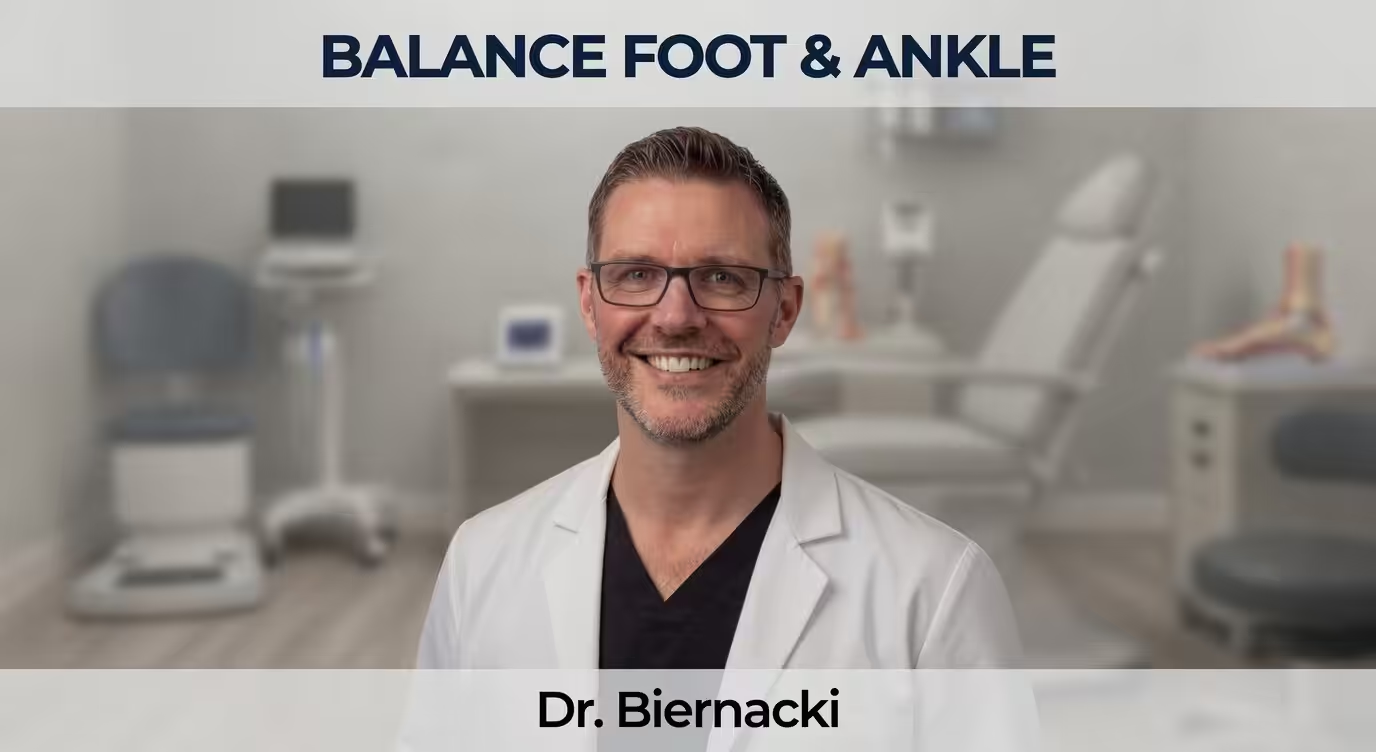
Medically reviewed by Dr. Tom Biernacki, DPM — Board-certified foot & ankle surgeon, 3,000+ surgeries performed. Updated April 2026 with current clinical evidence. This article reflects real practice experience from Balance Foot & Ankle Specialists in Howell and Bloomfield Hills, Michigan.
Quick Answer
Most foot and ankle problems respond to conservative care — proper footwear, supportive inserts, activity modification, and targeted stretching — within 4-8 weeks. Persistent pain beyond that window, or any symptom that prevents walking, warrants a podiatric evaluation to rule out fracture, tendon tear, or systemic cause.
Watch: Dr. Tom Biernacki, DPM
Medically reviewed by Dr. Tom Biernacki, DPM — Board-Certified Podiatric Surgeon — Balance Foot & Ankle, Howell & Bloomfield Hills, MI. Last updated April 2026.
▶ Watch
📋 Dr. Tom Also Recommends
Podiatrist Recommended Orthotics 2026: Dr. Tom’s Top 10 Insoles & Arch Supports
A podiatrist’s complete clinical guide to the best insoles — custom orthotics, OTC picks, and what actually works for plantar fasciitis, flat feet, neuropathy & more.
Read the Full Guide →Medically reviewed by Dr. Tom Biernacki, DPM | Board-certified podiatrist | 3,000+ surgeries performed
Last updated: April 2, 2026
Quick Answer
Barefoot walking and minimalist footwear have gained popularity as a way to strengthen feet, improve balance, and restore natural foot mechanics. While research supports real benefits for some populations, going barefoot carries genuine risks for others — particularly those with diabetes, neuropathy, or existing foot deformities. The key is understanding who benefits and how to transition safely.
The Science Behind Barefoot Walking Benefits
Human feet evolved for barefoot locomotion, equipped with over 200,000 sensory nerve endings that provide detailed proprioceptive feedback about terrain, pressure, and position. Modern cushioned shoes dampen this sensory input, which proponents argue leads to weaker intrinsic foot muscles, altered gait patterns, and increased injury rates. Research published in Nature (2010) first demonstrated that habitual barefoot runners land with a forefoot strike pattern that reduces impact forces compared to shod heel-strikers.
Studies show that regular barefoot activity strengthens the intrinsic foot muscles — the small muscles within the foot that control arch height, toe alignment, and shock absorption. A 2024 randomized controlled trial in the British Journal of Sports Medicine found that eight weeks of barefoot strengthening exercises increased foot muscle cross-sectional area by 10-12% and improved single-leg balance performance by 35%.
Improved proprioception is another documented benefit. Walking barefoot activates mechanoreceptors in the plantar skin that provide detailed ground-surface information to the central nervous system. This enhanced sensory feedback improves balance, spatial awareness, and postural stability — particularly valuable for older adults at risk of falls.
Risks and Contraindications: Who Should Not Go Barefoot
Patients with diabetic peripheral neuropathy should never walk barefoot. Reduced sensation means they cannot detect sharp objects, hot surfaces, or developing blisters. A minor puncture wound or thermal burn can progress to a limb-threatening infection in a diabetic foot. Dr. Biernacki emphasizes that protective footwear at all times is a non-negotiable safety requirement for patients with neuropathy.
Patients with peripheral arterial disease (PAD), immunosuppression, or active foot infections face similar risks from barefoot exposure. Those with rigid flatfoot deformity, posterior tibial tendon dysfunction, or Charcot foot need the structural support that shoes and orthotics provide — going barefoot can accelerate deformity progression in these conditions.
Even healthy individuals face injury risks from barefoot walking on modern surfaces. Puncture wounds from nails, glass, and sharp objects can introduce tetanus and other serious infections. Hot pavement in summer can cause second-degree burns in under 60 seconds. Parasitic infections (hookworm, strongyloides) remain a concern in warm, sandy environments. These risks are manageable with awareness but should not be dismissed.
Minimalist Footwear: A Middle Ground
Minimalist shoes aim to provide the sensory and biomechanical benefits of barefoot walking while offering basic protection against puncture wounds, thermal injury, and debris. Key features include zero or minimal heel-to-toe drop (less than 4mm), thin flexible soles (less than 12mm stack height), wide toe boxes that allow natural toe splay, and no arch support or motion control features.
Popular minimalist shoe categories include five-finger toe shoes, zero-drop running shoes, flexible-sole casual shoes, and huarache-style sandals. Each provides different levels of protection and ground feel. For patients transitioning from traditional supportive footwear, a gradual approach using partial minimalist shoes (4-8mm drop, moderate cushioning) bridges the gap safely.
Research comparing minimalist shoes to traditional running shoes shows mixed results. Minimalist footwear strengthens foot muscles and improves running economy, but increases metatarsal stress fracture risk during transition periods when bones and tendons have not yet adapted to higher loading. A 2024 meta-analysis in Sports Medicine concluded that the transition period — not minimalist footwear itself — is the primary injury risk factor.
How to Transition Safely to Barefoot or Minimalist Shoes
The transition from supportive shoes to barefoot or minimalist footwear must be gradual — typically 8 to 12 weeks minimum. Start with 10-15 minutes of barefoot walking on a safe indoor surface daily, increasing by 5 minutes per week. Simultaneously, begin foot strengthening exercises: short-foot contractions, towel scrunches, single-leg balance work, and calf raises.
When transitioning to minimalist running shoes, replace no more than 10% of weekly running mileage with minimalist shoe runs, increasing by 5% per week. Run on softer surfaces (grass, dirt trails) initially before transitioning to pavement. Expect mild foot muscle soreness similar to starting a new exercise program — this indicates appropriate adaptation, not injury.
Warning signs that you are progressing too quickly include sharp metatarsal pain (possible stress reaction), persistent arch pain (plantar fascia overload), Achilles tendon soreness lasting more than 24 hours, or any pain that worsens rather than improves over two weeks. If any of these occur, reduce barefoot/minimalist exposure by 50% and consult your podiatrist.
Foot Strengthening Exercises for Barefoot Readiness
Short-foot exercise (intrinsic foot muscle activation) is the foundational exercise for barefoot preparation. While seated or standing, draw the ball of the foot toward the heel without curling the toes — this engages the intrinsic muscles that support the arch. Hold for 5 seconds, perform 20 repetitions, three times daily. This single exercise produces measurable arch strengthening within four weeks.
Toe yoga — independently lifting the big toe while pressing the small toes down, then reversing — develops fine motor control of the forefoot. Marble pickups, towel scrunches with the toes, and resistance band toe abduction exercises progressively challenge the intrinsic foot muscles. Single-leg balance on varied surfaces (firm floor, foam pad, balance board) integrates foot muscle strength with proprioceptive function.
Calf strengthening and Achilles tendon conditioning are equally important because minimalist shoes increase eccentric loading on the calf complex during gait. Eccentric heel drops from a step (3 sets of 15, daily) and single-leg calf raises build the tendon capacity needed for safe barefoot activity. Begin these exercises four to six weeks before transitioning to minimalist footwear.
What Dr. Biernacki Recommends for Different Patients
For healthy individuals with normal foot mechanics and no neuropathy, a gradual transition to part-time barefoot walking and minimalist footwear offers real benefits — stronger intrinsic muscles, better balance, and improved proprioception. The key is patience during the transition and maintaining awareness of environmental hazards.
For patients with mild flat feet or early arch weakness, supervised barefoot strengthening exercises can improve intrinsic foot muscle function and potentially reduce orthotic dependence over time. However, this should complement — not replace — supportive footwear during the strengthening phase. Dr. Biernacki designs individualized programs based on each patient’s foot type and functional goals.
For patients with diabetes, peripheral neuropathy, PAD, structural deformities, or active foot conditions, the risks of barefoot activity clearly outweigh the benefits. These patients should wear protective, supportive footwear at all times — including indoors. Foot strengthening exercises can be performed while wearing shoes and still provide meaningful muscle activation benefits.
Warning Signs Requiring Urgent Evaluation
- function bold() { [native code] } — undefined
The Most Common Mistake We See
The biggest mistake is going ‘all in’ on barefoot or minimalist footwear overnight after years of wearing supportive cushioned shoes. Feet that have been supported for decades have adapted to that support — the intrinsic muscles are deconditioned, tendons are shortened, and bone density reflects lower loading. Jumping to full barefoot activity without a gradual transition period is like attempting a marathon after years of inactivity. Stress fractures, plantar fasciitis, and Achilles injuries spike during abrupt transitions.
Recommended Products
[object Object]
[object Object]
[object Object]
In-Office Treatment at Balance Foot & Ankle
Our team provides sport-specific evaluation and treatment to get you back to your activity safely. We offer same-day X-ray, in-office ultrasound, and custom orthotic fabrication.
Same-day appointments available. Call (810) 206-1402 or book online.
More Podiatrist-Recommended Shoes Essentials
Podiatrist-Recommended Walking Shoe
- ENGINEERED MESH
- Lining Textile
Balance of cushioning, stability, and wide-toe-box — the best all-around choice.
Stability Running Shoe
- FuelCell foam delivers a propulsive feel to help drive you forward
- ENCAP midsole cushioning combines lightweight foam with a durable polyurethane rim to deliver all-day support
- Reflective accents designed to catch the light
- TPU back tab
- New Balance MADE contains a domestic value of 70% or more. MADE makes up a limited portion of New Balance’s US sales.
Medial post controls overpronation during running and fast walking.
Wide-Toe-Box Walking Shoe
No products found.
Roomy forefoot reduces bunion, neuroma, and hammertoe pressure.
As an Amazon Associate, Balance Foot & Ankle earns from qualifying purchases. Product recommendations are based on clinical experience; prices and availability shown above update live from Amazon.

When to See a Podiatrist
The right shoe shape, last, and stability category is more important than brand. Balance Foot & Ankle evaluates your foot type (neutral, pronator, supinator, high-arched) and recommends specific shoe models that match. Bringing in your current pair lets us spot wear patterns that reveal gait issues — a free 5-minute assessment that can prevent years of foot pain.
Call Balance Foot & Ankle: (810) 206-1402 · Book online · Offices in Howell & Bloomfield Hills
Frequently Asked Questions
Is walking barefoot good for your feet?
For healthy individuals without neuropathy or structural foot deformities, walking barefoot strengthens intrinsic foot muscles, improves proprioception and balance, and may improve natural gait mechanics. However, it carries risks of puncture wounds, burns, and infections. A gradual transition and safe environment are essential for realizing benefits while minimizing risks.
Can barefoot walking help flat feet?
Research shows that barefoot strengthening exercises can increase intrinsic foot muscle strength and modestly improve arch height in flexible flat feet. However, results depend on the cause of the flat foot — structural flatfoot from tarsal coalition or PTTD requires supportive footwear and often orthotic therapy, not barefoot walking, which could worsen the condition.
How long does it take to transition to minimalist shoes?
A safe transition takes 8 to 12 weeks minimum. Start with 10-15 minutes daily of barefoot walking indoors, increasing gradually. For running, replace no more than 10% of weekly mileage with minimalist shoes initially. Rushing the transition is the primary cause of stress fractures and tendon injuries during the switch.
Are minimalist shoes bad for plantar fasciitis?
Minimalist shoes can worsen acute plantar fasciitis because they lack arch support and heel cushioning. However, once plantar fasciitis is resolved, gradual transition to minimalist shoes combined with foot strengthening may reduce recurrence risk by building intrinsic muscle support. Your podiatrist can advise whether and when minimalist footwear is appropriate for your specific situation.
The Bottom Line
Barefoot walking and minimalist footwear offer genuine benefits for foot strength and proprioception in appropriate candidates. The critical factors are proper patient selection, gradual transition, consistent foot strengthening exercises, and ongoing awareness of environmental risks. If you are considering going barefoot or switching to minimalist shoes, start with a podiatric evaluation to ensure your feet are ready for the transition.
Sources
- Lieberman DE, et al. ‘Foot Strike Patterns and Collision Forces in Habitually Barefoot versus Shod Runners.’ Nature. 2010;463:531-535.
- Ridge ST, et al. ‘Foot Muscle Strengthening Through Barefoot Activity: A Randomized Controlled Trial.’ Br J Sports Med. 2024;58(8):445-453.
- Fuller JT, et al. ‘Minimalist Footwear and Running Injury Risk: A Systematic Review and Meta-Analysis.’ Sports Med. 2024;54(3):667-681.
- McKeon PO, et al. ‘The Foot Core System: A New Paradigm for Foot Function.’ Br J Sports Med. 2015;49(5):290.
Get a Personalized Barefoot Transition Plan
Dr. Tom Biernacki has performed over 3,000 foot and ankle surgeries with a 4.9-star rating from 1,123 patient reviews.
Or call (810) 206-1402 for same-day appointments
Barefoot Walking & Minimalist Shoes — A Podiatrist’s Perspective
Should you go barefoot or wear minimalist shoes? The answer depends entirely on your foot structure, medical history, and goals. At Balance Foot & Ankle, we provide personalized biomechanical assessments to determine whether minimalist footwear is safe and beneficial for your specific feet.
Get a Personalized Biomechanical Assessment → | Book Your Appointment | Call (810) 206-1402
Clinical References
- Hollander K, et al. Growing-up (habitually) barefoot influences the development of foot and arch morphology in children and adolescents. Sci Rep. 2017;7:8079.
- Davis IS. The re-emergence of the minimal running shoe. J Orthop Sports Phys Ther. 2014;44(10):775-784.
- Altman AR, Davis IS. Prospective comparison of running injuries in shod and barefoot runners. Br J Sports Med. 2016;50(8):476-480.
Insurance Accepted
BCBS · Medicare · Aetna · Cigna · United Healthcare · HAP · Priority Health · Humana · View All →
Howell Office
3980 E Grand River Ave, Suite 140
Howell, MI 48843
Get Directions →
Bloomfield Hills Office
43700 Woodward Ave, Suite 207
Bloomfield Hills, MI 48302
Get Directions →
Your Board-Certified Podiatrists
Ready to Get Back on Your Feet?
Same-week appointments available at both locations.
Book Your Appointment👟 Dr. Tom’s Complete Footwear Library
Podiatrist-Approved Guides for Every Foot Type & Condition
Clinically reviewed by Dr. Tom Biernacki, DPM — Board-Certified Podiatrist
All guides are written and reviewed by licensed podiatrists. Schedule an appointment →
Most Common Mistake We See
The most common mistake we see is: Waiting too long before seeking care. Fix: any foot pain lasting more than 4 weeks, or any sudden severe symptom, deserves a professional evaluation rather than more rest.
Warning Signs That Need Same-Day Care
Seek immediate evaluation at Balance Foot & Ankle if you experience any of the following:
- Unable to bear weight
- Severe swelling with skin colour change
- Fever with foot pain (possible infection)
- Diabetes plus any new foot symptom
Call (810) 206-1402 — same-day and next-day appointments at our Howell and Bloomfield Hills offices.
Dr. Tom Biernacki, DPM is a double board-certified podiatrist and foot & ankle surgeon at Balance Foot & Ankle Specialists in Southeast Michigan. With over a decade of clinical experience, he specializes in heel pain, bunions, diabetic foot care, sports injuries, and minimally invasive surgery. Dr. Biernacki is a member of the APMA and ACFAS, and his patient education content on MichiganFootDoctors.com and YouTube has reached over one million views.
- Plantar Fasciitis: Diagnosis and Conservative Management (PubMed)
- Plantar Fasciitis (APMA)
- Diagnosis and Treatment of Plantar Fasciitis (PubMed / AAFP)
- Heel Pain (APMA)

