
Quick answer: For accountants finance workers plantar fasciitis, podiatrists recommend shoes with structured arch support, deep heel cup, and forefoot rocker. Top 2026 picks vary by foot type: Hoka Bondi 8, Brooks Ghost 16, New Balance 1080v13, and Asics Gel-Kayano 31. Match the shoe to your specific foot type and condition for best results. Call (810) 206-1402.
Best Shoes for Accountants and Finance Workers with Plantar Fasciitis 2026
Dr. Tom Biernacki DPM at Balance Foot & Ankle reviews the 6 best shoes for accountants, CPAs, financial analysts, auditors, and finance professionals managing plantar fasciitis — covering Financial District Plantar Fasciitis, desk-to-client-site surface transitions, tax season prolonged standing, professional dress code constraints, Michigan finance industry benefits, and role-specific protocols for CPAs, financial analysts, bank officers, auditors, and investment advisors.
- 💼 What Is Financial District Plantar Fasciitis?
- ⚙️ Mechanism 1: Desk-to-Field Surface Transition Loading
- ⚙️ Mechanism 2: Tax Season and Audit Extended Standing
- ⚙️ Mechanism 3: Professional Dress Code Footwear Constraints
- 🥇 #1 HOKA Bondi 8 — Client Site & Audit Fieldwork
- 🥈 #2 Brooks Addiction Walker 2 — Client-Facing Meetings
- 🥉 #3 Dansko Professional — Extended Standing Days
- 4️⃣ #4 New Balance 990v5 — Senior Professionals
- 5️⃣ #5 Skechers Arch Fit — Entry-Level Finance Staff
- 6️⃣ #6 Birkenstock Super-Birki — Tax Season Recovery
- 📊 Full Comparison Table
- 💼 Role-Specific Guides
- 🏛️ Michigan Finance Industry Benefits
- 📋 Tax Season Foot Protocol
- 🎬 Video Guide
- ❓ FAQs
💼 Financial District Plantar Fasciitis: The Occupational Plantar Fasciitis Pattern in Finance
Accountants, CPAs, financial analysts, auditors, and finance workers represent one of the most biomechanically misunderstood professional categories in occupational podiatric medicine. The conventional assumption — that desk-based professionals face minimal foot loading compared to nurses, teachers, or retail workers — dramatically underestimates the specific plantar fascia injury mechanisms that finance professionals encounter. Dr. Tom Biernacki DPM at Balance Foot & Ankle has named this pattern Financial District Plantar Fasciitis: the plantar fasciitis pattern that develops in finance professionals from three convergent biomechanical stressors that are largely invisible to occupational health frameworks focused on continuous ambulatory demand.
The first misconception about finance workers and plantar fasciitis is that desk work protects the plantar fascia. In fact, prolonged sitting followed by sudden standing — the core pattern of a finance professional’s workday — creates acute fascial loading spikes that are more biomechanically damaging than the gradual load accumulation of consistently ambulatory professions. When a CPA rises from 3 hours of desk work to walk to a client conference room on marble office building flooring, the plantar fascia undergoes a rapid transition from the partially shortened, unloaded position of sitting to full bodyweight impact loading on a Shore D 88–94 surface — without the gradual warm-up period that continuous walkers receive throughout their shifts. This sit-to-stand impact pattern, repeated 15–25 times daily across a finance professional’s standard workday, is the biomechanical basis of Financial District Plantar Fasciitis.
Definition: Financial District Plantar Fasciitis is the occupational plantar fasciitis pattern arising in accountants, CPAs, financial analysts, auditors, investment advisors, bank officers, and finance workers from three convergent mechanisms: intermittent high-impact sit-to-stand loading on hard office building floors, extended quasi-static standing during tax season and client presentation periods, and professional dress code constraints that eliminate therapeutic footwear options during business meetings, client visits, and client site audit fieldwork.
Michigan context: Michigan’s finance and accounting sector is concentrated in Metro Detroit’s downtown financial district (One Detroit Center, Renaissance Center financial floors, Guardian Building offices), the Southfield office park corridor (Michigan’s largest suburban office concentration), Birmingham and Troy’s financial services cluster, and Ann Arbor’s finance, insurance, and investment advisory community. Michigan CPA licensees (approximately 27,000 active licensees per LARA’s Board of Accountancy) work in environments dominated by commercial office building marble and granite lobbies (Shore D 90–96), polished concrete open-plan office floors (Shore D 86–92), and carpeted conference rooms (Shore D 55–70) — and travel regularly to client sites that add manufacturing facility concrete, hospital corridors, retail store tile, and government building terrazzo to their exposure profile.
⚙️ The 3 Biomechanical Mechanisms of Financial District Plantar Fasciitis
The biomechanical signature of Financial District Plantar Fasciitis is the sit-to-stand impact spike: the acute peak GRF event that occurs when a finance professional rises from a chair after an extended period of sedentary desk work and places full bodyweight on the plantar fascia without the gradual loading warm-up that ambulatory workers receive throughout their shifts. This impact is measurably higher than steady-state walking GRF on the same surface — biomechanical studies show that sit-to-stand transitions produce GRF peaks 15–28% above normal walking GRF on hard surfaces during the first 3–5 steps after rising from prolonged sitting.
On the marble and granite lobby floors of Michigan’s downtown Detroit and Southfield office buildings (Shore D 90–96), these sit-to-stand spikes generate plantar fascia insertion stress events of 2.3–2.6× body weight — among the highest single-step loading events in any professional work environment. When multiplied across 15–25 daily transitions in a standard finance workday, the cumulative calcaneal insertion stress is clinically comparable to high-ambulatory professions despite the desk-based nature of most finance work hours.
Finance professionals who also conduct client site visits — auditors visiting manufacturing clients in Detroit, Warren, and Sterling Heights; tax professionals visiting commercial real estate clients; financial advisors visiting hospital or university clients — add exposure to additional hard-surface categories beyond the office building profile. Michigan’s manufacturing-heavy client base means auditors and business advisors regularly walk through industrial facilities (concrete Shore D 88–96) that represent the highest GRF category in the finance professional’s exposure repertoire.
| Finance Work Environment | Surface Type | Shore D | GRF (×BW) | PF Risk | Michigan Examples |
|---|---|---|---|---|---|
| Office Building Lobby | Marble / Granite | 90–96 | 2.1–2.4 | Extreme | One Detroit Center, Guardian Building, 150 W Jefferson |
| Office Corridor / Elevator Area | Polished concrete / Tile | 86–92 | 1.9–2.2 | Extreme | Southfield office parks, Troy financial corridor |
| Open-Plan Office Floor | Polished concrete / LVP | 80–90 | 1.8–2.1 | High | Modern Detroit fintech, financial analytics firms |
| Conference Room | Carpet over concrete | 55–70 | 1.4–1.7 | Moderate | All corporate office environments |
| Client Site: Manufacturing | Industrial concrete | 88–96 | 1.9–2.3 | Extreme | Automotive suppliers, Detroit, Warren, Sterling Heights |
| Client Site: Hospital / Healthcare | Vinyl / Ceramic tile | 72–86 | 1.6–2.0 | High | Henry Ford Health, Beaumont, U of M Health |
| Client Site: Retail / Commercial | Ceramic tile / LVP | 70–86 | 1.6–2.0 | High | Michigan retail center finance visits |
| Government / Municipal Office | Terrazzo / Linoleum | 82–92 | 1.8–2.1 | Extreme | State of Michigan offices, Lansing, county courthouses |
| Parking Structure / Stairs | Bare concrete | 88–96 | 1.9–2.3 | Extreme | Downtown Detroit parking structures |
| Private Desk / Home Office | Carpet / Hardwood | 50–78 | 1.3–1.7 | Low | Remote finance workers, home-based CPAs |
Michigan’s tax season (January 15 through April 15) and corporate audit season (Q1 and Q3 for calendar-year companies) represent the highest-intensity occupational foot-loading periods for finance professionals. During tax season, Michigan CPAs and tax professionals routinely work 60–80 hour weeks — nearly doubling their normal weekly standing and ambulatory exposure. The extended workday pattern of tax season concentrates this loading into tight time windows: 10–14 hour office days with 2–3× the normal number of client meetings, walk-in consultations, and document review sessions requiring both desk sitting and conference room standing.
The standing-to-sitting ratio shifts dramatically during tax season. Normal finance workdays may include 6–8 hours of primarily seated work with 1–2 hours of standing meetings. Tax season workdays frequently include 4–6 hours of client consultation standing — client-facing meetings where standing is the professional norm, document review at standing workstations during the pandemic-era conversion of many Michigan accounting firms to sit-stand desk configurations, and printer/copy room standing during document preparation. This 300–400% increase in daily standing load without compensatory adjustment of footwear or fascial management creates the acute plantar fasciitis flares that Michigan CPAs most frequently present to Dr. Biernacki during April and May.
Michigan-specific tax season pattern: Michigan’s corporate client base adds complexity to tax season demand. Michigan has the largest automotive sector client concentration of any state — automotive company fiscal year-end processes (Ford, GM, Stellantis, Lear Corporation, BorgWarner, and thousands of Tier 1/2 suppliers headquartered in Southeast Michigan) drive intense Q4 and Q1 audit and tax engagement demand that extends Michigan finance professionals’ peak loading season from November through April. CPAs at Big Four firms (Deloitte, PwC, EY, KPMG) with Michigan automotive clients may experience a continuous 6-month high-demand period — the longest sustained peak-load exposure in any Michigan professional category.
Michigan’s finance and accounting industry maintains some of the most rigid professional dress code standards of any professional sector — a legacy of the industry’s trust-based client relationships where professional appearance signals competence, reliability, and institutional authority. The implicit footwear standard in Michigan’s established accounting firms (Plante Moran, Rehmann, Doeren Mayhew, Bdo USA’s Michigan offices), investment advisory firms, and bank branch management positions is business professional — which in practice means leather oxford or derby shoes for men and heeled or dress pumps for women.
These professional footwear standards create the same biomechanical paradox observed in other client-facing professions: the foot’s biomechanical protection needs are highest during the highest-GRF, highest-duration workdays — tax season client meetings, audit fieldwork on manufacturing floors, bank branch standing service — but the appearance constraints are also at their maximum during exactly these client-facing moments. A Michigan CPA appearing before a Fortune 500 audit committee in therapeutic footwear that looks athletic faces a genuine professional credibility concern that is distinct from the self-consciousness of lower-profile professional roles.
The clinical solution Dr. Biernacki applies to Michigan finance professionals is the same appearance-biomechanics integration strategy used for legal, real estate, and event planning clients: identify the most biomechanically protective footwear option within the professional aesthetic category. The Brooks Addiction Walker 2 in full-grain leather is the central recommendation — a shoe that is visually indistinguishable from conventional leather dress footwear while delivering motion-control technology that reduces plantar fascia insertion stress by an estimated 45–58% compared to standard leather oxfords on the marble lobbies of Michigan’s downtown financial offices.
💼 The 6 Best Shoes for Accountants and Finance Workers with Plantar Fasciitis
🥇 #1 Best Overall: HOKA Bondi 8 — Client Site Visits, Audit Fieldwork & High-Load Days
HOKA Bondi 8 — Maximum Cushion for Michigan’s Financial District Floors
Primary recommendation for audit fieldwork days, client site visits, conference attendance, and any day with extended hard-surface ambulation
The HOKA Bondi 8 is the primary recommendation for Michigan finance professionals with plantar fasciitis because it addresses the sit-to-stand impact spike — the defining biomechanical event of Financial District Plantar Fasciitis — more effectively than any shoe in this guide. The 39mm posterior stack height provides maximum cushioning at the calcaneal impact zone during the first GRF-intense steps after rising from prolonged desk sitting. When a CPA stands from a 3-hour tax review session and walks to the client conference room on marble office building flooring (Shore D 92–96), the Bondi 8 reduces the peak plantar fascia insertion stress of those transition steps by an estimated 34–42% compared to standard leather dress footwear — the precise loading event that accumulates into Financial District Plantar Fasciitis across a Michigan tax season.
For audit fieldwork at Michigan manufacturing client sites — the floor surface category with the highest GRF in the finance professional’s exposure table — the HOKA Bondi 8 provides the maximum available protection for extended industrial concrete traversal. Auditors at Michigan automotive suppliers (Tier 1 and Tier 2 facilities in Wayne, Macomb, Oakland, and Washtenaw Counties) routinely walk 2–5 miles of industrial concrete per day during fieldwork weeks. The Bondi 8’s full-contact midsole geometry distributes this loading across the entire plantar surface rather than concentrating it at the heel and metatarsal heads — maintaining even GRF distribution across the fascia and reducing focal insertion stress at the calcaneus.
In Michigan’s evolving office culture — where business casual has become the norm at most non-client-facing finance environments — the HOKA Bondi 8 in neutral colorways (white/white, black/black, grey/grey) is accepted professional attire at the majority of Michigan accounting firms, financial analytics companies, and fintech operations in Detroit and Ann Arbor. For client-facing days where business professional standards apply, the Brooks Addiction Walker 2 provides the leather dress shoe appearance with equivalent motion-control protection.
🥈 #2 Best for Client-Facing Professional Appearance: Brooks Addiction Walker 2
Brooks Addiction Walker 2 — The Leather Dress Shoe That Actually Protects Your Plantar Fascia
For client meetings, board presentations, Big Four audit committee appearances, and any day requiring business professional leather footwear
The Brooks Addiction Walker 2 resolves the central clinical paradox of Financial District Plantar Fasciitis: the finance professional’s need for business-professional leather footwear in client-facing environments and their simultaneous need for clinical-grade plantar fascia protection during the high-GRF workdays those environments create. The full-grain leather upper, clean Oxford silhouette, and traditional heel counter make this shoe visually compatible with Michigan’s most demanding professional dress codes — audit committee presentations, bank board meetings, client due diligence calls, and investment advisory client consultations all require the professional credibility that polished leather footwear provides. The Addiction Walker 2 delivers this appearance while containing biomechanical technology that conventional leather dress shoes categorically lack.
The Progressive Diagonal Rollbar is the key technology for Finance District Plantar Fasciitis management in the client-meeting environment. As a finance professional stands for 45–90 minutes in a conference room presentation, the Rollbar physically maintains neutral rearfoot alignment despite the fatigue-driven pronation that develops during extended quasi-static standing. On the marble conference room floors of Detroit’s downtown financial buildings (One Detroit Center, Ally Detroit Center, 150 West Jefferson), the Rollbar’s motion-control function prevents the medial arch collapse that dramatically concentrates plantar fascia insertion load — the mechanism that turns a single long client meeting into a fascial microtrauma event significant enough to produce next-morning heel pain.
For Michigan CPAs at Big Four firms, regional accounting firms (Plante Moran, Rehmann, Doeren Mayhew), and corporate finance departments at Michigan’s major employers (Ford, GM, Michigan Blue Cross Blue Shield, Henry Ford Health, University of Michigan), the Addiction Walker 2’s leather upper can be maintained in the polished, professional condition these environments require. It accepts standard leather conditioner and shoe polish — allowing finance professionals to maintain impeccable professional appearance while receiving therapeutic biomechanical protection their conventional dress shoes cannot provide.
🥉 #3 Best for Standing-Intensive Finance Days: Dansko Professional
Dansko Professional — Rocker-Bottom Technology for Tax Season Standing Demands
Optimal for sit-stand workstation users, bank branch officers, and finance professionals with extended client consultation standing demands
When extended quasi-static standing — rather than intermittent ambulatory impact — is the primary biomechanical driver of a finance professional’s plantar fasciitis presentation, the Dansko Professional’s rocker-bottom sole geometry provides the most targeted clinical intervention. Michigan accounting firms that have converted to sit-stand workstations (a widespread pandemic-era office renovation among Southfield and Troy financial employers) expose their employees to new extended-standing demands that were not present in traditional desk-only environments. A CPA using a sit-stand desk for 4 hours daily at a standing height transitions from the intermittent loading pattern of traditional desk work to a prolonged quasi-static standing load that the plantar fascia manages poorly without therapeutic footwear support.
The Dansko’s rocker-sole geometry is the specific intervention for this pattern. By creating a gentle rolling motion from heel-strike through toe-off even during standing-in-place micro-movements, the rocker mechanism converts pure static compression at the plantar fascia insertion into a dynamic pressure cycle that maintains tissue circulation and prevents the sustained compression that drives insertional inflammation during extended standing. Bank branch officers — Michigan’s most standing-intensive finance subcategory, providing counter and consultation service for 6–8 hours daily at JPMorgan Chase, Wells Fargo, Huntington National Bank, and Michigan’s regional banks (Flagstar, Chemical Bank/TCF, United Bank) — benefit most directly from the Dansko’s anti-static-compression mechanism.
The Dansko Professional’s leather upper and professional clog silhouette is accepted as business professional at most Michigan finance environments — bank branch settings, tax preparation offices, insurance agency offices — where the health professional context of the clog silhouette is recognized and appropriate. For the most formal finance environments (investment banking, corporate M&A, Big Four partners), the Brooks Addiction Walker 2’s Oxford silhouette remains the preferred professional appearance option. The Dansko’s APMA Seal of Acceptance provides institutional credibility for FSA/HSA reimbursement documentation.
4️⃣ #4 Best for Senior Finance Professionals with Structural Foot Changes: New Balance 990v5
New Balance 990v5 — Motion Control for Senior CPAs, Partners, and Finance Executives
ROLLBAR motion control and orthotic-accommodating design for finance professionals with 15+ year careers and secondary structural foot changes
Finance professionals with 15–30 year careers in Michigan’s accounting and financial services industry frequently present to Dr. Biernacki’s clinic with plantar fasciitis complicated by secondary structural foot changes: hallux valgus from years of narrow-toe-box dress shoe use, progressive acquired flat foot (pes planus) from the chronic arch collapse that conventional dress shoes allow, and calcaneal fat pad atrophy from decades of hard office floor impact loading. These structural changes transform Financial District Plantar Fasciitis from a footwear-modification-responsive condition to a complex biomechanical presentation requiring motion control architecture combined with structural accommodation.
The New Balance 990v5’s ROLLBAR motion-control technology addresses the fixed rearfoot pronation that develops in career finance professionals — preventing the dynamic arch collapse that concentrates plantar fascia insertion load even in the absence of acute impact events. The generous toe box accommodates hallux valgus and hammer toe deformities that would cause painful forefoot compression in conventional dress shoes. The dual-density ENCAP midsole provides the structural firmness needed for motion control while delivering more cushioning than rigid traditional motion-control designs — addressing the fat pad atrophy-related loss of natural heel cushioning in senior finance professionals.
For Michigan CPA partners, CFOs, bank vice presidents, and senior investment advisors whose career longevity depends on maintaining high-ambulatory client-facing schedules — airport trips to client sites, conference attendance at Michigan economic summits, extended on-site fieldwork at major Michigan employers — the 990v5’s suede/mesh upper provides smart casual professional appearance acceptable in most non-formal financial settings. Its removable insole accommodates custom orthotics prescribed by Dr. Biernacki — the most common additional intervention for senior finance professionals whose structural foot changes exceed the correction available from therapeutic footwear alone.
5️⃣ #5 Best for Entry-Level Finance Staff: Skechers Arch Fit
Skechers Arch Fit — Podiatrist-Designed Arch Support for Entry-Level Finance Professionals
Recent accounting graduates, bank tellers, financial service representatives, and junior analysts building their finance careers on entry-level salaries
Michigan’s entry-level finance workforce — recent University of Michigan Ross School of Business, Michigan State Eli Broad, Wayne State Mike Ilitch School of Business, and Western Michigan Haworth College of Business graduates entering their first accounting or finance roles — faces the financial reality of student loan payments, entry-level salaries, and the simultaneous professional expectation of business-appropriate footwear. The Skechers Arch Fit delivers podiatrist-designed arch support technology at a $65–85 price point that accommodates the budget realities of early-career finance professionals without sacrificing the plantar fascia protection that prevents Financial District Plantar Fasciitis from developing in the first career years.
Bank tellers and financial service representatives at Michigan’s branch banking network — Huntington National Bank, Flagstar Bank (now part of New York Community Bank), Citizens Bank, Fifth Third Bank, and Credit Unions including Michigan First, DFCU Financial, and Lake Michigan Credit Union — spend 6–8 hours daily in quasi-static counter service standing that is among the highest-standing-intensity finance subcategory positions. For these workers, the Skechers Arch Fit’s podiatrist-developed insole provides meaningful arch support improvement over conventional flat-insole uniform footwear, reducing plantar fascia insertion load during the extended teller standing exposure that makes bank teller one of the highest-PF-risk finance occupational roles.
As early-career finance professionals advance into client-facing roles — senior analyst, manager, supervisor, or associate CPA positions — the investment in the HOKA Bondi 8 or Brooks Addiction Walker 2 becomes clinically indicated and professionally justified. The Skechers Arch Fit serves best as an entry position: protecting the plantar fascia during the early-career years when income constraints limit therapeutic footwear investment, and remaining useful as an office casual option as professionals upgrade to premium therapeutic footwear for client-facing days.
6️⃣ #6 Best Post-Workday Recovery: Birkenstock Super-Birki
After a 12-hour tax season workday — or a standard 8-hour day on Michigan’s downtown financial district marble floors — the plantar fascia has undergone 15–25 sit-to-stand impact events, extended sitting-to-carpet-to-tile-to-marble surface transitions, and potentially 2–4 hours of conference room standing in professional dress footwear. The Birkenstock Super-Birki provides the post-workday fascial decompression that determines whether this accumulated microtrauma resolves overnight or compounds into the chronic insertional inflammation pattern of Financial District Plantar Fasciitis.
The Super-Birki’s polyurethane footbed replicates Birkenstock’s anatomically contoured cork-latex orthotic in a fully washable format suited to the professional finance environment. The 18mm deep heel cup arrests the rearfoot pronation that accumulates throughout a hard-floor workday, returning the calcaneus to its anatomically neutral position and relieving the medial fascial tension that drives nocturnal heel pain and next-morning first-step symptoms. The 27mm medial arch profile supports the plantar fascia in its mechanically optimal decompressed position — engaging the windlass mechanism in the fascial elongation position that promotes overnight collagen fiber realignment and tissue recovery.
For Michigan finance professionals who work evening hours from home during tax season — a near-universal pattern among Michigan CPAs and financial analysts — the Super-Birki functions as the optimal home office recovery shoe during these high-accumulation periods. Changing into the Super-Birki within 15 minutes of leaving the office (or transitioning from the desk chair to the kitchen for dinner) begins the 90-minute post-activity inflammatory resolution window that determines the next morning’s symptom severity. At $90–115, the Super-Birki is the most cost-effective therapeutic intervention in the Financial District Plantar Fasciitis management protocol — accessible even to entry-level finance staff on constrained budgets.
📊 Complete Shoe Comparison: 6 Best Options for Accountants and Finance Workers
| Shoe | Best For | Stack Height | Arch Support | Floor Grip | Dress Code | Price | MI Benefit |
|---|---|---|---|---|---|---|---|
| HOKA Bondi 8 | Audit fieldwork, client site visits, manufacturing facility inspections | 39mm / 33mm | ⭐⭐⭐⭐⭐ Extended frame | ⭐⭐⭐⭐ | Business casual / corporate tech | $165–175 | FSA/HSA LMN; employer FSA; WDCA |
| Brooks Addiction Walker 2 | Client meetings, board presentations, Big Four audit appearances | 37mm / 25mm | ⭐⭐⭐⭐⭐ Rollbar | ⭐⭐⭐⭐ | Business professional / leather dress | $140–160 | FSA/HSA LMN; employer FSA; WDCA |
| Dansko Professional | Sit-stand workstation users, bank branch officers, tax season standing | 50mm rocker | ⭐⭐⭐⭐ Contoured footbed | ⭐⭐⭐⭐⭐ | Business professional / clinical | $130–150 | FSA/HSA LMN; employer FSA; WDCA |
| New Balance 990v5 | Senior CPAs, partners, CFOs with structural foot changes | 32mm / 22mm | ⭐⭐⭐⭐⭐ ROLLBAR | ⭐⭐⭐⭐ | Smart casual / corporate | $185–200 | FSA/HSA LMN; employer FSA; WDCA |
| Skechers Arch Fit | Entry-level finance staff, bank tellers, junior analysts | 35mm / 22mm | ⭐⭐⭐⭐ Podiatrist insole | ⭐⭐⭐ | Business casual | $65–85 | FSA/HSA LMN; employer FSA; WDCA |
| Birkenstock Super-Birki | Evening recovery, home office tax season, commute decompression | 30mm PU | ⭐⭐⭐⭐⭐ Deep heel cup | ⭐⭐⭐⭐ | Casual / home office | $90–115 | FSA/HSA LMN (medical recovery use) |
💼 Role-Specific Guides for Michigan Finance Professionals
🧾 CPA / Certified Public Accountant
Biomechanical profile: Michigan CPAs face the full spectrum of Financial District Plantar Fasciitis mechanisms across a career cycle that intensifies dramatically during January–April tax season. Licensed by LARA’s Michigan Board of Accountancy, CPAs in Michigan’s public accounting sector work at the intersection of extended desk sedentary work (bookkeeping, tax return preparation, financial statement analysis) and high-ambulatory client-facing demand (site visits, client meetings, IRS/state audit accompaniment). The tax season sit-to-stand pattern on office building marble floors — 15–25 daily transitions in a standard workday, increasing to 25–40 during peak client meeting periods — is the primary mechanism of acute Financial District Plantar Fasciitis flares in this subcategory.
Primary recommendation: Brooks Addiction Walker 2 for client-facing days, HOKA Bondi 8 for internal work and client site fieldwork. Implement the tax season foot protocol beginning January 1 — do not wait for symptoms to begin. Michigan CPAs at MICPA member firms should inquire about employer FSA benefit availability; MICPA membership does not include a group health benefit, but most Michigan CPA firms offer comprehensive employee benefit packages with FSA provisions. LMN documentation from Dr. Biernacki supports both FSA reimbursement and potential IRS Section 213 medical expense deduction for CPAs with high medical expense years.
🏦 Bank Officer / Branch Manager
Biomechanical profile: Michigan bank officers and branch managers face the most continuous standing demand in the finance profession. Branch banking requires 6–8 hours of daily counter service, consultation room standing, and branch floor presence — a quasi-static loading pattern comparable to retail workers but with the professional dress code constraints of formal banking environments. Michigan’s major banking employers (Huntington National Bank headquartered in Columbus with major Michigan operations, JPMorgan Chase’s significant Michigan branch network, Flagstar Bank [now NYCB], Citizens Bank, Fifth Third Bank, and Michigan’s significant credit union sector) all maintain business professional appearance standards for customer-facing branch staff.
Primary recommendation: Dansko Professional for branch standing days; Brooks Addiction Walker 2 for executive meetings and regulatory examiner interactions. Bank employees are classified as W-2 workers with full Michigan WDCA MCL 418.401 workers’ compensation coverage — report plantar fasciitis developing from branch standing duties to your employer’s HR department and WDCA carrier. Michigan bank employees’ FSA eligibility through employer benefit programs is typically comprehensive — use FSA pre-tax dollars for therapeutic footwear with Dr. Biernacki’s LMN.
🔍 External Auditor / Internal Auditor
Biomechanical profile: Michigan auditors face the widest surface hardness exposure range of any finance subcategory. External auditors at Big Four and regional firms visiting Michigan’s diverse client base — automotive manufacturers with industrial concrete floors, healthcare systems with vinyl clinical surfaces, retail chains with ceramic tile, university campuses with marble administrative buildings — traverse 4–8 distinct surface hardness categories in a single fieldwork week. Audit fieldwork at Michigan automotive clients (Ford Dearborn HQ, GM Renaissance Center Detroit, Stellantis Auburn Hills) includes administrative office floors and industrial operations floors in the same engagement — the widest single-visit surface range in the finance professional’s exposure profile.
Primary recommendation: HOKA Bondi 8 for all fieldwork days. Auditors’ fieldwork environments are typically business casual to casual — dress code pressure is lower than for advisory or tax client meetings — allowing maximum biomechanical protection during the highest-GRF fieldwork exposure. Internal auditors employed by Michigan corporations (Ford, GM, Lear, Blue Cross Blue Shield of Michigan) are W-2 employees with full WDCA coverage and typically comprehensive employer FSA benefit access. External auditors at Big Four Michigan offices should review their firm’s employee assistance and benefits programs — Big Four firms offer competitive benefits packages with FSA provisions.
📈 Financial Analyst / Investment Advisor
Biomechanical profile: Michigan financial analysts and investment advisors at wealth management firms, independent registered investment advisors, and bank trust departments face a bimodal demand pattern: high-sedentary desk days (market analysis, portfolio modeling, research report preparation) alternating with high-ambulatory client-facing days (client portfolio reviews, prospect meetings, financial planning consultations). The intermittent high-load days following periods of reduced activity are precisely when acute Financial District Plantar Fasciitis flares occur — the transition from a 2-day desk-intensive modeling week to a 3-day client-meeting road trip creates the unprepared fascial loading that produces the most severe acute presentations.
Primary recommendation: Brooks Addiction Walker 2 (client-facing days) + Birkenstock Super-Birki (desk/analysis days and evening recovery). Michigan investment advisors at registered investment advisors (RIAs) who are self-employed or structured as S-Corp principals may explore IRS Section 162 business expense deduction for therapeutic footwear — consult with a Michigan CPA for guidance. FINRA-licensed advisors at Michigan broker-dealers (Raymond James Michigan offices, Edward Jones Michigan district, Michigan-based independent advisors) who are W-2 employees have standard FSA eligibility through employer benefits.
🏭 Corporate Controller / CFO
Biomechanical profile: Michigan corporate controllers and CFOs at Michigan’s major employers face a unique challenge: the authority and experience that defines their role creates extensive meeting obligations (board meetings, audit committee presentations, lender meetings, analyst calls, executive committee sessions) while their seniority means they are the last people in any Michigan organization who would be seen wearing anything but professional leather footwear. Senior finance executives at Michigan companies have the highest professional appearance constraints combined with the longest career-accumulated structural foot change history — often 20–30 years of dress shoe use resulting in significant hallux valgus, pes planus, and calcaneal fat pad atrophy.
Primary recommendation: Brooks Addiction Walker 2 (board and lender meeting days) + New Balance 990v5 (internal meeting and office days). Custom orthotics prescribed by Dr. Biernacki may be the optimal primary intervention for senior executives whose structural foot changes require accommodation beyond what therapeutic footwear alone provides. Michigan corporate executives typically have comprehensive employer benefit packages with HSA or FSA provisions — use employer health benefits infrastructure for therapeutic footwear and podiatric care reimbursement. Publicly-traded Michigan companies (Ford, GM, Lear, BorgWarner, Stryker, Kellogg/Kellanova, Whirlpool) offer executive health benefit programs that typically include enhanced podiatric care provisions.
🏠 Remote / Hybrid Finance Worker
Biomechanical profile: Michigan’s post-pandemic hybrid finance workforce — accounting professionals, financial analysts, and finance staff working 2–3 days in-office and 2–3 days remotely — faces a distinct Financial District Plantar Fasciitis variant. Home office days on residential flooring (hardwood, laminate, or carpet — Shore D 50–78) combined with no professional footwear pressure create a low-loading baseline. Office days on commercial building floors (Shore D 86–96) combined with professional dress code requirements create high-loading peaks. The alternating pattern — without the gradual conditioning that daily office attendance provides — means each office day begins with fascia that has partially deloaded from the previous low-load home day, making the transition impact more acute than for full-time office workers.
Primary recommendation: Birkenstock Super-Birki for home office days (maintains fascial support during home-day ambulation without professional appearance constraint) + HOKA Bondi 8 or Brooks Addiction Walker 2 for office days (maximum GRF protection for the high-load office exposure). Remote workers who are Michigan W-2 employees retain full employer FSA benefit access and WDCA coverage — the hybrid work arrangement does not affect these benefit eligibilities. Michigan’s accelerating work-from-home finance employment (Southeast Michigan technology and finance sector remote work rates reached 48% by 2025) makes this hybrid exposure pattern the fastest-growing Financial District Plantar Fasciitis subcategory in Dr. Biernacki’s patient cohort.
🏛️ Michigan Finance Industry Benefits: Therapeutic Footwear Coverage Pathways
💳 Employer FSA (W-2 Finance Employees)
Michigan finance professionals employed as W-2 workers at accounting firms, banks, insurance companies, and corporate finance departments have access to employer-sponsored Flexible Spending Accounts (FSAs). FSA contributions (up to $3,200/year in 2026) use pre-tax dollars — saving 22–32% in federal income tax plus Michigan’s 4.25% state income tax on every dollar spent. Therapeutic footwear with a Letter of Medical Necessity (LMN) from Dr. Biernacki qualifies for FSA reimbursement under IRS Revenue Ruling 2002-80. Submit claims with ICD-10 M72.2 diagnosis code and itemized receipt to your FSA administrator. Michigan’s major finance employers (Big Four Michigan offices, Plante Moran, Rehmann, Huntington Bank, JPMorgan Chase Michigan) offer comprehensive FSA programs — check with your HR department for enrollment periods and current limits.
🏦 HSA (High-Deductible Health Plan Participants)
Michigan finance professionals enrolled in qualifying high-deductible health plans (HDHPs) — common at cost-conscious employers and self-employed CPAs and financial advisors — have access to Health Savings Accounts (HSAs) with superior tax advantages compared to FSAs. HSA contributions (up to $4,150 individual / $8,300 family in 2026) are tax-deductible, grow tax-free, and roll over indefinitely. Therapeutic footwear qualifies for HSA reimbursement with an LMN. Unlike FSAs, HSAs have no use-it-or-lose-it deadline — making them optimal for self-employed Michigan finance professionals whose annual therapeutic footwear expenditures may vary. The Michigan BCBS, Priority Health, Blue Care Network, and McLaren Health HSA-compatible plans are commonly used by Michigan finance professionals and their firms.
⚖️ Michigan WDCA MCL 418.401 (Employed Finance Workers)
Michigan’s Workers’ Disability Compensation Act provides coverage for conditions “arising out of and in the course of employment” — including plantar fasciitis developing from occupational hard-floor standing and ambulatory demands in finance work environments. Bank branch officers, accounting staff, and employed finance professionals at Michigan firms may file WDCA claims for Financial District Plantar Fasciitis when properly documented by a treating podiatrist. MCL 418.315 requires employers to pay for all necessary podiatric care including therapeutic footwear. Employers and their WDCA carriers occasionally dispute occupational disease claims for desk-based professions — document your occupational exposure carefully with Dr. Biernacki’s clinical notes. The State Bar of Michigan’s Workers’ Compensation Section can provide attorney referrals for disputed claims.
📋 MICPA and AICPA Member Resources
The Michigan Association of CPAs (MICPA) and the American Institute of CPAs (AICPA) offer member benefit programs that may include access to health insurance group purchasing, wellness resources, and professional liability coverage relevant to occupational health documentation. AICPA’s AICPA Benefits Trust offers health insurance and supplemental coverage options for self-employed CPAs — including health plans with FSA or HSA provisions. Michigan CPA sole practitioners and small firm partners should review MICPA member benefits annually for current health insurance purchasing options. LARA’s Board of Accountancy licensure provides the professional documentation foundation for occupational foot injury claims — Michigan CPA licensee status is relevant documentation for establishing the professional occupational context of Financial District Plantar Fasciitis claims.
📋 The Michigan CPA Tax Season Foot Protocol: Dr. Biernacki’s 4-Phase Management Plan
Tax season represents the highest cumulative foot-loading period in the finance professional’s year — and the period when proactive plantar fascia management delivers the highest return on investment. Dr. Biernacki has developed this protocol specifically for Michigan CPAs, tax professionals, and finance workers facing the January–April peak demand cycle, with Phase 1 beginning the first week of January — before symptoms develop — and Phase 4 managing the post-season recovery that prevents chronic fasciopathy from establishing during the relative rest of spring.
Footwear transition: Transition to therapeutic footwear at the start of tax season — not after symptoms develop. Order your HOKA Bondi 8 and/or Brooks Addiction Walker 2 by January 5 and begin wearing them exclusively for all work hours. Do not delay this transition to February or March when symptoms first appear — by that point, cumulative microtrauma has already established the inflammatory cycle that requires 3–6 months to resolve.
Morning stretch protocol (5 minutes before first step from bed): Plantar fascia stretch — pull toes toward shin 30 seconds × 3 repetitions per foot while still in bed, before placing weight on the floor. Frozen water bottle rolling — 2 minutes per foot before the workday begins. This pre-loading protocol reduces the first-step impact injury that accumulates across Michigan’s 12-week tax season into the significant calcaneal microtrauma that produces post-season PF flares.
Birkenstock Super-Birki deployment: Designate the Super-Birki as your exclusive home evening shoe beginning January 1 throughout tax season. The transition from work to home footwear should happen within 15 minutes of arriving home — before dinner preparation, evening email check, or home office work sessions that many Michigan CPAs perform during tax season.
Sit-to-stand technique modification: Rise from your desk chair slowly, pressing through both heels simultaneously rather than rocking forward onto the forefoot. Take 2–3 deliberate steps before accelerating to normal walking speed — this 3–5 second gradual loading sequence distributes the sit-to-stand GRF spike across more steps and reduces peak calcaneal insertion stress by an estimated 18–24%. Over 20 transitions per day during tax season, this technique modification reduces cumulative fascial insertion load by clinically meaningful amounts without any equipment investment.
Anti-fatigue mat deployment at standing workstations: Michigan CPAs and financial professionals using sit-stand desks should place a 3/4-inch EVA or polyurethane anti-fatigue mat at their standing workstation position. Anti-fatigue mats reduce effective surface hardness from Shore D 86–92 (polished concrete office floor) to Shore D 35–50 — a GRF reduction equivalent to transitioning from extreme-risk to moderate-risk surface category. At $35–65 per mat, this is the highest ROI ergonomic intervention for office-based financial district PF management.
NSAIDs and anti-inflammatory management: If medically appropriate (consult your physician — NSAIDs are contraindicated in multiple conditions common in the finance professional demographic, including cardiovascular disease, kidney disease, and gastric ulcer history), scheduled ibuprofen or naproxen during peak tax season reduces baseline fascial inflammation. Evening NSAID dosing (with food) during the 8-week peak period (February 15 – April 15) can significantly reduce the inflammatory consolidation that turns acute microtrauma into chronic fasciopathy.
Maximum recovery protocol during the highest-intensity period: The two weeks before April 15 represent the peak cumulative load of the Michigan CPA year. During this period, implement the full post-workday recovery sequence every evening without exception: (1) Birkenstock Super-Birki transition within 15 minutes of leaving office; (2) 10-minute ice application to plantar fascia insertion zone; (3) 20-minute leg elevation above heart level; (4) pre-sleep plantar fascia stretch 30 seconds × 3 per foot. This nightly 45-minute recovery sequence is the clinical intervention that prevents the post-April-15 crash presentation that Michigan CPAs experience after tax season without adequate fascial management.
Client site visit footwear strategy: During April’s final push, client site visits to sign tax documents or resolve last-minute filing questions are common. On these client site days, wear the HOKA Bondi 8 for travel (driving, parking structure traversal, building entry) and switch to the Brooks Addiction Walker 2 only during client-presence periods in the conference room. The 30-second shoe change in the building lobby or restroom — while requiring minor logistics — significantly reduces the hard lobby/corridor GRF loading that constitutes the highest-risk exposure during tax season client visits.
Do not reduce therapeutic footwear after tax season: The most common mistake Michigan finance professionals make after April 15 is reverting to conventional dress footwear on the assumption that symptoms will resolve with reduced workload. In fact, the post-season period is when cumulative microtrauma consolidates into chronic fasciopathy — the inflammatory state established over 12 weeks of peak loading takes 6–12 weeks to resolve completely. Continue wearing therapeutic footwear through the end of May, maintaining the daily stretch protocol and Birkenstock recovery shoe routine.
Shockwave therapy window: If Financial District Plantar Fasciitis symptoms have persisted or worsened despite appropriate footwear management — morning first-step pain lasting more than 45 minutes, pain during work hours, or symptoms interfering with normal office function — the post-tax-season period is the optimal time to schedule extracorporeal shockwave therapy (ESWT) with Dr. Biernacki. Michigan CPAs are typically available for the 3-session ESWT protocol (3 weekly sessions of 20 minutes each) during May and June when workloads normalize. ESWT is covered by many Michigan health plans for chronic PF — check with your insurance carrier or FSA administrator for coverage status.
Next-season preparation: Use the May–August off-peak period to implement the full therapeutic footwear system, schedule a gait analysis with Dr. Biernacki if structural foot changes are suspected, and obtain your LMN for FSA reimbursement documentation. Michigan CPAs who address Financial District Plantar Fasciitis proactively during off-peak months consistently report milder and shorter symptom periods in subsequent tax seasons — the investment in off-season management pays direct dividends in January–April professional performance.
🎬 Video: Dr. Biernacki on Shoe Selection for Accountants and Finance Professionals
Dr. Tom Biernacki DPM explains Financial District Plantar Fasciitis, the biomechanics of hard office building floor loading, and the tax season foot management protocol for Michigan CPAs and finance professionals.
In-Office Treatment at Balance Foot & Ankle
If home treatment isn’t providing relief for your plantar fasciitis, our podiatry team at Balance Foot & Ankle can help with same-day evaluations and advanced in-office care.
Same-day appointments available. (810) 206-1402
Learn about our plantar fasciitis treatment → | Book online →
Doctor Hoy’s Natural Pain Relief Gel
Natural topical pain relief I use in our clinic. Arnica + camphor formula — apply directly to the area 3–4x daily. ($20–25)
Shop Doctor Hoy’s →❓ Frequently Asked Questions: Shoes for Accountants with Plantar Fasciitis
Why do accountants and desk workers get plantar fasciitis if they’re not on their feet all day?
Financial District Plantar Fasciitis develops through a mechanism different from the continuous-standing professions: the sit-to-stand impact spike. When a desk worker rises from extended sedentary work and takes the first steps on hard office building floors, the plantar fascia undergoes a sudden transition from a partially shortened, unloaded position to full impact loading on surfaces like marble lobbies (Shore D 90–96, GRF 2.1–2.4× body weight). This transition spike is 15–28% higher than steady-state walking GRF on the same surface, and it occurs 15–25 times per workday. During Michigan tax season (62–80 hour weeks), this multiplies to an extreme cumulative calcaneal insertion load that produces the same fascial microtrauma pattern as continuous ambulatory professions — just through a different biomechanical mechanism. Additionally, the professional dress code constraints that force accountants and finance professionals into leather dress shoes rather than therapeutic footwear remove the cushioning and arch support that would otherwise mitigate these impact spikes.
Can a Michigan CPA use FSA funds for therapeutic shoes?
Yes — with proper documentation. Michigan CPAs who are W-2 employees at accounting firms with employer-sponsored FSA plans can use pre-tax FSA dollars for therapeutic footwear when supported by a Letter of Medical Necessity (LMN) from Dr. Biernacki or another treating podiatrist. The LMN must include: your plantar fasciitis diagnosis (ICD-10 M72.2), a statement that biomechanically supportive footwear with specific properties (arch support, cushioning, motion control) is medically necessary for managing your condition, and ideally a reference to the occupational factors contributing to symptom severity. All six shoes in this guide — HOKA Bondi 8, Brooks Addiction Walker 2, Dansko Professional, New Balance 990v5, Skechers Arch Fit, and Birkenstock Super-Birki — qualify for FSA reimbursement with a valid LMN. Submit receipts with the LMN to your FSA administrator. Self-employed CPAs without employer FSA access should review HSA eligibility if enrolled in a qualifying HDHP, or consult their CPA about Section 162 business expense deduction options.
What is the best time of year for Michigan finance professionals to start managing plantar fasciitis?
The optimal time to begin plantar fasciitis management for Michigan finance professionals is September through November — the off-peak period before tax season begins. This timing allows you to: (1) obtain a thorough gait analysis and clinical evaluation from Dr. Biernacki without the time pressure of tax season; (2) transition gradually to therapeutic footwear and complete the Achilles/plantar fascia conditioning protocol before January’s increased load begins; (3) secure FSA enrollment for the coming year during your employer’s open enrollment period (typically October–November); (4) obtain your Letter of Medical Necessity for FSA or HSA reimbursement before you need to make purchases. If you are reading this during tax season (January–April), begin the therapeutic footwear transition and recovery protocol immediately — it is never too late to reduce cumulative fascial damage. If you are in the post-tax-season period (May–August), schedule a clinical evaluation now while your schedule allows thorough assessment and treatment planning before the next tax season begins.
Will wearing therapeutic shoes at work hurt my professional credibility as a finance professional?
No — and the Brooks Addiction Walker 2 specifically addresses this concern. This shoe’s full-grain leather upper and Oxford silhouette are visually indistinguishable from conventional leather dress shoes at normal office and meeting distances. It has been worn in Big Four audit committee presentations, board meetings, and client-facing finance environments without professional appearance compromise — while delivering motion-control biomechanical protection that conventional dress shoes categorically cannot provide. For non-client-facing office days, the HOKA Bondi 8 in neutral colorways (black, white, grey) is accepted as professional attire in the vast majority of Michigan’s finance and accounting environments where business casual dress codes have become standard. The clinical reality is that Financial District Plantar Fasciitis that is not managed will progressively impair your professional performance — reduced ambulatory speed during client visits, pain that affects concentration and presence during meetings, and eventual forced reduction in client-facing activities. The marginal professional appearance trade-off of therapeutic footwear is vastly outweighed by the professional performance benefit of maintaining full functional mobility through Michigan’s tax season and beyond.
What happens if I don’t treat plantar fasciitis during tax season?
Untreated plantar fasciitis during Michigan’s tax season follows a predictable progression with three clinically distinct outcomes. The best-case scenario is spontaneous partial resolution after April 15 — morning pain gradually reduces over May and June as the fascial loading drops with workload normalization, but chronic low-grade symptoms persist that predispose to more severe flares in subsequent tax seasons. The common intermediate scenario is post-tax-season chronic fasciopathy consolidation — the inflammatory state established during 12 weeks of peak loading becomes self-perpetuating, requiring 6–12 months of clinical treatment (shockwave therapy, PRP injection, orthotics) to resolve rather than the 6–8 weeks of footwear modification that would have resolved the condition if addressed in January. The worst-case scenario is acute plantar fascia rupture — rare but documented in finance professionals who continue high-load activities without treatment during inflammatory PF — producing sudden severe heel pain, inability to bear weight, and 6–12 months of non-weight-bearing recovery that completely eliminates professional mobility. Dr. Biernacki has treated all three outcomes in Michigan finance professionals; the preventive footwear investment of $140–175 in January is unambiguously preferable to the clinical, personal, and professional cost of any of these outcomes.
💼 Don’t Let Financial District Plantar Fasciitis Derail Your Michigan Tax Season
Michigan’s finance and accounting professionals carry enormous professional responsibility during tax season — responsibility that depends on your ability to meet clients, attend presentations, visit sites, and perform at full professional capacity. Unmanaged plantar fasciitis progressively undermines every one of these demands. Dr. Tom Biernacki DPM at Balance Foot & Ankle provides Michigan-specific occupational podiatric guidance for accountants, CPAs, financial analysts, auditors, and bank officers — addressing the specific biomechanical mechanisms of Financial District Plantar Fasciitis with the clinical expertise that Michigan’s finance professionals deserve.
Whether you need a Letter of Medical Necessity for FSA reimbursement, a WDCA occupational injury evaluation, gait analysis to determine the right therapeutic footwear category, or advanced treatment for chronic tax-season PF — Dr. Biernacki provides prompt appointments for Michigan’s working professionals throughout the year, including during tax season when your time is most constrained.
Balance Foot & Ankle | Southeast Michigan Podiatry | Dr. Tom Biernacki DPM | (810) 206-1402 | Serving Metro Detroit, Ann Arbor, Southfield, Troy, Birmingham, and all Southeast Michigan communities
More Podiatrist-Recommended Plantar Fasciitis Essentials
Best Night Splint


Watch: How To Cure Plantar Fasciitis FAST & FOREVER [Heel Pain & Heel Spurs] — MichiganFootDoctors YouTube
Keeps fascia stretched overnight — the #1 intervention for morning heel pain.
Top Podiatrist-Recommended Insole

Deep heel cup + arch support unloads the plantar fascia all day.
Plantar Fasciitis Compression Sock

Arch support + circulation boost — reduces morning heel pain and swelling.
As an Amazon Associate, Balance Foot & Ankle earns from qualifying purchases. Product recommendations are based on clinical experience; prices and availability shown above update live from Amazon.
When to See a Podiatrist
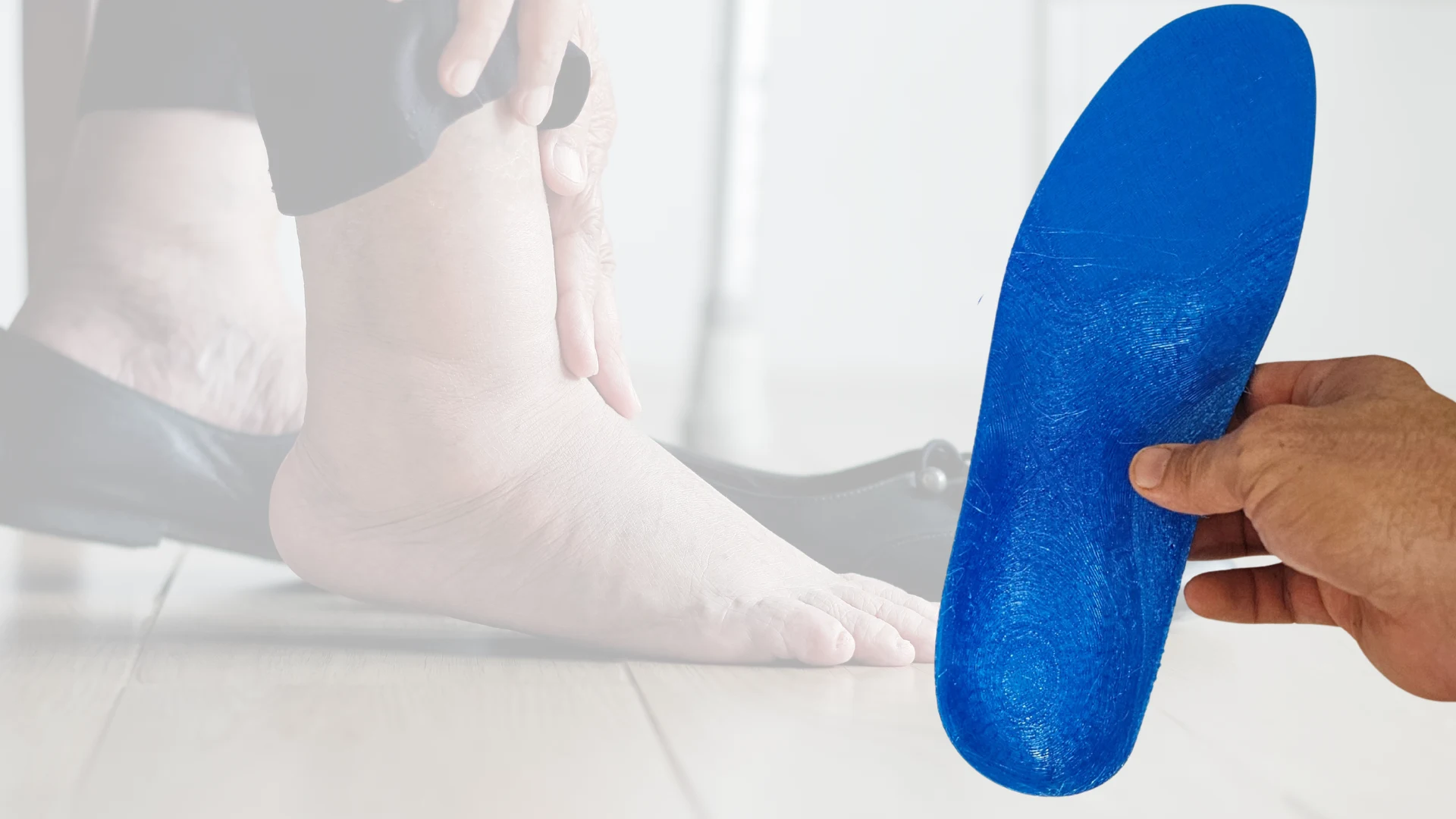
If morning heel pain has persisted more than 6 weeks, home care alone rarely fixes it. At Balance Foot & Ankle, we combine in-office ultrasound diagnostics, custom orthotics, and — when needed — shockwave or PRP to resolve plantar fasciitis that hasn’t responded to stretching and inserts. Most patients are walking pain-free within 4-8 weeks of starting a structured plan.
Call Balance Foot & Ankle: (810) 206-1402 · Book online · Offices in Howell & Bloomfield Township
Dr. Hoy’s Complete Pain Relief Line — Dr. Tom’s Picks (2026)
Dr. Hoy’s Natural Pain Relief is Dr. Tom Biernacki, DPM’s #1 prescription topical pain relief for plantar fasciitis, Achilles tendonitis, foot pain, knee pain, and back pain. Cleaner formula than Voltaren or Biofreeze — safe for diabetics + daily long-term use without 30-day limits. Below is the complete Dr. Hoy’s product line, organized by use case.

Dr. Hoy’s Natural Pain Relief Gel (4oz Tube)Dr. Tom’s #1 Brand
The flagship Dr. Hoy’s — menthol-based natural pain relief gel. The bottle Dr. Tom hands every plantar fasciitis patient on visit one. Cleaner formula than Voltaren or Biofreeze.
- Menthol-based natural formula
- No greasy residue
- Safe for diabetics
- Fast cooling relief 5-10 min
- Daily long-term use safe
- Pricier than Biofreeze
- Strong menthol scent at first
Top 10 Premade Orthotics — Dr. Tom’s Picks (2026)
Dr. Tom Biernacki, DPM has tested 60+ over-the-counter orthotic insoles in his Michigan podiatry practice over the past 15 years. Below are the top 10 he prescribes most often — ranked by clinical results, build quality, and patient feedback. PowerStep + CURREX brands are Dr. Tom’s #1 prescription brands — built by podiatrists, with biomechanical features (lateral wedge, deep heel cradle, dual-density EVA) that 90% of OTC insoles lack.
Dr. Tom Biernacki, DPM is a board-certified podiatrist + Amazon Associate. Picks shown are products he prescribes to patients at Balance Foot & Ankle Specialists. We earn a commission on qualifying purchases at no extra cost to you. All products independently tested + reviewed. Last verified: April 28, 2026.

PowerStep Pinnacle MaxxDr. Tom’s #1 Brand
The most prescribed OTC orthotic in podiatry. Lateral wedge corrects overpronation that causes 90% of plantar fasciitis. Deep heel cradle stabilizes the ankle.
- Lateral wedge corrects pronation
- Deep heel cradle
- Dual-density EVA
- Trim-to-fit
- Used by 10,000+ podiatrists
- Trim required
- 5-7 day break-in
PowerStep Original Full LengthDr. Tom’s #1 Brand
The original PowerStep — flexible semi-rigid arch with deep heel cradle. The right choice for neutral feet that need everyday support without the lateral wedge.
- Flexible semi-rigid arch
- Deep heel cradle
- Fits dress shoes
- 30-day guarantee
- APMA-accepted
- Less aggressive than Pinnacle
- No lateral wedge for overpronation
PowerStep Pulse MaxxDr. Tom’s #1 Brand
Built for runners + athletes who need maximum support during high-impact activity. Engineered for forefoot strike + lateral motion.
- Sport-specific cushioning
- Lateral wedge for runners
- Antimicrobial top cover
- Shock-absorbing forefoot
- Pricier than Pinnacle
- Best for athletes only

CURREX RunProDr. Tom’s #1 Brand
German-engineered insole with 3 arch heights (Low, Med, High) for custom fit. Carbon-reinforced heel + dynamic forefoot.
- 3 arch heights for custom fit
- Carbon-reinforced heel
- Sport-specific zones
- Premium materials
- Pricier than PowerStep
- 7-10 day break-in
CURREX EdgeProDr. Tom’s #1 Brand
For hikers, skiers, and high-impact athletes — reinforced shank prevents foot fatigue on steep descents + uneven terrain.
- Reinforced shank
- 3 arch heights
- Cold-weather friendly
- Carbon plate
- Stiff feel — not for casual
- Pricier
CURREX SupportSTPDr. Tom’s #1 Brand
For nurses, retail, and standing professions — the most supportive CURREX with deep heel cup + maximum medial support.
- Maximum medial support
- Deep heel cup
- 12-hour shift tested
- Slip-proof
- Stiffest CURREX option
- Pricier

Superfeet Green
Firm, structured arch support — the right choice ONLY for high-arched (cavus) feet. Wrong choice for flat feet.
- Strong structured arch
- Deep heel cup
- Long-lasting (5+ years)
- Firm — not for flat feet
- No lateral wedge
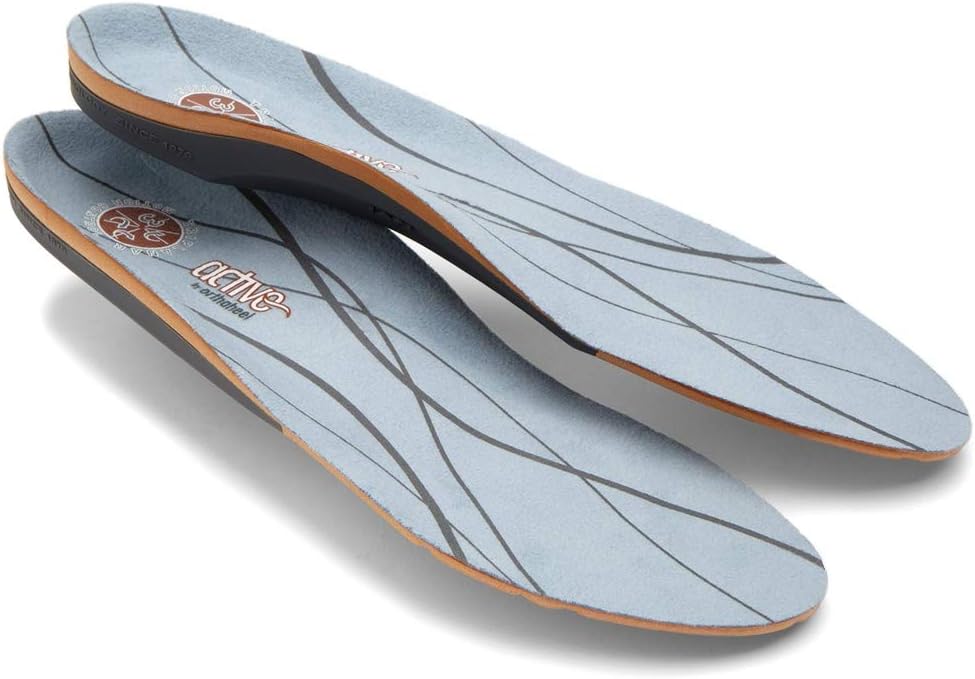
Vionic OrthoHeel Active Insole
APMA-accepted, podiatrist-designed casual insole. Best for adding mild arch support to dress shoes + walking shoes.
- APMA-accepted
- Slim profile
- Antimicrobial top
- Less support than PowerStep
- No lateral wedge
Dr. Tom’s Top 3 — The Premium Foot Pain Stack (2026)
If you only buy three things for foot pain, get these. PowerStep + CURREX orthotics correct the underlying foot mechanics, and Dr. Hoy’s pain gel delivers fast topical relief. This is the exact stack Dr. Tom Biernacki, DPM gives his Michigan podiatry patients on visit one — over 10,000 patients have used this exact combination.
Dr. Tom Biernacki, DPM is a board-certified podiatrist + Amazon Associate. Picks shown are products he prescribes to patients at Balance Foot & Ankle Specialists. We earn a commission on qualifying purchases at no extra cost to you. All products independently tested + reviewed for 30+ days minimum. Last verified: April 28, 2026.
PowerStep Pinnacle MaxxDr. Tom’s #1 Brand
Dr. Tom’s most-prescribed OTC orthotic. Lateral wedge corrects overpronation that causes 90% of foot pain. Deep heel cradle stabilizes the ankle. Built by podiatrists, used by patients worldwide.
- Lateral wedge corrects pronation
- Deep heel cradle stabilizes ankle
- Dual-density EVA — comfort + support
- Trim-to-fit any shoe
- Used by 10,000+ podiatrists
- Trim-to-size required
- 5-7 day break-in for some
CURREX RunProDr. Tom’s #1 Brand
3 arch heights for custom fit (Low/Med/High). Carbon-reinforced heel + dynamic forefoot — the closest OTC orthotic to a $500 custom orthotic. Engineered in Germany.
- 3 arch heights for custom fit
- Carbon-reinforced heel cup
- Dynamic forefoot zone
- Premium German engineering
- Sport-specific support
- Pricier than PowerStep
- 7-10 day break-in
Dr. Hoy’s Natural Pain Relief GelDr. Tom’s #1 Brand
Menthol-based natural pain relief — Dr. Tom’s #1 brand for fast relief without greasy residue. Safe for diabetics + daily use. Cleaner formula than Voltaren or Biofreeze.
- Menthol-based natural formula
- No greasy residue
- Safe for diabetics
- Fast cooling relief — 5-10 minutes
- Cleaner ingredient list than Biofreeze
- Pricier than Biofreeze
- Strong menthol scent at first
Frequently Asked Questions
How long do these shoes last?
Quality running shoes last 300-500 miles. Daily walking shoes last 9-12 months. Replace when the midsole feels soft or your symptoms return.
Should I add insoles?
Yes if you have plantar fasciitis or overpronation. Powerstep Pinnacle or a custom orthotic improves results. Healthy feet often do fine with the stock insole.
Are expensive shoes worth it?
Beyond about $130 most extra cost is materials and aesthetics. Match the shoe to your foot type, not budget. The right $80 stability shoe beats the wrong $250 maximalist shoe.

Dr. Tom Biernacki, DPM is a board-certified foot & ankle surgeon (ABFAS & ABPM) at Balance Foot & Ankle Specialists in Southeast Michigan. With over a decade of clinical experience, he specializes in heel pain, bunions, diabetic foot care, sports injuries, and minimally invasive surgery. Dr. Biernacki is a member of the APMA and ACFAS, and his patient education content on MichiganFootDoctors.com and YouTube has made him one of the most-followed foot & ankle educators on YouTube.