

Best Shoes for Flight Attendants: TSA + Comfort Picks
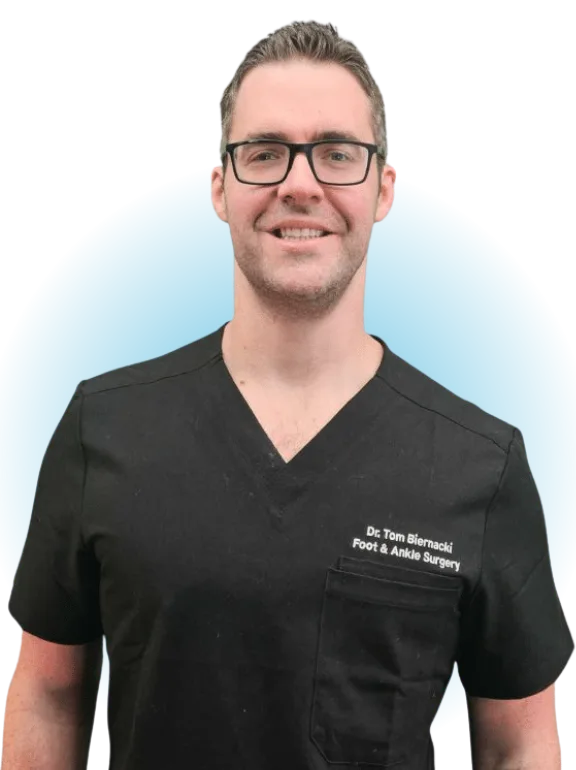
Quick answer: Dr. Tom Biernacki, DPM ranks the best shoes for flight attendant shoes based on cushioning, arch support, slip resistance, and durability over 12-hour shifts.
What to Look For
- EVA midsole cushioning (28+ mm stack)
- Removable insole (for orthotic compatibility)
- Slip-resistant outsole
- Reinforced toe box
- Breathable upper
Top Picks
Hoka Bondi 8, Brooks Glycerin 21, ASICS Gel Nimbus 26, and New Balance 1080v13 are Dr. Tom’s go-to recommendations.
When to Replace Your Shoes
Replace work shoes every 300-500 miles or 6 months of daily use, whichever comes first. Worn-out cushioning is the #1 cause of work-related foot pain.
APMA: Footwear for Flight Attendants & Standing Professionals
In-Office Treatment at Balance Foot & Ankle
No products found.
If home treatment isn’t providing relief for your best shoes for flight attendants, our podiatry team at Balance Foot & Ankle can help with same-week evaluations and advanced in-office care.
Same-week appointments available. (810) 206-1402
VitaMedica Arnica Gel
Arnica gel plus 15 plant compounds for sore feet, plantar fasciitis flares and post-activity soreness. Apply a thin layer to the sore area.
Shop VitaMedica Arnica Gel →
Dr. Tom Biernacki, DPM is a board-certified foot & ankle surgeon (ABFAS & ABPM) at Balance Foot & Ankle Specialists in Southeast Michigan. With over a decade of clinical experience, he specializes in heel pain, bunions, diabetic foot care, sports injuries, and minimally invasive surgery. Dr. Biernacki is a member of the APMA and ACFAS, and his patient education content on MichiganFootDoctors.com and YouTube has made him one of the most-followed foot & ankle educators on YouTube.
More questions patients ask
What features should flight attendants look for in shoes?
Flight attendants face a unique combination of foot demands — 8–14 hour shifts on their feet, rapid transitions between sitting (flight) and standing/walking (boarding and service), hard aircraft and airport floors, and the need to move quickly in an emergency — that require a specific set of shoe features. The critical features for flight attendant footwear: cushioning for hard floor impact: aircraft and airport floors are hard composite and tile with no give; a shoe with a cushioned midsole (EVA foam or polyurethane with adequate thickness) absorbs the impact energy that would otherwise be transmitted directly to the heel, metatarsals, and joints; Hoka, Brooks, and New Balance running shoe lines excel at midsole cushioning; slip resistance: the galley floor becomes wet and slippery during beverage service; the ASTM F2913 slip resistance standard is the relevant certification; outsoles with multidirectional lug patterns or siped (grooved) rubber provide the best traction; stability and ankle support: turbulence creates unpredictable lateral forces; a shoe with a firm heel counter (the rigid structure cupping the heel) and a stable midsole prevents the ankle from rolling; low-to-the-ground shoes outperform thick rocker soles in lateral stability; professional appearance: most airline uniform policies specify black shoes with a heel below 2–3 inches and a closed toe; the shoe must comply with the carrier's appearance standards; widths and fit: foot swelling during long flights increases shoe volume need; a shoe fitted slightly roomier or with a removable insole that can be replaced with a custom orthotic accommodates foot volume changes; lightweight construction: heavy shoes contribute to lower limb fatigue over long shifts; the shift from leather shoes to technical fabric shoes with leather-look finishes has significantly reduced shoe weight without sacrificing appearance standards.
What are the best shoe brands for flight attendants?
Several brands have established a strong reputation among flight attendants and cabin crew through a combination of professional appearance, durability, and foot-health-conscious design. The top-performing brands for flight attendant use: Dansko: the most frequently recommended brand among flight attendants in online forums and podiatric surveys; the Dansko Professional clog and Dansko Ingrid are the most popular models; features: a rocker bottom that reduces ankle joint load during the push-off phase of walking, a wide toe box, a PU-foam footbed, and a substantial heel counter; a 1.75-inch heel is within most airline uniform policies; limitation: the clog design may feel unstable on uneven surfaces and is not ideal for emergency evacuation; available in extended width sizes; ECCO: a European brand with significant cabin crew following; the ECCO Soft 7, ECCO Bella, and ECCO Helsinki are commonly used; features: premium leather construction with comfort-focused design, full-length cushioned footbed, and a low heel profile; the ECCO Flowt and ECCO Chunky are more casual-to-professional boundary options; Clarks: the Clarks Un Loop and Clarks Petra Line are popular among flight attendants; excellent arch support in the Clarks Cushion Plus footbed; professional leather appearance in a range of heel heights; Rockport: the Rockport Total Motion line combines professional leather appearance with athletic shoe cushioning technology; EVA midsoles provide cushioning unusual for a dress-appearance shoe; appropriate for airlines with leather shoe requirements; SAS (San Antonio Shoemakers): a comfort shoe brand frequently recommended by podiatrists; wider toe boxes than fashion shoes; excellent cushioning and support; available in A-width (narrow) through 10E (extra wide); particularly suitable for flight attendants with foot conditions requiring therapeutic footwear.
How do flight attendants prevent foot pain and swelling during long shifts?
Flight attendants experience foot and ankle swelling from prolonged standing and walking, combined with the low-cabin-pressure, low-humidity environment of the aircraft that promotes fluid retention in the lower extremities — a proactive approach significantly reduces end-of-shift foot pain. Compression socks (the most evidence-supported intervention): graduated compression stockings (20–30 mmHg for healthy adults, 15–20 mmHg for mild symptoms) improve venous return from the lower legs and feet; compression reduces the fluid pooling that causes foot and ankle swelling during long cabin duty; graduated compression is highest at the ankle and decreases toward the knee — this mechanical gradient drives fluid back toward the heart; brands popular among cabin crew: Sockwell Firm Graduated Compression, CEP Compression Airline Travel Socks, Jobst ActiveWear; most airline uniform policies permit compression socks in the approved color palette; wearing compression socks from the beginning of the shift (before swelling develops) is significantly more effective than putting them on after swelling has started. Insole upgrades: the factory insoles in most professional shoes provide minimal cushioning; replacing with a quality aftermarket insole (Superfeet Black for cushioning and support, Powerstep Pinnacle for arch support, Spenco Polysorb for maximum cushioning) meaningfully reduces plantar pressure at the metatarsal heads and heel; insole replacement is particularly impactful in leather dress shoes with thin factory insoles. In-cabin foot care: remove shoes during seated flight segments when permitted; brief barefoot or sock-footed rest resets the sensory nerve input and reduces the pressure from shoe construction; ankle circles and calf raises during seated segments maintain venous circulation; Hydration: adequate hydration in the low-humidity cabin environment helps maintain blood volume and reduces the venous insufficiency component of lower limb swelling; post-shift: ice therapy (15 minutes on the feet and ankles) and elevation above heart level for 20 minutes after a long shift accelerates edema resolution.
Can flight attendants wear sneakers or running shoes on the job?
Whether flight attendants can wear sneakers or athletic-style shoes depends entirely on the airline's uniform and grooming policy — policies vary widely between carriers, and many have modernized to allow professional-looking athletic footwear that meets appearance standards. Airline shoe policies vary by carrier: traditional carriers (many legacy airlines): strict policies requiring leather or leather-appearance professional shoes with a defined heel height, closed toe, and specific color requirements; athletic shoes and sneakers with visible branding are explicitly prohibited; these airlines often specify that shoes must be 'dress shoe' in appearance; hybrid and low-cost carriers: some carriers have revised their shoe policies to allow athletic-appearance shoes if they meet color and style requirements; a black, closed-toe running shoe or walking shoe may be permitted under updated policies; checking the current carrier policy: the specific footwear policy is in the carrier's Flight Attendant Operations Manual and is briefed during initial training; policy updates can occur; confirm the current policy directly with the base manager or union representative before purchasing new shoes. Professional-appearance athletic shoes (where policies permit): several brands produce athletic shoes with a professional, non-athletic appearance: Cole Haan Grand: leather appearance with athletic cushioning technology; Rockport Eureka Walking: dress shoe appearance with athletic foam midsole; Skechers Work: slip-resistant, non-branded athletic shoes designed for professional environments; new balance Fresh Foam Roav Work: slip-resistant with a toned-down professional appearance; the key requirements where athletic shoes are considered: no visible athletic branding, solid color (typically black), closed toe and closed heel, non-slip sole, and a professional appearance from 10 feet away; podiatric recommendation regardless of policy: whether the shoe is classified as a dress shoe or athletic shoe, the foot-health priority remains: adequate cushioning, a supportive heel counter, a wide enough toe box, and slip resistance appropriate for the work environment.
Still have a question about coverage or cost? Book online and we will check your benefits before your visit: Book in Howell · Book in Bloomfield Township. Prefer to talk it through first? Call (810) 206-1402.