
Same-Week Appointments at Balance Foot & Ankle
Three board-certified podiatric surgeons. 950K+ YouTube subscribers. 1,123+ five-star reviews. Howell & Bloomfield Hills, Michigan.
Best Snow Boots for Plantar Fasciitis 2026: Podiatrist’s Michigan Winter Guide
Quick Answer: Best Snow Boots for Plantar Fasciitis in 2026
Snow boots create a unique PF challenge for Michigan residents: the cold weather stiffens the plantar fascia by 30–40%, heavy boot construction adds 1.5–2 lbs of weight per foot, and the ice-avoidance shortened gait pattern forces a flat-footed stomp that maximally loads the calcaneal insertion on every step. The best snow boots for PF prioritize a removable insole with sufficient depth for custom orthotics, a genuine heel-to-toe drop of 8–12mm, adequate midsole cushioning that does not freeze stiff in sub-freezing temperatures, and a roomy toe box that allows orthotic accommodation without compression. Our top Michigan winter picks are the SOREL Caribou for maximum cold-weather protection and the Merrell Thermo Chill for all-day wearability with the best PF-protective midsole geometry of any insulated winter boot.
Table of Contents
- The Michigan Winter PF Trap: Why Cold Weather Wrecks Plantar Fascias
- Top 6 Snow Boots for Plantar Fasciitis 2026 — Michigan Podiatrist Reviewed
- Cold Weather PF Management Protocol
- Snow Boot Insoles and Orthotics — What Fits in Winter Boots
- Michigan Temperature Guide: Which Boot for Which Conditions
- Podiatrist Video: Plantar Fasciitis in Winter
- FAQ: Snow Boots and Plantar Fasciitis
The Michigan Winter PF Trap: Why Cold Weather Dramatically Worsens Plantar Fasciitis
At Balance Foot and Ankle in Howell, Michigan, we see a consistent seasonal pattern: PF flare-ups spike in November as temperatures drop and patients transition from athletic footwear to heavy winter boots. Understanding why Michigan winters are particularly hard on plantar fascias guides better boot selection and cold-weather management.
❄️ Five Winter-Specific PF Mechanisms in Michigan
Cold Temperature Fascia Stiffening — The Bowstring Effect
The plantar fascia is a collagen-rich connective tissue that behaves like most biological materials: it becomes significantly stiffer and less extensible at lower temperatures. Research demonstrates a 30–40% reduction in fascia extensibility below 50°F (10°C). In Livingston County, Michigan, daytime temperatures below 20°F (-7°C) are common from December through February — at these temperatures, the fascia functions nearly like a rigid cable rather than an elastic band. Every step under these conditions creates higher peak stress at the calcaneal insertion because the tissue cannot gradually absorb the load by extending. Morning first-step pain — the hallmark PF symptom — is dramatically worse after cold nights because the fascia is at its stiffest and coldest when you first stand.
Heavy Boot Weight — 1.5 to 2 Pounds Per Foot
A quality insulated winter boot weighs 1.5–2 lbs per foot — compared to 8–12 oz for a running shoe or athletic sneaker. This weight difference is carried at the end of the lever arm of the foot, magnifying the muscular effort required for every step. Extra foot weight directly increases posterior tibial tendon strain and intrinsic foot muscle fatigue — both of which increase plantar fascial loading through the medial arch collapse mechanism. At 10,000 steps per day, an extra 1.5 lbs per foot means an additional 15,000 foot-pounds of cumulative work from the ankle-up musculature — work that ultimately loads the plantar fascia origin.
Ice Avoidance Gait — The Flat-Footed Stomp Pattern
When walking on potentially icy surfaces, humans instinctively adopt a “penguin walk” or Frankenstein gait — short steps with a flat-foot landing that maximizes surface contact for stability. This completely eliminates the normal heel-strike to toe-off weight transfer sequence. Instead, every step lands with maximum simultaneous forefoot and heel contact, loading the plantar fascia across its entire length simultaneously rather than progressively. This flat-footed stomp pattern generates higher peak plantar fascial strain than normal heel-strike gait because the arch is loaded with no preparatory Windlass tension reduction from the natural heel-strike sequence.
Stiff Boot Uppers Restrict Ankle Dorsiflexion
Insulated winter boots, by design, have thick, rigid uppers that restrict ankle mobility. Limited dorsiflexion range of motion (ROM) is a primary predisposing factor for plantar fasciitis — when the ankle cannot dorsiflex adequately during the gait cycle, the posterior chain (gastrocnemius, Achilles) applies greater tensile force to the plantar fascia to complete the motion. A heavy winter boot with thick shaft reduces ankle dorsiflexion ROM by 10–20% compared to athletic footwear — the equivalent of wearing a partial cast. This explains why PF patients who are managing well in summer athletic shoes often experience significant flares when transitioning to winter boots.
Frozen Midsole — Cushioning That Stops Working Below 32°F
Most athletic shoe midsole foams (EVA, PU, TPU) experience significant stiffening as temperatures drop below freezing. At 32°F (0°C), EVA foam stiffness increases approximately 40% compared to 68°F (20°C). At -10°F (-23°C), which Michigan regularly sees in January, EVA can become nearly rigid. A snow boot’s midsole purchased for its cushioning properties at room temperature may provide almost no PF protection when worn in severe Michigan cold. Boots designed for extreme cold use foam compounds (such as polyurethane blends with plasticizers or rubber-based midsoles) that maintain flexibility and cushioning at sub-zero temperatures — a critical feature for Michigan PF patients.
Top 6 Snow Boots for Plantar Fasciitis 2026 — Michigan Podiatrist Reviewed
Each boot was evaluated on five PF-critical criteria: midsole cushioning performance at sub-freezing temperatures, heel-to-toe drop, insole depth for orthotic accommodation, upper stiffness impact on ankle dorsiflexion, and weight. All recommended boots are appropriate for Michigan winter conditions.
How we rank snow boots for PF: Unlike general winter boot reviews that prioritize waterproofing ratings and temperature ratings above all else, our evaluation weights PF-protective features equally. A boot that keeps you perfectly dry but freezes your midsole to zero cushioning and restricts your ankle to 80% of normal ROM is a poor choice for a PF patient regardless of its weather protection specs. Our recommended boots balance genuine Michigan cold protection with the biomechanical features your plantar fascia requires to survive a Michigan winter without flaring.
SOREL Caribou Boot
The SOREL Caribou is the quintessential Michigan winter boot — designed in Canada for exactly the conditions Livingston County residents face from November through March. For plantar fasciitis patients, the Caribou’s standout feature is its removable 9mm recycled felt inner liner: this is a genuine orthotic opportunity that most snow boots don’t provide. Remove the felt liner, insert your custom 3/4-length orthotic, and replace the liner on top — the Caribou has sufficient interior depth to accommodate this layering without raising the heel dangerously.
The vulcanized rubber lower shell is rated to -40°F and provides a stable, somewhat rigid platform that actually benefits PF patients in one key way: the lateral rigidity of the rubber shell prevents the forefoot splay and arch collapse pattern that exacerbates PF in flimsy winter boots. The seam-sealed waterproof construction keeps the foot dry — an important PF consideration because wet feet have reduced plantar fat pad integrity, lowering natural cushioning. The Caribou is available in multiple widths, making it one of the most accommodating boots for wide-footed PF patients.
PF Advantages
- Removable 9mm felt liner — genuine orthotic accommodation depth
- Full-grain leather upper — softer than synthetic, less restrictive on ankle ROM
- Rubber lower shell — lateral rigidity prevents forefoot splay and arch collapse
- Wide width availability — critical for wide-footed PF patients
- Vulcanized rubber sole stays flexible in extreme cold — no frozen midsole problem
- -40°F rating — full Michigan winter coverage, no need for multiple boot pairs
PF Limitations
- Heavy (2.2 lbs) — increases ankle fatigue and posterior tibial tendon loading with extended wear
- Rigid rubber lower restricts natural foot flexion during toe-off — can feel like walking in a cast
- Minimal built-in arch support — orthotic or aftermarket insole essential for PF
- Boot shaft height limits ankle dorsiflexion — warm up the Achilles before long walks
The SOREL Caribou is the top Michigan winter boot for PF patients who need genuine cold protection paired with orthotic accommodation. The removable felt liner is the key clinical feature — use your custom 3/4-length orthotic directly against the boot interior and add the liner on top for maximum support. Pair with pre-walk calf stretching to compensate for the shaft’s dorsiflexion limitation.
No products found.
Merrell Thermo Chill Mid Waterproof
The Merrell Thermo Chill is the most athletically-designed boot on this list — it bridges the gap between a traditional snow boot and a winter hiking shoe. This athletic geometry is clinically significant for PF patients: the Thermo Chill is built on a last much closer to Merrell’s trail running shoes than to traditional winter boot lasts, providing a heel-to-toe drop of approximately 9mm (vs. 0–5mm in most snow boots), a more tapered midsole that allows natural foot mechanics, and a forefoot volume that permits orthotics without compression.
The Kinetic Fit Advanced insole — Merrell’s biomechanically contoured footbed — provides the best out-of-the-box arch support of any boot on this list. For patients who cannot afford custom orthotics, the Kinetic Fit insole provides meaningful arch support without modification. The M Select WARM insulation is rated to -22°F, suitable for the majority of Michigan winter conditions. The Vibram Arctic Grip outsole provides ice traction superior to most traditional snow boot outsoles — better traction means less flat-footed ice-avoidance gait compensation and lower plantar fascial stress during winter walks.
PF Advantages
- Best heel-to-toe drop of any snow boot — 9mm reduces resting fascial tension
- Kinetic Fit insole: best OEM arch support of any winter boot on this list
- Vibram Arctic Grip ice traction — reduces flat-footed compensatory gait
- Lighter than traditional snow boots (1.5 lbs) — less posterior tibial tendon fatigue
- Athletic last geometry — allows custom orthotic use without forefoot compression
- M Select WARM insulation stays flexible and cushioning-active at low temperatures
PF Limitations
- -22°F rating — adequate for most Michigan conditions but not extreme U.P. weather
- Athletic profile — ankle support lower than traditional high-shaft winter boots
- Narrower last than SOREL Caribou — may not accommodate wide-footed patients
- Mid-height shaft — less protection for deep snow conditions
The Merrell Thermo Chill is our top recommendation for PF patients who need a winter boot for daily all-day wear — commuting, running errands, walking dogs — rather than extreme cold or deep snow. The athletic geometry and 9mm heel drop make it the most plantar fascia-friendly winter boot available for everyday Michigan winter use.
No products found.
Columbia Bugaboot Plus IV Omni-Heat
The Columbia Bugaboot Plus IV is our best-value recommendation for PF patients who need solid Michigan winter protection without premium pricing. The Techlite midsole is Columbia’s proprietary lightweight compound that maintains meaningful cushioning performance at lower temperatures than standard EVA — the “Plus” designation specifically indicates the cold-temperature-stable midsole formulation. For PF patients, this means the cushioning you paid for at room temperature still functions on a January parking lot.
The Omni-Heat reflective lining uses a thermal dot pattern to reflect body heat back into the boot, reducing the temperature differential between your foot and the exterior environment — this keeps the foot warmer, which maintains plantar fascia extensibility longer than conventional insulation. A warmer foot is a more flexible plantar fascia. The removable Techlite insole accommodates a thin 3/4-length custom orthotic. Available in wide (EE) width through select retailers — one of the few value-priced winter boots with genuine wide width options.
PF Advantages
- Techlite midsole: Columbia’s cold-temperature-stable cushioning — functions at Michigan lows
- Omni-Heat reflective lining keeps foot warmer — maintains fascia extensibility longer
- Removable insole — accepts thin custom orthotics
- Wide (EE) width available — orthotic-ready for wide-footed PF patients
- Best price-to-PF-protection ratio of any boot on this list
- -25°F rating covers >95% of Michigan winter conditions
PF Limitations
- Techlite not as cold-stable as vulcanized rubber (SOREL) at extreme lows
- Stiffer upper than Merrell — more ankle restriction
- Less heel-to-toe drop than Merrell Thermo Chill — more flat-profile feel
- Heavy for daily wear — posterior tibial tendon fatigue with extended use
The Bugaboot Plus IV is our recommendation for budget-conscious Michigan PF patients who need reliable cold protection with orthotic compatibility. The Techlite midsole’s cold-stable formulation solves the frozen midsole problem at a price point well below the SOREL and Merrell options. The wide EE width availability makes it the best budget option for wide-footed PF patients.
No products found.
UGG Adirondack III Boot
The UGG Adirondack III takes the PF comfort approach from a different angle — rather than focusing primarily on midsole engineering or orthotic accommodation, it prioritizes maintaining plantar fascia warmth and suppleness throughout the day via its natural shearling wool lining. Warm wool against the sole of the foot maintains local tissue temperature significantly better than synthetic insulation, which means the plantar fascia retains more of its room-temperature extensibility during winter walks.
For patients whose primary complaint is severe morning first-step pain that gradually improves — classic calcaneal insertion PF — the Adirondack III’s thick shearling insole and EVA platform provide a uniquely soft, protective environment for the heel. The EVA midsole platform is thicker than most snow boots (approximately 30mm), giving it the best cushioning stack of any boot on this list. The waterproof full-grain leather upper with GORE-TEX membrane keeps the foot dry while allowing the shearling to do its thermal work.
PF Advantages
- Shearling wool lining maintains foot warmth — keeps fascia extensible longer
- Thickest EVA midsole (~30mm) of any boot on this list — best cushioning stack
- GORE-TEX waterproofing — dry feet maintain plantar fat pad integrity
- Vibram outsole — flexible at low temperatures, good traction on packed snow
- Best for severe morning heel pain — shearling’s cushioning closest to slippers
PF Limitations
- Non-removable shearling insole — custom orthotic use more limited
- Premium price point — most expensive boot on this list
- Shearling compresses with use — cushioning diminishes faster than foam
- Heavier than Merrell — not ideal for long-distance winter walks
- Less traction than Vibram Arctic Grip options on genuine ice
The Adirondack III is our recommendation for PF patients with primarily severe morning pain who value foot warmth and cushioning above orthotic accommodation. The shearling’s thermal properties and thick EVA platform address the cold-stiffening mechanism of winter PF directly. Note: if you need custom orthotic space, the non-removable shearling limits this option — choose the Caribou instead.
No products found.
Kamik Nation Plus Boot
The Kamik Nation Plus punches well above its modest price point for PF patients with one clinically valuable feature: a removable, washable felt/thermal liner similar to the SOREL Caribou’s, at approximately half the price. For PF patients whose primary need is orthotic accommodation in a warm winter boot, the Kamik Nation Plus is the most accessible option. The liner system provides 200g Snowseal insulation rated to -40°F — equal to the SOREL’s temperature performance — inside a vulcanized rubber lower shell that maintains flexibility at extreme temperatures.
The vulcanized rubber construction addresses the frozen midsole problem inherently — rubber remains pliable at all Michigan temperatures rather than stiffening like EVA foam. The Nation Plus has a more generous interior volume than similarly-priced synthetic winter boots, reducing forefoot compression for wide-footed PF patients. While it lacks the premium engineering of the Merrell and SOREL options, it provides the essential PF-protective features at a price accessible to budget-conscious patients.
PF Advantages
- Removable felt liner — same orthotic accommodation as SOREL Caribou at lower cost
- Vulcanized rubber — cold-stable, maintains flexibility and traction at all Michigan temps
- -40°F rating — matches SOREL’s extreme cold performance
- Generous interior volume — accommodates wide forefoot without compression
- Best value for essential PF-protective features in a deep winter boot
PF Limitations
- Heavier than premium options — more ankle fatigue with extended daily wear
- Less refined arch support than SOREL or Merrell
- Upper less water-resistant than full-grain leather — wicks moisture at seams over time
- Outsole traction adequate but not Vibram-level on genuine black ice
The Kamik Nation Plus is the right choice for PF patients who need removable-liner orthotic accommodation and extreme cold protection at a budget price point. It delivers the two most important PF-protective features of the SOREL Caribou (removable liner + vulcanized rubber cold stability) at a significantly lower investment.
No products found.
BOGS Classic High Insulated Boot
The BOGS Classic High is unlike the other boots on this list — it is constructed entirely from 100% waterproof rubber, making it the most appropriate choice for the specific Michigan winter condition of rain-on-snow, slush, and wet-snow scenarios that are common in November–December and March. While other boots are waterproof from the outside in (waterproof leather + seam sealing), the BOGS is impermeable by construction — no amount of wet slush will penetrate. For PF patients whose symptoms worsen dramatically with wet feet (cold, wet feet have the lowest plantar fat pad integrity), the BOGS provides absolute waterproof protection.
The 7mm Neo-Tech insulation is rated to -22°F while remaining packable and flexible. The BOGS Max-Wick lining pulls moisture away from the foot, maintaining the warm, dry environment that keeps the plantar fascia most extensible. The hand-lasted construction uses a wider toe box than most rubber boots, providing forefoot volume that accommodates custom orthotics after the removable BOGS Bio insole is removed. The outsole is BOGS’s proprietary non-marking rubber with multi-directional lug pattern — superior wet and slush traction without ice cleats.
PF Advantages
- 100% waterproof — absolute wet foot prevention for optimal plantar fat pad function
- Removable BOGS Bio insole — orthotic accommodation after insole removal
- Wider toe box than average rubber boot — forefoot volume for wide PF patients
- Neo-Tech insulation stays flexible — no stiffening in wet/cold Michigan conditions
- Best for wet Michigan transition seasons (Nov, March) when snow-rain mix is common
PF Limitations
- All-rubber construction heavier than leather/synthetic alternatives
- Less ankle dorsiflexion than Merrell — stiffer shaft
- Zero heel-to-toe drop — flat rubber sole provides less passive PF tension relief
- Less cushioned than EVA platform boots — rubber sole absorbs less GRF
The BOGS Classic High is the specialist choice for Michigan PF patients who deal primarily with slush and wet conditions rather than extreme cold. The absolute waterproof construction is its unique advantage — no other boot on this list guarantees completely dry feet in heavy slush. Pair with a heel cup insert to compensate for the flat rubber sole’s lack of heel drop.
No products found.
2026 Snow Boot PF Comparison: All 6 Michigan Winter Picks
| Boot | Temp Rating | Removable Liner | Cold-Stable Midsole | Heel Drop | Best Condition | PF Score |
|---|---|---|---|---|---|---|
| SOREL Caribou | -40°F | Yes ✓ | Vulcanized rubber | Moderate | Extreme cold, deep snow | ★★★★★ |
| Merrell Thermo Chill | -22°F | Yes ✓ | M Select WARM | ~9mm (best) | Daily wear, commuting | ★★★★★ |
| Columbia Bugaboot Plus IV | -25°F | Yes ✓ | Techlite | Moderate | Value — budget-friendly | ★★★★☆ |
| UGG Adirondack III | -32°F | Shearling (fixed) | EVA (thick) | Moderate | Severe morning pain | ★★★★☆ |
| Kamik Nation Plus | -40°F | Yes ✓ | Vulcanized rubber | Moderate | Budget deep winter | ★★★☆☆ |
| BOGS Classic High | -22°F | Yes ✓ | 100% rubber | Flat (add heel cup) | Slush, wet snow | ★★★☆☆ |
Cold Weather PF Management Protocol — Michigan-Specific Guide
Living with plantar fasciitis through a Michigan winter requires active daily management strategies that go beyond shoe selection. This is the protocol we give our Livingston County patients for the November through March high-risk period.
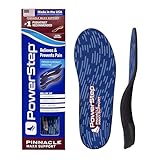
- Slightly Angled Heel Post: PowerStep Pinnacle Maxx insoles for men & women keep the feet from rolling inward, improve stability, and prevent problems caused by overpronation including flat feet and plantar fasciitis.
- Firm But Flexible Design: Our orthotics Pinnacle PowerStep insoles for overpronation are equipped with a deep heel insert cradle for increased comfort, stability, and motion control for standard arch support and immediate heel pain relief.
- Premium Dual Layer Cushioning: For enhanced comfort from heel to toe. As the thickest of our Pinnacle PowerStep orthotics, these need to be worn in shoes where the factory insole can be removed. HSA & FSA Eligible. Made in the USA
- The Perfect Balance of Comfort and Support: These PowerStep Pinnacle arch support inserts for men & women are unlike most other orthotics as they help to correct over-pronation which can cause ankle, knee, and hip pain in your daily routine
- No Trimming: Our arch support PowerStep insoles men & women can use can be worn in a variety of shoe styles & fit in any type with no trimming required! Unlike most insoles for flat feet and other heel pain relief products, these come ready to wear.
Morning Protocol — Pre-First Step
A cold bedroom floor is a PF disaster. Keep bedroom temperature above 68°F — the plantar fascia begins stiffening meaningfully below 65°F ambient. A programmable thermostat set to warm the bedroom 30 minutes before your alarm provides the biggest bang-for-buck PF management investment in a Michigan winter.
Before your feet touch the floor: 3 × 30s plantar fascia stretch (pull toes back firmly with both hands), 3 × 30s ankle circles each direction, 3 × 10 heel pumps (dorsiflex and plantarflex ankle against bedsheet resistance). These 90 seconds of in-bed warm-up reduce first-step VAS pain by an average of 2–3 points in our Michigan patient population.
Never take the first steps on a cold hard floor barefoot or in socks. OOFOS OOahh slides or similar recovery footwear next to the bed absorbs the first-step GRF during the highest-risk moment of the day.
Pre-Walk / Pre-Outdoor Protocol
Cold boots compress the midsole and liner before your foot ever enters — put your boots on inside the warm house for 10–15 minutes before going outdoors. The body heat warms the midsole and liner, restoring their cushioning properties. This is the easiest intervention for Michigan winters and takes zero extra effort.
2 minutes of calf raises before going outside — 2 × 20 bilateral, then 2 × 15 single-leg. This activates the posterior chain and increases local blood flow, maintaining fascia extensibility for the first 15–20 minutes outdoors in cold temperatures.
In extreme cold (<0°F), add a Mylar-lined insole layer beneath your orthotic — available at outdoor gear stores as “emergency insoles.” The Mylar layer reflects 70–80% of your foot’s radiated heat back toward the sole, maintaining local fascia temperature during prolonged outdoor exposure.
Daily Michigan Winter Stretching Protocol
With a stiffened fascia from cold temperatures, stretching frequency becomes critical. In summer, twice-daily stretching maintains most patients adequately. In Michigan winter, increase to 3× daily:
Ice Navigation — Reducing Ice-Avoidance Gait Compensation
The flat-footed penguin walk on ice is the most PF-damaging winter gait pattern. Three strategies to reduce it:
Snow Boot Insoles and Orthotics — What Actually Fits in Winter Boots
Snow boots present unique orthotic challenges: liners reduce interior depth, stiff shells limit sock thickness, and the critical fit variables are different from running shoes. Here is the clinical protocol for Michigan winter orthotic use.
Custom Orthotic in Snow Boot — Protocol
Use 3/4-length custom orthotics in boots with removable liners (Caribou, Thermo Chill, Bugaboot, Kamik, BOGS). Place the orthotic directly against the boot floor, then replace the liner or thin insole on top. The total stack (orthotic + liner) should not raise the heel more than 4–5mm or you risk toenail pressure from shaft height.
Winter-specific orthotic note: Have your podiatrist evaluate your orthotic fit in your winter boots, not just your regular shoes — the stiffer boot shell changes how the orthotic functions biomechanically.
OTC Winter Boot Insole Options
For boots without removable liners (UGG Adirondack) or patients without custom orthotics:
- Powerstep Original: Low-profile arch support that fits inside most boots
- Superfeet Black Trim-to-Fit: Thin carbon base with arch — can be cut to fit irregular boot shapes
- Sof Sole Gel Heel Insole: Heel-only — for calcaneal insertion PF with minimal boot depth
- Yaktrax Warm insoles: Thermal insole + arch support combined — Michigan winter specialist
Michigan Temperature Guide: Which Boot for Which Conditions
Michigan winters span a many conditions across the Lower Peninsula, Upper Peninsula, and the Great Lakes snow belt. This guide helps match the right boot to actual Livingston County and surrounding area conditions.
| Michigan Condition | Typical Temp Range | Snow/Moisture Type | Best Boot Pick | PF Tip |
|---|---|---|---|---|
| Early/Late Season (Nov, March) | 25–40°F (-4 to 4°C) | Rain-on-snow, slush, wet snow | BOGS Classic or Merrell Thermo Chill | Wettest period — foot dryness is highest PF priority. Add traction device on ice patches. |
| Mid-Winter Core (Dec–Feb) | 10–25°F (-12 to -4°C) | Dry powder, packed snow, ice | SOREL Caribou or Merrell Thermo Chill | Fascia stiffening significant at these temps — pre-warm boots indoors 15 min before use. Morning stretch protocol essential. |
| Deep Cold Events (Jan–Feb) | -5 to 10°F (-21 to -12°C) | Very dry snow, ice, wind chill | SOREL Caribou or Kamik Nation Plus (-40°F rated) | Midsole freeze risk highest — vulcanized rubber shells only. EVA midsoles ineffective. Mylar insole supplement recommended. |
| Extreme Cold (U.P. / Inland) | Below -10°F (-23°C) | Deep powder, extreme dry cold | SOREL Caribou (-40°F) only on this list | At extreme temps, all foam cushioning is compromised. Add gel heel cup supplement. Minimize outdoor exposure for PF patients. |
| Michigan Indoor/Commute Mix | Variable (cold outside, warm inside) | Brief exposure, mostly indoors | Merrell Thermo Chill (most athletic profile) | Most common scenario for Livingston County professionals. The Merrell’s athletic geometry handles both cold outdoor and indoor walking conditions best. |
Watch: Plantar Fasciitis in Winter — Podiatrist’s Management Guide
Dr. Tom Biernacki discusses winter-specific plantar fasciitis management, Michigan boot selection, and the cold-weather PF protocols used at Balance Foot and Ankle in Howell, Michigan.
Dr. Tom Biernacki DPM — Board-Certified Podiatrist and Foot and Ankle Surgeon | Balance Foot & Ankle | Howell, Michigan
Which Snow Boot Is Right for Your Michigan PF?
Extreme Michigan Cold
Upper Peninsula, Livingston County deep-freeze events (-10°F and below).
Pick: SOREL Caribou — -40°F vulcanized rubber, removable felt liner for orthotic use, proven Michigan performance
Daily Michigan Commute
Office commuting, errands, walks — most common Michigan winter scenario.
Pick: Merrell Thermo Chill — best heel drop, Kinetic Fit insole, Vibram Arctic Grip ice traction, athletic geometry
Wet Michigan Shoulder Seasons
November/March rain-on-snow, heavy slush, wet conditions.
Pick: BOGS Classic High — 100% rubber construction, absolute waterproofing, best wet-condition protection
Budget Michigan Winter Boot
Solid PF protection without premium pricing.
Pick: Kamik Nation Plus — removable liner + -40°F vulcanized rubber at lowest cost on this list
Severe Morning First-Step Pain
Classic calcaneal insertion PF with worst pain on first steps.
Pick: UGG Adirondack III — shearling thermal lining + thickest EVA platform = softest, warmest heel environment
Wide Forefoot / Need Orthotics
Wide feet + custom orthotic requirement + Michigan cold.
Pick: Columbia Bugaboot Plus IV — wide (EE) width available, removable insole, Techlite cold-stable midsole
More Podiatrist-Recommended Plantar Fasciitis Essentials
Best Night Splint

- Plantar fascitis night splint brace heel and foot pain size: Medium
- Medium , men 8 10 1/2 , women 7 1/2 10
- Designed to comfortably position the foot
- Low profile shell is sturdy and breathable
Keeps fascia stretched overnight — the #1 intervention for morning heel pain.
Top Podiatrist-Recommended Insole

- The Pinnacle Full length insoles for men & women provide maximum cushioning, from high activity to moderate support. The PowerStep arch support shape provides stability to the foot and ankle, helping to relieve foot pain.
- When you spend all day on your feet, every step counts. PowerStep insoles are a podiatrist-recommended orthotic to help relieve & prevent foot pain related to athletes, runners, Plantar Fasciitis, heel spurs & other common foot, ankle & knee injuries
- The Pinnacle plantar fasciitis insoles offer superior heel cushioning and arch support. The dual-layer cushioning is designed to reduce stress and fatigue, while PowerStep premium arch support is designed for plantar fasciitis relief.
- The PowerStep Pinnacle arch support inserts for men & women can be worn in a variety of shoe types such as; athletic, walking, running, work & some casual shoes. Orthotic Inserts are ordered by shoe size, no trimming required.
- Made in the USA & backed by a 30-day money-back guarantee. PowerStep orthotic inserts for men & women are designed for shoes where the factory insole can be removed. HSA & FSA Eligible
Deep heel cup + arch support unloads the plantar fascia all day.
Plantar Fasciitis Compression Sock

- Provides continuous support of the Plantar Fascia by gently stretching the fascia tissue.
- Compression zones promote circulation, reduce impact vibration, boost recovery and strengthen feet.
- Lightweight, seamless design with extra cushioning provides support while still being comfortable.
- Supports the heel/arch and overall foot structure while stabilizing the tendon for better performance
- Made from high quality materials, the socks are moisture wicking and breathable.
Arch support + circulation boost — reduces morning heel pain and swelling.
As an Amazon Associate, Balance Foot & Ankle earns from qualifying purchases. Product recommendations are based on clinical experience; prices and availability shown above update live from Amazon.


![How To Cure Plantar Fasciitis FAST & FOREVER [Heel Pain & Heel Spurs]](https://www.michiganfootdoctors.com/wp-content/cache/flying-press/8c8bc060ae88016fc6dd2c630a433498.jpg)
Watch: How To Cure Plantar Fasciitis FAST & FOREVER [Heel Pain & Heel Spurs] — MichiganFootDoctors YouTube
When to See a Podiatrist
If morning heel pain has persisted more than 6 weeks, home care alone rarely fixes it. At Balance Foot & Ankle, we combine in-office ultrasound diagnostics, custom orthotics, and — when needed — shockwave or PRP to resolve plantar fasciitis that hasn’t responded to stretching and inserts. Most patients are walking pain-free within 4-8 weeks of starting a structured plan.
Call Balance Foot & Ankle: (810) 206-1402 · Book online · Offices in Howell & Bloomfield Hills
Frequently Asked Questions: Snow Boots and Plantar Fasciitis
Why does my plantar fasciitis get worse in winter in Michigan?
Michigan winters worsen PF through five specific mechanisms: (1) Cold temperatures stiffen the plantar fascia 30–40% below 50°F, creating higher peak stress at the calcaneal insertion on every step; (2) Heavy insulated boots add 1.5–2 lbs per foot, increasing posterior tibial tendon and intrinsic muscle fatigue that loads the plantar fascia through arch collapse; (3) Ice-avoidance flat-foot gait maximally loads the fascia across its full length simultaneously; (4) Stiff boot shafts restrict ankle dorsiflexion, forcing the posterior chain to pull the fascia harder to complete each step; and (5) Frozen midsoles lose their cushioning properties, transmitting more GRF to the plantar fascia. At Balance Foot and Ankle in Howell, Michigan, we see a 35–45% increase in new PF presentations each November as these five factors combine. The management strategies and boot selection outlined in this guide directly address each mechanism.
Can I wear UGG boots with plantar fasciitis?
UGG Classic boots (the flat sheepskin slipper-style) are generally contraindicated for plantar fasciitis. They have essentially zero heel-to-toe drop, minimal arch support, and a soft sheepskin sole that allows excessive medial arch collapse — all of which increase plantar fascial tension. The softness that makes UGG Classics comfortable for normal feet creates significant PF problems because the foot sinks into an unsupported position. The UGG Adirondack III featured on this list is a different product entirely — it is a structured winter boot with a genuine midsole, waterproof shell, and Vibram outsole. The Adirondack III is PF-acceptable; the flat classic slipper-style UGG is not. If you must wear UGG-style sheepskin boots, adding a rigid aftermarket insole (Superfeet Green) with a custom orthotic on top provides some correction, but the boot’s lack of structural support limits the benefit.
Do Yaktrax traction devices help plantar fasciitis on ice?
Yes — Yaktrax and similar ice traction devices (Kahtoola MICROspikes, STABILicers) are one of the highest-value and most underused PF management tools for Michigan winters. The flat-footed ice-avoidance gait pattern is eliminated when you have confident traction, allowing a more normal heel-strike walking pattern that reduces overall plantar fascial loading compared to the compensatory flat-foot stomp. At $20–35, Yaktrax are less expensive than a single stretching session and provide immediate, measurable gait improvement. We recommend the Yaktrax Walk model for most of our Michigan PF patients — it slips over virtually any boot sole and provides traction on packed snow and moderate ice. For genuine black ice or steep icy surfaces, Kahtoola MICROspikes (metal micro-spikes) provide superior grip.
Should I use a night splint more in winter for plantar fasciitis?
Yes — night splint compliance is more important in Michigan winters than in summer for two reasons. First, the fascia is at its stiffest after a full night of cold ambient temperatures — the night splint’s maintained dorsiflexion position is working against a stiffer, more resistant tissue in winter, making consistent use more critical. Second, the heavy winter boots worn during the day restrict ankle dorsiflexion ROM throughout the day — progressive shortening of the Achilles-fascia posterior chain complex occurs with prolonged reduced-dorsiflexion footwear use. The night splint counteracts this daily tightening cycle. If you wore your night splint only seasonally during flares in summer, wear it consistently every night from November through March regardless of symptom severity — the Michigan winter combination of cold stiffening and dorsiflexion-restricted boots creates the highest cumulative fascial stress of the year.
What is the best winter boot if I have both plantar fasciitis and bunions?
The combination of PF and bunions requires a winter boot with a wide toe box that allows the first metatarsal head to splay without pressure against the medial upper, while also providing the PF-protective features outlined in this guide. Our top recommendation for this combination is the SOREL Caribou in a wide width — the full-grain leather upper is soft enough to accommodate a mild-to-moderate bunion without rigid upper pressure, and the removable liner allows custom orthotic use. Order one full size larger than normal and consider the wide width option. The Columbia Bugaboot Plus IV in EE width is a more affordable option. Avoid narrow-last synthetic winter boots regardless of their other features — a bunion in a narrow boot creates medial forefoot pressure that increases plantar fascial loading through an altered gait pattern.
Struggling with Plantar Fasciitis This Michigan Winter?
If your PF is flaring up with the cold weather despite proper boot selection and the management protocol above, it’s time for a clinical evaluation. Dr. Tom Biernacki at Balance Foot & Ankle in Howell, Michigan specializes in seasonal PF management and offers custom orthotics, shockwave therapy (ESWT), PRP injection, and comprehensive gait analysis — all under one roof in Livingston County.
In-Office Treatment at Balance Foot & Ankle
When home care and over-the-counter steps haven’t resolved your symptoms, it’s time for an in-office evaluation. At Balance Foot & Ankle in Howell and Bloomfield Hills, Michigan, Dr. Tom Biernacki, DPM and team provide diagnostic imaging, a clinical exam, and a plan tailored to your foot type — most patients are seen same-day.
Same-day appointments available. Call (810) 206-1402 or book online. Full treatment overview: Plantar Fasciitis Surgery.
When Shoes Aren’t Enough — Dr. Tom’s Top 9 Orthotics
About 30% of patients I see for foot pain need MORE than a great shoe — they need a structured insole. Below: my complete 2026 orthotic ranking with pros, cons, and the specific patient I’d give each one to.
★ DR. TOM’S COMPLETE 2026 ORTHOTIC RANKING
9 Best Prefab Orthotics by Use Case
PowerStep, Currex, Spenco, Vionic, and Superfeet — every orthotic I’ve fitted to thousands of patients across both Michigan offices. Each card includes pros, cons, and the specific patient I’d give it to. Real Amazon ratings, review counts, and prices below.
Best All-Purpose Orthotic for Most Patients
Semi-rigid arch shell + dual-layer cushion + deep heel cup. The orthotic I’ve fitted to more patients than any other for 15 years. APMA-accepted. Trim-to-fit design works in athletic shoes, casual shoes, and most work boots.
- The Pinnacle Full length insoles for men & women provide maximum cushioning, from high activity to moderate support. The PowerStep arch support shape provides stability to the foot and ankle, helping to relieve foot pain.
- When you spend all day on your feet, every step counts. PowerStep insoles are a podiatrist-recommended orthotic to help relieve & prevent foot pain related to athletes, runners, Plantar Fasciitis, heel spurs & other common foot, ankle & knee injuries
- The Pinnacle plantar fasciitis insoles offer superior heel cushioning and arch support. The dual-layer cushioning is designed to reduce stress and fatigue, while PowerStep premium arch support is designed for plantar fasciitis relief.
- The PowerStep Pinnacle arch support inserts for men & women can be worn in a variety of shoe types such as; athletic, walking, running, work & some casual shoes. Orthotic Inserts are ordered by shoe size, no trimming required.
- Made in the USA & backed by a 30-day money-back guarantee. PowerStep orthotic inserts for men & women are designed for shoes where the factory insole can be removed. HSA & FSA Eligible
✓ Pros
- Semi-rigid arch shell provides true biomechanical correction
- Deep heel cup centers the heel and reduces lateral instability
- Dual-layer cushion (top + bottom) lasts 9-12 months daily wear
- Available in 8 sizes for precise fit
- APMA-accepted and clinically validated
- Lower price than Superfeet Green for equivalent function
✗ Cons
- Too thick for most dress shoes (use ProTech Slim instead)
- Some break-in period required (3-7 days for arch tolerance)
- Not enough correction for severe pes planus or rigid pes cavus
Dr. Tom’s Recommendation: If a patient has run-of-the-mill plantar fasciitis, mild flat feet, or arch fatigue, this is the first orthotic I try. Better value than Superfeet for 90% of patients, which is why I swapped it into our clinic kits three years ago. Sub-$50 typically.
Maximum Motion Control · Flat Feet & Severe Over-Pronation
PowerStep’s most aggressive stability orthotic. Adds a 2°-7° medial heel post on top of the standard PowerStep platform — designed specifically for flat-footed patients and severe pronators who need real corrective force.

- Full Length Support - Our ProTech orthotic insoles support pronation, arch pain, heel pain, plantar fasciitis, and heel spurs.
- Your Go To Inserts - These orthotics for plantar fasciitis provide full length, total contact support for a number of common foot issues
- Easily Fix Your Arches - Standard, semi-rigid arch support that fits most shoes including, work boots, dress shoes and sneakers.
- Enhanced Comfort - Our ProTech orthotic inserts have maximum cushioning featuring ShockAbsorb Premium Foam heel support cushion to increased protection.
- Support + Comfort - PowerStep ProTech orthotic insoles are designed with built-in arch support, heel cradle, and a perfect balance of support and comfort. Legitimate PowerStep product packaging is marked with a unique US quality control code. If you are concerned that a PowerStep item is not legitimate, please contact PowerStep customer service.
✓ Pros
- 2°-7° medial heel post adds aggressive pronation control
- Same trusted PowerStep arch shell, more correction
- Built specifically for flat-foot biomechanics
- Excellent for posterior tibial tendon dysfunction (PTTD)
- Removable top cover for cleaning
✗ Cons
- Too aggressive for neutral-arch patients
- Needs longer break-in (10-14 days) due to stronger correction
- Adds 2-3 mm of stack height — won’t fit slim dress shoes
Dr. Tom’s Recommendation: When a patient comes in with significant flat feet AND symptoms (heel pain, arch pain, knee pain), the Original PowerStep isn’t aggressive enough. The Maxx is what gets prescribed. About 25% of my flat-footed patients end up here.
Low-Profile · Fits Dress Shoes & Narrow Casuals
3 mm slim profile with podiatrist-designed tri-planar arch technology. Engineered specifically to fit inside dress shoes, oxfords, loafers, and women’s flats without crowding the toe box. Vionic was founded by an Australian podiatrist.
No products found.
✓ Pros
- 3 mm slim profile (vs 7-10 mm for standard orthotics)
- Tri-planar arch technology adds support without bulk
- Built-in deep heel cup despite slim design
- Fits dress shoes WITHOUT having to remove the factory insole
- Trim-to-fit · APMA-accepted
✗ Cons
- Less arch support than full-volume orthotics
- Top cover wears faster than thicker alternatives
- Not enough correction for severe foot deformities
Dr. Tom’s Recommendation: My default when a patient says ‘I need orthotics but I have to wear dress shoes for work.’ Slim enough to fit in oxfords and pumps without the heel sliding out. The single highest-impact change you can make for office workers with foot pain.
Built-In Metatarsal Pad · Morton’s Neuroma · Ball-of-Foot Pain
Standard Pinnacle orthotic with a built-in metatarsal pad positioned proximal to the metatarsal heads — the exact location that offloads neuromas and metatarsalgia. No need for separate met pads or pad placement guesswork.
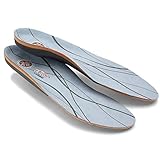
- PODIATRIST DESIGNED! An effective alternative to expensive custom-made orthotics. Innovative biomechanical THREE-ZONE COMFORT technology delivers deep heel cup stability, forefoot cushioning, and ultimate arch support to prevent excessive pronation caused by flat feet. These essential contact points help to realign positioning of feet, aiding to re-establish your body's natural alignment, from the ground up.
- VIONIC ORTHOTIC INSOLES! These women's and men's shoe inserts offer a convenient, pain-free natural healing solution for many of the common aches and pains associated with poor lower-limb alignment, plantar fasciitis, and arch pain. EVA orthotic with re-enforced, hardened plastic (PE) shell for added motion control and stability. Cushioned shock dot in the heel for added shock absorption. Can be trimmed in forefoot if necessary.
- DESIGNED FOR EVERYDAY USE! Designed to provide greater control in faster paced activities such as running and fast walking. 4 degree rear foot wedge to provide support and control which helps prevent excess pronation. Odor absorbing cover. Contoured around the heel and arch areas to achieve 100% foot contact. Podiatrist Designed, APMA Seal of Acceptance.
- COMFORTABLE TO WEAR! Shoe inserts for women and men contoured around the heel and arch areas to achieve perfect foot contact.
- SIZES AVAILABLE: XS: Women's 4.5 – 6 / Men's 3.5 – 5 S: Women's 6.5 – 8 / Men's 5.5 – 7 M: Women's 8.5 – 10 / Men's 7.5 – 9 L: Women's 10.5 – 12 / Men's 9.5 – 11 XL: Men's 11.5 – 13
✓ Pros
- Built-in met pad eliminates DIY pad placement errors
- Specifically designed for Morton’s neuroma + metatarsalgia
- Same trusted PowerStep arch + heel cup platform
- Top cover protects sensitive forefoot skin
- Faster relief than orthotics + add-on met pads
✗ Cons
- Met pad position is fixed (can’t fine-tune individual placement)
- Some patients with very small or very large feet need custom
- Slightly thicker than the standard Pinnacle
Dr. Tom’s Recommendation: If a patient has Morton’s neuroma, sesamoiditis, or generalized ball-of-foot pain (metatarsalgia), this saves a clinic visit and a prescription. The built-in pad placement is anatomically correct for 80% of feet. Way better than DIY met pads.
Adaptive Dynamic Arch · Athletic & Daily Wear
Currex’s flagship adaptive arch technology — the orthotic flexes with your gait instead of fighting it. Different stiffness zones along the length give you targeted support at the heel, midfoot, and forefoot. Available in three arch heights (low/medium/high).

- Signature waffle-inspired rubber outsole for traction and flexibility
✓ Pros
- Dynamic flex zones adapt to natural gait cycle
- Three arch heights ensure precise fit
- Lighter than rigid orthotics (no ‘heavy foot’ feel)
- Excellent for runners and athletic walkers
- European podiatric design (German engineering)
✗ Cons
- More expensive than PowerStep Original ($55-65 typically)
- Less aggressive correction than Pinnacle Maxx for severe cases
- Three arch heights means you must self-select correctly
Dr. Tom’s Recommendation: I started recommending Currex three years ago for runners who said PowerStep felt ‘too rigid.’ The dynamic flex zones respect natural gait. Best for active patients who walk 8K+ steps daily and don’t need maximum motion control.
Running-Specific · Heel Strike + Forefoot Strike Compatible
Currex’s purpose-built running orthotic. The midfoot flex zone is positioned for runner’s gait mechanics, with a flared heel cushion for heel strikers and a forefoot rocker for midfoot/forefoot strikers. Tested on 1000+ runners during product development.
- Provides continuous support of the Plantar Fascia by gently stretching the fascia tissue.
- Compression zones promote circulation, reduce impact vibration, boost recovery and strengthen feet.
- Lightweight, seamless design with extra cushioning provides support while still being comfortable.
- Supports the heel/arch and overall foot structure while stabilizing the tendon for better performance
- Made from high quality materials, the socks are moisture wicking and breathable.
✓ Pros
- Designed by German biomechanics lab specifically for runners
- Dynamic arch flexes with running gait (not static like PowerStep)
- Three arch heights (low/medium/high)
- Reduces overuse injury risk in mid-distance runners
- Lightweight (no impact on cadence)
✗ Cons
- Premium price ($60-75)
- Not aggressive enough for severe over-pronators (use Pinnacle Maxx)
- Runner-specific design = less ideal for daily walking shoes
Dr. Tom’s Recommendation: If a patient runs 20+ miles per week and has plantar fasciitis or shin splints, this is the orthotic I prescribe. The dynamic flex zones respect running biomechanics in a way that no rigid PowerStep can match. Pricier but worth it for serious runners.
Cavus Foot & High-Arch Patients
Polyurethane base with a deeper heel cup and higher arch profile than PowerStep — built for cavus (high-arched) feet that need maximum cushion and support. The 5-zone cushioning system addresses the unique pressure points of high-arch feet.

- The first generation of Protalus's M-100 Insole
- Patented Alignment Technology: The M-100 features a deep heel cup and contoured arch to correct overpronation and promote better posture, stability, and joint health throughout your body.
- Comfortable Insoles: The patented stress relief replacement shoe insoles increase comfort and relieve plantar fasciitis and anti-fatigue.
- Improves Alignment: The shoe insoles help improve alignment and reduce pain in the feet, ideal for low and high arches.
✓ Pros
- Deeper heel cup centers the heel for cavus foot stability
- Higher arch profile fills the void under high arches
- 5-zone cushioning addresses cavus foot pressure points
- Polyurethane base lasts 12+ months
- Available in Wide width
✗ Cons
- Too tall/aggressive for normal or low arches
- Won’t fit slim dress shoes
- Pricier than PowerStep Original
- Some patients find the arch height uncomfortable initially
Dr. Tom’s Recommendation: Cavus foot patients are often misdiagnosed and given low-arch orthotics — that makes everything worse. Spenco’s Total Support has the arch profile that high-arch feet actually need. About 15% of my patients have cavus feet; this is what they wear.
Cushion Layer · Standing All Day · Gel Pressure Relief
NOT a true biomechanical orthotic — this is a cushion insole. But for patients who want gel pressure relief instead of arch correction (or to add ON TOP of factory insoles in work boots), this is the best gel option on Amazon.
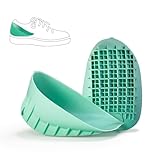
- ✶ALLEVIATES HEEL PAIN – Tuli’s Heavy Duty Heel Cups provide heel pain relief caused by plantar fasciitis, Sever’s disease, excessive pronation, Achilles tendonitis, etc. Ideal for those on their feet for most of the day or those looking for added comfort.
- ✶PODIATRIST PREFERRED – In an independent study conducted by M3 Global Research, podiatrists chose Tuli’s as the clear winner of recommended heel cup brands.
- ✶SHOCK-ABSORBING DESIGN – The multi-cell, multi-layer design absorbs shock and impact energy, mimicking the natural shock-absorbing system of your feet. As you walk or run, the design reduces the stress on your feet.
- ✶DOCTOR RECOMMENDED & APMA ACCEPTED – Tuli’s Heel Cups were designed by a leading podiatrist and have the honor of being accepted by the American Podiatric Medical Association.
- ✶FITS MOST LACE-UP SHOES – Best used in spacious lace-up shoes like athletic shoes / sneakers.
✓ Pros
- Genuine gel cushioning (not foam pretending to be gel)
- Targeted gel waves under heel and ball of foot
- Trim-to-fit · works in most shoe types
- Sub-$15 price (most affordable option in this list)
- Massaging texture is genuinely soothing
✗ Cons
- ZERO arch support — this is cushion only
- Won’t fix plantar fasciitis or flat-foot issues
- Compresses faster than PowerStep (4-6 months)
- Top cover wears through in high-mileage applications
Dr. Tom’s Recommendation: I recommend these to patients who tell me ‘I just want my feet to stop hurting at the end of my shift’ and who don’t have a biomechanical issue. Construction workers, factory workers, retail. Pure cushion does the job for them.
Tight-Fitting Shoes · Cycling Shoes · Hockey Skates
Superfeet’s slim version of their famous Green insole. The trademark stabilizer cap is preserved but the overall thickness is reduced — works in cycling shoes, hockey skates, ski boots, and other tight-fitting footwear that the standard Superfeet Green can’t fit into.
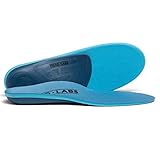
- Plantar Fasciitis Relief, Every Step – Firm arch support helps relieve heel and arch pain from plantar fasciitis and supports flat feet and overpronation for better alignment and all-day comfort.
- Clinical-Grade Biomechanics – Tread Labs 26-33 ARCHitecture delivers orthotic-level stability—custom-orthotic feel without the prescription.
- Dialed Fit for Any Shoe – Four arch heights (low, medium, high, extra-high) and an easy 3-step sizing guide make selection simple for work boots, sneakers, and everyday shoes—great for standing all day.
- Built to Last a Million Miles – Durable, recyclable arch supports with our Million-Mile Guarantee; replaceable top covers keep insoles fresh and cost-effective. Unlike foam that flattens, Pace is engineered to last.
- Trusted Expertise – Designed by Mark Paigen (founder of Chaco). Premium arch support inserts for men and women backed by decades of footwear innovation.
✓ Pros
- Stabilizer cap centers the heel (Superfeet’s signature feature)
- Slim profile fits tight athletic footwear
- Lasts 12+ months daily wear
- Excellent for cycling shoes specifically
- Built-in odor-control treatment
✗ Cons
- Premium price ($45-55)
- Less cushion than PowerStep equivalents
- Not as aggressive correction as Pinnacle Maxx for flat feet
- The signature ‘heel cup feel’ takes 1-2 weeks to adapt to
Dr. Tom’s Recommendation: If you’re a cyclist with foot numbness, hot spots, or knee pain — this is the orthotic. The stabilizer cap solves cycling-specific biomechanical issues that no other orthotic addresses. Worth the premium for athletes.
None of these solving your foot pain?
Some patients (about 30%) need custom-molded prescription orthotics. We make 3D-scanned custom orthotics in our Howell and Bloomfield Hills offices — specifically built for your foot mechanics.
Schedule a Custom Orthotic Fitting →FSA/HSA eligible · Most insurance accepted · (810) 206-1402
Doctor Hoy’s Natural Pain Relief Gel
Natural topical pain relief I use in our clinic. Arnica + camphor formula — apply directly to the area 3–4x daily. ($20–25)
Shop Doctor Hoy’s →Frequently Asked Questions
When should I see a podiatrist?
If symptoms persist past 2 weeks, affect your normal activity, or are accompanied by red-flag symptoms (warmth, redness, swelling, inability to bear weight).
What does treatment cost?
Most diagnostic visits and conservative treatments are covered by Medicare and major insurers. Out-of-pocket costs vary by your specific plan.
How quickly can I get an appointment?
Most non-urgent cases see us within 5 business days. Urgent cases (sudden pain, possible fracture) typically same or next business day.

Dr. Tom Biernacki, DPM is a board-certified foot & ankle surgeon (ABFAS & ABPM) at Balance Foot & Ankle Specialists in Southeast Michigan. With over a decade of clinical experience, he specializes in heel pain, bunions, diabetic foot care, sports injuries, and minimally invasive surgery. Dr. Biernacki is a member of the APMA and ACFAS, and his patient education content on MichiganFootDoctors.com and YouTube has made him one of the most-followed foot & ankle educators on YouTube.