
Medically reviewed by Dr. Tom Biernacki, DPM
Board-certified podiatric surgeon | Balance Foot & Ankle, Howell & Bloomfield Township, MI
Last reviewed: May 2026

Quick answer: Best Walking Shoes For Flat Feet is a common foot/ankle topic that affects many patients. The 2026 evidence-based approach combines proper diagnosis, conservative-first treatment, and escalation only when needed. We treat this regularly at our Howell and Bloomfield Township practices. Call (810) 206-1402.
Flat feet — medically called pes planus — affect approximately 20–30% of the adult population, and many people go years without understanding why their feet, knees, hips, and lower back hurt chronically. The answer is often in their shoes.
When the arch collapses with each step, the entire kinetic chain above it compensates: the ankle rolls inward, the tibia internally rotates, the knee tracks medially, and the hip abductors work overtime to stabilize. The result is a cascade of pain that can manifest anywhere from the foot to the lower back. The right walking shoe interrupts this chain at its source.
The most important clinical decision with Best Walking Shoes For Flat Feet isn’t which treatment to start with — it’s identifying the correct subtype. That changes everything. Call (810) 206-1402.
Understanding Flat Feet: Types and Implications for Footwear
Flexible Flat Feet
The most common type. The arch appears present when sitting or on tiptoe but collapses to a flat contact pattern when weight-bearing. The arch is structurally capable of forming but lacks sufficient muscular control or ligamentous tension to maintain it under load. This type responds well to arch-support footwear and orthotics.
Rigid Flat Feet
The arch is absent even when non-weight-bearing. Often associated with tarsal coalition (abnormal bony connection between foot bones), Charcot joint, or severe posterior tibial tendon dysfunction. Rigid flat feet may be painful in any direction of stress and sometimes require surgical intervention. Footwear selection is still important but may not fully address symptoms.
Posterior Tibial Tendon Dysfunction (PTTD)
An acquired flat foot deformity caused by progressive failure of the posterior tibial tendon — the primary dynamic supporter of the medial arch. PTTD progresses through stages from mild arch fatigue to complete arch collapse with tendon rupture. Early stages respond to supportive footwear and orthotics; advanced stages may require surgery.
Key takeaway: If your flat feet are asymmetric (one foot much flatter than the other) or if a previously present arch has collapsed over months, see a podiatrist immediately to rule out PTTD. This condition is treatable in early stages and can progress to requiring major reconstructive surgery if left unaddressed.
What Flat Feet Need from Walking Shoes
Flat-footed walkers need shoes that actively compensate for their arch’s inability to maintain height under load. The critical design features:
- Medial post or dual-density midsole — a firmer foam insert on the inner (medial) side of the midsole resists the inward collapse that drives overpronation; this is the most important stability feature
- Deep heel cup — centers the calcaneus and prevents the heel from rolling inward at heel strike
- Firm longitudinal arch support — contoured to fill the arch space and apply corrective upward pressure
- Straight last — the shape of the shoe mold; a straight or semi-curved last accommodates the wider, flatter forefoot profile of many flat-footed individuals
- Motion control features — for severe flat feet, a fully rigid medial post or carbon fiber plate may be needed to prevent full arch collapse
Top Walking Shoes for Flat Feet — Podiatrist-Reviewed
Best Overall Stability: ASICS Gel-Kayano 30
The ASICS Gel-Kayano series has been a podiatrist staple for flat-footed patients for over a decade. The 4D guidance system provides firm medial support through the entire stance phase, the Gel heel technology absorbs impact, and the FF Blast+ foam provides energetic cushioning. The 10mm drop positions the foot ideally for arch correction.
Best Motion Control: New Balance 1540v3
For patients with severe flat feet or significant overpronation, the New Balance 1540v3 is the strongest OTC motion control shoe available. The ROLLBAR technology in the midsole — a rigid post that extends along the medial arch — physically prevents arch collapse rather than just resisting it. Available in multiple widths (2E, 4E, 6E) for flat feet with associated wide forefoot.
Best for Work/Walking Shoes: Brooks Addiction Walker 2
The Brooks Addiction Walker 2 is my top recommendation for flat-footed patients who need a walking shoe (rather than athletic trainer) for daily wear. The Extended Progressive Diagonal Rollbar (PDRB) provides exceptional motion control in a dress-friendly profile. The leather upper is professional enough for work environments while the supportive midsole makes it therapeutic.
Saucony Echelon 9 rounds out the top picks with a wide fit and neutral-to-mild stability that works well for flat-footed walkers who find motion control shoes overly rigid. The PWRRUN cushioning midsole with a slightly firmer medial zone provides support without the stiffness of full motion control.
Custom Orthotics vs. Stability Shoes for Flat Feet
The most effective approach for flat feet combines both: a stability or motion control shoe as the foundation, with a custom or semi-custom orthotic added for personalized arch correction. The shoe provides the gross structural support; the orthotic fine-tunes the correction to your specific arch height and pronation pattern.
In our clinic, we begin most flat-footed patients with a stability shoe plus a semi-custom OTC insole (PowerStep Pinnacle Green, PowerStep Pinnacle). If symptoms persist after 4–6 weeks, we proceed to 3D-scanned custom orthotics fabricated specifically for their foot geometry. For patients with severe PTTD or rigid flat feet, I often go directly to custom orthotics.
Common Mistakes Flat-Footed Walkers Make with Shoes
The most common error I see in the clinic: flat-footed patients choosing neutral cushioning shoes because they feel comfortable in the store. Neutral shoes feel soft and pleasant during a brief in-store trial — but they provide no medial support, allowing full arch collapse with every step during extended walking. The comfort is real; the support is absent.
Other frequent errors include buying shoes in regular widths when the flat foot has created a wider forefoot, choosing shoes based on appearance rather than function, and continuing to wear flat-soled casual shoes (Vans, Converse, flip-flops) for extended periods despite flat-foot pain.
⚠️ When Flat Feet Need More Than Better Shoes
- Flat foot in one foot only, or an arch that has collapsed over time (possible PTTD — see podiatrist promptly)
- Severe ankle pain on the inner side (medial) — could indicate deltoid ligament stress from chronic pronation
- Flat feet in children that cause pain or difficulty keeping up with peers (normal in toddlers; persistent painful flat feet in school-age children warrant evaluation)
- Flat feet with significant knee or hip pain that doesn’t improve with supportive footwear
- Any rigid flat foot where the arch is absent even off weight-bearing
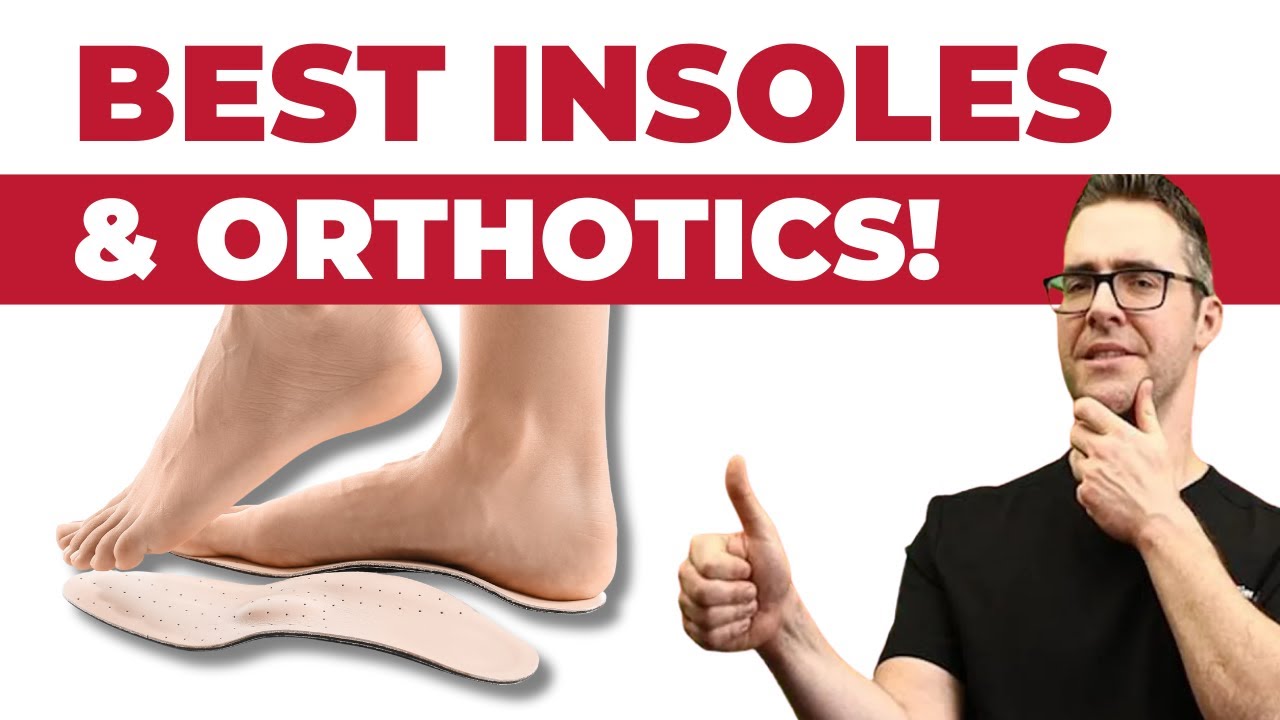
When Shoes Aren’t Enough — Dr. Tom’s Top 9 Orthotics
About 30% of patients I see for foot pain need MORE than a great shoe — they need a structured insole. Below: my complete 2026 orthotic ranking with pros, cons, and the specific patient I’d give each one to.
Frequently Asked Questions About Walking Shoes for Flat Feet
Do I need stability or motion control shoes for flat feet?
Mild-to-moderate flat feet (flexible, low arch that is present on tiptoe) respond well to stability shoes. Severe flat feet or significant overpronation benefit from motion control shoes. If you’re unsure, a podiatrist or specialty running store gait analysis will identify your pronation pattern and appropriate shoe category.
Can flat feet be fixed with the right shoes?
Shoes and orthotics manage flat foot symptoms and slow progression but do not structurally correct flat feet in adults. They reduce pain, improve function, and prevent associated overuse injuries. Some pediatric flat foot responds to orthotic intervention during growth; adult structural flat feet require surgical correction for permanent change.
Are expensive walking shoes better for flat feet?
Price does correlate with durability and design quality in stability and motion control footwear, but the most important factor is getting the correct category of support for your pronation level. A $120 New Balance 1540 provides better support for severe flat feet than a $200 neutral cushioning shoe. Get the right type first; then buy the best quality within that type you can afford.
How often should I replace walking shoes if I have flat feet?
Replace every 300–500 miles or every 6–12 months for daily walkers. The medial stability features — dual-density midsole foam, rollbars — degrade before the outsole shows obvious wear. If you notice your arch pain returning after a period of relief, check whether your shoes have exceeded their replacement threshold.
Can children with flat feet wear regular shoes?
Toddlers naturally have flat feet — the arch doesn’t develop until ages 3-6. By school age, if a child has a painful flat foot that affects activity or gait, an evaluation by a podiatrist is warranted. For children with documented painful flat feet, supportive footwear and pediatric orthotics are the first-line treatment.
The bottom line: The best walking shoes for flat feet actively support the medial arch rather than simply providing cushioning. ASICS Gel-Kayano, New Balance 1540, and Brooks Addiction Walker are the strongest clinically-supported options across mild-to-severe flat feet. Combine stability footwear with structured insoles for maximum effect. If your flat feet are causing significant pain, arch fatigue, or associated knee and hip pain despite supportive footwear, a podiatric evaluation will determine whether custom orthotics or other interventions are needed.
Sources
- Mosca VS. Flexible flatfoot in children and adolescents. J Child Orthop. 2010;4(2):107-121.
- Murley GS, Menz HB, Landorf KB. Foot posture influences the electromyographic activity of selected lower limb muscles during gait. J Foot Ankle Res.2009;2:35.
- Leardini A, et al. Rear-foot, mid-foot and fore-foot motion during the stance phase of gait. Gait Posture. 2007;25(3):453-462.
- Williams DS, McClay IS, Hamill J. Arch structure and injury patterns in runners. Clin Biomech. 2001;16(4):341-347.
- Sung PS, Zipple JT, Andraka JM, Danial P. The kinematic and kinetic analyses in subjects with and without flat foot during stair climbing. Gait Posture. 2017;57:148-153.
OrthoInfo – AAOS: Adult Flatfoot
Ready to Get Relief?
Same-day appointments available in Howell & Bloomfield Township, MI
4.9★ | 1,123 Reviews | 3,000+ Surgeries
Or call: (810) 206-1402

Dr. Tom Biernacki, DPM is a board-certified foot & ankle surgeon (ABFAS & ABPM) at Balance Foot & Ankle Specialists in Southeast Michigan. With over a decade of clinical experience, he specializes in heel pain, bunions, diabetic foot care, sports injuries, and minimally invasive surgery. Dr. Biernacki is a member of the APMA and ACFAS, and his patient education content on MichiganFootDoctors.com and YouTube has made him one of the most-followed foot & ankle educators on YouTube.