
Quick answer: Treatment for big toe joint pain treatment follows a stepwise approach: 1) conservative care first (rest, ice, supportive footwear, OTC anti-inflammatories), 2) physical therapy and targeted exercises, 3) in-office treatments (injections, custom orthotics) if conservative fails at 4-6 weeks, 4) surgery for refractory cases. Most patients resolve at step 1 or 2. Call (810) 206-1402.
The most important clinical decision with Big Toe Joint Pain Treatment isn’t which treatment to start with — it’s identifying the correct subtype. That changes everything. Call (810) 206-1402.
Bunion Pads for Big Toe: 2026 Podiatrist Picks & How to Use
The best bunion pads for big toe: (1) ZenToes Gel Bunion Pads — silicone shield, reusable, $10-15, (2) Dr. Frederick’s Original Bunion Sleeves — full sleeve with toe spacer, $20, (3) YogaToes Gems — toe spreaders for daily wear, $40, (4) NatraCure Bunion Sleeves with Gel — combines spacer + cushion, $25, (5) Donjoy Bunion Splint Bandage — nighttime brace, $30. Use protocol: wear during shoe time + at night for chronic bunions; replace every 2-3 months.
In my Michigan podiatry clinic, my bunion pad recommendations: (1) Daytime (in shoes): silicone bunion sleeve with toe spacer — relieves shoe pressure on the bunion + slows progression, (2) Nighttime: YogaToes Gems or Donjoy bunion splint — passive stretching of the contracted joint capsule, (3) Custom orthotic during all activity — addresses underlying biomechanical cause. About 80% of patients experience meaningful pain relief with this 3-pronged conservative approach. Note: pads CANNOT reverse the bony deformity — only surgery (Lapiplasty) can do that.
✅ Medically reviewed by Dr. Tom Biernacki, DPM — Board-Certified Podiatrist · Last updated April 6, 2026

Medically reviewed by
Dr. Carl Jay, DPM · Board-Certified Podiatric Surgeon
Fellowship-Trained in Foot & Ankle Surgery · Updated April 2026
Watch: Big Toe Joint Pain Causes & Treatment
Table of Contents
- Quick Diagnosis by Pain Location
- 1. Bunions (Hallux Valgus)
- 2. Hallux Rigidus (Big Toe Arthritis)
- 3. Gout
- 4. Sesamoiditis
- 5. Turf Toe
- 6. Ingrown Toenail
- 7. Hallux Varus
- Home Treatment That Works for Most Causes
- Best Products for Big Toe Pain
- Warning Signs
- FAQ
- Sources
Quick Diagnosis by Pain Location
Where your big toe hurts is the single most useful clue to what’s causing it. This table helps narrow down the most likely diagnosis based on your specific symptoms.
| Pain Location | Most Likely Cause | Key Feature | Detailed Guide |
|---|---|---|---|
| Inner side (medial bump) | Bunion (hallux valgus) | Visible bump; toe angles outward; worse in tight shoes | Bunion Treatment → |
| Top of joint (dorsal) | Hallux rigidus (arthritis) | Bone spur on top; limited upward motion; stiffness | Hallux Rigidus → |
| Entire joint (sudden onset) | Gout | Red, hot, swollen; often overnight; excruciating | Gout Treatment → |
| Underneath (plantar) | Sesamoiditis | Deep ache under ball of foot; worse pushing off | Sesamoiditis → |
| Entire joint (after injury) | Turf toe | Sudden hyperextension injury; swelling; can’t push off | See below |
| Nail border (side of toe) | Ingrown toenail | Red, swollen skin at nail edge; possible drainage | Ingrown Toenail → |
| Inner side (toe angles inward) | Hallux varus | Big toe points away from 2nd toe (often post-surgical) | Hallux Varus → |
1. Bunions (Hallux Valgus)
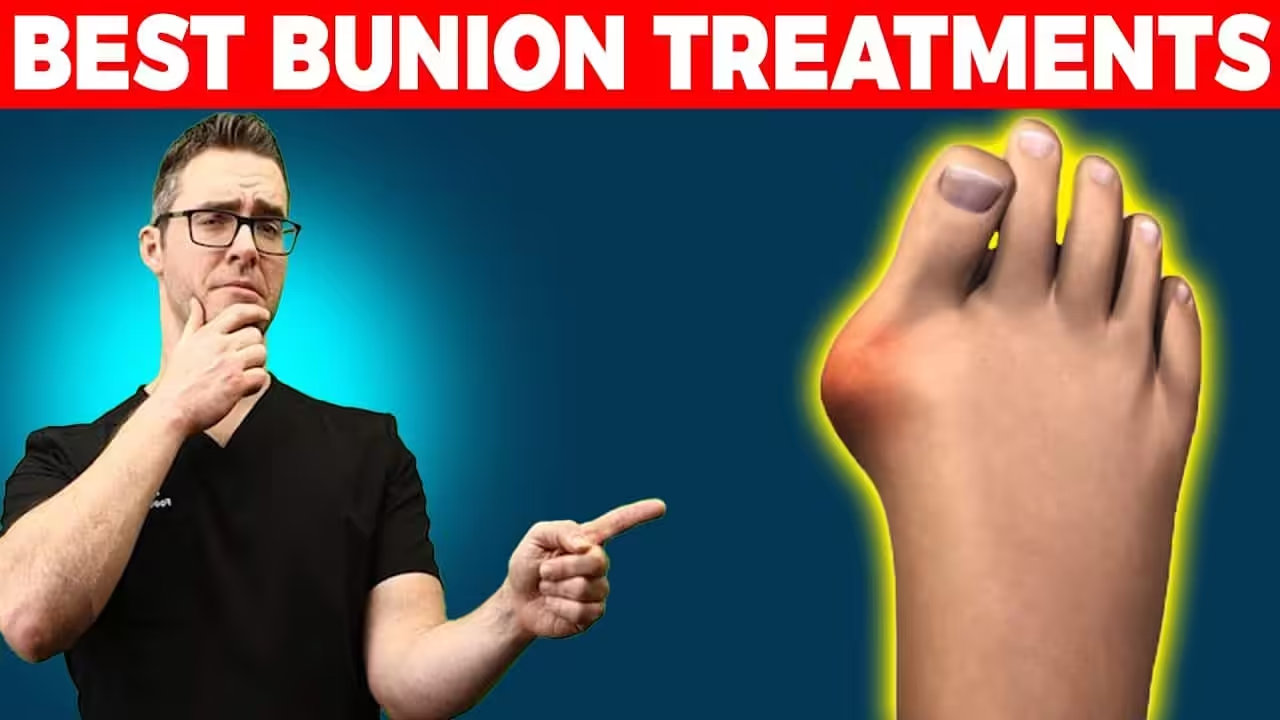
A bunion is the most common cause of big toe joint pain, affecting roughly 23% of adults. It develops when the 1st metatarsal bone drifts inward while the big toe angles outward toward the second toe, creating a prominent bony bump on the inner side of the foot. The pain comes from two sources: direct shoe pressure on the bump, and progressive joint misalignment that leads to arthritis over time.
Home treatment: Wide-toe-box shoes that don’t press on the bump, bunion spacers or splints to realign the toe during rest, and orthotics with a medial arch support to slow progression. Ice and NSAIDs help during flare-ups.
When to see us: If the bump is large enough that no shoe fits comfortably, if the big toe is pushing against or crossing over the second toe, or if you’re developing arthritis symptoms in the joint. Modern bunion surgery (including minimally invasive techniques) offers reliable correction with faster recovery than in the past.
Read our complete guide: Bunion Causes, Treatment & Surgery →
2. Hallux Rigidus (Big Toe Arthritis)
Hallux rigidus is arthritis of the big toe joint — specifically, degenerative loss of cartilage at the 1st metatarsophalangeal (MTP) joint. It’s the most common arthritic condition in the foot and the second most common condition of the big toe (after bunions). The hallmark is progressive stiffness: the toe gradually loses its ability to bend upward (dorsiflex), and a bony ridge (osteophyte) develops on top of the joint.
Home treatment: Stiff-soled or rocker-bottom shoes that reduce the need for big toe bending during walking, orthotics with a Morton’s extension (rigid plate under the big toe), and oral anti-inflammatory medication. Avoid flexible shoes and going barefoot, which force the arthritic joint through its painful range.
When to see us: When stiffness limits your ability to walk normally, when the bone spur on top is visible or catches on shoes, or when conservative measures no longer provide adequate relief. Surgical options range from joint-preserving cheilectomy (removing the bone spur) to joint fusion for severe cases.
Read our complete guide: Hallux Rigidus Causes & Treatment →
3. Gout
Gout is an inflammatory arthritis caused by uric acid crystal deposits in the joint. The big toe joint is the single most common location for a gout attack — so common that the medical term for it is podagra. An acute gout flare produces sudden, dramatic symptoms: the joint becomes intensely painful (often described as the worst pain the patient has experienced), red, hot, and swollen — frequently starting overnight and waking the patient from sleep.
Home treatment during an attack: NSAIDs (indomethacin or naproxen are preferred), ice, elevation, and rest. Avoid aspirin during a flare as it can worsen uric acid levels. Stay well-hydrated and avoid alcohol, red meat, and shellfish — all of which raise uric acid levels.
When to see us: For your first attack (to confirm the diagnosis and rule out infection), for recurrent attacks (which may benefit from long-term uric acid-lowering medication like allopurinol), or if you’re unsure whether the swelling is gout or something else. We can perform a joint aspiration to identify uric acid crystals definitively.
Read our complete guide: Gout Causes, Treatment & Prevention →
4. Sesamoiditis
Sesamoiditis causes pain underneath the big toe joint rather than in the joint itself. The two sesamoid bones — small bones embedded in the flexor tendon beneath the 1st metatarsal head — become inflamed from repetitive loading. It’s most common in runners, dancers, and people who spend a lot of time on the balls of their feet.
Home treatment: Dancer’s pads (felt pads with a cutout to offload the sesamoids), cushioned shoes with stiff soles, and avoiding barefoot walking on hard surfaces. The Hoka Bondi with its thick cushioning and rocker sole is ideal for this condition.
When to see us: If pain persists beyond 3–4 weeks despite offloading, if there’s significant swelling or bruising, or if you suspect a sesamoid stress fracture (pain at rest, throbbing at night). MRI can distinguish between inflammation and fracture.
Read our complete guide: Sesamoiditis Causes & Treatment →
5. Turf Toe
Turf toe is a sprain of the ligaments surrounding the big toe joint, caused by forceful hyperextension (bending the toe upward beyond its normal range). It’s named for its frequent occurrence on artificial turf, where the foot can stick to the surface while the body continues forward, jamming the big toe. Football, soccer, basketball, and wrestling are the most common causes.
Turf toe is graded by severity: Grade 1 (stretching of the ligaments — mild pain, able to play), Grade 2 (partial tear — moderate pain, swelling, difficulty pushing off), and Grade 3 (complete tear — severe pain, unable to bear weight, significant swelling). Grade 3 injuries may involve sesamoid fracture or cartilage damage and sometimes require surgery.
Home treatment: RICE protocol (rest, ice, compression, elevation) for the first 48–72 hours, followed by stiff-soled shoes or a walking boot, and gradual return to activity once pain resolves. Taping the big toe to limit dorsiflexion during sports helps prevent recurrence. Recovery ranges from 1–2 weeks for Grade 1 to 2–6 months for Grade 3.
6. Ingrown Toenail
An ingrown toenail occurs when the edge of the nail grows into the surrounding skin fold, causing pain, redness, swelling, and sometimes infection. The big toe is by far the most commonly affected nail. While it’s technically a nail and skin problem rather than a joint problem, the pain can radiate across the entire big toe area and is frequently mistaken for joint pathology.
Home treatment (mild cases only): Soak the foot in warm water for 15 minutes, gently lift the nail border with a small piece of cotton or dental floss, and apply antibiotic ointment. Wear shoes with a wide toe box.
When to see us: If there’s redness, swelling, or drainage (signs of infection), if the ingrown nail recurs after home treatment, or if you have diabetes (which increases infection risk significantly). An in-office procedure to remove the ingrown border provides immediate relief and takes about 15 minutes.
Read our complete guide: Ingrown Toenail Treatment →
7. Hallux Varus
Hallux varus is the opposite of a bunion — the big toe angles inward, away from the second toe, creating a gap between the first and second toes. It most commonly occurs as a complication of previous bunion surgery (overcorrection), though it can also develop from trauma, rheumatoid arthritis, or congenital factors.
Home treatment: Taping the big toe toward the second toe, spacers between toes, and wide shoes that accommodate the toe’s position. Conservative measures are worth trying for mild cases.
When to see us: If the toe position prevents comfortable shoe wear, if the deformity is worsening, or if the joint is becoming stiff. Surgical correction (tendon transfer, soft tissue rebalancing, or fusion) produces reliable results when conservative measures fail.
Read our complete guide: Hallux Varus Treatment & Surgery →
Home Treatment That Works for Most Causes
While each condition has its own specific treatment, several approaches help across almost all causes of big toe joint pain. These are safe to start at home while you’re deciding whether to see a specialist.
Supportive footwear with a stiff sole and wide toe box reduces motion and pressure at the big toe joint — beneficial for bunions, hallux rigidus, sesamoiditis, and turf toe alike. Avoid going barefoot on hard surfaces, wearing flexible flat shoes, and wearing high heels, all of which increase stress on the big toe joint.
Ice applied for 15–20 minutes, 2–3 times daily, reduces inflammation for any acute flare-up. Use a thin towel between the ice and your skin.
Over-the-counter anti-inflammatories (ibuprofen 400–600mg every 6–8 hours with food, or naproxen 220–440mg every 12 hours) manage pain and inflammation across all causes. Use for the shortest effective duration.
Toe spacers and pads gently realign the big toe and protect the joint from shoe pressure. These are particularly helpful for bunions, hallux varus, and bunionettes.
Best Products for Big Toe Joint Pain
🏆 #1 Pick: Hoka Bondi 9
Maximum cushioning with a rocker sole that reduces big toe joint bending — ideal for hallux rigidus, sesamoiditis, and turf toe. The 35mm stack height absorbs impact before it reaches your joints, and the meta-rocker geometry rolls you through push-off without demanding full big toe dorsiflexion. Wide toe box version available.
Affiliate link · As an Amazon Associate we earn from qualifying purchases
Correct Toes Toe Spacers
Medical-grade silicone spacers that fit between all five toes, gently restoring natural alignment. Particularly effective for bunions and hallux varus. Unlike rigid splints, these are flexible enough to wear during walking and exercise inside wide-toe-box shoes. They help reduce joint pressure by improving forefoot mechanics.
Affiliate link · As an Amazon Associate we earn from qualifying purchases
PowerStep Pinnacle Maxx Orthotics
Firm arch support with a deep heel cradle that controls overpronation — reducing the rotational forces on the big toe joint that worsen bunions and hallux rigidus. The semi-rigid shell distributes forefoot pressure more evenly, helping with sesamoiditis and metatarsalgia as well. A versatile first orthotic for nearly any big toe condition.
Affiliate link · As an Amazon Associate we earn from qualifying purchases
⚠️ Warning Signs — See a Podiatrist Promptly
- Sudden severe pain with redness and swelling — could be gout or infection; both require prompt treatment
- Inability to bend the big toe upward at all — indicates advanced hallux rigidus that may need surgical intervention
- Pain with red streaks or fever — possible spreading infection that needs immediate medical attention
- Big toe crossing over or under the second toe — progressive bunion deformity that’s causing secondary problems
- Numbness or loss of feeling in the toe — may indicate nerve compression or circulation issues
- Pain that doesn’t improve after 4 weeks of home treatment — the condition needs professional diagnosis and targeted treatment
Frequently Asked Questions
What is the most common cause of big toe joint pain?
Bunions (hallux valgus) are the most common cause overall, affecting nearly one in four adults. However, in patients over 50, hallux rigidus (arthritis) becomes equally common. In active athletes, sesamoiditis and turf toe are the leading causes. And for sudden-onset pain that wakes you up at night, gout is the most likely culprit. Your age, activity level, and the pattern of your symptoms help narrow down the specific cause.
Should I see a podiatrist or orthopedist for big toe pain?
A podiatrist is typically the best first choice for big toe joint pain. Podiatrists are foot and ankle specialists with focused training in the biomechanics, conditions, and surgical techniques specific to this area. We see these conditions every day and can provide both the conservative and surgical care you need. Orthopedic foot and ankle specialists are also excellent — the key is choosing a provider who specializes in the foot and ankle rather than a general practitioner.
Can big toe joint pain be a sign of something serious?
Most big toe joint pain is caused by common, treatable mechanical conditions (bunions, arthritis, sesamoiditis). However, sudden onset of severe pain with redness and swelling can indicate gout (which requires treatment to prevent joint damage) or, rarely, a joint infection (septic arthritis) that requires urgent care. Persistent pain with unexplained swelling that doesn’t respond to treatment warrants imaging to rule out less common causes. If you have diabetes, any foot problem — including big toe pain — should be evaluated promptly due to the higher risk of complications.
Why does my big toe hurt when I walk?
Pain during walking points to conditions that worsen with weight-bearing and push-off: sesamoiditis (pain underneath during push-off), hallux rigidus (pain and stiffness when the toe bends upward at each step), or turf toe (pain with any big toe motion). Bunion pain tends to be more related to shoe pressure than the act of walking itself. If the pain is specifically at push-off (the moment your foot leaves the ground), sesamoiditis and hallux rigidus are the two most likely causes.
Sources
- Nix S, Smith M, Vicenzino B. Prevalence of hallux valgus in the general population: a systematic review and meta-analysis. J Foot Ankle Res. 2010;3:21.
- Coughlin MJ, Shurnas PS. Hallux rigidus: grading and long-term results of operative treatment. J Bone Joint Surg Am. 2003;85(11):2072-2088.
- Dalbeth N, Merriman TR, Stamp LK. Gout. Lancet. 2016;388(10055):2039-2052.
- McCormick JJ, Anderson RB. The great toe: failed turf toe, chronic turf toe, and complicated sesamoid injuries. Foot Ankle Clin. 2009;14(2):135-150.
The Bottom Line
Big toe joint pain is one of the most common foot complaints, but the specific cause matters enormously for choosing the right treatment. A bump that rubs on shoes points to a bunion. Stiffness and a bony ridge on top suggests arthritis. Excruciating pain that appears overnight is likely gout. A deep ache underneath when pushing off indicates sesamoiditis. The diagnosis table above can help you narrow it down — and when you’re ready for a definitive answer, our podiatrists can examine you, take the appropriate imaging, and create a targeted treatment plan.
🩺 Dr. Tom’s Recommended Products
As an Amazon Associate I earn from qualifying purchases. These are products I personally use and recommend to patients.
The OTC orthotic I recommend most. Sub-$50 before custom orthotics.
View on Amazon →
Natural menthol + arnica topical. FSA-eligible — what I switched my family to from Doctor Hoy’s Natural Pain Relief Gel.
View on Amazon →
Big Toe Pain Holding You Back?
Our board-certified podiatrists diagnose and treat every cause of big toe joint pain — from bunions and arthritis to gout and sesamoiditis. Same-week appointments available.
Or call: (810) 206-1402 · Howell & Bloomfield Township, MI
Big Toe Joint Pain?
Our podiatrists diagnose and treat all causes of big toe joint pain including arthritis, bunions, gout, and sesamoiditis.
Clinical References
- Coughlin MJ, Shurnas PS. Hallux rigidus: grading and long-term results of operative treatment. J Bone Joint Surg Am. 2003;85(11):2072-2088.
- Dalbeth N, Merriman TR, Stamp LK. Gout. Lancet. 2016;388(10055):2039-2052.
- Nix S, Smith M, Vicenzino B. Prevalence of hallux valgus in the general population: a systematic review and meta-analysis. J Foot Ankle Res. 2010;3:21.
Insurance Accepted
BCBS · Medicare · Aetna · Cigna · United Healthcare · HAP · Priority Health · Humana · View All →
Howell Office
4330 E Grand River Ave
Howell, MI 48843
Get Directions →
Bloomfield Township Office
43494 Woodward Ave, #208
Bloomfield Township, MI 48302
Get Directions →
Your Board-Certified Podiatrists



Ready to Get Back on Your Feet?
Same-week appointments available at both locations.
Book Your AppointmentIn-Office Treatment at Balance Foot & Ankle

If home treatment isn’t providing relief for your big toe joint pain treatment, our podiatry team at Balance Foot & Ankle can help with same-day evaluations and advanced in-office care.
Same-day appointments available. (810) 206-1402
Get Expert Care at Balance Foot & Ankle
Same-week appointments at our Howell and Bloomfield Township offices. Board-certified podiatric surgeons. Most insurance accepted.

Dr. Tom Biernacki, DPM is a board-certified foot & ankle surgeon (ABFAS & ABPM) at Balance Foot & Ankle Specialists in Southeast Michigan. With over a decade of clinical experience, he specializes in heel pain, bunions, diabetic foot care, sports injuries, and minimally invasive surgery. Dr. Biernacki is a member of the APMA and ACFAS, and his patient education content on MichiganFootDoctors.com and YouTube has made him one of the most-followed foot & ankle educators on YouTube.
1 thought on “Big Toe Joint Pain — 7 Causes & Home Treatment Guide”
Comments are closed.