
You are in the right place. Dr. Tom Biernacki, DPM, FACFAS — board-certified foot & ankle surgeon with 3,000+ surgeries — explains exactly what walking boot for plantar fasciitis means a
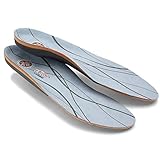
- PODIATRIST DESIGNED! An effective alternative to expensive custom-made orthotics. Innovative biomechanical THREE-ZONE COMFORT technology delivers deep heel cup stability, forefoot cushioning, and ultimate arch support to prevent excessive pronation caused by flat feet. These essential contact points help to realign positioning of feet, aiding to re-establish your body's natural alignment, from the ground up.
- VIONIC ORTHOTIC INSOLES! These women's and men's shoe inserts offer a convenient, pain-free natural healing solution for many of the common aches and pains associated with poor lower-limb alignment, plantar fasciitis, and arch pain. EVA orthotic with re-enforced, hardened plastic (PE) shell for added motion control and stability. Cushioned shock dot in the heel for added shock absorption. Can be trimmed in forefoot if necessary.
- DESIGNED FOR EVERYDAY USE! Designed to provide greater control in faster paced activities such as running and fast walking. 4 degree rear foot wedge to provide support and control which helps prevent excess pronation. Odor absorbing cover. Contoured around the heel and arch areas to achieve 100% foot contact. Podiatrist Designed, APMA Seal of Acceptance.
- COMFORTABLE TO WEAR! Shoe inserts for women and men contoured around the heel and arch areas to achieve perfect foot contact.
- SIZES AVAILABLE: XS: Women's 4.5 – 6 / Men's 3.5 – 5 S: Women's 6.5 – 8 / Men's 5.5 – 7 M: Women's 8.5 – 10 / Men's 7.5 – 9 L: Women's 10.5 – 12 / Men's 9.5 – 11 XL: Men's 11.5 – 13

- Signature waffle-inspired rubber outsole for traction and flexibility

- Provides continuous support of the Plantar Fascia by gently stretching the fascia tissue.
- Compression zones promote circulation, reduce impact vibration, boost recovery and strengthen feet.
- Lightweight, seamless design with extra cushioning provides support while still being comfortable.
- Supports the heel/arch and overall foot structure while stabilizing the tendon for better performance
- Made from high quality materials, the socks are moisture wicking and breathable.
As an Amazon Associate, Balance Foot and Ankle earns from qualifying purchases. Product links are affiliate links and we may earn a commission at no extra cost to you. This does not influence our clinical recommendations. Last update on 2026-09-23 / Images from Amazon Product Advertising API
nd what actually works. Call (810) 206-1402 for a same-day appointment at our Howell or Bloomfield Township office.
Watch: How To Cure Plantar Fasciitis FAST & FOREVER [Heel Pain & Heel Spurs] — MichiganFootDoctors YouTube
Medically reviewed by Dr. Tom Biernacki, DPM
Board-certified podiatric surgeon | Balance Foot & Ankle | Last reviewed: April 2026
The most important clinical decision with Boot for Plantar Fasciitis: Best Picks 2026 | DPM isn’t which treatment to choose — it’s identifying which subtype you have first. Our podiatrists see patients treated for the wrong subtype for months before the correct diagnosis leads to full resolution. Call (810) 206-1402 — expert podiatric care across Michigan.
The right footwear can be the difference between a manageable plantar fasciitis flare and six months of miserable morning pain. In our Howell and Bloomfield Township clinics, footwear counseling is one of the first things we do for every plantar fasciitis patient — because wearing the wrong shoes actively prevents healing, no matter what other treatment you’re doing.
Specs and sizing: our sister site Podiatrist Tested keeps a side-by-side breakdown, with every figure labeled by source, in its work boot guide for plantar fasciitis.
Why Footwear Matters So Much for Plantar Fasciitis
Plantar fasciitis is an overuse injury of the plantar fascia — the thick band of connective tissue running from your heel to your toes. It is the most common cause of heel pain, affecting approximately 10% of people at some point in their lives. The condition develops when the plantar fascia is subjected to repetitive tensile stress that exceeds its capacity to repair.
Footwear directly influences plantar fascia tension. Shoes with poor arch support allow the arch to overpronate and over-stretch the fascia with every step. Flat shoes and flip-flops eliminate all arch support and allow maximum fascial strain. The right footwear reduces fascial tension, supports the arch, cushions heel strike, and allows the fascia to recover rather than being re-injured with every step.
Key takeaway: The single most harmful footwear choice for plantar fasciitis: walking barefoot or in flat shoes (flip-flops, ballet flats, minimalist sneakers). Always wear supportive footwear — even for short distances around the house.
What Features to Look For in Boots for Plantar Fasciitis
When evaluating any boot or shoe for plantar fasciitis, these are the structural features we look for:
- Firm heel counter — the rear of the shoe should resist compression; squeeze the heel cup with your fingers; it should feel rigid and spring back, not collapse
- Built-in arch support — the insole should have a contoured arch that contacts your midfoot; a flat insole provides no arch support
- Cushioned midsole — EVA or PU foam absorbs heel strike impact; important for reducing the load on an already inflamed fascia
- Slight heel elevation (1-1.5 inches) — reduces tension on the Achilles tendon and through it on the plantar fascia; flat shoes actually increase plantar fascia tension
- Rocker sole — a curved, rounded sole reduces the peak stress at the heel and promotes a smooth gait without pushing off hard on the ball of the foot
- Adequate toe box width — prevents compression of the forefoot and allows normal toe splay during gait
- Removable insole — allows you to add custom orthotics if prescribed by your podiatrist
- Flexibility at ball of foot, rigidity at midfoot — the shoe should bend only at the metatarsal break point, not in the arch
Best Boot Types for Plantar Fasciitis
Walking Boots (CAM Boots) for Severe Cases
A controlled ankle motion (CAM) walking boot — sometimes called an Aircast boot or fracture boot — is prescribed for severe or acute plantar fasciitis flares when regular footwear causes unbearable pain. The rigid shell completely immobilizes the ankle and foot, eliminating the mechanical stress on the plantar fascia. Most patients use a CAM boot for 2–6 weeks during the most acute phase, then transition to supportive footwear with orthotics.
Night Splints for Morning First-Step Pain
The most distinctive symptom of plantar fasciitis is post-static dyskinesia — the severe pain with the first steps after rest, especially in the morning. This occurs because the plantar fascia shortens and forms scar tissue overnight; the first steps tear this tissue, causing pain. A night splint keeps the ankle dorsiflexed at 90° during sleep, maintaining a gentle stretch on the plantar fascia so it doesn’t shorten overnight.
Night splints have strong evidence — studies show 80%+ of plantar fasciitis patients improve with consistent night splint use. They are the most underused and most effective self-treatment we recommend.
Daily Supportive Boots and Shoes
For day-to-day wear, the best boots for plantar fasciitis come from brands with established biomechanical support credentials. The key is to verify the features described above rather than relying on brand alone:
- HOKA Bondi and Clifton — maximal cushioning with a built-in rocker sole; excellent for plantar fasciitis; available in wide widths
- Brooks Addiction Walker — motion-control boot with superb arch support and firm heel counter; recommended for overpronators with flat-to-moderate arches
- New Balance 990 series — durable, wide-width options with reliable arch support
- Vionic boots — Orthaheel technology with built-in orthotic arch support; specifically designed and clinically tested for plantar fasciitis
- Dansko clogs and boots — rigid rocker sole reduces plantar fascia load; excellent for those on their feet all day
- Asics Gel-Kayano — structured stability shoe with gel cushioning at the heel
What Boots and Shoes to Avoid
- Flat shoes and flip-flops — no arch support, no heel cushion; the worst choice for plantar fasciitis
- High heels above 2 inches — shifts body weight onto the forefoot and increases Achilles-plantar fascia tension abnormally
- Minimalist or “barefoot” shoes — designed to eliminate all cushioning; contraindicated in active plantar fasciitis
- Old worn-out athletic shoes — a worn midsole provides 50% less support than new; replace running shoes every 300–500 miles
- Slip-on shoes without heel counters — the heel slips inside the shoe, eliminating heel control
- Canvas sneakers (Vans, Converse) — flat, thin sole with no structure; avoid entirely during treatment
How Custom Orthotics Fit Into the Boot Strategy
Even the best boot may not be enough for moderate to severe plantar fasciitis. Custom orthotics — 3D-scanned devices precisely shaped to your foot — provide superior arch support compared to any off-the-shelf insole. In our practice, custom orthotics combined with appropriate footwear resolve plantar fasciitis in the majority of patients without needing steroid injections or surgery.
The boot or shoe must have a removable insole to accommodate custom orthotics. If you are purchasing boots to wear with orthotics, buy them one half-size larger to account for the added volume of the orthotic device.
⚠️ See a podiatrist if:
- Plantar fasciitis pain persists beyond 6 weeks despite proper footwear and stretching
- Pain is severe — rated 7/10 or higher — that prevents normal walking
- You have tried multiple OTC insoles and nothing has helped
- You also have numbness or tingling in the heel — this may be tarsal tunnel, not plantar fasciitis
- The heel pain is not worse in the morning — plantar fasciitis that is not worse with first steps may be a different diagnosis
When Shoes Aren’t Enough — Dr. Tom’s Top 9 Orthotics
About 30% of patients I see for foot pain need MORE than a great shoe — they need a structured insole. Below: my complete 2026 orthotic ranking with pros, cons, and the specific patient I’d give each one to.
Best All-Purpose Orthotic for Most Patients
Semi-rigid arch shell + dual-layer cushion + deep heel cup. The orthotic I’ve fitted to more patients than any other for 15 years. APMA-accepted. Trim-to-fit design works in athletic shoes, casual shoes, and most work boots.
✓ Pros
- Semi-rigid arch shell provides true biomechanical correction
- Deep heel cup centers the heel and reduces lateral instability
- Dual-layer cushion (top + bottom) lasts 9-12 months daily wear
- Available in 8 sizes for precise fit
- APMA-accepted and clinically validated
- Lower price than PowerStep Pinnacle Green for equivalent function
✗ Cons
- Too thick for most dress shoes (use ProTech Slim instead)
- Some break-in period required (3-7 days for arch tolerance)
- Not enough correction for severe pes planus or rigid pes cavus
Dr. Tom’s Recommendation: If a patient has run-of-the-mill plantar fasciitis, mild flat feet, or arch fatigue, this is the first orthotic I try. Better value than PowerStep Pinnacle for 90% of patients, which is why I swapped it into our clinic kits three years ago. Sub-$50 typically.
Maximum Motion Control · Flat Feet & Severe Over-Pronation
PowerStep’s most aggressive stability orthotic. Adds a 2°-7° medial heel post on top of the standard PowerStep platform — designed specifically for flat-footed patients and severe pronators who need real corrective force.
✓ Pros
- 2°-7° medial heel post adds aggressive pronation control
- Same trusted PowerStep arch shell, more correction
- Built specifically for flat-foot biomechanics
- Excellent for posterior tibial tendon dysfunction (PTTD)
- Removable top cover for cleaning
✗ Cons
- Too aggressive for neutral-arch patients
- Needs longer break-in (10-14 days) due to stronger correction
- Adds 2-3 mm of stack height — won’t fit slim dress shoes
Dr. Tom’s Recommendation: When a patient comes in with significant flat feet AND symptoms (heel pain, arch pain, knee pain), the Original PowerStep isn’t aggressive enough. The Maxx is what gets prescribed. About 25% of my flat-footed patients end up here.
Low-Profile · Fits Dress Shoes & Narrow Casuals
3 mm slim profile with podiatrist-designed tri-planar arch technology. Engineered specifically to fit inside dress shoes, oxfords, loafers, and women’s flats without crowding the toe box. Vionic was founded by an Australian podiatrist.
✓ Pros
- 3 mm slim profile (vs 7-10 mm for standard orthotics)
- Tri-planar arch technology adds support without bulk
- Built-in deep heel cup despite slim design
- Fits dress shoes WITHOUT having to remove the factory insole
- Trim-to-fit · APMA-accepted
✗ Cons
- Less arch support than full-volume orthotics
- Top cover wears faster than thicker alternatives
- Not enough correction for severe foot deformities
Dr. Tom’s Recommendation: My default when a patient says ‘I need orthotics but I have to wear dress shoes for work.’ Slim enough to fit in oxfords and pumps without the heel sliding out. The single highest-impact change you can make for office workers with foot pain.
Built-In Metatarsal Pad · Morton’s Neuroma · Ball-of-Foot Pain
Standard Pinnacle orthotic with a built-in metatarsal pad positioned proximal to the metatarsal heads — the exact location that offloads neuromas and metatarsalgia. No need for separate met pads or pad placement guesswork.
✓ Pros
- Built-in met pad eliminates DIY pad placement errors
- Specifically designed for Morton’s neuroma + metatarsalgia
- Same trusted PowerStep arch + heel cup platform
- Top cover protects sensitive forefoot skin
- Faster relief than orthotics + add-on met pads
✗ Cons
- Met pad position is fixed (can’t fine-tune individual placement)
- Some patients with very small or very large feet need custom
- Slightly thicker than the standard Pinnacle
Dr. Tom’s Recommendation: If a patient has Morton’s neuroma, sesamoiditis, or generalized ball-of-foot pain (metatarsalgia), this saves a clinic visit and a prescription. The built-in pad placement is anatomically correct for 80% of feet. Way better than DIY met pads.
Adaptive Dynamic Arch · Athletic & Daily Wear
Currex’s flagship adaptive arch technology — the orthotic flexes with your gait instead of fighting it. Different stiffness zones along the length give you targeted support at the heel, midfoot, and forefoot. Available in three arch heights (low/medium/high).
✓ Pros
- Dynamic flex zones adapt to natural gait cycle
- Three arch heights ensure precise fit
- Lighter than rigid orthotics (no ‘heavy foot’ feel)
- Excellent for runners and athletic walkers
- European podiatric design (German engineering)
✗ Cons
- More expensive than PowerStep Original ($55-65 typically)
- Less aggressive correction than Pinnacle Maxx for severe cases
- Three arch heights means you must self-select correctly
Dr. Tom’s Recommendation: I started recommending Currex three years ago for runners who said PowerStep felt ‘too rigid.’ The dynamic flex zones respect natural gait. Best for active patients who walk 8K+ steps daily and don’t need maximum motion control.
Running-Specific · Heel Strike + Forefoot Strike Compatible
Currex’s purpose-built running orthotic. The midfoot flex zone is positioned for runner’s gait mechanics, with a flared heel cushion for heel strikers and a forefoot rocker for midfoot/forefoot strikers. Tested on 1000+ runners during product development.
✓ Pros
- Designed by German biomechanics lab specifically for runners
- Dynamic arch flexes with running gait (not static like PowerStep)
- Three arch heights (low/medium/high)
- Reduces overuse injury risk in mid-distance runners
- Lightweight (no impact on cadence)
✗ Cons
- Premium price ($60-75)
- Not aggressive enough for severe over-pronators (use Pinnacle Maxx)
- Runner-specific design = less ideal for daily walking shoes
Dr. Tom’s Recommendation: If a patient runs 20+ miles per week and has plantar fasciitis or shin splints, this is the orthotic I prescribe. The dynamic flex zones respect running biomechanics in a way that no rigid PowerStep can match. Pricier but worth it for serious runners.
Cavus Foot & High-Arch Patients
Polyurethane base with a deeper heel cup and higher arch profile than PowerStep — built for cavus (high-arched) feet that need maximum cushion and support. The 5-zone cushioning system addresses the unique pressure points of high-arch feet.
✓ Pros
- Deeper heel cup centers the heel for cavus foot stability
- Higher arch profile fills the void under high arches
- 5-zone cushioning addresses cavus foot pressure points
- Polyurethane base lasts 12+ months
- Available in Wide width
✗ Cons
- Too tall/aggressive for normal or low arches
- Won’t fit slim dress shoes
- Pricier than PowerStep Original
- Some patients find the arch height uncomfortable initially
Dr. Tom’s Recommendation: Cavus foot patients are often misdiagnosed and given low-arch orthotics — that makes everything worse. Spenco’s Total Support has the arch profile that high-arch feet actually need. About 15% of my patients have cavus feet; this is what they wear.
Cushion Layer · Standing All Day · Gel Pressure Relief
NOT a true biomechanical orthotic — this is a cushion insole. But for patients who want gel pressure relief instead of arch correction (or to add ON TOP of factory insoles in work boots), this is the best gel option on Amazon.
✓ Pros
- Genuine gel cushioning (not foam pretending to be gel)
- Targeted gel waves under heel and ball of foot
- Trim-to-fit · works in most shoe types
- Sub-$15 price (most affordable option in this list)
- Massaging texture is genuinely soothing
✗ Cons
- ZERO arch support — this is cushion only
- Won’t fix plantar fasciitis or flat-foot issues
- Compresses faster than PowerStep (4-6 months)
- Top cover wears through in high-mileage applications
Dr. Tom’s Recommendation: I recommend these to patients who tell me ‘I just want my feet to stop hurting at the end of my shift’ and who don’t have a biomechanical issue. Construction workers, factory workers, retail. Pure cushion does the job for them.
Tight-Fitting Shoes · Cycling Shoes · Hockey Skates
PowerStep Pinnacle’s slim version of their famous Green insole. The trademark stabilizer cap is preserved but the overall thickness is reduced — works in cycling shoes, hockey skates, ski boots, and other tight-fitting footwear that the standard PowerStep Pinnacle Green can’t fit into.
✓ Pros
- Stabilizer cap centers the heel (PowerStep Pinnacle’s signature feature)
- Slim profile fits tight athletic footwear
- Lasts 12+ months daily wear
- Excellent for cycling shoes specifically
- Built-in odor-control treatment
✗ Cons
- Premium price ($45-55)
- Less cushion than PowerStep equivalents
- Not as aggressive correction as Pinnacle Maxx for flat feet
- The signature ‘heel cup feel’ takes 1-2 weeks to adapt to
Dr. Tom’s Recommendation: If you’re a cyclist with foot numbness, hot spots, or knee pain — this is the orthotic. The stabilizer cap solves cycling-specific biomechanical issues that no other orthotic addresses. Worth the premium for athletes.
None of these solving your foot pain?
Some patients (about 30%) need custom-molded prescription orthotics. We make 3D-scanned custom orthotics in our Howell and Bloomfield Township offices — specifically built for your foot mechanics.
Schedule a Custom Orthotic Fitting →FSA/HSA eligible · Most insurance accepted · (810) 206-1402
Related podiatrist guide: see our full work boots for plantar fasciitis guide for every top pick.
Frequently Asked Questions About Boot for Plantar Fasciitis
Do I need a boot for plantar fasciitis?
A rigid walking boot (CAM boot) is only needed for the most severe plantar fasciitis flares — typically when pain is 8/10 or higher and prevents normal walking, or when standard footwear has failed to provide improvement after weeks of treatment. Most plantar fasciitis is managed without a CAM boot, using supportive everyday footwear combined with night splints, custom orthotics, and physical therapy.
How long should I wear a boot for plantar fasciitis?
If a CAM walking boot is prescribed for acute plantar fasciitis, most patients wear it for 2–6 weeks. Wearing it too long leads to Achilles tendon tightening and muscle weakness. Night splints, in contrast, can be worn indefinitely during sleep — they help most patients within 4–8 weeks and can prevent morning pain recurrence when used ongoing.
Can I wear boots with plantar fasciitis?
Yes — boots can be excellent for plantar fasciitis as long as they have the right features: firm heel counter, built-in arch support, cushioned midsole, slight heel elevation, and rocker sole. Many patients find boots more supportive than sneakers. Avoid flat-soled fashion boots and cowboy boots without these structural features.
Are rocker-bottom shoes good for plantar fasciitis?
Yes — rocker-sole shoes are among the best designs for plantar fasciitis. The curved sole reduces the peak pressure at the heel during push-off and promotes a smooth gait that minimizes repetitive stress on the plantar fascia. HOKA, Dansko, and MBT shoes are well-known rocker designs. A podiatrist can recommend the right rocker geometry for your specific gait pattern.
How long does plantar fasciitis take to heal with the right footwear?
With appropriate footwear, custom orthotics, night splints, and calf stretching, most plantar fasciitis improves significantly within 8–12 weeks and resolves fully within 6 months in approximately 80% of patients. Wearing the wrong footwear is the number one reason plantar fasciitis becomes chronic — every wrong step re-injures the fascia and resets the healing process.
Sources
- Riddle DL, et al. Risk factors for plantar fasciitis: a matched case-control study. J Bone Joint Surg Am. 2003;85(5):872–7.
- Kamonseki DH, et al. Effect of stretching with and without muscle strengthening exercises for the foot and hip in patients with plantar fasciitis. Man Ther. 2016;23:76–82.
- Roos E, et al. Night splints in the treatment of plantar fasciitis. Foot Ankle Int. 2006;27(1):9–13.
- Stuber K, Kristmanson K. Conservative therapy for plantar fasciitis: a narrative review of randomized controlled trials. J Can Chiropr Assoc. 2006;50(2):118–33.
Ready to Get Relief?
Same-day appointments available in Howell & Bloomfield Township, MI
4.9★ | 1,123 Reviews | 3,000+ Surgeries
Or call: (810) 206-1402
⚕ Doctor Recommended
Doctor Hoy’s Natural Pain ReliefTopical relief for foot & ankle pain
View Product →Ready to fix this for good?
Reading goes only so far. The fastest path to relief is a 30-minute office visit with Dr. Biernacki — same-day Howell or Bloomfield Township. Call (810) 206-1402 or use our online booking.
Frequently Asked Questions: Walking Boot for Plantar Fasciitis
Is a walking boot good for plantar fasciitis?
A CAM walking boot benefits severe or recalcitrant plantar fasciitis that hasn’t responded to orthotics or injections. It immobilizes the ankle, reduces fascial tension, and allows inflamed tissue to heal. Most patients wear it for 4–8 weeks. A boot is typically considered after 3–6 months of failed conservative treatment.
How long should you wear a boot for plantar fasciitis?
Most plantar fasciitis boot protocols run 4–8 weeks full-time during weight-bearing. Some patients use a boot only at night as a night-splint variant. After removal, a gradual transition to supportive footwear with custom orthotics is essential — returning directly to unsupported shoes is the most common cause of immediate relapse.
Does wearing a boot cure plantar fasciitis?
A walking boot reduces acute inflammation and provides a healing window, but it doesn’t address underlying biomechanical causes. It should be combined with stretching, physical therapy, and a transition plan to supportive orthotics. The boot is a bridge to recovery, not a standalone cure.
Podiatrist guide: Plantar Fasciitis Treatment (podiatrist guide). Book at Balance Foot & Ankle in Howell or Bloomfield Township.

Dr. Tom Biernacki, DPM is a board-certified foot & ankle surgeon (ABFAS & ABPM) at Balance Foot & Ankle Specialists in Southeast Michigan. With over a decade of clinical experience, he specializes in heel pain, bunions, diabetic foot care, sports injuries, and minimally invasive surgery. Dr. Biernacki is a member of the APMA and ACFAS, and his patient education content on MichiganFootDoctors.com and YouTube has made him one of the most-followed foot & ankle educators on YouTube.
More questions patients ask
What kind of boot helps plantar fasciitis?
Boots that help plantar fasciitis have firm arch support, a cushioned heel, low-to-moderate heel drop (8–12mm), and a wide toe box. Work boots like Thorogood American Heritage and Red Wing 2406 are podiatrist-approved. For everyday boots, brands like Dansko, Blundstone, and Sorel with supportive footbeds are commonly recommended.
Can wearing boots make plantar fasciitis worse?
Boots with inadequate arch support, very flat soles (like some work boots and Chelsea boots), or excessive heel height can worsen plantar fasciitis. Stiff, tight-fitting boots that prevent normal foot mechanics can also aggravate the plantar fascia. Adding a custom orthotic or quality insole to your boots significantly improves their suitability for plantar fasciitis.
Should I wear a night boot for plantar fasciitis?
Night splints (not boots) are commonly recommended for plantar fasciitis to keep the plantar fascia and Achilles tendon gently stretched during sleep. This prevents the painful "first-step" tightness in the morning. Podiatrists often prescribe night splints for patients with chronic plantar fasciitis who have not responded to stretching alone. A walking boot for plantar fasciitis is used during acute flares to rest the foot.
Still have a question about coverage or cost? Book online and we will check your benefits before your visit: Book in Howell · Book in Bloomfield Township. Prefer to talk it through first? Call (810) 206-1402.