

Medically reviewed by Dr. Tom Biernacki, DPM · Board-Certified Podiatric Surgeon · Last reviewed: April 2026 · Editorial Policy
Quick Answer
Corn & Callus Treatment in Michigan When to See a Podi relates to foot pain — typically caused by overuse, footwear, or biomechanics. Most patients improve in 6-12 weeks with conservative care. Same-week appointments in Howell + Bloomfield Township: (810) 206-1402.
Quick Answer
Corns are small round thickenings with a hard center that presses into deeper skin, causing focal pain. Calluses are larger, flatter, and usually painless. Most respond to soaking, pumice debridement, and 40% salicylic acid. See a podiatrist if diabetic, infected, or not improving after 4-6 weeks.
Medically reviewed by Dr. Tom Biernacki, DPM — Board-Certified Podiatric Surgeon — Balance Foot & Ankle, Howell & Bloomfield Township, MI. Last updated April 2026.
Watch: Dr. Tom Biernacki, DPM
👟 Dr. Tom Also Recommends
Podiatrist Recommended Shoes 2026: Dr. Tom’s Top Picks for Every Condition
The right footwear can make or break your recovery. Dr. Tom’s complete guide to the best shoes for plantar fasciitis, flat feet, neuropathy, bunions & more — with clinical picks for every foot type.
See Dr. Tom’s Top Shoe Picks →Corns and calluses are among the most common foot complaints — and among the most commonly mismanaged at home. While both represent thickened skin in response to pressure or friction, they differ in structure, location, and ideal treatment. At Balance Foot & Ankle in Southeast Michigan, Dr. Tom Biernacki provides professional corn and callus removal and — importantly — addresses the underlying biomechanical causes that drive their recurrence.
Corns vs. Calluses: What’s the Difference?
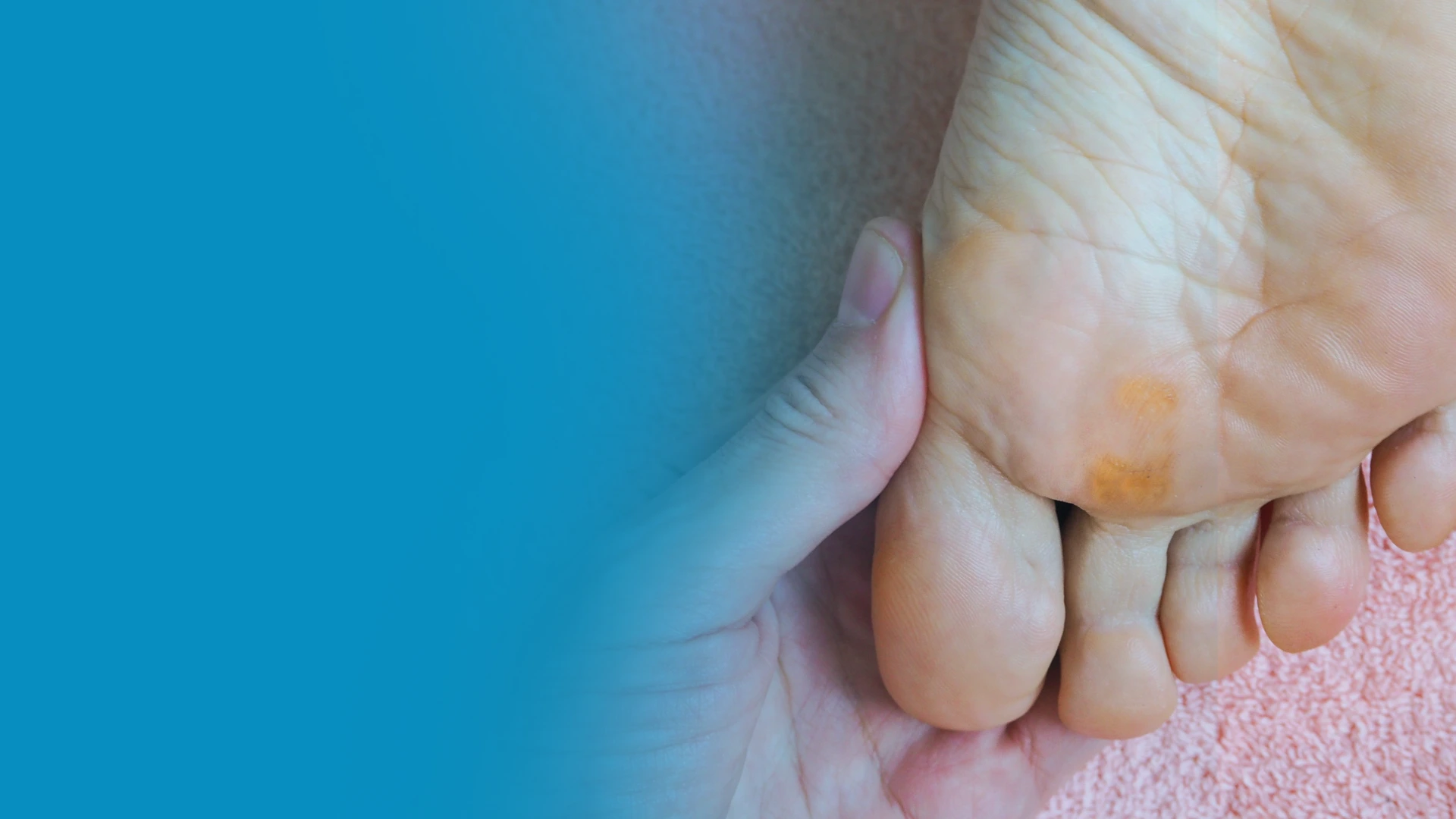
A callus (tyloma) is a diffuse area of thickened, hardened skin that develops in response to broad, repetitive pressure — most commonly on the ball of the foot (plantar metatarsal callus) or the heel border. Calluses are the skin’s protective response to friction and are not inherently painful unless they develop a central nucleus or ulcerate. A corn (heloma) is a focal, often cone-shaped thickening with a central hard nucleus (hard corn, heloma durum) or a soft, whitish macerated center between the toes (soft corn, heloma molle). Hard corns develop on bony prominences — the dorsal aspect of hammertoes (from shoe pressure), the fifth toe (tailor’s corn), and under bony prominences on the plantar surface. Soft corns develop between the toes, kept soft by moisture, and are often extremely painful because they can become infected.
Why Home Remedies Often Fail
Over-the-counter corn pads contain salicylic acid, which chemically debrides the thickened skin. This approach can be effective for mild corns in healthy patients, but carries significant risk in diabetic patients and those with poor circulation — chemical burns and ulcers can result from over-application on vulnerable skin. Home cutting (bathroom surgery) with a razor blade or nail clippers is dangerous: deep cuts can introduce infection, and cutting without removing the underlying pressure point guarantees rapid recurrence. A podiatrist uses a sterile scalpel to precisely pare the corn or callus in a single session, providing immediate relief, without the risks of chemical burns or self-inflicted wounds.
Treating the Cause, Not Just the Symptom
Debridement provides relief but is not a cure — the corn or callus will return within weeks if the mechanical cause is not addressed. Pressure mapping identifies the specific areas of elevated plantar loading. Custom orthotics with metatarsal pads and forefoot accommodations redistribute pressure away from callus-prone areas. Wider, deeper toe-box shoes eliminate the dorsal shoe pressure causing dorsal corns. Hammertoe correction — either through splinting and padding in mild cases, or surgery in rigid cases — removes the underlying bony prominence creating the hard corn. Shaving the bony eminence (ostectomy) under a persistent corn is a simple, effective surgical procedure when conservative management fails. For diabetic patients, regular professional debridement is a covered Medicare benefit and a key component of diabetic foot ulcer prevention.
More Podiatrist-Recommended Foot Health Essentials
Hoka Clifton 10


Max-cushion everyday shoe — podiatrist favorite for walking and running.

OOFOS Recovery Slide

Impact-absorbing recovery sandal — wear after long days on your feet.
As an Amazon Associate, Balance Foot & Ankle earns from qualifying purchases. Product recommendations are based on clinical experience; prices and availability shown above update live from Amazon.
When to See a Podiatrist
If foot or ankle pain has been bothering you for more than a few weeks, home care alone may not be enough. Balance Foot & Ankle offers same-week appointments at our Howell and Bloomfield Township clinics — no referral needed in most cases. Bring your current shoes and a short list of symptoms and we’ll build you a treatment plan in one visit.
Call Balance Foot & Ankle: (810) 206-1402 · Book online · Offices in Howell & Bloomfield Township
Frequently Asked Questions
Should I cut my own corn at home?
No. Home cutting of corns with razor blades or clippers risks cutting too deep, introducing infection, and creating a wound that is worse than the corn itself. This is particularly dangerous for diabetic patients and those with poor circulation, where even a small cut can become a serious wound. Professional debridement by a podiatrist is safe, painless, and provides immediate relief without these risks.
Why do my calluses keep coming back?
Calluses recur because the underlying pressure causing them has not been addressed. Debridement (trimming) removes the existing thickening but does not change the biomechanical or shoe-fit issue that created it. Eliminating the cause — with custom orthotics, appropriate footwear, or correction of a bony deformity — prevents recurrence. Without addressing the cause, callus formation typically resumes within 4–8 weeks of debridement.
Is corn debridement painful?
Professional corn and callus debridement by a podiatrist is typically painless or produces only very mild discomfort. The procedure takes 5–10 minutes, requires no anesthesia, and patients walk out with immediate pain relief. Soft corns between toes that have become macerated or infected may cause brief discomfort during cleaning but still do not require local anesthesia in most cases.
Does Medicare cover corn and callus removal?
Medicare covers callus and corn debridement (trimming) when the patient has a qualifying systemic condition — diabetes, peripheral arterial disease, or other conditions documented by the treating physician — that makes routine foot care medically necessary rather than cosmetic. For patients without qualifying systemic conditions, routine foot care (nail trimming, callus removal) is generally not covered by Medicare. Call our office to verify your coverage.
Professional corn and callus care provides lasting relief when combined with addressing the underlying cause. Contact Balance Foot & Ankle to schedule with Dr. Biernacki in Southeast Michigan.
Dr. Tom’s Recommended Products for Calluses & Corns
📍 Located in Michigan?
Our board-certified podiatrists treat this condition at two convenient locations. Most new patients are seen the same week.
These are products I personally use and recommend to my patients at Balance Foot & Ankle.
- Amope Pedi Perfect Electronic Foot File — Micro-abrasion rollers remove callus layers painlessly — the most effective at-home alternative to office debridement
- PowerStep Corn Cushions — Medicated pads with salicylic acid dissolve corn tissue while donut pad offloads pressure
- Urea 40% Foot Cream (Gold Bond Rough & Bumpy) — 40% urea dissolves hard callus keratin — clinically effective for thick skin reduction between podiatry visits
Affiliate disclosure: As an Amazon Associate, Balance Foot & Ankle earns from qualifying purchases. We only recommend products we trust for our own patients.
Join 950,000+ Learning About Foot Health
Dr. Tom shares honest medical advice, supplement reviews, and treatment guides you won’t find anywhere else.
Subscribe on YouTube →Medically Reviewed by: Dr. Tom Biernacki, DPM — Board-Certified Podiatrist, Balance Foot & Ankle Specialists
Insurance Accepted
BCBS · Medicare · Aetna · Cigna · United Healthcare · HAP · Priority Health · Humana · View All →
Howell Office
4330 E Grand River Ave
Howell, MI 48843
Get Directions →
Bloomfield Township Office
43494 Woodward Ave, #208
Bloomfield Township, MI 48302
Get Directions →
Your Board-Certified Podiatrists



Ready to Get Back on Your Feet?
Same-week appointments available at both locations.
Book Your AppointmentDifferential Diagnosis: What Else Could It Be?
Several conditions share symptoms with Corns and Calluses and are commonly misdiagnosed in the first office visit. Considering these alternatives is part of every Balance Foot & Ankle exam:
- Plantar wart. Skin lines interrupted, black-dot capillaries, pain with side-pinch.
- Porokeratosis. Thin keratotic rim with central plug, painful pinpoint center.
- Foreign body granuloma. History of penetrating injury, ultrasound finds the object.
If your symptoms don’t fit the textbook pattern, ask your podiatrist which differentials they ruled out — that conversation often shortcuts months of trial-and-error treatment.
In Our Clinic
The typical corn or callus patient at Balance Foot & Ankle has been trimming them at home for years with limited success. We pare the lesion to see what’s underneath — a well-demarcated central core distinguishes a corn from a diffuse callus, and a plantar wart interrupts the skin lines instead of following them. The real question we ask is WHY the callus formed: a bony prominence (bunion, hammertoe), a biomechanical imbalance, or an ill-fitting shoe. Correct the cause — with custom orthotics, a metatarsal pad, or footwear change — and the callus stops coming back. Otherwise it’s a lifelong re-trim cycle.
Most Common Mistake We See
The most common mistake we see is: Cutting corns at home with scissors or razor blades. Fix: professional podiatric enucleation with sterile instruments — safer and prevents recurrence.
Warning Signs That Need Same-Day Care
Seek immediate evaluation at Balance Foot & Ankle if you experience any of the following:
- Spreading redness (infection)
- Diabetic patient with any corn
- Not healing after 4-6 weeks of conservative care
- Ulceration beneath the corn
Call (810) 206-1402 — same-week appointments at our Howell and Bloomfield Township offices.
In-Office Treatment at Balance Foot & Ankle
When conservative care isn’t enough, Dr. Tom Biernacki and the team at Balance Foot & Ankle offer advanced, same-day options — including Corn & Callus Treatment Michigan at our Howell and Bloomfield Township clinics.
Same-week appointments available. Call (810) 206-1402 or book online.
Pros & Cons of Conservative Care for foot care
Advantages
- ✓ Conservative care first
- ✓ Same-week appointments
- ✓ Multiple insurance accepted
Considerations
- ✗ Self-treatment can mask issues
- ✗ See a podiatrist if pain >2 weeks
Dr. Tom’s Recommended Products for foot care
Affiliate disclosure: As an Amazon Associate, Balance Foot & Ankle earns from qualifying purchases. We only recommend products we use with patients.
Footnanny Heel Cream Dr. Tom’s Pick
Best for: Daily moisturizer for cracked heels
Ready to Get Back on Your Feet?
Same-week appointments in Howell + Bloomfield Township. Most insurance accepted. Dr. Tom Biernacki, DPM & team.
Book Today — Same-Week Appointments Available
Call Now: (810) 206-1402
About Your Care Team at Balance Foot & Ankle
Dr. Tom Biernacki, DPM · Board-Certified Foot & Ankle Surgeon. Specializes in conservative-first care, minimally invasive bunion surgery, and complex reconstruction.
Dr. Carl Jay, DPM · Accepting new patients. Specializes in sports medicine, athletic injuries, and routine podiatric care.
Dr. Daria Gutkin, DPM, AACFAS · Accepting new patients. Specializes in surgical reconstruction and pediatric podiatry.
Locations: 4330 E Grand River Ave, Howell, MI 48843 · 43494 Woodward Ave Suite 208, Bloomfield Township, MI 48302
Hours: Mon–Fri 8:00 AM – 5:00 PM · (810) 206-1402
Visit Balance Foot & Ankle — Same-Week Appointments Available
Our podiatry team serves patients throughout Michigan including Howell, Brighton, and Bloomfield Township. If you’re dealing with heel pain, ingrown toenails, or a foot injury, we have same-week appointment availability.
Same-week appointments available. (810) 206-1402
Doctor Hoy’s Natural Pain Relief Gel
Natural topical pain relief I use in our clinic. Arnica + camphor formula — apply directly to the area 3–4x daily. ($20–25)
Shop Doctor Hoy’s →Frequently Asked Questions
How long does treatment take to work?
Most patients see improvement in 4-8 weeks with consistent conservative care. Persistent symptoms after 8 weeks need imaging and escalation.
When is surgery needed?
Surgery is reserved for cases that fail 3-6 months of conservative care, structural deformities, or fractures requiring stabilization.
Is this covered by insurance?
Most diagnostic visits and conservative treatments are covered by Medicare and major insurers. Custom orthotics often require diabetic or post-surgical justification.
What is Corns and calluses?
Corns and calluses is a common foot/ankle condition that affects mobility and quality of life. Understanding the underlying cause is the first step in successful treatment. Our podiatrists at Balance Foot & Ankle perform a hands-on biomechanical exam, review your activity history, and use diagnostic imaging when appropriate to identify the root cause—not just treat the symptom. Many patients have been told to “rest and ice” without a deeper diagnostic workup; our approach is different.
Symptoms and warning signs
Common signs of corns and calluses include pain that worsens with activity, morning stiffness, swelling, tenderness when palpated, and difficulty bearing weight. If you experience sudden severe pain, inability to walk, visible deformity, numbness or color change, contact our office the same day or visit urgent care—these can signal a more serious injury such as a fracture, tendon rupture, or vascular compromise. Diabetics with any foot wound should seek same-day care.
Conservative treatment options
Most cases of corns and calluses respond to non-surgical care: structured rest, supportive footwear changes, custom orthotics, targeted stretching and strengthening protocols, anti-inflammatory medications when medically appropriate, and in-office procedures such as ultrasound-guided injections. We also offer advanced therapies including laser therapy, EPAT/shockwave, regenerative injections, and image-guided procedures. Treatment is sequenced from least invasive to most invasive, and we explain the rationale at every step.
When is surgery considered?
Surgery is reserved for cases that fail 3-6 months of well-structured conservative care, when there is structural pathology (severe deformity, complete tear, advanced arthritis), or when imaging shows damage that will not heal without intervention. Our surgeons have performed 3,000+ foot and ankle procedures and prioritize minimally-invasive techniques whenever appropriate. We discuss recovery timelines, return-to-activity milestones, and realistic outcome expectations before any procedure is scheduled.
Recovery timeline and prevention
Recovery from corns and calluses varies based on severity and chosen treatment path. Conservative cases often improve within 4-8 weeks with consistent adherence to the protocol. Post-procedural recovery may range from a few days (in-office procedures) to several months (reconstructive surgery). Long-term prevention involves footwear assessment, activity modification, structured strengthening, and regular check-ins with your podiatrist if you have a history of recurrence. We provide written home-exercise plans and digital follow-up support.
Ready to feel better?
Same-week appointments available in Howell and Bloomfield Township, Michigan.
Book Your VisitOur podiatrists treat the underlying cause, not just the symptom. Same-week appointments at our Howell and Bloomfield Township, Michigan offices.
Ready for Expert Care?
Same-week appointments in Howell & Bloomfield Township, MI.
4.9★ | 1,123 Reviews | 3,000+ Surgeries
Or call: (810) 206-1402

Dr. Tom Biernacki, DPM is a board-certified foot & ankle surgeon (ABFAS & ABPM) at Balance Foot & Ankle Specialists in Southeast Michigan. With over a decade of clinical experience, he specializes in heel pain, bunions, diabetic foot care, sports injuries, and minimally invasive surgery. Dr. Biernacki is a member of the APMA and ACFAS, and his patient education content on MichiganFootDoctors.com and YouTube has made him one of the most-followed foot & ankle educators on YouTube.