
Quick answer: Cycling Foot Pain Metatarsalgia Hot Foot Cleat Position has multiple potential causes including mechanical, neurological, vascular, and inflammatory. The most common causes we identify are overuse, ill-fitting shoes, and biomechanical imbalance. Red flags requiring urgent evaluation: warmth/redness (infection), inability to bear weight (fracture), and unilateral swelling without injury (DVT). Call (810) 206-1402.
Medically reviewed by Dr. Tom Biernacki, DPM — Board-Certified Podiatric Surgeon — Balance Foot & Ankle, Howell & Bloomfield Township, MI. Last updated April 2026.
Medically reviewed by Dr. Tom Biernacki, DPM
Board-certified podiatric surgeon | Balance Foot & Ankle
Last reviewed: April 2026
In this guide:
Why Cycling Causes Foot Pain
 metatarsalgia hot foot cleat position treatment podiatrist Howell MI” class=”wp-image-57389″ width=”1200″ height=”630″ loading=”eager” fetchpriority=”high” decoding=”async”/>
![Metatarsalgia Treatment [BEST Ball of Foot Pain RELIEF 2024]](https://www.michiganfootdoctors.com/wp-content/cache/flying-press/d7857672675f2bf191a8e896b2f7208b.jpg)
Watch: Metatarsalgia Treatment [BEST Ball of Foot Pain RELIEF 2024] — MichiganFootDoctors YouTube
Road cycling, mountain biking, and indoor cycling generate unique foot problems because of the static foot position, sustained forefoot loading across the pedal, and the pressure concentration created by the rigid cycling shoe on the metatarsal heads across thousands of pedal strokes per hour. Unlike running sports where the foot dynamically loads and unloads, cycling maintains the foot in a fixed position against a hard surface for the entire duration of the ride. Small biomechanical imperfections are amplified over the repetition of cycling, and even minor cleat position errors or shoe fit issues that would be inconsequential for a 30-minute ride become significant problems on multi-hour training rides and centuries. Southeast Michigan has a large and growing road cycling community that participates in local gran fondos, touring events, and competitive racing throughout the warm months.
Hot Foot and Metatarsalgia
Hot foot — a burning, aching sensation across the ball of the foot during cycling — is the most common foot complaint among road cyclists and is caused by sustained compression of the forefoot across the rigid pedal axle. The metatarsal heads, particularly the second and third, are compressed against the stiff cycling shoe sole with each pedal stroke. Cleat position is the primary determinant: a cleat positioned too far forward places the pedal axle behind the metatarsal heads, creating a lever arm that amplifies forefoot pressure. Moving the cleat rearward — typically 3 to 5 millimeters — so that the pedal axle is directly under the first metatarsal head significantly reduces hot foot in most cyclists. Custom cycling orthotics or metatarsal buttons inside the shoe further redistribute forefoot load.
Foot Numbness and Nerve Compression
Forefoot numbness and tingling in cyclists results from compression of the interdigital nerves between the metatarsal heads — the same mechanism as Morton neuroma. Cycling shoes that are too narrow across the forefoot and tight buckle or boa closure systems that constrict the metatarsal region are the primary causes. Switching to wider shoes, using a ventilated shoe to reduce heat-related swelling, and adjusting closure tension so that the forefoot is held but not compressed resolves most cases. Heel and arch numbness may indicate saddle height issues creating excessive plantarflexion that compresses heel nerves.
When to see a podiatrist for cycling foot pain:
- Burning or numbness that persists after getting off the bike
- Ball-of-foot pain that worsens with each ride despite shoe adjustments
- Tingling in toes that doesn’t resolve within 30 minutes post-ride
- Arch or heel pain developing during longer rides
- Visible swelling at the forefoot after cycling
Cycling Shoe Selection and Orthotics
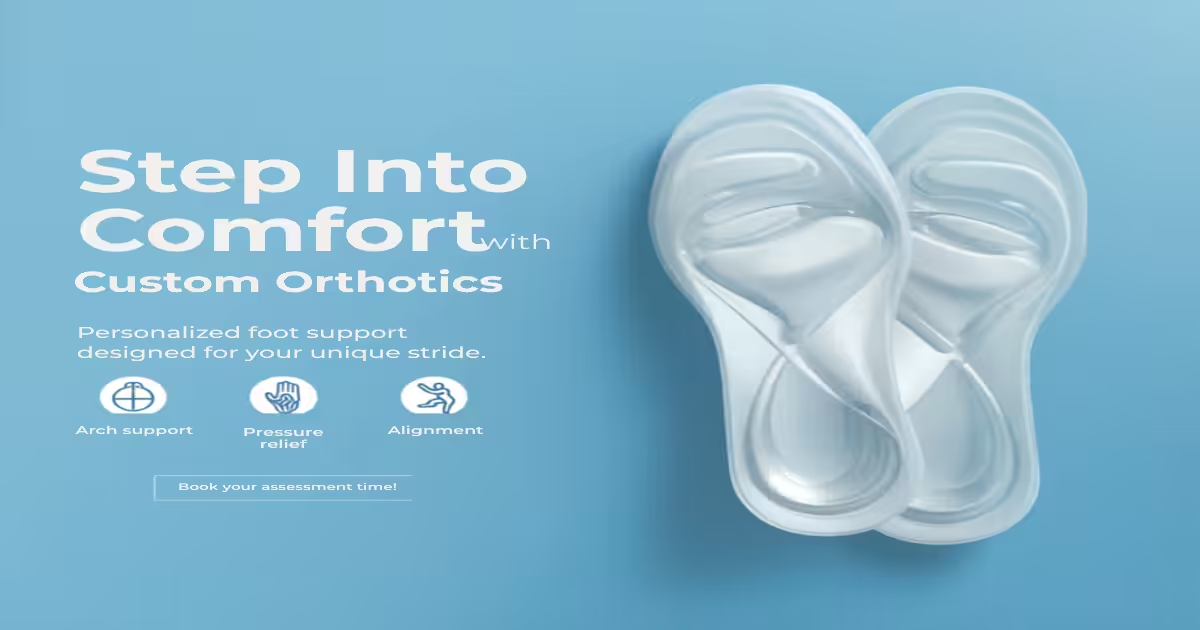
Cycling shoes with carbon fiber soles maximize power transfer but also transmit the most forefoot pressure. Cyclists with metatarsalgia benefit from shoes with composite or fiberglass soles that have slight flex. Custom cycling orthotics are fabricated specifically for the cycling shoe and accommodate the varus or valgus forefoot wedging that corrects functional asymmetries visible during pedal stroke analysis. Any cyclist with persistent foot pain during or after rides that does not respond to cleat adjustment and shoe modification deserves podiatric evaluation.
Recommended Products for Cyclists
In our clinic, we recommend these products for cyclists dealing with foot pain:
Powerstep Pinnacle Insoles — Fits inside cycling shoes to provide arch support and redistribute pressure across the forefoot. Reduces hot spots that cause metatarsalgia during long rides.
TheraBand Foot Roller — Post-ride recovery tool for plantar fascia and intrinsic foot muscles. Rolling after every ride reduces cumulative tension that leads to arch and heel pain in cyclists.
SB SOX Compression Socks — Graduated compression improves circulation and reduces foot swelling during long rides. Particularly helpful for cyclists who experience numbness or tingling in the toes.
More Podiatrist-Recommended Foot Health Essentials
Hoka Clifton 10

Max-cushion everyday shoe — podiatrist favorite for walking and running.

OOFOS Recovery Slide

Impact-absorbing recovery sandal — wear after long days on your feet.
As an Amazon Associate, Balance Foot & Ankle earns from qualifying purchases. Product recommendations are based on clinical experience; prices and availability shown above update live from Amazon.
When to See a Podiatrist
If foot or ankle pain has been bothering you for more than a few weeks, home care alone may not be enough. Balance Foot & Ankle offers online booking 24/7 at our Howell and Bloomfield Township clinics — no referral needed in most cases. Bring your current shoes and a short list of symptoms and we’ll build you a treatment plan in one visit.
Call Balance Foot & Ankle: (810) 206-1402 · Book online · Offices in Howell & Bloomfield Township
Frequently Asked Questions
Why do my feet go numb when cycling?
Cycling shoe pressure compresses the nerves between the metatarsal heads, especially when shoes are too narrow or laced too tight. Moving cleats 1-2mm rearward, loosening straps, and using metatarsal pads usually eliminates numbness within a few rides.
Do I need cycling-specific orthotics?
If over-the-counter insoles don’t resolve your pain, custom cycling orthotics made from a 3D foot scan provide precise arch support and forefoot pressure redistribution tailored to your pedaling biomechanics.
Can cycling cause plantar fasciitis?
Yes, particularly in riders with flat feet or high arches who use stiff-soled shoes without adequate arch support. The repetitive pedaling motion with a rigid sole can strain the plantar fascia over long distances.
Differential Diagnosis: What Else Could It Be?
Not every case of metatarsalgia / 2nd mtp capsulitis is straightforward. In our clinic we routinely rule out three look-alike conditions before confirming the diagnosis. If your symptoms don’t match the classic presentation, one of these may explain the pain — which is why physical exam matters more than self-diagnosis.
| Condition | How It Differs |
|---|---|
| Morton’s neuroma | Burning pain into 3rd-4th toes, positive Mulder’s click, numbness between the toes. |
| Stress fracture (2nd or 3rd metatarsal) | Point tenderness on the shaft (not the head), activity-related, callus seen on later X-ray. |
| Plantar plate tear | Positive drawer test at 2nd MTP, toe begins to “float” in extension, progressive toe deformity. |
Red Flags — When to See a Podiatrist Now
Seek expert evaluation at Balance Foot & Ankle if you notice any of the following:
- Second toe drifting, crossing over, or “floating”
- Inability to bear weight on the ball of the foot
- Point tenderness suggesting stress fracture
- Diabetic + forefoot wound (urgent)
Call (810) 206-1402 or request an appointment. For an urgent foot or ankle problem, call (810) 206-1402 and we’ll find the soonest opening.
In Our Clinic: What We See
Clinical perspective from Dr. Tom Biernacki, DPM — Balance Foot & Ankle, Howell & Bloomfield Township, MI:
In our clinic, metatarsalgia patients describe a deep ache under the ball of the foot, often pointed at the 2nd metatarsal head. The pain is worse barefoot or on hard surfaces. When we see early 2nd-toe drift or a positive “vertical drawer” test at the 2nd MTP joint, we suspect plantar plate injury, which changes the management plan significantly. Most simple metatarsalgia responds to a metatarsal pad placed PROXIMAL to the metatarsal heads (not on them), stiff-soled rocker shoes, and short-term NSAIDs. Plantar plate tears may need taping, toe crest pads, or surgical repair.
The Bottom Line
Most cycling foot pain resolves with proper shoe fit, cleat positioning, and appropriate insole support. In our Howell and Bloomfield Township clinics, we see Michigan cyclists every week with preventable foot problems that respond quickly to targeted adjustments. If your foot pain persists despite basic shoe and cleat changes, a biomechanical evaluation can identify the specific cause and get you back to pain-free riding.
Cycling Foot Pain? We Can Help
Book online 24/7 in Howell & Bloomfield Township, MI
4.9★ | 1,200+ Reviews | 3,000+ Surgeries
Or call: (810) 206-1402
Cycling Foot Pain Solutions in Michigan
Metatarsalgia, hot foot, and numbness while cycling often stem from cleat position, shoe fit, or biomechanical issues. Our podiatrists provide cycling-specific evaluation and custom orthotics at our Howell and Bloomfield Township offices.
Learn About Custom Orthotics | Book Your Appointment | Call (810) 206-1402
Clinical References
- Bini RR, Hume PA. Effects of workload and pedalling cadence on knee forces in competitive cyclists. Sports Biomech. 2013;12(2):93-107.
- Gregor RJ, Wheeler JB. Biomechanical factors associated with shoe/pedal interfaces. Sports Med. 1994;17(2):117-131.
- Silberman MR, et al. Road cycling injuries. Clin Sports Med. 2005;24(3):687-714.
Insurance Accepted
BCBS · Medicare · Aetna · Cigna · United Healthcare · HAP · Priority Health · Humana · View All →
Howell Office
4330 E Grand River Ave
Howell, MI 48843
Get Directions →
Bloomfield Township Office
43494 Woodward Ave, Suite 208
Bloomfield Township, MI 48302
Get Directions →
In-Office Treatment at Balance Foot & Ankle
If home treatment isn’t providing relief for your metatarsalgia, our podiatry team at Balance Foot & Ankle can help with expert evaluations and advanced in-office care.
Book online 24/7. (810) 206-1402
VitaMedica Arnica Gel
Arnica gel plus 15 plant compounds for sore feet, plantar fasciitis flares and post-activity soreness. Apply a thin layer to the sore area.
Shop VitaMedica Arnica Gel →Frequently Asked Questions
When should I see a doctor?
See a podiatrist if pain persists past 2 weeks, prevents normal activity, or is accompanied by red-flag symptoms (warmth, swelling, numbness, inability to bear weight).
Can I treat this at home?
Mild cases respond to RICE protocol (rest, ice, compression, elevation), supportive shoes, and OTC anti-inflammatories. Persistent symptoms need professional evaluation.
How long does it take to heal?
Most soft tissue injuries resolve in 2-6 weeks with appropriate care. Bone injuries take 6-12 weeks. Chronic conditions need longer-term management.
Ready to feel better?
Appointments available in Howell and Bloomfield Township, Michigan.
Book Your Visit
Dr. Tom Biernacki, DPM is a board-certified foot & ankle surgeon (ABFAS & ABPM) at Balance Foot & Ankle Specialists in Southeast Michigan. With over a decade of clinical experience, he specializes in heel pain, bunions, diabetic foot care, sports injuries, and minimally invasive surgery. Dr. Biernacki is a member of the APMA and ACFAS, and his patient education content on MichiganFootDoctors.com and YouTube has made him one of the most-followed foot & ankle educators on YouTube.
More questions patients ask
What causes hot foot (metatarsalgia) when cycling?
Cycling hot foot: cleat positioned too far forward creates excessive pressure on metatarsal heads, compressing the nerves. Narrow cycling shoes and high cadence worsen it.
How do I fix hot foot when cycling?
Move cleats 2–3mm back toward the heel. Use wider cycling shoes. Add metatarsal button insoles. CURREX CyclePro insoles designed for cycling. See Dr. Tom Biernacki DPM if numbness persists. (810) 206-1402.
When should I see a podiatrist for cycling foot pain?
See Dr. Tom Biernacki DPM if symptoms persist >4 weeks or worsen. Book at Balance Foot & Ankle — Howell & Bloomfield Township. (810) 206-1402.
Does Balance Foot & Ankle accept insurance?
We accept BCBS, Medicare Part B, and most Michigan PPO plans. Call (810) 206-1402.
Still have a question about coverage or cost? Book online and we will check your benefits before your visit: Book in Howell · Book in Bloomfield Township. Prefer to talk it through first? Call (810) 206-1402.