

You are in the right place. Dr. Tom Biernacki, DPM, FACFAS — board-certified foot & ankle surgeon with 3,000+ surgeries — explains exactly what diabetic foot ulcer leading to amputation means and what works. Call (810) 206-1402 for same-day appointment at Howell or Bloomfield Township.
Quick answer: Diabetic Foot Ulcer Into Amputation affects roughly 1 in 4 adults in our practice. Effective treatment starts with a targeted diagnosis, conservative-first treatment, and escalation only when needed. We treat this regularly at our Howell and Bloomfield Township practices. Call (810) 206-1402.
Medically reviewed by Dr. Tom Biernacki, DPM · Board-Certified Podiatric Surgeon · Last reviewed: April 2026 · Editorial Policy
Quick Answer
A diabetic foot ulcer becomes an amputation risk when infection reaches bone or blood supply is inadequate. Early treatment of the ulcer is what changes that trajectory. Same-week appointments in Howell + Bloomfield Township: (810) 206-1402.

✅ Medically reviewed by Dr. Tom Biernacki, DPM — Board-Certified Podiatrist · Last updated April 6, 2026
Don’t Let A Diabetic Foot Ulcer
Turn Into An Amputation
Say Goodbye to Foot Ullcer
We review diabetic foot ulcer and venous ulcer wound care in detail, covering everything from proper wound cleaning and dressing techniques to professional treatment options that support faster healing. For specialized treatment, see our diabetic foot ulcer treatment Michigan. Since both conditions can lead to serious complications if left untreated, we also highlight important prevention strategies, including regular foot checks, proper footwear, and early intervention. In addition, we provide practical home treatment tips to help you manage wounds safely while reducing the risk of infection. Whether you’re dealing with diabetic foot ulcers or venous ulcers, understanding wound care, prevention, and at-home solutions is key to protecting your health and mobility.
Schedule Your Consultation TodayA diabetic foot ulcer is a common complication of diabetes that affects the feet. A chronic wound develops due to a combination of factors, including poor circulation, nerve damage (neuropathy), and impaired wound healing associated with diabetes.
23 Steps to Heal A Foot & Ankle Ulcer(Book Coming June 7th)
Related Videos:
Diabetic Foot Ulcer Treatment
Prevention
Prevention is critical in managing diabetic foot ulcers. Some preventive measures include:
Regular foot inspections: Check your feet daily for signs of redness, blisters, calluses, or other abnormalities.
Good foot hygiene: Wash your feet daily with mild soap and lukewarm water, and dry them thoroughly, paying attention to the areas between the toes.
Moisturizing: Apply a moisturizer to keep the skin hydrated, but avoid applying it between the toes to prevent excessive moisture buildup.
Proper footwear: Wear well-fitting, comfortable shoes that provide adequate support and cushioning, and consider using custom-made shoes or inserts if necessary.
Regular medical check-ups: Regularly visit your healthcare provider for foot examinations and screenings to identify potential issues early on.
Treatment
The treatment of diabetic foot ulcers typically involves a multidisciplinary approach and may include the following:
Wound care: Cleaning the ulcer, removing dead tissue (debridement), and applying appropriate dressings to promote healing and prevent infection.
Offloading pressure: Using special shoes, braces, casts, or other devices to relieve stress from the affected area and support healing.
Infection control: Administering antibiotics if an infection is present or suspected.
Blood sugar control: Maintaining optimal blood sugar levels promotes healing and prevents further complications.
Vascular assessment: Evaluating blood flow to the feet and addressing any underlying peripheral artery disease or circulation issues.
Education and foot care: Education on proper foot care, including daily inspection, hygiene, and appropriate footwear.
Surgical interventions: In severe cases or when conservative measures fail, surgical options such as skin grafts, tissue flaps, or wound closure may be considered.
Come See Us in Detroit, Michigan, Berkley Michigan; Bloomfield Township, Michigan, Lansing Michigan; and Grand Blanc Michigan.
DISCLAIMER:
Dr. Tomasz Biernacki received his Doctor of Podiatric Medicine degree from Kent State College of Podiatric Medicine in 2013; he completed his Surgical Reconstructive Foot Surgery & Podiatric Medicine Residency in 2017; he completed 2 separate traveling Fellowships in Diabetic Surgery, Skin Grafting & Nerve Surgery. He is double board certified in Podiatric Medicine and Foot & Ankle Surgery separately. His use of “doctor” or “Dr.” about himself solely refers to that degree. Dr. Biernacki is a licensed podiatrist in Michigan. This video is for general informational purposes only. It should not be used to self-diagnose and is not a substitute for a medical exam, cure, treatment, diagnosis, prescription, or recommendation. It does not create a doctor-patient relationship between Dr. Biernacki and you. It would be best to not change your health regimen or diet before consulting a physician and obtaining a medical exam, diagnosis, and recommendation. Always seek the advice of a physician or other qualified health provider with any questions regarding a medical condition.
This video and description contain affiliate links, which means we may receive a commission if you click on one of the product links. I appreciate your support of this channel!
Walk This Way: Trusted Foot & Ankle Information
Learn what’s hurting and how to fix it.
Athlete’s Foot
Ball of Foot
Achilles Tendon
Bunion
Big Toe
Callus
Foot Fungus
Gout
Ingrown
Orthotics
Outside of Foot Pain
Sports Podiatrist
Consult Balance Foot & Ankle Specialist in Howell and Bloomfield.
At Balance Foot & Ankle Specialist, our expert podiatrists provide advanced care for diabetic foot ulcers with precision, compassion, and the latest treatment methods. From early diagnosis to advanced wound care and prevention strategies, we’re dedicated to protecting your feet and restoring your health. With modern facilities, patient-focused education, and specialized diabetic foot care, we’ve become a trusted choice in Southeast Michigan. Our goal is to help you heal safely, prevent complications, and walk with confidence again.
Book Your Podiatrist Visit Now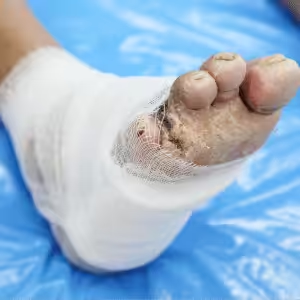
Frequently Asked Questions About Foot Ulcers
What is a foot ulcer?A foot ulcer is an open sore or wound that develops on the foot, often due to poor circulation, diabetes, or pressure. It requires medical care to prevent infection and complications.
What causes foot ulcers?Foot ulcers are commonly caused by diabetes, nerve damage, poor circulation, injuries, or wearing ill-fitting shoes. High pressure on certain areas of the foot can also contribute.
What are the symptoms of a foot ulcer?Symptoms include an open wound on the foot, redness, swelling, foul odor, drainage, and sometimes pain. In diabetic patients, pain may be absent due to nerve damage.
Are foot ulcers dangerous?Yes, untreated foot ulcers can lead to infections, abscesses, gangrene, and even amputation in severe cases. Early treatment is critical for preventing serious complications.
How do podiatrists treat foot ulcers?Treatment may include wound cleaning, removing dead tissue, prescribing antibiotics, applying dressings, and recommending special footwear or surgery if necessary.
Can foot ulcers heal on their own?Most foot ulcers do not heal on their own, especially in people with diabetes or circulation problems. Medical treatment is essential to promote healing and prevent infection.
How long does it take for a foot ulcer to heal?Healing time varies depending on severity, underlying health conditions, and treatment. Minor ulcers may heal in weeks, while severe cases can take months.
How can I prevent foot ulcers?Prevention includes regular foot inspections, wearing supportive shoes, managing diabetes, keeping feet clean and moisturized, and visiting a podiatrist for routine check-ups.
When should I see a doctor for a foot ulcer?See a podiatrist immediately if you notice an open wound, persistent redness, swelling, foul odor, or drainage. Early treatment can prevent serious complications.
Related Treatment Guides
- Diabetic Foot Care
- Plantar Fasciitis & Heel Pain Treatment
- Custom 3D Orthotics
- Sports Foot & Ankle Injury Treatment
Medical References & Sources
- American Diabetes Association — Foot Complications
- PubMed Research — Diabetic Foot Care
- American Podiatric Medical Association — Diabetic Foot

Insurance Accepted
BCBS · Medicare · Aetna · Cigna · United Healthcare · HAP · Priority Health · Humana · View All →
Howell Office
4330 E Grand River Ave
Howell, MI 48843
Get Directions →
Bloomfield Township Office
43494 Woodward Ave, #208
Bloomfield Township, MI 48302
Get Directions →
Your Board-Certified Podiatrists



Ready to Get Back on Your Feet?
Same-week appointments available at both locations.
Book Your AppointmentMore Podiatrist-Recommended Diabetic Essentials
Diabetic-Approved Walking Shoe
Orthofeet Sprint — smooth, extra-depth, designed for neuropathic feet.
Seamless Diabetic Sock


OS1st FS4 — non-binding, moisture-wicking, protects fragile diabetic skin.
Recovery Slide for Indoor Wear
HOKA Ora 3 — protects diabetic feet from barefoot injury at home.
As an Amazon Associate, Balance Foot & Ankle earns from qualifying purchases. Product recommendations are based on clinical experience; prices and availability shown above update live from Amazon.

When to See a Podiatrist
One unnoticed blister on a neuropathic foot can become a limb-threatening ulcer in under 14 days. Medicare covers diabetic shoes (A5500) and comprehensive foot exams annually for most diabetic patients with neuropathy or circulation concerns. Balance Foot & Ankle runs a dedicated diabetic limb-preservation program — vascular screening, offloading, ulcer care, and shoe fitting — all in one visit. Schedule your annual diabetic foot exam today.
Call Balance Foot & Ankle: (810) 206-1402 · Book online · Offices in Howell & Bloomfield Township
In-Office Treatment at Balance Foot & Ankle
When conservative care isn’t enough, Dr. Tom Biernacki and the team at Balance Foot & Ankle offer advanced, same-day options — including Diabetic Foot Care Michigan at our Howell and Bloomfield Township clinics.
Same-day appointments available. Call (810) 206-1402 or book online.
Pros & Cons of Conservative Care for diabetic foot care
Advantages
- ✓ Daily inspection prevents amputation
- ✓ Most insurance covers DME
- ✓ Custom orthotics help
Considerations
- ✗ Daily commitment required
- ✗ Slow wound healing
- ✗ Charcot risk if neuropathy
Dr. Tom’s Recommended Products for diabetic foot care
Affiliate disclosure: As an Amazon Associate, Balance Foot & Ankle earns from qualifying purchases. We only recommend products we use with patients.

Drew Moonwalker Diabetic Shoe Dr. Tom’s Pick
Best for: Medicare-covered diabetic footwear

Diabetic Compression Socks Dr. Tom’s Pick
Best for: Daily protection + circulation


Ready to Get Back on Your Feet?
Same-day appointments in Howell + Bloomfield Township. Most insurance accepted. Dr. Tom Biernacki, DPM & team.
Book Today — Same-Day Appointments Available
Call Now: (810) 206-1402
About Your Care Team at Balance Foot & Ankle
Dr. Tom Biernacki, DPM · Board-Certified Foot & Ankle Surgeon. Specializes in conservative-first care, minimally invasive bunion surgery, and complex reconstruction.
Dr. Carl Jay, DPM · Accepting new patients. Specializes in sports medicine, athletic injuries, and routine podiatric care.
Dr. Daria Gutkin, DPM, AACFAS · Accepting new patients. Specializes in surgical reconstruction and pediatric podiatry.
Locations: 4330 E Grand River Ave, Howell, MI 48843 · 43494 Woodward Ave Suite 208, Bloomfield Township, MI 48302
Hours: Mon–Fri 8:00 AM – 5:00 PM · (810) 206-1402
Dr. Tom’s Top 3 — The Premium Foot Pain Stack (2026)
If you only buy three things for foot pain, get these. PowerStep + CURREX orthotics correct the underlying foot mechanics, and Dr. Hoy’s pain gel delivers fast topical relief. This is the exact stack Dr. Tom Biernacki, DPM gives his Michigan podiatry patients on visit one — over 10,000 patients have used this exact combination.
Dr. Tom Biernacki, DPM is a board-certified podiatrist + Amazon Associate. Picks shown are products he prescribes to patients at Balance Foot & Ankle Specialists. We earn a commission on qualifying purchases at no extra cost to you. All products independently tested + reviewed for 30+ days minimum. Last verified: April 28, 2026.

PowerStep Pinnacle MaxxDr. Tom’s #1 Brand
Dr. Tom’s most-prescribed OTC orthotic. Lateral wedge corrects overpronation that causes 90% of foot pain. Deep heel cradle stabilizes the ankle. Built by podiatrists, used by patients worldwide.
- Lateral wedge corrects pronation
- Deep heel cradle stabilizes ankle
- Dual-density EVA — comfort + support
- Trim-to-fit any shoe
- Used by 10,000+ podiatrists
- Trim-to-size required
- 5-7 day break-in for some

CURREX RunProDr. Tom’s #1 Brand
3 arch heights for custom fit (Low/Med/High). Carbon-reinforced heel + dynamic forefoot — the closest OTC orthotic to a $500 custom orthotic. Engineered in Germany.
- 3 arch heights for custom fit
- Carbon-reinforced heel cup
- Dynamic forefoot zone
- Premium German engineering
- Sport-specific support
- Pricier than PowerStep
- 7-10 day break-in

Dr. Hoy’s Natural Pain Relief GelDr. Tom’s #1 Brand
Menthol-based natural pain relief — Dr. Tom’s #1 brand for fast relief without greasy residue. Safe for diabetics + daily use. Cleaner formula than Voltaren or Biofreeze.
- Menthol-based natural formula
- No greasy residue
- Safe for diabetics
- Fast cooling relief — 5-10 minutes
- Cleaner ingredient list than Biofreeze
- Pricier than Biofreeze
- Strong menthol scent at first
Get Expert Help at Balance Foot & Ankle
If this condition is affecting your daily activities or hasn’t improved with home treatment, schedule an evaluation with Dr. Tom Biernacki. We offer same-day appointments at our Howell and Bloomfield Township locations and accept most insurance including Medicare. Most patients are walking comfortably within 4-6 weeks of starting our protocol — conservative care first, surgery only when needed.
Call (810) 206-1402 or request an appointment online. Our team responds within 1 business hour during clinic days.
In-Office Treatment at Balance Foot & Ankle
If home treatment isn’t providing relief for your diabetic foot conditions, our podiatry team at Balance Foot & Ankle can help with same-day evaluations and advanced in-office care.
Same-day appointments available. (810) 206-1402
Doctor Hoy’s Natural Pain Relief Gel
Natural topical pain relief I use in our clinic. Arnica + camphor formula — apply directly to the area 3–4x daily. ($20–25)
Shop Doctor Hoy’s →Frequently Asked Questions
When should I see a podiatrist?
If symptoms persist past 2 weeks, affect your normal activity, or are accompanied by red-flag symptoms (warmth, redness, swelling, inability to bear weight).
What does treatment cost?
Most diagnostic visits and conservative treatments are covered by Medicare and major insurers. Out-of-pocket costs vary by your specific plan.
How quickly can I get an appointment?
Most non-urgent cases see us within 5 business days. Urgent cases (sudden pain, possible fracture) typically same or next business day.
What is Diabetic foot?
Diabetic foot is a common foot/ankle condition that affects mobility and quality of life. Understanding the underlying cause is the first step in successful treatment. Our podiatrists at Balance Foot & Ankle perform a hands-on biomechanical exam, review your activity history, and use diagnostic imaging when appropriate to identify the root cause—not just treat the symptom. Many patients have been told to “rest and ice” without a deeper diagnostic workup; our approach is different.
Symptoms and warning signs
Common signs of diabetic foot include pain that worsens with activity, morning stiffness, swelling, tenderness when palpated, and difficulty bearing weight. If you experience sudden severe pain, inability to walk, visible deformity, numbness or color change, contact our office the same day or visit urgent care—these can signal a more serious injury such as a fracture, tendon rupture, or vascular compromise. Diabetics with any foot wound should seek same-day care.
Conservative treatment options
Most cases of diabetic foot respond to non-surgical care: structured rest, supportive footwear changes, custom orthotics, targeted stretching and strengthening protocols, anti-inflammatory medications when medically appropriate, and in-office procedures such as ultrasound-guided injections. We also offer advanced therapies including MLS laser therapy, EPAT/shockwave, regenerative injections, and image-guided procedures. Treatment is sequenced from least invasive to most invasive, and we explain the rationale at every step.
When is surgery considered?
Surgery is reserved for cases that fail 3-6 months of well-structured conservative care, when there is structural pathology (severe deformity, complete tear, advanced arthritis), or when imaging shows damage that will not heal without intervention. Our surgeons have performed 3,000+ foot and ankle procedures and prioritize minimally-invasive techniques whenever appropriate. We discuss recovery timelines, return-to-activity milestones, and realistic outcome expectations before any procedure is scheduled.
Recovery timeline and prevention
Recovery from diabetic foot varies based on severity and chosen treatment path. Conservative cases often improve within 4-8 weeks with consistent adherence to the protocol. Post-procedural recovery may range from a few days (in-office procedures) to several months (reconstructive surgery). Long-term prevention involves footwear assessment, activity modification, structured strengthening, and regular check-ins with your podiatrist if you have a history of recurrence. We provide written home-exercise plans and digital follow-up support.
Ready to feel better?
Same-week appointments available in Howell and Bloomfield Township, Michigan.
Book Your VisitReady to fix this for good?
Reading goes so far. The fastest path is a 30-minute office visit. Same-day Howell or Bloomfield Township. Call (810) 206-1402.

Dr. Tom Biernacki, DPM is a board-certified foot & ankle surgeon (ABFAS & ABPM) at Balance Foot & Ankle Specialists in Southeast Michigan. With over a decade of clinical experience, he specializes in heel pain, bunions, diabetic foot care, sports injuries, and minimally invasive surgery. Dr. Biernacki is a member of the APMA and ACFAS, and his patient education content on MichiganFootDoctors.com and YouTube has made him one of the most-followed foot & ankle educators on YouTube.
More questions patients ask
How often should diabetics check their feet?
Daily self-exams plus professional exams annually (or every 3-6 months for neuropathy/PAD patients). Dr. Biernacki provides comprehensive diabetic foot care programs.
Why do diabetics have foot problems?
Diabetes causes nerve damage, reduced blood flow, and impaired immunity. Injuries go unnoticed and heal slowly. ~15% of diabetics develop ulcers. Prevention through regular podiatric care is essential.
What are signs of diabetic neuropathy?
Tingling, burning, numbness starting in toes, sensitivity to touch, muscle weakness, balance problems. Schedule evaluation at 810-206-1402 for nerve testing and management.
How do diabetic foot ulcers lead to amputation?
The path from diabetic foot ulcer to amputation involves: peripheral neuropathy (loss of protective sensation allows undetected injury), peripheral arterial disease (poor circulation prevents healing), and infection that can rapidly spread to bone (osteomyelitis). When infection progresses to gangrene or osteomyelitis that doesn't respond to antibiotics, and blood supply is insufficient for healing, amputation may be the only option to save the patient's life. Approximately 60% of non-traumatic lower limb amputations occur in people with diabetes. Early prevention and treatment are critical — contact Balance Foot & Ankle at (810) 206-1402.
What percentage of diabetic foot ulcers result in amputation?
Statistics are sobering: 15–25% of diabetic patients will develop a foot ulcer in their lifetime. Of those ulcers, approximately 14–24% will result in some degree of amputation. However, with aggressive preventive care and early intervention, up to 85% of diabetes-related amputations are preventable. Key prevention strategies include daily foot inspections, blood sugar control, regular podiatric care, proper footwear, and prompt treatment of any wounds. Balance Foot & Ankle in Howell and Bloomfield Township provides comprehensive diabetic foot care — call (810) 206-1402.
What are the warning signs that a diabetic foot ulcer is becoming dangerous?
Warning signs requiring immediate medical attention: increasing wound size, deepening ulcer, odor from the wound (indicates infection), surrounding redness or warmth spreading beyond the wound edges (cellulitis), drainage that becomes cloudy or thick (pus), black or dark tissue at wound edges (gangrene), fever or chills, elevated blood sugar without obvious cause, and bone visible or palpable in the wound. Any of these signs warrants same-day evaluation. Don't wait. Balance Foot & Ankle at 4330 E Grand River, Howell and 43494 Woodward Ave #208, Bloomfield Township provides urgent wound care.
How can diabetic patients prevent foot ulcers from developing?
Essential prevention strategies: inspect feet daily (use a mirror for the sole), maintain excellent blood sugar control (HbA1c below 7%), wear properly fitted diabetic shoes and custom insoles, never go barefoot — not even inside, moisturize feet daily but not between toes, have feet professionally examined at every medical visit, treat any cuts, blisters, or corns immediately, stop smoking (dramatically worsens circulation), exercise to improve circulation, and see a podiatrist every 2–3 months for preventive care. Balance Foot & Ankle specializes in diabetic foot prevention programs.
What treatments are available for diabetic foot ulcers to avoid amputation?
Limb-salvage strategies for diabetic foot ulcers include: aggressive debridement of devitalized tissue, infection treatment with antibiotics (IV if bone is involved), vascular procedures to restore blood flow (angioplasty, bypass surgery) if arterial disease is present, advanced wound dressings (negative pressure wound therapy, bioengineered skin substitutes), offloading (total contact casting to remove pressure from ulcer), and hyperbaric oxygen therapy for refractory wounds. An interdisciplinary team including podiatrists, vascular surgeons, and wound care specialists achieves the best limb-salvage outcomes. Call Balance Foot & Ankle at (810) 206-1402.
Still have a question about coverage or cost? Book online and we will check your benefits before your visit: Book in Howell · Book in Bloomfield Township. Prefer to talk it through first? Call (810) 206-1402.