

You are in the right place. Dr. Tom Biernacki, DPM, FACFAS — board-certified foot & ankle surgeon with 3,000+ surgeries — explains exactly what diabetic peripheral neuropathy foot care means and what works. Call (810) 206-1402 for same-day appointment at Howell or Bloomfield Township.
Quick answer: Diabetic Peripheral Neuropathy Foot Care is a common foot/ankle topic that affects many patients. The 2026 evidence-based approach combines proper diagnosis, conservative-first treatment, and escalation only when needed. We treat this regularly at our Howell and Bloomfield Township practices. Call (810) 206-1402.
Medically reviewed by Dr. Tom Biernacki, DPM — Board-Certified Podiatric Surgeon — Balance Foot & Ankle, Howell & Bloomfield Township, MI. Last updated April 2026.
▶ Watch
Medically reviewed by Dr. Tom Biernacki, DPM | Board-certified podiatrist | 3,000+ surgeries performed
Last updated: April 2, 2026
The most important clinical decision with Diabetic Peripheral Neuropathy Foot Care isn’t which treatment to start with — it’s identifying the correct subtype. That changes everything. Call (810) 206-1402.
How Diabetes Damages Foot Nerves
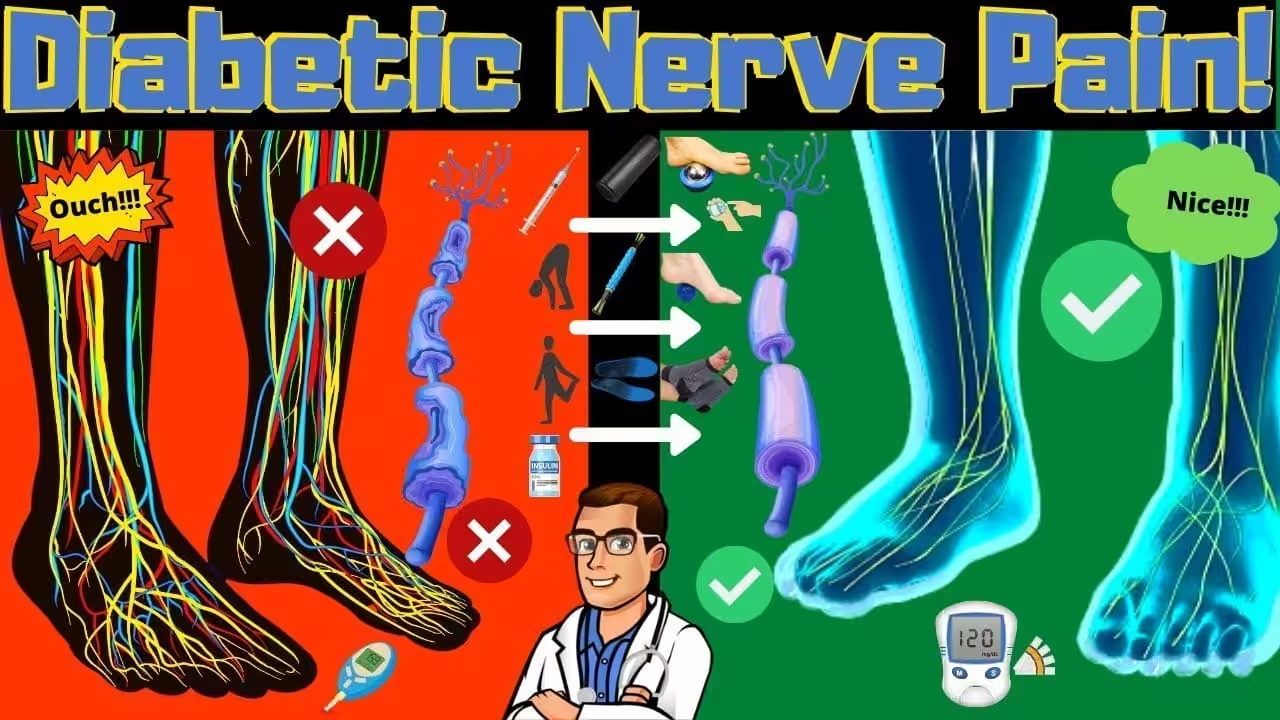
Chronically elevated blood glucose damages the small blood vessels that supply peripheral nerves, particularly the longest nerves that extend to the feet and toes. This microvascular damage deprives nerves of oxygen and nutrients, causing them to degenerate progressively from the tips upward in a stocking-glove distribution.
The nerve damage affects three types of fibers: sensory nerves that detect pain, temperature, and pressure; motor nerves that control foot muscles; and autonomic nerves that regulate sweating and skin moisture. The loss of all three creates a perfect storm for foot complications.
In our clinic, we screen every diabetic patient for neuropathy at every visit using monofilament testing, vibration perception, and ankle reflexes. Early detection of sensory loss allows us to implement protective strategies before wounds develop. Patients with an HbA1c consistently above 7% are at highest risk for progressive neuropathy.
Symptoms and Progression of Diabetic Neuropathy
Early neuropathy presents as tingling, burning, or prickling sensations in the toes that progress to the balls of the feet and then the entire foot. These positive symptoms indicate nerve irritation and are actually a sign that the nerves are still partially functioning.
As neuropathy progresses, the positive symptoms give way to numbness — the absence of sensation. This transition from painful to painless neuropathy is paradoxically more dangerous because patients lose the warning system that would normally alert them to injuries, blisters, pressure points, and infections.
Motor neuropathy causes weakness and atrophy of the small intrinsic foot muscles, leading to hammertoe deformity, claw toe formation, and prominent metatarsal heads. These structural changes create abnormal pressure points that are particularly vulnerable to ulceration in the absence of protective sensation.
Autonomic neuropathy causes decreased sweating and skin dryness, leading to cracks and fissures that serve as entry points for bacteria. The dry, fragile skin combined with loss of sensation and structural deformity creates the classic high-risk diabetic foot.
The Daily Foot Inspection Routine
Every person with diabetic neuropathy must perform a daily foot inspection — this single habit prevents more amputations than any other intervention. Check every surface of both feet including between the toes, the soles, the heels, and around the toenails.
Look for redness, swelling, blisters, calluses, cracks, cuts, color changes, temperature differences between feet, and any drainage or odor. Use a mirror or smartphone camera to see the soles if you cannot lift your feet. If you cannot inspect your own feet, a family member or caregiver should perform the inspection daily.
Any new finding — even something that seems minor — warrants a call to our clinic. What looks like a small blister or superficial cut to a neuropathic patient can progress to a deep ulcer or bone infection within days because the patient cannot feel the worsening damage.
Wash feet daily with lukewarm water (test temperature with your elbow, not your foot), dry thoroughly between toes, and apply urea-based moisturizer to prevent cracking — but never between the toes, where moisture promotes fungal infection.
Footwear: Your First Line of Defense
Proper footwear is the single most important protective measure for diabetic neuropathic feet. Shoes must have a wide, deep toe box that accommodates any deformities without creating pressure points, a rigid or rocker-bottom sole that reduces forefoot pressure, and seamless interiors that minimize friction.
Medicare’s Therapeutic Shoe Program covers one pair of depth shoes and three pairs of custom insoles annually for qualifying diabetic patients. In our clinic, we fit patients with diabetic shoes and PowerStep Pinnacle insoles that provide arch support and even pressure distribution.
Never walk barefoot — even in the house. An undetected piece of glass, a stubbed toe, or a burn from hot pavement can cause a wound that progresses rapidly without protective sensation. Wear supportive shoes or diabetic slippers at all times.
Seamless diabetic socks made from moisture-wicking materials reduce friction and keep feet dry. DASS compression socks in light compression levels help circulation in patients without significant peripheral arterial disease — check with your podiatrist before starting compression if you have known PAD.
When Neuropathy Leads to Foot Ulcers
Diabetic foot ulcers develop when repetitive pressure is applied to an area of skin that the patient cannot feel. The most common locations are under the metatarsal heads, the tips of hammertoes, the sides of the big toe, and the heel — all points of concentrated pressure during walking.
Once an ulcer forms, healing is impaired by multiple diabetes-related factors: poor circulation slows delivery of nutrients and immune cells, elevated blood glucose impairs white blood cell function, neuropathy prevents offloading because the patient does not feel pain, and structural deformity perpetuates the pressure that caused the wound.
Treatment of diabetic ulcers requires a comprehensive approach: offloading pressure from the wound with specialized boots or total contact casting, debridement of non-viable tissue, infection management with antibiotics when needed, optimizing blood glucose control, and vascular assessment to ensure adequate blood flow for healing.
In our clinic, we treat diabetic foot ulcers aggressively because we know the consequences of delayed healing. A non-healing ulcer can progress to osteomyelitis (bone infection), gangrene, and ultimately amputation. Approximately 85% of diabetes-related amputations are preceded by a foot ulcer — prevention is everything.
In-Office Treatment at Balance Foot & Ankle
Our comprehensive diabetic foot program includes neuropathy screening, vascular assessment, therapeutic shoe fitting through Medicare, custom orthotic fabrication, routine preventive nail and callus care, and advanced wound care for ulcers. We see diabetic patients every 2-3 months for preventive monitoring.
Same-day appointments available. Call (810) 206-1402 or visit michiganfootdoctors.com/new-patient-information/ to schedule.
The Most Common Mistake We See
The most common mistake diabetic patients make is assuming that because their feet do not hurt, their feet are fine. The absence of pain IS the problem — it means you cannot feel the damage that is happening. A daily visual inspection replaces the pain warning system that neuropathy has disabled.
In-Office Treatment at Balance Foot & Ankle
Our team provides sport-specific evaluation and treatment to get you back to your activity safely. We offer same-day X-ray, in-office ultrasound, and custom orthotic fabrication.
Same-day appointments available. Call (810) 206-1402 or book online.
More Podiatrist-Recommended Diabetic Essentials
Diabetic-Approved Walking Shoe
Orthofeet Sprint — seamless, extra-depth, designed for neuropathic feet.
Seamless Diabetic Sock


Watch: Peripheral Neuropathy Home Remedies [Leg & Foot Nerve Pain Treatment] — MichiganFootDoctors YouTube
OS1st FS4 — non-binding, moisture-wicking, protects fragile diabetic skin.
Recovery Slide for Indoor Wear
HOKA Ora 3 — protects diabetic feet from barefoot injury at home.
As an Amazon Associate, Balance Foot & Ankle earns from qualifying purchases. Product recommendations are based on clinical experience; prices and availability shown above update live from Amazon.
When to See a Podiatrist
One unnoticed blister on a neuropathic foot can become a limb-threatening ulcer in under 14 days. Medicare covers diabetic shoes (A5500) and comprehensive foot exams annually for most diabetic patients with neuropathy or circulation concerns. Balance Foot & Ankle runs a dedicated diabetic limb-preservation program — vascular screening, offloading, ulcer care, and shoe fitting — all in one visit. Schedule your annual diabetic foot exam today.
Call Balance Foot & Ankle: (810) 206-1402 · Book online · Offices in Howell & Bloomfield Township
Frequently Asked Questions
What are the early signs of diabetic neuropathy in the feet?
Early signs include tingling, burning, or prickling sensations in the toes that may worsen at night. As neuropathy progresses, these sensations are replaced by numbness and loss of ability to feel temperature, pressure, and pain. Any new foot sensations in a diabetic patient warrant evaluation.
How often should a diabetic patient see a podiatrist?
Diabetic patients should see a podiatrist every 2-3 months for preventive foot care including neuropathy screening, nail trimming, callus management, and shoe evaluation. Patients with active ulcers or high-risk feet may need weekly visits until the wound heals.
Does Medicare cover diabetic foot care?
Yes, Medicare covers routine podiatric care for diabetic patients including evaluation, neuropathy testing, nail trimming, callus care, and therapeutic shoes with custom insoles through the Diabetic Shoe Program. Most private insurance plans offer similar coverage.
Can diabetic neuropathy be reversed?
Existing nerve damage is generally permanent, but strict blood glucose control can prevent further progression and may allow partial recovery of mildly damaged nerves. Early intervention when symptoms first appear provides the best chance of preserving remaining nerve function.
The Bottom Line
Diabetic peripheral neuropathy is a silent threat that requires active surveillance. You cannot rely on pain to warn you of foot problems when your nerves can no longer transmit pain signals. Daily inspection, proper footwear, and regular podiatric care form the defense system that replaces your damaged nerves.
In Our Clinic
Diabetic neuropathy patients in our clinic often don’t realize they have it until we put a 10-gram Semmes-Weinstein monofilament to the plantar foot and they can’t feel it. Many arrive for an unrelated concern — an ingrown toenail, a callus — and we catch the neuropathy on screening. The conversation then shifts: we need to discuss daily foot inspections, appropriate footwear, the urgency of any blister or open area, and the timing of vascular referral if pulses are diminished. Comprehensive diabetic foot exams are covered by Medicare annually. If you have diabetes, we want to see you once a year even if nothing hurts.
Sources
- Pop-Busui R, et al. Diabetic neuropathy: a position statement by the American Diabetes Association. Diabetes Care. 2025;48(1):S206-S228.
- Armstrong DG, et al. Diabetic foot ulcers and their recurrence. N Engl J Med. 2017;376(24):2367-2375.
Expert Diabetic Foot Care in Michigan
Dr. Tom Biernacki has performed over 3,000 foot and ankle surgeries with a 4.9-star rating from 1,123 patient reviews.
Or call (810) 206-1402 for same-day appointments
Diabetic Neuropathy Foot Care in Michigan
Diabetic peripheral neuropathy requires vigilant foot care to prevent ulcers, infections, and amputation. Our podiatrists at Balance Foot & Ankle provide comprehensive diabetic foot exams, neuropathy screening, wound care, and preventive treatment at our Howell and Bloomfield Township offices.
Learn About Our Diabetic Foot Care Program | Book Your Appointment | Call (810) 206-1402
Clinical References
- Boulton AJ, et al. Diabetic neuropathies: a statement by the American Diabetes Association. Diabetes Care. 2005;28(4):956-962.
- Pop-Busui R, et al. Diabetic neuropathy: a position statement by the American Diabetes Association. Diabetes Care. 2017;40(1):136-154.
- Singh N, Armstrong DG, Lipsky BA. Preventing foot ulcers in patients with diabetes. JAMA. 2005;293(2):217-228.
Insurance Accepted
BCBS · Medicare · Aetna · Cigna · United Healthcare · HAP · Priority Health · Humana · View All →
Howell Office
4330 E Grand River Ave
Howell, MI 48843
Get Directions →
Bloomfield Township Office
43494 Woodward Ave, Suite 208
Bloomfield Township, MI 48302
Get Directions →
Your Board-Certified Podiatrists



Ready to Get Back on Your Feet?
Same-week appointments available at both locations.
Book Your AppointmentDr. Tom’s Product Picks for Diabetic Neuropathy
These are the three products I most often send home with diabetic neuropathy patients at Balance Foot & Ankle. Each targets a different part of the problem — mechanics, activity support, and pain relief.
PowerStep Pinnacle Maxx insoles — Even pressure distribution is the first defense against the calluses and hot spots neuropathy hides from you.
CURREX RunPro insoles — A thinner option for athletic shoes on active days.
Doctor Hoy’s Natural Pain Relief Gel — For deep aching after long days — confirm skin is intact before every application.
As an Amazon Associate and Foundation Wellness partner, Dr. Biernacki may earn a commission on qualifying purchases at no extra cost to you.
In-Office Treatment at Balance Foot & Ankle
If home treatment isn’t providing relief for your neuropathy, our podiatry team at Balance Foot & Ankle can help with same-day evaluations and advanced in-office care.
Same-day appointments available. (810) 206-1402
Learn about our peripheral neuropathy treatment → | Book online →
Doctor Hoy’s Natural Pain Relief Gel
Natural topical pain relief I use in our clinic. Arnica + camphor formula — apply directly to the area 3–4x daily. ($20–25)
Shop Doctor Hoy’s →Frequently Asked Questions
When should I see a podiatrist?
If symptoms persist past 2 weeks, affect your normal activity, or are accompanied by red-flag symptoms (warmth, redness, swelling, inability to bear weight).
What does treatment cost?
Most diagnostic visits and conservative treatments are covered by Medicare and major insurers. Out-of-pocket costs vary by your specific plan.
How quickly can I get an appointment?
Most non-urgent cases see us within 5 business days. Urgent cases (sudden pain, possible fracture) typically same or next business day.
What is Neuropathy?
Neuropathy is a common foot/ankle condition that affects mobility and quality of life. Understanding the underlying cause is the first step in successful treatment. Our podiatrists at Balance Foot & Ankle perform a hands-on biomechanical exam, review your activity history, and use diagnostic imaging when appropriate to identify the root cause—not just treat the symptom. Many patients have been told to “rest and ice” without a deeper diagnostic workup; our approach is different.
Symptoms and warning signs
Common signs of neuropathy include pain that worsens with activity, morning stiffness, swelling, tenderness when palpated, and difficulty bearing weight. If you experience sudden severe pain, inability to walk, visible deformity, numbness or color change, contact our office the same day or visit urgent care—these can signal a more serious injury such as a fracture, tendon rupture, or vascular compromise. Diabetics with any foot wound should seek same-day care.
Conservative treatment options
Most cases of neuropathy respond to non-surgical care: structured rest, supportive footwear changes, custom orthotics, targeted stretching and strengthening protocols, anti-inflammatory medications when medically appropriate, and in-office procedures such as ultrasound-guided injections. We also offer advanced therapies including MLS laser therapy, EPAT/shockwave, regenerative injections, and image-guided procedures. Treatment is sequenced from least invasive to most invasive, and we explain the rationale at every step.
When is surgery considered?
Surgery is reserved for cases that fail 3-6 months of well-structured conservative care, when there is structural pathology (severe deformity, complete tear, advanced arthritis), or when imaging shows damage that will not heal without intervention. Our surgeons have performed 3,000+ foot and ankle procedures and prioritize minimally-invasive techniques whenever appropriate. We discuss recovery timelines, return-to-activity milestones, and realistic outcome expectations before any procedure is scheduled.
Recovery timeline and prevention
Recovery from neuropathy varies based on severity and chosen treatment path. Conservative cases often improve within 4-8 weeks with consistent adherence to the protocol. Post-procedural recovery may range from a few days (in-office procedures) to several months (reconstructive surgery). Long-term prevention involves footwear assessment, activity modification, structured strengthening, and regular check-ins with your podiatrist if you have a history of recurrence. We provide written home-exercise plans and digital follow-up support.
Ready to feel better?
Same-week appointments available in Howell and Bloomfield Township, Michigan.
Book Your VisitReady to fix this for good?
Reading goes so far. The fastest path is a 30-minute office visit. Same-day Howell or Bloomfield Township. Call (810) 206-1402.
Get Expert Care at Balance Foot & Ankle
Same-week appointments at our Howell and Bloomfield Township offices. Board-certified podiatric surgeons. Most insurance accepted.

Dr. Tom Biernacki, DPM is a board-certified foot & ankle surgeon (ABFAS & ABPM) at Balance Foot & Ankle Specialists in Southeast Michigan. With over a decade of clinical experience, he specializes in heel pain, bunions, diabetic foot care, sports injuries, and minimally invasive surgery. Dr. Biernacki is a member of the APMA and ACFAS, and his patient education content on MichiganFootDoctors.com and YouTube has made him one of the most-followed foot & ankle educators on YouTube.
More questions patients ask
How often should diabetics check their feet?
Diabetic patients should perform daily self-examinations of both feet, checking for cuts, blisters, redness, swelling, calluses, and temperature changes. Professional diabetic foot exams should occur at least annually, or every 3-6 months for patients with neuropathy, peripheral artery disease, or history of foot ulcers. Dr. Biernacki provides comprehensive diabetic foot care programs.
Why do diabetics have foot problems?
Diabetes causes peripheral neuropathy (nerve damage reducing sensation), peripheral artery disease (reduced blood flow), and impaired immune function. This combination means injuries go unnoticed, heal slowly, and are prone to infection. Approximately 15% of diabetics will develop a foot ulcer, and diabetic foot complications are the leading cause of non-traumatic amputation. Prevention through regular podiatric care is essential.
What are the signs of diabetic neuropathy in feet?
Early signs include tingling, burning, or numbness starting in the toes and progressing upward. Other symptoms include sensitivity to touch, muscle weakness, balance problems, and loss of reflexes. If you experience any of these symptoms, schedule an evaluation with Dr. Biernacki at 810-206-1402 for nerve conduction testing and a comprehensive neuropathy management plan.
Still have a question about coverage or cost? Book online and we will check your benefits before your visit: Book in Howell · Book in Bloomfield Township. Prefer to talk it through first? Call (810) 206-1402.