
Medically reviewed by Dr. Tom Biernacki, DPM
Board-certified podiatric surgeon | Balance Foot & Ankle, Howell & Bloomfield Township, MI
Last reviewed: May 2026


What the Research Says About Orthotics
Foot orthotics have been subject to hundreds of clinical trials over the past 30 years, and the evidence is nuanced. The short answer: orthotics work very well for specific conditions and moderately well for others. The key is matching the right orthotic to the right condition.
For plantar fasciitis specifically, multiple randomized controlled trials and systematic reviews show that both custom and high-quality OTC orthotics significantly reduce heel pain and improve function compared to no treatment. A landmark 2006 study in the Archives of Internal Medicine found custom orthotics and prefabricated orthotics both reduced plantar fasciitis pain by approximately 50% at 3 months, with no significant difference between them. This is why I often start patients with a quality OTC option before prescribing custom.
For flat feet (pes planus), overpronation, and tibialis posterior tendon dysfunction, custom orthotics are more clearly superior to OTC options because they can be shaped to control specific biomechanical faults that prefabricated arch supports cannot address individually.
Conditions Where Orthotics Have Strong Evidence
Plantar fasciitis — Strong evidence. Both custom and quality OTC orthotics reduce pain effectively. Custom preferred for moderate-severe cases or those failing OTC.
Patellofemoral pain syndrome (runner’s knee) — Good evidence. Orthotics that control overpronation reduce tibial internal rotation, which reduces patellofemoral joint stress. Multiple RCTs support orthotic use for anterior knee pain.
Metatarsalgia — Good evidence. Metatarsal pad placement in orthotics offloads the painful metatarsal heads effectively. Prefabricated pads available, but custom orthotics allow precise placement.
Posterior tibial tendon dysfunction — Good evidence for early-stage PTTD. Medial wedging in custom orthotics reduces the strain on the posterior tibial tendon and can halt progressive flatfoot collapse in stage 1–2 PTTD.
Diabetic foot ulcer prevention — Very strong evidence. Total contact casting and custom diabetic insoles significantly reduce plantar pressure and ulcer recurrence rates in diabetic neuropathy patients.
Custom vs. OTC: When to Upgrade
Start with a quality OTC orthotic if your condition is mild-to-moderate, you’ve never tried arch supports, and your foot pain is straightforward. Brands like PowerStep, CURREX, and PowerStep Pinnacle provide genuine biomechanical support at 10–20% of the cost of custom orthotics. If you get 70%+ relief from an OTC, custom may not be necessary.
Upgrade to custom orthotics if: OTC insoles haven’t adequately resolved your pain after 6–8 weeks, your foot problem is complex (significant deformity, PTTD, pediatric, diabetic), you’re an athlete with high-mileage demands on your feet, or your foot dimensions are outside normal ranges (very narrow, very wide, very high arch).
Custom orthotics made by a podiatrist involve a precision plaster or 3D scan of your weight-bearing foot, fabrication to your specific prescription, and follow-up adjustments. When properly prescribed and made, they are significantly more effective than OTC for complex biomechanical problems.
Dr. Tom's Product Recommendations
PowerStep Pinnacle Insoles
⭐ Highly Rated
The best-evidence OTC arch support. Start here before investing in custom orthotics — PowerStep Pinnacle provides genuine clinical-grade support for most patients.
Plantar fasciitis, flat feet, overpronation, metatarsalgia, general arch fatigue
Very narrow feet, pediatric patients, or severe structural deformities
Disclosure: We earn a commission at no extra cost to you.
CURREX RunPro Insoles
⭐ Highly Rated
Profile-specific OTC insoles (low, medium, high arch) that offer more personalization than flat OTC options. An excellent step between generic OTC and full custom.
Athletes, runners, walkers with overpronation or arch fatigue
Patients needing full custom prescription orthotics for structural correction
Disclosure: We earn a commission at no extra cost to you.
✅ Pros / Benefits
- Strong evidence for plantar fasciitis, runner’s knee, and PTTD
- Quality OTC orthotics provide 50%+ pain relief for most patients
- Custom orthotics offer personalized biomechanical correction
- Orthotics can prevent ulcers and deformity progression in diabetics
- Non-invasive, adjustable, and reversible intervention
❌ Cons / Risks
- Custom orthotics are expensive ($300–$600) with variable insurance coverage
- OTC orthotics may not suffice for complex structural problems
- Orthotics require appropriate footwear to function correctly
- Some patients require a break-in period of 1–2 weeks
Dr. Tom Biernacki’s Recommendation
Orthotics work — when prescribed correctly for the right condition. I always start patients with a quality OTC trial. If they get good relief, we’re done. If not, a proper custom orthotic made from a weight-bearing scan of their foot with a specific prescription usually solves the problem. The research supports this approach.
— Dr. Tom Biernacki, DPM | Board-Certified Podiatric Surgeon | Balance Foot & Ankle
Frequently Asked Questions
Are custom orthotics better than OTC?
For complex biomechanical problems, yes. For straightforward plantar fasciitis, high-quality OTC orthotics perform comparably to custom in clinical trials.
How long do custom orthotics last?
Custom orthotics typically last 2–5 years with proper care. The shell is durable, but top covers need replacement every 12–18 months.
Will orthotics weaken my feet?
This is a common concern but lacks strong evidence. Orthotics don’t cause foot muscle weakness when used appropriately. Combining orthotics with foot strengthening exercises is always recommended.
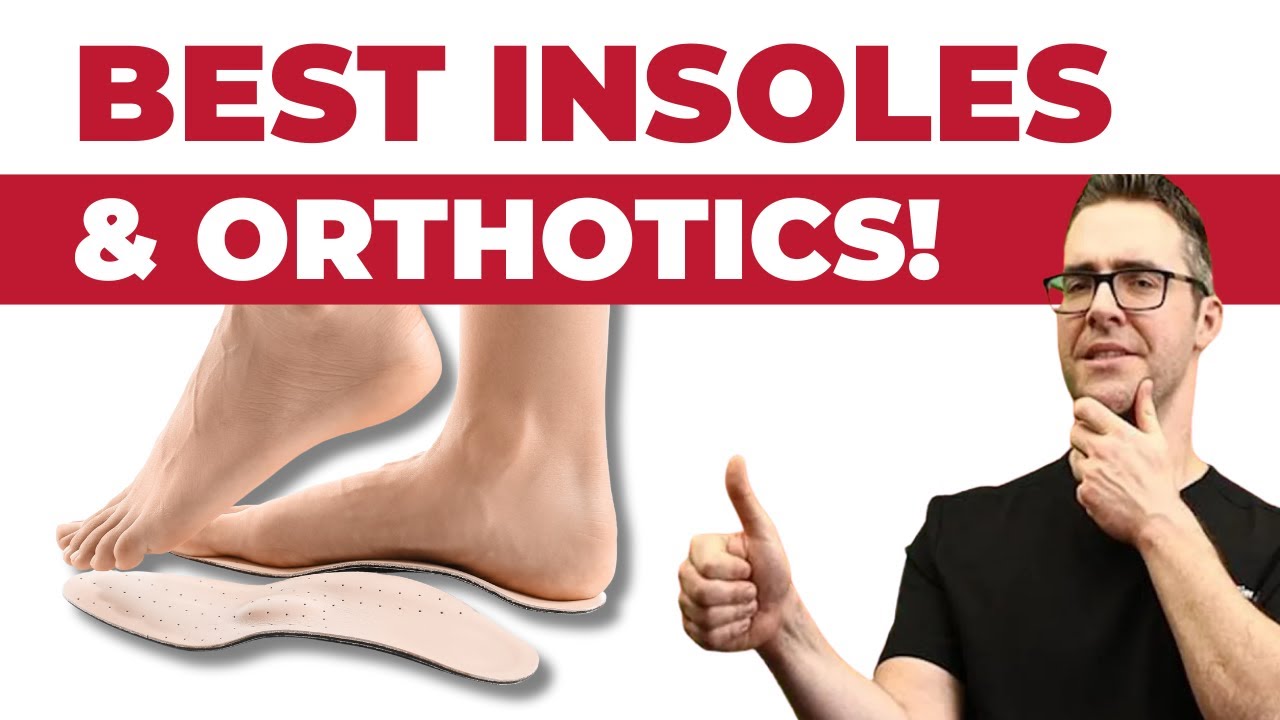
When Shoes Aren’t Enough — Dr. Tom’s Top 9 Orthotics
About 30% of patients I see for foot pain need MORE than a great shoe — they need a structured insole. Below: my complete 2026 orthotic ranking with pros, cons, and the specific patient I’d give each one to.
In-Office Treatment at Balance Foot & Ankle
If home treatment isn’t providing relief for your foot pain, our podiatry team at Balance Foot & Ankle can help with expert evaluations and advanced in-office care.
Ready to Get Relief?
Book online 24/7 in Howell & Bloomfield Township, MI
4.9★ | 1,200+ Reviews | 3,000+ Surgeries
Or call: (810) 206-1402

Dr. Tom Biernacki, DPM is a board-certified foot & ankle surgeon (ABFAS & ABPM) at Balance Foot & Ankle Specialists in Southeast Michigan. With over a decade of clinical experience, he specializes in heel pain, bunions, diabetic foot care, sports injuries, and minimally invasive surgery. Dr. Biernacki is a member of the APMA and ACFAS, and his patient education content on MichiganFootDoctors.com and YouTube has made him one of the most-followed foot & ankle educators on YouTube.