
You are in the right place. Dr. Tom Biernacki, DPM, FACFAS — board-certified foot & ankle surgeon with 3,000+ surgeries — explains exactly what fibular stress fracture lateral ankle pain running means and what works. Call (810) 206-1402 for same-day appointment at Howell or Bloomfield Township.
Quick answer: Fibular Stress Fracture Lateral Ankle Pain Running has multiple potential causes including mechanical, neurological, vascular, and inflammatory. The most common causes we identify are overuse, ill-fitting shoes, and biomechanical imbalance. Red flags requiring urgent evaluation: warmth/redness (infection), inability to bear weight (fracture), and unilateral swelling without injury (DVT). Call (810) 206-1402.
Medically reviewed by Dr. Tom Biernacki, DPM — Board-Certified Podiatric Surgeon — Balance Foot & Ankle, Howell & Bloomfield Township, MI. Last updated April 2026.
Medically reviewed by Dr. Tom Biernacki, DPM | Board-certified podiatrist | 3,000+ surgeries performed
Last updated: April 2, 2026
The most important clinical decision with Fibular Stress Fracture Lateral Ankle Pain Running isn’t which treatment to start with — it’s identifying the correct subtype. That changes everything. Call (810) 206-1402.
What Causes a Fibular Stress Fracture?
Stress fractures develop when repetitive mechanical loading creates microscopic damage in bone faster than the body’s remodeling process can repair it. In the fibula, the distal third is the most common location — the lower portion of the smaller leg bone near the ankle. This area bears significant bending and rotational forces during the push-off phase of running.
The primary risk factor is a rapid increase in training volume or intensity — the classic too much, too soon pattern. Increasing weekly mileage by more than 10 percent, adding high-impact speed work or hill training without adequate adaptation time, or switching from soft to hard running surfaces can all trigger a fibular stress fracture.
Additional risk factors include low bone density (particularly in female runners with the female athlete triad), inadequate caloric intake relative to training demands, vitamin D deficiency, worn-out running shoes that no longer provide adequate shock absorption, and biomechanical factors including excessive pronation or supination that concentrate forces on the fibula.
Symptoms and How to Distinguish from Other Conditions
The hallmark symptom is lateral ankle or lower leg pain that develops gradually over days to weeks and is directly related to running activity. Initially, the pain appears toward the end of longer runs and resolves with rest. As the stress fracture progresses, the pain begins earlier in runs, persists longer after stopping, and eventually may be present during walking.
Distinguishing a fibular stress fracture from a lateral ankle sprain is critical because the treatments are very different. An ankle sprain produces acute pain after a specific twisting event, while a stress fracture develops gradually without any single traumatic incident. Peroneal tendinitis causes pain along the tendon course behind the ankle bone, while a stress fracture produces focal tenderness directly over the bone.
The hop test is a useful clinical screening tool — hopping on the affected leg produces sharp pain at the fracture site. Point tenderness with direct palpation over the distal fibula is another key finding. However, imaging is required for definitive diagnosis. Standard X-rays may appear normal for the first two to three weeks. MRI is the gold standard, detecting bone stress reactions and fractures with high sensitivity even in early stages.
Diagnosis: Imaging and Clinical Assessment
When a fibular stress fracture is suspected, the diagnostic approach begins with a thorough clinical examination including palpation of the entire fibula, assessment of ankle stability, and evaluation of the peroneal tendons to exclude other causes of lateral ankle pain. The tuning fork test — placing a vibrating tuning fork on the fibula — may reproduce pain at the fracture site.
Conventional X-rays are the first imaging study but have limited sensitivity for early stress fractures. A periosteal reaction or fracture line may not be visible until two to three weeks after symptom onset. If X-rays are negative but clinical suspicion remains high, MRI should be obtained. MRI detects the bone marrow edema that precedes visible fracture lines and provides the earliest and most accurate diagnosis.
Bone scan is an alternative when MRI is not available but is less specific — it identifies areas of increased bone turnover but cannot distinguish stress fractures from other conditions causing increased metabolic activity. CT scanning can help characterize fracture lines once they are established and is useful for monitoring healing progress.
Treatment and Recovery Timeline
Treatment of fibular stress fractures is almost exclusively non-surgical. The fundamental principle is relative rest — removing the repetitive loading that caused the fracture while maintaining fitness through non-impact activities. A walking boot may be used for the first two to four weeks if walking is painful, though many fibular stress fractures allow comfortable walking in a supportive shoe.
The recovery timeline typically spans six to eight weeks for uncomplicated fibular stress fractures. During this period, swimming, pool running, cycling, and upper body exercises maintain cardiovascular fitness without stressing the healing bone. Weight-bearing activities are gradually reintroduced based on symptoms — walking pain-free is the first milestone, followed by a progressive return-to-running protocol.
The return-to-running program should be gradual and systematic. Begin with walk-run intervals — alternating one minute of running with four minutes of walking — and progressively increase the running intervals while monitoring for any return of symptoms. Full return to previous training volume typically takes three to four months from the date of diagnosis. Any recurrence of lateral ankle pain during the progression warrants re-evaluation.
Preventing Fibular Stress Fractures
The 10 percent rule — limiting weekly mileage increases to no more than 10 percent — is the foundation of stress fracture prevention. Periodized training with built-in recovery weeks (reducing volume every third or fourth week) allows bone remodeling to keep pace with the adaptive demands of training.
Nutritional optimization is equally important. Adequate calcium intake (1000-1300 mg daily), sufficient vitamin D (maintain blood levels above 30 ng/mL), and caloric intake that matches training demands support bone health. Female runners should be particularly vigilant about energy availability — inadequate caloric intake relative to exercise expenditure directly impairs bone density.
Running shoe rotation between two or three pairs distributes mechanical stress differently and reduces the repetitive loading pattern that targets specific bones. Replace shoes every 400 to 500 miles. Running surface variation — alternating between roads, trails, and tracks — also varies the stress distribution and reduces the monotonous loading that contributes to stress injuries.
Special Considerations for Female Runners
Female runners are at significantly higher risk for stress fractures due to the interplay between hormonal status, energy availability, and bone density — collectively known as relative energy deficiency in sport (RED-S), previously called the female athlete triad. Low estrogen from menstrual irregularities or amenorrhea directly impairs bone density and healing capacity.
Any female runner who develops a stress fracture should be evaluated for RED-S. Screening includes assessment of menstrual history, dietary habits, and bone density (DEXA scan). Addressing the underlying energy deficit and hormonal imbalance is essential not only for healing the current fracture but for preventing future stress injuries.
Hormonal contraceptives have variable effects on bone density and stress fracture risk. Current evidence does not strongly support using oral contraceptives specifically for bone protection in athletes with RED-S — the primary intervention should be addressing the energy deficit. A sports medicine physician or endocrinologist can provide individualized guidance on hormonal management.
Expert Stress Fracture Care at Balance Foot & Ankle
At Balance Foot & Ankle Specialists, Dr. Tom Biernacki provides accurate diagnosis of fibular stress fractures using advanced imaging and thorough clinical assessment. We understand the urgency of getting runners back to training and develop individualized recovery plans that balance healing time with fitness maintenance.
Our approach addresses not just the fracture but the underlying factors that caused it — training errors, biomechanical issues, nutritional deficiencies, and shoe wear. Custom orthotics can address biomechanical contributions, and we coordinate with sports nutritionists and physicians when RED-S or metabolic factors are identified.
With offices in Howell and Bloomfield Township, we serve runners throughout Southeast Michigan. If lateral ankle pain is disrupting your training, schedule an evaluation to get an accurate diagnosis and a clear recovery timeline.
The Most Common Mistake We See
The most common mistake with fibular stress fractures is continuing to run through gradually worsening lateral ankle pain under the assumption that it is a soft tissue issue that will resolve. Every run on a developing stress fracture extends the damage and prolongs the eventual recovery. When lateral ankle pain is present during running and worsening over days to weeks despite rest, early imaging with MRI provides a definitive answer and prevents the weeks of additional bone damage that result from delayed diagnosis.
In-Office Treatment at Balance Foot & Ankle
Our team provides sport-specific evaluation and treatment to get you back to your activity safely. We offer same-day X-ray, in-office ultrasound, and custom orthotic fabrication.
Same-day appointments available. Call (810) 206-1402 or book online.
More Podiatrist-Recommended Stress Fracture Essentials
Max-Cushion Walking Shoe
Hoka Bondi 9 — maximum shock absorption during stress fracture recovery.
Foam Roller for Recovery
TriggerPoint foam roller — maintains lower-leg mobility during return to activity.
Supportive Insole


![Calcaneus Stress Fracture Treatment [Heel Stress Fracture RECOVERY!]](https://www.michiganfootdoctors.com/wp-content/cache/flying-press/cdfca81fb25b3ea56c6af7d70a9e3fb0.jpg)
Watch: Calcaneus Stress Fracture Treatment [Heel Stress Fracture RECOVERY!] — MichiganFootDoctors YouTube
PowerStep Pinnacle — distributes impact evenly across the foot.
As an Amazon Associate, Balance Foot & Ankle earns from qualifying purchases. Product recommendations are based on clinical experience; prices and availability shown above update live from Amazon.

When to See a Podiatrist
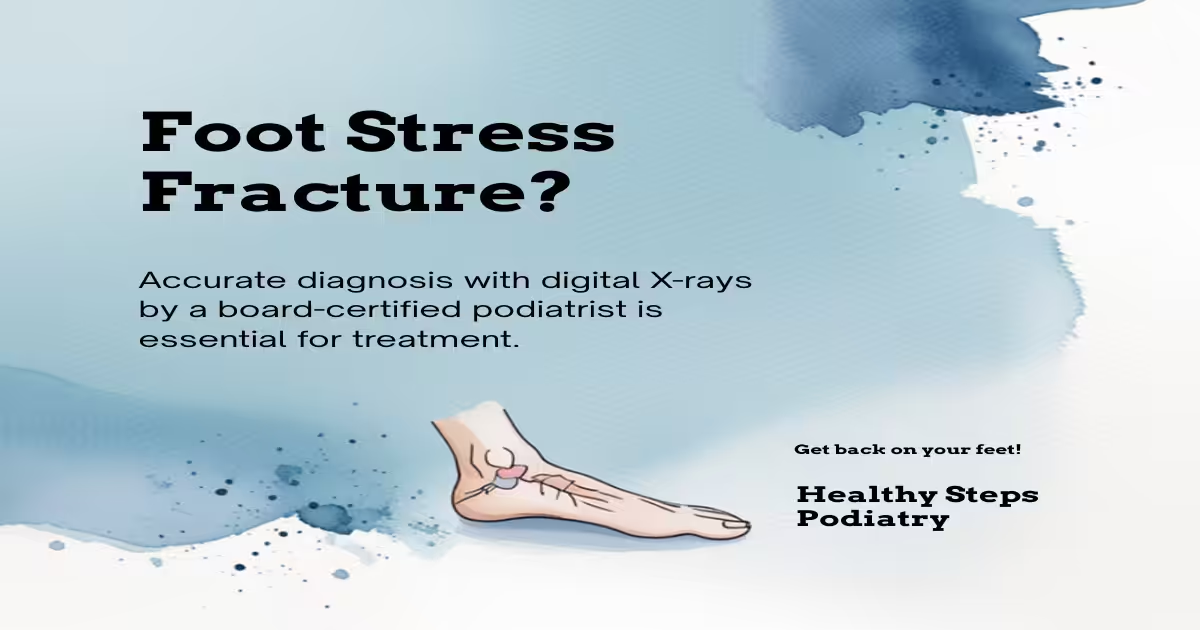
Most foot stress fractures heal in 6-8 weeks of protected weight-bearing — but rushing back to activity can turn a hairline fracture into a full break. Balance Foot & Ankle confirms stress fractures on X-ray or MRI and guides your return-to-running protocol. Don’t guess — we’ll tell you the exact week you can start jogging again.
Call Balance Foot & Ankle: (810) 206-1402 · Book online · Offices in Howell & Bloomfield Township
Frequently Asked Questions
How long does a fibular stress fracture take to heal?
Most fibular stress fractures heal in six to eight weeks with appropriate rest from impact activities. Return to full running volume typically takes three to four months from diagnosis. The healing timeline varies based on the fracture severity, nutritional status, and compliance with activity restrictions during recovery.
Can you walk with a fibular stress fracture?
Many patients with fibular stress fractures can walk comfortably in supportive shoes. If walking is painful, a walking boot provides additional support for the first two to four weeks. The ability to walk pain-free is the first milestone in the recovery progression before beginning a return-to-running program.
Will a fibular stress fracture show on X-ray?
X-rays may appear normal for the first two to three weeks after a fibular stress fracture develops. A periosteal reaction or fracture line becomes visible only as the bone begins to heal. MRI is the gold standard for early diagnosis, detecting bone marrow edema and stress reactions before they are visible on conventional X-rays.
How do I know if my ankle pain is a stress fracture or a sprain?
An ankle sprain occurs suddenly from a twisting event, while a stress fracture develops gradually over days to weeks from repetitive activity. Stress fractures cause focal tenderness directly over the bone with pain during hopping. Sprains produce instability and pain with ankle inversion. If there was no specific injury event and pain worsens with running, a stress fracture should be suspected.
The Bottom Line
Fibular stress fractures are common overuse injuries that respond well to appropriate rest and rehabilitation. Early accurate diagnosis prevents prolonged bone damage from continued running, and a structured return-to-running program ensures safe return to full training. Address the underlying causes — training errors, nutritional gaps, biomechanical factors — to prevent recurrence.
Sources
- Pegrum J, et al. Stress fractures in runners: diagnosis and management. Br J Sports Med. 2024;58(6):478-490.
- Warden SJ, et al. Bone stress injuries: etiology and management. J Am Acad Orthop Surg. 2024;32(10):456-468.
- Tenforde AS, et al. Running-related bone stress injuries in female athletes. Sports Med. 2025;55(1):78-92.
Get Expert Running Injury Care in Michigan
Dr. Tom Biernacki has performed over 3,000 foot and ankle surgeries with a 4.9-star rating from 1,123 patient reviews.
Or call (810) 206-1402 for same-day appointments
Stress Fracture Treatment in Michigan
Fibular stress fractures cause lateral ankle pain that’s often misdiagnosed. At Balance Foot & Ankle, we use advanced imaging to accurately diagnose stress fractures and create personalized recovery plans for runners and athletes.
Explore Our Sports Injury Treatments | Book Your Appointment | Call (810) 206-1402
Clinical References
- Matheson GO, et al. “Stress fractures in athletes: a study of 320 cases.” Am J Sports Med. 1987;15(1):46-58.
- Nattiv A, et al. “Stress fracture risk factors, incidence, and management.” PM R. 2013;5(5 Suppl):S31-42.
- Brukner P, et al. “Stress fractures: a review of 180 cases.” Clin J Sport Med. 1996;6(2):85-89.
Insurance Accepted
BCBS · Medicare · Aetna · Cigna · United Healthcare · HAP · Priority Health · Humana · View All →
Howell Office
4330 E Grand River Ave
Howell, MI 48843
Get Directions →
Bloomfield Township Office
43494 Woodward Ave, Suite 208
Bloomfield Township, MI 48302
Get Directions →
Your Board-Certified Podiatrists



Ready to Get Back on Your Feet?
Same-week appointments available at both locations.
Book Your AppointmentWatch: Fibular Stress Fracture
Dr. Tom on fibular stress fx — lateral ankle pain in runners, point tenderness distal fibula, MRI gold standard (X-ray often negative early), return-to-run protocol 6-8 weeks.
Fibular Stress Fx Kit
Structured runner recovery. Dr. Tom’s kit:
As an Amazon Associate, Balance Foot & Ankle earns from qualifying purchases. This supports our free patient education content.
Weeks 1-6 offload.
Weeks 6-12 return-to-run.
Bone healing support.
Topical lateral relief.
Related: Foot Stress Fx · Ankle Sprain Differential · Book Runner Eval
In-Office Treatment at Balance Foot & Ankle
If home treatment isn’t providing relief for your stress fractures, our podiatry team at Balance Foot & Ankle can help with same-day evaluations and advanced in-office care.
Same-day appointments available. (810) 206-1402
Frequently Asked Questions
When should I see a doctor?
See a podiatrist if pain persists past 2 weeks, prevents normal activity, or is accompanied by red-flag symptoms (warmth, swelling, numbness, inability to bear weight).
Can I treat this at home?
Mild cases respond to RICE protocol (rest, ice, compression, elevation), supportive shoes, and OTC anti-inflammatories. Persistent symptoms need professional evaluation.
How long does it take to heal?
Most soft tissue injuries resolve in 2-6 weeks with appropriate care. Bone injuries take 6-12 weeks. Chronic conditions need longer-term management.
What is Stress fracture?
Stress fracture is a common foot/ankle condition that affects mobility and quality of life. Understanding the underlying cause is the first step in successful treatment. Our podiatrists at Balance Foot & Ankle perform a hands-on biomechanical exam, review your activity history, and use diagnostic imaging when appropriate to identify the root cause—not just treat the symptom. Many patients have been told to “rest and ice” without a deeper diagnostic workup; our approach is different.
Symptoms and warning signs
Common signs of stress fracture include pain that worsens with activity, morning stiffness, swelling, tenderness when palpated, and difficulty bearing weight. If you experience sudden severe pain, inability to walk, visible deformity, numbness or color change, contact our office the same day or visit urgent care—these can signal a more serious injury such as a fracture, tendon rupture, or vascular compromise. Diabetics with any foot wound should seek same-day care.
Conservative treatment options
Most cases of stress fracture respond to non-surgical care: structured rest, supportive footwear changes, custom orthotics, targeted stretching and strengthening protocols, anti-inflammatory medications when medically appropriate, and in-office procedures such as ultrasound-guided injections. We also offer advanced therapies including MLS laser therapy, EPAT/shockwave, regenerative injections, and image-guided procedures. Treatment is sequenced from least invasive to most invasive, and we explain the rationale at every step.
When is surgery considered?
Surgery is reserved for cases that fail 3-6 months of well-structured conservative care, when there is structural pathology (severe deformity, complete tear, advanced arthritis), or when imaging shows damage that will not heal without intervention. Our surgeons have performed 3,000+ foot and ankle procedures and prioritize minimally-invasive techniques whenever appropriate. We discuss recovery timelines, return-to-activity milestones, and realistic outcome expectations before any procedure is scheduled.
Recovery timeline and prevention
Recovery from stress fracture varies based on severity and chosen treatment path. Conservative cases often improve within 4-8 weeks with consistent adherence to the protocol. Post-procedural recovery may range from a few days (in-office procedures) to several months (reconstructive surgery). Long-term prevention involves footwear assessment, activity modification, structured strengthening, and regular check-ins with your podiatrist if you have a history of recurrence. We provide written home-exercise plans and digital follow-up support.
Ready to feel better?
Same-week appointments available in Howell and Bloomfield Township, Michigan.
Book Your VisitReady to fix this for good?
Reading goes so far. The fastest path is a 30-minute office visit. Same-day Howell or Bloomfield Township. Call (810) 206-1402.

Dr. Tom Biernacki, DPM is a board-certified foot & ankle surgeon (ABFAS & ABPM) at Balance Foot & Ankle Specialists in Southeast Michigan. With over a decade of clinical experience, he specializes in heel pain, bunions, diabetic foot care, sports injuries, and minimally invasive surgery. Dr. Biernacki is a member of the APMA and ACFAS, and his patient education content on MichiganFootDoctors.com and YouTube has made him one of the most-followed foot & ankle educators on YouTube.