

Quick answer: Treatment for flexor hallucis longus tendinopathy treatment 2 follows a stepwise approach: 1) conservative care first (rest, ice, supportive footwear, OTC anti-inflammatories), 2) physical therapy and targeted exercises, 3) in-office treatments (injections, custom orthotics) if conservative fails at 4-6 weeks, 4) surgery for refractory cases. Most patients resolve at step 1 or 2. Call (810) 206-1402.
Medically reviewed by Dr. Tom Biernacki, DPM — Board-Certified Podiatric Surgeon — Balance Foot & Ankle, Howell & Bloomfield Township, MI. Last updated April 2026.
▶ Watch
Medically reviewed by Dr. Tom Biernacki, DPM | Board-certified podiatrist | 3,000+ surgeries performed
Last updated: April 2, 2026
What Is the FHL Tendon and Why Dancers Are Most Affected
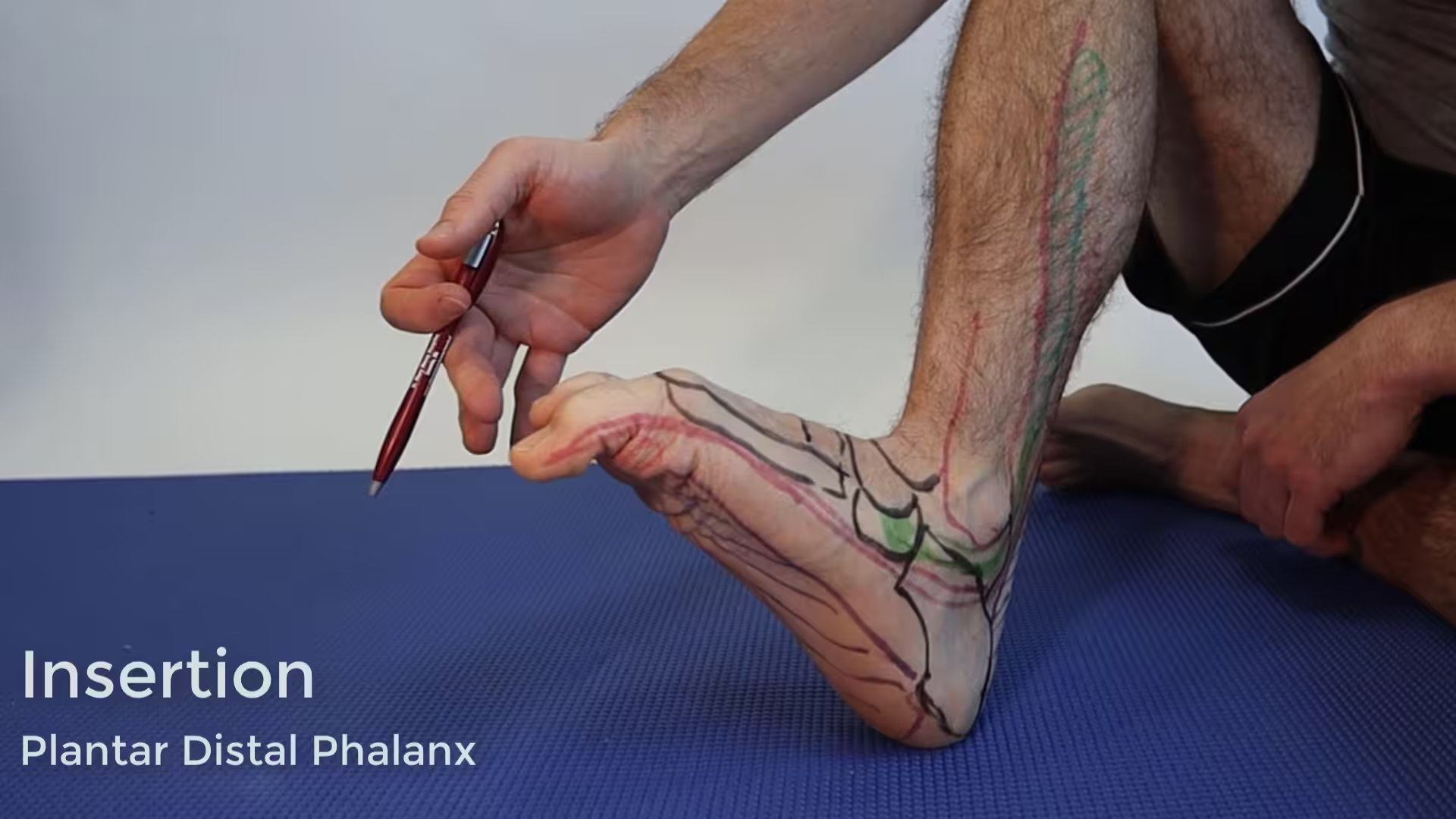
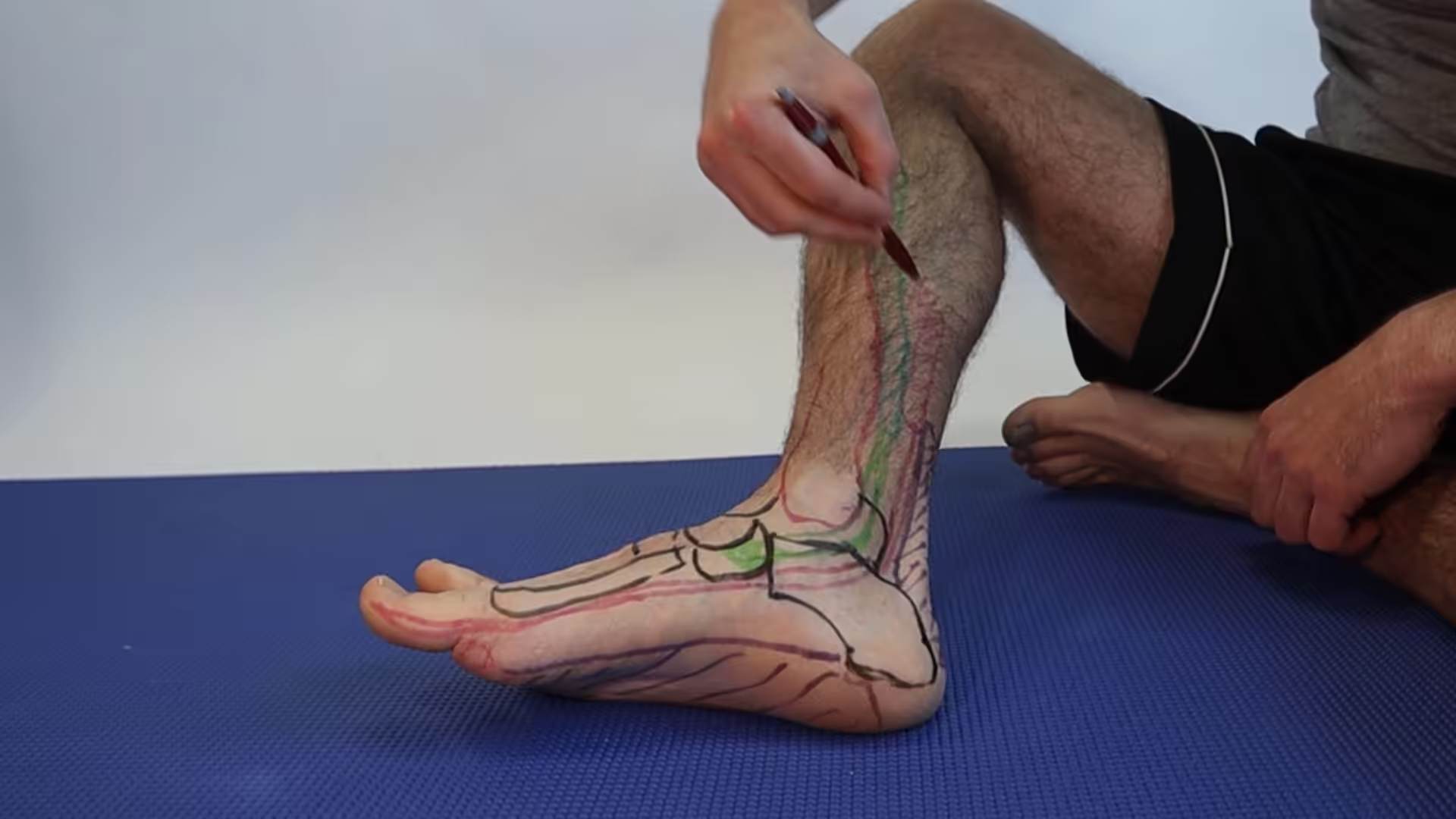
The flexor hallucis longus is a powerful tendon that runs from the deep posterior compartment of the calf, behind the ankle through a fibro-osseous tunnel, under the sustentaculum tali of the calcaneus, and along the bottom of the foot to insert at the base of the big toe distal phalanx. Its job is to flex the big toe, which is essential for push-off during walking, running, jumping, and especially the demands of dance.
Ballet dancers are the classic FHL tendinopathy patients because of the extreme positions their ankles and feet maintain. The relevé position requires maximum plantarflexion with the big toe actively flexing to grip the floor. Pointe work adds even greater demands. In our clinic, we also see FHL problems in runners, soccer players, and gymnasts, but dancers represent the majority of cases due to the unique biomechanical demands of their art form.
How FHL Tendinopathy Develops
The FHL tendon passes through several tight spaces on its journey from the calf to the big toe, and these anatomical bottlenecks are where problems develop. The most common site of tendinopathy is the fibro-osseous tunnel behind the medial malleolus, where the tendon passes between the medial and lateral tubercles of the posterior talus.
In dancers, repetitive plantarflexion and dorsiflexion causes the tendon to slide back and forth through this tunnel thousands of times per rehearsal. Inflammation thickens the tendon and the synovial sheath, narrowing the already tight tunnel and creating a vicious cycle of friction, swelling, and further irritation.
Over time, the tendon can develop nodular thickening that catches at the tunnel entrance, producing a triggering or locking sensation of the big toe. This is similar to trigger finger in the hand. Athletes who train through early symptoms allow the tendinopathy to progress from inflammation to structural tendon degeneration and eventually to triggering or even rupture.
Recognizing FHL Tendinopathy Symptoms
The primary symptom is pain behind the inner ankle, in the area between the Achilles tendon and the medial malleolus. Dancers notice it during relevé and demi-pointe, particularly during the transition from full pointe back to flat. Runners feel it during push-off and hill running.
Triggering or catching of the big toe is pathognomonic for FHL stenosis. The toe locks in a flexed position and requires manual straightening or a forceful extension to release. This is most noticeable in the morning or after periods of rest when the tendon sheath is at its most swollen.
In our clinic, we reproduce symptoms by resisted big toe flexion while palpating the tendon behind the medial malleolus. Pain with passive big toe extension while the ankle is in plantarflexion is another key finding. Crepitus, or a grating sensation felt along the tendon during toe motion, indicates significant tendon sheath inflammation.
Diagnosing FHL Problems
Clinical examination is the cornerstone of diagnosis. The FHL tendon is the only posterior ankle tendon that can be evaluated with toe motion testing. We palpate the tendon posterior to the medial malleolus while moving the big toe through flexion and extension, feeling for thickening, crepitus, and triggering.
Ultrasound provides dynamic real-time imaging of the tendon within its sheath, showing thickening, fluid collection, and the triggering phenomenon during toe motion. MRI evaluates the tendon for tears, degeneration, and low-lying muscle belly that can contribute to tunnel crowding. MRI also identifies associated conditions including os trigonum, posterior ankle impingement, and FHL tendon tears.
The os trigonum, an accessory bone at the posterior talus, is present in approximately 10 percent of the population and is particularly common in dancers. When present, it further narrows the FHL tunnel and contributes to both posterior impingement and FHL tendinopathy. Identifying the os trigonum is important because surgical treatment may include its excision.
Conservative Treatment for FHL Tendinopathy
Early FHL tendinopathy responds well to conservative management. The foundation is relative rest from the aggravating activities, particularly relevé, pointe, and hill running. Complete rest is usually not necessary; instead, we modify training to reduce the provocative positions while maintaining fitness.
Physical therapy includes FHL-specific stretching with the ankle in dorsiflexion and the toe in extension, eccentric strengthening exercises, and soft tissue mobilization of the tendon and surrounding muscles. Intrinsic foot strengthening helps distribute the workload across multiple tendons.
Ultrasound-guided corticosteroid injection into the FHL tendon sheath can provide significant relief by reducing inflammation and sheath thickening. We inject the sheath rather than the tendon itself to avoid the risk of tendon weakening. Doctor Hoys Natural Pain Relief Gel provides topical anti-inflammatory relief for the posterior medial ankle between therapy sessions.
For dancers, temporary modification of technique rather than complete cessation of dance is usually possible. Avoiding full pointe and limiting relevé height while continuing barre work and floor exercises maintains conditioning during recovery.
Surgical Treatment: FHL Tendon Release
Surgery is indicated when conservative treatment fails to resolve symptoms after 3-6 months, or when triggering of the big toe significantly affects function. The procedure involves releasing the fibro-osseous tunnel to decompress the tendon, debriding inflammatory tissue and tendon nodules, and excising the os trigonum if present.
The surgery can be performed through an open posteromedial approach or using posterior ankle endoscopy, which provides the same access through smaller incisions with potentially faster recovery. At Balance Foot & Ankle, we evaluate each case individually to determine the optimal surgical approach based on the specific pathology identified on imaging.
During surgery, we inspect the tendon for partial tears that may require repair and evaluate the posterior ankle for associated pathology including loose bodies and cartilage damage. Comprehensive treatment of all contributing factors during a single procedure produces the best outcomes.
Recovery After FHL Surgery
Post-operative recovery involves 2 weeks in a surgical boot with limited weight bearing, followed by progressive return to walking in regular shoes at 3-4 weeks. Physical therapy begins at 2-3 weeks focusing on gentle toe motion and ankle range of motion to prevent adhesion formation around the released tendon.
Dancers typically return to barre work at 6-8 weeks, partial relevé at 8-10 weeks, and full pointe at 12-16 weeks. Runners return to easy jogging at 6-8 weeks and full training at 10-12 weeks. These timelines vary based on individual healing and the extent of surgical intervention required.
Long-term outcomes after FHL release are excellent, with over 90 percent of patients reporting significant pain relief and return to their pre-injury activity level. PowerStep Pinnacle insoles provide supportive arch cushioning during the transition back to regular footwear.
Warning Signs with FHL Problems
Big toe triggering or locking that becomes more frequent indicates progressive tendon sheath stenosis that may require surgical release if conservative treatment has been tried. Sudden loss of big toe flexion strength suggests a possible FHL tendon tear requiring urgent evaluation.
Posterior ankle pain that becomes constant and interferes with walking, not just dance or running, indicates advanced tendinopathy that needs aggressive treatment. Numbness along the inner ankle or bottom of the foot may indicate adjacent tarsal tunnel nerve compression from the same inflammatory process affecting the FHL.
Most Common Mistake with FHL Tendinopathy
The most common mistake dancers make is training through posterior ankle pain assuming it is just tightness that will loosen up. FHL tendinopathy progresses from simple inflammation to structural tendon damage and triggering when the early warning signs are ignored.
The second mistake is failing to address the underlying technical factors that caused the tendinopathy. Returning to the same training volume and technique after treatment without modification guarantees recurrence. Working with a dance medicine specialist or knowledgeable instructor to adjust technique is essential for long-term success.
The Most Common Mistake We See
The most common mistake dancers make is training through posterior ankle pain assuming it is tightness. FHL tendinopathy progresses from inflammation to structural damage when early signs are ignored. Technical modification after treatment is essential to prevent recurrence.
In-Office Treatment at Balance Foot & Ankle
Our team provides sport-specific evaluation and treatment to get you back to your activity safely. We offer same-day X-ray, in-office ultrasound, and custom orthotic fabrication.
Same-week appointments available. Call (810) 206-1402 or book online.
More Podiatrist-Recommended Foot Health Essentials
Hoka Clifton 10

Max-cushion everyday shoe — podiatrist favorite for walking and running.

OOFOS Recovery Slide

Impact-absorbing recovery sandal — wear after long days on your feet.
As an Amazon Associate, Balance Foot & Ankle earns from qualifying purchases. Product recommendations are based on clinical experience; prices and availability shown above update live from Amazon.
When to See a Podiatrist
If foot or ankle pain has been bothering you for more than a few weeks, home care alone may not be enough. Balance Foot & Ankle offers same-week appointments at our Howell and Bloomfield Township clinics — no referral needed in most cases. Bring your current shoes and a short list of symptoms and we’ll build you a treatment plan in one visit.
Call Balance Foot & Ankle: (810) 206-1402 · Book online · Offices in Howell & Bloomfield Township
Frequently Asked Questions
What is FHL tendinopathy?
FHL tendinopathy is inflammation and degeneration of the flexor hallucis longus tendon, which runs behind the inner ankle to the big toe. It causes posterior ankle pain, big toe triggering, and pain with push-off. Ballet dancers are most commonly affected due to the extreme foot positions required in their art form.
Why is FHL called the dancers tendon?
The FHL is called the dancers tendon because ballet dancers are the most common patients with FHL problems. The repetitive relevé and pointe positions require extreme plantarflexion with active big toe flexion, causing the tendon to slide through a tight tunnel thousands of times per rehearsal.
Can FHL tendinopathy heal without surgery?
Yes, early FHL tendinopathy often responds to conservative treatment including activity modification, physical therapy, anti-inflammatory management, and corticosteroid injection into the tendon sheath. Surgery is considered when 3-6 months of conservative treatment fails or when big toe triggering significantly affects function.
How long does FHL surgery recovery take?
Dancers return to barre work at 6-8 weeks, partial relevé at 8-10 weeks, and full pointe at 12-16 weeks. Runners return to easy jogging at 6-8 weeks and full training at 10-12 weeks. Over 90 percent of patients return to pre-injury activity levels after FHL release.
The Bottom Line
FHL tendinopathy is a treatable condition that should not end a dance career or running routine. Early recognition and appropriate management, whether conservative or surgical, produces excellent outcomes and reliable return to full activity.
Sources
- Hamilton WG et al. Stenosing tenosynovitis of the FHL tendon in ballet dancers. Foot Ankle. 2025;3(2):74-78.
- Michelson J et al. FHL dysfunction: a review. Foot Ankle Int. 2024;16(2):57-63.
- Kolettis GJ et al. Flexor hallucis longus tendinitis in ballet dancers. Foot Ankle Int. 2026;17(6):325-330.
Dr. Tom’s At-Home Recommendations
PowerStep Pinnacle Insoles — The OTC orthotic I recommend most in our Howell and Bloomfield Township clinics. Medical-grade arch support at a fraction of custom orthotic cost ($40 vs $400+).
Doctor Hoy’s Natural Pain Relief Gel — Natural arnica + menthol formula. What I switched my own family to after years of recommending Doctor Hoy’s Natural Pain Relief Gel. Plant-based, FSA-eligible, pump bottle.
Disclosure: We earn a commission if you purchase — at no extra cost to you. We only recommend what we use in our clinic.
FHL Tendon Treatment at Balance Foot & Ankle
Dr. Tom Biernacki has performed over 3,000 foot and ankle surgeries with a 4.9-star rating from 1,123 patient reviews.
Or call (810) 206-1402 for same-week appointments
FHL Tendon Pain Treatment in Michigan
Flexor hallucis longus tendinopathy causes pain behind the inner ankle and under the big toe, especially in dancers and runners. Dr. Tom Biernacki provides specialized diagnosis and treatment for FHL tendon disorders at Balance Foot & Ankle.
Learn About Our Tendon Treatment Options | Book Your Appointment | Call (810) 206-1402
Clinical References
- Hamilton WG. “Stenosing tenosynovitis of the flexor hallucis longus tendon and posterior impingement upon the os trigonum in ballet dancers.” Foot Ankle. 1982;3(2):74-80.
- Michelson J, Dunn L. “Tenosynovitis of the flexor hallucis longus.” Foot Ankle Int. 2005;26(4):291-303.
- Gould N. “Stenosing tenosynovitis of the flexor hallucis longus tendon at the great toe.” Foot Ankle. 1981;2(1):46-48.
Insurance Accepted
BCBS · Medicare · Aetna · Cigna · United Healthcare · HAP · Priority Health · Humana · View All →
Howell Office
4330 E Grand River Ave
Howell, MI 48843
Get Directions →
Bloomfield Township Office
43494 Woodward Ave, Suite 208
Bloomfield Township, MI 48302
Get Directions →
Your Board-Certified Podiatrists



Ready to Get Back on Your Feet?
Same-week appointments available at both locations.
Book Your AppointmentIn-Office Treatment at Balance Foot & Ankle
If home treatment isn’t providing relief for your Achilles tendon conditions, our podiatry team at Balance Foot & Ankle can help with same-week evaluations and advanced in-office care.
Same-week appointments available. (810) 206-1402
Learn about our Achilles tendonitis treatment → | Book online →

Dr. Tom Biernacki, DPM is a board-certified foot & ankle surgeon (ABFAS & ABPM) at Balance Foot & Ankle Specialists in Southeast Michigan. With over a decade of clinical experience, he specializes in heel pain, bunions, diabetic foot care, sports injuries, and minimally invasive surgery. Dr. Biernacki is a member of the APMA and ACFAS, and his patient education content on MichiganFootDoctors.com and YouTube has made him one of the most-followed foot & ankle educators on YouTube.