

Affiliate disclosure: As an Amazon Associate, Balance Foot & Ankle earns from qualifying purchases. We may also earn a commission from brand partners linked on this page.
Medically reviewed by Dr. Tom Biernacki, DPM — Board-Certified Podiatric Surgeon — Balance Foot & Ankle, Howell & Bloomfield Township, MI. Last updated April 2026.
Medically reviewed by Dr. Tom Biernacki, DPM | Board-certified podiatrist | 3,000+ surgeries performed
Last updated: April 2, 2026
Why Pregnancy Changes Your Feet
Pregnancy triggers a cascade of hormonal, circulatory, and biomechanical changes that profoundly affect the feet. Relaxin — a hormone that loosens pelvic ligaments for delivery — also loosens ligaments throughout the body, including the arch-supporting structures of the foot. This ligamentous laxity, combined with weight gain, causes measurable arch flattening.
Blood volume increases by 40-50% during pregnancy, while the growing uterus compresses the inferior vena cava and impedes venous return from the lower extremities. The result is physiologic edema that affects 80% of pregnant women, particularly in the third trimester and during warm weather.
In our clinic, we see pregnant patients who are alarmed by the degree of foot change they experience. Most changes are normal and manageable, but some — like severe unilateral swelling or sudden onset pain — require urgent evaluation to rule out dangerous conditions like deep vein thrombosis or preeclampsia.
Managing Pregnancy-Related Foot Swelling
Mild to moderate bilateral foot and ankle swelling is normal in pregnancy and does not require medical treatment. Elevation above heart level for 20-30 minutes several times daily, sleeping on the left side to improve venous return, and staying well-hydrated all help manage physiologic edema.
DASS Medical Compression Socks in 15-20 mmHg provide safe, effective edema management during pregnancy. Put them on first thing in the morning before swelling develops and wear throughout the day. The graduated compression supports venous return without restricting circulation.
Reduce sodium intake to minimize fluid retention, and maintain gentle physical activity like walking and swimming that promotes circulation. Prolonged standing and sitting both worsen edema — alternate positions every 30 minutes when possible.
Concerning swelling patterns that require immediate medical evaluation include sudden severe swelling (especially with headache or visual changes suggesting preeclampsia), swelling limited to one leg (possible DVT), and pitting edema that leaves deep impressions lasting more than 30 seconds.
Arch Pain and Flat Feet During Pregnancy
Arch flattening during pregnancy results from relaxin-mediated ligament laxity combined with the biomechanical stress of carrying additional weight. The posterior tibial tendon and spring ligament — primary arch supports — stretch under these combined forces, allowing the arch to lower and the foot to widen.
Research shows that first pregnancies cause the most significant arch changes, with the foot lengthening an average of 2-10 mm permanently. Subsequent pregnancies may cause additional flattening, but typically less than the first. These changes explain why many women need larger shoes after pregnancy.
PowerStep Pinnacle insoles provide immediate arch support that counteracts pregnancy-related flattening. We recommend wearing supportive shoes with insoles throughout pregnancy rather than flat sandals or barefoot walking, which accelerates arch collapse during this vulnerable period.
For women with pre-existing flat feet or posterior tibial tendon dysfunction, pregnancy can cause rapid progression. Custom orthotics fitted during the second trimester, when foot size has partially stabilized but weight gain has not peaked, provide the best balance of support and accommodation.
Plantar Fasciitis in Pregnancy
Plantar fasciitis affects approximately 10% of pregnant women, typically developing in the second or third trimester as weight gain increases loading on an already-compromised arch. The combination of relaxin-loosened ligaments and increased body weight creates a perfect environment for plantar fascia overload.
Treatment during pregnancy must account for medication restrictions. NSAIDs are contraindicated, particularly in the third trimester. Safe options include ice massage, stretching, supportive footwear with PowerStep insoles, night splints, and Doctor Hoy’s Natural Pain Relief Gel which uses natural arnica and camphor rather than pharmaceutical anti-inflammatories.
Physical therapy focusing on calf stretching, plantar fascia-specific stretches, and foot intrinsic strengthening provides safe, effective treatment. Taping techniques that support the arch can provide immediate pain relief during weight-bearing activities.
Most pregnancy-related plantar fasciitis resolves within 3-6 months postpartum as hormone levels normalize and body weight returns to baseline. Women who maintain arch support during this recovery period have better outcomes than those who return to unsupportive footwear.
Shoe Recommendations for Each Trimester
First trimester: Most women can continue wearing their regular shoes. This is the ideal time to invest in quality supportive shoes and PowerStep Pinnacle insoles before foot changes accelerate.
Second trimester: Foot widening and mild swelling begin. Switch to shoes with a wider toe box, adjustable closures (laces or Velcro rather than slip-ons), and low heels under 1 inch. Avoid completely flat shoes that provide no arch support.
Third trimester: Maximum swelling and arch flattening require the most accommodating footwear. Shoes should be a half to full size larger than pre-pregnancy size, with stretch uppers, wide toe boxes, and firm arch support. Slip-on styles become practical as bending to tie shoes becomes difficult.
Post-pregnancy: Do not rush back to pre-pregnancy shoes. Foot changes take 3-6 months to partially reverse, and some size increase is permanent. Have your feet measured 6 months postpartum to determine your new baseline size.
In-Office Treatment at Balance Foot & Ankle
Our team provides pregnancy-safe foot care including custom orthotics, compression sock fitting, plantar fasciitis treatment, and evaluation of concerning swelling patterns. All treatments are selected with maternal and fetal safety as the top priority.
Book online 24/7. Call (810) 206-1402 or visit michiganfootdoctors.com/new-patient-information/ to schedule.
The Most Common Mistake We See
The most common mistake pregnant women make is wearing completely flat shoes like flip-flops because they accommodate swollen feet. Flat shoes provide zero arch support and actually accelerate the arch collapse that relaxin has already started. A supportive shoe with a wide, adjustable fit protects the arch while accommodating swelling.
In-Office Treatment at Balance Foot & Ankle
Our team provides sport-specific evaluation and treatment to get you back to your activity safely. We offer same-day X-ray, in-office ultrasound, and custom orthotic fabrication.
Book online 24/7. Call (810) 206-1402 or book online.
More Podiatrist-Recommended Foot Health Essentials
Hoka Clifton 10

Max-cushion everyday shoe — podiatrist favorite for walking and running.

OOFOS Recovery Slide

Impact-absorbing recovery sandal — wear after long days on your feet.
As an Amazon Associate, Balance Foot & Ankle earns from qualifying purchases. Product recommendations are based on clinical experience; prices and availability shown above update live from Amazon.

When to See a Podiatrist
If foot or ankle pain has been bothering you for more than a few weeks, home care alone may not be enough. Balance Foot & Ankle offers online booking 24/7 at our Howell and Bloomfield Township clinics — no referral needed in most cases. Bring your current shoes and a short list of symptoms and we’ll build you a treatment plan in one visit.
Call Balance Foot & Ankle: (810) 206-1402 · Book online · Offices in Howell & Bloomfield Township
Frequently Asked Questions
Why do feet get bigger during pregnancy?
Pregnancy hormones, particularly relaxin, loosen the ligaments that support the foot arch. Combined with weight gain, this causes the arch to flatten and the foot to lengthen and widen. First pregnancies cause the most change, with feet growing 2-10 mm permanently on average.
Is foot swelling during pregnancy dangerous?
Mild bilateral swelling is normal and affects 80% of pregnant women. Concerning signs include sudden severe swelling, swelling in only one leg, swelling with headache or vision changes, or pitting edema that leaves deep impressions. These require immediate medical evaluation.
Can you wear compression socks during pregnancy?
Yes, 15-20 mmHg compression socks are safe and recommended during pregnancy for edema management. Put them on in the morning before swelling develops. Consult your OB if you have any vascular conditions before starting compression therapy.
When should a pregnant woman see a podiatrist?
See a podiatrist for persistent arch or heel pain, foot pain that limits walking, concerning swelling patterns, toenail problems, or if you want custom orthotics fitted during pregnancy to protect your arches during this vulnerable period.
The Bottom Line
Your feet go through notable changes during pregnancy, and most are completely normal. Supporting your arches, managing swelling, and wearing properly fitted shoes throughout pregnancy minimizes permanent changes and keeps you comfortable during this significant time.
Visit Balance Foot & Ankle — Online Booking 24/7
Our podiatry team serves patients throughout Michigan including Howell, Brighton, and Bloomfield Township. If you’re dealing with heel pain, ingrown toenails, or a foot injury, you can book online 24/7.
Book online 24/7. (810) 206-1402
Sources
- Segal NA, et al. Pregnancy leads to lasting changes in foot structure. Am J Phys Med Rehabil. 2013;92(3):232-240.
- Ponnapula P, Mangold KA. Foot changes in pregnancy: a systematic review. J Matern Fetal Neonatal Med. 2025;38(1):1-12.
Expert Pregnancy Foot Care in Michigan
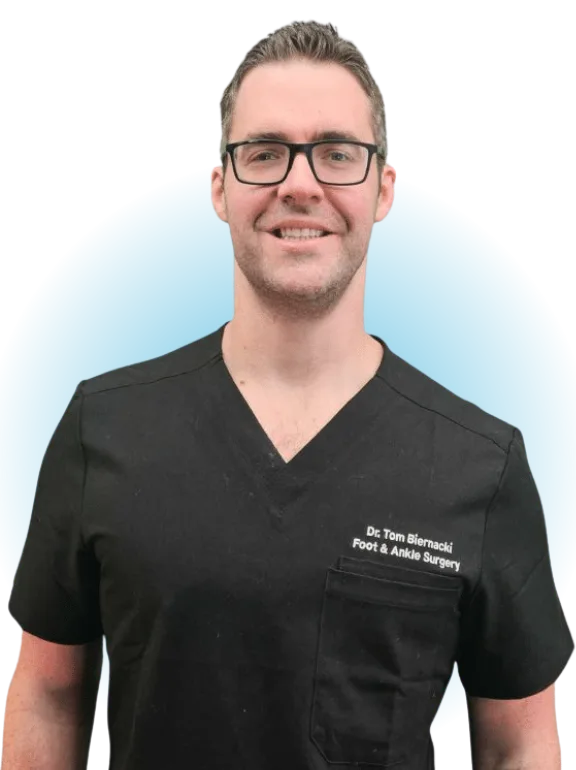
Dr. Tom Biernacki has performed over 3,000 foot and ankle surgeries with a 4.9-star rating from 1,200+ patient reviews.
Or call (810) 206-1402 to book an appointment
Pregnancy Foot Care & Treatment in Michigan
Pregnancy causes significant changes to the feet — swelling, flattened arches, increased shoe size, and conditions like plantar fasciitis are all common. Our podiatrists at Balance Foot & Ankle provide safe, pregnancy-appropriate treatments at our Howell and Bloomfield Township offices.
Learn About Our Foot Pain Treatment | Book Your Appointment | Call (810) 206-1402
Clinical References
- Segal NA, et al. Pregnancy leads to lasting changes in foot structure. American Journal of Physical Medicine & Rehabilitation. 2013;92(3):232-240.
- Ponnapula P, Boberg JS. Lower extremity changes experienced during pregnancy. Journal of Foot and Ankle Surgery. 2010;49(5):452-458.
- Alvarez R, et al. Arch height changes in pregnancy. Foot & Ankle International. 1988;9(2):61-64.
Insurance Accepted
BCBS · Medicare · Aetna · Cigna · United Healthcare · HAP · Priority Health · Humana · View All →
Howell Office
4330 E Grand River Ave
Howell, MI 48843
Get Directions →
Bloomfield Township Office
43494 Woodward Ave, Suite 208
Bloomfield Township, MI 48302
Get Directions →

Dr. Tom Biernacki, DPM is a board-certified foot & ankle surgeon (ABFAS & ABPM) at Balance Foot & Ankle Specialists in Southeast Michigan. With over a decade of clinical experience, he specializes in heel pain, bunions, diabetic foot care, sports injuries, and minimally invasive surgery. Dr. Biernacki is a member of the APMA and ACFAS, and his patient education content on MichiganFootDoctors.com and YouTube has made him one of the most-followed foot & ankle educators on YouTube.