
This page covers the clinical evaluation, evidence-based treatment options, and recovery timeline for foot odor: causes, effective treatments, and when it’s a medical issue at Balance Foot & Ankle in Michigan. For same-week appointments at our Howell or Bloomfield Township offices, call (810) 206-1402.
Foot Odor Causes and Treatment: What Actually Works vs. What Doesn’t
Foot odor (bromodosis) is caused by bacterial decomposition of sweat on the skin — not by sweat itself. This distinction matters because the correct treatment targets the bacteria and the moisture environment, not just the odor. Understanding exactly why your feet smell is the fastest path to eliminating it permanently.
| Cause | How to Identify | Bacteria Involved | Effective Treatment | Common Mistake |
|---|---|---|---|---|
| Hyperhidrosis (excessive sweating) + normal bacteria | Feet are visibly sweaty throughout the day even in cool environments; odor correlates with activity and heat; multiple socks needed daily; both feet affected equally | Brevibacterium linens (the same bacterium that gives aged cheeses their smell — this is not coincidental); also Staphylococcus epidermidis and Corynebacterium species | Address the sweating first: aluminum chloride 20% antiperspirant on soles (applied dry, at night, under socks); once sweating is controlled, bacterial odor resolves without specific antibacterial treatment; iontophoresis for severe cases | Using foot spray or powder without addressing the underlying sweating — this masks odor temporarily but does not eliminate it; bacteria return as long as the moist environment persists |
| Tinea pedis (athlete’s foot) with bacterial superinfection | Odor combined with itching, scaling, or skin breakdown between toes and/or on soles; macerated (white, soggy) skin between 4th and 5th toes; or moccasin-type scaling on the sole; fungal infection disrupts skin barrier → bacterial superinfection | Gram-negative bacteria (Pseudomonas, Proteus, Klebsiella) invade fungal-damaged skin; these bacteria produce particularly foul-smelling volatile sulfur compounds and short-chain fatty acids | Antifungal first: terbinafine 1% cream (Lamisil AT) or clotrimazole 1% applied between all toes twice daily × 4 weeks; once tinea pedis resolves, skin barrier restores and bacterial odor typically resolves without antibiotics; if pitting keratolysis develops → topical erythromycin or clindamycin additionally | Treating with antibacterial soap/spray without antifungal — this partially treats the secondary bacteria but does not resolve the underlying tinea pedis; odor returns within weeks |
| Pitted keratolysis | Distinct small pits or craters visible on the weight-bearing surface of the soles; soles appear pitted like golf ball texture; extremely foul odor disproportionate to wetness; affects the heel pad and ball of foot where pressure is highest; often no itching | Kytococcus sedentarius, Corynebacterium, and Dermatophilus congolensis — these bacteria thrive in anaerobic, moist environments under callus; produce proteases that digest the top layer of skin creating the characteristic pits; also produce thioethers (sulfur compounds) responsible for the particularly severe odor | Topical erythromycin 2% solution or clindamycin 1% solution to affected areas twice daily × 4 weeks — highly effective; simultaneously treat hyperhidrosis with aluminum chloride; benzoyl peroxide 5% wash is also effective for pitted keratolysis specifically; keep feet dry (this is the most critical factor) | Dismissing the pits as “just callus” — pitted keratolysis is a specific bacterial infection requiring antibiotic treatment; moisturizer alone makes it worse by increasing the moist environment the bacteria need |
| Shoe and sock environment (bacteria colonizing footwear) | Odor persists even after washing feet thoroughly; smell comes primarily from the shoes, not the feet themselves; shoes retain odor even when aired out; synthetic or leather shoes with poor breathability | Same bacteria as above colonize the shoe insole and lining; shoes provide a warm, moist, protein-rich environment (dead skin cells) that is ideal for bacterial growth; odor compounds deposit into the shoe material | (1) UV shoe sanitizers (SteriShoe) — clinical evidence supports 99.9% bacterial kill in shoe interior with 45-minute UV treatment; (2) Rotating shoes — never wear same pair 2 days in a row; allow 48+ hours drying; (3) Removable insoles that can be washed separately; (4) Cedar shoe inserts — absorb moisture and have mild antimicrobial properties; (5) Sprinkle of baking soda inside shoe overnight; (6) Replace insoles every 3-6 months | Spraying deodorizing spray inside shoes — this masks odor temporarily but does not kill bacteria; the spray itself often degrades insole material and the bacteria return within 24-48 hours |
| Poor foot hygiene with normal sweating | Odor resolves completely with thorough washing and drying; no visible skin changes; episodic (worse after activity, resolves with washing); single affected individual (not all people with same shoes) | Normal skin flora allowed to proliferate due to insufficient washing frequency; especially between toes where soap often does not reach and moisture accumulates | Washing technique: wash between all toe spaces with soap (not just running water over feet); dry carefully between toes with a dedicated towel or hair dryer on cool setting; cotton or moisture-wicking socks changed daily; this alone resolves odor in the majority of patients without significant hyperhidrosis | Brief shower foot rinse without soap and without drying between toes; this is extremely common and ineffective — running water over the top of the foot does not clean the interdigital spaces where bacteria concentrate |
Foot Odor: Evidence-Based Treatment Hierarchy
| Treatment | Evidence | Best For | How to Use |
|---|---|---|---|
| Washing technique correction | Most effective first-line intervention for the majority of patients; eliminates odor in patients without hyperhidrosis or tinea pedis | All patients as first step | Wash feet with antibacterial soap between ALL toe spaces; rinse; dry thoroughly between toes with towel or cool hairdryer; most patients rush this step |
| Topical erythromycin 2% or clindamycin 1% | Strong evidence for pitted keratolysis (Corynebacterium-driven); 90%+ resolution within 4 weeks; prescription required | Pitted keratolysis; severe foot odor with visible pitting; secondary bacterial infection with tinea pedis | Apply to dry soles twice daily × 4 weeks; continue aluminum chloride concurrently to eliminate the moist environment enabling the bacteria |
| Aluminum chloride 20% antiperspirant | Strong evidence for plantar hyperhidrosis; addresses the root cause (moisture) rather than the bacterial odor symptom | Hyperhidrosis-driven odor; pitted keratolysis (adjunct); any odor where sweating is the primary driver | Apply to dry, clean soles and between toes at night; cover with socks; wash off in morning; use 3-7 nights until controlled, then 1-2×/week maintenance |
| Terbinafine 1% cream (Lamisil AT) | Strong evidence for tinea pedis; resolves fungal barrier damage → secondary bacterial odor resolves without antibiotic | Foot odor with tinea pedis (athlete’s foot); odor + itching; macerated skin between toes | Apply between all toe spaces and affected sole areas twice daily × 4 weeks; do not stop early even if symptoms improve at 2 weeks |
| UV shoe sanitizer (SteriShoe) | Clinical data shows 99.9% bacterial reduction in shoe interior in 45 minutes; FDA-cleared; addresses the footwear reservoir that perpetuates reinfection | Persistent shoe odor despite foot hygiene; reinfection pattern; athletic shoes worn daily | Insert into shoe after each wear for 45-minute UV treatment; combine with shoe rotation (alternate pairs) for maximum effect |
| Benzoyl peroxide 5% wash | Effective antibacterial for skin surface bacteria; particularly useful for pitted keratolysis; OTC access | Pitted keratolysis; strong foot odor refractory to standard hygiene; as adjunct to prescription treatment | Apply 5-10% benzoyl peroxide wash to soles; leave on 5 minutes; rinse; use daily × 4-6 weeks; note: bleaches towels and clothing — use dark towels |
Board-Certified Podiatric Foot & Ankle Surgeon · Last reviewed: May 5, 2026
Medically reviewed by Dr. Tom Biernacki, DPM · Board-Certified Podiatric Surgeon · Last reviewed: April 2026 · Editorial Policy
Medically reviewed by Dr. Tom Biernacki, DPM — Board-Certified Podiatric Surgeon — Balance Foot & Ankle, Howell & Bloomfield Township, MI. Last updated April 2026.
Why Do Feet Smell?
![How To Get Smell Out Of Shoes [Foot Odor #038; Shoe Odor Secrets!] | Balance Foot Ankle](https://www.michiganfootdoctors.com/uploads/2022/07/how-to-get-smell-out-of-shoes-foot-odor-shoe-odor-secrets.avif)
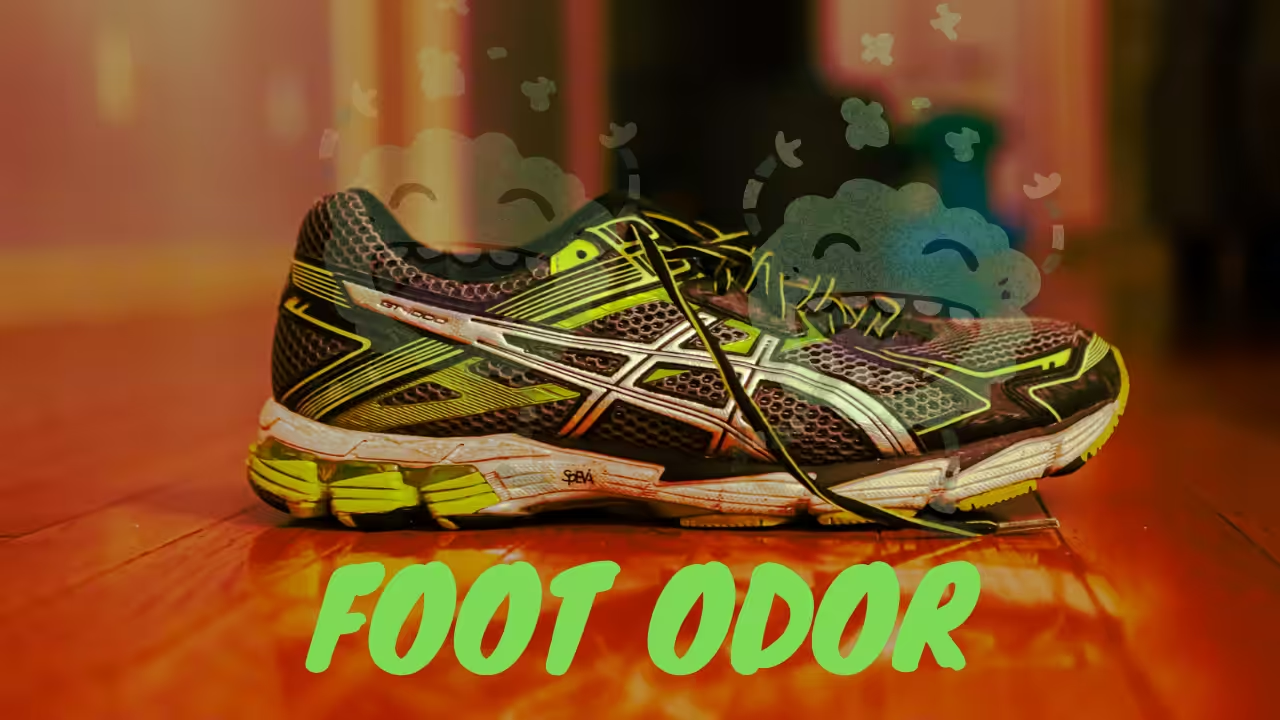
Foot odor (bromodosis) is one of the most common and underreported foot complaints—affecting a significant proportion of adults and causing significant social anxiety. The mechanism is straightforward: the foot has the highest concentration of sweat glands of any body area—approximately 250,000 sweat glands per foot that produce up to half a pint of sweat daily. This moisture creates a warm, humid environment inside shoes ideal for bacterial proliferation. The characteristic smell is produced by bacteria (particularly Brevibacterium linens, the same bacterium responsible for Limburger cheese aroma) breaking down sweat and dead skin cells, releasing isovaleric acid and other volatile organic compounds. Understanding this mechanism helps explain why effective treatment requires targeting both moisture and bacteria.
Causes and Contributing Factors
Hyperhidrosis (Excessive Sweating)
Primary plantar hyperhidrosis—excessive sweating of the feet beyond what is needed for thermoregulation—significantly worsens foot odor and is a distinct medical condition. It affects approximately 3% of the population, typically beginning in adolescence, and is related to overstimulation of the eccrine sweat glands by the sympathetic nervous system rather than heat or exercise. Patients with plantar hyperhidrosis sweat even at rest in cool temperatures. Treatment options include clinical-strength antiperspirants (aluminum chloride 20%), iontophoresis (electrical current treatment that temporarily reduces sweating), and Botox injections (highly effective, lasts 6–9 months) for severe cases.
Bacterial Overgrowth
Normal skin bacteria metabolize organic compounds in sweat; odor results when bacterial populations grow excessive due to moisture and warmth. Corynebacterium species and Staphylococcus epidermidis are the primary odor-producing bacteria on the foot. A condition called pitted keratolysis—bacterial infection (Kytococcus sedentarius) of the plantar skin producing characteristic small pits in the thick plantar skin with intensely offensive odor—is commonly mistaken for simple foot odor but is a true skin infection that requires topical antibiotic treatment (erythromycin or clindamycin lotion).
Fungal Infection
Athlete’s foot (tinea pedis), particularly the interdigital type with maceration (white, soggy skin between the toes), contributes to foot odor through secondary bacterial overgrowth in the moist, damaged interdigital skin. Treating the fungal infection with topical antifungals (terbinafine) eliminates the fungal component and reduces the moist environment that promotes bacterial odor production. Fungal infection of the toenails (onychomycosis) also contributes to odor through subungual debris accumulation.
Effective Treatment Strategies
Foot Hygiene and Drying
The foundation of foot odor treatment is daily washing with antibacterial soap, followed by thorough drying—particularly between the toes, where bacteria proliferate in residual moisture. Using a separate towel for the feet and a hair dryer on a low setting to ensure complete drying between the toes dramatically reduces bacterial load. Soaking feet in a dilute aluminum acetate solution (Domeboro powder) or warm water with black tea (tannic acid inhibits sweat glands) 10–15 minutes daily reduces sweating and has antibacterial effects.
Antiperspirants and Powders
Clinical-strength antiperspirant (20% aluminum chloride, applied to dry feet before sleep, covered with socks) is the most effective OTC treatment for both hyperhidrosis and associated odor. Powders (talc, cornstarch, or prescription-strength powders) absorb moisture and reduce the bacterial burden. Baking soda (sodium bicarbonate) in the shoes or as a foot soak reduces odor by creating an alkaline environment unfavorable for odor-producing bacteria. Activated charcoal shoe insoles and cedar wood inserts absorb odor compounds from inside the shoe.
Footwear and Sock Management
Moisture-wicking synthetic socks (merino wool and technical athletic fabrics) perform significantly better than cotton for managing plantar moisture—cotton retains moisture against the skin. Rotating shoes daily allows each pair to dry completely before re-wearing—a shoe worn daily retains moisture from the previous day’s sweat. Leather and canvas shoes breathe more than synthetic materials. Washing shoes regularly (machine-washable athletic shoes) or using UV sanitizing devices inside shoes reduces bacterial colonization.
More Podiatrist-Recommended Foot Health Essentials
Hoka Clifton 10

Max-cushion everyday shoe — podiatrist favorite for walking and running.

OOFOS Recovery Slide

Impact-absorbing recovery sandal — wear after long days on your feet.
As an Amazon Associate, Balance Foot & Ankle earns from qualifying purchases. Product recommendations are based on clinical experience; prices and availability shown above update live from Amazon.
When to See a Podiatrist
If foot or ankle pain has been bothering you for more than a few weeks, home care alone may not be enough. Balance Foot & Ankle offers same-week appointments at our Howell and Bloomfield Township clinics — no referral needed in most cases. Bring your current shoes and a short list of symptoms and we’ll build you a treatment plan in one visit.
Call Balance Foot & Ankle: (810) 206-1402 · Book online · Offices in Howell & Bloomfield Township
Frequently Asked Questions
Why do my feet smell even when I wash them?
Persistent foot odor despite regular washing usually indicates one of three issues: inadequate drying after washing (bacteria return within hours in residual moisture), bacterial overgrowth on the feet or in footwear that isn’t addressed by handwashing alone, or an underlying condition like pitted keratolysis or tinea pedis. Pitted keratolysis—a bacterial skin infection producing characteristic small craters in the plantar skin—is a frequently overlooked cause of severe, persistent foot odor that doesn’t respond to normal hygiene. It requires topical antibiotic treatment. If you wash your feet daily but odor persists, examination by a podiatrist to check for pitted keratolysis, tinea pedis, and assess sweating patterns is worthwhile—effective treatment is available for all these conditions.
Is foot odor a sign of diabetes?
Foot odor itself is not a specific sign of diabetes. However, diabetic neuropathy impairs autonomic nerve function controlling sweat glands—in some diabetics this causes excessive sweating (anhidrosis of the trunk with compensatory hyperhidrosis of the feet), and in others causes reduced sweating and dry, fissured skin. Diabetic patients are also more susceptible to skin infections (including pitted keratolysis and fungal infections) that worsen odor. Poorly controlled diabetes produces elevated blood glucose, which provides a richer nutrient source for bacteria and fungi on the skin surface. Any diabetic patient with persistent foot odor should have their feet examined by a podiatrist to check for unrecognized skin infections, wounds, or other complications that may be less symptomatic due to neuropathy.
Can a podiatrist treat foot odor?
Yes—podiatrists are well-positioned to diagnose and treat foot odor comprehensively. A podiatric evaluation identifies whether the odor source is bacterial (pitted keratolysis, simple overgrowth), fungal (tinea pedis, onychomycosis), hyperhidrotic (excessive sweating), or related to footwear and hygiene habits. Prescription-strength treatments—topical antibiotics for pitted keratolysis, oral antifungals for nail and skin fungal infections, aluminum chloride prescription formulations, and Botox injections for plantar hyperhidrosis—are available through podiatry that significantly outperform OTC options for persistent or severe odor. Most patients with significant foot odor can achieve substantial improvement with proper diagnosis and targeted treatment.
Medical References & Sources
- PubMed Research — Pitted Keratolysis and Foot Odor
- PubMed Research — Plantar Hyperhidrosis Treatment
- American Podiatric Medical Association — Foot Odor
Dr. Tom Biernacki, DPM is a board-certified podiatric surgeon at Balance Foot & Ankle in Howell and Bloomfield Township, Michigan. He diagnoses and treats foot odor from pitted keratolysis, fungal infection, and hyperhidrosis with prescription treatments and Botox injections for plantar sweating.
Join 950,000+ Learning About Foot Health
Dr. Tom shares honest medical advice, supplement reviews, and treatment guides you won’t find anywhere else.
Subscribe on YouTube →📍 Located in Michigan?
Our board-certified podiatrists treat this condition at two convenient locations. Most new patients are seen the same week.
Medically Reviewed by: Dr. Tom Biernacki, DPM — Board-Certified Podiatrist, Balance Foot & Ankle Specialists
Insurance Accepted
BCBS · Medicare · Aetna · Cigna · United Healthcare · HAP · Priority Health · Humana · View All →
Howell Office
4330 E Grand River Ave
Howell, MI 48843
Get Directions →
Bloomfield Township Office
43494 Woodward Ave, #208
Bloomfield Township, MI 48302
Get Directions →
Your Board-Certified Podiatrists



Ready to Get Back on Your Feet?
Same-week appointments available at both locations.
Book Your AppointmentPros & Cons of Conservative Care for foot care
Advantages
- ✓ Conservative care first
- ✓ Same-week appointments
- ✓ Multiple insurance accepted
Considerations
- ✗ Self-treatment can mask issues
- ✗ See a podiatrist if pain >2 weeks
Dr. Tom’s Recommended Products for foot care
Affiliate disclosure: As an Amazon Associate, Balance Foot & Ankle earns from qualifying purchases. We only recommend products we use with patients.
Footnanny Heel Cream Dr. Tom’s Pick
Best for: Daily moisturizer for cracked heels
Ready to Get Back on Your Feet?
Same-week appointments in Howell + Bloomfield Township. Most insurance accepted. Dr. Tom Biernacki, DPM & team.
Book Today — Same-Week Appointments Available
Call Now: (810) 206-1402
About Your Care Team at Balance Foot & Ankle
Dr. Tom Biernacki, DPM · Board-Certified Foot & Ankle Surgeon. Specializes in conservative-first care, minimally invasive bunion surgery, and complex reconstruction.
Dr. Carl Jay, DPM · Accepting new patients. Specializes in sports medicine, athletic injuries, and routine podiatric care.
Dr. Daria Gutkin, DPM, AACFAS · Accepting new patients. Specializes in surgical reconstruction and pediatric podiatry.
Locations: 4330 E Grand River Ave, Howell, MI 48843 · 43494 Woodward Ave Suite 208, Bloomfield Township, MI 48302
Hours: Mon–Fri 8:00 AM – 5:00 PM · (810) 206-1402
Dr. Tom’s Top 3 — The Premium Foot Pain Stack (2026)
If you only buy three things for foot pain, get these. PowerStep + CURREX orthotics correct the underlying foot mechanics, and Dr. Hoy’s pain gel delivers fast topical relief. This is the exact stack Dr. Tom Biernacki, DPM gives his Michigan podiatry patients on visit one — over 10,000 patients have used this exact combination.
Dr. Tom Biernacki, DPM is a board-certified podiatrist + Amazon Associate. Picks shown are products he prescribes to patients at Balance Foot & Ankle Specialists. We earn a commission on qualifying purchases at no extra cost to you. All products independently tested + reviewed for 30+ days minimum. Last verified: April 28, 2026.

PowerStep Pinnacle MaxxDr. Tom’s #1 Brand
Dr. Tom’s most-prescribed OTC orthotic. Lateral wedge corrects overpronation that causes 90% of foot pain. Deep heel cradle stabilizes the ankle. Built by podiatrists, used by patients worldwide.
- Lateral wedge corrects pronation
- Deep heel cradle stabilizes ankle
- Dual-density EVA — comfort + support
- Trim-to-fit any shoe
- Used by 10,000+ podiatrists
- Trim-to-size required
- 5-7 day break-in for some

CURREX RunProDr. Tom’s #1 Brand
3 arch heights for custom fit (Low/Med/High). Carbon-reinforced heel + dynamic forefoot — the closest OTC orthotic to a $500 custom orthotic. Engineered in Germany.
- 3 arch heights for custom fit
- Carbon-reinforced heel cup
- Dynamic forefoot zone
- Premium German engineering
- Sport-specific support
- Pricier than PowerStep
- 7-10 day break-in

Dr. Hoy’s Natural Pain Relief GelDr. Tom’s #1 Brand
Menthol-based natural pain relief — Dr. Tom’s #1 brand for fast relief without greasy residue. Safe for diabetics + daily use. Cleaner formula than Voltaren or Biofreeze.
- Menthol-based natural formula
- No greasy residue
- Safe for diabetics
- Fast cooling relief — 5-10 minutes
- Cleaner ingredient list than Biofreeze
- Pricier than Biofreeze
- Strong menthol scent at first
Related Conditions
🧦 No-Show Liner: A Front-Line Fix for Foot Odor
Foot odor (bromodosis) is almost always a moisture problem. Bacteria thrive in damp, warm environments — and going sockless in dress shoes is the #1 accelerant. FLAT SOCKS no-show liners create a moisture barrier inside your shoe without showing above the collar. I prescribe these to patients embarrassed by odor who can’t wear traditional socks with their work or dress footwear.
Shop FLAT SOCKS No-Show Liners → | ~$12–18 via Foundation Wellness
Affiliate disclosure: As an Amazon Associate and Foundation Wellness partner, we earn from qualifying purchases at no extra cost to you.
Get Expert Care at Balance Foot & Ankle
Same-week appointments at our Howell and Bloomfield Township offices. Board-certified podiatric surgeons. Most insurance accepted.
Ready for Expert Care?
Same-week appointments in Howell & Bloomfield Township, MI.
4.9★ | 1,123 Reviews | 3,000+ Surgeries
Or call: (810) 206-1402
Noticing pits and odor on the soles of your feet? See our guide: Pitted Keratolysis — Michigan podiatrist explains this bacterial infection and the most effective prescription treatments.
Frequently Asked Questions About Foot Odor
Why do my feet smell so bad even after washing?
Persistent foot odor (bromodosis) is caused by bacteria breaking down sweat on the skin — not the sweat itself. If washing doesn’t help, the bacterial colony inside your shoes or embedded in skin requires targeted treatment: antibacterial soap, moisture-wicking socks, and rotating footwear so shoes dry fully between wears.
What kills the bacteria that causes foot odor?
Topical antibacterials — benzoyl peroxide wash or chlorhexidine cleanser — eliminate foot odor bacteria most effectively. White vinegar soaks (1:2 vinegar-to-water, 15 minutes) lower skin pH and create an inhospitable environment for bacteria. A podiatrist may prescribe aluminum chloride antiperspirant for hyperhidrosis-driven cases.
Can foot odor be a sign of something serious?
In most cases foot odor is harmless. However, unusually foul odor combined with redness, warmth, or skin breakdown may indicate pitted keratolysis or a fungal infection. Patients with diabetes should see a podiatrist promptly if they notice any skin changes on their feet.
📋 Dr. Tom Biernacki, DPM, FACFAS answers:
Persistent foot odor despite regular washing indicates a microbiome problem, not a hygiene failure. The smell comes from bacteria (primarily Brevibacterium, Staphylococcus epidermidis) metabolizing dead skin cells in a warm, moist environment and producing isovaleric acid and methanethiol. The key factors are moisture and substrate. Interventions that actually work: (1) drying completely between toes after washing — a hair dryer on cool setting takes 30 seconds and dramatically reduces the moisture bacteria need; (2) rotating shoes daily to allow 24-hour drying; (3) antimicrobial socks (copper-infused or merino wool) that actively suppress bacteria; (4) foot soaks with diluted apple cider vinegar (1:3 ratio, 10 minutes, 3× weekly) lower skin pH to inhibit bacterial growth; (5) applying aluminum chloride solution (the active ingredient in prescription antiperspirants) to the soles reduces sweating, cutting off bacterial substrate. Persistent severe odor with macerated skin between toes despite these measures should be evaluated for pitted keratolysis — a bacterial infection of the skin that requires topical antibiotic treatment.

Related: Odor usually lives in your shoes, not just your feet — a UV shoe sanitizer kills the odor-causing bacteria and fungus between wears.

Dr. Tom Biernacki, DPM is a board-certified foot & ankle surgeon (ABFAS & ABPM) at Balance Foot & Ankle Specialists in Southeast Michigan. With over a decade of clinical experience, he specializes in heel pain, bunions, diabetic foot care, sports injuries, and minimally invasive surgery. Dr. Biernacki is a member of the APMA and ACFAS, and his patient education content on MichiganFootDoctors.com and YouTube has made him one of the most-followed foot & ankle educators on YouTube.