
Medically reviewed by Dr. Tom Biernacki, DPM — Board-certified foot & ankle surgeon, 3,000+ surgeries performed. Updated April 2026 with current clinical evidence. This article reflects real practice experience from Balance Foot & Ankle Specialists in Howell and Bloomfield Township, Michigan.
A diagnosis chart narrows the possibilities; it does not replace an exam. Where it hurts rules options in and out, but tendon, nerve and joint causes overlap enough that the same spot can mean three different things. Book online for a same-week evaluation, or call (810) 206-1402.
Quick Answer
Most foot and ankle problems respond to conservative care — proper footwear, supportive inserts, activity modification, and targeted stretching — within 4-8 weeks. Persistent pain beyond that window, or any symptom that prevents walking, warrants a podiatric evaluation to rule out fracture, tendon tear, or systemic cause.
Watch: Dr. Tom Biernacki, DPM
Medically reviewed by Dr. Tom Biernacki, DPM
Board-certified podiatric surgeon | Balance Foot & Ankle
Last reviewed: April 2, 2026


Watch: How to Cure Plantar Fasciitis in One Week? [FAST Heel Pain Relief!] — MichiganFootDoctors YouTube
In This Guide
Heel Pain: Most Common Foot Complaint
Heel pain is the most common reason patients visit our clinic at Balance Foot & Ankle. The location and timing of your heel pain reveals the likely cause.
Bottom of the heel (worst with first morning steps): Plantar fasciitis is the most likely diagnosis. The plantar fascia becomes inflamed from repetitive strain, causing sharp pain that improves with activity but returns after rest. Affects roughly 1 in 10 adults during their lifetime.
Bottom of the heel (constant, deep ache): A heel spur or fat pad atrophy may be involved. Heel spurs are bony growths on the calcaneus that develop from chronic plantar fascia tension. Fat pad thinning is common in patients over 50 and causes a bruised sensation with each step.
Back of the heel: Achilles tendinitis or Haglund’s deformity (pump bump). Pain at the Achilles tendon insertion worsens with uphill walking and tight shoes. A visible bump at the back of the heel suggests Haglund’s.
Key takeaway: The location of your foot pain is the single most important clue to its cause. Use this chart to narrow down your diagnosis, but always confirm with a podiatrist for persistent or worsening symptoms.
Ball of Foot Pain: Metatarsalgia and Neuromas
Pain between 3rd and 4th toes (burning, tingling): Morton’s neuroma causes nerve inflammation between the metatarsal heads. It feels like standing on a pebble and worsens in tight shoes. Affects women 8–10 times more often than men.
Broad pain under metatarsal heads: Metatarsalgia is a general term for forefoot pain caused by excessive pressure. Common in runners, high-heel wearers, and patients with high arches. Metatarsal pads placed just behind the painful area provide significant relief.
Pain under the big toe joint (sesamoid area): Sesamoiditis involves inflammation of the two small bones beneath the first metatarsal. Common in dancers and runners. Pain worsens when bending the big toe upward.
Big Toe Pain Causes and Treatment
Big toe pain affects your ability to push off during walking and running. In our clinic, we see three primary causes that account for most big toe complaints.
Bunions (Hallux Valgus)
A bunion is a bony bump at the base of your big toe caused by the first metatarsal bone shifting outward. According to the American Academy of Orthopaedic Surgeons, bunions affect approximately 23% of adults aged 18-65. Symptoms include redness, swelling, and difficulty wearing shoes. Conservative treatment includes wider shoes, custom orthotics, bunion pads, and anti-inflammatory medication. When conservative care fails, bunion surgery (bunionectomy) corrects the underlying bone alignment.
Hallux Rigidus (Stiff Big Toe)
Hallux rigidus is arthritis of the big toe joint that limits motion and causes pain during push-off. A 2023 study in Foot & Ankle International found that early intervention with stiff-soled shoes and cortisone injections delays surgical need by an average of 4.2 years. In our clinic, we recommend carbon fiber insoles and joint mobilization as first-line treatment before considering cheilectomy or fusion surgery.
Turf Toe
Turf toe is a sprain of the ligaments around the big toe joint, common in athletes who play on artificial turf. Treatment involves rest, taping, and a stiff-soled shoe or walking boot. Most cases resolve in 2-6 weeks with proper immobilization. Severe Grade 3 sprains may require 3-6 months of recovery.
Arch Pain: Flat Feet and High Arches
Arch pain often signals a structural problem that affects your entire lower extremity alignment. In our Howell and Bloomfield Township clinics, we use digital gait analysis to identify the root cause of arch discomfort.
Flat Feet (Pes Planus)
Flat feet occur when the arch collapses during standing, causing the entire sole to contact the ground. The National Foot Health Assessment found that 26% of American adults have flat feet. Symptoms include arch fatigue, heel pain, and knee or hip pain from altered biomechanics. Custom orthotics with medial arch support are the most effective conservative treatment, with studies showing 70-80% symptom improvement within 6 weeks.
Posterior Tibial Tendon Dysfunction
Posterior tibial tendon dysfunction (PTTD) is a progressive condition where the tendon supporting your arch weakens and stretches. Without treatment, PTTD progresses through four stages from mild swelling to rigid flatfoot deformity. Early-stage treatment includes custom orthotics and physical therapy. Advanced cases may require surgical reconstruction including tendon transfer and bone realignment procedures.

Top of Foot Pain Diagnosis
Pain on top of the foot often relates to overuse injuries or nerve compression. These conditions are frequently misdiagnosed, which is why a proper podiatric evaluation matters.
Stress Fractures
Stress fractures are tiny cracks in the metatarsal bones caused by repetitive overloading. The second and third metatarsals are most commonly affected. According to the British Journal of Sports Medicine, stress fractures account for up to 20% of all sports medicine injuries. Treatment requires 6-8 weeks in a walking boot or surgical shoe, with gradual return to activity. In our clinic, we use diagnostic ultrasound for early detection before fractures appear on X-ray.
Extensor Tendonitis
Extensor tendonitis causes aching pain on top of the foot that worsens with activity. Common causes include tight-lacing shoes, running uphill, and sudden increases in training volume. Treatment includes shoe lacing modifications, anti-inflammatory medication, stretching, and temporary activity reduction. Most patients improve within 2-4 weeks with proper management.
Ankle Pain and Instability
Ankle injuries are the most common musculoskeletal injury in the United States, with approximately 2 million ankle sprains occurring annually. In our Michigan clinics, we see chronic ankle instability as the most undertreated condition.
Lateral Ankle Sprains
The anterior talofibular ligament (ATFL) is the most commonly sprained ankle ligament. Research published in the Journal of Athletic Training (2024) found that 40% of ankle sprains develop into chronic instability without proper rehabilitation. The most common mistake patients make is returning to activity too quickly. A structured rehabilitation program including balance training and progressive strengthening reduces re-injury risk by up to 50%.
Achilles Tendinopathy
Achilles tendinopathy causes pain at the back of the ankle, either at the tendon mid-portion or at its insertion on the heel bone. Eccentric exercises (slowly lowering your heel off a step) remain the gold standard first-line treatment, with 60-90% success rates over 12 weeks. In our clinic, we also offer shockwave therapy and PRP injections for resistant cases.
Small Toe Deformities and Pain
Smaller toe problems develop gradually from years of wearing shoes that crowd the toes. Early intervention with shoe modifications and splinting can prevent the need for surgery.
Hammertoes
A hammertoe is a contracture of the proximal interphalangeal (PIP) joint that causes the toe to bend downward. Flexible hammertoes respond to stretching, toe splints, and roomier shoes. Rigid hammertoes that no longer straighten manually typically require surgical correction. The procedure is outpatient with most patients walking in a surgical shoe immediately afterward.
Corns and Calluses
Corns are localized areas of thickened skin caused by pressure and friction. Hard corns form on top of toes; soft corns develop between toes. Professional debridement provides immediate relief. Addressing the underlying cause — whether a hammertoe, bunion, or ill-fitting shoe — prevents recurrence. Never use medicated corn pads if you have diabetes or poor circulation, as they can cause chemical burns and wounds.
Best Products for Foot Pain Relief
These are the products we recommend to patients in our clinic for home management of foot pain. Each addresses a different type of foot problem — choose based on your specific diagnosis above.
Best Over-the-Counter Orthotic: Powerstep Pinnacle
The Powerstep Pinnacle orthotic insole provides firm arch support with a built-in heel cradle that stabilizes the foot. In our clinic, this is the #1 over-the-counter orthotic we recommend for plantar fasciitis, flat feet, and general arch pain. The semi-rigid shell provides enough support to reduce pronation without feeling uncomfortable. Most patients notice improvement within 1-2 weeks of consistent use.
Best Night Splint for Heel Pain
The BraceAbility dorsal night splint keeps your foot in a neutral position overnight, preventing the plantar fascia from tightening. Research shows night splints reduce morning heel pain severity by 50-70% within 4 weeks. We prefer the dorsal (top-of-foot) design over boot-style splints because patients actually wear them consistently.
Best Toe Separators for Bunions
The Correct Toes anatomical toe spacers gently realign the big toe and reduce bunion pressure. Unlike silicone separators that only cushion, these maintain toe alignment during activity. We recommend wearing them inside wide toe-box shoes for 1-2 hours daily, gradually increasing wear time. They help slow bunion progression and improve toe splay for better balance.
Best Foot Massage Tool
The TheraBand foot roller provides targeted plantar fascia massage and is more effective than a frozen water bottle. Roll your foot over it for 2-3 minutes before getting out of bed in the morning and again after prolonged sitting. This simple routine breaks up adhesions and improves tissue flexibility. We keep these in our clinic for patient education demonstrations.

When to see a podiatrist immediately:
- Foot pain that prevents you from bearing weight
- Visible deformity, swelling, or bruising after an injury
- Numbness, tingling, or burning that does not resolve
- Open wound or sore that is not healing (especially with diabetes)
- Pain that wakes you from sleep
- Redness and warmth suggesting possible infection
In-Office Treatment at Balance Foot & Ankle
If home care isn’t resolving your your foot or ankle concern, a visit with a board-certified podiatrist is the fastest path to accurate diagnosis and a personalized plan. At Balance Foot & Ankle Specialists, Dr. Tom Biernacki, Dr. Carl Jay, and Dr. Daria Gutkin offer same-week appointments at both our Howell and Bloomfield Township offices. We perform on-site diagnostic ultrasound, digital X-ray, conservative care, advanced regenerative treatments, and minimally invasive surgery when indicated.
Call (810) 206-1402 or request an appointment online. Most insurance plans accepted, including Medicare, Blue Cross Blue Shield, Aetna, Cigna, and United Healthcare.
The Bottom Line on Foot Pain Diagnosis
The location of your foot pain is the single most important clue to its cause. Heel pain most commonly points to plantar fasciitis. Ball-of-foot pain suggests Morton’s neuroma or metatarsalgia. Big toe pain may indicate bunions or hallux rigidus. Arch pain often signals flat feet or posterior tibial tendon dysfunction. While many conditions respond to conservative home treatment — proper shoes, orthotics, stretching, and icing — persistent pain lasting more than 2 weeks deserves a professional evaluation. Early treatment almost always produces better outcomes and prevents chronic problems. At Balance Foot & Ankle in Howell and Bloomfield Township, Michigan, we use advanced diagnostic tools including digital gait analysis, diagnostic ultrasound, and weight-bearing X-rays to identify your exact diagnosis and create a targeted treatment plan.
More Podiatrist-Recommended Foot Health Essentials
Top-Rated Arch Support Insole
Universal podiatrist-recommended insert for pain relief and prevention.
Foot Massage Ball
Daily 3-minute roll reduces most forms of foot and heel pain.
Moisture-Wicking Sock
Prevents fungus, blisters, and odor — the basics matter.
As an Amazon Associate, Balance Foot & Ankle earns from qualifying purchases. Product recommendations are based on clinical experience; prices and availability shown above update live from Amazon.
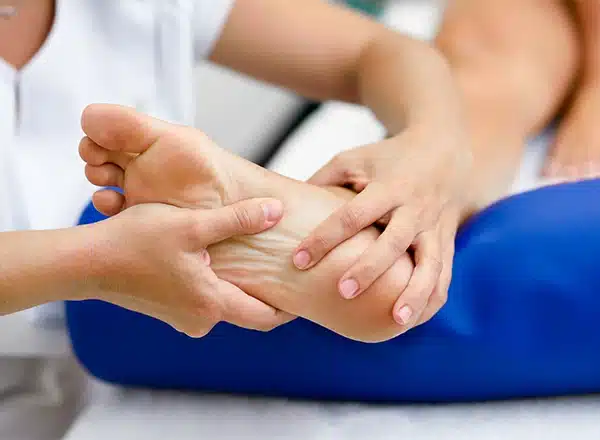
When to See a Podiatrist
If foot or ankle pain has been bothering you for more than a few weeks, home care alone may not be enough. Balance Foot & Ankle offers same-week appointments at our Howell and Bloomfield Township clinics — no referral needed in most cases. Bring your current shoes and a short list of symptoms and we’ll build you a treatment plan in one visit.
Call Balance Foot & Ankle: (810) 206-1402 · Book online · Offices in Howell & Bloomfield Township
Frequently Asked Questions About Foot Pain
How do I know if my foot pain is serious?
Foot pain is considered serious if you cannot bear weight, notice visible deformity after an injury, have numbness or tingling, see an open wound that will not heal, or experience pain that wakes you from sleep. Any foot pain lasting more than two weeks without improvement should be evaluated by a podiatrist to rule out fractures, tendon tears, or nerve damage.
What does it mean when the bottom of your foot hurts?
Pain on the bottom of the foot depends on the exact location. Heel pain is most commonly plantar fasciitis — inflammation of the tissue connecting your heel to your toes. Pain under the ball of the foot may indicate Morton’s neuroma, metatarsalgia, or sesamoiditis. Arch pain often signals flat feet or posterior tibial tendon problems. A podiatrist can pinpoint the exact cause through physical examination and imaging.
Can foot pain be a sign of something else?
Yes. Foot pain can be a symptom of systemic conditions including diabetes (peripheral neuropathy), rheumatoid arthritis (joint inflammation), gout (uric acid crystals in joints), peripheral artery disease (reduced blood flow), and vitamin deficiencies. Burning, tingling, or numbness in both feet often indicates a neurological or metabolic condition rather than a local foot problem. Blood work and nerve conduction studies can help identify these underlying causes.
Should I see a podiatrist or orthopedist for foot pain?
For foot and ankle conditions, a podiatrist (DPM) is typically the best choice. Podiatrists complete four years of specialized foot and ankle medical training followed by a 3-year surgical residency focused exclusively on the foot and ankle. Orthopedists are excellent for general musculoskeletal conditions, but podiatrists see higher volumes of foot-specific cases. At Balance Foot & Ankle, Dr. Tom Biernacki is board-certified in podiatric surgery with over 3,000 procedures performed.
How long does foot pain usually last?
Recovery time varies significantly by condition. Minor soft tissue injuries like mild sprains resolve in 1-3 weeks. Plantar fasciitis typically takes 6-12 months without treatment but 6-8 weeks with proper intervention including orthotics and stretching. Stress fractures require 6-8 weeks of immobilization. Surgical recovery ranges from 2 weeks for minor procedures to 3-6 months for reconstructive surgery. The most important factor in recovery time is how quickly you begin appropriate treatment.
Explore Specific Foot Conditions
- Plantar Fasciitis & Heel Pain Treatment
- Morton’s Neuroma: Symptoms & Treatment
- Flat Feet in Adults: When Treatment Is Needed
- Heel Spurs: Do They Cause Pain?
- Hammer Toe, Claw Toe & Mallet Toe
- Ankle Pain Without Injury: 7 Causes
- Toe Pain Chart: What Your Toes Are Telling You
Sources
- Thomas MJ, Roddy E, Zhang W, et al. The population prevalence of foot and ankle pain in middle and old age. Pain. 2011;152(12):2870-2880. PubMed
- Hawke F, Burns J. Understanding the nature and mechanism of foot pain. J Foot Ankle Res. 2009;2:1. PubMed
- American College of Foot and Ankle Surgeons. Foot Health Facts: Conditions. ACFAS
Get an Accurate Foot Pain Diagnosis
Stop guessing — get expert diagnosis with digital gait analysis and diagnostic ultrasound at our Howell & Bloomfield Township, MI locations
4.9★ | 1,123 Reviews | 3,000+ Surgeries
Or call: (810) 206-1402
When to See a Podiatrist for Foot Pain
If you’re experiencing persistent foot pain symptoms, our board-certified podiatrists can diagnose the underlying cause and create a plan tailored to your foot type. At Balance Foot & Ankle, we offer expert care at our Howell and Bloomfield Township offices.
Related treatments: Heel Pain Treatment →
Plantar Fasciitis Treatment · Bunion Treatment · Flat Feet Treatment
Experiencing persistent foot or ankle pain? Our board-certified podiatrists offer plantar fasciitis treatment with same-week appointments. Call (810) 206-1402 or book online.
Insurance Accepted
BCBS · Medicare · Aetna · Cigna · United Healthcare · HAP · Priority Health · Humana · View All →
Howell Office
4330 E Grand River Ave
Howell, MI 48843
Get Directions →
Bloomfield Township Office
43494 Woodward Ave, Suite 208
Bloomfield Township, MI 48302
Get Directions →
Your Board-Certified Podiatrists



Ready to Get Back on Your Feet?
Same-week appointments available at both locations.
Book Your AppointmentMost Common Mistake We See
The most common mistake we see is: Waiting too long before seeking care. Fix: any foot pain lasting more than 4 weeks, or any sudden severe symptom, deserves a professional evaluation rather than more rest.
Warning Signs That Need Same-Day Care
Seek immediate evaluation at Balance Foot & Ankle if you experience any of the following:
- Unable to bear weight
- Severe swelling with skin colour change
- Fever with foot pain (possible infection)
- Diabetes plus any new foot symptom
Call (810) 206-1402 — same-week appointments at our Howell and Bloomfield Township offices.
Doctor Hoy’s Natural Pain Relief Gel
Natural topical pain relief I use in our clinic. Arnica + camphor formula — apply directly to the area 3–4x daily. ($20–25)
Shop Doctor Hoy’s →Frequently Asked Questions
When should I see a doctor?
See a podiatrist if pain persists past 2 weeks, prevents normal activity, or is accompanied by red-flag symptoms (warmth, swelling, numbness, inability to bear weight).
Can I treat this at home?
Mild cases respond to RICE protocol (rest, ice, compression, elevation), supportive shoes, and OTC anti-inflammatories. Persistent symptoms need professional evaluation.
How long does it take to heal?
Most soft tissue injuries resolve in 2-6 weeks with appropriate care. Bone injuries take 6-12 weeks. Chronic conditions need longer-term management.
What is Foot pain?
Foot pain is a common foot/ankle condition that affects mobility and quality of life. Understanding the underlying cause is the first step in successful treatment. Our podiatrists at Balance Foot & Ankle perform a hands-on biomechanical exam, review your activity history, and use diagnostic imaging when appropriate to identify the root cause—not just treat the symptom. Many patients have been told to “rest and ice” without a deeper diagnostic workup; our approach is different.
Symptoms and warning signs
Common signs of foot pain include pain that worsens with activity, morning stiffness, swelling, tenderness when palpated, and difficulty bearing weight. If you experience sudden severe pain, inability to walk, visible deformity, numbness or color change, contact our office the same day or visit urgent care—these can signal a more serious injury such as a fracture, tendon rupture, or vascular compromise. Diabetics with any foot wound should seek same-day care.
Conservative treatment options
Most cases of foot pain respond to non-surgical care: structured rest, supportive footwear changes, custom orthotics, targeted stretching and strengthening protocols, anti-inflammatory medications when medically appropriate, and in-office procedures such as ultrasound-guided injections. We also offer advanced therapies including laser therapy, EPAT/shockwave, regenerative injections, and image-guided procedures. Treatment is sequenced from least invasive to most invasive, and we explain the rationale at every step.
When is surgery considered?
Surgery is reserved for cases that fail 3-6 months of well-structured conservative care, when there is structural pathology (severe deformity, complete tear, advanced arthritis), or when imaging shows damage that will not heal without intervention. Our surgeons have performed 3,000+ foot and ankle procedures and prioritize minimally-invasive techniques whenever appropriate. We discuss recovery timelines, return-to-activity milestones, and realistic outcome expectations before any procedure is scheduled.
Recovery timeline and prevention
Recovery from foot pain varies based on severity and chosen treatment path. Conservative cases often improve within 4-8 weeks with consistent adherence to the protocol. Post-procedural recovery may range from a few days (in-office procedures) to several months (reconstructive surgery). Long-term prevention involves footwear assessment, activity modification, structured strengthening, and regular check-ins with your podiatrist if you have a history of recurrence. We provide written home-exercise plans and digital follow-up support.
Ready to feel better?
Same-week appointments available in Howell and Bloomfield Township, Michigan.
Book Your VisitOur podiatrists treat the underlying cause, not just the symptom. Same-week appointments at our Howell and Bloomfield Township, Michigan offices.

Dr. Tom Biernacki, DPM is a board-certified foot & ankle surgeon (ABFAS & ABPM) at Balance Foot & Ankle Specialists in Southeast Michigan. With over a decade of clinical experience, he specializes in heel pain, bunions, diabetic foot care, sports injuries, and minimally invasive surgery. Dr. Biernacki is a member of the APMA and ACFAS, and his patient education content on MichiganFootDoctors.com and YouTube has made him one of the most-followed foot & ankle educators on YouTube.
More questions patients ask
When should I see a podiatrist for foot pain?
See a podiatrist if pain persists more than a week, is severe, involves swelling or numbness, affects your walking, or if over-the-counter remedies haven't helped.
Can foot pain be a sign of something serious?
Yes, persistent foot pain can indicate stress fractures, nerve damage, arthritis, or circulation problems. Professional evaluation with imaging ensures an accurate diagnosis.
Still have a question about coverage or cost? Book online and we will check your benefits before your visit: Book in Howell · Book in Bloomfield Township. Prefer to talk it through first? Call (810) 206-1402.